


Search results
Search for "regioselectivity" in Full Text gives 559 result(s) in Beilstein Journal of Organic Chemistry. Showing first 200.
Amino acid-based surfactants: sustainable synthesis and antimicrobial mechanisms
Beilstein J. Org. Chem. 2026, 22, 1067–1085, doi:10.3762/bjoc.22.85
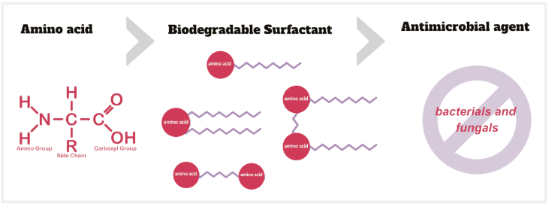
- requires the use of protecting groups, including Boc (tert-butyloxycarbonyl), Fmoc (fluorenylmethyloxycarbonyl), Cbz (benzyloxycarbonyl), and ester-based strategies, to ensure regioselectivity and controlled coupling [3][13]. Although effective, these approaches increase synthetic complexity and may limit


Synthesis of novel 1,2,4-oxadiazole-isoxazoline hybrids and their in silico potential with adenosine receptors
Beilstein J. Org. Chem. 2026, 22, 1033–1047, doi:10.3762/bjoc.22.82
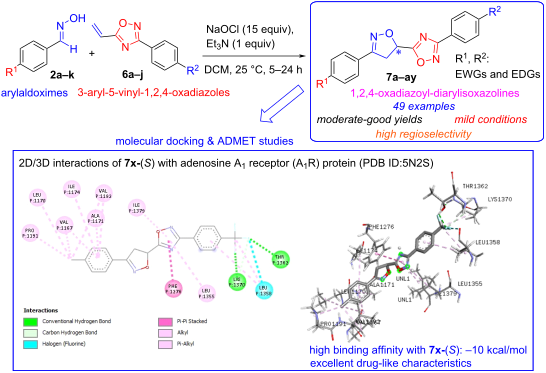
- –97%) and fully characterized by IR, NMR, and HRMS analyses. The reactions exhibited high regioselectivity, exclusively affording 5-isoxazoline derivatives, while substituent effects played a decisive role in modulating reaction efficiency. In silico studies revealed that all hybrids 7a–ay display
- tool. These reactions are generally governed by HOMO–LUMO orbital interactions between the dipole and dipolarophile. While substituent effects on the nitrile oxide dipole are minimal, monosubstituted alkenes typically yield 5-substituted isoxazolines with high regioselectivity due to steric and
- regioselectivity of the applied nitrile oxide cycloaddition reactions (Scheme 4). Moreover, the molecular masses of all compounds 7a–ay were unambiguously confirmed by high-resolution mass spectrometry, which showed the expected M+ or [M + H]+ ions. (See Experimental section for physical, spectroscopic data and


Novel macrocycles: from synthesis to supramolecular function
Beilstein J. Org. Chem. 2026, 22, 982–985, doi:10.3762/bjoc.22.76

- . The observed regioselectivity originates from through-space electronic communication between the naphthalene units, which suppresses multiple substitution pathways across the remaining framework. Owing to their defined three-dimensional shape and moderate conformational flexibility, the resulting
Recent advances in copper-catalyzed direct hydroamination of alkenes with (hetero)aromatic amines
Beilstein J. Org. Chem. 2026, 22, 925–947, doi:10.3762/bjoc.22.73
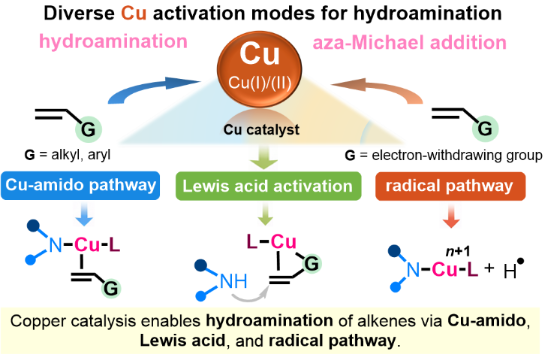
- , including copper–amido-mediated nucleophilic addition or aminocupration, Lewis acid-type alkene activation, and radical-mediated pathways. These complementary mechanisms provide access to diverse alkene classes with control over regioselectivity (Markovnikov vs anti-Markovnikov addition), stereoselectivity
- regioselectivity (Markovnikov vs anti-Markovnikov addition), while stereochemical control (diastereo- and enantioselectivity) presents further challenges (Scheme 1) [7]. These challenges become more pronounced when using (hetero)aromatic amines as the N–H partners. Compared to aliphatic amines, aromatic amines and
- provide complementary regioselectivity profiles and an expanded substrate scope compared to purely polar mechanisms. The ability of copper catalysts to operate across these mechanistic regimes has enabled significant progress in the hydroamination of activated and challenging alkenes using (hetero







Palladium-catalyzed benzocyclization reactions of quinoline-2-carboxamides via sequential C–H/N–H functionalization
Beilstein J. Org. Chem. 2026, 22, 905–914, doi:10.3762/bjoc.22.71
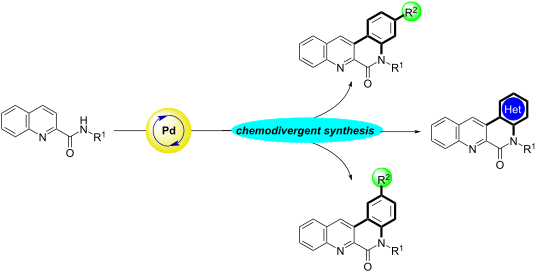
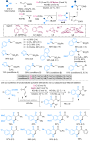
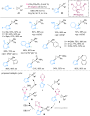
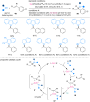
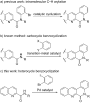
- moderate yields with high regioselectivity (Table 3, entries 9 and 10). The structures of the isomeric products were confirmed by nuclear Overhauser effect spectroscopy (NOESY, see Supporting Information File 1). First, the structures of lactams 3ab, 3ac, and 3ad were determined (Figure 1a–c, respectively




Diastereodivergent electrophilic trapping of α-boryl lithium derivatives
Beilstein J. Org. Chem. 2026, 22, 882–887, doi:10.3762/bjoc.22.68
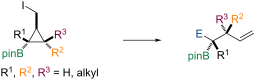
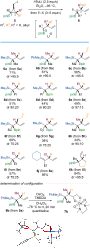
- regioselectivity. The use of various electrophiles enabled the synthesis of acyclic boronic esters featuring vicinal tri- and tetrasubstituted stereocenters. Cyclopropylmethyl iodide starting materials. Synthesis and reactivity of α-boryl lithium species. Diastereodivergent electrophilic trapping of α-boryl




Synthesis of heterocycles based on azomethine ylides from α-amino acids (or amines) and carbonyl compounds
Beilstein J. Org. Chem. 2026, 22, 705–741, doi:10.3762/bjoc.22.55
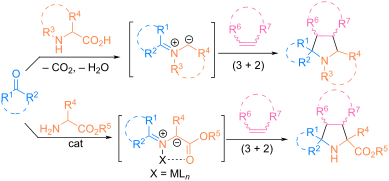
- 12 with β-fluoromethyl-β,β-disubstituted enones 15 was studied, resulting in the formation of pyrrolidines 16 and 17 with two adjacent or two discrete quaternary stereocenters (Scheme 10). The regioselectivity of this reaction is controlled by the choice of a suitable chiral ligand. The authors
- dissociation of the amine nitrogen of L9 from the Cu(I) center in the transition state F leads to a change in regioselectivity and the formation of cycloadduct 17 [46]. A similar catalytic system was successfully used for the asymmetric (3 + 2) cycloaddition of azomethine ylides with trisubstituted
- imidazoles 18 catalyzed by Cu(I)/phosphine L10, which resulted in the formation of chiral pyrrolidines 19 and 20 with high diastereoselectivity (Scheme 11). The authors attribute the reactivity patterns observed in imino esters reactions, including regioselectivity variations, by differences in electron


Computational prediction of C–H hydricities and their use in predicting the regioselectivity of electron-rich C–H functionalisation reactions
Beilstein J. Org. Chem. 2026, 22, 603–610, doi:10.3762/bjoc.22.46
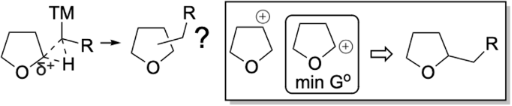
- regioselectivity of electron-rich C–H functionalisation reactions. The workflow was benchmarked against 35 experimentally determined C–H hydricities in DMSO, yielding a mean absolute error (MAE) of 4.43 kcal/mol and a root mean squared error (RMSE) of 5.45 kcal/mol. Leveraging this approach, we generated a dataset
- ten representative reactions, surpassing BDEs in most cases. These findings highlight hydricity as a complementary and, in some cases, superior descriptor for guiding regioselectivity predictions in electron-rich C–H functionalisation. The model is made available at regioselect.org, together with a
- regioselectivity of various C–H functionalisation reactions and machine learning (ML) models have been developed for both properties [1][2][3][4][5]. In contrast, C–H hydricities have received considerably little attention. However, the insertion into, or H-abstraction from, innately electron-rich C–H bonds are


![[Graphic 6]](/bjoc/content/inline/1860-5397-22-46-i8.svg?max-width=637&scale=1.18182)


Regioselective approach to 5-arylsulfonylisoxazoles and their antimicrobial activity
Beilstein J. Org. Chem. 2026, 22, 592–602, doi:10.3762/bjoc.22.45
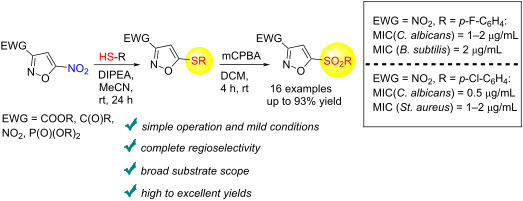
- 4-unsubstituted isoxazoles with various aryl substituents in position 3 [24][25] (approach B). One example describes the Ru-catalyzed reaction of nitrile oxide with alkynyl sulfone providing 5-sulfonylisoxazole with high regioselectivity [26] (approach C). Despite the widespread application of
- nitrile oxides in cycloaddition reactions, complete control of regioselectivity without metal catalysis is not always achievable. Another problem with this method is the tendency of nitrile oxides to form dimers (furoxanes), which entails a decrease in the yield of isoxazoles. Due to dimerization, nitrile


Experimental and DFT studies on the regioselective methanolysis of 5-azido-9-oxabicyclo[6.1.0]nonan-4-yl 4-nitrobenzoate isomers
Beilstein J. Org. Chem. 2026, 22, 547–556, doi:10.3762/bjoc.22.40
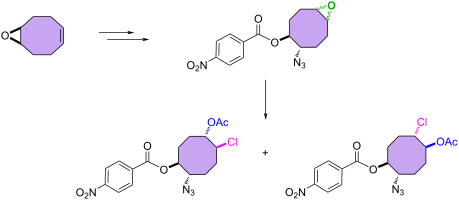
- epoxide ring and acetylation resulted in the formation of two corresponding chloro-acetate isomers. The structure of one of the chloro-acetate isomers was determined via crystallographic analysis and the other by 1D and 2D NMR spectroscopy. DFT computations confirm the regioselectivity of the methanolysis
- -opening reaction of an azidoepoxide containing an eight-membered ring with HCl(g) in MeOH by regioselectivity [12]. More recently we have directed our interest towards developing an efficient method for the synthesis of new C8-azides. In the present paper, we report the first synthesis of 5-azido-9
- observed regioselectivity, steric drawings of epoxides 9a and 9b were constructed using a bathtub-like representation of the cyclooctane ring (Table 1). For epoxide 9a, the majority of dihedral angles fall within the ±60–80° range, consistent with a regular boat-chair geometry. The limited deviation from


Electrosynthetic access to unsymmetrical oxaza[8]helicenes with high chiral stability and strong circularly polarized luminescence (CPL)
Beilstein J. Org. Chem. 2026, 22, 372–382, doi:10.3762/bjoc.22.25
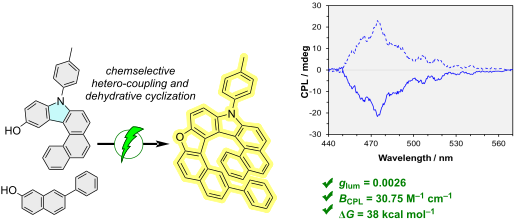
- along the helical rim – are far rarer. Their scarcity primarily reflects the formidable challenge of controlling chemo- and regioselectivity during ring annulation and heteroatom introduction, which often necessitates multistep synthetic strategies [36][37][38]. To the best of our knowledge, only four
- electrochemical arenol activations reported by Waldvogel and co-workers [46]. Subsequent intramolecular dehydrative cyclization furnishes the desired oxaza[8]helicenes 5. The oxidation-potential gap between 3 and 4 and the reactivity of Int-I thus provides a handle to control chemo- and regioselectivity
- designed coupling partners to control both chemo- and regioselectivity. A finely tuned anodic sequence enables selective oxidative hetero-coupling followed by dehydrative cyclization, delivering extended [8]helical scaffolds efficiently under mild, oxidant-free conditions. Combined experimental and DFT




Arene activation via π-bond localization: concepts and opportunities
Beilstein J. Org. Chem. 2026, 22, 257–273, doi:10.3762/bjoc.22.19
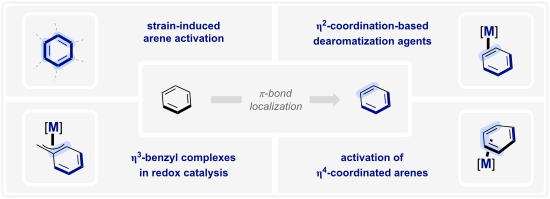
- of π-bond localization in arenes and its influence on reactivity can be traced back to the early 1930s, when Mills and Nixon investigated how the annelation of small rings to aromatic systems influences the regioselectivity of electrophilic substitutions in tetralin vs indane (Figure 3A) [16
- arene activation offers powerful opportunities in reactivity design. Notably, the small-ring annelation exerts a dual influence: it lowers kinetic barriers and enhances regioselectivity, with strain-release providing the key thermodynamic driving force to overcome aromatic stabilization. Synthetic
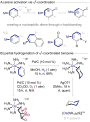
- , and pyrroles (Scheme 6B) [81][82]. Despite this diversification, the underlying reactivity pattern remained remarkably consistent, with preferential formation of 1,4-substituted dearomatized products observed across the substrate classes. A refined approach to controlling regioselectivity was




A new synthesis of Tyrian purple (6,6’-dibromoindigo) and its corresponding sulfonate salts
Beilstein J. Org. Chem. 2026, 22, 167–174, doi:10.3762/bjoc.22.10
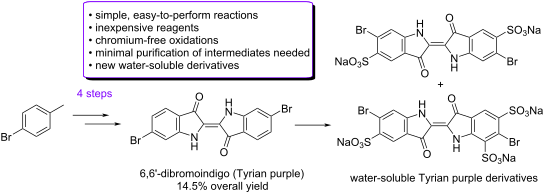
- polynitrated side-products, but was unable to effectively separate the two regioisomers, and this mixture was carried on to the next step. The regioselectivity of nitration obtained in this reaction was better than the 5:4 ratio of 3 to 7 reported for a traditional nitration of p-bromotoluene [5][19]. Despite
- our best efforts, however, we were unable to reproduce the regioselectivity and 90% yield reported by Keinan et al. [12]. One possible explanation for this disparity in yield was the use of 90% fuming nitric acid in place of the reported 100% fuming nitric acid. At the time of this work, we were


Total synthesis of natural products based on hydrogenation of aromatic rings
Beilstein J. Org. Chem. 2026, 22, 88–122, doi:10.3762/bjoc.22.4
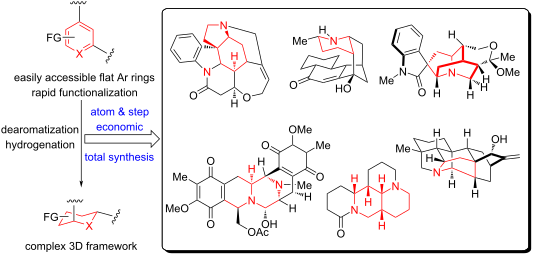
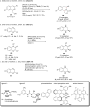
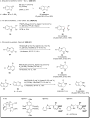
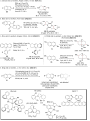
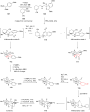
- regioselectivity, degree of saturation, and stereochemical induction – features that are increasingly leveraged in total synthesis to access complex, three-dimensional natural products [68][69][70]. Total synthesis based on hydrogenation of aromatic rings Beyond catalyst and substrate diversity, arene











Advances in Zr-mediated radical transformations and applications to total synthesis
Beilstein J. Org. Chem. 2026, 22, 71–87, doi:10.3762/bjoc.22.3
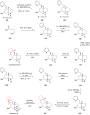
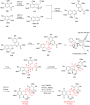
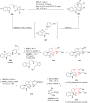
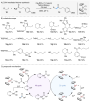
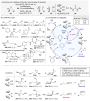
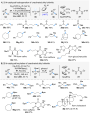
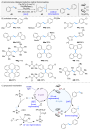
- unsymmetrical epoxides (Scheme 5B). Both monosubstituted epoxides 23a–e and di- and trisubstituted epoxides 23f–h underwent ring opening with regioselectivity opposite to that observed in conventional systems, affording the corresponding alcohols. Moreover, the method was successfully applied to complex
- molecules such as allose (23i) and cholesterol (23k), delivering the desired alcohols in good yields with excellent regioselectivity. The proposed mechanism is shown in Scheme 5C. Homolytic cleavage of the C–O bond in the epoxide generates a strong Zr–O bond, while the resulting alkyl radical abstracts a
- hydrogen atom from 1,4-cyclohexadiene to furnish the alcohol product. The active species Cp2ZrIII(OTf) is then regenerated via single-electron transfer (SET) from the Ir photocatalyst. Notably, the addition of thiourea 26 significantly improved the regioselectivity in this reaction. According to NMR








Reactivity umpolung of the cycloheptatriene core in hexa(methoxycarbonyl)cycloheptatriene
Beilstein J. Org. Chem. 2026, 22, 64–70, doi:10.3762/bjoc.22.2
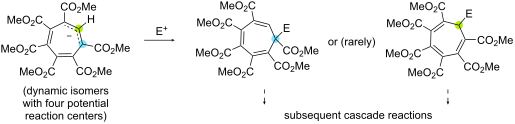
- potassium 1 (Figure 2) undergoes reactions with various electrophilic reagents which presented the first examples of unexpected pathways for the derivatization of cycloheptatrienes [17][18][19]. However, the anion is highly symmetric and does not challenge regioselectivity. Therefore, besides the


Competitive cyclization of ethyl trifluoroacetoacetate and methyl ketones with 1,3-diamino-2-propanol into hydrogenated oxazolo- and pyrimido-condensed pyridones
Beilstein J. Org. Chem. 2025, 21, 2716–2729, doi:10.3762/bjoc.21.209
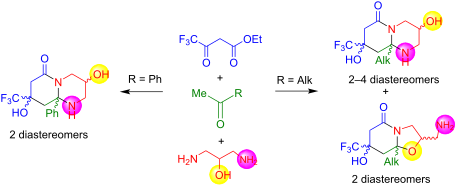
- methyl ketones increases the regioselectivity in the synthesis of octahydropyrido[1,2-a]pyrimidinones. The cyclization with acetophenone is characterized by the regiospecific generation of these bicycles. The presence of three chiral centers in the synthesized bicycles, depending on the alkyl substituent
- ketones 2b,c (Scheme 2), similar to the transformations with acetone 2a (Scheme 1). The conversion and the preparative yields of products 4b,c and 5b,c are given in Table 2. The regioselectivity is the main feature of the reaction of ester 1 and diaminopropanol (3) with acetophenone (2d), because in this
- increase in the regioselectivity of octahydropyrido[1,2-a]pyrimidinones formation. In contrast, the cyclization with acetophenone occurs regiospecifically, yielding only octahydropyrido[1,2-a]pyrimidinones. The presence of three chiral centers in the synthesized bicycles leads to the formation of


Recent advancements in the synthesis of Veratrum alkaloids
Beilstein J. Org. Chem. 2025, 21, 2657–2693, doi:10.3762/bjoc.21.206
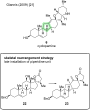
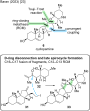
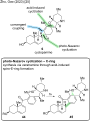
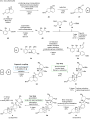
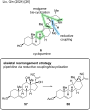
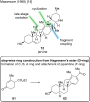
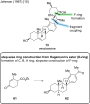
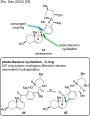
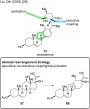
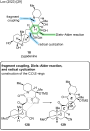
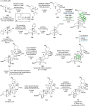
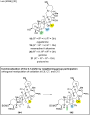
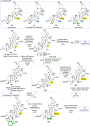
- C12,15-glycol 102. The glycol was subjected to periodate cleavage, which was followed by intramolecular aldol reaction to effect contraction of the C-ring. The observed regioselectivity was rationalized by steric influence of the C19-methyl group hindering deprotonation at C11. Thus, desired cyclization










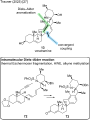

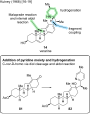


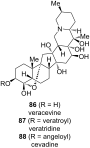


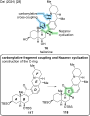

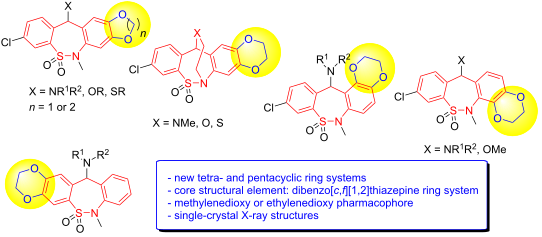
Synthesis of new tetra- and pentacyclic, methylenedioxy- and ethylenedioxy-substituted derivatives of the dibenzo[c,f][1,2]thiazepine ring system
Beilstein J. Org. Chem. 2025, 21, 2645–2656, doi:10.3762/bjoc.21.205
- regioselectivity. Reduction of 51 with NaBH4 and subsequent chlorination of alcohol 52 with SOCl2 gave chloro derivative 53, which was treated with amines to afford compounds 54a–e. 7-Aminoheptanoic acid ester derivative 54e was hydrolyzed to tianeptine analogue 54f. Conclusion As continuation of our efforts to


Palladium-catalyzed regioselective C1-selective nitration of carbazoles
Beilstein J. Org. Chem. 2025, 21, 2479–2488, doi:10.3762/bjoc.21.190
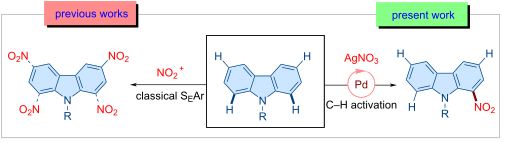
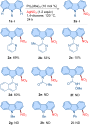
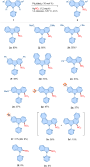
- methodologies are greatly limited due to harsh reaction conditions that impact the scope of the reaction, poor yield, and regioselectivity issues. In sharp contrast, transition metal-catalyzed cross-coupling reactions promisingly improve the regioselectivity issues and substrate scope [25][26][27][28]. In
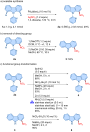
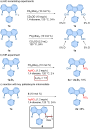
- nitro source. The catalytic system demonstrates a satisfactory substrate scope and excellent regioselectivity. The scalability of the reaction was demonstrated, further underscoring the robustness of the protocol. Overall, this study highlights the potential of palladium-catalyzed C–H activation


Catalytic enantioselective synthesis of selenium-containing atropisomers via C–Se bond formations
Beilstein J. Org. Chem. 2025, 21, 2447–2455, doi:10.3762/bjoc.21.186
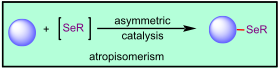
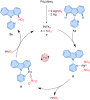
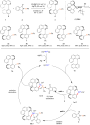
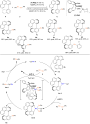
- reaction yielded the desired product at room temperature with high regioselectivity and stereoselectivity (E/Z ratio >99:1). Notably, when chiral catalyst (cat.1) was used, the reaction afforded the axially chiral product 9 in 43% yield with 84% ee. The proposed mechanism proceeds as follows. Catalyst cat
- catalytic performance. The developed catalytic system demonstrated high activity, excellent yields (mostly exceeding 85%), mild reaction conditions, broad functional group tolerance, as well as high regioselectivity, (E)-selectivity, and enantioselectivity (up to 99% ee). According to the kinetic study, the


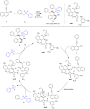
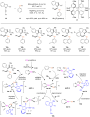
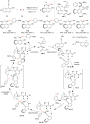
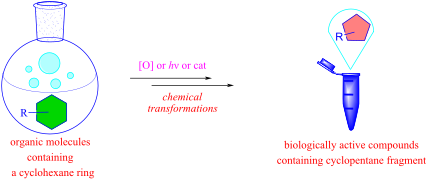
Transformation of the cyclohexane ring to the cyclopentane fragment of biologically active compounds
Beilstein J. Org. Chem. 2025, 21, 2416–2446, doi:10.3762/bjoc.21.185
- [52] achieved high regioselectivity and stereospecific construction of contiguous all-carbon quaternary centers through an oxidative ring contraction of cyclic α-formyl ketones by the action of H2O2. This reaction is easy to perform, environmentally friendly, and does not require expensive catalysts
- regioselectivity (>99:1) and complete preservation of the stereochemistry at both quaternary carbon centers (Scheme 17). Through a series of synthetic transformations, the target products (+)-cuparene (91) and (+)-tochuinylacetate (92) were synthesized from acids 96a and 96b with high regioselectivity. In [53


Comparative analysis of complanadine A total syntheses
Beilstein J. Org. Chem. 2025, 21, 2334–2344, doi:10.3762/bjoc.21.178
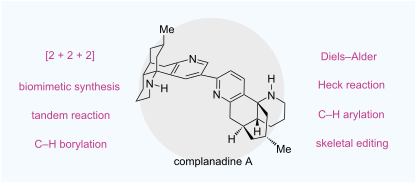
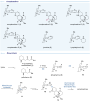
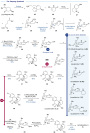
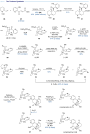
- regioselectivity and gave the desired cycloadduct 24 as the major product in 56% yield. From here on, removal of the TMS group with TBAF, followed by hydrogenolytic removal of the benzyl group and acidic hydrolysis of the formyl group, completed Siegel’s total synthesis of complanadine A. In addition, this


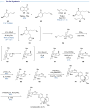

Recent advances in Norrish–Yang cyclization and dicarbonyl photoredox reactions for natural product synthesis
Beilstein J. Org. Chem. 2025, 21, 2315–2333, doi:10.3762/bjoc.21.177
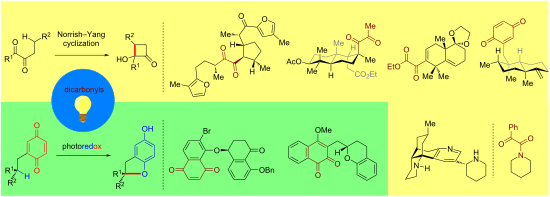
- review, drawing on examples from recently reported natural product syntheses, elaborates on reaction mechanisms, factors governing regioselectivity and stereoselectivity, and the impact of substrate structures on reaction pathways. These reactions not only serve as robust tools for the streamlined
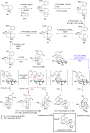
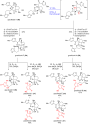
- , enabling the total synthesis of 13 via in situ intramolecular lactonization as a key step. Computational and experimental studies reveal that the regio- and stereoselectivity of the Norrish−Yang cyclization are governed by the influence of the methyl group at C10: (1) In terms of regioselectivity, the 1,3
- -diketones, the rigid lattice structure locks molecules into a specific conformation, limiting access to certain γ-hydrogens for abstraction and thus enhancing regioselectivity [42]. Enantiopure 87 was obtained by preparative chiral supercritical fluid chromatography (SFC) resolution of the racemate, while




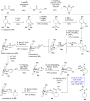


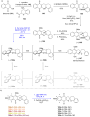

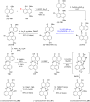
Pathway economy in cyclization of 1,n-enynes
Beilstein J. Org. Chem. 2025, 21, 2260–2282, doi:10.3762/bjoc.21.173
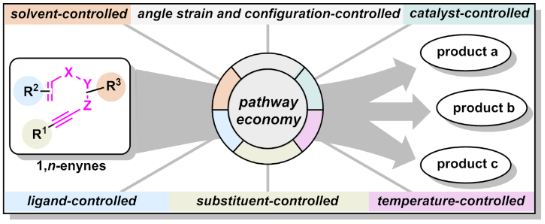
- ligand-controlled Au(I)-catalyzed intramolecular hydroarylation overcame key challenges of poor regioselectivity and limited applicability to electron-deficient substrates. In 2018, a gold-catalyzed divergent cyclization to access heteropolycyclic frameworks was reported by the Shi group (Scheme 18) [26
- ). Collectively, these findings demonstrate that the choice of transition metal catalyst critically governs the regioselectivity of 1,2-alkyl migration processes, thereby providing a strategic approach for the efficient synthesis of structurally diverse polysubstituted carbazoles. In 2015, Menon et al. developed
- allene intermediate 141, which subsequently underwent 5-exo-trig cyclization to construct polysubstituted furan compounds 142. Liu et al. discovered that the regioselectivity of cyclization could be completely altered by introducing a cyclic structure to modify the bond angle of the enol ether





