


Search results
Search for "sensors" in Full Text gives 191 result(s) in Beilstein Journal of Organic Chemistry.
Knoevenagel condensation of 4,5- and 1,8-diazafluorenes
Beilstein J. Org. Chem. 2026, 22, 803–812, doi:10.3762/bjoc.22.62
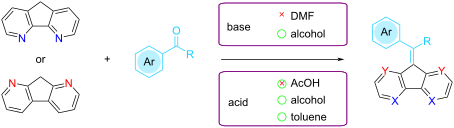
- be applied as antitumor agents [1][2][3], emitters and sensors [4][5]. They have also been extensively used as ligands yielding a wide library of transition-metal complexes [6][7][8], catalysts [9][10], light-driven molecular motors [11][12], nonlinear optical chromophores [13], and electrochromic


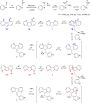


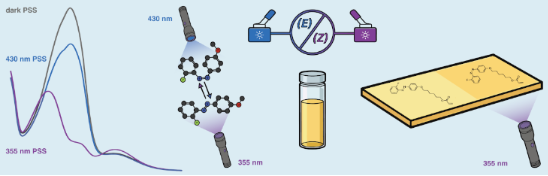
Halogenated azobenzene acrylates: from efficient solution photoswitching to stable solid-state photochromic materials
Beilstein J. Org. Chem. 2026, 22, 782–794, doi:10.3762/bjoc.22.60
- fluorescence intensity linearly dependent on the temperature [19][20]. Priimagi et al. reported thermal sensors based on the simple azobenzenes B1–3 by exploiting the dependence of the protonation rate on the temperature, which is accompanied by a color change [21]. Four different azobenzenes C1–4 were used as


Synthesis and uranyl(VI) extraction performance of a calix[4]pyrrole–tetrahydroxamic acid receptor
Beilstein J. Org. Chem. 2026, 22, 486–494, doi:10.3762/bjoc.22.36
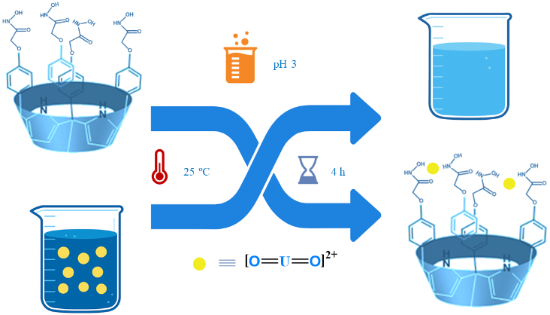
- matrices for a broad range of applications [9]. Notable examples include catalysis, chromogenic sensors and fluorescent sensors, as well as heavy metals extraction [12][13][14][15][16]. One CP molecule that has attracted the attention of several research groups is the meso-tetra-methyltetrakis(4


Design and synthesis of an axially chiral platinum(II) complex and its CPL properties in PMMA matrix
Beilstein J. Org. Chem. 2026, 22, 143–150, doi:10.3762/bjoc.22.7
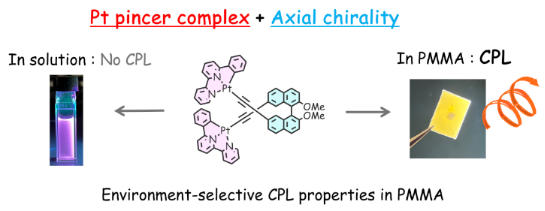
- Luminescent materials based on metal complexes have been extensively studied due to their high phosphorescence efficiency, making them promising candidates for applications in organic light-emitting diodes (OLEDs) [1][2][3][4][5], sensors [6][7][8][9], and bioimaging materials [10][11]. Among these materials


Symmetrical D–π–A–π–D indanone dyes: a new design for nonlinear optics and cyanide detection
Beilstein J. Org. Chem. 2026, 22, 131–142, doi:10.3762/bjoc.22.6
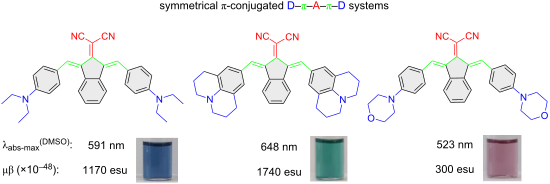
- organic semiconductors and are also broadly used in diagnostic kits for diseases, fluorescence sensors, and various biotechnological fields [1][2][3][4][5][6][7]. Especially, organic materials showing nonlinear optical (NLO) properties have considerable advantages, such as low-cost production and larger


Assembly strategy for thieno[3,2-b]thiophenes via a disulfide intermediate derived from 3-nitrothiophene-2,5-dicarboxylate
Beilstein J. Org. Chem. 2025, 21, 2489–2497, doi:10.3762/bjoc.21.191
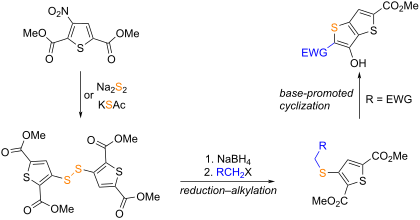
- , the use of TT frameworks for semiconductors has led to significant progress in organic field-effect transistors (OFETs), organic photovoltaics, organic light-emitting diodes, and chemical sensors [1][2][3]. For instance, TT-containing copolymers have shown high hole mobility, strong absorption in the



Conformational effects on iodide binding: a comparative study of flexible and rigid carbazole macrocyclic analogs
Beilstein J. Org. Chem. 2025, 21, 2369–2375, doi:10.3762/bjoc.21.181
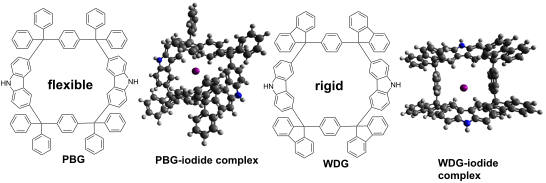
- , which provides a foundation for developing next-generation smart sensors with programmable anion selectivity. (a) partial 1H NMR spectrum of PBG in CDCl3 (400 MHz, CDCl3, 25 °C), (b) Partial 1H NMR spectrum of WDG in CDCl3 (400 MHz, CDCl3, 25 °C). (a) Partial 1H NMR spectra of PBG and TBAI at different



Pd-catalyzed dehydrogenative arylation of arylhydrazines to access non-symmetric azobenzenes, including tetra-ortho derivatives
Beilstein J. Org. Chem. 2025, 21, 2234–2242, doi:10.3762/bjoc.21.170
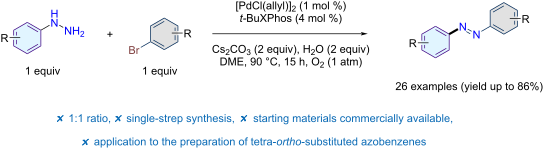
- Paris, France 10.3762/bjoc.21.170 Abstract Azobenzenes are photoresponsive compounds widely used in molecular switches, light-controlled materials, and sensors, but despite extensive studies on symmetric derivatives, efficient methods for synthesizing non-symmetric analogues remain scarce due to
- of applications, including molecular switches, sensors, and light-controlled materials [1][2][3][4][5][6][7][8]. The photoswitching behavior arises from the reversible photoisomerization between the E- and Z-forms of the azobenzene chromophore, driven by the isomerization of the N–N double bond. This


On the aromaticity and photophysics of 1-arylbenzo[a]imidazo[5,1,2-cd]indolizines as bicolor fluorescent molecules for barium tagging in the study of double-beta decay of 136Xe
Beilstein J. Org. Chem. 2025, 21, 1627–1638, doi:10.3762/bjoc.21.126
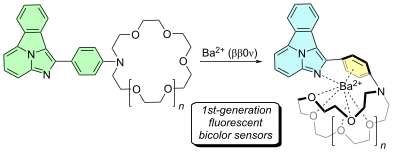
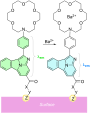
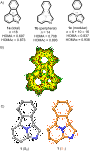
- concluded that the aromatic character of the fluorophore is better described as the combination of two aromatic subunits integrated in the polycyclic system. Different DFT functional are used to analyze the photochemical behavior of this family of sensors. It is concluded that PBE0 and M06 functionals
- decoupling between the para-phenylene and benzo[a]imidazo[5,1,2-cd]indolizine components that results in a blue shift upon Ba2+ coordination. Keywords: aromaticity; DFT-TDDFT calculations; double-beta decay; fluorescent sensors; polycyclic arenes; Introduction Double beta-decay [1] is a radioactive decay
- functionals being quite similar among them. Therefore, we concluded that M06-2X, whose calculated geometry is almost coincident with that computed with B3LYP-D3BJ, is the most precise functional to predict the two-color behavior of these fluorescent sensors. Computational Methods All the DFT [32] and TDDFT





Azobenzene protonation as a tool for temperature sensing
Beilstein J. Org. Chem. 2025, 21, 1528–1534, doi:10.3762/bjoc.21.115
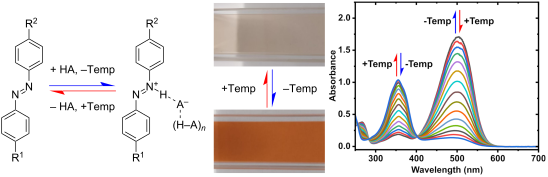
- -dichloroethane and highlight its potential for temperature sensing applications. Density functional theory calculations were performed to support our findings and to investigate the mechanisms of azobenzene–acid interactions, aiming to guide the design of azobenzene-based temperature sensors in future research
- they all typically result in significant changes in the absorption spectrum and/or alter the stability of the metastable isomer. In sensing, azobenzenes have been utilized, e.g., through changes in isomerization kinetics [17][18] or colorimetric properties. The colorimetric sensors are effective for


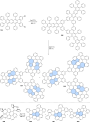
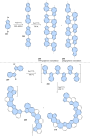
Recent advances and future challenges in the bottom-up synthesis of azulene-embedded nanographenes
Beilstein J. Org. Chem. 2025, 21, 1272–1305, doi:10.3762/bjoc.21.99
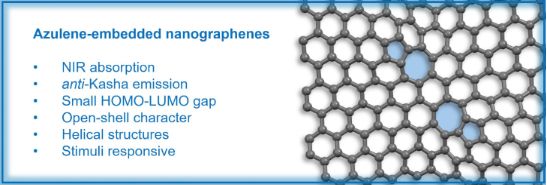
- , new OFET-based acid vapor sensors were developed from 150 by synergistically utilizing its charge transport and protonation−deprotonation properties. The solution-phase synthesis of a non-benzenoid nanoribbon from an azulene-containing polymer via alkyne benzannulation was reported by Morin and co


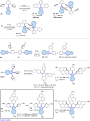
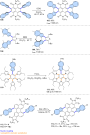


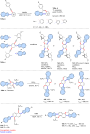


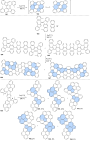
Optimized synthesis of aroyl-S,N-ketene acetals by omission of solubilizing alcohol cosolvents
Beilstein J. Org. Chem. 2025, 21, 1201–1206, doi:10.3762/bjoc.21.97
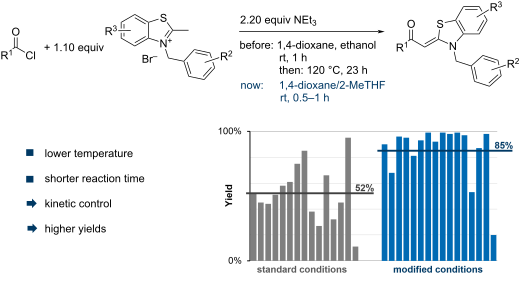
- -on of emission upon induced aggregation in alcohol–water mixtures [1]. This chromophore class has been extensively developed in recent years, even to aggregation-induced emissive (AIE) multichromophores [2] and even bichromophoric fluorimetric sensors [3][4]. The retrosynthesis of the title compounds


Gold extraction at the molecular level using α- and β-cyclodextrins
Beilstein J. Org. Chem. 2025, 21, 1116–1125, doi:10.3762/bjoc.21.89
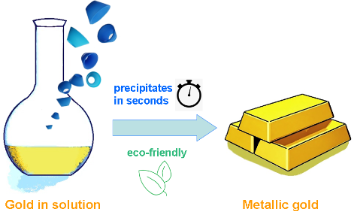
- ][10] and a variety of implants, from hearing aids to prosthetic coatings and endovascular stents [11]. Traces of gold are found in a few electronic components of the automotive industry, such as airbag sensors, circuit boards, and audio systems [12]. Last but not least, gold coatings have gained a


Dicarboxylate recognition based on ultracycle hosts through cooperative hydrogen bonding and anion–π interactions
Beilstein J. Org. Chem. 2025, 21, 884–889, doi:10.3762/bjoc.21.72
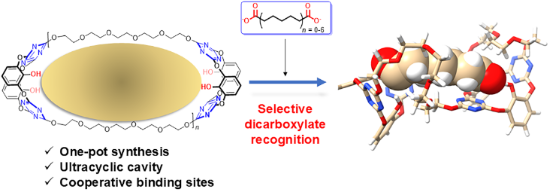
- introduction of lower-rim hydroxy substituents effectively enhances the dicarboxylate binding through cooperative hydrogen bonding and anion–π interactions. The selective recognition of long and flexible dicarboxylates holds exciting promise for the use of dicarboxylate sensors in medicine and industry. (a, b


Beyond symmetric self-assembly and effective molarity: unlocking functional enzyme mimics with robust organic cages
Beilstein J. Org. Chem. 2025, 21, 421–443, doi:10.3762/bjoc.21.30
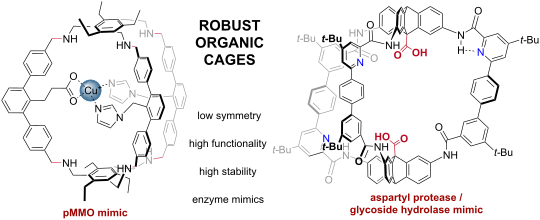
- methods in materials discovery are unlikely to discover solution-phase sensors or catalysts without a rational starting point to build from. Instead, new receptors [413] and catalysts [414][415][416] will likely arise from improvements in computational rationalization of experimental data [415][417




Emerging trends in the optimization of organic synthesis through high-throughput tools and machine learning
Beilstein J. Org. Chem. 2025, 21, 10–38, doi:10.3762/bjoc.21.3
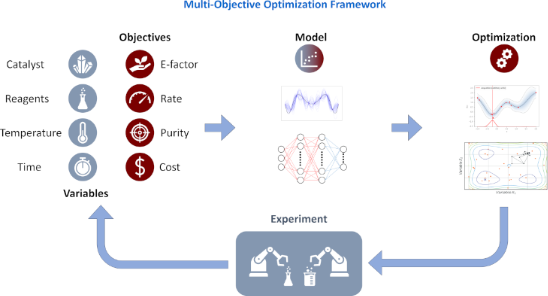
- , each comprising 650 µL within a slug flow reactor [48]. This innovative system features precise monitoring of the reaction slug through a dedicated array of phase sensors and an algorithm designed for detecting its passage. As a result, the workflow delivers a notable boost in productivity, surpassing


Efficient synthesis of fluorinated triphenylenes with enhanced arene–perfluoroarene interactions in columnar mesophases
Beilstein J. Org. Chem. 2024, 20, 3263–3273, doi:10.3762/bjoc.20.270
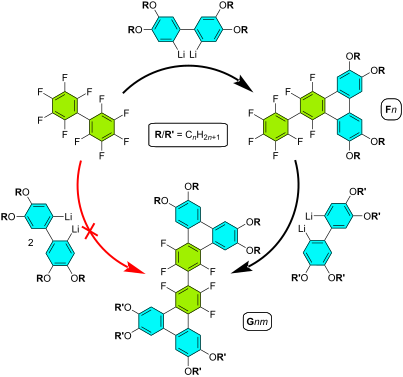
- tuneability of the optical and electronic properties, which can potentially be exploited for advanced applications in display technologies, photonic devices, sensors, and organic electronics. We recently successfully reported the straightforward synthesis of several mesogens containing four lateral aliphatic



Investigation of a bimetallic terbium(III)/copper(II) chemosensor for the detection of aqueous hydrogen sulfide
Beilstein J. Org. Chem. 2024, 20, 2818–2826, doi:10.3762/bjoc.20.237
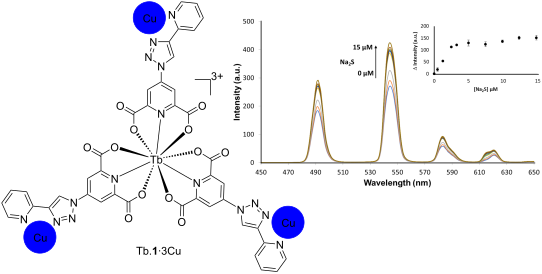
- Parvathy Mini Michael R. Grace Genevieve H. Dennison Kellie L. Tuck School of Chemistry, Monash University, Clayton, Victoria 3800, Australia CBRN Defence, Sensors and Effectors Division, Defence Science and Technology Group, Edinburgh, SA, 5111, and Fishermans Bend, VIC, 3207, Australia 10.3762
- − in the aqueous state at a pH of 7.4 due to its weak acidic nature and high solubility in water (80 mM at 37 °C) [6]. Elevated levels of H2S in groundwater pose high risks to both human health and aquatic ecosystems [7], compelling rigorous monitoring of water sources. Even though sensors for
- fluorescent-based sensors; notable features include large Stokes shifts, extended luminescent lifetimes, and precisely defined emission bands [15]. Typically lasting in the order of milliseconds, their extended luminescent lifetimes enable the implementation of time-gated detection methods, effectively


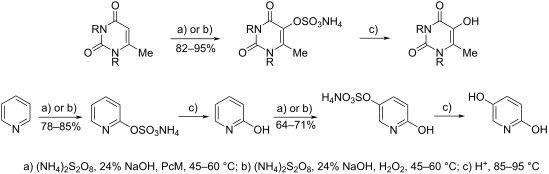
Efficient modification of peroxydisulfate oxidation reactions of nitrogen-containing heterocycles 6-methyluracil and pyridine
Beilstein J. Org. Chem. 2024, 20, 2599–2607, doi:10.3762/bjoc.20.219
- classes. Experimental 1H and 13C NMR spectra were recorded on a Bruker Avance III 500 MHz spectrometer at 500.13 MHz (1H) and 125.73 MHz (13C) with 5 mm QNP sensors at a constant sample temperature of 298 K. The solvents were DMSO-d6, D2O, CDCl3 and the internal standard was SiMe4. Chemical shifts in the


Synthesis and reactivity of the di(9-anthryl)methyl radical
Beilstein J. Org. Chem. 2024, 20, 2254–2260, doi:10.3762/bjoc.20.193
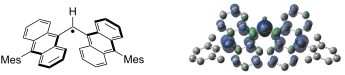
- state yields the monomer radical [16][17][18]. Therefore, aromatic hydrocarbon radicals with Ant units possess both stability and reactivity depending on the conditions, giving them high potential for use as reactive catalysts [22][23] and stimuli-responsive sensors [24][25]. To further investigate this


A new platform for the synthesis of diketopyrrolopyrrole derivatives via nucleophilic aromatic substitution reactions
Beilstein J. Org. Chem. 2024, 20, 1933–1939, doi:10.3762/bjoc.20.169
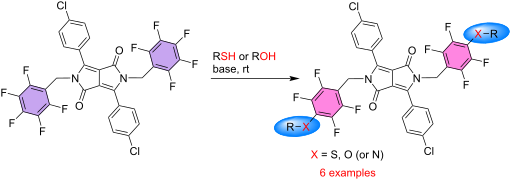
- fluorescence quantum yields, ranging from 0.66 to 0.83, confirming their potential applications in fluorescence imaging, sensors, and optoelectronic devices. A comprehensive discussion of the potential uses of these fluorescent substances in areas such as materials science, biology, or chemistry may provide a


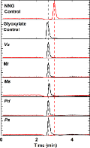
Activity assays of NnlA homologs suggest the natural product N-nitroglycine is degraded by diverse bacteria
Beilstein J. Org. Chem. 2024, 20, 830–840, doi:10.3762/bjoc.20.75

- (Scheme 1) [20][21]. Vs NnlA contains a Per-Arnt-Sim (PAS) domain – protein domains that often bind heme and function as gas or redox sensors [20]. Indeed, Vs NnlA was shown to contain a heme cofactor [21]. Mutagenesis of a predicted histidine ligand to this heme resulted in loss of the heme and the




Methodology for awakening the potential secondary metabolic capacity in actinomycetes
Beilstein J. Org. Chem. 2024, 20, 753–766, doi:10.3762/bjoc.20.69
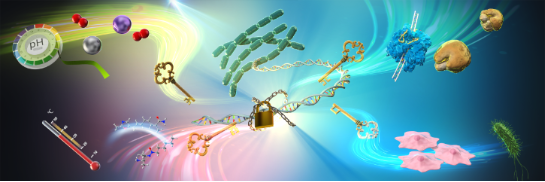
- is regulated by such heat shock sensors. Although long-term high-temperature culture experiments are employed in this study, reactive oxygen species (ROS) may exert a stronger effect than high temperature. In actinomycetes, several sensor proteins for ROS have been reported (e.g., SoxR and OxyR


Possible bi-stable structures of pyrenebutanoic acid-linked protein molecules adsorbed on graphene: theoretical study
Beilstein J. Org. Chem. 2024, 20, 570–577, doi:10.3762/bjoc.20.49
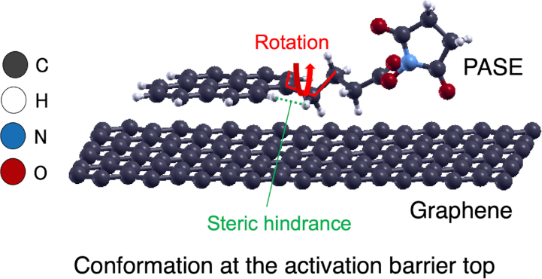
- graphene. We discuss the expected protein sensors when this type of energy surface appears and provide a guideline for improving the sensitivity, especially as an oscillator-type biosensor. Keywords: biosensor; DFT; PASE; protein; surface adsorption; Introduction Consideration of the atomic-scale motion
- can be expected for proteins immobilized on graphene. As a result, we propose a strategy for improving the accuracy of the sensing process in elastic wave measurement sensors through antigen/antibody reactions. Results and Discussion PASE and PASE-derivatives on graphene Among pyrene derivatives, PASE
- ]. Various biosensors have already been developed, many of which require immobilization of antibody proteins on graphene surface. Therefore, protein capture by linkers is used in a relatively large number of sensors. In the elastic wave measurement system, elastic waves are generated by laser irradiation and


Synthesis of photo- and ionochromic N-acylated 2-(aminomethylene)benzo[b]thiophene-3(2Н)-ones with a terminal phenanthroline group
Beilstein J. Org. Chem. 2024, 20, 552–560, doi:10.3762/bjoc.20.47
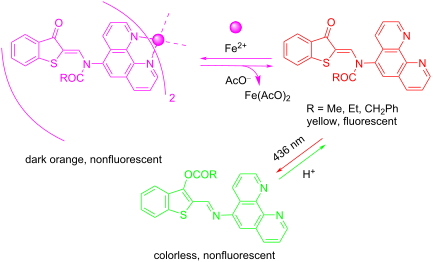
- change depending on the intensity of sunlight), photochromic tags for biological research and optical sensors [15][16][17][18][19][20][21]. To develop new dual-mode molecular switches capable of efficient modulation of optical and fluorescent properties, both upon irradiation with visible light and upon





