Search results
Search for "X-ray crystallography" in Full Text gives 325 result(s) in Beilstein Journal of Organic Chemistry. Showing first 200.
Unprecedented visible light-initiated topochemical [2 + 2] cycloaddition in a functionalized bimane dye
Beilstein J. Org. Chem. 2025, 21, 500–509, doi:10.3762/bjoc.21.37
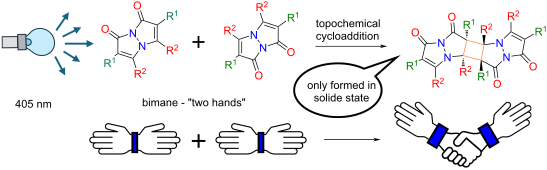
- promising strategy for synthesizing substituted cyclobutanes without the need for ultraviolet irradiation. Keywords: bimane; [2 + 2] cycloaddition; fluorescence; topochemical polymerization; X-ray crystallography; Introduction Topochemical polymerizations refer to polymerization reactions occurring in the


Electrochemical synthesis of cyclic biaryl λ3-bromanes from 2,2’-dibromobiphenyls
Beilstein J. Org. Chem. 2025, 21, 451–457, doi:10.3762/bjoc.21.32
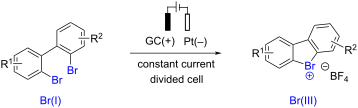
- extractive workup followed by reversed-phase chromatography and its structure was unambiguously confirmed by X-ray crystallography (Table 1, graphic). Gratifyingly, a two-fold increase in the yield was achieved by a slight reduction of the current density to j = 8 mA·cm−2 (entry 2 vs entry 1 in Table 1). A


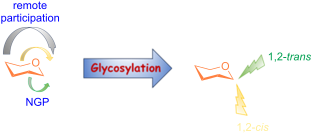
The effect of neighbouring group participation and possible long range remote group participation in O-glycosylation
Beilstein J. Org. Chem. 2025, 21, 369–406, doi:10.3762/bjoc.21.27




Synthesis and characterizations of highly luminescent 5-isopropoxybenzo[rst]pentaphene
Beilstein J. Org. Chem. 2025, 21, 270–276, doi:10.3762/bjoc.21.19
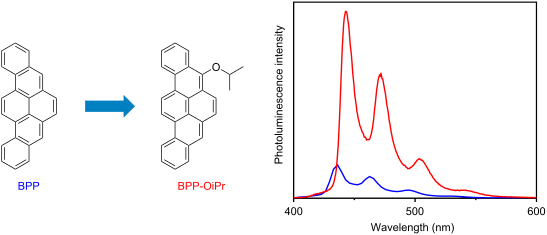
- literature. During our attempt to scale up the preparation of BPP 2 through the "DPEX" reaction, we unexpectedly obtained a 5-isopropoxy-substituted derivative of BPP (BPP-OiPr 3) (Scheme 1), whose structure was proven by NMR, mass spectrometry, and X-ray crystallography. In this work, we optimized the
- BPP 2 and BPP-OiPr 3. Supporting Information Supporting Information File 114: Experimental and computational details, X-ray crystallography, synthesis and characterization of new compounds, additional PL, mass, and NMR spectra, and theoretical calculations. Acknowledgements We appreciate the help




Streamlined modular synthesis of saframycin substructure via copper-catalyzed three-component assembly and gold-promoted 6-endo cyclization
Beilstein J. Org. Chem. 2025, 21, 226–233, doi:10.3762/bjoc.21.14
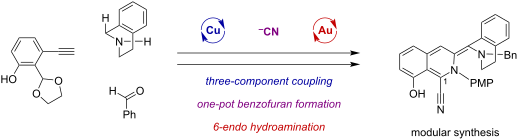
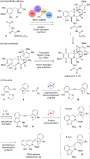
- structure of 16 was confirmed by serial X-ray crystallography using an X-ray free-electron laser (XFEL) [deposition number CCDC 2352718) [54][55]. We then performed a Strecker-type reaction on the aldehyde 16 to construct an α-aminonitrile 17. To our delight, the key intermediate, 2,3-diaminobenzofuran 11




Synthesis, structure and π-expansion of tris(4,5-dehydro-2,3:6,7-dibenzotropone)
Beilstein J. Org. Chem. 2025, 21, 1–7, doi:10.3762/bjoc.21.1
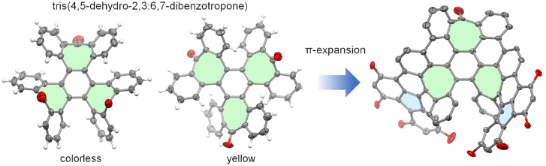
- analysis of it with X-ray crystallography. Interestingly, it is observed that tris(4,5-dehydro-2,3:6,7-dibenzotropone) crystallized from its solution in hexane resulting in colorless and yellow crystal polymorphs, where it adopts conformations of approximate Cs and C2 symmetry, respectively. Furthermore
- 1) featuring three heptagons and two pentagons, with its structure confirmed by X-ray crystallography. This π-expansion approach of compound 1 differs from the method reported by Müllen and co-workers, which involves Ramirez olefination and Suzuki coupling, resulting in the expansion of a seven
- Scholl reaction conditions. The structure of 3 was confirmed with single crystal X-ray crystallography, as detailed later. In addition, another product with a molecular ion peak of 1695.9115 in the high-resolution mass spectrum (Supporting Information File 1, Figure S6) was isolated in trace amounts


Synthesis, characterization, and photophysical properties of novel 9‑phenyl-9-phosphafluorene oxide derivatives
Beilstein J. Org. Chem. 2024, 20, 3299–3305, doi:10.3762/bjoc.20.274
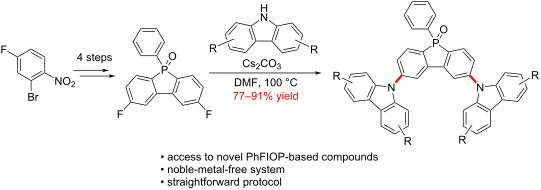
- fully elucidated by single-crystal X-ray crystallography, which was performed on a Bruker APEX-II CCD diffractometer using graphite monochromated Mo Kα radiation at a temperature of 296 ± 2 K. Crystallographic data were deposited with the Cambridge Crystallographic Data Centre under accession number




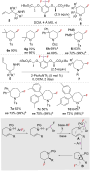
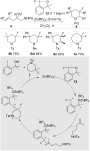
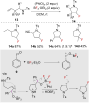
Hypervalent iodine-mediated intramolecular alkene halocyclisation
Beilstein J. Org. Chem. 2024, 20, 3113–3133, doi:10.3762/bjoc.20.258
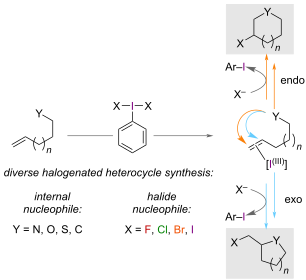
- excellent yields. The structures were also assigned by X-ray crystallography. Sulfur nucleophiles In 2015, Li and co-workers reported the synthesis of 5-bromomethyl-2-phenylthiazoline (79, Scheme 41) [48]. Sulfur was used as the internal nucleophile instead of nitrogen, as previously reported by the authors






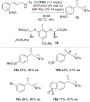















4,6-Diaryl-5,5-difluoro-1,3-dioxanes as chiral dopants for liquid crystal compositions
Beilstein J. Org. Chem. 2024, 20, 2940–2945, doi:10.3762/bjoc.20.246
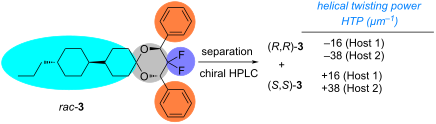
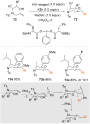
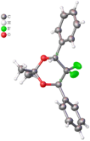
- polar mixture Host 2 it is twice as high as for less polar Host 1. Selected examples of chiral dopants with high HTPs in their nematic host LC mixture. Configuration of (R,R)-3 determined by X-ray crystallography. Configuration of (R,R)-4 determined by X-ray crystallography. Structure–property


Structure and thermal stability of phosphorus-iodonium ylids
Beilstein J. Org. Chem. 2024, 20, 2931–2939, doi:10.3762/bjoc.20.245
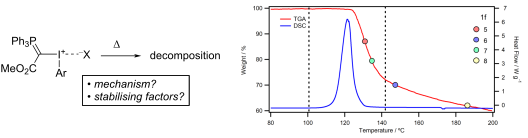
- to fully understand the electronic effect of the arene substituent. Conclusion A systematic investigation of phosphorus-iodonium ylids was carried out, correlating structural data from X-ray crystallography with thermal stability data from DSC and TGA measurements. A common decomposition mechanism


C–C Coupling in sterically demanding porphyrin environments
Beilstein J. Org. Chem. 2024, 20, 2784–2798, doi:10.3762/bjoc.20.234
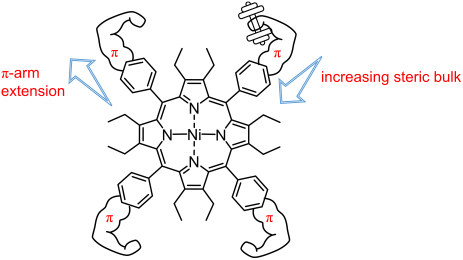
- porphyrins appended with boronic ester groups to be structurally disseminated by X-ray crystallography [62][63]. Compound 46 was found to crystallize in a 1:1 ratio with bis(pinacolato)diboron, with a void size of 8–9 Å. The formation of channel-type lattice structures is thermodynamically unfavorable, when


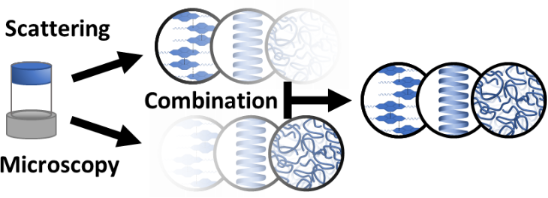
Applications of microscopy and small angle scattering techniques for the characterisation of supramolecular gels
Beilstein J. Org. Chem. 2024, 20, 2608–2634, doi:10.3762/bjoc.20.220


Evaluating the halogen bonding strength of a iodoloisoxazolium(III) salt
Beilstein J. Org. Chem. 2024, 20, 2401–2407, doi:10.3762/bjoc.20.204
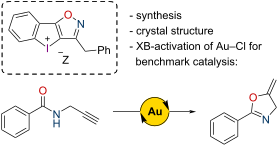
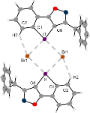
- donors in recent years. Herein, a new structural motif for this compound class was developed: iodoloisoxazolium salts, bearing a cyclic five-membered iodolium core fused with an isoxazole ring. A derivative of this class was synthesized and investigated in the solid state by X-ray crystallography




Asymmetric organocatalytic synthesis of chiral homoallylic amines
Beilstein J. Org. Chem. 2024, 20, 2349–2377, doi:10.3762/bjoc.20.201
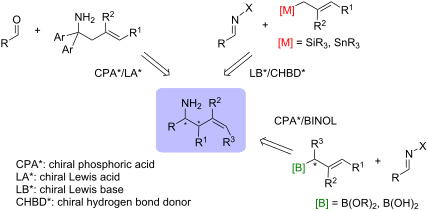
- enantioselectivities were in the range of 82–97% and were lowest for the prenylation, and highest for Z-geranylboronic acid. The absolute configurations of the products were established by X-ray crystallography of the hydrochloride salts of the corresponding bromoindole and bromodihydroisoquinoline derivatives 20 and








Synthesis and reactivity of the di(9-anthryl)methyl radical
Beilstein J. Org. Chem. 2024, 20, 2254–2260, doi:10.3762/bjoc.20.193
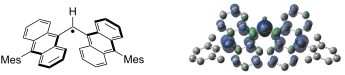
- , Supporting Information File 1). ESR and MS measurements as well as X-ray crystallography revealed that the radical species was assigned 10-mesityl-9-anthroyxyl radical (5), obtained in 47% yield (Figure 4c, Figure S8, Supporting Information File 1). Thus, two decomposition pathways were considered: a minor
- . Decomposition pathway of the DAntM radical under air conditions. Supporting Information Supporting Information File 81: Synthetic procedure and compound characterization data (1H, 13C NMR, MS, melting point, X-ray crystallography) of new compounds. DFT calculation results and optimized structural Cartesian


Computational toolbox for the analysis of protein–glycan interactions
Beilstein J. Org. Chem. 2024, 20, 2084–2107, doi:10.3762/bjoc.20.180
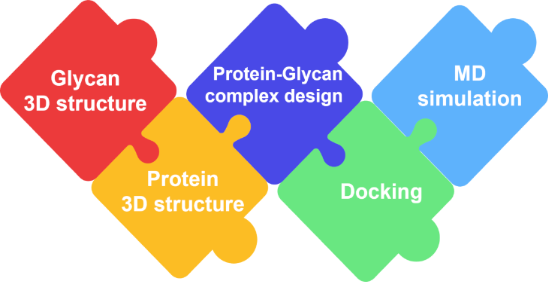
- needed to deeply investigate the multifaceted aspects of protein–glycan interactions. To date, advanced and versatile NMR, X-ray crystallography, and MS methods [36][37][38] above all, have been developed to reach extensive information on the structural and conformational features of glycans and proteins
- . Several experimental techniques, including NMR, X-ray crystallography and Cryo-EM, can provide critical information for the characterisation of protein structure and conformation. Their widespread and wisely use permitted to experimentally determine the structures of around 200,000 proteins [78], all


Regioselective alkylation of a versatile indazole: Electrophile scope and mechanistic insights from density functional theory calculations
Beilstein J. Org. Chem. 2024, 20, 1940–1954, doi:10.3762/bjoc.20.170
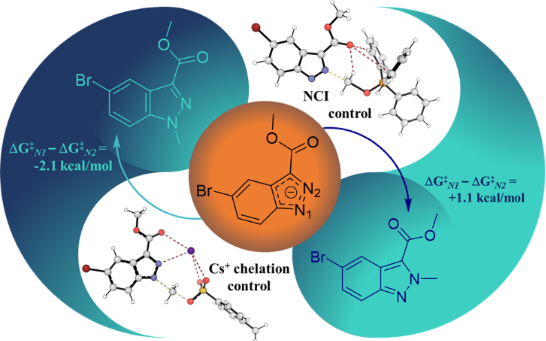
- Scheme 1 compound 6 was treated with isopropyl iodide (7) in DMF in the presence of sodium hydride to provide products 8 and 9 in 38% and 46% yields, respectively. The structures of both compounds were unambiguously assigned using X-ray crystallography and 1H and nuclear Overhauser effect (NOE) NMR


Oxidative fluorination with Selectfluor: A convenient procedure for preparing hypervalent iodine(V) fluorides
Beilstein J. Org. Chem. 2024, 20, 1785–1793, doi:10.3762/bjoc.20.157
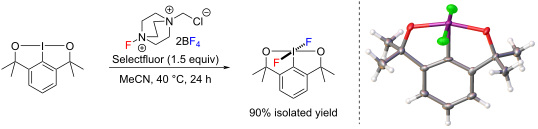
- (1–3 % spectroscopic yield) when BF3·OEt2 was added to the reaction mixture. X-ray crystallography and DFT calculations The solid-state structure of difluoroiodane 6 is shown in Figure 2 and displays the expected square pyramidal geometry around the iodine atom, with only minor distortion (τ5 = 0.191


Synthesis and characterization of 1,2,3,4-naphthalene and anthracene diimides
Beilstein J. Org. Chem. 2024, 20, 1767–1772, doi:10.3762/bjoc.20.155
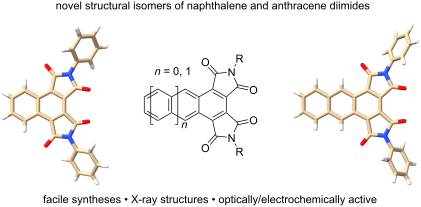
- cyclic imides. The solid-state structures of the N-phenyl derivatives, determined by X-ray crystallography, reveal changes in packing preference based on the number of aromatic rings in the core. The optical and electronic properties of the title compounds compare favorably with other previously
- evaporation of CH2Cl2/MeOH solutions and characterized by X-ray crystallography. 7-Ph crystallizes in the Pbcn space group into a solvent superstructure of π-stacked columns of 7-Ph. The imide groups are pointed in alternating directions within a stack. While this may occur in part as a consequence of the
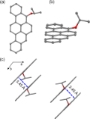
- -Ph as determined by X-ray crystallography. Representative C=O···H–C and C–H···π interactions are indicated in teal and magenta, respectively. Top-down views of π-stacking modes in c) 7-Ph and d, e) 8-Ph. Hydrogen atoms have been removed for clarity in c–e. Atom color code: C = tan, H = white, Cl


Primary amine-catalyzed enantioselective 1,4-Michael addition reaction of pyrazolin-5-ones to α,β-unsaturated ketones
Beilstein J. Org. Chem. 2024, 20, 1518–1526, doi:10.3762/bjoc.20.136
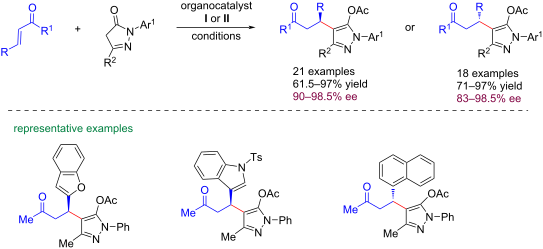
- center. Under the disclosed optimized conditions, the product ent-3ba was isolated as white solid with 85% ee and the enantiopurity of the product could be enriched to 98% ee by single recrystallization. The absolute stereochemistry was determined to be “R” on the basis of single-crystal X-ray
- crystallography data of ent-3ba (Figure 2) [37]. The stereochemistry of the products in this series was assigned by analogy. Based on the observed absolute configuration of product ent-3ba and preceding literature reports [38][40], a plausible mechanistic pathway is outlined in Scheme 5. Initially, in the




Synthesis and optical properties of bis- and tris-alkynyl-2-trifluoromethylquinolines
Beilstein J. Org. Chem. 2024, 20, 1246–1255, doi:10.3762/bjoc.20.107
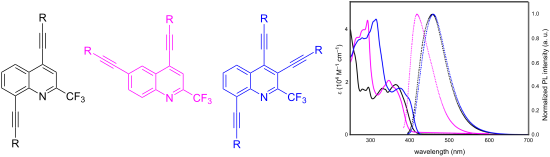
- group, could not be isolated at all, since the reaction resulted in an inseparable mixture of several products. The structure of 6b could be independently confirmed by X-ray crystallography (Figure 2). Both phenyl rings are found to be twisted in an angle of approximately 45° from the quinoline core. As
- the 6-position in comparison to the 8-position. The structure of product 9f was confirmed by X-ray crystallography (Figure 3). The thiophene ring in 4-position is in plane with the quinoline core, while the other ring is twisted in an angle of approximately 85°. This might be explained by an
- dehalogenation at position 3. In particular, the side-product 6b was isolated in 25% yield during the purification of 12b. The structure of product 12d was proven by X-ray crystallography (Figure 4). All three phenyl rings are found to be nearly in plane with the quinoline core, showing only a slight twist of 5








Competing electrophilic substitution and oxidative polymerization of arylamines with selenium dioxide
Beilstein J. Org. Chem. 2024, 20, 1221–1235, doi:10.3762/bjoc.20.105
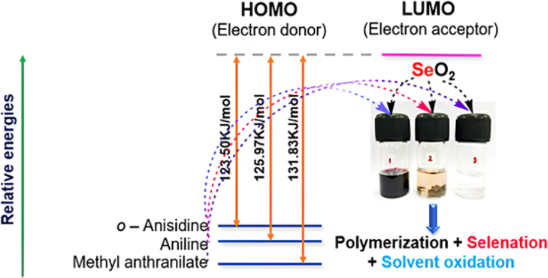
- , and methyl anthranilate, with selenium dioxide in acetonitrile. A systematic analysis of the reaction products with the help of 77Se NMR and single-crystal X-ray crystallography revealed that the reaction progress follows three major reaction pathways, electrophilic selenation, oxidative


Introduction of peripheral nitrogen atoms to cyclo-meta-phenylenes
Beilstein J. Org. Chem. 2024, 20, 1207–1212, doi:10.3762/bjoc.20.103
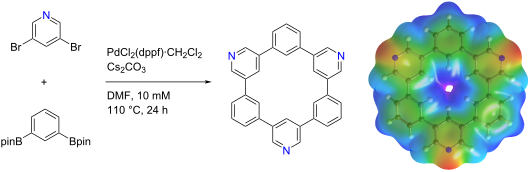
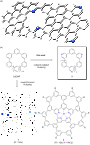
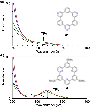
- nitrogen-doped [n]CMPs (3) containing outward-radiating nitrogen dopants. The properties and structures were investigated with UV–vis spectroscopy and X-ray crystallography, which revealed the fundamental properties of the nitrogen dopants in the macrocyclic structures. Results and Discussion Nitrogen



Two-fold addition reaction of silylene to C60: structural and electronic properties of a bis-adduct
Beilstein J. Org. Chem. 2024, 20, 1179–1188, doi:10.3762/bjoc.20.100
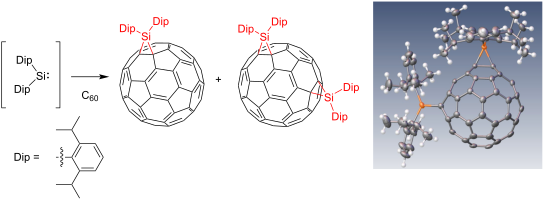
- -silylene adduct 3 of C60 based on spectroscopic measurements, X-ray crystallography, electrochemical analyses, and theoretical calculations. Results and Discussion Synthesis of bis-silylene adduct 3 The synthesis of the silylene adduct was conducted using a modified literature procedure [15]. A degassed
- (s, 1C), 37.59 (d, 2C), 37.35 (d, 2C), 37.24 (d, 2C), 37.11 (d, 2C), 28.55 (q, 2C), 27.86 (q, 2C), 27.57 (q, 2C), 27.44 (q, 2C), 25.61 (q, 2C), 25.25 (q, 2C), 25.10 (q, 2C), 24.11 (q, 2C); UV–vis (CH2Cl2) λmax 515 nm. X-ray crystallography of 3: Black plate crystals suitable for X-ray diffraction


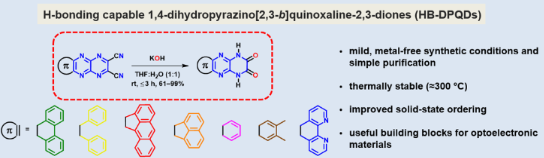
Structure–property relationships in dicyanopyrazinoquinoxalines and their hydrogen-bonding-capable dihydropyrazinoquinoxalinedione derivatives
Beilstein J. Org. Chem. 2024, 20, 1037–1052, doi:10.3762/bjoc.20.92
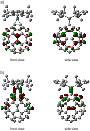
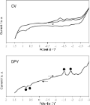
- ). Cyclic voltammetric measurements of DCPQs, specifically 4a and 6a, and DPQDs 4b and 6b, support the overall trends observed through the electronic structure calculations. X-ray crystallography Single crystal X-ray diffraction data could be obtained for 2b, 5b, and 6b. Figure 6 illustrates the single