Search results
Search for "acylation" in Full Text gives 355 result(s) in Beilstein Journal of Organic Chemistry. Showing first 200.
A convergent synthetic approach to the tetracyclic core framework of khayanolide-type limonoids
Beilstein J. Org. Chem. 2025, 21, 926–934, doi:10.3762/bjoc.21.75
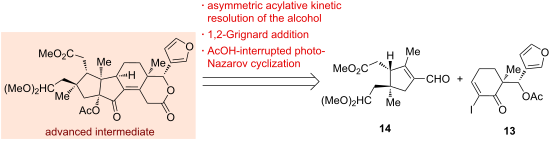
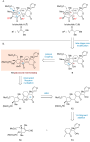
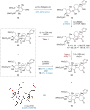
- molecules could be synthesized from diol 9 through a late-stage modification involving adjustment of the oxidation state and regioselective acylation. The formation of 9 was envisioned to proceed via an intramolecular pinacol coupling [30][31] of [5,5,6,6]-tetracycle 10, which forges the A2 ring while




Substituent effects in N-acetylated phenylazopyrazole photoswitches
Beilstein J. Org. Chem. 2025, 21, 830–838, doi:10.3762/bjoc.21.66
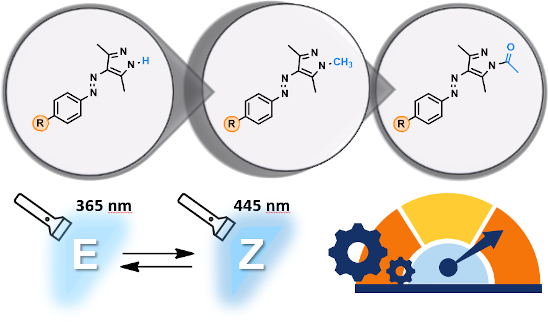
- discovered that simple acylation of the pyrazole moiety leads to increased quantum yields of isomerization, long Z-isomer life-times, good spectral separation, and high photostability. Keywords: azobenzenes; azopyrazoles; photochromism; photoswitches; substituent effects; Introduction Organic photoswitches
- . Acylation of the pyrazole moiety led to an enhanced metastable half-life compared to the NH-PAPs. For NAc-PAP-H, we observed increased half-lifes (21.5 days, 30 °C), compared to the reported NH-PAP-H (0.066 days; 25 °C [51]) or NMe-PAP-H (10 days; 25 °C [31], all in CH3CN). In the presence of OH as


Semisynthetic derivatives of massarilactone D with cytotoxic and nematicidal activities
Beilstein J. Org. Chem. 2025, 21, 607–615, doi:10.3762/bjoc.21.48
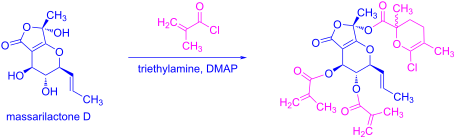
- Massarilactones constitute a rare class of polyketides produced mainly by endophytic fungi. Given that semisynthetic derivatives often exhibit biological activities greater than those of the substrates, seven previously unreported derivatives of massarilactone D, compounds 2–8, were synthetized by acylation with
- nematicidal activity with LD90 and LD50 of 100 and 12.5 µg/mL, respectively. Since the parent compound was not active, the present study supports the fact that the acylation reaction can improve bioactivities of some natural products. Keywords: acylation reaction; cytotoxic activity; massarilactone D
- activity of this polyketide. Seven analogues of massarilactone D, compounds 2–8, were synthetized through acylation modifications aimed at enhancing the compound’s interactions with biological targets (Scheme 1). These acylated analogues were subsequently screened for their cytotoxicity against a panel of


Study of the interaction of 2H-furo[3,2-b]pyran-2-ones with nitrogen-containing nucleophiles
Beilstein J. Org. Chem. 2025, 21, 556–563, doi:10.3762/bjoc.21.44
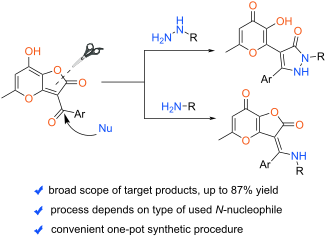
- the molecule. In this regard we performed the acylation of starting compound 8o using pivaloyl chloride. The process was carried out with 3-fold excess of the aforementioned reagent at reflux in MeCN for 3 h. As a result, product 13 bearing two acyl fragments at oxygen atoms of pyranone and pyrazole


Photomechanochemistry: harnessing mechanical forces to enhance photochemical reactions
Beilstein J. Org. Chem. 2025, 21, 458–472, doi:10.3762/bjoc.21.33
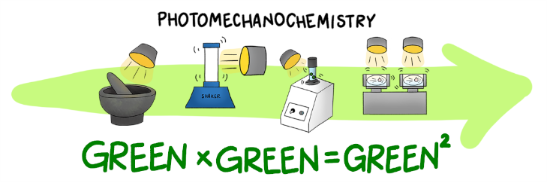
- benefits of the photomechanochemical approach in the field of synthesis [77]. Specifically, they developed photomechanochemical conditions for the atom-transfer-radical addition (ATRA) of sulfonyl chlorides to alkenes, pinacol coupling of carbonyl compounds, decarboxylative acylation, and photocatalyzed [2
- acylation of electrophilic olefins (Scheme 11C). Compared to solution-phase photocatalysis, photomechanochemical conditions allowed to reduce the reaction time from 24 h to 3 h while maintaining comparable yields. Finally, the authors proved that photomechanochemistry contributes to the initial rate




New tandem Ugi/intramolecular Diels–Alder reaction based on vinylfuran and 1,3-butadienylfuran derivatives
Beilstein J. Org. Chem. 2025, 21, 444–450, doi:10.3762/bjoc.21.31
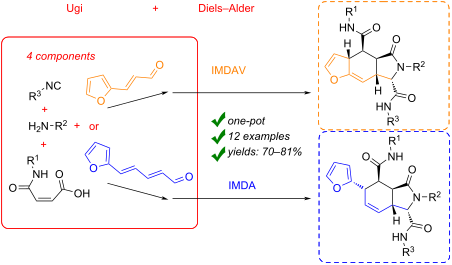
- agree with our previous results on tandem acylation/Diels–Alder reactions [31][32][33] and lead us to conclude that the final Diels–Alder reaction products are formed as the exo-adducts. Moreover, since we do not observe other stereoisomers we speculate that the Ugi and Diels–Alder reactions occur under
- beneficial aromatic product. Since we previously studied the reaction of 3-(thien-2-yl)allylamines with maleic anhydride [30], followed by a domino sequence involving successive acylation/[4 + 2] cycloaddition steps, that leads to the formation of the thieno[2,3-f]isoindole core, it was interesting to


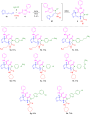


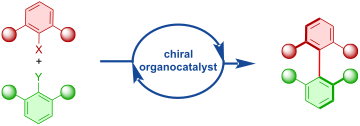
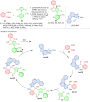
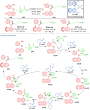
Recent advances in organocatalytic atroposelective reactions
Beilstein J. Org. Chem. 2025, 21, 55–121, doi:10.3762/bjoc.21.6











Direct trifluoroethylation of carbonyl sulfoxonium ylides using hypervalent iodine compounds
Beilstein J. Org. Chem. 2024, 20, 3182–3190, doi:10.3762/bjoc.20.263
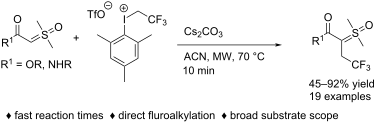
- [28]. In 2017, the Aϊssa group described a procedure to better synthesize such α-alkyl-substituted carbonyl sulfoxonium ylides [29]. This protocol involved the alkylation of a dialkyl thioether, counterion exchange, oxidation, and eventual acylation (Scheme 1a). More recently, the Burtoloso group


Cyclodextrin-based rotaxanes for polymer materials: challenge on simultaneous realization of inexpensive production and defined structures
Beilstein J. Org. Chem. 2024, 20, 3026–3049, doi:10.3762/bjoc.20.252
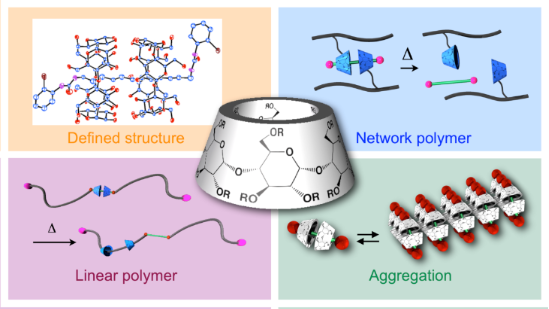
- acylation of the 36 hydroxy groups on the CDs of [3]rotaxane proceeded effectively under the standard reaction conditions to yield perfectly acylated species (Figure 10B). Interestingly, the acylation of [3]rotaxane 7 at 60 °C did not proceed completely even after two weeks, although it did within 2.5 h at
- 80 °C. Additionally, that for a single native α-CD molecule proceeded completely at 60 °C within 2.5 h. Thus, the reaction temperature was confirmed as the key to completing the acylation reaction, probably because of the huge steric hindrance of the densely packed hydroxy groups on the [3]rotaxane
- bonding, resulting in the non-covered axle-end groups (Figure 11B, top). Meanwhile, the acylation of the hydroxy groups on the CDs expanded the cavity size along the axle, and the disappearance of the hydrogen bonding between the two CD units placed the CDs on the axle ends, causing the partial coverage






Advances in radical peroxidation with hydroperoxides
Beilstein J. Org. Chem. 2024, 20, 2959–3006, doi:10.3762/bjoc.20.249
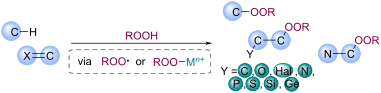
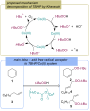
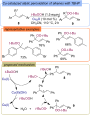
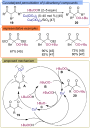
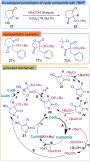
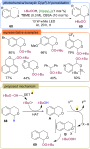
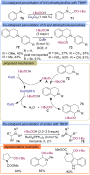
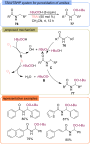
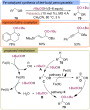
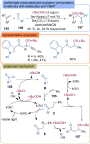
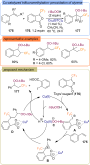
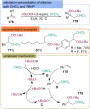
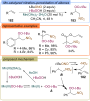
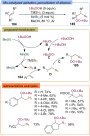
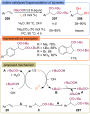
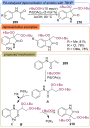
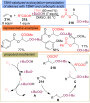
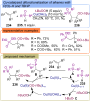
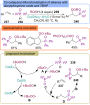
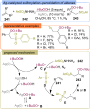
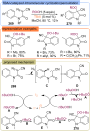
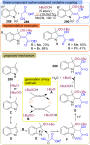
- further hydrogen atom transfer from aldehyde 153 to tert-butoxy radical A leads to the formation of the acyl radical C, which adds to the double bond of alkene 152 to form the radical intermediate D. Recombination of radical D with tert-butylperoxy radical B affords the target product 154. The acylation





























N-Glycosides of indigo, indirubin, and isoindigo: blue, red, and yellow sugars and their cancerostatic activity
Beilstein J. Org. Chem. 2024, 20, 2840–2869, doi:10.3762/bjoc.20.240
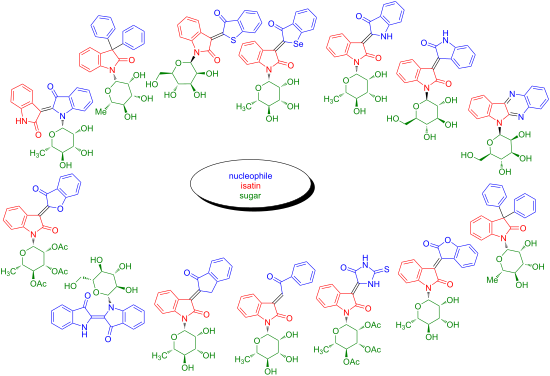
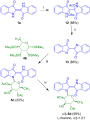
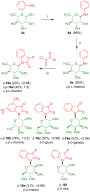
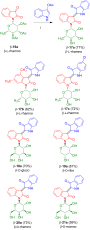
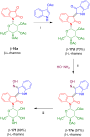
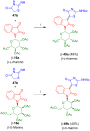
- described above, glycosides 81 were inactive against cancer and melanoma cell lines. 3,3-Diaryloxindole-N-glycosides The Friedel–Crafts acylation of isatin-N-rhamnoside β-16a with benzene (82a) afforded 3,3-diphenyloxindole-N-rhamnoside β-83a in 94% yield (Scheme 44) [63]. Deprotection of the latter
- afforded β-84a in 88% yield. Friedel–Crafts acylation of isatin-N-glycosides β-16c–e with benzene, toluene, anisole, and N,N-dimethylaniline and subsequent deprotection afforded 3,3-diaryloxindole-N-glycosides β-84b–l (Scheme 45) [63]. Some of the products showed antiproliferative activity against











Transition-metal-free decarbonylation–oxidation of 3-arylbenzofuran-2(3H)-ones: access to 2-hydroxybenzophenones
Beilstein J. Org. Chem. 2024, 20, 2655–2667, doi:10.3762/bjoc.20.223
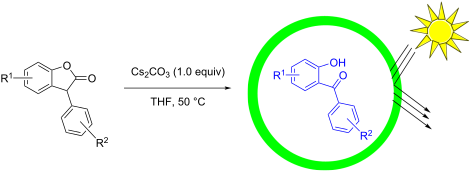
- reported over the years (Figure 2) [2]. Conventionally, benzophenones are synthesized by Friedel–Crafts acylation of benzoyl halides and aromatic compounds. However, the regioselectivity of Friedel–Crafts benzoylation at the desired position is difficult to control [9]. On the other hand, 2




Selective hydrolysis of α-oxo ketene N,S-acetals in water: switchable aqueous synthesis of β-keto thioesters and β-keto amides
Beilstein J. Org. Chem. 2024, 20, 2225–2233, doi:10.3762/bjoc.20.190
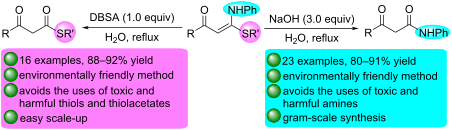
- ) [25] or β-keto esters (Scheme 1a, path 4) [26][27], the aldol reaction between aldehydes and S-ethyl acetothioate followed by oxidation with Dess–Martin periodinane (Scheme 1a, path 5) [28], the hydrolysis of α-oxo ketene dithioacetals (Scheme 1a, path 6) [29] and MgBr2·OEt2-catalyzed acylation of



Novel truxene-based dipyrromethanes (DPMs): synthesis, spectroscopic characterization and photophysical properties
Beilstein J. Org. Chem. 2024, 20, 2163–2170, doi:10.3762/bjoc.20.186
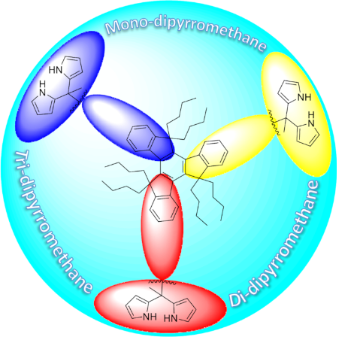
- for diverse applications in future studies. Keywords: condensation; co-timerization; dipyrromethane; Friedel–Crafts acylation; heterocycles; pyrrole; truxene; Introduction The scaffold of truxene (10,15‐dihydro‐5H‐diindeno[1,2‐a;1′,2′‐c]fluorene) and its congeners comprises three fluorene subunits
- derivatives (12, 15, and 17) in controlled manner (with appropriate equivalents of acetyl chloride and aluminium chloride) using one-to-threefold Friedel–Crafts acylation reaction(s) at 0 °C to rt in dichloromethane (DCM) solvent (Scheme 1 and Scheme 2). Subsequent condensation of thus prepared acetylated


Multicomponent syntheses of pyrazoles via (3 + 2)-cyclocondensation and (3 + 2)-cycloaddition key steps
Beilstein J. Org. Chem. 2024, 20, 2024–2077, doi:10.3762/bjoc.20.178
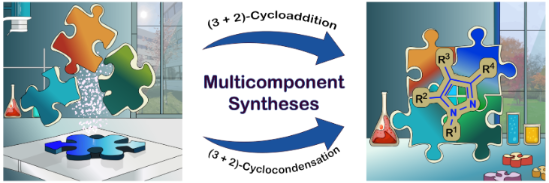
- is that the reaction with methylhydrazine leads to two different regioisomers. Shen et al. used a concept developed by them for the C-acylation of β-ketoesters for the one-pot synthesis of pyrazoles. SmCl3-catalyzed acylation of these yields the 1,3-diketones 4, and after cyclization with hydrazine
- formation of alkenone intermediates, dialkyl acetylenedicarboxylates 147, as alkynoyl derivatives, are transformed to pyrazolones 149 by Michael addition–cyclocondensation with phenylhydrazine. In a consecutive one-pot reaction, the latter intermediates undergo O-acylation with aryl chlorides to give N




Access to 2-oxoazetidine-3-carboxylic acid derivatives via thermal microwave-assisted Wolff rearrangement of 3-diazotetramic acids in the presence of nucleophiles
Beilstein J. Org. Chem. 2024, 20, 1894–1899, doi:10.3762/bjoc.20.164

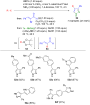
- -methoxyethylamine. Attempts to obtain directly 2-oxoazetidine carboxylic acid (or its decarboxylation product) or its trifluoroethyl ester by running the synthesis with water or trifluoroethanol were also unsuccessful. Acylation of the π-excessive double bonds of N-alkylindole and dihydropyran by the in situ


Syntheses and medicinal chemistry of spiro heterocyclic steroids
Beilstein J. Org. Chem. 2024, 20, 1713–1745, doi:10.3762/bjoc.20.152
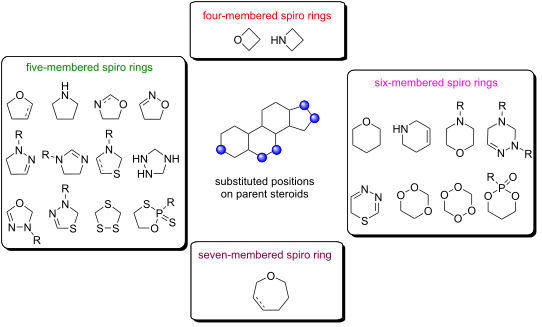
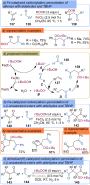
- )-spiro[cholest-5-en-3,2’-[1,3,4]-oxadiazoline] (99) through the acylation of semicarbazone 98 using freshly distilled acetic anhydride and pyridine at 80 °C [55]. Semicarbazone 98 was initially obtained via condensation of cholest-5-en-3-one (97) with semicarbazide hydrochloride in a refluxing ethanol
- 140a,b (α/β 35:65), which were successfully separated. The following aminolysis of the isolated compounds was achieved by microwave heating using 3 equivalents of butylamine in ethanol at 180 °C. Finally, formation of morpholinones 142 and 143 was accomplished by N-acylation of the corresponding amino


Chemo-enzymatic total synthesis: current approaches toward the integration of chemical and enzymatic transformations
Beilstein J. Org. Chem. 2024, 20, 1693–1712, doi:10.3762/bjoc.20.151
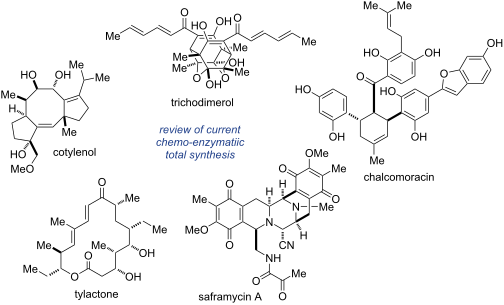
- bisorbicillinoid family. Substrate 33 for SorbC-catalyzed enzymatic transformation was synthesized in 3 steps from phenol 35 via formylation and subsequent reduction to introduce a methyl group, followed by a Friedel–Crafts acylation with 36 (Scheme 4B) [39][40]. The in vitro enzymatic transformation of 33 by




Oxidation of benzylic alcohols to carbonyls using N-heterocyclic stabilized λ3-iodanes
Beilstein J. Org. Chem. 2024, 20, 1677–1683, doi:10.3762/bjoc.20.149
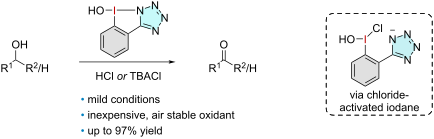
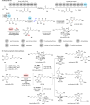
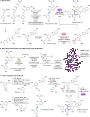
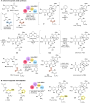
- to undesired oxidations of the triple bond. The behavior of secondary benzylic alcohols was tested next, giving 4-methylacetophenone (4t) in an excellent yield of 97% and 1-indanone (4u) in 46%. It is worth noting that for some derivatives oxidized by method A, an acylation of the alcohol was




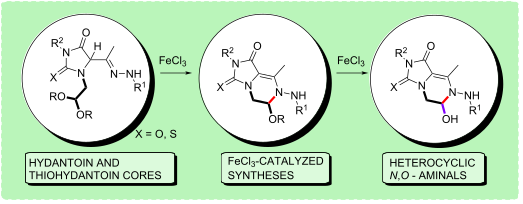
Challenge N- versus O-six-membered annulation: FeCl3-catalyzed synthesis of heterocyclic N,O-aminals
Beilstein J. Org. Chem. 2024, 20, 1412–1420, doi:10.3762/bjoc.20.123
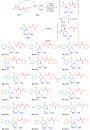
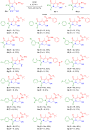
- ), whose sequential acylation process by iso(thio)cyanates 3a–h gives rise to the asymmetric (thio)urea derivatives (intermediate II). The spontaneous nucleophilic attack of the (thio)amide nitrogen on the terminal methyl ester function at C-4 of the starting azo-ene system provides a regioselective




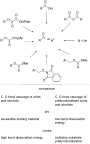
Generation of alkyl and acyl radicals by visible-light photoredox catalysis: direct activation of C–O bonds in organic transformations
Beilstein J. Org. Chem. 2024, 20, 1348–1375, doi:10.3762/bjoc.20.119
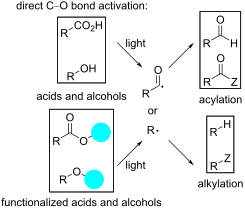
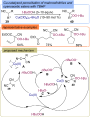
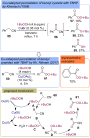
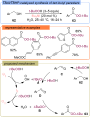
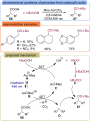
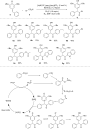
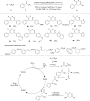
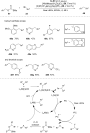
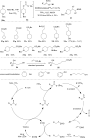
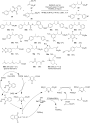
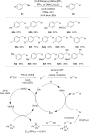
- photocatalytic mechanism. Photoredox-catalyzed hydroacylation of olefins with aliphatic carboxylic acids. Acylation–aromatization of p-quinone methides using carboxylic acids. Visible-light-induced deoxygenation–defluorination for the synthesis of γ,γ-difluoroallylic ketones. Photochemical hydroacylation of






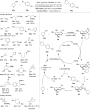
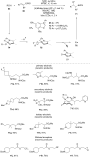
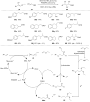
Sustainable tandem acylation/Diels–Alder reaction toward versatile tricyclic epoxyisoindole-7-carboxylic acids in renewable green solvents
Beilstein J. Org. Chem. 2024, 20, 1308–1319, doi:10.3762/bjoc.20.114
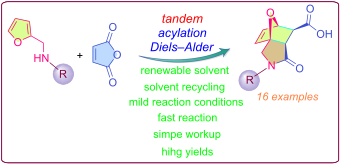
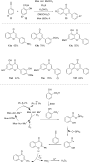
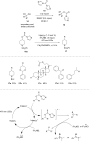
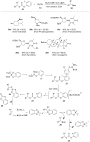
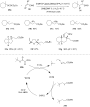
- moiety in N-furfuryl-N-benzylmaleamic acid, formed by acylation of N-benzyl-N-furfurylamine with maleic anhydride, adopts a favorable conformational structure thanks to two activating electron-withdrawing groups and participates in the formation of the corresponding IMDAF product in oil medium rapidly
- reaction, the acylation is followed by an intramolecular Diels–Alder reaction and the amide intermediate (a sample compound has been previously isolated and fully characterized as a result of detailed studies) is in equilibrium with the final product at room temperature in polar solvents such as DMSO


Kinetically stabilized 1,3-diarylisobenzofurans and the possibility of preparing large, persistent isoacenofurans with unusually small HOMO–LUMO gaps
Beilstein J. Org. Chem. 2024, 20, 1099–1110, doi:10.3762/bjoc.20.97
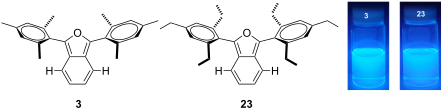
- substituents, respectively, were also attempted but without success. In these cases, the sterically congesting ortho isopropyl and tert-butyl groups stymie the Friedel–Crafts acylation step leading to diketone (Scheme 1). Experimental and computational studies of 1,3-diarylisoacenofurans Purified


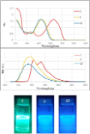


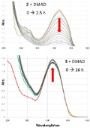
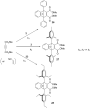


Structure–property relationships in dicyanopyrazinoquinoxalines and their hydrogen-bonding-capable dihydropyrazinoquinoxalinedione derivatives
Beilstein J. Org. Chem. 2024, 20, 1037–1052, doi:10.3762/bjoc.20.92
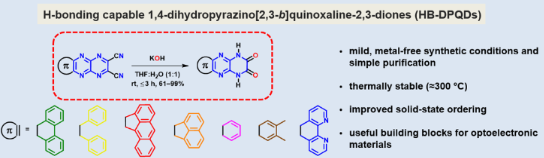
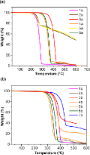
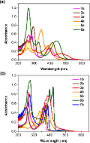
- reactions (over 10-gram scale) using diaminomaleonitrile (15) as a starting material in accordance with the procedure in the literature (Scheme 1) [27]. The first step is the acylation with oxalyl chloride to yield 14 followed by a reaction with SOCl2 in the presence of cat. DMF to obtain dichloropyrazine




Direct synthesis of acyl fluorides from carboxylic acids using benzothiazolium reagents
Beilstein J. Org. Chem. 2024, 20, 921–930, doi:10.3762/bjoc.20.82
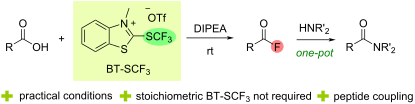
- employed as acylation reagents [1][2][3]. The strong C–F bond makes acyl fluorides relatively stable towards hydrolysis and easier to handle than other acyl halides [4][5][6][7][8]. Their reactions with nucleophiles are typically less violent than for the corresponding acyl chlorides with acyl fluorides
- of all these properties mean that acyl fluorides can provide significant advantages over acyl chlorides, especially for challenging acylation reactions [13][14]. Nevertheless, acyl chlorides still dominate in the literature; however, the recent development of safer and more practical synthetic routes
- unreliable isolation of acyl fluoride intermediates, we next considered whether BT-SCF3-mediated deoxyfluorination of carboxylic acids could be coupled with a subsequent acylation in an overall one-pot process. Selecting amines as nucleophilic coupling partners, a short optimisation study was carried out to