


Search results
Search for "inhibition" in Full Text gives 585 result(s) in Beilstein Journal of Organic Chemistry. Showing first 200.
Efficient solid-phase synthesis and structural characterization of segetalins A–H, J and K
Beilstein J. Org. Chem. 2025, 21, 2612–2617, doi:10.3762/bjoc.21.202

- evaluation and structure–activity relationship studies. The systematic investigation of the their key biological activities, including estrogenic activity (assessed via breast cell proliferation assays), antitumor activity (evaluated through HeLa cell inhibition assays), and antibacterial activity (evaluated


Synthesis and characterization of a isothiouronium-calix[4]arene derivative: self-assembly and anticancer activity
Beilstein J. Org. Chem. 2025, 21, 2535–2541, doi:10.3762/bjoc.21.195
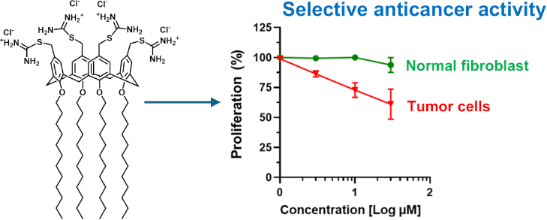
- mechanisms including elevation of reactive oxygen species (ROS) or interference with redox homeostasis, and inhibition of kinase or topoisomerase activities essential for cancer cell proliferation. The selective activity of thiouronium salts against cancer cells compared to non-malignant cells can be related


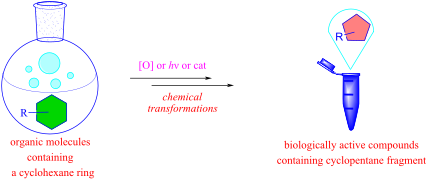
Transformation of the cyclohexane ring to the cyclopentane fragment of biologically active compounds
Beilstein J. Org. Chem. 2025, 21, 2416–2446, doi:10.3762/bjoc.21.185
- 2012, Lin and co-workers [69] isolated the membrane diterpenoid (−)-134 from the marine soft coral Sinularia pavida. The study showed that (−)-134 exhibits highly selective inhibition against the human promyelocytic leukemia cell line HL-60 with an IC50 of 2.7 μg/mL. Structurally, (−)-134 contains a


Recent advances in Norrish–Yang cyclization and dicarbonyl photoredox reactions for natural product synthesis
Beilstein J. Org. Chem. 2025, 21, 2315–2333, doi:10.3762/bjoc.21.177
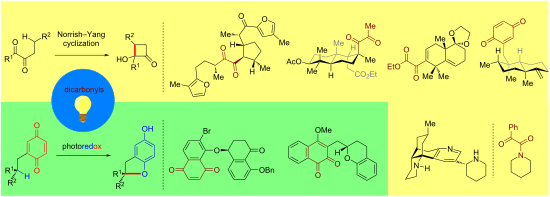
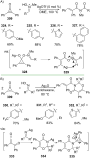
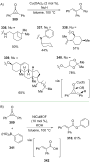
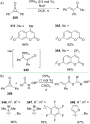
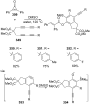
- ). Dysifragilone A (34) displays stronger inhibition of NO production than hydrocortisone, with an IC50 of 6.6 μM. Dysideanone B (35) shows cytotoxicity against HeLa and HepG2 human cancer cell lines, with IC50 values of 7.1 and 9.4 μM, respectively. Septosone B (37), featuring an unusual spiro[4.5]decane scaffold
- , characterized by a [5,6]-bisbenzannulated spiroketal moiety as its central structural motif. This key feature is critical to its potent biological activities, including strong inhibition of human telomerase [52], as well as its established roles as an effective antibiotic and HIV-1 reverse transcriptase
- inhibition (>5.75 × 10⁻⁴ M) against Alternaria solani [55]. In 2023, Suzuki's group pioneered the enantioselective total syntheses of preussomerins 97–99 through their photoredox strategy [49]. This study addressed the key challenge of controlling spiroacetal stereoselectivity through a 1,6-HAT process – a







Research towards selective inhibition of the CLK3 kinase
Beilstein J. Org. Chem. 2025, 21, 2250–2259, doi:10.3762/bjoc.21.172
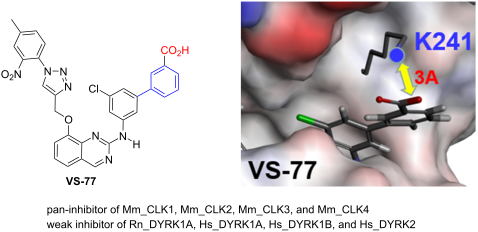
- that no potent and selective inhibitor of this specific kinase has been reported, to the best of our knowledge. Among the Tchem kinase inhibitors [9], only four molecules demonstrated significant enzymatic inhibition of CLK3 (from 6.5 nM to 110 nM, Table 1, [10]): SM08502, T-025, T3, and CX-4945
- reagent the 3-(methoxycarbonyl)phenylboronic acid ester 11. All derivatives have spectral and analytical data in agreement with the proposed structures (see experimental section and Supporting Information File 1). Kinase inhibition studies Our molecules have been submitted first to a primary screening
- to observe a dose-dependent effect from 1 to 10 µM for these compounds (e.g., the same level of inhibition was observed when 12a was tested at 1 or 10 µM against CLK1). For the hit compounds that showed an inhibitory activity, we next determined their respective IC50 against the four mouse CLKs. The


The application of desymmetric enantioselective reduction of cyclic 1,3-dicarbonyl compounds in the total synthesis of terpenoid and alkaloid natural products
Beilstein J. Org. Chem. 2025, 21, 2085–2102, doi:10.3762/bjoc.21.164
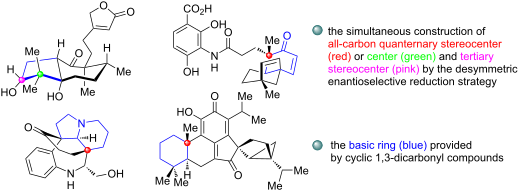
- Hamigera tarangaensis, and show cytotoxicity against various tumor cells. Notably, compound 11 exhibits 100% inhibition against herpes and polio viruses without significant host cell cytotoxicity [38]. Since their isolation, the synthesis of 11 and 12 have been reported by many groups [39][40][41][42][43
- -bromohamigeran B (12), respectively. Total synthesis of (+)-randainin D (+)-Randainin D (13) is a representative member of a class of structurally intriguing diterpenoids containing a trans-hydroazulenone core and a C9-butenolide moiety isolated from Callicarpa randaiensis [52]. It exhibits inhibition of




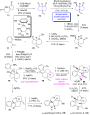

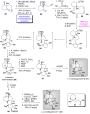


Discovery of cytotoxic indolo[1,2-c]quinazoline derivatives through scaffold-based design
Beilstein J. Org. Chem. 2025, 21, 2062–2071, doi:10.3762/bjoc.21.161
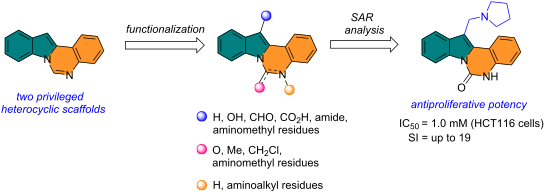
- indolo[1,2-c]quinazoline derivatives was patented as anti-HCV compounds acting through selective inhibition of viral polymerase (Figure 1, top) [17]. Other notable bioactive indoloquinazoline compounds include the natural alkaloids tryptanthrin and hinckdentine A (Figure 1, bottom). Tryptanthrin (indolo
- [5,6,1-jk]carbazoles possessed exceptionally high in vitro and in vivo antitumor potencies though topoisomerase II inhibition (Figure 1, bottom) [20]. Taken together, an emerging evidence points to the remarkable pharmacological versatility of indolo[1,2-c]quinazoline derivatives, highlighting the need
- : indolo[1,2-c]quinazoline derivative 7c bearing a 4-aminobutyl substituent showed weaker DNA binding and cell growth inhibition. Moreover, the measured dissociation constants for the most active derivatives indicated a lack of significant binding to dupex DNA, suggesting that their cytotoxic effects on


Synthesis, biological and electrochemical evaluation of glycidyl esters of phosphorus acids as potential anticancer drugs
Beilstein J. Org. Chem. 2025, 21, 1909–1916, doi:10.3762/bjoc.21.148

- , PC-3, and MCF7 cell lines, respectively. Similarly, diglycidyl methylphosphate (2) achieved 50% inhibition at concentrations of 398 ± 33 μM, 300 ± 21 μM, and 128 ± 10 μM. Triglycidyl phosphate (3) exhibited IC50 values of 254 ± 19 μM for HSF, 257 ± 20 μM for PC-3, and 182 ± 14 μM for MCF7 cells


Convenient alternative synthesis of the Malassezia-derived virulence factor malassezione and related compounds
Beilstein J. Org. Chem. 2025, 21, 1730–1736, doi:10.3762/bjoc.21.135

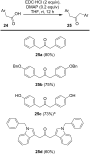
- others (11–19) (see Figure 1), which may serve as virulence factors [8][9][10][11][12][13]. Most significantly, some of these indoles have been shown to be potent aryl hydrocarbon receptor (AHR) ligands [8][9][14][15], which can lead to induction of melanocyte apoptosis and inhibition of neutrophil


Chemical synthesis of glycan motifs from the antitumor agent PI-88 through an orthogonal one-pot glycosylation strategy
Beilstein J. Org. Chem. 2025, 21, 1587–1594, doi:10.3762/bjoc.21.122

- from the extracellular matrix (ECM) via inhibition of heparanase [19][20][21][22]. PI-88 is a complex mixture of monophosphorylated, highly sulfated mannose glycans derived from the extracellular phosphomannan of Pichia holstii NRRL Y-2448 yeast [23][24][25], which had progressed to phase III clinical


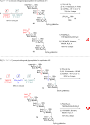
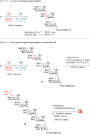

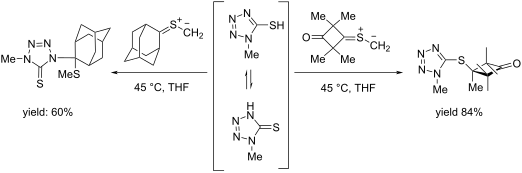
Ambident reactivity of enolizable 5-mercapto-1H-tetrazoles in trapping reactions with in situ-generated thiocarbonyl S-methanides derived from sterically crowded cycloaliphatic thioketones
Beilstein J. Org. Chem. 2025, 21, 1508–1519, doi:10.3762/bjoc.21.113
- tetrazolium structure in the MTT dye results in the formation of a coloured formazan that can be detected by spectrophotometry. Cytotoxic properties of the studied compounds were assessed on non-cancer as well as cancer cell lines. Cytotoxicity was established by measurement of 50% inhibition of cell growth


Heterologous biosynthesis of cotylenol and concise synthesis of fusicoccane diterpenoids
Beilstein J. Org. Chem. 2025, 21, 1489–1495, doi:10.3762/bjoc.21.111
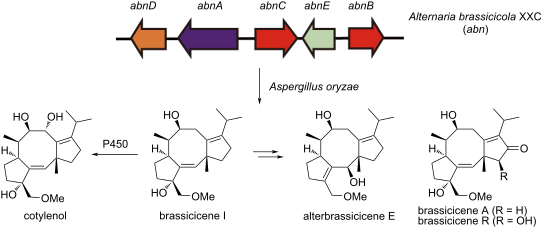
- activity than cotylenin A in cell growth inhibition assays and less toxicity in single-agent treatments [27][28]. Recently, Jiang and Renata described a chemoenzymatic approach that combines the skeletal construction by chemical methods and enzymatic C–H oxidations [29]. The synthesis employs a catalytic


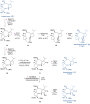
Oxetanes: formation, reactivity and total syntheses of natural products
Beilstein J. Org. Chem. 2025, 21, 1324–1373, doi:10.3762/bjoc.21.101
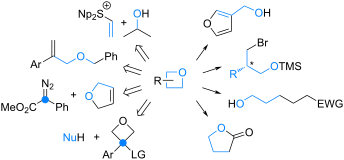
- infants and it has successfully completed a phase III clinical trial [17][18]. Finally, sulphonamide 4 is a lead compound for the treatment of osteoarthritis via MMP-13 (matrix metalloproteinase 13) inhibition which exhibited an excellent selectivity profile and complete inhibition of collagenolysis in


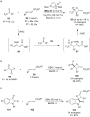


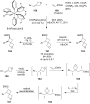






Recent advances in oxidative radical difunctionalization of N-arylacrylamides enabled by carbon radical reagents
Beilstein J. Org. Chem. 2025, 21, 1207–1271, doi:10.3762/bjoc.21.98
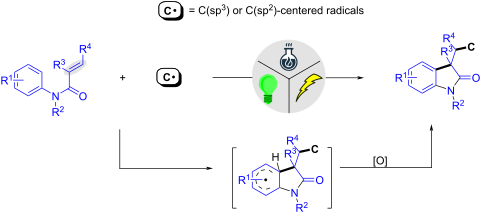
- -3-phenylpropanenitrile (16ha), were successfully employed to construct the target polycycles. To verify the reaction mechanism, a series of control experiments were conducted. The complete inhibition of the reaction by radical scavengers such as TEMPO, BHT, and hydroquinone suggested a radical














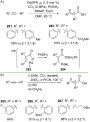
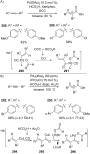
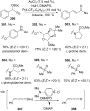
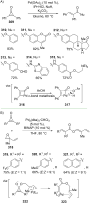
Synthesis of β-ketophosphonates through aerobic copper(II)-mediated phosphorylation of enol acetates
Beilstein J. Org. Chem. 2025, 21, 1192–1200, doi:10.3762/bjoc.21.96
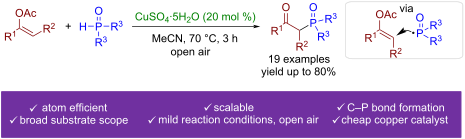
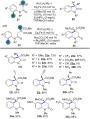
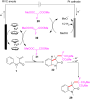
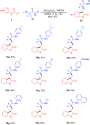
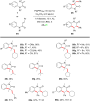
- -inflammatory [21][22] as well as enzyme inhibition activities [23][24][25][26]. Traditionally, β-ketophosphonates were prepared via Arbuzov reaction [27], acylation of alkylphosphonates [28], and hydration of alkynylphosphonates [29][30][31]. However, these methods have several drawbacks, including low atom


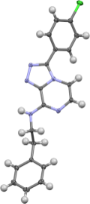
Investigations of amination reactions on an antimalarial 1,2,4-triazolo[4,3-a]pyrazine scaffold
Beilstein J. Org. Chem. 2025, 21, 1126–1134, doi:10.3762/bjoc.21.90
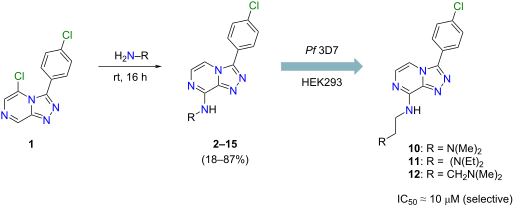
- not reach 100% growth inhibition at the assay top dose (80 µM), against Pf 3D7. Thus, determination of accurate IC50 values was not possible. The mean IC50 values (duplicate, n = 1) for compounds 10–14 against Pf 3D7 were calculated and are shown in Table 1. The antimalarial activity of 10–14 was
- limited activity against Pf 3D7 resulted in low selectivity indices, as indicated in Table 1. Compounds 3 and 13–15 demonstrated some inhibition of HEK293 at the highest concentrated tested, but did not display sigmoidal dose-dependent kinetics, thus accurate IC50 values were unable to be determined
- . Meaningful selectivity indices for these compounds could, therefore, likewise not be calculated. Hence, the mean % growth inhibition (duplicate, n = 1) at the top concentration is indicated in Table 1. Conclusion A modified approach for amine substitution of 5-chloro-3-(4-chlorophenyl)-[1,2,4]triazolo[4,3-a




Recent advances in synthetic approaches for bioactive cinnamic acid derivatives
Beilstein J. Org. Chem. 2025, 21, 1031–1086, doi:10.3762/bjoc.21.85
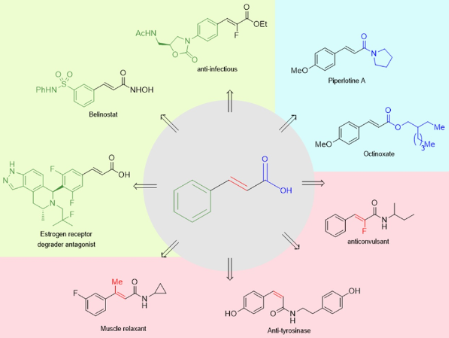
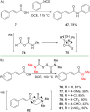
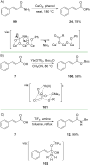
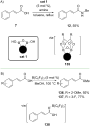
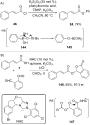
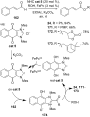
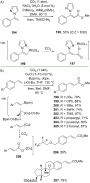
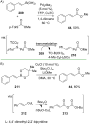
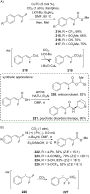
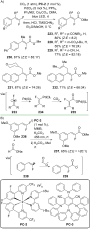
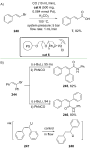
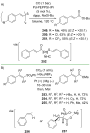
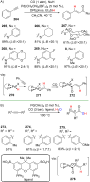
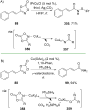
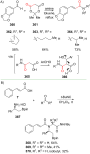
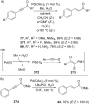
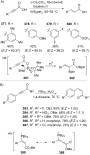
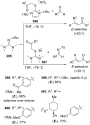
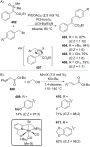
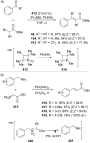
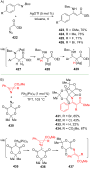
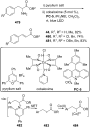
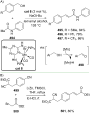
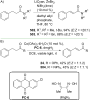
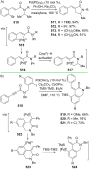
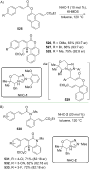
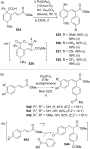
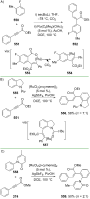
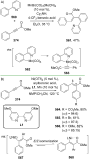
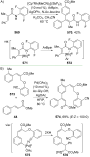
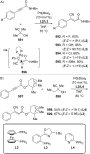
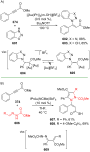
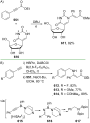
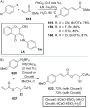
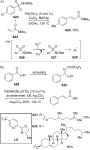
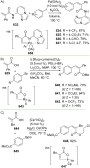
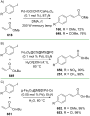
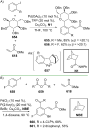
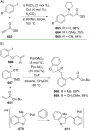
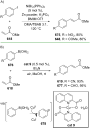
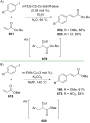
- (TXA2) synthetase inhibition [10], antinociceptive [11], histone deacetylase inhibition [12], α-glucosidase inhibition [13] , tyrosinase inhibition [14], allelochemical [15], anticonvulsant [16], antioxidant [17], antiplatelet aggregation [18], anti-inflammatory [19], and UV absorption [20]. Cinnamic




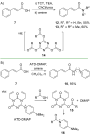


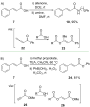


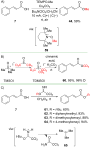

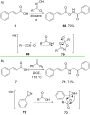








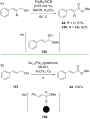
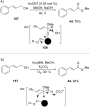


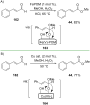

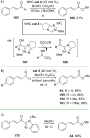






















4-(1-Methylamino)ethylidene-1,5-disubstituted pyrrolidine-2,3-diones: synthesis, anti-inflammatory effect and in silico approaches
Beilstein J. Org. Chem. 2025, 21, 817–829, doi:10.3762/bjoc.21.65
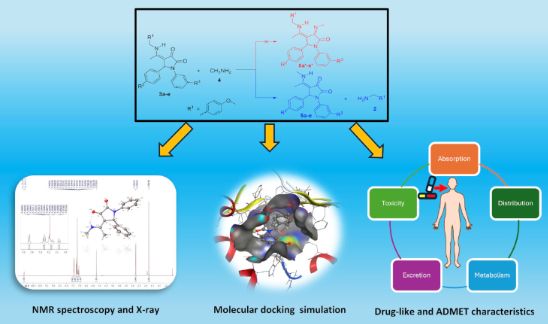
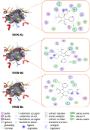
- ) production, with an IC50 value of 43.69 ± 5.26 µM. The presence of an electron-withdrawing group (-NO2 group) on the benzene ring at the 1-position of the pyrrolidine-2,3-dione subunit in compound 5e may be responsible for the observed high inhibition activity due to the enhancement and optimization of
- eliminate invading bacteria via the inhibition of metabolic enzymes and DNA destruction. However, overexpression of iNOS results in the overproduction of NO which is associated with septic shock and tissue damage [6]. Therefore, inhibition of iNOS could be considered a potential therapeutic strategy for
- drug dexamethasone (IC50 = 13.25 ± 1.39 µM). At a concentration of 100 µM, the NO inhibition of pyrrolidine-2,3-dione derivatives 5a, 5b, and 5e was 53.65%, 50.22%, and 63.65%, respectively, as compared to 85.04% of dexamethasone. It is clear that the presence of a nitro group or halogen atom on the


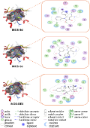
Orthogonal photoswitching of heterobivalent azobenzene glycoclusters: the effect of glycoligand orientation in bacterial adhesion
Beilstein J. Org. Chem. 2025, 21, 736–748, doi:10.3762/bjoc.21.57
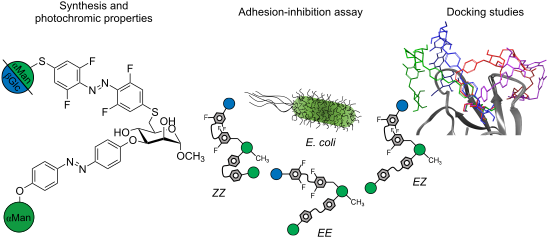
- the structural determinants of the recognition process is a prerequisite for understanding and manipulating carbohydrate–protein interactions, such as in the inhibition of carbohydrate-specific bacterial adhesion. For receptor binding, glycoligands have to be properly oriented in three-dimensional
- –inhibition assay. The measured results were systematically contextualized employing new reference compounds such as the respective homobivalent Man/Man glycocluster. An in-depth study comprising the analysis of the photochromic properties and the potential as inhibitors of bacterial adhesion of the synthetic
- of the various isomers at 37 °C are long enough to persist during the time a bioassay takes. In the PSS of the EE, EZ, and ZZ states, the respective isomers clearly predominate the mixtures and hence, testing the various isomeric states in bacterial inhibition–adhesion assays can lead to


Semisynthetic derivatives of massarilactone D with cytotoxic and nematicidal activities
Beilstein J. Org. Chem. 2025, 21, 607–615, doi:10.3762/bjoc.21.48
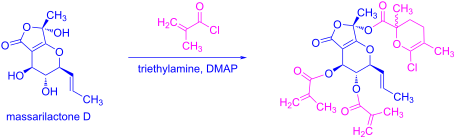
- [14]. Massarilactones A and B were earlier shown to exhibit antimicrobial activity against Bacillus subtilis (ATCC 6051) and Staphylococcus aureus (ATCC 29213), affording zones of inhibition varying from 12 to 19 mm at 200 μg/disk [8], while massarilactone H displayed moderate cytotoxicity against


Asymmetric synthesis of β-amino cyanoesters with contiguous tetrasubstituted carbon centers by halogen-bonding catalysis with chiral halonium salt
Beilstein J. Org. Chem. 2025, 21, 547–555, doi:10.3762/bjoc.21.43
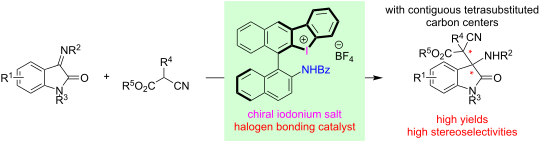
- phenyl- or trityl-substituted 7c and 7d yielded products with decreased enantioselectivities, likely due to the inhibition of the interaction between the imines and the chiral catalyst by hydrogen and/or halogen bonding. From these observations, the substituent on the 1-position strongly affected the


Beyond symmetric self-assembly and effective molarity: unlocking functional enzyme mimics with robust organic cages
Beilstein J. Org. Chem. 2025, 21, 421–443, doi:10.3762/bjoc.21.30
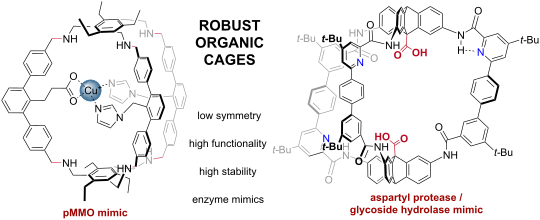
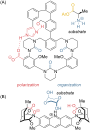
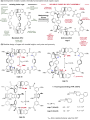
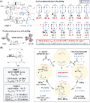
- cyclodextrin) can promote enantioselectivity [76], although turnover from augmented macrocycles is not always achieved [26]. The affinity of generic hydrophobic pockets for a hydrophobic product often leads to product inhibition, since binding a single large product is entropically favored over binding two
- hydrophobic catalysis as for the macrocycles discussed in the previous section [115], and so remain prone to product inhibition [113], though not exclusively [120]. Size- and regioselectivity are possible [121]. As with the two identical halves of a tennis ball/softball, it is harder to conceive unsymmetric
- concentration. As for the macrocycles discussed above, dual confinement/encapsulation [36] and the hydrophobic effect dominate the origin of catalytic rate enhancements [158][159]. To avoid product inhibition, model reactions that increase molecularity (A → B + C) or that generate weakly interacting or less




Synthesis, structure, ionochromic and cytotoxic properties of new 2-(indolin-2-yl)-1,3-tropolones
Beilstein J. Org. Chem. 2025, 21, 358–368, doi:10.3762/bjoc.21.26
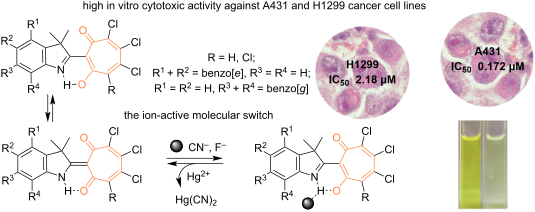
- decrease to normal values of 1800–2000 cm−1, indicating a complete inhibition of the ESIPT process. These spectral transformations are usually caused by the formation of a strong N–H(O–H)···CN− (F−) hydrogen bond up to deprotonation [28]. Using the principle of “relay recognition” [29], we investigated the




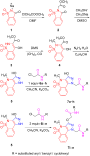
Synthesis, characterization, antimicrobial, cytotoxic and carbonic anhydrase inhibition activities of multifunctional pyrazolo-1,2-benzothiazine acetamides
Beilstein J. Org. Chem. 2025, 21, 348–357, doi:10.3762/bjoc.21.25
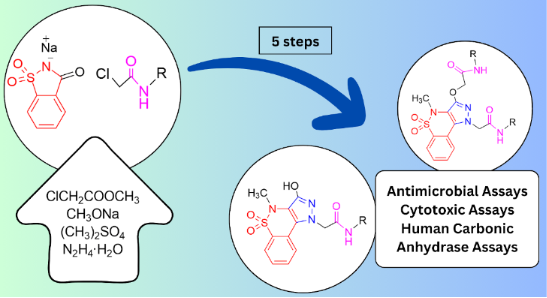
- cell line HCT-116 (ATCC CCL-247) revealed that only compound 7l inhibited cell viability, while the rest of the compounds including 7b and 7h showed no significant decrease in mammalian cell viability. Results of human carbonic anhydrase (hCA) inhibition assays discovered that monoalkylated derivatives
- have low to negligible inhibition potential but dialkylated ones have no inhibition potential at all for directed CAs (I, II, IX, and XII). From the low inhibiting compounds, 7b showed the highest inhibition potential with a minimum Ki value of 72.9 μM. In light of the above findings, these newly
- -benzothiazine derivatives into a carbonic anhydrase inhibition assessment test. The design of the present research work is emphasized by all mentioned pharmaceutical contributions of benzothiazines and adjoining scaffolds. After synthesis following characterization, these new pyrazolobenzothiazine scaffolds


Antibiofilm and cytotoxic metabolites from the entomopathogenic fungus Samsoniella aurantia
Beilstein J. Org. Chem. 2025, 21, 327–339, doi:10.3762/bjoc.21.23
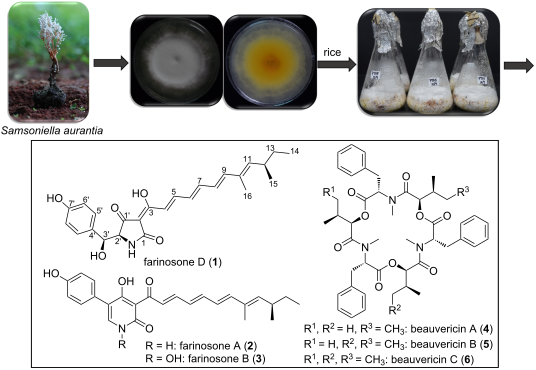
- screening assays were conducted to explore their antibiofilm properties. According to the crystal violet (CV) assay, both compounds exhibited significant activity in the S. aureus biofilm inhibition assay. Farinosone A (2) (Figure 5A) displayed activity at a concentration as low as 3.9 µg/mL, resulting in
- approximately 68% inhibition of biofilm formation. Similarly, farinosone D (1) demonstrated activity up to a concentration of 15.62 µg/mL, achieving a comparable inhibitory effect of approximately 74% at this dilution. In addition, only farinosone A (2) (Figure 5B) demonstrated moderate activity in the
- activity trend, reflecting the results from CV biofilm inhibition assay, where compound 2 was found to be more effective than compound 1. The genetic and molecular basis of biofilm formation in staphylococci are complex. This process involves at least two key properties: planktonic cell adherence to





