


Search results
Search for "natural products" in Full Text gives 1039 result(s) in Beilstein Journal of Organic Chemistry. Showing first 200.
Efficient solid-phase synthesis and structural characterization of segetalins A–H, J and K
Beilstein J. Org. Chem. 2025, 21, 2612–2617, doi:10.3762/bjoc.21.202

- (Caryophyllaceae), are head-to-tail cyclic oligopeptides comprising 5–9 amino acid residues [5][6][7][8][9][10][11][12][13]. These natural products exhibit a significant diversity of pharmacological activities [14][15][16], including estrogen-like activity (1, 2, 7, 8), antitumor effects (5), and antimicrobial



Visible-light-driven NHC and organophotoredox dual catalysis for the synthesis of carbonyl compounds
Beilstein J. Org. Chem. 2025, 21, 2584–2603, doi:10.3762/bjoc.21.200
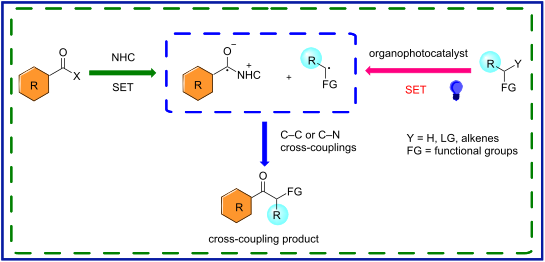
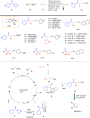
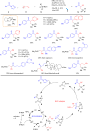
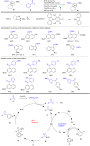
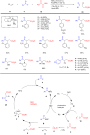
- organic chemistry, and particularly in the late-stage functionalization of bioactive compounds, drugs, and natural products. This review highlights recent advances in NHC–organophotoredox dual catalysis, focusing on methodology development, mechanistic insights, and reaction scope for synthesizing
- ; NHC; organic photocatalyst; radicals; visible-light; Introduction Over the last ten years, NHC-catalyzed visible-light-promoted radical chemistry has been extensively developed for the cost-effective and practical synthesis of bioactive intermediates, pharmaceuticals, drugs, and natural products [1
- functional groups are found in various drugs, natural products, and optoelectronic materials. In the last three decades, N-heterocyclic carbenes (NHCs) have been renowned as versatile organocatalysts, including thiazolium, imidazolium, and triazolium moieties. NHCs are extensively used in many catalytic





Recent advances in total synthesis of illisimonin A
Beilstein J. Org. Chem. 2025, 21, 2571–2583, doi:10.3762/bjoc.21.199
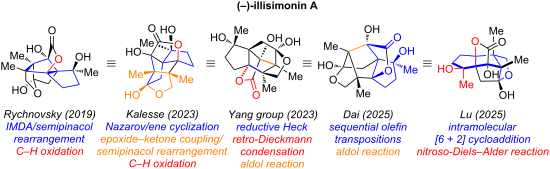
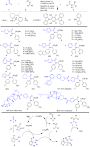
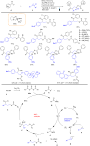
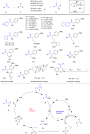
- total synthesis. Keywords: bioinspired synthesis; biosynthetic pathway; Illicium sesquiterpene; illisimonin A; total synthesis; Introduction The genus Illicium, the sole member of the family Illiciaceae, is a rich source of sesquiterpenoid natural products. To date, a wide variety of sesquiterpenes
- , pseudomajucin-subtype, cycloparvifloralone-subtype, majucin-subtype, and miwanensin-subtype (Figure 1). The seminal work by the Fukuyama group demonstrated that some of these natural products exhibit potent neurite outgrowth-promoting activity in primary cultured rat cortical neurons, which has attracted
- proposed that a deeper understanding of the biosynthetic pathway of Illicium sesquiterpenes could facilitate a divergent total synthesis of this family of natural products, even among members with distinct carbon skeletons. Since previously proposed biosynthetic pathways lacked key mechanistic details






Total syntheses of highly oxidative Ryania diterpenoids facilitated by innovations in synthetic strategies
Beilstein J. Org. Chem. 2025, 21, 2553–2570, doi:10.3762/bjoc.21.198
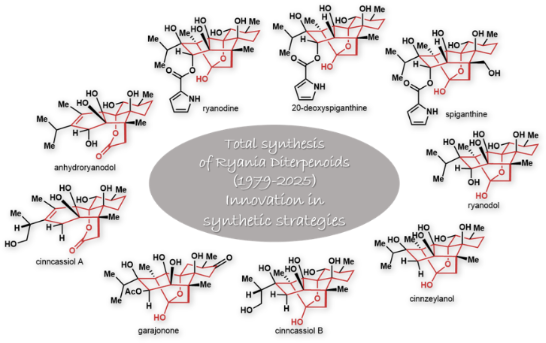
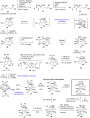
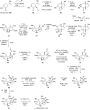
- enhance synthetic efficiency, reduce costs, and provide robust solutions to challenges encountered in the synthesis of complex molecular architectures. Ryania diterpenes are natural products characterized by intricate structures and high oxidation states. Biological studies have revealed that the family
- focuses on reviewing the efficient application of ring-construction methods and synthetic strategies in the total synthesis of highly oxidized Ryania diterpenoid natural products, emphasizing the pivotal role of novel synthetic methods and strategic innovations. Keywords: natural products; Ryania
- diterpenoids; synthetic strategy; total synthesis; Introduction Organic synthesis, as a cornerstone of chemical research, is dedicated to constructing complex natural products or target molecules from simple and readily available starting materials via a series of precise and efficient chemical reactions


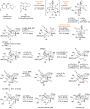





Ni-promoted reductive cyclization cascade enables a total synthesis of (+)-aglacin B
Beilstein J. Org. Chem. 2025, 21, 2548–2552, doi:10.3762/bjoc.21.197
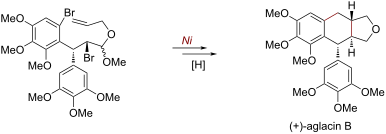
- the tropical rain forests of the Kalimantan region (Indonesia) [1][2]. These cyclic ether natural products belong to the typical aryltetralin lignans, which have already attracted broad attention from the synthetic community [3][4][5]. Zhu and co-workers disclosed a concise synthesis of (±)-aglacins B
- the formation of inter- or intramolecular carbon–carbon bonds under mild conditions [9][10][11][12], and strategically applied this method for the divergent syntheses of some natural products [13][14][15][16][17]. Herein, we report our recent advance to a total synthesis of (+)-aglacin B (2), which


Palladium-catalyzed regioselective C1-selective nitration of carbazoles
Beilstein J. Org. Chem. 2025, 21, 2479–2488, doi:10.3762/bjoc.21.190
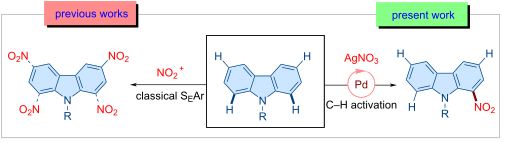
- ; palladium; Introduction Carbazole represents an important heterocyclic scaffold that is broadly present in many natural products, biologically active motifs, as well as optoelectronic and functional materials [1][2][3][4][5][6][7][8]. By virtue of its substantial application in various fields, significant
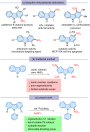
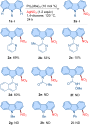
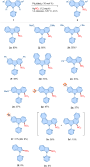
- developed a regioselective protocol for the direct C1–H nitration of carbazoles, an important class of heterocycles with wide-ranging applications in materials science and natural products chemistry. The transformation proceeds using commercially available Pd2(dba)3 as the catalyst and silver nitrate as the


Synthesis of the tetracyclic skeleton of Aspidosperma alkaloids via PET-initiated cationic radical-derived interrupted [2 + 2]/retro-Mannich reaction
Beilstein J. Org. Chem. 2025, 21, 2470–2478, doi:10.3762/bjoc.21.189
- University, Liaoning Shenyang 110016, China 10.3762/bjoc.21.189 Abstract Natural products with topologically complex architectures are important sources in drug discovery. The pursuit of conciseness and efficiency in the total synthesis of natural products promotes continuous innovation and the development
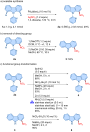
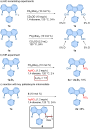
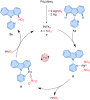
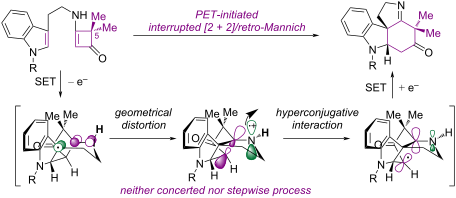
- current interest in the synthesis of complex natural products via photochemical reactions, we decided to achieve such an unusual bond cleavage (Figure 1a, path A) of cyclobutenone by generating a radical cation species via a PET reaction. The synthetic plan is shown in Figure 1c and includes a PET


Catalytic enantioselective synthesis of selenium-containing atropisomers via C–Se bond formations
Beilstein J. Org. Chem. 2025, 21, 2447–2455, doi:10.3762/bjoc.21.186
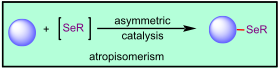
- Atropisomers are not only prevalent in biologically active natural products and pharmaceuticals, but they have also garnered increasing attention for their effectiveness as ligands and catalysts in the field of catalytic asymmetric synthesis. Asymmetric catalysis serves as a key strategy for the


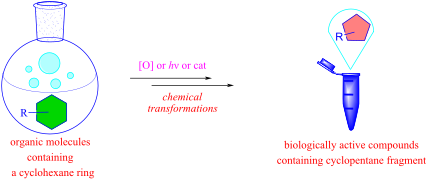
Transformation of the cyclohexane ring to the cyclopentane fragment of biologically active compounds
Beilstein J. Org. Chem. 2025, 21, 2416–2446, doi:10.3762/bjoc.21.185
- acid (DMOA), are a large series of hybrid natural products with a huge structural diversity and impressive biological activity [50]. Attempts by the authors to use acidic (TiCl4, TMSI, SnCl4), basic (NaOMe, t-BuONa, Et3N, DBU, DMAP) and thermal conditions (PhMe, 110 °C) failed to give the desired
- seconorrisolide C (130) from Wieland–Miescher ketone derivative 131. The spongian diterpenes are a large family of marine natural products that have pronounced effects on the Golgi apparatus [67]. The introduction of the diazo group into ketone 131 was achieved under standard conditions through an α-formyl
- multiple stereocenters, including contiguous quaternary carbons. As a result, the carboborative ring contraction reaction is conveniently used for structural modification of natural products containing a cyclohexene ring and in the synthesis of new compounds to increase their activity, metabolic stability


An Fe(II)-catalyzed synthesis of spiro[indoline-3,2'-pyrrolidine] derivatives
Beilstein J. Org. Chem. 2025, 21, 2383–2388, doi:10.3762/bjoc.21.183
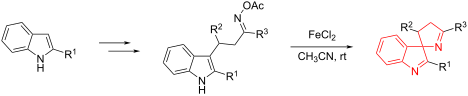
- -unsaturated ketone; dearomatization; indole; spirocyclization; spiro[indoline-3,2'-pyrrolidine]; Introduction Spiro[indoline-3,2'-pyrrolidine] derivatives represent an important class of organic compounds found in both natural products (e.g., coerulescine [1], horsfiline [2], and elacomine [3]) and synthetic




Synthetic study toward vibralactone
Beilstein J. Org. Chem. 2025, 21, 2376–2382, doi:10.3762/bjoc.21.182

- Liang Shi Jiayi Song Yiqing Li Jia-Chen Li Shuqi Li Li Ren Zhi-Yun Liu Hong-Dong Hao Shaanxi Key Laboratory of Natural Products & Chemical Biology, College of Chemistry & Pharmacy, Northwest A&F University, Yangling, Shaanxi 712100, China 10.3762/bjoc.21.182 Abstract A synthetic study toward
- ; Introduction β-Lactones have attracted continuous interest and have been widely utilized as key intermediates in the synthesis of natural products and polymers due to their innate ring strain [1][2][3][4][5][6]. Moreover, several natural products and their derivatives containing β-lactone as key structural
- outcomes. As intermediate 13 may serve as a valuable precursor to vibralactone (6) and other congeners such as vibralactone E (7), an alternative synthetic route toward 13 is currently being carried out in our laboratory and will be reported in due course. Selected representative natural products and


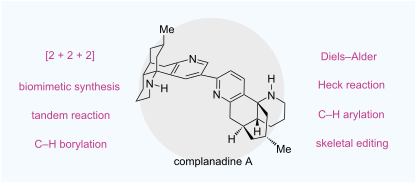
Comparative analysis of complanadine A total syntheses
Beilstein J. Org. Chem. 2025, 21, 2334–2344, doi:10.3762/bjoc.21.178
- ; Introduction Natural products, owing to their structural complexity, diversity, and therapeutic potential, have continued to serve as inspirations for the development of novel synthetic methodologies and strategies. In turn, these methodological and strategic advancements have significantly improved the
- efficiency and step-economy of natural product total synthesis. This symbiotic relationship has also helped to accelerate natural product biological evaluation and the subsequent biomedical development [1]. Lycopodium alkaloids are one of the largest families of natural products [2], from which famous
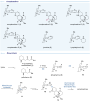
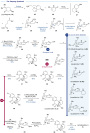
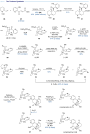
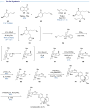
- activity relationships, and generation of synthetic analogs, all of which pave the way for further study and development of this unique natural product and/or its analogs. Complanadine natural products and their plausible biosynthesis. The Siegel total synthesis of complanadine A enabled by [2 + 2 + 2



Recent advances in Norrish–Yang cyclization and dicarbonyl photoredox reactions for natural product synthesis
Beilstein J. Org. Chem. 2025, 21, 2315–2333, doi:10.3762/bjoc.21.177
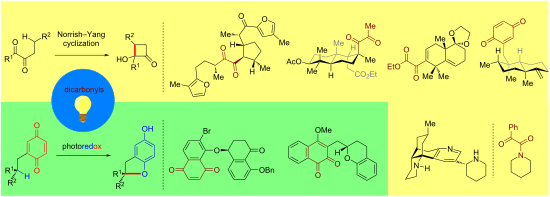
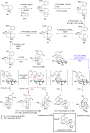
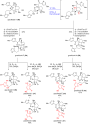
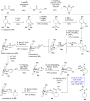
- synthesis of natural products but also establish a solid foundation for subsequent pharmaceutical investigations. Keywords: dicarbonyls; natural product; Norrish–Yang cyclization; photoredox; total synthesis; Introduction In the 1930s, Norrish documented the photodecomposition of aldehydes and ketones [1
- , α-keto amides, 1,4-quinones, and 1,2-quinones in this context, have emerged as versatile substrates in Norrish–Yang cyclizations, finding widespread application in natural products synthesis. Compared to monoketones, dicarbonyls (e.g., 1,2-diketones) offer distinct advantages: (1) they generally
- -hydroxy-β-lactams or 2-hydroxycyclobutanones can function either as inherent structural motifs in target natural products or as strained reactive intermediates, facilitating C–H functionalization via four-membered ring opening [6][7][8][9][10][11]. Quinones display distinct photochemical reactivities







Halogenated butyrolactones from the biomass-derived synthon levoglucosenone
Beilstein J. Org. Chem. 2025, 21, 2297–2301, doi:10.3762/bjoc.21.175
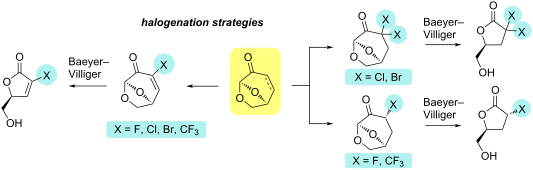
- Baeyer–Villiger oxidation affording the fluorinated, chlorinated, and brominated dideoxyribonolactones. Keywords: butyrolactone; cyrene; fluorine; halogenation; levoglucosenone; Introduction The γ-butyrolactone ring is a privileged scaffold found in natural products and can be used as a valuable




Pathway economy in cyclization of 1,n-enynes
Beilstein J. Org. Chem. 2025, 21, 2260–2282, doi:10.3762/bjoc.21.173
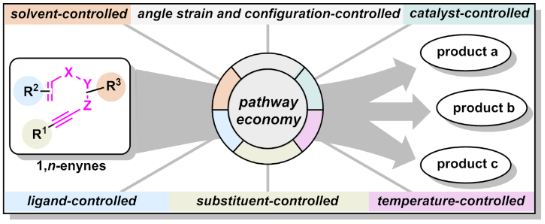
- significant reaction, 1,n-enyne cyclization is capable of constructing a variety of complex small-molecule frameworks, including fused and bridged rings, thereby serving as a potent tool in the syntheses of natural products and pharmaceuticals. Our group has pioneered the concept of "pathway economy" by
- could be further derivatized (e.g., via borylation, epoxidation), establishing a versatile platform for accessing fused-ring natural products. Substituent-controlled cyclization of 1,n-enynes In transition metal-catalyzed cyclization reactions, the electronic properties and steric hindrance of
- ]quinolizine framework 46 (Scheme 10, path b). This controllable approach provided an efficient synthetic pathway for the related natural products. In 2020, a gold-catalyzed divergent synthesis of bicyclo[3.2.1]oct-2-ene and bicyclo[3.3.1]nonadiene derivatives from 1,6-cyclohexenynes was reported by Davenel et


Research towards selective inhibition of the CLK3 kinase
Beilstein J. Org. Chem. 2025, 21, 2250–2259, doi:10.3762/bjoc.21.172
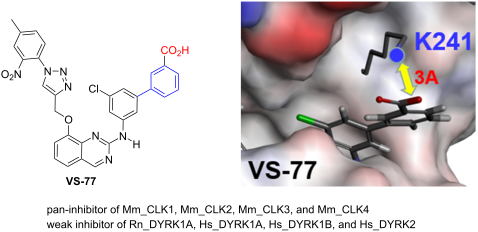
- Chemveda Life Sciences for providing laboratory facility for carrying these research experiments. This research has been performed also as part of the Indo-French “Joint Laboratory for Natural Products and Synthesis towards Affordable Health”. We thank CSIR, CNRS and University of Rennes 1 for their


A chiral LC–MS strategy for stereochemical assignment of natural products sharing a 3-methylpent-4-en-2-ol moiety in their terminal structures
Beilstein J. Org. Chem. 2025, 21, 2243–2249, doi:10.3762/bjoc.21.171
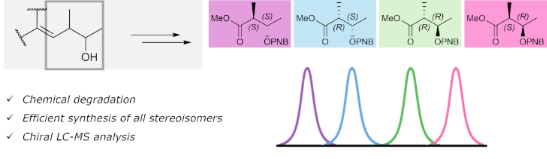
- A terminal 3-methylpent-4-en-2-ol (MPO) moiety is a common structural feature in various polyketide natural products. Stereochemical assignments of this moiety have mainly relied on computational analyses of NMR, ECD, and specific rotation data. However, none of these approaches can be applied to
- the stereochemical assignment of (+)-capsulactone (1). Keywords: chemical degradation; chiral LC–MS analysis; methyl 3-hydroxy-2-methylbutanoate; 3-methylpent-4-en-2-ol moiety; p-nitrobenzoyl ester; Introduction Configurational elucidation of natural products is essential for progress in diverse
- structural elucidation of complex natural products at microgram quantities, facilitating the discovery of novel bioactive compounds [1][2]. However, a definitive approach for stereochemical determination that can be applied across all compound classes has yet to be established. Relative configurations are


Electrochemical cyclization of alkynes to construct five-membered nitrogen-heterocyclic rings
Beilstein J. Org. Chem. 2025, 21, 2173–2201, doi:10.3762/bjoc.21.166
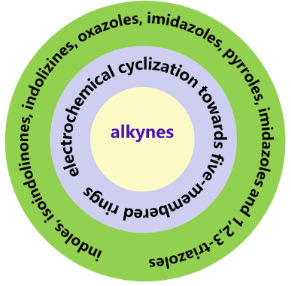
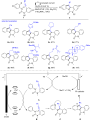
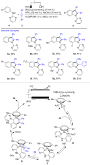
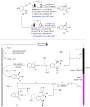
- of Chemistry and Chemical Engineering, Hunan University, Changsha 410082, P. R. China 10.3762/bjoc.21.166 Abstract Organic five-membered rings have shown significant applications in the fields of organic synthesis, natural products, organic materials and pharmaceuticals for their unique
- organic synthesis [1][2][3][4][5][6][7][8][9][10][11][12][13][14] but also are critical moieties in natural products [15][16][17][18], organic materials [19] and pharmaceuticals [20][21][22][23][24] due to their unique chemical, electrical, optical, pharmacological and biological properties. Gracilioether
- alkynes bearing heteroatoms such as ynamides and thioalkynes would be enhanced in future research; (2) since axial chirality is critical in natural products and pharmaceuticals, it would be significant to apply the electrochemical annulation of alkynes in formation of organic rings with axial chirality






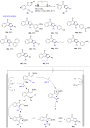


The application of desymmetric enantioselective reduction of cyclic 1,3-dicarbonyl compounds in the total synthesis of terpenoid and alkaloid natural products
Beilstein J. Org. Chem. 2025, 21, 2085–2102, doi:10.3762/bjoc.21.164
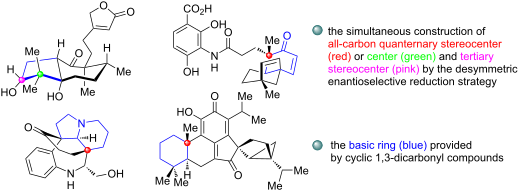
- complex natural products. On the other hand, terpenoids and alkaloids, with their intricate and diverse skeletal frameworks as well as the broad range of biological activities, have long been a major focus for synthetic chemists. Over the past fifteen years, significant progress has been made in the total
- synthesis of complex terpenoid and alkaloid natural products by strategically applying desymmetric enantioselective reduction. Advance before 2016 in this area has been overviewed in an elegant review article. Since then, a series of more challenging terpenoid and alkaloid natural products have been
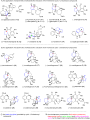
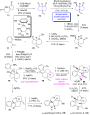
- synthesized utilizing a desymmetric enantioselective reduction strategy of cyclic 1,3-dicarbonyl compounds as a key transformation. This review will summarize the application of this strategy in the total synthesis of terpenoid and alkaloid natural products from the year 2016 to 2025. We first focus on the





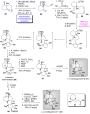


Further elaboration of the stereodivergent approach to chaetominine-type alkaloids: synthesis of the reported structures of aspera chaetominines A and B and revised structure of aspera chaetominine B
Beilstein J. Org. Chem. 2025, 21, 2072–2081, doi:10.3762/bjoc.21.162
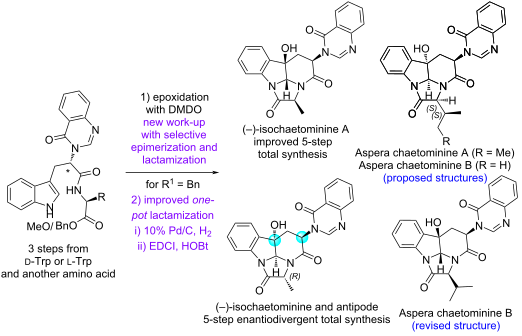
- confirmation of natural products is no longer a motivation for the total synthesis [1]. Nevertheless, we also witness that each year, cases continue to be reported on the total synthesis enabled revision of misassigned structures of natural products [1][2][3][4][5][6][7][8][9]. Efficiency is one of the major
- concerns in the field of total synthesis of natural products [10][11][12][13][14][15][16][17][18][19][20], which is not only essential for organic chemistry in its own right, but also crucial for drug discovery and structural revision of natural products. Although more and more diastereomeric and
- enantiomeric natural products have been discovered [21][22][23][24][25][26][27][28][29][30][31][32], and divergent synthetic methodology has attracted attention in recent years [33][34][35][36][37][38], diastereodivergent and enantiodivergent total synthesis remain rare [39][40][41][42][43][44][45][46][47][48



Bioinspired total syntheses of natural products: a personal adventure
Beilstein J. Org. Chem. 2025, 21, 2048–2061, doi:10.3762/bjoc.21.160
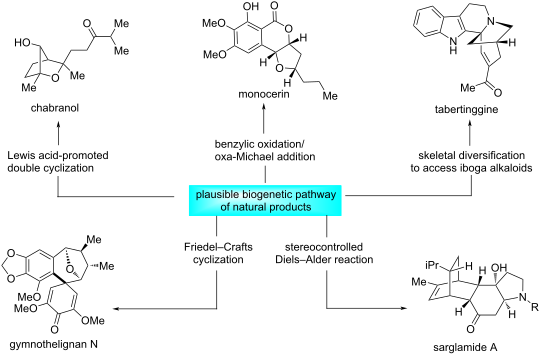
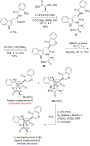
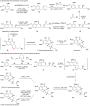
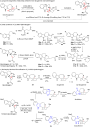
- natural products. Recently, we have achieved an array of bioinspired total syntheses, which showed the great power of this approach in natural product synthesis. Documented herein is a review of these achievements which include the detailed process of how we develop these strategies. Specifically
- , bioinspired total synthesis of three types of natural products, namely diterpenoids (chabranol, and monocerin), alkaloids (indole, hydroquinoline, and monoterpenoid−indolidinoid hybrid), and gymnothelignans are discussed. Based on these achievements on bioinspired total synthesis, we provide some information
- on how to use this important strategy in natural product synthesis. Keywords: bioinspired total synthesis; chabranol; gymnothelignans; monocerin; sarglamides; taberginggine; Introduction Natural products are chemical substances generated within living organisms in nature. They are products of



Asymmetric total synthesis of tricyclic prostaglandin D2 metabolite methyl ester via oxidative radical cyclization
Beilstein J. Org. Chem. 2025, 21, 1964–1972, doi:10.3762/bjoc.21.152
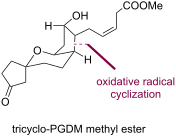
- synthesis of tricyclic-PGDM methyl ester in 9 steps and 8% overall yield. Keywords: asymmetric total synthesis; oxidative radical cyclization; tricyclic prostaglandin D2 metabolite methyl ester; Introduction Prostaglandins (PGs), a family of hormone-like lipid compounds, are ubiquitous natural products
- used as a powerful method for synthesizing complex natural products [20][21]. We envisaged that the A-ring in 4 could be constructed from the alkene-substituted β-keto ester precursor A via a bioinspired oxidative radical cyclization (Scheme 1D). Herein, we report the full details of our efforts to



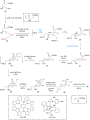
Enantioselective desymmetrization strategy of prochiral 1,3-diols in natural product synthesis
Beilstein J. Org. Chem. 2025, 21, 1932–1963, doi:10.3762/bjoc.21.151

- functionalization of one hydroxy group, offers beneficial procedures for accessing diverse structural motifs. In this review, we highlight a curated compilation of publications, focusing on the applications of enantioselective desymmetrization of prochiral 1,3-diols in the synthesis of natural products and
- biologically active molecules. Based on the reaction types, three strategies are discussed: enzymatic acylation, transition-metal-catalyzed acylation, and local desymmetrization. Keywords: asymmetric synthesis; desymmetrization; 1,3-diols; natural product; total synthesis; Introduction Natural products
- isolated from organisms are often asymmetric in their spatial structures, and these unique spatial structures are precisely what lead to their diverse biological activities [1][2][3][4]. For the synthesis of these natural products or bioactive molecules, chemists usually need to consider how to carry out


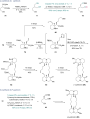

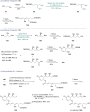


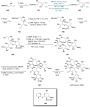







Stereoselective electrochemical intramolecular imino-pinacol reaction: a straightforward entry to enantiopure piperazines
Beilstein J. Org. Chem. 2025, 21, 1897–1908, doi:10.3762/bjoc.21.147
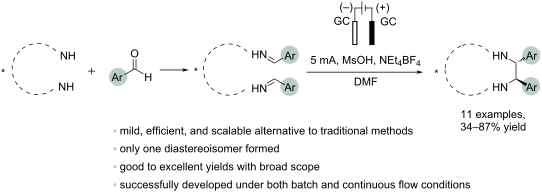
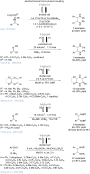
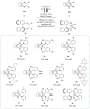
- applications in the preparation of chiral ligands. Keywords: chiral piperazines; electrosynthesis; flow chemistry; green chemistry; imino-pinacol coupling; Introduction Vicinal diamines represent a highly valuable class of compounds that, over the past decades, have found widespread application in natural
- products, agrochemicals, and pharmacologically active compounds. Enantiomerically pure 1,2-diamines and their derivatives are also increasingly used in stereoselective synthesis, particularly as chiral auxiliaries or as ligands for metal complexes in asymmetric catalysis [1]. Metal-based reductants





Preparation of spirocyclic oxindoles by cyclisation of an oxime to a nitrone and dipolar cycloaddition
Beilstein J. Org. Chem. 2025, 21, 1890–1896, doi:10.3762/bjoc.21.146
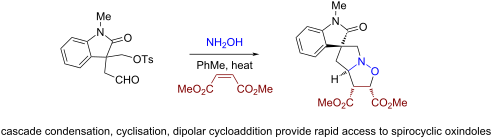
- an important class of compounds with significant biological activities. Spirocyclic derivatives are present in a variety of natural products. We describe here the formation of spirooxindoles using an intermolecular nitrone cycloaddition reaction. The nitrone dipole was prepared in situ by cyclisation
- -dipole, access to 1,3-amino-alcohol functionality is possible. This arrangement is present in many Alstonia alkaloids, and we envisaged using this cycloaddition chemistry to set up the bridged amine ring system found in these natural products. Bridged and spirocyclic ring systems are known to be
- approach. This generates the desired spirooxindole connected to a bicyclic amine, with functionality related to the natural products. It is likely that unactivated dipolarophiles could be successful in related intramolecular cycloadditions [18]. Hence this approach could allow access the spirooxindole and





