


Search results
Search for "stereoselective" in Full Text gives 600 result(s) in Beilstein Journal of Organic Chemistry. Showing first 200.
Pathway economy in cyclization of 1,n-enynes
Beilstein J. Org. Chem. 2025, 21, 2260–2282, doi:10.3762/bjoc.21.173
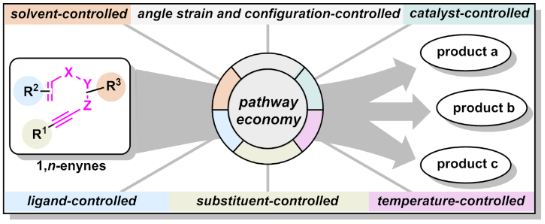
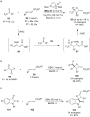
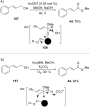
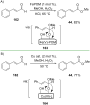
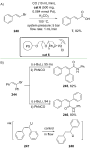
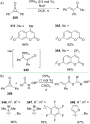
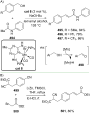
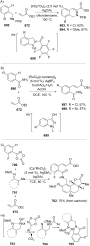
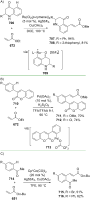
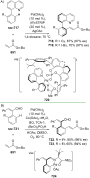
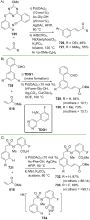
- -catalyzed cyclization approach using aromatic enyne derivatives, where substituent control governed the stereoselective syntheses of naphthalene and indene cores (Scheme 7) [14]. When the alkyne terminus of the substrate 27 bore an alkyl or aryl substituent, the Ph3PAuCl/AgOTf-catalyzed 6-endo-dig
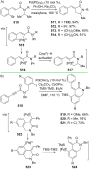
- derivatives 31 (Scheme 7, path b). This work provided a novel approach for constructing substituted naphthalene and indene frameworks via gold-catalyzed cycloisomerization of 1,5-enynes. In 2016, Liu et al. achieved the stereoselective syntheses of furofuran and furopyran scaffolds from propargyl vinyl ethers
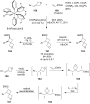
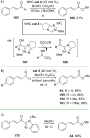
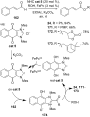
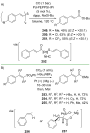
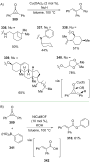
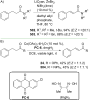
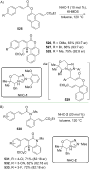
- )-catalyzed transformation to afford tetracyclic products 99 (Scheme 20, path c). This allenylation reaction provided efficient access to functionalized indole derivatives by regulating catalyst systems and substituent patterns. In 2010, the Iwasawa group established a stereoselective synthetic strategy


A chiral LC–MS strategy for stereochemical assignment of natural products sharing a 3-methylpent-4-en-2-ol moiety in their terminal structures
Beilstein J. Org. Chem. 2025, 21, 2243–2249, doi:10.3762/bjoc.21.171
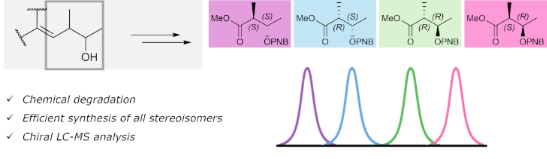
- the MPO moiety by LC–MS and demonstrate its application to the stereochemical assignment of capsulactone (1) at the microgram scale. The strategy involves the optical resolution of MPO derivatives, chemical degradation of 1, and the stereoselective synthesis of four diastereomers. Results and
- that at C8–C9, and (3) methyl esterification (Scheme 2). The resulting C9–C12 fragment 7 was successfully detected at m/z 304.1 [M + Na]+ by LC–MS, as expected (see Figure 2b for the chromatogram). We then proceeded with the stereoselective synthesis of four diastereomers; 4-methoxy-3-methyl-4-oxobutan
- -2-yl 4-nitrobenzoates (2S,3S)-8, (2S,3R)-9, (2R,3R)-10, and (2R,3S)-11, as outlined in Scheme 3. The synthesis of (2S,3S)-8, and (2S,3R)-9 started from commercially available (3S)-12, and the stereogenic center at C2 was constructed via stereoselective methylation [27] to afford (2S,3S)-13. Due to


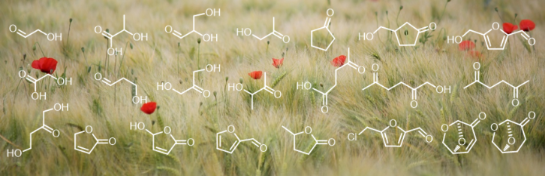
C2 to C6 biobased carbonyl platforms for fine chemistry
Beilstein J. Org. Chem. 2025, 21, 2103–2172, doi:10.3762/bjoc.21.165


The application of desymmetric enantioselective reduction of cyclic 1,3-dicarbonyl compounds in the total synthesis of terpenoid and alkaloid natural products
Beilstein J. Org. Chem. 2025, 21, 2085–2102, doi:10.3762/bjoc.21.164
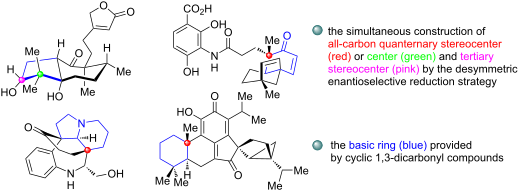
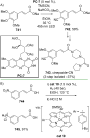
- stereoselective cyclopropanation accomplished the first total synthesis of (+)-isochamaecydin (26). On the other hand, starting from 122 and (−)-123, the authors adopted the same procedures as for the synthesis of 125 to obtain the pentacyclic product 126, which underwent the same functional group transformations


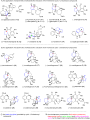


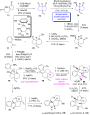

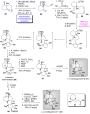


Bioinspired total syntheses of natural products: a personal adventure
Beilstein J. Org. Chem. 2025, 21, 2048–2061, doi:10.3762/bjoc.21.160
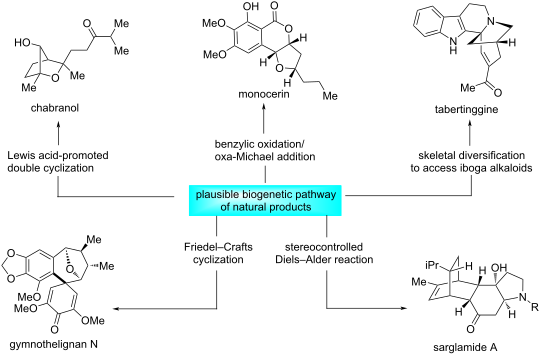
- stereoselective de novo approach [37]. The lactone was reduced with DIBAL-H to a semiketal, which was treated with the Lewis acid BF3·OEt2 to generate the putative oxa-carbenium 39. This cation triggered the Friedel–Crafts proposed cyclization with the electron-rich phenyl ring to give the dibenzocyclooctene
- -, chemo-, and stereoselective patterns in forming the polycycles could be trace back to same precursors or fragments, which would result in bioinspired total syntheses of natural products through controllable and selective chemical transformations. If there is only one single target molecule with an



Understanding the origin of stereoselectivity in the photochemical denitrogenation of 2,3-diazabicyclo[2.2.1]heptene and its derivatives with non-adiabatic molecular dynamics
Beilstein J. Org. Chem. 2025, 21, 2007–2020, doi:10.3762/bjoc.21.156
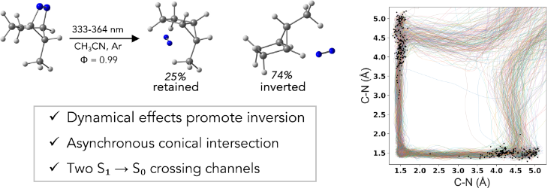
- been employed to release carbon monoxide at relatively safer doses in biological systems using photoresponsive CO-releasing molecules (photo-CORMs) [4] because these have shown anti-inflammatory activity [5][6]. Photochemical denitrogenation of azoalkanes has been utilized in the stereoselective
- nucleophiles [7][8][9][10][11], radicals [12][13][14][15] and electrophiles [16][17][18] to give cyclobutanes and cyclobutenes [19][20], which are building blocks in regio- and stereoselective synthesis [21][22][23][24][25][26][27] (Scheme 1a). Additionally, BCB has been used in bioconjugation due to its high
- favorable. All MECI structures show partial stereochemical inversion. Following the initial σCN-bond cleavage, the carbon atom still bonded to N₂ begins to move towards inversion, indicating that dynamic effects help promote the stereoselective inversion. Conclusion We used multiconfigurational quantum


Measuring the stereogenic remoteness in non-central chirality: a stereocontrol connectivity index for asymmetric reactions
Beilstein J. Org. Chem. 2025, 21, 1995–2006, doi:10.3762/bjoc.21.155
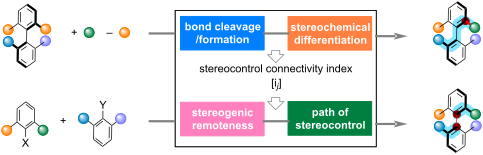
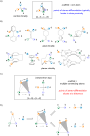
- of sets of atoms identified in step 2 (one or two sets). Before discussing applications to non-central chirality, we analyze two examples of stereoselective reactions that establish central chirality to illustrate the concept of stereogenic remoteness measured using the stereocontrol connectivity
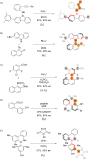
- they do not share a common path. Typically, in stereoselective reactions involving central chirality, the proximity between the site of reaction and the points of stereo-differentiation means that the indices [ij] are expected to have small values. In general, j = 0 in the index [ij] of an addition
- generation of indices following the 3-step procedure using a prototypic program coded using Python or through coaching GPT-4.1. Stereoselective reactions were input as SMILES (for Python) or InChI (for GPT-4.1) of the starting materials and products, and the corresponding indices were generated automatically



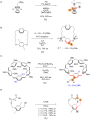
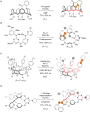
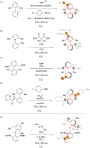

Asymmetric total synthesis of tricyclic prostaglandin D2 metabolite methyl ester via oxidative radical cyclization
Beilstein J. Org. Chem. 2025, 21, 1964–1972, doi:10.3762/bjoc.21.152
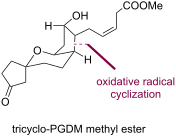
- available has prevented its practical use, and synthesis methods for tricyclic-PGDM methyl ester are required. Based on the utilization of oxidative radical cyclization for the stereoselective construction of the cyclopentanol subunit with three consecutive stereocenters, we describe an asymmetric total
- the total syntheses of PGs via organocatalysis, and enyne cycloisomerization, respectively. Thus, from a strategic viewpoint, developing alternative synthetic approaches for the stereoselective construction of the highly substituted cyclopentanol core framework in compound 4 may advance the efficient
- an inseparable mixture of diastereomers at C-15 in a ratio of 1.0/1.1 (1H NMR analysis). Having established a route to the bicyclic hemiketal 21, we investigated the stereoselective introduction of an allyl moiety at C8 for the synthesis of compound 25 according to the strategy in Scheme 3. Treatment



Enantioselective desymmetrization strategy of prochiral 1,3-diols in natural product synthesis
Beilstein J. Org. Chem. 2025, 21, 1932–1963, doi:10.3762/bjoc.21.151

- ) and vinyl acetate, affording the corresponding monoacetate. Subsequent reaction with tert-butyldiphenylsilyl chloride (TBDPSCl) and imidazole provided compound 119 in 94% yield over two steps with 97% ee. Next, compound 120 was obtained in six steps from 119. A stereoselective aldol reaction installed
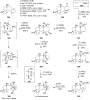
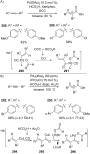
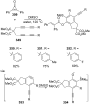
- deoxygenation of 200 and ketone reduction to give compound 201. Stereoselective hemiaminal ether formation promoted by BF3·Et2O with subsequent desilylation constructed the hexacyclic framework of alstrostine G, yielding compound 202. Finally, (+)-alstrostine G (203) was obtained through a two-step sequence. Zn
- benzylic C11 position of 268 was first oxidized to generate intermediate 269, followed by intramolecular nucleophilic attack of the hydroxy group. This stereoselective cyclization constructed the tetrahydropyran ring of pentacyclic compound 270 in 92% yield and established the stereocenter at the C7












Stereoselective electrochemical intramolecular imino-pinacol reaction: a straightforward entry to enantiopure piperazines
Beilstein J. Org. Chem. 2025, 21, 1897–1908, doi:10.3762/bjoc.21.147
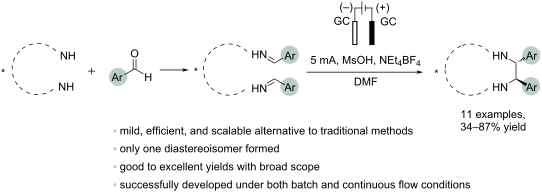
- Margherita Gazzotti Fabrizio Medici Valerio Chiroli Laura Raimondi Sergio Rossi Maurizio Benaglia Dipartimento di Chimica, Università degli Studi di Milano, via Golgi 19, IT-20133 Milano, Italy 10.3762/bjoc.21.147 Abstract The stereoselective electroreductive intramolecular coupling of chiral
- products, agrochemicals, and pharmacologically active compounds. Enantiomerically pure 1,2-diamines and their derivatives are also increasingly used in stereoselective synthesis, particularly as chiral auxiliaries or as ligands for metal complexes in asymmetric catalysis [1]. Metal-based reductants
- resulted in a wide range of diamines, obtained in moderate to good yields. Inspired by these works, we aimed to investigate and optimize the stereoselective electrochemical intramolecular imino-pinacol coupling reaction under both batch and continuous flow conditions as a direct approach to enantiopure





3,3'-Linked BINOL macrocycles: optimized synthesis of crown ethers featuring one or two BINOL units
Beilstein J. Org. Chem. 2025, 21, 1719–1729, doi:10.3762/bjoc.21.134

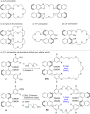
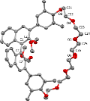
- ][17][18][19][20][21][22][23] and more [24]. Especially BINOL-based crown ethers proved to be highly useful and were applied for stereoselective molecular recognition [25][26][27], for catalysis [25][28][29][30][31], as stationary phases for chromatography [32][33][34], but also as building blocks for





Approaches to stereoselective 1,1'-glycosylation
Beilstein J. Org. Chem. 2025, 21, 1700–1718, doi:10.3762/bjoc.21.133
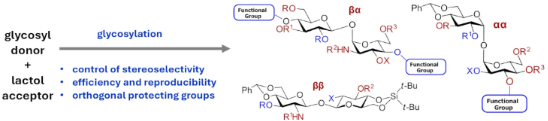
- feature asymmetrically distributed functional groups across their two pyranose rings, emphasizes the importance of robust, stereoselective synthetic strategies capable of producing fully orthogonally protected 1,1′-linked sugars suitable for selective chemical modification. This review highlights recent
- requirements for functional or protecting groups that substitute the hydroxy- or amino functions of the monosaccharide components. Over the past decade, significant progress has been achieved in the stereoselective construction of 1,1'-glycosides using both conventional glycosylation methodologies and
- precursors [38][39][40][41][42]. This emphasizes the importance of reliable and reproducible approaches for the stereoselective synthesis of unsymmetrically orthogonally protected nonreducing disaccharides. While the desired anomeric selectivity on the side of the glycosyl donor can often be achieved by


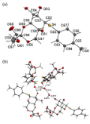
Structural analysis of stereoselective galactose pyruvylation toward the synthesis of bacterial capsular polysaccharides
Beilstein J. Org. Chem. 2025, 21, 1671–1677, doi:10.3762/bjoc.21.131



Catalytic asymmetric reactions of isocyanides for constructing non-central chirality
Beilstein J. Org. Chem. 2025, 21, 1648–1660, doi:10.3762/bjoc.21.129

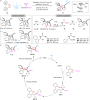
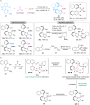
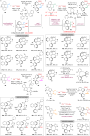
- attention due to its broad applications in various fields, including but not limited to drug discovery, asymmetric catalysis, and materials science (Figure 1b). Consequently, the development of efficient and stereoselective methods for assembling such scaffolds with respect to structural diversity has





Transition-state aromaticity and its relationship with reactivity in pericyclic reactions
Beilstein J. Org. Chem. 2025, 21, 1613–1626, doi:10.3762/bjoc.21.125

- accelerate Diels–Alder cycloaddition reactions [30][31]. In addition, these LA-catalyzed cycloadditions not only exhibit higher reaction rates but also become, in many cases, more regio- and stereoselective than the corresponding uncatalyzed reactions. For these reasons, LAs have been (and still are) widely


Chemical synthesis of glycan motifs from the antitumor agent PI-88 through an orthogonal one-pot glycosylation strategy
Beilstein J. Org. Chem. 2025, 21, 1587–1594, doi:10.3762/bjoc.21.122

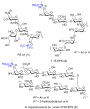
- ABz 7, Man PVB 8, and Man 9 through orthogonal one-pot glycosylation strategy (Scheme 1B). The 2-O-Bz group in 5–8 served as the neighboring participating group for the stereoselective construction of 1,2-trans-mannosidic bonds, while the 3-O-Lev group in 6 was the temporary protecting group for (1→3



Copper catalysis: a constantly evolving field
Beilstein J. Org. Chem. 2025, 21, 1477–1479, doi:10.3762/bjoc.21.109

- allenes with diisobutylaluminum hydride, which is followed by the allylation with p-toluenesulfonyl cyanide in a regio- and stereoselective manner. They propose a new way to access accessing acyclic β,γ-unsaturated nitriles with α-all-carbon quaternary centers. In the process, they managed to achieve a
- stereoselective synthesis of chlorocyclopropanes. As guest editors, we are deeply grateful to all contributors for sharing their high-quality work and valuable perspectives. We also thank the referees for their thoughtful evaluations, which helped maintain the scientific rigor of this collection. We hope this
Oxetanes: formation, reactivity and total syntheses of natural products
Beilstein J. Org. Chem. 2025, 21, 1324–1373, doi:10.3762/bjoc.21.101
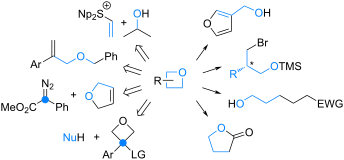
- , vinyl, ethynyl or sulphide are sufficient if a superbase such as LIDAKOR or LICKOR is used (Scheme 16) [54][55]. The reaction tends to be remarkably regioselective (in terms of the epoxide opening) and stereoselective, however, it should be treated with caution in case of allyl ethers as they can also










A versatile route towards 6-arylpipecolic acids
Beilstein J. Org. Chem. 2025, 21, 1104–1115, doi:10.3762/bjoc.21.88
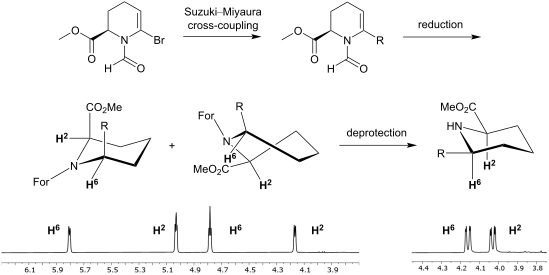
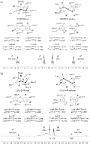
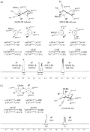
- accordance with coupling constants and resulting dihedral angles. Keywords: conformational restraints; dihedral angle NMR; half-chair conformation; modified amino acids; pipecolic acid; stereoselective hydrogenation; Suzuki–Miyaura cross-coupling; Introduction Non-proteinogenic amino acids play an





Recent advances in synthetic approaches for bioactive cinnamic acid derivatives
Beilstein J. Org. Chem. 2025, 21, 1031–1086, doi:10.3762/bjoc.21.85
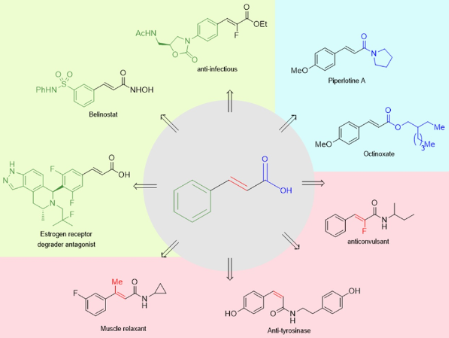
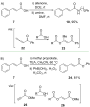
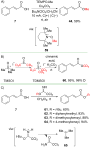
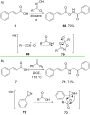
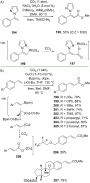
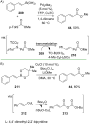
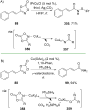
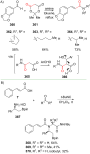
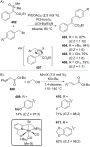
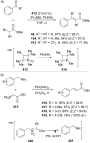
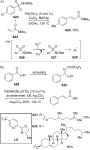
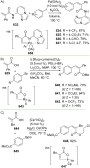
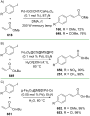
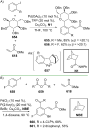
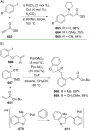
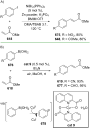
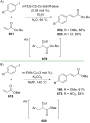
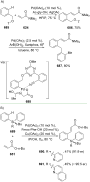
- -cinnamic acid esters 383–385 and amides 386 and 387 via zwitterionic allene species 389 (Scheme 83B) [142]. 3.1.2 Ylide reactions: The construction of double bond ylide reactions (e.g. Wittig and Horner–Wadsworth–Emmons reactions) is one of the most reliable and stereoselective methods. Several
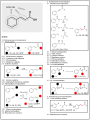
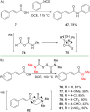
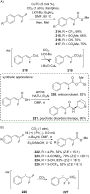
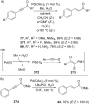
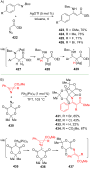
- -workers (2019) employed a non-metal Lewis acid tritylium salt (TrBF4) to catalyze the stereoselective olefination of α-diazocarbonyl compounds 438 to access Z-cinnamate esters 439–442 via 1,2-hydride migration (443) (Scheme 89) [151]. The ion pair of carbocation, BF4− anions, and the trityldiazene group
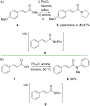
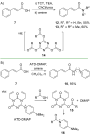
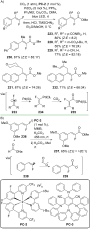
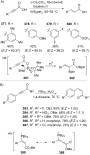
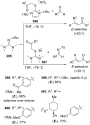
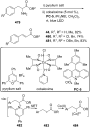
- are cis-coplanar resulting in the Z-isomer product. 3.1.4 Metathesis reactions: Metathesis reactions are one of the most crucial approaches to preparing olefins. Grubbs and Grubbs–Hoveyda catalysts are among the most frequently used catalysts for the stereoselective construction of C=C bonds. Moreover










































Cu–Bpin-mediated dimerization of 4,4-dichloro-2-butenoic acid derivatives enables the synthesis of densely functionalized cyclopropanes
Beilstein J. Org. Chem. 2025, 21, 877–883, doi:10.3762/bjoc.21.71
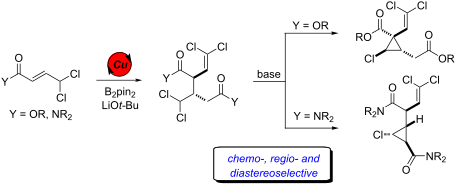
- versatile building blocks for the stereoselective synthesis of chlorocyclopropanes. Keywords: chlorocyclopropanes; copper; cyclization; 4,4-dichloro-2-butenoic acid derivatives; dimerization; Introduction In the last years our group has been focused on the development of catalytic methodologies for the


Regioselective formal hydrocyanation of allenes: synthesis of β,γ-unsaturated nitriles with α-all-carbon quaternary centers
Beilstein J. Org. Chem. 2025, 21, 800–806, doi:10.3762/bjoc.21.63
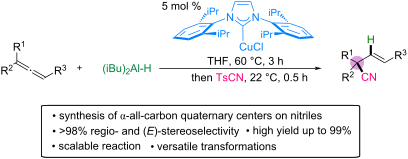
- by the regio- and stereoselective allylation with p-toluenesulfonyl cyanide. The proposed methodology is efficient for accessing acyclic β,γ-unsaturated nitriles with α-all-carbon quaternary centers and achieves yields up to 99% and excellent regio- and E-selectivity. The reaction proceeds under mild
- centers [30][31][32][33]. Herein, we report a mild and efficient method for the regio- and (E)-stereoselective formal hydrocyanation of di- and trisubstituted allenes. Using DIBAL-H as the hydride source and TsCN as a readily available and bench-stable cyanating agent in the presence of a copper catalyst




New advances in asymmetric organocatalysis II
Beilstein J. Org. Chem. 2025, 21, 766–769, doi:10.3762/bjoc.21.60
- contributions in stereoselective organocatalytic transformations. The collection contains nine articles featuring various aspects of asymmetric organocatalysis. In the first contribution, Waser et al. examined how chiral phase-transfer catalysts promote β-selective additions of azlactones to allenoates. Maruoka

Origami with small molecules: exploiting the C–F bond as a conformational tool
Beilstein J. Org. Chem. 2025, 21, 680–716, doi:10.3762/bjoc.21.54
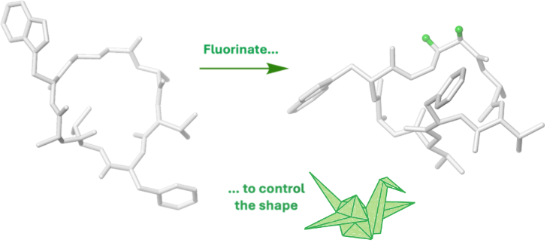
- , fragrance chemicals, organocatalysts, and peptides. This comprehensive review summarises developments in this field during the period 2010–2024. Keywords: conformational analysis; medicinal chemistry; organofluorine chemistry; stereoselective fluorination; Introduction In the art of origami, a


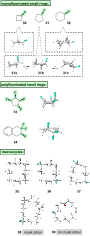
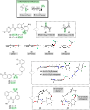

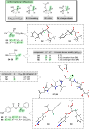
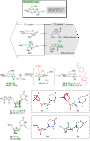
Asymmetric synthesis of fluorinated derivatives of aromatic and γ-branched amino acids via a chiral Ni(II) complex
Beilstein J. Org. Chem. 2025, 21, 659–669, doi:10.3762/bjoc.21.52
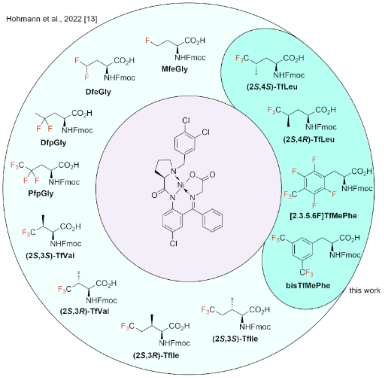
- diastereomerically pure γ‑branched fluorinated amino acids. This work further underlines the importance of chiral Ni(II) complexes in the synthesis of fluorinated amino acids. Keywords: chiral nickel complexes; fluorinated amino acids; gram-scale amino acid synthesis; stereoselective synthesis; Introduction Non
- < 5%) despite numerous attempts. Conclusion This work described the stereoselective and gram-scale synthesis of a highly attractive palette of fluorinated amino acids prepared for application in solid-phase peptide synthesis. First, two different fluorinated variants of phenylalanine were synthesized





