Search results
Search for "calculations" in Full Text gives 926 result(s) in Beilstein Journal of Organic Chemistry. Showing first 200.
Photochemical reduction of acylimidazolium salts
Beilstein J. Org. Chem. 2025, 21, 1973–1983, doi:10.3762/bjoc.21.153
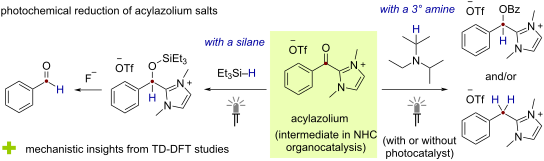
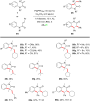
- density functional theory (DFT) calculations were obtained. Results and Discussion Photoreduction of 2-benzoylimidazolium triflate with diisopropylethylamine Initial investigations To investigate the potential for the light-mediated reduction of acylazolium salts, compound 1 was prepared as a
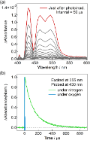
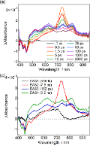
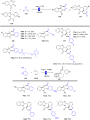
- , however, did not reveal any significant change in the absorption profile. To gain further insight, time-dependent density functional theory (TD-DFT) calculations were carried out (for details of the computational studies, see Supporting Information File 1). In line with the UV–vis studies, comparison of
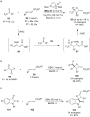
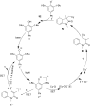
- ][26][27][28][29][30]. The TD-DFT calculations also provided insight into the nature of the subsequent mechanistic steps where the excited benzoylimidazolium 1* is converted to the reduced zwitterionic alkoxide species E in the presence of DIPEA (Scheme 2). This requires the transfer of both an


Synthesis of N-doped chiral macrocycles by regioselective palladium-catalyzed arylation
Beilstein J. Org. Chem. 2025, 21, 1917–1923, doi:10.3762/bjoc.21.149
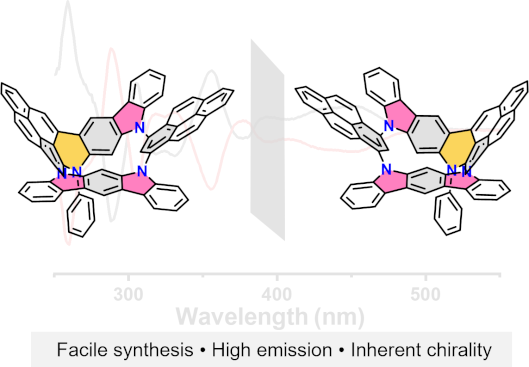
- , theoretical calculations were performed to evaluate the energy barriers of isomerization. As shown in Figure S3 (Supporting Information File 1), the configuration observed in the crystal structure has the lower energy by 24.0 kcal mol−1 than that of the isomeric structure with two pyrene units at the same
- macrocycles, theoretical calculations on the frontier molecular orbitals were carried out based on the optimized structures. As shown in Figure 4, the distributions of the highest occupied molecular orbitals (HOMOs) are disjointed from that of the lowest unoccupied molecular orbitals (LUMOs). Specifically




Photoswitches beyond azobenzene: a beginner’s guide
Beilstein J. Org. Chem. 2025, 21, 1808–1853, doi:10.3762/bjoc.21.143
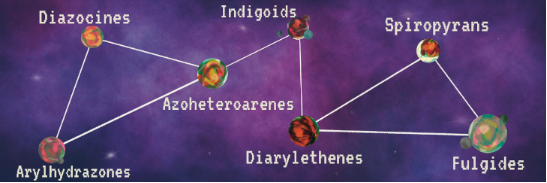
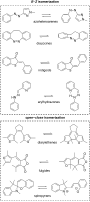
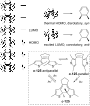
- concentration of the photoswitch in solution: when MeOH or water are present, the lifetimes drop significantly, and particularly at pH 4, as consequence of more favourable intermolecular proton transfer. Calculations show that water molecules bridging between two Z-isomers favour the formation of hydrazone and






Thermodynamics and polarity-driven properties of fluorinated cyclopropanes
Beilstein J. Org. Chem. 2025, 21, 1742–1747, doi:10.3762/bjoc.21.137
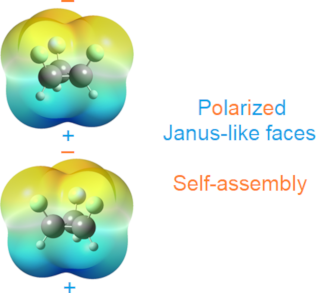
- advanced materials, particularly those whose properties rely on the polarity and spatial arrangement of C–F bonds within a cyclopropane framework. Keywords: cyclopropane; fluorination; polarity; theoretical calculations; Introduction Cyclopropane, the smallest cycloalkane, has a rigid structure that
- substitution is endothermic and, therefore, destabilizing [8]. This destabilization was attributed to the greater s-character of the orbital involved in bonding to the substituent. In contrast, our calculations at the B3LYP-GD3BJ/6-311++G(d,p) level revealed that the reactions leading to the fluorinated
- of organofluorine compounds [24]. Frequency calculations confirmed the absence of imaginary frequencies, ensuring the structures correspond to true minima, and provided standard Gibbs free energies. For the dimer of 1.2.3-c.c. and its complexes with Na+ and Cl−, basis set superposition error was


Preparation of a furfural-derived enantioenriched vinyloxazoline building block and exploring its reactivity
Beilstein J. Org. Chem. 2025, 21, 1737–1741, doi:10.3762/bjoc.21.136

- to form oxazolo[3,2-c]pyrimidine derivative 7 (Scheme 7). The highly diastereoselective formation of product 7 can be explained based on the theoretical calculations by Elliott et al. of aza-Diels–Alder reaction of vinyloxazoline with TsNCO [19]. According to their investigations, the aza-nucleophile


Continuous-flow-enabled intensification in nitration processes: a review of technological developments and practical applications over the past decade
Beilstein J. Org. Chem. 2025, 21, 1678–1699, doi:10.3762/bjoc.21.132
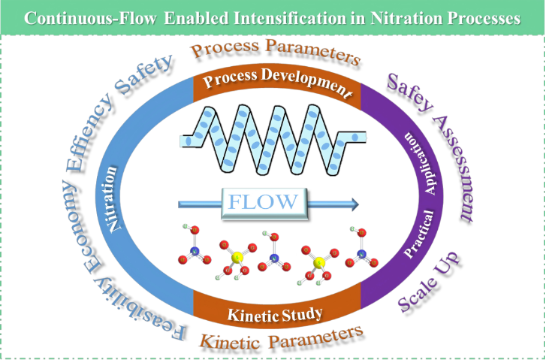
- process hazards through the evaluation of thermal safety parameters and DFT calculations revealed catalytic and solvent effects of ionic liquids in nitration [9]. In addition, researchers have focused on improving nitration processes through process intensification strategies by integrating advanced



Influence of the cation in hypophosphite-mediated catalyst-free reductive amination
Beilstein J. Org. Chem. 2025, 21, 1661–1670, doi:10.3762/bjoc.21.130

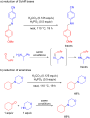
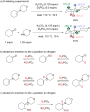
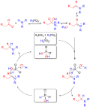
- . The remedy for Parkinson’s disease, piribedil, was obtained in high yield. The plausible mechanism of the elaborated process was proposed and supported by DFT calculations. Keywords: amines; DFT; hypophosphites; reductive amination; role of cations; Introduction Sodium hypophosphite, NaH2PO2, is one
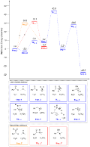
- the DFT calculations (Scheme 5, Figure 2). Firstly, reductive amination of an aldehyde started from a nucleophilic addition of the amine to the carbonyl group of the aldehyde. In the presence of acid, this step could occur via acidic catalysis involving a protonation step of an amine (Step_2) or


Catalytic asymmetric reactions of isocyanides for constructing non-central chirality
Beilstein J. Org. Chem. 2025, 21, 1648–1660, doi:10.3762/bjoc.21.129

- cyclization of functionalized phenyl isocyanides, guided by DFT calculations (Scheme 2b) [29]. Three types of isocyanides (10–12) were evaluated in reactions with aryl iodides, affording indole-fused N-heteroaryl scaffolds 13–15, featuring either a C–C or C–N stereogenic axis, in moderate-to-high yields with
- identified. While the employment of L9 afforded endo-selective [3 + 2] cycloadducts 60, using Trost ligand L10 resulted in a complete reversal to the exo-cycloadducts 61. DFT calculations were performed and indicated that these two ligands act in different ways in the cyclization process, providing





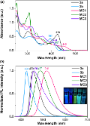
On the aromaticity and photophysics of 1-arylbenzo[a]imidazo[5,1,2-cd]indolizines as bicolor fluorescent molecules for barium tagging in the study of double-beta decay of 136Xe
Beilstein J. Org. Chem. 2025, 21, 1627–1638, doi:10.3762/bjoc.21.126
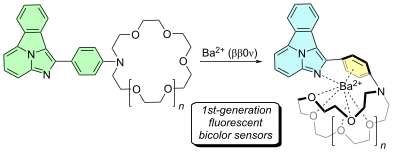
- decoupling between the para-phenylene and benzo[a]imidazo[5,1,2-cd]indolizine components that results in a blue shift upon Ba2+ coordination. Keywords: aromaticity; DFT-TDDFT calculations; double-beta decay; fluorescent sensors; polycyclic arenes; Introduction Double beta-decay [1] is a radioactive decay
- values. Our calculations show that, as expected, 12-crown-4 16a and 15-crown-5 16b are too small and consequently the barium cation lies outside the average molecular plane determined by the macrocycle. In the case of 18-crown-6 16c, the cyclic ligand accommodates very well the cation, which is now
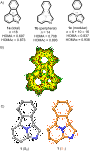
- . We chose compound 18 (Figure 5) as a convenient computational model. We calculated the energy profile associated with the rotation between the 1,4-phenylene and benzo[a]imidazo[5,1,2-cd]indolizine 1 components, defined as variation of the ω = a–d–c–d dihedral angle shown in Figure 5. Our calculations





Transition-state aromaticity and its relationship with reactivity in pericyclic reactions
Beilstein J. Org. Chem. 2025, 21, 1613–1626, doi:10.3762/bjoc.21.125

- an in-plane aromatic transition state, is analogous to the first step of this transformation, known as Hopf cyclization. Indeed, our calculations [85] indicate that the parent Hopf cyclization involving cis-hexa-1,3-diene-5-yne occurs in a concerted manner through a transition state that features in


Synthesis of optically active folded cyclic dimers and trimers
Beilstein J. Org. Chem. 2025, 21, 1603–1612, doi:10.3762/bjoc.21.124

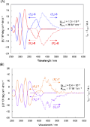
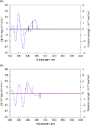
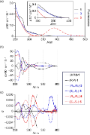
- spectra were simulated by time-dependent density functional theory (TD-DFT) calculations (TD-MN15/6-31G(d)//MN15/6-31G(d). The calculated rotatory strengths of (Sp)-6 and (Sp)-7 were plotted with their observed CD spectra in Figure 3A and 3B, respectively, and the calculated CD spectra are shown in
- ). Molecular orbitals of (Sp)-6 and (Sp)-7 in their ground and excited states were calculated using DFT and TD-DFT calculations (Figures S20–S23, Supporting Information File 1). In both molecules, the orbitals were localized to part of the π-conjugation systems rather than the whole system in the ground and
- excited states due to the twisted structures by the π-stacked [2.2]paracyclophane moieties. The CPL behaviors of (Sp)-6 and (Sp)-7 were investigated by TD-DFT calculations; namely, the electric transition dipole moment (μ), magnetic transition dipole moment (m), and the angle (θ) between μ and m in the S1


Thermodynamic equilibrium between locally excited and charge transfer states in perylene–phenothiazine dyads
Beilstein J. Org. Chem. 2025, 21, 1577–1586, doi:10.3762/bjoc.21.121
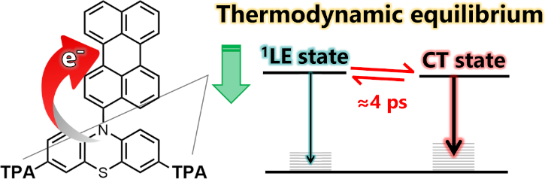
- synthesized and characterized (Figure 1). Their photophysical properties were comprehensively examined by steady-state and time-resolved emission and absorption spectroscopy. Furthermore, time-dependent density functional theory (TD-DFT) calculations were performed to support the experimental findings
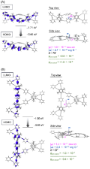
- shown in Supporting Information File 1. Energy levels and steady-state optical properties Time-dependent density functional theory (TD-DFT) calculations were performed to gain insights into the electronic structures of Pe–PTZ derivatives at B3LYP/6-31+G(d,p) level of theory (Figure 2) [18]. The
- calculations revealed that the highest occupied molecular orbitals (HOMOs) are localized at the PTZ or PTZ–TPA moieties in all compounds. In contrast, the lowest unoccupied molecular orbitals (LUMOs) are localized at the Pe moiety. This spatial separation of frontier orbitals suggests a weak electronic




pH-Controlled isomerization kinetics of ortho-disubstituted benzamidines: E/Z isomerism and axial chirality
Beilstein J. Org. Chem. 2025, 21, 1568–1576, doi:10.3762/bjoc.21.120
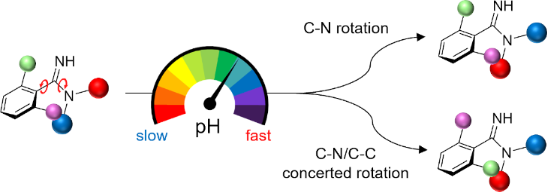
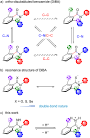
- hypothesis that the rotational barrier of the benzamidine changes upon protonation, density functional theory (DFT) calculations were performed for the C–N and C–N/C–C rotations of the molecular form and of the protonated 2-bromo-N,N,6-trimethylbenzimidamide as a model compound (Figure 2). Several transition
- effect of the C–N rotation due to the decrease in pH. As the rotation of the C–N bond of the ortho-disubstituted benzamidine could be controlled by the protonation of the amidine moiety, we then focused on the chiral axis of the ortho-disubstituted benzamidine. Our DFT calculations suggested that the
- . Notably, at pH 9.2, racemization proceeded minimally, even under high temperature conditions. Furthermore, it was confirmed that racemization requires a higher pH where a higher proportion of the amidine exists in its molecular form. This result was consistent with our DFT calculations, which showed that



Azobenzene protonation as a tool for temperature sensing
Beilstein J. Org. Chem. 2025, 21, 1528–1534, doi:10.3762/bjoc.21.115
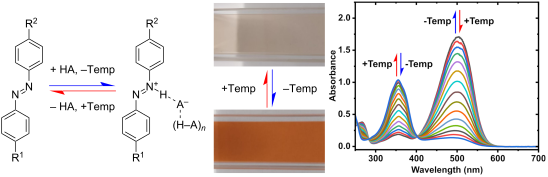
- -dichloroethane and highlight its potential for temperature sensing applications. Density functional theory calculations were performed to support our findings and to investigate the mechanisms of azobenzene–acid interactions, aiming to guide the design of azobenzene-based temperature sensors in future research
- = 98–144 nm) between compounds 1–3 and their protonated counterparts (1H+–3H+; Figures S16–S18 in Supporting Information File 1). The experimental results are enticing from the applications point of view but offer little insight into details of the azobenzene–acid interactions. DFT calculations were
- calculations revealed that a second acid molecule significantly enhances protonation, prompting further investigation into the reaction stoichiometry. Upon protonation of 3, the n → π* transition disappears and the π → π* transition red-shifts from 358 nm to 502 nm (Figure 1B), resulting in a visible color


Highly distinguishable isomeric states of a tripodal arylazopyrazole derivative on graphite through electron/hole-induced switching at ambient conditions
Beilstein J. Org. Chem. 2025, 21, 1496–1507, doi:10.3762/bjoc.21.112
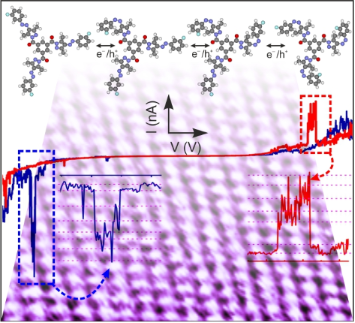
- calculations assume a commensurate hexagonal lattice. The graphite lattice directions are marked by the 3-black arrows. The unit cell parameters of optimized geometry (a = 1.968 nm, b = 1.968 nm and γ = 120°) match well with the experiments. The microscopic arrangement of the molecules is clearly visible. It
- voltage, which is ≈1.1 V. This suggests that while switching, the molecules may not be in their neutral state. Since the graphite–molecule interaction is weak and van der Waals-type, we use the gas-phase calculations and no major change in the electronic structure is expected for molecules upon adsorption
- memory. A pre-optimized two-layer graphite was used from the library data as provided in the Quantumwise DFT package. The lattice parameters for graphite are, a = 2.4612 Å, b = 2.4612 Å, c = 6.709 Å, and α = 60°. Molecular orbitals were obtained from the calculations performed using the Gaussian 03



Microwave-enhanced additive-free C–H amination of benzoxazoles catalysed by supported copper
Beilstein J. Org. Chem. 2025, 21, 1462–1476, doi:10.3762/bjoc.21.108
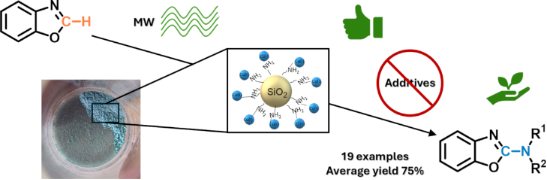
- circumvent any possible solvent influence on yield calculations and both Si-MonoAm and Si-DiAm showed a high degree of derivatisation; 9.9 and 21 wt %, respectively, which correspond to 738 and 1090 μmol/g. The first derivative peak temperatures that indicate the point of the greatest rate of change in the



Wittig reaction of cyclobisbiphenylenecarbonyl
Beilstein J. Org. Chem. 2025, 21, 1454–1461, doi:10.3762/bjoc.21.107
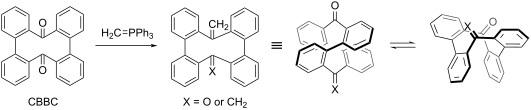
- nucleophilic substitution of the thus generated alkoxide to form an oxygen-containing five-membered ring. At least, density functional theory (DFT) calculations support that the nucleophilic attack of methylenetriphenylphosphorane to the exo-methylene unit is slightly favorable over reaction with the carbonyl
- signals due to the exo-methylene groups overlapped with the solvent signal in CD2Cl2. The thus obtained activation barriers of 3 and 5 were 11 and 12 kcal mol–1 at 263 and 253 K, respectively (Figure S27 in Supporting Information File 1). Previous DFT calculations at the B3LYP/6-31G(d) level of theory
- suggested that the bathtub conformation of CBBC 1 is slightly unfavorable than the figure-eight conformation by 2.4 kcal mol−1 [21]. On the other hand, the current DFT calculations suggest that the bathtub conformation of bis-olefin 5 is rather favorable by 0.3 kcal mol−1, which is in accordance with the



Tautomerism and switching in 7-hydroxy-8-(azophenyl)quinoline and similar compounds
Beilstein J. Org. Chem. 2025, 21, 1404–1421, doi:10.3762/bjoc.21.105
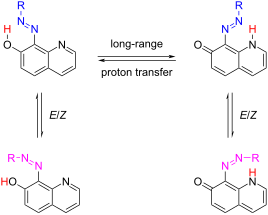
- OH functionality in compound 2 gives possibility to influence the tautomerism in this compound dynamically by protonation/deprotonation. The tautomeric and switching properties of compounds 1 and 2 have been revealed by using quantum-chemical calculations, UV–vis and NMR spectroscopy and UV
- makes possible to analyze the tautomerism in 1 as a function of (E+KE) and KK. The NMR spectra of 1 in acetonitrile-d3 are in agreement with the above analysis of tautomeric equilibration based on theoretical calculations and UV spectra. At room temperature the proton signals are very broad and
- K does not change it much (Table 1, the italicized values). The calculated energy barrier of process from 1KE to 1KK in acetonitrile (37 kcal/mol in Table 1) is relatively high and this process should be slow in the NMR time scale. The conclusion from these calculations is that the major conformer




High-pressure activation for the solvent- and catalyst-free syntheses of heterocycles, pharmaceuticals and esters
Beilstein J. Org. Chem. 2025, 21, 1374–1387, doi:10.3762/bjoc.21.102
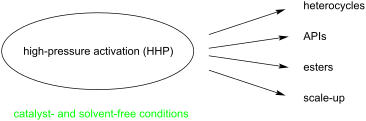
- volume data (ΔV) was calculated for each reaction. Gaussian 09 was used to carry out the calculations at the b3lyp/6-311++g(d,p) level of theory. The molecular volume of each reactant and product (including all by-products that are part of the reaction scheme) was calculated and the overall volume
- using density functional theory (DFT) with the Becke three-parameter exchange and Lee–Yang–Parr correlation (B3LYP) functional [49], along with the 6–311++G(d,p) basis set for gas-phase calculations of all compounds. After completing the molecular geometry optimizations, vibrational frequency
- calculations were conducted to ensure that none of the optimized structures exhibited imaginary frequencies confirming that all structures corresponded to real local minima on the potential energy surface. For the volume calculations, the Gaussian keyword “volume” was used, which defines the molar volume as


Oxetanes: formation, reactivity and total syntheses of natural products
Beilstein J. Org. Chem. 2025, 21, 1324–1373, doi:10.3762/bjoc.21.101
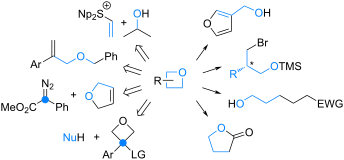
- loadings were necessary for ortho-substituted phenyls. Control experiments and DFT calculations revealed that the oxetane ring is formed before the tetrahydrofuran in the domino process. In 2023, Shigehisa and co-workers published a new cycloisomerisation strategy for the construction of oxetane rings from
- still runs smoothly, if the aryl is substituted for cyclohexyl. The proposed mechanism, supported by control experiments, deuterium exchange studies and energy calculations, consists of the following steps: conjugate addition of the carbene to the allenoate, regioselective addition of the resulting
- halogens, nitriles, alkenes and heteroaryls. On the other hand, this methodology suffers from relatively low diastereoselectivity as the dr lies between 1:1 and 2:1. DFT calculations suggested the reaction proceeds through nitrogen elimination, oxonium ylide 119 formation, homolytic cleavage and radical










Recent advances and future challenges in the bottom-up synthesis of azulene-embedded nanographenes
Beilstein J. Org. Chem. 2025, 21, 1272–1305, doi:10.3762/bjoc.21.99
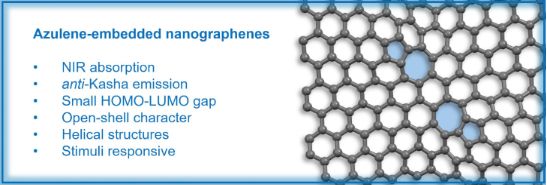
- reported by Feng and co-workers (Scheme 24) [110]. Precursor 181 was annealed on an Au(111) surface at 300 °C, resulting in PAH 182 with two embedded azulene subunits. Spin-polarized density functional theory calculations predicted that PAH 182 would exhibit an open-shell singlet ground state, as it
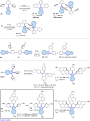
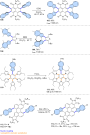
- revealed that none of the azulene subunits exhibits the characteristic azulene-like aromaticity. Additionally, both 186 and 187 show moderate open-shell biradical character, according to theoretical calculations. A similar strategy, leading to different types of skeletal rearrangements, was reported by Ma
- substituents of precursor 188 after annealing. In contrast, all the other observed PAHs 189–194 result from oxidative ring-closure and skeletal ring-rearrangement reactions. Theoretical calculations revealed that nanographene 188 possesses an antiferromagnetic open-shell singlet ground state, whereas the other




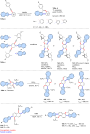


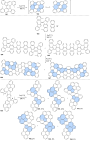
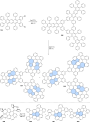
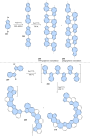
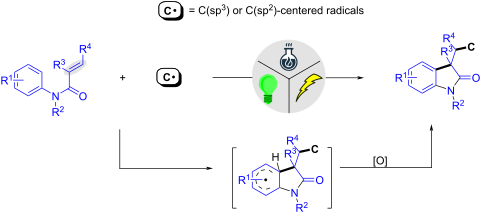
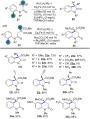
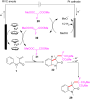
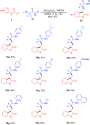
Recent advances in oxidative radical difunctionalization of N-arylacrylamides enabled by carbon radical reagents
Beilstein J. Org. Chem. 2025, 21, 1207–1271, doi:10.3762/bjoc.21.98














Selective monoformylation of naphthalene-fused propellanes for methylene-alternating copolymers
Beilstein J. Org. Chem. 2025, 21, 1183–1191, doi:10.3762/bjoc.21.95
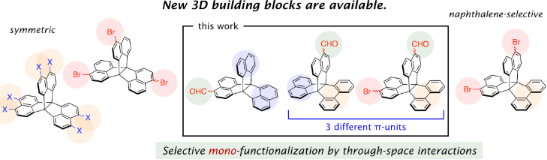
- ], [4.3.3]_Br and [4.3.3]_2Br. To gain insight into the different reactivity between [3.3.3] and [4.3.3], theoretical calculations were performed at the ωB97X-D/6-31G(d,p) level of theory (Figures S901–S903 in Supporting Information File 1). Although distribution of the highest occupied molecular orbitals
- copolymers.a Supporting Information Supporting information includes general information, synthetic procedures and compound data, NMR and MS spectra, HPLC charts, and results of PXRD, DSC, TGA, gas adsorption, and theoretical calculations. Supporting Information File 2: Experimental. Acknowledgements The


Enhancing chemical synthesis planning: automated quantum mechanics-based regioselectivity prediction for C–H activation with directing groups
Beilstein J. Org. Chem. 2025, 21, 1171–1182, doi:10.3762/bjoc.21.94
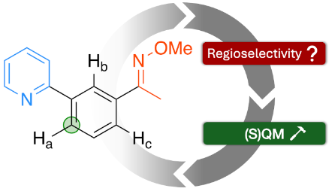
- . This study introduces a novel quantum mechanics-based computational workflow tailored for the regioselective prediction of C–H activation in the presence of DGs. Utilizing (semi-empirical) quantum calculations hierarchically, the workflow efficiently predicts outcomes by considering concerted
- be predicted by calculation and comparison of the relative energies of the proceeding palladacycle intermediate, as postulated in the Bell–Evans–Polanyi (BEP) principle [10][11]. Focussing on the intermediates allows for easier automation of the calculations since a minimum instead of a saddle point
- chemistry’s structural variability. Cao et al. [14] developed an automated workflow that predicts the regioselectivity of C–H activations using extensive DFT calculations on a HPC cluster using up to 600 nodes, each containing 16 Intel Xeon E5-2670 cores. They considered two possible reaction mechanisms, an


A multicomponent reaction-initiated synthesis of imidazopyridine-fused isoquinolinones
Beilstein J. Org. Chem. 2025, 21, 1161–1169, doi:10.3762/bjoc.21.92
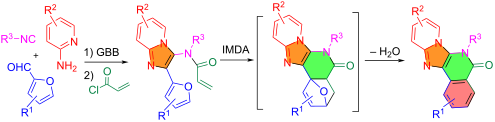
- chromatography with 30:70 EtOAc/hexanes. Product structures were confirmed by 1H and 13C NMR analysis and X-ray crystal structure analysis of 8a. Density functional theory (DFT) calculations DFT computations were conducted utilizing Gaussian 16W with the B3LYP functional and the 6-31G(d,p) basis set [21][22