


Search results
Search for "transition state" in Full Text gives 463 result(s) in Beilstein Journal of Organic Chemistry. Showing first 200.
Synthesis, structure and π-expansion of tris(4,5-dehydro-2,3:6,7-dibenzotropone)
Beilstein J. Org. Chem. 2025, 21, 1–7, doi:10.3762/bjoc.21.1
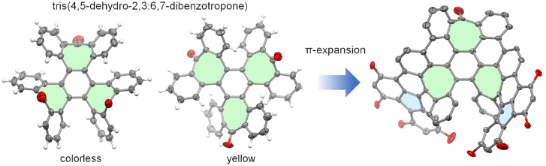
- the colorless crystal, two of these [5]helicenoid moieties display P and M helix structures respectively, whereas the third moiety (colored in light blue) adopts a structure with approximate plane symmetry, recognized as a transition state for the enantiomerization of helicenes. The central benzene


Non-covalent organocatalyzed enantioselective cyclization reactions of α,β-unsaturated imines
Beilstein J. Org. Chem. 2024, 20, 3221–3255, doi:10.3762/bjoc.20.268
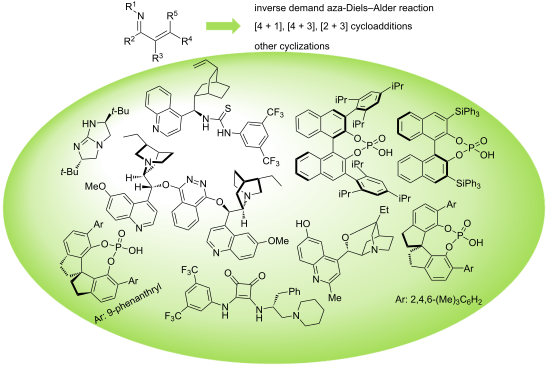
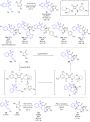
- organocatalyst acts as a Lewis base forming an enamine which raises the HOMO energy of the dienophile, while the thiourea moiety acts as a Lewis acid, lowering the LUMO level of the diene (Scheme 1). A confined transition state is formed providing a high enantiocontrol of the reaction. In 2016, Shi and co
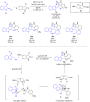
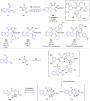
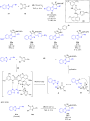
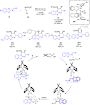
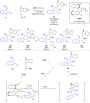
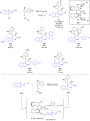
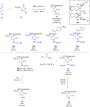
- concerted mechanism which could be explained by the transition state depicted in Scheme 16: the chiral phosphoric acid could act as a bifunctional catalyst; the OH group acts as a Brønsted acid activating the 1-azadiene, while the phosphoryl oxygen atom activates the enecarbamates as a Lewis base. In order
- activating both the azadiene and the 3-vinylindole by hydrogen-bonding interactions. However, from this transition state two possible reaction pathways could explain the observed end product. While in path a, a concerted reaction involving an inverse electron demand aza-Diels–Alder reaction could happen, a











Synthesis of 2H-azirine-2,2-dicarboxylic acids and their derivatives
Beilstein J. Org. Chem. 2024, 20, 3191–3197, doi:10.3762/bjoc.20.264
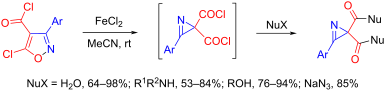
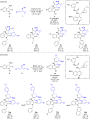
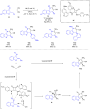
- , into the O–H bonds of diacid 6a (Scheme 5). Apparently, in this case, the reaction proceeds through a less sterically congested transition state. Diacyl chloride 2a was also reacted with sodium azide as nucleophile at room temperature giving dicarbonyl azide 12 in 85% yield (Scheme 6). Conclusion Two





Direct trifluoroethylation of carbonyl sulfoxonium ylides using hypervalent iodine compounds
Beilstein J. Org. Chem. 2024, 20, 3182–3190, doi:10.3762/bjoc.20.263
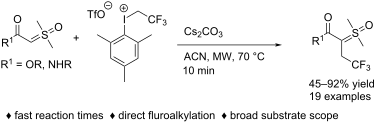
- proposal was operative, owing to its lower-energy barrier; however, the saddle point geometries identified at this low level of theory were not close enough to the true transition state geometries to meet convergence criteria. Thus, using the guidance of the PES scans, A, XB-2, and B were subjected to the
- nudged elastic band climbing image (NEB-CI) method using Orca 5.0.1 at the PBE/def2-SVP D4 level of theory in the CPCM solvation model (see also section 4.2 in Supporting Information File 1) [51][52][53][54][55][56]. Both climbing images were subjected to transition state optimization and successfully
- 160° with equal C–I bond lengths of 2.5 Å in the transition state. The significantly lower activation energy allowed us to conclude that the SN2 mechanism was the more favourable pathway. Conclusion In conclusion, we have developed a direct polyfluoroalkylation reaction of sulfoxonium ylides. The


Advances in the use of metal-free tetrapyrrolic macrocycles as catalysts
Beilstein J. Org. Chem. 2024, 20, 3085–3112, doi:10.3762/bjoc.20.257
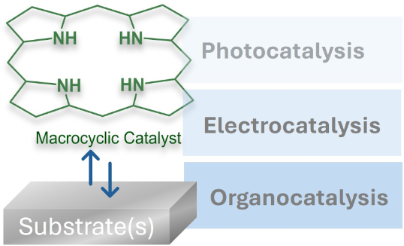
- nitrogen atoms that can form nitrogen–hydrogen (N–H) bonds. Therefore, the general mechanism for HER using a metal-free porphyrin involves inner core nitrogen atoms, which keep protons in proximity and lowers the activation barrier. Dihydrogen is then produced by prearranging the transition state of
- adopts a 1,3-alternate conformation and binds simultaneously to the epoxide O-atom and iodide anion via (NH···O and NH···I) hydrogen-bonding interactions. The TBA countercation is bound to the O-atom of the epoxide ring with hydrogen bonds and is situated away from the I− anion. This crucial transition
- state stabilizes the anionic species generated during the reaction pathway and facilitates a backside attack of I− on the epoxide thus resulting in the initial ring opening (Figure 4b). Apart from acting as an organocatalyst, calix[4]pyrrole 11 has been used for the promotion of cuprous chloride


Enantioselective regiospecific addition of propargyltrichlorosilane to aldehydes catalyzed by biisoquinoline N,N’-dioxide
Beilstein J. Org. Chem. 2024, 20, 3069–3076, doi:10.3762/bjoc.20.255
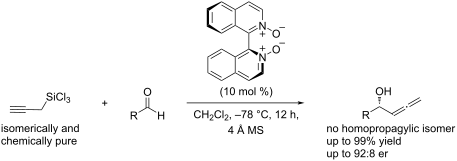
- the two transformations. Studies directed toward a better understanding of possible transition-state structures and the design of new catalysts to improve the results are currently underway in our laboratories. A potential energy surface (PES) for the proposed mechanism for (a) isomerization of


Recent advances in transition-metal-free arylation reactions involving hypervalent iodine salts
Beilstein J. Org. Chem. 2024, 20, 2891–2920, doi:10.3762/bjoc.20.243

- five to seven-membered cyclic compounds [47]. Arylation reactions using diaryliodonium salts can occur through four distinct mechanisms. First, the arylation can occur under metal-free conditions, involving the formation of a three-membered ring transition state through ligand coupling, leading to the
- formation of the Nu–Ar product and aryl iodide [21]. Second, the arylation can take place in the presence of a metal catalyst via oxidative addition, followed by reduction elimination [48][49]. Thirdly, it proceeds through a ligand-coupled arylation which involves a five-membered transition state to yield




Mechanochemical difluoromethylations of ketones
Beilstein J. Org. Chem. 2024, 20, 2799–2805, doi:10.3762/bjoc.20.235
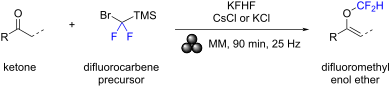
- , proceeding through a five-membered transition state. To clarify the mechanism, two experiments were conducted. In the first one, 2-acetonaphthone with a trideuteromethyl group (1i-d3) was subjected to the standard reaction conditions. Two products were obtained: First, 3i-d2 containing a CF2H group, and


Access to optically active tetrafluoroethylenated amines based on [1,3]-proton shift reaction
Beilstein J. Org. Chem. 2024, 20, 2776–2783, doi:10.3762/bjoc.20.233
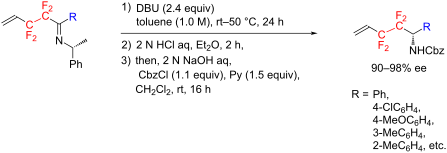
- , the negative charge generated on the imine carbon can be delocalized, hence the transition state is stabilized and the reaction proceeds smoothly. On the other hand, when the substituent R is an alkyl group, the negative charge generated on the imine carbon is an unstable factor, and therefore the
- transition state is not stabilized, leading to the increase of the activation energy of the reaction. As a result, the reaction does not proceed smoothly. The absolute configurations of product (S)-23c, (S)-23d, and (S)-23e were determined on the basis of their X-ray crystallographic analyses. The validity
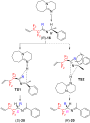
- which is being abstracted simultaneously interacts with the carbon possessing the tetrafluoroethylene fragment. At this time, transition states TS1 or TS2 are possible, but the reaction proceeds exclusively through the transition state TS1 to avoid significant steric repulsion between the substituent R



Copper-catalyzed yne-allylic substitutions: concept and recent developments
Beilstein J. Org. Chem. 2024, 20, 2739–2775, doi:10.3762/bjoc.20.232
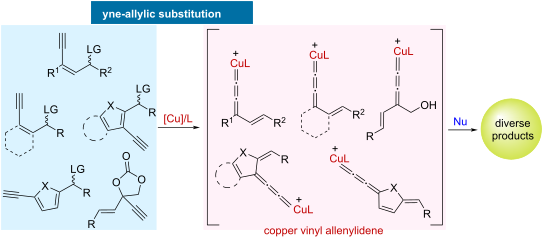
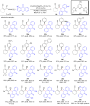
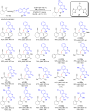
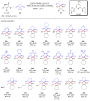
- alkoxylation and alkylation products with the assistance of Lewis acid as co-catalyst (Scheme 9). Starting from four different racemic substrates, the same product 6g with 96% ee was obtained under standard conditions. This indicates that the reactions proceed through the same transition state and the













Computational design for enantioselective CO2 capture: asymmetric frustrated Lewis pairs in epoxide transformations
Beilstein J. Org. Chem. 2024, 20, 2668–2681, doi:10.3762/bjoc.20.224
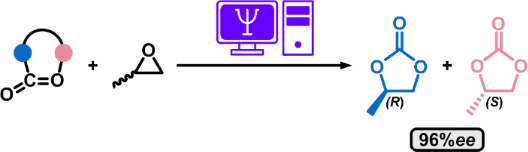
- free energy correction at double-zeta. The kinetics of some reactions were calculated, applying the transition state theory [40]. Within this theory, the rate constant of an elementary reaction with the free energy barrier ΔG‡ is given by Equation 1, where k is the rate constant in s−1, kB is the
- File 1). Notably, the CO2 capture exhibits a lower activation barrier compared to the capture of epoxide (+10.0 kcal·mol−1 vs +30.0 kcal·mol−1). Using transition state theory [40] as expressed in Equation 1, the rate constants were calculated for binding to either molecule at 273.0 K, resulting in k1
- mechanism leading to the (S) product presents an asymmetric TS, 1.2 kcal·mol−1 higher in energy than that of the (R) mechanism. Thus, the asymmetric catalyst enables to generate an enantiomeric excess of 95% with the (R) product being the most abundant product. Surprisingly, a transition state connecting


Machine learning-guided strategies for reaction conditions design and optimization
Beilstein J. Org. Chem. 2024, 20, 2476–2492, doi:10.3762/bjoc.20.212
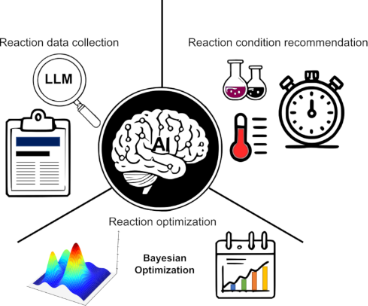
- extensive effort. This involves complex parameter optimization, meticulous validation against experimental data, and careful consideration of diverse reaction conditions and possible reaction mechanisms [28][29]. Although some studies employ transition-state (TS) theory to simulate activation energies and


Hypervalent iodine-mediated cyclization of bishomoallylamides to prolinols
Beilstein J. Org. Chem. 2024, 20, 2455–2460, doi:10.3762/bjoc.20.209
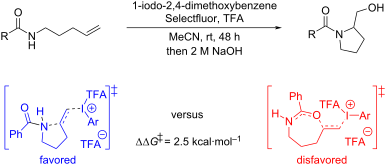
- that the transition state was stabilized by 4.1 kcal·mol−1 by an extra molecule of trifluoroacetic acid. A similar stabilizing interaction was not identified in this case with 3a, despite significant effort, but it cannot be ruled out. The cyclization of 9 was shown to be possible by attack of the


Asymmetric organocatalytic synthesis of chiral homoallylic amines
Beilstein J. Org. Chem. 2024, 20, 2349–2377, doi:10.3762/bjoc.20.201
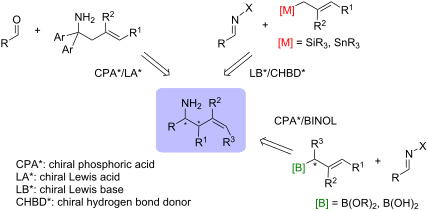
- attributed to the chair-like transition state where the organoboron reagent 1 exchanges one isopropoxy group for one of the BINOL 3 oxygen atoms, whereas the free OH group of the BINOL forms a hydrogen bond to the carbonyl of substrate 2. The flanking phenyl groups on the BINOL facilitate recognition between
- -Fmoc-aryl- and -alkylimines, catalysed by a chiral disulfonimide 45 (Scheme 10). Since allyltrimethylsilane (46) belongs to the type 2 allylation reagents [33], the nucleophilic addition proceeds via an open transition state (Figure 1). Two possible mechanistic pathways were proposed, where the Fmoc
- , in the COBI–imine complex 74 it appears at 8.41 ppm, while in the imine TfOH salt 75 it shows at 9.24 ppm. This detailed NMR investigation sparked further interest in the structure of the transition state of this reaction. An analysis of the potential energy profiles of the two hypothetical pathways








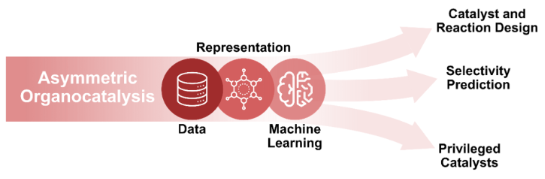
Catalysing (organo-)catalysis: Trends in the application of machine learning to enantioselective organocatalysis
Beilstein J. Org. Chem. 2024, 20, 2280–2304, doi:10.3762/bjoc.20.196
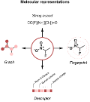
- [92] and a phase-transfer catalysed oxidative amination reaction [93]. In the latter, NCI descriptors were both used to simplify previously existing MLR models and also led to a hypothesis of key NCIs in the transition state. Whereas these descriptors require the selection of a suitable probe model
- [96] investigated a bromocyclization catalysed by a chiral phosphoric acid (CPA) and a DABCOnium brominating reagent (Figure 6). The authors calculated transition state conformer ensembles for several flexible DABCOnium systems and performed energy decomposition analysis to separate the interactions
- develop a comprehensive model, finding that imine parameters govern the defining transition state and hence the preferred enantiomer. In a focused modelling, two separate models are constructed, one for all E- and Z-imines, respectively, finding substrate–catalyst matching is important for E- and Z-imines




Synthesis and reactivity of the di(9-anthryl)methyl radical
Beilstein J. Org. Chem. 2024, 20, 2254–2260, doi:10.3762/bjoc.20.193
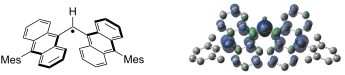
- small about 1.18 kcal mol−1 (Supporting Information File 1, Figure S2). To investigate the activation barrier of this equilibrium, potential energy curve by changing the dihedral angle θ of one anthryl group was calculated. The transition state was calculated with the dihedral angle θ = 30.6° and the


Metal-free double azide addition to strained alkynes of an octadehydrodibenzo[12]annulene derivative with electron-withdrawing substituents
Beilstein J. Org. Chem. 2024, 20, 2234–2241, doi:10.3762/bjoc.20.191
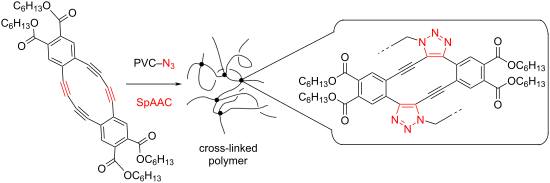
- (PCM) solvent (Figure 4). The reaction initially started with the addition of benzyl azide to one of the internal alkynes of 5. Although the benzyl group is situated on the interior side of DBA, a more energetically unstable transition state (in-ts) is generated. However, the resulting monoadduct (in
- the experimental observation that no monotriazoles were obtained. During the second azide addition, the orientation of benzyl azide is once more controlled. The benzyl group positioned on the inner side results in a thermodynamically less stable transition state (in-in-ts) compared to that on the
- was taken into account by the polarizable continuum model using the integral equation formalism (IEFPCM) [25] for DFT calculations. The optimized molecular structures were verified by vibrational analysis; equilibrium structures did not have imaginary frequencies and transition-state structures had




Regioselective alkylation of a versatile indazole: Electrophile scope and mechanistic insights from density functional theory calculations
Beilstein J. Org. Chem. 2024, 20, 1940–1954, doi:10.3762/bjoc.20.170
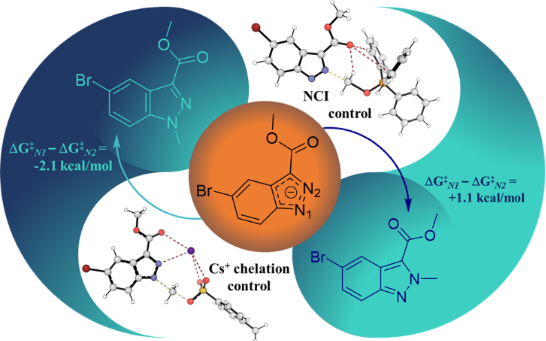
- indazole and the deprotonated indazole was only −0.2 kcal/mol (Figure 11). Again, no preorganized intermediates were found. The NCIs were consistent with the parent system. The hydrogen bond between the H on the electrophilic methyl group and an ester oxygen was found in the transition state leading to the
- N1 product, was conserved (18-N1-OMe, Figure 11), in a total of 4 NCIs. The only relevant NCIs in 18-N2-OMe were between an aryl hydrogen, N1 and an ester oxygen, the result of which is ΔΔG‡ = 2.0 kcal/mol favoring the N1 transition state 18-N1-OMe among the NCIs found. To further probe whether the
- stabilization, nucleophilicity would dictate regioselectivity outcomes. This also implies that the favorable NCIs and chelation are stronger driving forces towards transition-state energy partitioning than nucleophilicity alone. These results suggest chelation is a highly plausible driving force for


Divergent role of PIDA and PIFA in the AlX3 (X = Cl, Br) halogenation of 2-naphthol: a mechanistic study
Beilstein J. Org. Chem. 2024, 20, 1580–1589, doi:10.3762/bjoc.20.141
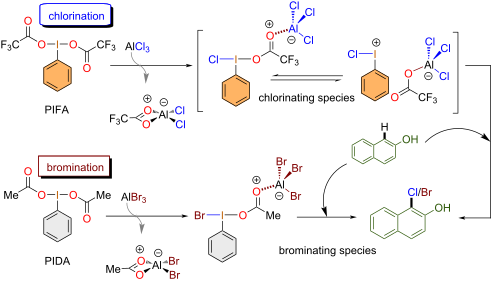
- , and transition-state structures were optimized by density functional theory (DFT) calculations employing the software Gaussian 16 [34]. Although the B3LYP functional could be suitable for these calculations, e.g., for tracing reaction pathways, nitrations, halogenations, or FC acylations in solution
- ) must exhibit only positive harmonic frequencies, whereas each energy maximum (transition state) exhibited only one negative frequency. From these last calculations, zero-point energy, thermal, and entropy corrections were obtained, which were added to the electronic energy to express the calculated
- rise to the chlorinating species I-2–Cl in equilibrium with I-3–Cl. At this point, 2-naphthol reacts, leading to the formation of the ion pair I-4–Cl via chlorine atom transfer, which then yields the adduct I-5–Cl trough transition state TS2–Cl. Then, the release of the second equivalent of the TFAO


Benzylic C(sp3)–H fluorination
Beilstein J. Org. Chem. 2024, 20, 1527–1547, doi:10.3762/bjoc.20.137

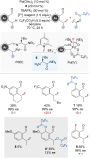
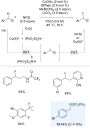
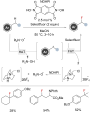
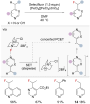
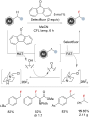
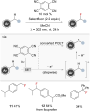
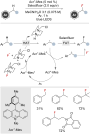
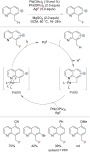
- intramolecular fluorine-atom-transfer (FAT) from an N-fluorinated amide to a pendant carbon-based radical formed from an iron catalyst (Figure 15) [55][56]. This concept of fluorine transfer through a 6-membered transition state was shown to work efficiently from primary, as well as secondary, benzylic radicals




















Synthetic applications of the Cannizzaro reaction
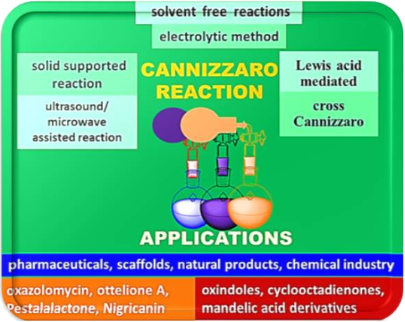
Beilstein J. Org. Chem. 2024, 20, 1376–1395, doi:10.3762/bjoc.20.120
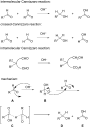
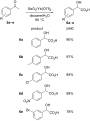
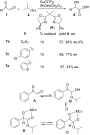
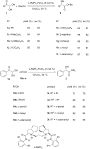
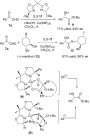
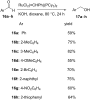
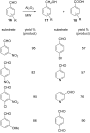
- of a hydride ion from a tetracoordinated intermediate (B), which is formed upon hydroxide addition to the aldehyde (A). The primary pathway of the reaction entails the rate-determining step of hydride ion transfer via either a linear or bent transition state (C) to a second molecule of aldehyde









Computation-guided scaffold exploration of 2E,6E-1,10-trans/cis-eunicellanes
Beilstein J. Org. Chem. 2024, 20, 1320–1326, doi:10.3762/bjoc.20.115

- barrier through the chair–chair transition state of 28.1 kcal mol−1 and an overall ΔG from 2 to 10a/10b, which have the same predicted energy, of −2.0 kcal mol−1 (Figure 3B). The relative free energy barrier through the chair–boat transition state was calculated to be 36.9 kcal mol−1, but would require a
- , Supporting Information File 1). The lowest transition state for a Cope rearrangement, a chair–chair structure at 29.3 kcal mol−1, originates from a DD (down–down orientations of the methyl groups on the 10-membered ring) conformer that is 3.2 kcal mol−1 higher in free energy than the most dominant conformer
- previously reported [10]. A biosynthetically related analog is similarly proposed to undergo oxy-Cope rearrangement to yield 13a/13b. (B) Results of DFT calculations indicate that the Cope rearrangement of 2 is more favorable via a chair–chair transition state than a chair–boat transition state. (C) Results


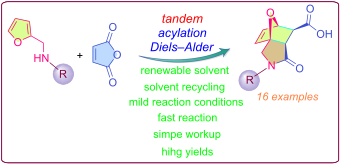
Sustainable tandem acylation/Diels–Alder reaction toward versatile tricyclic epoxyisoindole-7-carboxylic acids in renewable green solvents
Beilstein J. Org. Chem. 2024, 20, 1308–1319, doi:10.3762/bjoc.20.114
- study indicates that the retro-IMDAF reaction does not occur under the reaction conditions developed. As seen in Figure 4b, the different sigma bond lengths formed in the exo transition state (calculations which were performed in Gaussian 16 Rev B.01 (Gaussian, Inc., Wallingford, CT, USA)) [135
- ] indicate that the IMDAF reaction proceeds through an asynchronous process (the same is true for the endo transition state). Accordingly, the length of the σ bond formed near the amide functional group was calculated to be 2.012 Å, while the length of the bond formed on the far side was calculated to be
- 2.160 Å. These bond lengths support path I, which is a more valid pathway in the reaction mechanism. As can be seen in Figure 4, the energies of both the exo transition state and the exo product are lower than those of the endo, which also supports the experimental results. Conclusion Vegetable oils


Two-fold addition reaction of silylene to C60: structural and electronic properties of a bis-adduct
Beilstein J. Org. Chem. 2024, 20, 1179–1188, doi:10.3762/bjoc.20.100
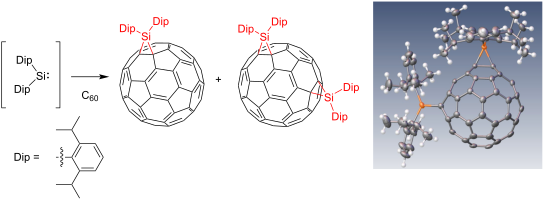
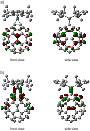
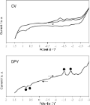
- the transition state was ascribed to the donor–acceptor interactions between the HOMO of the silylene and the LUMO of ethylene, and vice versa [42]. For 2a, the LUMO is largely distributed at the e' bonds, followed by the cis-2 and trans-3 bonds (Figure 8). These results suggest that the formation of


Synthesis of 1,4-azaphosphinine nucleosides and evaluation as inhibitors of human cytidine deaminase and APOBEC3A
Beilstein J. Org. Chem. 2024, 20, 1088–1098, doi:10.3762/bjoc.20.96
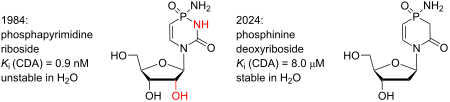
- cytosine deamination involves a nucleophilic attack at the C4 position by a Zn2+-activated water molecule [40][41][42], it was proposed to employ transition state analogues and mimetics of the tetrahedral intermediate formed as inhibitors of these enzymes [43][44][45][46][47]. More than 30 compounds have





