Search results
Search for "halogen" in Full Text gives 495 result(s) in Beilstein Journal of Organic Chemistry. Showing first 200.
HFIP as a versatile solvent in resorcin[n]arene synthesis
Beilstein J. Org. Chem. 2024, 20, 2469–2475, doi:10.3762/bjoc.20.211
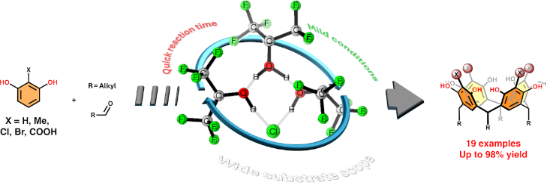
- example, halogen-containing resorcin[n]arenes are highly sought after as they engage in divergent synthesis [8][63][64][65][66][67][68]. However, 2-haloresorcinol does not cyclize under standard protocols (Scheme 1a) pushing the need for an additional halogenation step (Scheme 1b). To overcome this
- synthon, which is used conveniently towards other applications, e.g., metal cluster synthesis, and halogen and hydrogen-bonded cavitands [77][78][79]. Our protocol works well with 2-methylresorcinol, as shown for products 1f and 1g, with significant yields around 80%. Electron-deficient and halogenated 2
- manner, and from the few reports using 2-bromoresorcinol, it has been described to yield inseparable mixtures of oligomers [9][59]. Electron-withdrawing groups like carboxylic acids are another useful functional group instead of the halogen that provide a divergent route to other functional materials


Synthesis and conformational analysis of pyran inter-halide analogues of ᴅ-talose
Beilstein J. Org. Chem. 2024, 20, 2442–2454, doi:10.3762/bjoc.20.208
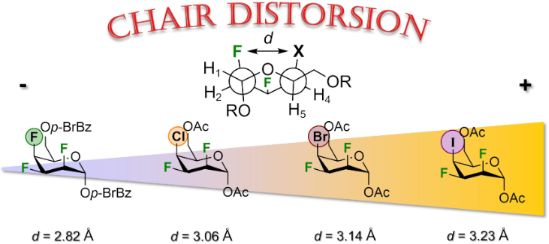
- halo-divergent strategy from known 1,6-anhydro-2,3-dideoxy-2,3-difluoro-β-ᴅ-mannopyranose. In solution and in the solid-state, all analogues adopt standard 4C1-like conformations despite 1,3-diaxial repulsion between the F2 and the C4 halogen. Moreover, the solid-state conformational analysis of
- halogenated pyrans reveals deviation in the intra-annular torsion angles arising from repulsion between the axial fluorine at C2 and the axial halogen at C4, which increases with the size of the halogen at C4 (F < Cl < Br < I). Crystal packing arrangements of pyran inter-halides show hydrogen bond acceptor
- and nonbonding interactions for the halogen at C4. Finally, density functional theory (DFT) calculations corroborate the preference of talose analogues to adopt a 4C1-like conformation and a natural bonding orbital (NBO) analysis demonstrates the effects of hyperconjugation from C–F antibonding


Facile preparation of fluorine-containing 2,3-epoxypropanoates and their epoxy ring-opening reactions with various nucleophiles
Beilstein J. Org. Chem. 2024, 20, 2421–2433, doi:10.3762/bjoc.20.206
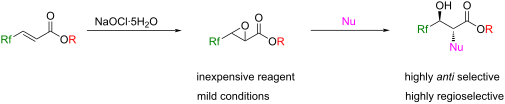
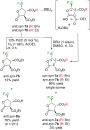
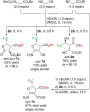
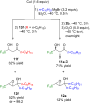
- 2 and 3 positions which clearly proved the epoxy ring opening taking place at the 2 position in an SN2 fashion (Figure 1). The introduction of an additional halogen atom was considered to be possible by treatment of 2b with an appropriate metal salt, and actually, similar results to the case of
- spectra for the compounds 11a and 11a-D. Expectation of the regio- as well as stereoselective reactions of 2. Attempts of the present epoxidation to other α,β-unsaturated esters, 1h–j. Introduction of additional halogen atoms at the 2-position of the compound 2b. Clarification of the stereochemistry of





Evaluating the halogen bonding strength of a iodoloisoxazolium(III) salt
Beilstein J. Org. Chem. 2024, 20, 2401–2407, doi:10.3762/bjoc.20.204
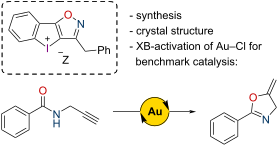
- Dominik L. Reinhard Anna Schmidt Marc Sons Julian Wolf Elric Engelage Stefan M. Huber Fakultät für Chemie und Biochemie, Ruhr-Universität Bochum, Universitätsstraße 150, 44801 Bochum, Germany 10.3762/bjoc.20.204 Abstract Diaryliodonium(III) salts have been established as powerful halogen-bond
- . Finally, the potential as halogen-bonding activator was benchmarked in solution in the gold-catalyzed cyclization of a propargyl amide. Keywords: diaryliodonium; gold catalysis; halogen bonding; hypervalent iodine; non-covalent interactions; Introduction The compound class of diaryliodonium (DAI) salts
- in a Mannich reaction [4]. In 2018, our group showed in a proof-of-principle study [5] that the Lewis acid catalysis by DAI salts is based on halogen bonding (XB), an interaction between a Lewis base (XB acceptor) and an electrophilic halogen atom in the Lewis acid (XB donor) [6][7][8][9][10]. In




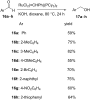
Efficient one-step synthesis of diarylacetic acids by electrochemical direct carboxylation of diarylmethanol compounds in DMSO
Beilstein J. Org. Chem. 2024, 20, 2392–2400, doi:10.3762/bjoc.20.203
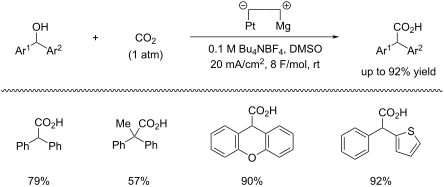
- due to heat generation by electric resistance. With these results in hand, the substrate scope was investigated. First, the applicability of halogen-containing diphenylmethanol compounds 1b and 1c to the electrochemical carboxylation under the reaction conditions shown in Table 1, entry 8 was
- , 2H); 13C NMR (100 MHz, CDCl3, δ) 52.1, 125.5, 126.6, 126.7, 128.0, 128.3, 128.8, 137.6, 140.0, 177.8. Synthesis of diarylacetic acids 2 from diarylmethanol compounds 1 and carbon dioxide. Attempted electrochemical carboxylation of halogen-containing diphenylmethanol compounds 1b and 1c. Synthesis of


Asymmetric organocatalytic synthesis of chiral homoallylic amines
Beilstein J. Org. Chem. 2024, 20, 2349–2377, doi:10.3762/bjoc.20.201
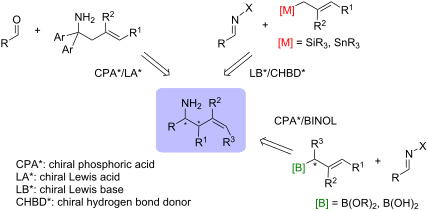
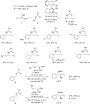
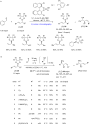
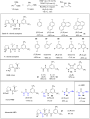
- . The limitations in the scope of this methodology include a poor stereoselectivity achieved with 5-membered cyclic 2,3-disubstituted silanes in contrast to the 6-membered analogues (53). A lower efficiency was recorded with 2-substituted allylsilanes bearing either a halogen or an alkyl group with
- terminal halogen or acetate. The 2-ethynylallylsilane decomposed in the reaction conditions, while simple allyltrimethylsilane was unreactive. Among allylstannanes, the (3-phenylallyl)tri-n-butylstannane was also unreactive. Interestingly, both tetraallylsilane and tetraallylstannane gave racemic products








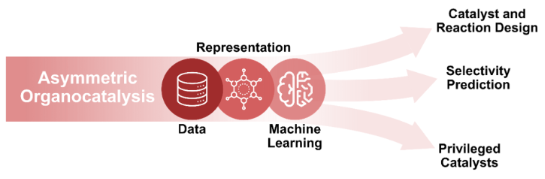
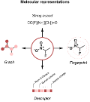
Catalysing (organo-)catalysis: Trends in the application of machine learning to enantioselective organocatalysis
Beilstein J. Org. Chem. 2024, 20, 2280–2304, doi:10.3762/bjoc.20.196




gem-Difluorination of carbon–carbon triple bonds using Brønsted acid/Bu4NBF4 or electrogenerated acid
Beilstein J. Org. Chem. 2024, 20, 2261–2269, doi:10.3762/bjoc.20.194
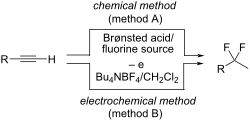
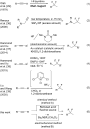
- –13). In addition, 2-(pent-4-yn-1-yl)isoindoline-1,3-dione (1h) was utilized for the construction of the CF2 unit under the same conditions to give 2h (Table 2, entries 14 and 15). The substrate bearing a halogen, such as 10-iododec-1-yne (1i) in method A, produced the corresponding 2i in 60% isolated



Selective hydrolysis of α-oxo ketene N,S-acetals in water: switchable aqueous synthesis of β-keto thioesters and β-keto amides
Beilstein J. Org. Chem. 2024, 20, 2225–2233, doi:10.3762/bjoc.20.190
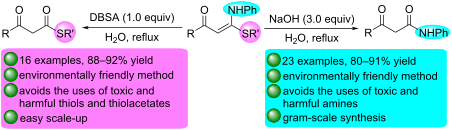
- products 2a–l. A variety of valuable functional groups on the benzene ring of 1b–j, such as methyl, methoxy, trifluoromethyl, and halogen atoms (F, Cl, Br, I), were well compatible with reaction conditions A. Most notably, unlike work by Li et al. [40], S-ethyl 3-oxo-3-(4-(trifluoromethyl)phenyl
- well as electron-withdrawing substituents on the two phenyl rings in compounds 1, such as methyl, methoxy, halogen atoms (F, Cl, Br, I), CF3 and SO2CH3, were well tolerated, and their electronic effects insignificantly impacted the formation of 3. Similarly, N-benzyl-3-oxo-3-phenylpropanamide (3w

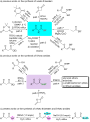


Multicomponent syntheses of pyrazoles via (3 + 2)-cyclocondensation and (3 + 2)-cycloaddition key steps
Beilstein J. Org. Chem. 2024, 20, 2024–2077, doi:10.3762/bjoc.20.178
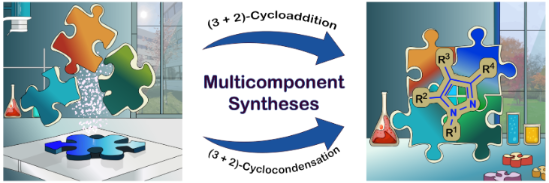
- from di-tert-butyldiazocarboxylate (23), aryl-substituted di-Boc-hydrazines 26 were prepared by the addition of aryllithium species generated in situ by lithium-halogen exchange of aryl halides [55]. Gerstenberger et al. used this entry for the one-pot synthesis of N-arylpyrazoles 25, as depicted in
- pyrazole 88 (Scheme 31) [114]. In addition to pyrazoles, functionalized pyrimidines can also be prepared in a one-pot process using this method. In 2001, Bouillon et al. reported a one-pot process for synthesizing fluorinated pyrazoles. Initially, a lithium–halogen exchange was carried out on fluorinated




1,2-Difluoroethylene (HFO-1132): synthesis and chemistry
Beilstein J. Org. Chem. 2024, 20, 1955–1966, doi:10.3762/bjoc.20.171
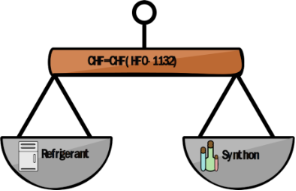
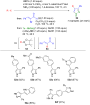
- going from diiodo- and dibromo- to dichloro- and difluoroethylene, the radius of the halogen atom decreases while the electronegativity increases. As a result, the influence of halogen atom electronegativity on the double bond is more significant in 1,2-difluoroethylene, and the relative energy of the
- -difluoroethylene and the disappearance of vinyl protons resonances in the 1H NMR spectra [78]. Addition to the C=C bond Halogen addition: 1,2-Difluoroethylene was reported to react with chlorine [46][79] and bromine [51] under irradiation, yielding 1,2-difluoro-1,2-dihaloethanes in moderate to high yield (Scheme 9
- -Difluoroethylene synthesis from perfluoropropyl vinyl ether. Deuteration reaction of 1,2-difluoroethylene. Halogen addition to 1,2-difluoroethylene. Hypohalite addition to 1,2-difluoroethylene. N-Bromobis(trifluoromethyl)amine addition to 1,2-difluoroethylene. N-Chloroimidobis(sulfonyl fluoride) addition to 1,2


The Groebke–Blackburn–Bienaymé reaction in its maturity: innovation and improvements since its 21st birthday (2019–2023)
Beilstein J. Org. Chem. 2024, 20, 1839–1879, doi:10.3762/bjoc.20.162
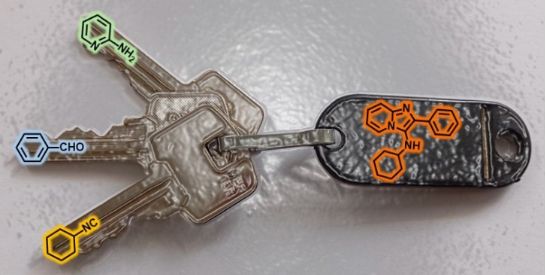
- an effective chalcogen bond donation to the substrates, in place of the halogen bonding previously described. Although their catalytic activity was reported to be lower than the one of aryl iodonium derivatives, this research contributed to the scarce number of publications on the catalytic activity






A facile three-component route to powerful 5-aryldeazaalloxazine photocatalysts
Beilstein J. Org. Chem. 2024, 20, 1831–1838, doi:10.3762/bjoc.20.161
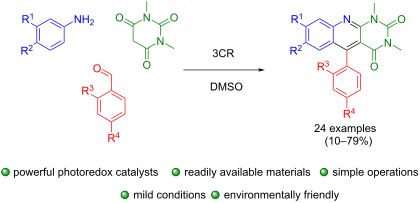
- bearing electron-donating or halogen groups. This practical method is characterised by atom economy and offers a direct route to the introduction of an aryl moiety into the C(5)-position of deazaalloxazines, thereby generating novel catalysts for photoredox catalysis without the need for subsequent
- various anilines and aromatic aldehydes with electron-donating groups or electron-withdrawing halogen atoms. However, the reaction yield was affected by the nature of the substituent on the aniline moiety. The results suggest that substrates bearing electron-donating groups on anilines have higher
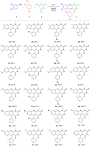
- the described conditions. The halogen groups on the anilines slightly decreased their reactivity, leading to the formation of products 2q–w with lower yields. However, the 8-chlorine derivative 2u with a o-tolyl aldehyde moiety was prepared with a yield of 37%. Aromatic aldehydes bearing bromine and




Oxidative fluorination with Selectfluor: A convenient procedure for preparing hypervalent iodine(V) fluorides
Beilstein J. Org. Chem. 2024, 20, 1785–1793, doi:10.3762/bjoc.20.157
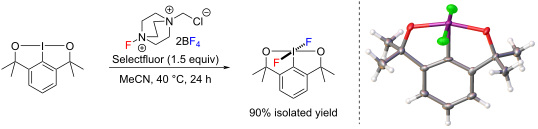
- ) fluorides in good isolated yields (72–90%). Stability studies revealed that bicyclic difluoro(aryl)-λ5-iodane 6 was much more stable in acetonitrile-d3 than in chloroform-d1, presumably due to acetonitrile coordinating to the iodine(V) centre and stabilising it via halogen bonding. Keywords: fluorination
- ; fluorobenziodoxoles; halogen bonding; hypervalent iodine; Selectfluor; Introduction An important strategy in the drug discovery process is the incorporation of fluorine into biologically active molecules because fluorine can improve bioactivity and pharmacokinetic properties [1]. Consequently, 22% of all small
- days, but it decomposed completely to iodosyl 9 after just 48 hours in dry chloroform-d1 in air (red line in Figure 3). The difference in the stability of difluoroiodane 6 in CDCl3 and CD3CN was attributed to the ability of acetonitrile to coordinate to the iodine(V) centre. Stabilisation via halogen


Ugi bisamides based on pyrrolyl-β-chlorovinylaldehyde and their unusual transformations
Beilstein J. Org. Chem. 2024, 20, 1773–1784, doi:10.3762/bjoc.20.156
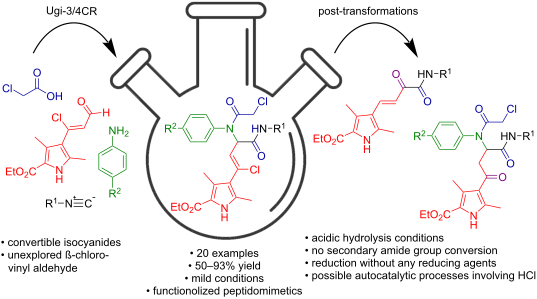
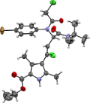
- other isocyanide MCRs is effective and one promising direction to increase the diversity of new peptidomimetics is the use of, for example, α,β-unsaturated aldehydes including those containing a halogen atom in the β-position, in the Ugi-4CR reaction [1][39]. As our previous studies have shown




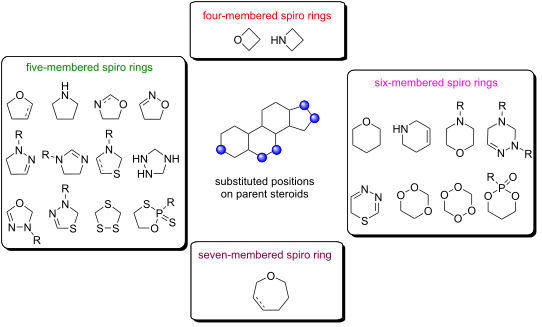
Syntheses and medicinal chemistry of spiro heterocyclic steroids
Beilstein J. Org. Chem. 2024, 20, 1713–1745, doi:10.3762/bjoc.20.152


Generation of multimillion chemical space based on the parallel Groebke–Blackburn–Bienaymé reaction
Beilstein J. Org. Chem. 2024, 20, 1604–1613, doi:10.3762/bjoc.20.143

- (compounds 1{17–21}); for pyridazine or pyrazine derivatives, even the presence of halogen atoms was sufficient to deactivate the substrate (e.g., compounds 1{22–24}); a dialkylamino or alkoxy group at the C-6 position of pyridine derivatives also hampered the substrate’s reactivity (e.g., compounds 1{25–27


Divergent role of PIDA and PIFA in the AlX3 (X = Cl, Br) halogenation of 2-naphthol: a mechanistic study
Beilstein J. Org. Chem. 2024, 20, 1580–1589, doi:10.3762/bjoc.20.141
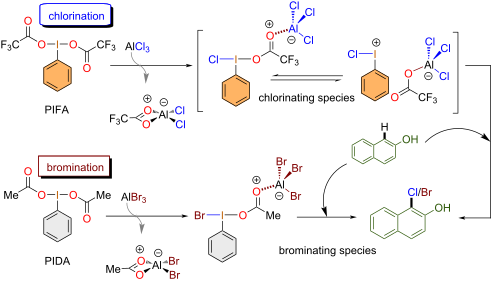
- , respectively). Then, the tetracoordinate TFAO–AlCl2 salt is released, giving rise to intermediate I-1–Cl (ΔG = −25.2 kcal/mol), which contains the key Cl–I(III) bond, in a formal TFAO/Cl ligand exchange. The Cl–I bond length is 2.46 Å, with the halogen atom sharing the hypervalent iodine bond in the equatorial


Benzylic C(sp3)–H fluorination
Beilstein J. Org. Chem. 2024, 20, 1527–1547, doi:10.3762/bjoc.20.137

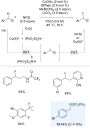
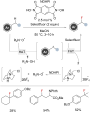
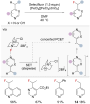
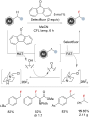
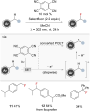
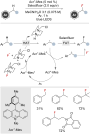
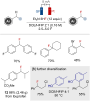
- yields, with the authors proposing that HFIP aided in stabilising the electrochemically generated benzylic radical cation intermediates. Secondary and tertiary benzylic substrates bearing halogen, ester, protected amine and alkyl functional groups tolerated the reaction conditions well. The authors




















Primary amine-catalyzed enantioselective 1,4-Michael addition reaction of pyrazolin-5-ones to α,β-unsaturated ketones
Beilstein J. Org. Chem. 2024, 20, 1518–1526, doi:10.3762/bjoc.20.136
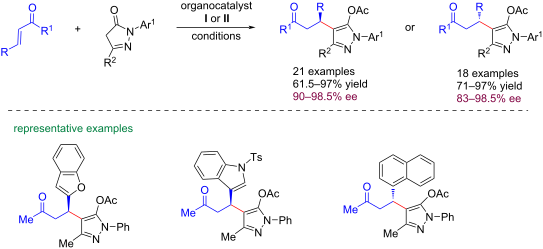
- %) furnished ent-3aa in 76% yield and 87.5% ee (Table 1, entry 13). With the optimal reaction conditions at hands, the 1,4-conjugate addition reaction of a series of α,β-unsaturated ketones 1 with pyrazolin-5-one (2a) were studied next (Scheme 2). Aryl α,β-unsaturated ketones bearing a halogen, electron




Synthesis of 2-benzyl N-substituted anilines via imine condensation–isoaromatization of (E)-2-arylidene-3-cyclohexenones and primary amines
Beilstein J. Org. Chem. 2024, 20, 1468–1475, doi:10.3762/bjoc.20.130
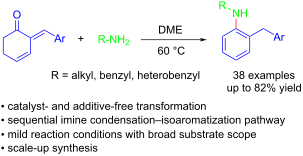
- to various aryl moieties except for those containing strong electron-withdrawing substituent (i.e., -CN, -NO2). 3-Cyclohexenones 2 bearing a halogen group (i.e., -Cl, -Br) as well as an electron-donating group (i.e., -Me, -OMe, -Ph) worked well under the optimized reaction conditions, delivering the



Predicting bond dissociation energies of cyclic hypervalent halogen reagents using DFT calculations and graph attention network model
Beilstein J. Org. Chem. 2024, 20, 1444–1452, doi:10.3762/bjoc.20.127
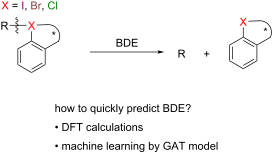
- both homolytic and heterolytic bond dissociation energies (BDEs) critical for assessing the chemical stability and functional group transfer capability of cyclic hypervalent halogen compounds using density functional theory (DFT) analysis. A moderate linear correlation was observed between the
- homolytic BDEs across different halogen centers, while a strong linear correlation was noted among the heterolytic BDEs across these centers. Furthermore, we developed a predictive model for both homolytic and heterolytic BDEs of cyclic hypervalent halogen compounds using machine learning algorithms. The
- results of this study could aid in estimating the chemical stability and functional group transfer capabilities of hypervalent bromine(III) and chlorine(III) reagents, thereby facilitating their development. Keywords: BDE; cyclic hypervalent halogen reagents; DFT calculation; graph attention network


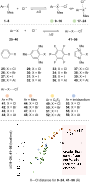
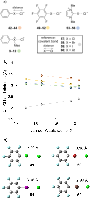
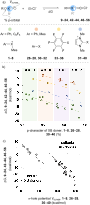
A comparison of structure, bonding and non-covalent interactions of aryl halide and diarylhalonium halogen-bond donors
Beilstein J. Org. Chem. 2024, 20, 1428–1435, doi:10.3762/bjoc.20.125
- Nicole Javaly Theresa M. McCormick David R. Stuart Department of Chemistry, Portland State University, 1719 SW 10th Ave, Portland OR 97201, United States 10.3762/bjoc.20.125 Abstract Halogen bonding permeates many areas of chemistry. A wide range of halogen-bond donors including neutral, cationic
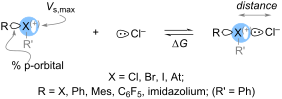
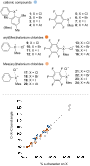
- , monovalent, and hypervalent have been developed and studied. In this work we used density functional theory (DFT), natural bond orbital (NBO) theory, and quantum theory of atoms in molecules (QTAIM) to analyze aryl halogen-bond donors that are neutral, cationic, monovalent and hypervalent and in each series
- we include the halogens Cl, Br, I, and At. Within this diverse set of halogen-bond donors, we have found trends that relate halogen bond length with the van der Waals radii of the halogen and the non-covalent or partial covalency of the halogen bond. We have also developed a model to calculate ΔG of




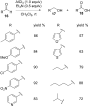
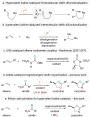
Hypervalent iodine-catalyzed amide and alkene coupling enabled by lithium salt activation
Beilstein J. Org. Chem. 2024, 20, 1405–1411, doi:10.3762/bjoc.20.122

- electrophilicity of the halogen source could be modulated to render different classes of nucleophiles for additions onto olefins in various olefin difunctionalization reactions [48][49][50][51][52]. In particular, we demonstrated that addition of either a Lewis acid or a base could activate amides to couple with
- regioselectivities (Figure 2, products 4–7). Concurring with our kinetic data, the electronic nature of the amide bears little impact on the overall reaction rate and in this case, on the final yields as well. Similarly, ortho- and meta-substituted benzamides with halogen functionalities could also generate the



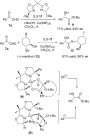
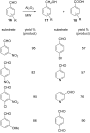
Synthetic applications of the Cannizzaro reaction
Beilstein J. Org. Chem. 2024, 20, 1376–1395, doi:10.3762/bjoc.20.120
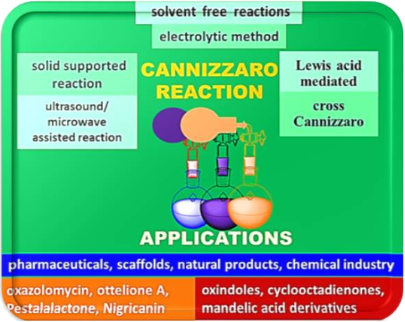
- scaffolds Burroughs et al. developed an intramolecular Cannizzaro-based cascade synthesis for the construction of 8-membered cycloocta-2,5-dienones [91]. The initial formation of the organolithium species 82 formed by acetylide addition to the ortho-substituted bromoaldehyde 81, was subjected to halogen