


Search results
Search for "energy" in Full Text gives 1410 result(s) in Beilstein Journal of Organic Chemistry. Showing first 200.
Gold extraction at the molecular level using α- and β-cyclodextrins
Beilstein J. Org. Chem. 2025, 21, 1116–1125, doi:10.3762/bjoc.21.89
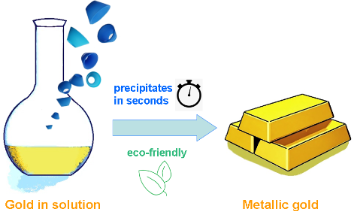
- , α-CD·cyanoauride. Moreover, the use of α-CD offers the benefit of a selective isolation of Au(CN)2. The path is open for the integration of the α-CD stripping method into commercial gold mining protocols, with expected reductions in costs, energy consumption, and environmental impact. Research on


Supramolecular assembly of hypervalent iodine macrocycles and alkali metals
Beilstein J. Org. Chem. 2025, 21, 1095–1103, doi:10.3762/bjoc.21.87
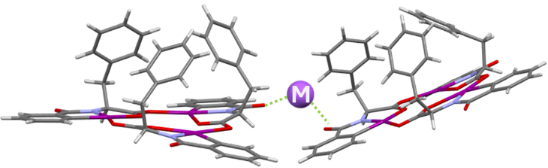
- and I. Without any metal coordination, DFT suggests conformer I is more stable than conformer II by ≈60 kJ/mol. However, upon complexation with Li+, both complexes 2 and 3 are remarkably similar in energy with the difference of less than 1 kJ/mol. This very small energy difference should be too small
- similar trend was seen in the HIM–Na+ crystals where complex 4 and complex 5 are similar in energy with a difference of less than 1.5 kJ/mol. While both Li+ and Na+ crystals were prepared in similar conditions, the difference in the resulting crystal structure (e.g., location of benzyl rings) could arise
- from a difference in the overall nucleation events of a given crystal and not necessarily from a difference in energy between conformations. DFT results of the binding energy of the two metals shows that the isolated Li+ complex 2 (1029.87 kJ/mol) is more stable than the Na+ complex (897.77 kJ/mol



Recent advances in synthetic approaches for bioactive cinnamic acid derivatives
Beilstein J. Org. Chem. 2025, 21, 1031–1086, doi:10.3762/bjoc.21.85


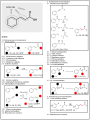

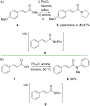

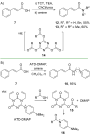


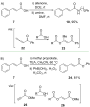


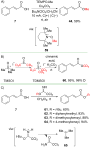

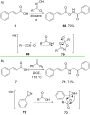
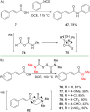


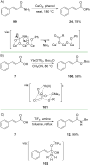








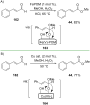

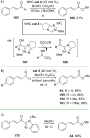
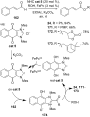


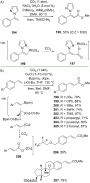
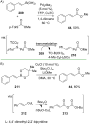
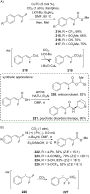
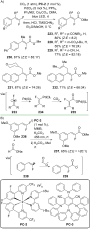

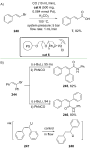
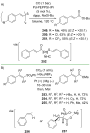

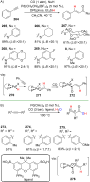

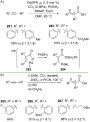
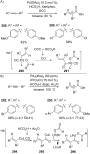

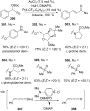
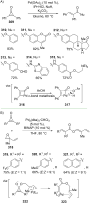
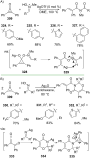
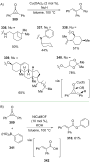
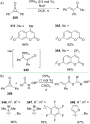
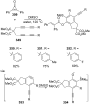
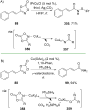
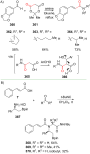
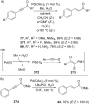

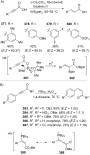

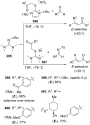
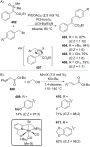
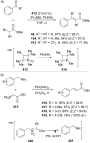
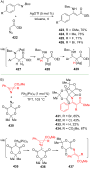


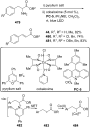


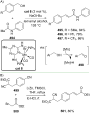
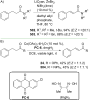

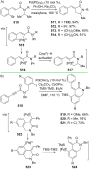
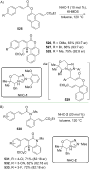
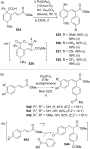

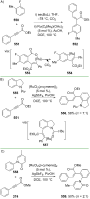
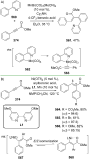
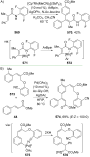


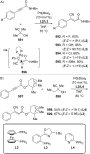
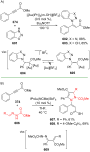
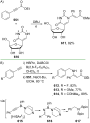
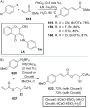
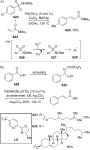
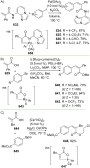
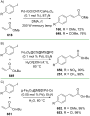
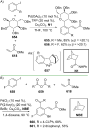
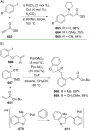

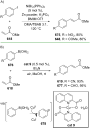
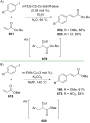

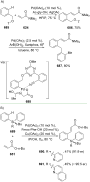
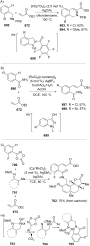
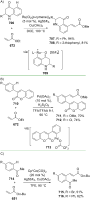
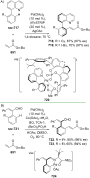
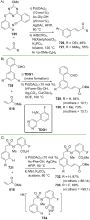


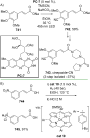


Synthesis of pyrrolo[3,2-d]pyrimidine-2,4(3H)-diones by domino C–N coupling/hydroamination reactions
Beilstein J. Org. Chem. 2025, 21, 1010–1017, doi:10.3762/bjoc.21.82
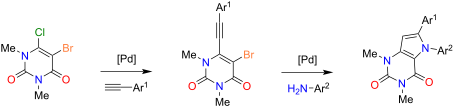
- similar absorption feature, but slightly bathochromically shifted, was observed for the thienyl-substituted derivative 4m. The strongly electron-donating N,N-dimethylaminophenyl group (products 4k,l) resulted in segmentation into two absorption bands accompanied by a strongly red-shifted lower energy


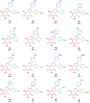

Recent total synthesis of natural products leveraging a strategy of enamide cyclization
Beilstein J. Org. Chem. 2025, 21, 999–1009, doi:10.3762/bjoc.21.81
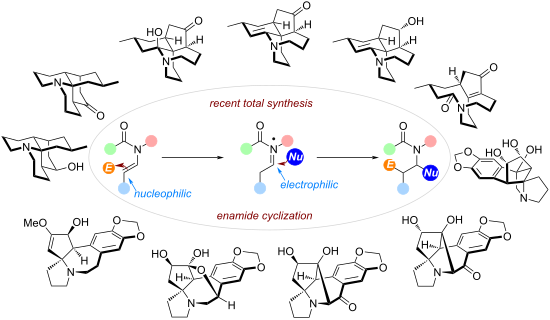
- bridge cycle [36][37]. The excellent diastereoselectivity in this radical cyclization was further rationalized by DFT calculations, which suggests an energy discrepancy of the hydrogen atom transfer process from different faces of the resulting α-hydroxyl radical. Final reduction of the ketone and amide





On the photoluminescence in triarylmethyl-centered mono-, di-, and multiradicals
Beilstein J. Org. Chem. 2025, 21, 964–998, doi:10.3762/bjoc.21.80
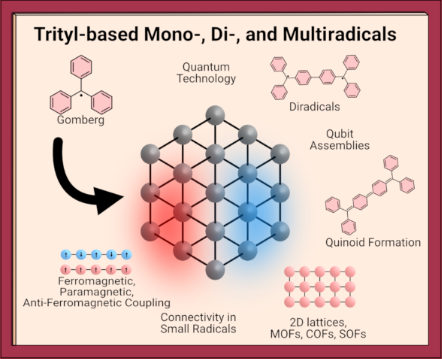
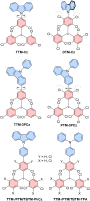
- –LUMO energy gaps are identical and their respective transitions exhibit identical transition dipole moments [19][32][33]. For the |D1⟩ transition these two degenerate transitions mix in an out-of-phase fashion leading to the observed weak absorption at 544 nm (see Figure 1b and c). When looking at the
- 374 nm and 544 nm. Therefore, the higher energy for excitation to the D2 state must quickly be lost during relaxation to the relaxed D1 state, rendering the emission indistinguishable from the higher energy excitation. While for TTM and PTM there is no transient absorption data to further elucidate
- iodine should break the symmetry; however, no effect on the absorption spectra and especially on the lower energy |D1⟩ transition has been reported [45]. Interestingly, substitution of one of the para-chlorines in TTM by iodine (I-TTM) has been reported to enable Pd-catalyzed cross-coupling, allowing









Study of tribenzo[b,d,f]azepine as donor in D–A photocatalysts
Beilstein J. Org. Chem. 2025, 21, 935–944, doi:10.3762/bjoc.21.76
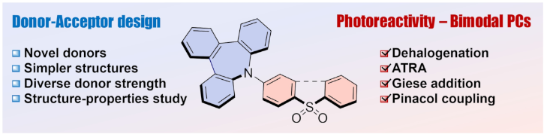
- (RAFT) polymerization [18]. Moreover, in 2022, Zysman-Colman and collaborators showed that molecule 3, initially synthesized as a TADF (thermally activated delayed fluorescence) emitter [14], can be used as a PC under electron-transfer (ET) and energy-transfer (EnT) processes (Figure 1a) [19]. All the
- experimentally in the solvatochromism study of fluorescence using solvents with diverse polarities (see Supporting Information File 1, Figure S9). Indeed, the density functional theory (DFT) calculation performed at WB97XD/Def2TZVP level of theory showed the lowest value for the HOMO–LUMO energy gap in compound
- behavior is supported by the DFT studies, which suggested a better spatial separation between the HOMO and LUMO. As expected, the HOMO–LUMO energy gap followed a trend that is dependent on the electron-donating capacity of the nitrogen heterocycles and amine present in compounds 5e (2.9 eV), 5d (3.5 eV



Recent advances in controllable/divergent synthesis
Beilstein J. Org. Chem. 2025, 21, 890–914, doi:10.3762/bjoc.21.73
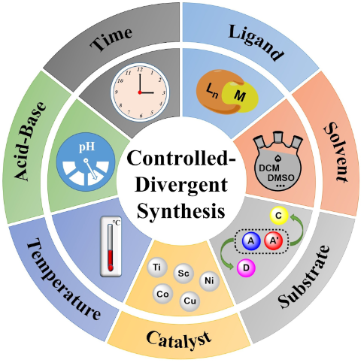
- while regenerating the catalytic species Int-82. Comparative kinetic analysis revealed a marked preference for alkyl iodide activation, as demonstrated by its substantially lower activation energy barrier compared to alkyl bromide analogs (path b). This energetic advantage facilitates preferential
- imides and TMS-alkynes, enabling the rapid construction of S(VI)–C(sp2) or S(VI)–C(sp) bonds efficiently (Scheme 24) [55]. This linkage utilizes the high bond dissociation energy (BDE = 135 kcal/mol) of silicon–fluorine bonds, employing trifluoroborate as a fluorine transfer reagent to simultaneously







Light-enabled intramolecular [2 + 2] cycloaddition via photoactivation of simple alkenylboronic esters
Beilstein J. Org. Chem. 2025, 21, 854–863, doi:10.3762/bjoc.21.69
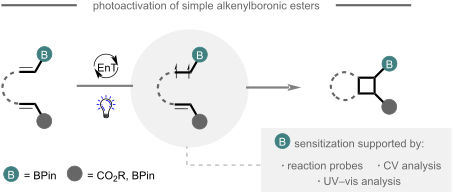
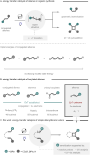
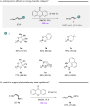
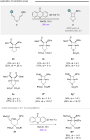
- , Germany 10.3762/bjoc.21.69 Abstract The photoactivation of organic molecules via energy transfer (EnT) catalysis is often limited to conjugated systems that have low-energy triplet excited states, with simple alkenes remaining an intractable challenge. The ability to address this limitation, using high
- energy sensitizers, would represent an attractive platform for future reaction design. Here, we disclose the photoactivation of simple alkenylboronic esters established using alkene scrambling as a rapid reaction probe to identify a suitable catalyst and boron motif. Cyclic voltammetry, UV–vis analysis
- , and control reactions support sensitization, enabling an intramolecular [2 + 2] cycloaddition to be realized accessing 3D bicyclic fragments containing a boron handle. Keywords: boron; catalysis; [2 + 2] cycloaddition; energy transfer; photochemistry; Introduction The strategic use of a photon to



Unraveling cooperative interactions between complexed ions in dual-host strategy for cesium salt separation
Beilstein J. Org. Chem. 2025, 21, 845–853, doi:10.3762/bjoc.21.68
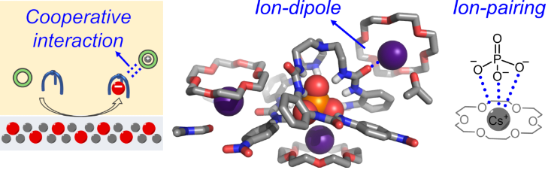
- displays higher hydration energy than that of sulfate, and the tetrahedral shape of sulfate anion matches the pseudo-tetrahedral cavity of the folded hexaurea receptor [30]. Secondly, for Cs+ cations, two types of Cs+ binding are shown in the solid state. Two type-(I) cesium cations are found to be


Substituent effects in N-acetylated phenylazopyrazole photoswitches
Beilstein J. Org. Chem. 2025, 21, 830–838, doi:10.3762/bjoc.21.66
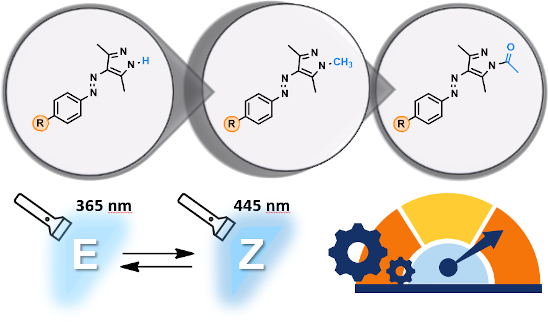
- -art technologies ranging from energy-storage materials [6][7] to pharmacology [8][9][10][11], materials chemistry [12][13], control of peptides structure [14][15] or proteins [16], as antibacterial agents [17][18], smart coating [19], or multivalent photoresponsive systems [20][21], to name only a few


4-(1-Methylamino)ethylidene-1,5-disubstituted pyrrolidine-2,3-diones: synthesis, anti-inflammatory effect and in silico approaches
Beilstein J. Org. Chem. 2025, 21, 817–829, doi:10.3762/bjoc.21.65
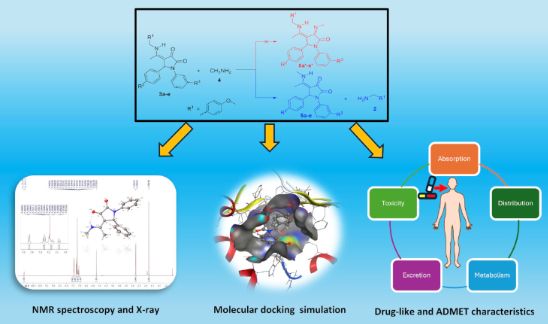
- necessary to elucidate the toxicological profiles of compounds 5c and 5e prior to consideration for drug development. Analysis of reactivity descriptors The primary reactivity descriptors, such as frontier molecular orbital energies (EHOMO and ELUMO), energy gap (ΔEL-H), ionization energy (IE), electron
- docking scores (DS) revealed a range of binding affinities, with values ranging from −8.55 kcal/mol (iNOS–DEX) to −9.51 kcal/mol (iNOS–5e). Notably, iNOS–5e exhibited the most favorable binding energy, suggesting it has the strongest interaction with the iNOS enzyme. Hydrogen bonding analysis demonstrated
- optimized at the M062X/6-31+G(d) level of theory using Gaussian 16 software [48]. The reactivity, stability, and electronic properties of molecules determined by key parameters such as frontier molecular orbital energies (EHOMO and ELUMO), energy gap (ΔEL-H), ionization energy (IE), electron affinity (EA


Synthesis and photoinduced switching properties of C7-heteroatom containing push–pull norbornadiene derivatives
Beilstein J. Org. Chem. 2025, 21, 807–816, doi:10.3762/bjoc.21.64
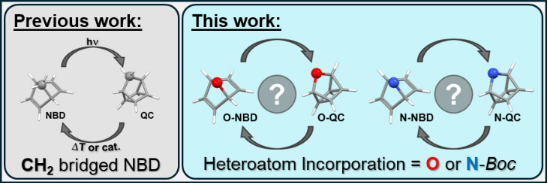
- catalytic back-conversion studies. Keywords: heterocycles; molecular solar thermal systems; norbornadiene; photochemistry; quadricyclane; Introduction In recent decades, the demand for renewable energy has increased tremendously [1]. A promising alternative to fossil fuels is the utilization of so-called
- molecular solar thermal (MOST) systems [2]. These systems operate on the principle of converting an energy-lean isomer into an energy-rich form by irradiating it with sunlight, effectively storing energy in the form of chemical strain energy [3]. On demand, by application of an external stimulus such as
- heat, catalysis, or an electrochemical input [4][5][6], the stored energy can be released converting the molecule back in the parent form (Figure 1). Typical MOST systems are azobenzenes (E/Z-isomerization) [7][8][9][10], the isomerization of dihydroazulenes/vinylheptafulvenes [11][12][13], conversion



Recent advances in the electrochemical synthesis of organophosphorus compounds
Beilstein J. Org. Chem. 2025, 21, 770–797, doi:10.3762/bjoc.21.61
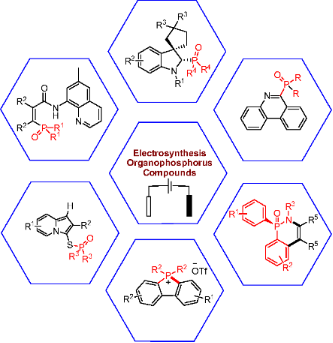
- . Electricity can perform the oxidation and reduction process by exchanging electrons on the electrode surface in a region called the double layer (DL) [12]. Unlike traditional methods that require high temperature, pressure, and external oxidants, electrochemistry is an efficient and energy-saving approach
- Electrochemical reaction cells When a redox reaction occurs indirectly, chemical energy is transformed into electrical energy. A device that facilitates this conversion is known as an electrochemical cell. Electrochemical reaction cells are divided into two primary categories: galvanic (voltaic) and electrolytic
- . They consist of two electrodes – anode (where oxidation occurs) and cathode (where reduction occurs) – immersed in an electrolyte. Galvanic cell The redox reaction occurs spontaneously in these cells, converting chemical energy into electrical energy. The potential difference between the two electrodes


Development and mechanistic studies of calcium–BINOL phosphate-catalyzed hydrocyanation of hydrazones
Beilstein J. Org. Chem. 2025, 21, 755–765, doi:10.3762/bjoc.21.59
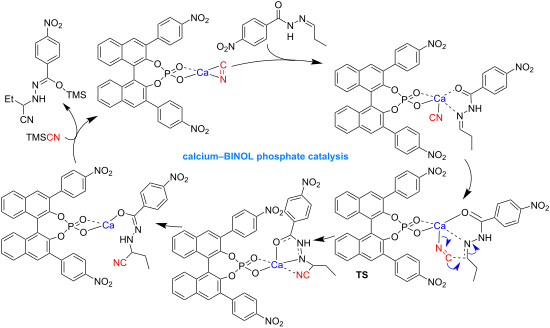
- ), is 0.5 kcal·mol−1 lower in energy. Substrate 1 may conceivably undergo a tautomerization towards an iminol form, 14.2 kcal·mol−1 higher in energy. Hence, amounts of this isomer are negligible in equilibrium and do not play a role also in the formation of the pre-complex 3. The competing cyanide form
- of 9 (with a collinear arrangement of Ca–C–N) was found to be a sizable 3.3 kcal·mol−1 higher in energy than the preferred isonitrile, conforming to earlier anticipations based on computations of alkaline earth metal dicyanides [54]. Similarly, it also has been recently observed that boron-catalyzed
- [1,2]H shift is orbital symmetry forbidden and has, hence, a high barrier of 39.8 kcal·mol−1, and also because a – conceivable – intermittently at carbonyl oxygen protonated species (i.e., on an iminol-type pathway) is considerably higher in energy than 10 or 11. The TMS-bound product 12, proposed in


Orthogonal photoswitching of heterobivalent azobenzene glycoclusters: the effect of glycoligand orientation in bacterial adhesion
Beilstein J. Org. Chem. 2025, 21, 736–748, doi:10.3762/bjoc.21.57
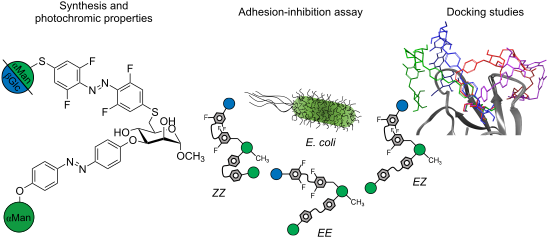
- 1, the EE isomer has the lowest and the ZZ isomer the highest binding energy. Comparison of the molecular interactions as revealed by molecular modeling shows that the second, non CRD-bound antenna adopts different orientations in the EE versus the ZZ isomer exerting different secondary interactions
- Thr53. The high binding energy of the ZZ isomer, on the other hand, can be explained by additional hydrogen bonds of the scaffold mannoside to Asn138 and Ser139 (but not to Tyr48) and furthermore, the glucose moiety interacts with Arg92, Asn135, Asn138, and Asp140. The binding energies predicted for the
- , 6αMan3αMan 2, 6αMan 4, and 3αMan 5 are listed together with the RIP(MeMan) values. The best docking scores obtained using Glide for the open and closed gate crystal structures of FimH (PDB: 1KLF and 1UWF) with the corresponding binding energy (MM-GBSA) are shown. Furthermore, the best docking scores obtained


Origami with small molecules: exploiting the C–F bond as a conformational tool
Beilstein J. Org. Chem. 2025, 21, 680–716, doi:10.3762/bjoc.21.54
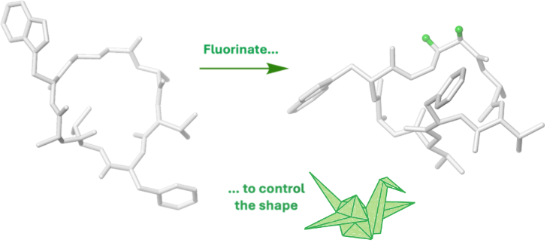
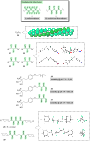
- concepts to their own scaffolds of interest. Review 1 Alkanes The simplest organic scaffolds are the alkanes. In such molecules, C–C bond rotations often have low energy barriers, and they often deliver conformers that are similar in energy, and this means that many alkanes have considerable conformational
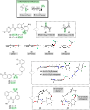
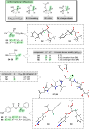
- this hyperconjugative stabilisation, and it is ≈1 kcal·mol−1 higher in energy. Thus, we now have a situation where the fluorinated structural motif is not a passive chameleon as was seen above for the 1,1-difluoro pattern, but rather it exerts its own conformational character [21]. The 1,2-difluoro
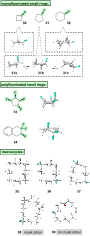
- offer interesting opportunities and challenges in terms of conformational control. For example, consider cyclododecane (35, Figure 5). This molecule has a global minimum energy conformation that features a square shape, but this conformation suffers from steric clashes between 1,4-pairs of hydrogen



Photochemically assisted synthesis of phenacenes fluorinated at the terminal benzene rings and their electronic spectra
Beilstein J. Org. Chem. 2025, 21, 670–679, doi:10.3762/bjoc.21.53
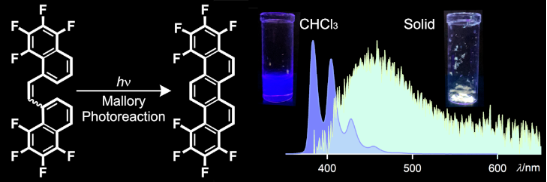
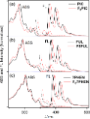
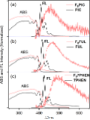
- aromatics [53]. Figure 5 shows the molecular orbitals (MOs) around the frontier MO levels and the eigenvalues. The shapes (symmetries) and the energy-level order of the MOs in the F8-phenacenes are the same as those of the corresponding parent phenacenes. It is characteristic that, upon the fluorination
- , the MO levels systematically lowered by 0.7–0.8 eV compared to the parent phenacenes, and that the energy gaps and the symmetry of the MOs are little affected by the fluorination. Accordingly, the electronic spectral behavior of the F8-phenacenes is essentially the same as that of the parent
- that, through the fluorination, one can tune the MO energy levels without changing the apparent electronic spectral features in solution, such as, electronic spectral shapes, wavelengths, and fluorescence quantum yields. Such fluorine-substitution effects on electronic spectra and MO levels were





Asymmetric synthesis of fluorinated derivatives of aromatic and γ-branched amino acids via a chiral Ni(II) complex
Beilstein J. Org. Chem. 2025, 21, 659–669, doi:10.3762/bjoc.21.52
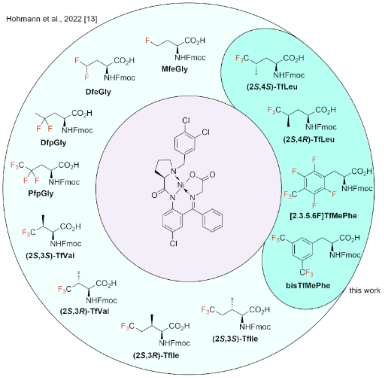
- (HREIMS) were measured on a MAT 711 (Varian MAT, Bremen, Germany). Electron energy for EI was set to 70 eV. Infrared spectra (IR) were measured on an ALPHA II (Bruker, Billerica, USA) spectrometer. Characteristic absorption bands are given in wave numbers (cm−1). Qualitative thin-layer chromatography (TLC


Recent advances in allylation of chiral secondary alkylcopper species
Beilstein J. Org. Chem. 2025, 21, 639–658, doi:10.3762/bjoc.21.51
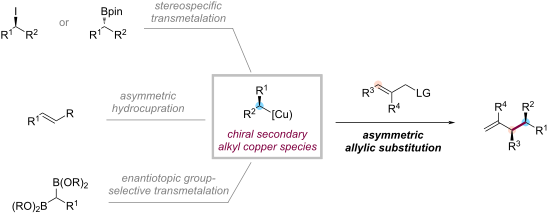
- ligand L3 and the allylic electrophile 35. In contrast, a si-face attack leads to a higher-energy transition state due to significant steric repulsion. Enantioselective hydroallylation of vinyltrifluoromethyl compounds The direct functionalization of 1-trifluoromethylalkenes 38 through copper catalysis
- transition states: an open transition state TS7 facilitated by LiOt-Bu and a closed transition state TS6 without base assistance (Scheme 17a). The significant energy difference between these pathways (ΔΔG‡ = 4.3 kcal/mol) strongly favors the open transition state TS7 mechanism, attributed to reduced steric
- , computational density functional theory calculations were performed focusing on the oxidative addition transition states (S,R)-TS8 and (S,S)-TS9 (Scheme 19b). The theoretical analysis revealed a notable energy difference between these diastereomeric transition states, with (S,R)-TS8 being 4.11 kcal/mol lower in


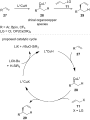


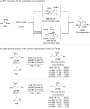
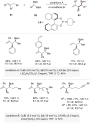

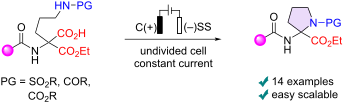
Entry to 2-aminoprolines via electrochemical decarboxylative amidation of N‑acetylamino malonic acid monoesters
Beilstein J. Org. Chem. 2025, 21, 630–638, doi:10.3762/bjoc.21.50
- observed by LC–MS when the electrolysis was performed in 5:1 MeCN/D2O (Scheme 2, reaction 2). The considerably higher O–H bond dissociation energy (119 kcal/mol) [12] as compared to that of the C–H bond in MeCN (86 kcal/mol) [13] renders the hydrogen atom abstraction from water by a carbon-centered radical

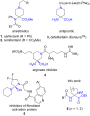


Photocatalyzed elaboration of antibody-based bioconjugates
Beilstein J. Org. Chem. 2025, 21, 616–629, doi:10.3762/bjoc.21.49
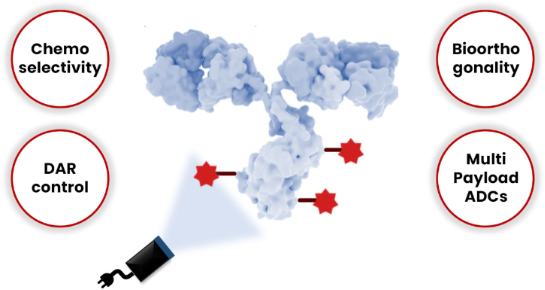
- the agency of low-energy visible light with specific functional groups on biomolecules. This allows precise control over the conjugation process, enabling targeted modifications without affecting non-reactive sites. Although previous reviews have discussed the more traditional synthetic methods
- catalysts, including photoredox catalysts, energy-transfer catalysts, and genetically encoded photocatalysts, highlighting their distinct features, mechanisms, applications, and prospects [41]. This thorough analysis showcased the promising advancements in the chemical modification of proteins. As this
- oxygen [42]. Through energy transfer (EnT) from the ruthenium-based photocatalyst to triplet oxygen, singlet oxygen is produced in a targeted manner, which oxidizes histidine to an endoperoxide, significantly increasing its reactivity toward nucleophiles (Figure 4A). This strategy employs a


Sequential two-step, one-pot microwave-assisted Urech synthesis of 5-monosubstituted hydantoins from L-amino acids in water
Beilstein J. Org. Chem. 2025, 21, 596–600, doi:10.3762/bjoc.21.46
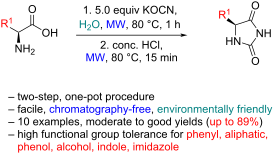
- . Additionally, the reaction proceeds efficiently without the need for toxic or moisture-sensitive reagents, further making it suitable for large-scale applications. The shorter reaction time (less than 2 hours) also contributes to improve energy efficiency when compared to traditional methods. These factors


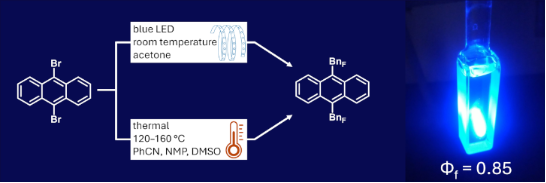
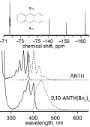
Deep-blue emitting 9,10-bis(perfluorobenzyl)anthracene
Beilstein J. Org. Chem. 2025, 21, 515–525, doi:10.3762/bjoc.21.39
- Reineke for preliminary experiments on photoluminescence lifetimes. Part of the experimental work is based on doctoral theses of Dr. Long San [40] and Dr. Brian Reeves [41]. Funding We thank National Science Foundation (grant NSF/CHE-2153922 (O.V.B.), the Office of Basic Energy Sciences, and the Colorado
- State University Research Foundation for partial financial support. the Office of Basic Energy Sciences, and the Colorado State University Research Foundation for partial financial support. NSF’s ChemMatCARS Sector 15 is principally supported by the National Science Foundation under grant number NSF/CHE
- -1834750 and NSF/CHE-2335833. Use of the Advanced Photon Source was supported by the U.S. Department of Energy, Office of Science, and Office of Basic Energy Sciences under Contract DE-AC02-06CH11357.





Unprecedented visible light-initiated topochemical [2 + 2] cycloaddition in a functionalized bimane dye
Beilstein J. Org. Chem. 2025, 21, 500–509, doi:10.3762/bjoc.21.37
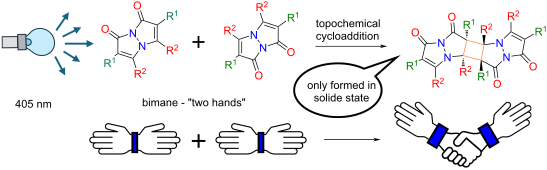
- crystal lattice and are often reversible, requiring either high-energy light or heat for initiation [6][7][8]. Notably, topochemical polymerizations align with the principles of green chemistry, as they are solvent-free and do not involve toxic reagents [9]. The highly ordered and uniform nature of





