Search results
Search for "function" in Full Text gives 1173 result(s) in Beilstein Journal of Organic Chemistry. Showing first 200.
Chemo-enzymatic total synthesis: current approaches toward the integration of chemical and enzymatic transformations
Beilstein J. Org. Chem. 2024, 20, 1693–1712, doi:10.3762/bjoc.20.151
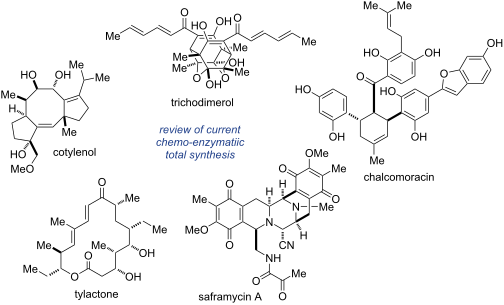
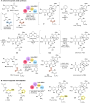
- substrate–enzyme combinations. The integrative approach of combining intriguing enzymes in ever-evolving biosynthetic research with chemical synthesis, would foster collaborative breakthroughs in the interdisciplinary landscape of natural product biosynthesis, total synthesis as well as function- and




A fiber-optic spectroscopic setup for isomerization quantum yield determination
Beilstein J. Org. Chem. 2024, 20, 1684–1692, doi:10.3762/bjoc.20.150
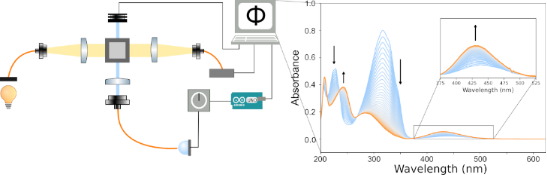
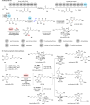
- different python scripts (provided in Supporting Information File 1). The rate equations are ordinary differential equations (ODEs) and can thus be solved numerically using existing methods in the SciPy package [50]. An absorbance function was constructed, which takes the solution of the ODEs to model the
- absorbance over time. This absorbance function was then fitted to the measured absorbance at the wavelength of irradiation (or wavelengths, for a non-monochromatic excitation light). The parameters ΦA→B and ΦB→A were evaluated to minimize the residual sum of squares (RSS) between the measured and fitted


Methyltransferases from RiPP pathways: shaping the landscape of natural product chemistry
Beilstein J. Org. Chem. 2024, 20, 1652–1670, doi:10.3762/bjoc.20.147
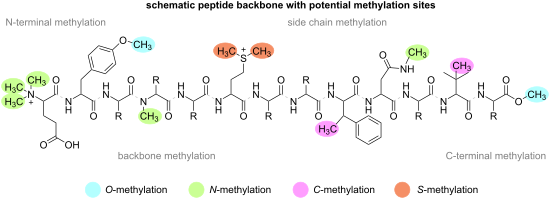
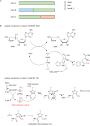
- peptides at the C-terminal carboxy group of different amino acids, namely methionine, isoleucine, and valine. This demonstrates its tolerance to various substrates. LahSB does not require the leader peptide or other modifying enzymes to carry out its function [72], making it a promising tool for
- biocatalytic applications. The co-crystallisation of LahSB with bound SAH provides important details about the structure–function relationship, the substrate–enzyme interaction, and the cofactor binding site (Figure 5). This structural information, including the residues involved in binding, is essential for
- enzyme engineering and rational design [73][74]. Lentzea kentuckyensis sp. produces lassomycin (Figure 4), a lasso peptide, with a methyl ester at the C-terminus. The las cluster encodes LasF, which is predicted to function as an O-MT. Since no other putative MT is encoded in the las cluster, LasF is





Polymer degrading marine Microbulbifer bacteria: an un(der)utilized source of chemical and biocatalytic novelty
Beilstein J. Org. Chem. 2024, 20, 1635–1651, doi:10.3762/bjoc.20.146
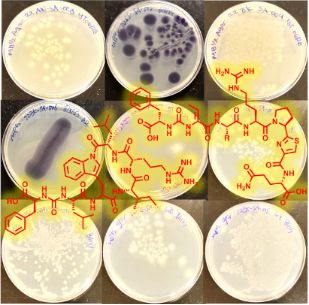
- domain. It functions as an exochitinase. The two catalytic domains have different activities on chitooligosaccharides. Each domain was maximally active from 30 °C to 37 °C and from pH 7.2 to 8.0. Both domains function cooperatively to degrade chitin [22]. It should be noted that M. degradans 2-40 was




pKalculator: A pKa predictor for C–H bonds
Beilstein J. Org. Chem. 2024, 20, 1614–1622, doi:10.3762/bjoc.20.144
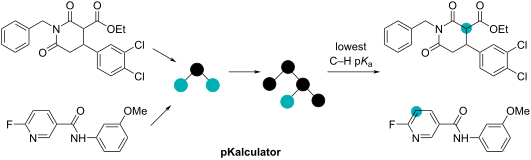
- classifier as Ree et al. [14] have shown the opposite to be true for electrophilic aromatic substitutions. However, our regression model serves a dual function, that is, it accurately predicts pKa values and identifies the reaction site. Prediction of aryl C–H borylation sites In the previous section, we
- , respectively, when correlating with QM-computed pKa values. Both methods are freely available under the MIT license. Our workflow can function as a filtering tool for computer-aided synthesis planning for the synthesis of various pKa-dependent reactions (aldol, Michael, and Claisen), evidenced by its accurate


![[Graphic 9]](/bjoc/content/inline/1860-5397-20-144-i12.svg?max-width=637&scale=1.3000021)


Divergent role of PIDA and PIFA in the AlX3 (X = Cl, Br) halogenation of 2-naphthol: a mechanistic study
Beilstein J. Org. Chem. 2024, 20, 1580–1589, doi:10.3762/bjoc.20.141
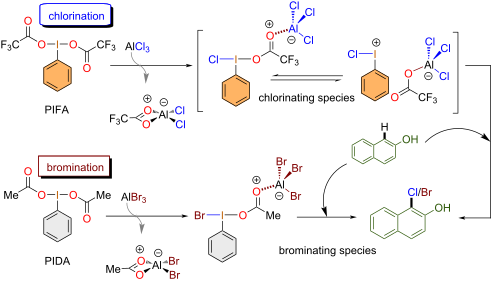
- . Single-point calculations were improved using a mixed basis set of triple-ζ quality with a polarization function, 6-311G(d,p) for all atoms except for Br and I, which were treated with the LANL08d relativistic pseudopotential [41][42][43], i.e., the composite level of theory used is the following: (SMD


Mining raw plant transcriptomic data for new cyclopeptide alkaloids
Beilstein J. Org. Chem. 2024, 20, 1548–1559, doi:10.3762/bjoc.20.138
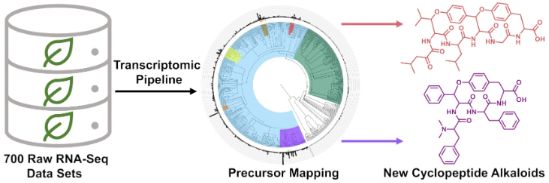
- (Figure 1). Recent enzymatic reconstitution has demonstrated that the burpitide cyclases can function either autocatalytically (fused) or as traditional stand-alone proteins with separate free peptide substrates (split) [4][7][8][9][10][11]. When fully matured, burpitides possess a wide range of
- containing cores matching known molecules such as hibispeptins, moroidins, jubanines, and lyciumins were selected for the new model (see Supporting Information). The sequences were aligned and the hmm build function of HMMER v3.3.2 was used to generate the model [36]. The HMM is available in Supporting





Benzylic C(sp3)–H fluorination
Beilstein J. Org. Chem. 2024, 20, 1527–1547, doi:10.3762/bjoc.20.137

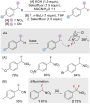
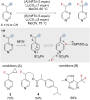
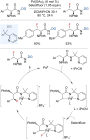
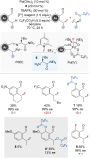
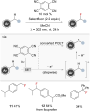
- their function is three-fold; as a fluoride source, as a supporting electrolyte and as a proton source, allowing for the hydrogen-evolution reaction as the counter electrode process [91]. Benzylic fluorination with these reagents has been observed as a side-product in the electrochemical generation of








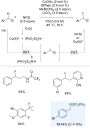


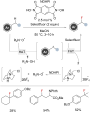


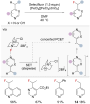


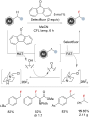





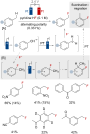

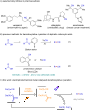
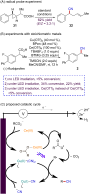
Electrophotochemical metal-catalyzed synthesis of alkylnitriles from simple aliphatic carboxylic acids
Beilstein J. Org. Chem. 2024, 20, 1497–1503, doi:10.3762/bjoc.20.133
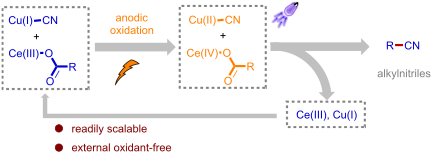
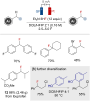
- Yukang Wang Yan Yao Niankai Fu Beijing National Laboratory for Molecular Sciences, CAS Key Laboratory of Molecular Recognition and Function, Institute of Chemistry, Chinese Academy of Sciences, Beijing 100190, China University of Chinese Academy of Sciences, Beijing 100049, China 10.3762/bjoc


Photoswitchable glycoligands targeting Pseudomonas aeruginosa LecA
Beilstein J. Org. Chem. 2024, 20, 1486–1496, doi:10.3762/bjoc.20.132
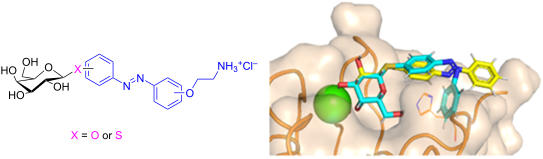
- deactivation of biological function. It also offers the potential to change the properties of defined molecules in biological systems with minimal disturbance to the rest of the system. Photoswitchable ligands, i.e., the incorporation of light-responsive moieties into a drug-like molecular structure, allow
- has a tetrameric structure, displays a high affinity for ᴅ-galactose (ᴅ-Gal, with Kd = 34 μM) and galactosides. The 3- and 4-hydroxy function on the ᴅ-Gal unit are involved in the coordination of Ca2+ in the binding site [5][6][7][8][32]. A large range of galactosyl conjugates have been synthetized
- total heat released as a function of total ligand concentration for the titration shown in the upper panel. The solid line represents the best least-square fit to experimental data using a one site model. (A) Enthalpy–entropy compensation plot of compounds 1–5 from ITC analysis. The dotted green line


Bioinformatic prediction of the stereoselectivity of modular polyketide synthase: an update of the sequence motifs in ketoreductase domain
Beilstein J. Org. Chem. 2024, 20, 1476–1485, doi:10.3762/bjoc.20.131
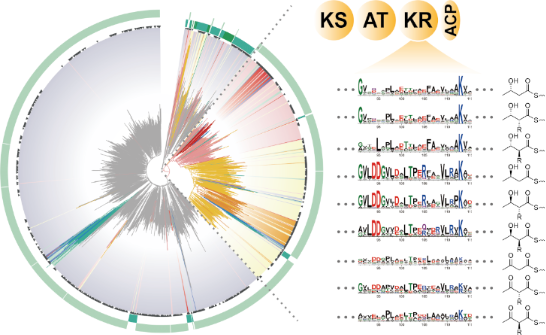
- ) Sequence alignment of KR domains whose stereoselectivity cannot be predicted based on the reported motifs. The labels show the product name and the order of the module where KR is located in the PKS assembly line (starting from the module with condensation function). KR types predicted based on the


Challenge N- versus O-six-membered annulation: FeCl3-catalyzed synthesis of heterocyclic N,O-aminals
Beilstein J. Org. Chem. 2024, 20, 1412–1420, doi:10.3762/bjoc.20.123
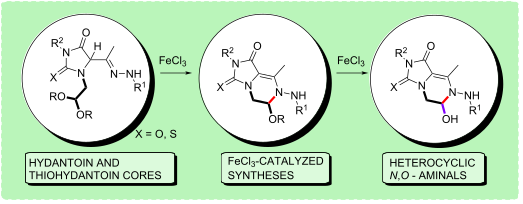
- ), whose sequential acylation process by iso(thio)cyanates 3a–h gives rise to the asymmetric (thio)urea derivatives (intermediate II). The spontaneous nucleophilic attack of the (thio)amide nitrogen on the terminal methyl ester function at C-4 of the starting azo-ene system provides a regioselective
- keto function of the hydrazone moiety and the open-chain hemiacetal or aldehyde hydrate in Brønsted acid medium to access 1H-imidazo[5,1-c][1,4]oxazine derivatives (Scheme 1) [21]. Considering that the hydrazone function at C-4 of 4a–r may exist in a tautomeric equilibrium with the corresponding ene




Rhodium-catalyzed homo-coupling reaction of aryl Grignard reagents and its application for the synthesis of an integrin inhibitor
Beilstein J. Org. Chem. 2024, 20, 1341–1347, doi:10.3762/bjoc.20.118
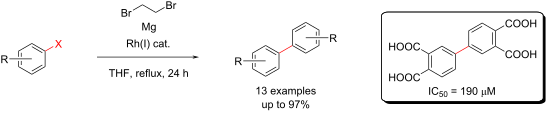
- developing novel inhibitors of integrin function, we identified a drug candidate (10n) through high throughput screening (HTS) that inhibits the integrin complex formation, which is an important step for integrin activation. The binding inhibitor 10n was effective as IC50 of 190 μM in AlphaScreen system, and


Mechanistic investigations of polyaza[7]helicene in photoredox and energy transfer catalysis
Beilstein J. Org. Chem. 2024, 20, 1236–1245, doi:10.3762/bjoc.20.106
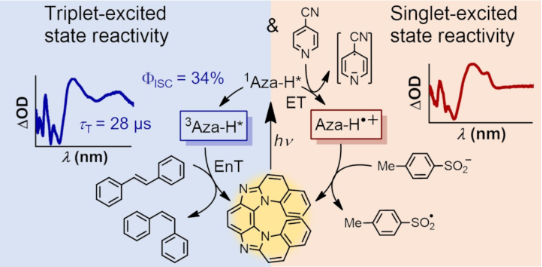
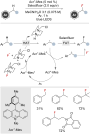
- thorough photochemical characterization is essential for efficient light-driven applications. In this article, the mode of action of a polyazahelicene catalyst (Aza-H) was investigated using laser flash photolysis (LFP). The study revealed that the chromophore can function as a singlet-state photoredox




Competing electrophilic substitution and oxidative polymerization of arylamines with selenium dioxide
Beilstein J. Org. Chem. 2024, 20, 1221–1235, doi:10.3762/bjoc.20.105
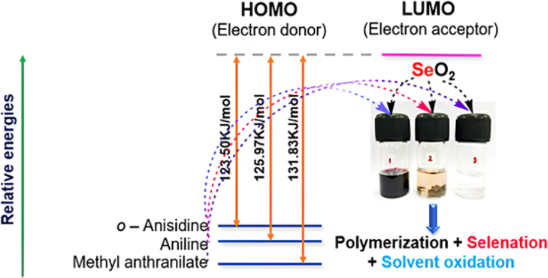
- electrons over the adjacent carboxylate function, which prompted the selenation pathway, leading to the formation of two of the isomeric diorganyl selenides of methyl anthranilate. The diaryl selenides were structurally characterized using single-crystal X-ray diffraction. Density functional theory
- aniline with an electron-donating function (i.e., o-anisidine) undergo significant polymerization in the presence of SeO2, we were interested in studying this reaction using methyl anthranilate, having an electron-withdrawing group (Scheme 4). To our surprise, the quantity of polymer 3 formed was low
- . Conclusion Aniline and o-anisidine underwent a predominant oxidative polymerization reaction with SeO2. Therein, electrophilic selenation was poor. The reactivity of the NH2 unit towards oxidation could be partially suppressed by the presence of an electron-withdrawing function. Consequently, for methyl


Cofactor-independent C–C bond cleavage reactions catalyzed by the AlpJ family of oxygenases in atypical angucycline biosynthesis
Beilstein J. Org. Chem. 2024, 20, 1198–1206, doi:10.3762/bjoc.20.102
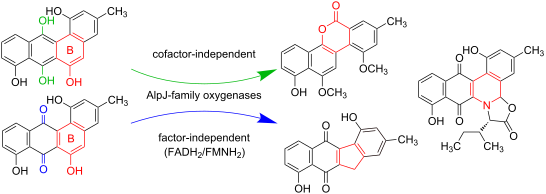
- , Supporting Information File 1) [21][22]. In this study, we reveal the previously undisclosed facet that AlpJ-family oxygenases can function as cofactor-independent oxygenases when the hydroquinone intermediate CR1 (8) serves as the substrate. In this context, the enzymes autonomously catalyze oxidative C–C




Two-fold addition reaction of silylene to C60: structural and electronic properties of a bis-adduct
Beilstein J. Org. Chem. 2024, 20, 1179–1188, doi:10.3762/bjoc.20.100
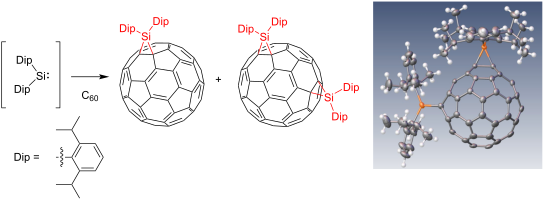
- with excellent properties as organic photovoltaic materials [9][10][11][12][13][14]. Furthermore, regioisomerically pure bis-functionalized fullerenes function better as electron acceptors in organic thin-film solar cells than mixtures of the corresponding regioisomers do [12][13][14]. Therefore


Synthesis of 1,4-azaphosphinine nucleosides and evaluation as inhibitors of human cytidine deaminase and APOBEC3A
Beilstein J. Org. Chem. 2024, 20, 1088–1098, doi:10.3762/bjoc.20.96
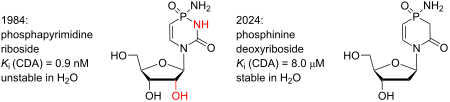
- function in an organism, but the activities can also be detrimental. CDA is highly active in the liver and spleen, which results in deamination and consequent deactivation of several chemotherapeutic agents, including the anticancer agents cytarabine, gemcitabine and 5-aza-2'-deoxycytidine (decitabine) [2
- kinetic data using Lambert’s W function [71]. This method provides better estimates for the Michaelis–Menten constant (KM) and maximum velocity (Vmax) than nonlinear regression analysis of the initial rate (V0). It is also superior to any of the known linearised transformations of the Michaelis–Menten


Mild and efficient synthesis and base-promoted rearrangement of novel isoxazolo[4,5-b]pyridines
Beilstein J. Org. Chem. 2024, 20, 1069–1075, doi:10.3762/bjoc.20.94
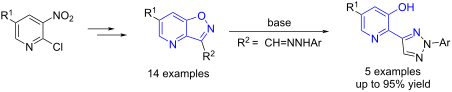
- us to try another protecting group for the formyl function, namely arylhydrazone. Thus, reactions of compounds 7a–c with a number of arylhydrazines afforded the corresponding hydrazones 11 which were not isolated and subjected to cyclization under the action of K2CO3 (Scheme 5). In most cases the


Novel analogues of a nonnucleoside SARS-CoV-2 RdRp inhibitor as potential antivirotics
Beilstein J. Org. Chem. 2024, 20, 1029–1036, doi:10.3762/bjoc.20.91
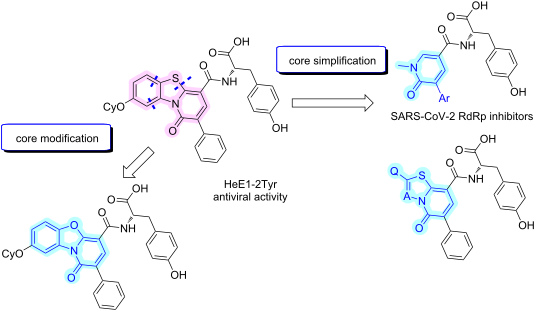
- suitably decorated benzoxazole derivative 12a. The benzoxazole core showed increased sensitivity towards a basic environment, resulting in the ring-opened side product 13 through saponification of the ester function of compound 12a. The identification of this side product proved to be challenging due to
- insufficient evidence provided even by meticulous NMR analysis and eventually had to be confirmed by X-ray crystallography (Figure S1, Supporting Information File 1). Changing the ester function from an ethyl to an allyl group enabled a very mild cleavage using a Pd-mediated reaction with triethylsilane [28
- curves. C) The IC50 values were determined using the GraphPad algorithm (IC50 value of compound 1 was published by Dejmek et al. [24]), the BEI was calculated using the function pIC50 [mol/L]/MW [kDa]. Synthetic pathway to benzoxazole analogue 2 of HeE1-2Tyr (1). Reagents and conditions: a) TMSN3, TfOH


Carbonylative synthesis and functionalization of indoles
Beilstein J. Org. Chem. 2024, 20, 973–1000, doi:10.3762/bjoc.20.87
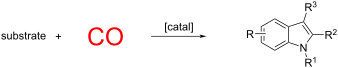
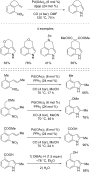
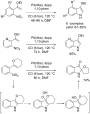
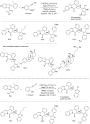
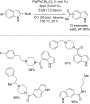
- , the metal-catalyzed direct C–H carbonylation of indoles is an effective and straightforward approach to synthesize indole derivatives containing a carbonyl function in position 3. On the other hand, only a few examples to synthesize indole-2-carbonyl derivatives have been realized. One example is the












Enhancing structural diversity of terpenoids by multisubstrate terpene synthases
Beilstein J. Org. Chem. 2024, 20, 959–972, doi:10.3762/bjoc.20.86
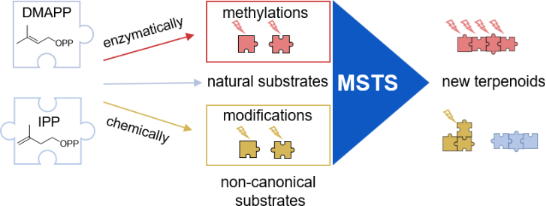
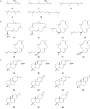
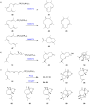
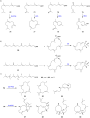
- potential of TSs to generate terpenoids has been underestimated. With the development of synthetic biology technologies, an efficient precursor-providing chassis was constructed. Together with the accumulation of genome sequencing data, we systematically evaluated the function of TSs and discovered new







Monitoring carbohydrate 3D structure quality with the Privateer database
Beilstein J. Org. Chem. 2024, 20, 931–939, doi:10.3762/bjoc.20.83

- modelling of glycoproteins and protein–carbohydrate complexes is pivotal in understanding the complex biochemical interactions that affect the physiological function of cells [1]. Any mechanistic analysis done with finely grained approaches such as QM/MM [2] relies heavily on the correctness of the starting


(Bio)isosteres of ortho- and meta-substituted benzenes
Beilstein J. Org. Chem. 2024, 20, 859–890, doi:10.3762/bjoc.20.78
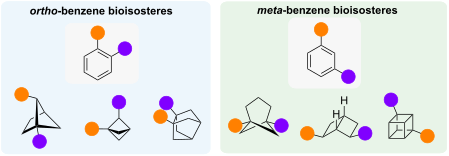
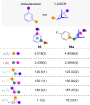
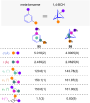
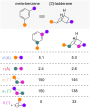
- racemic mixtures of bioisosteres 1,5-BCHs (±)-64 and (±)-71. Their analysis showed that all compounds display similar antifungal activity over a wide range of concentrations, validating the proposition that 1,5-BCHs can function as bioisosteres of ortho-benzenes (Figure 9) [45]. 1,5-Disubstituted 3

















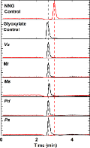
Activity assays of NnlA homologs suggest the natural product N-nitroglycine is degraded by diverse bacteria
Beilstein J. Org. Chem. 2024, 20, 830–840, doi:10.3762/bjoc.20.75
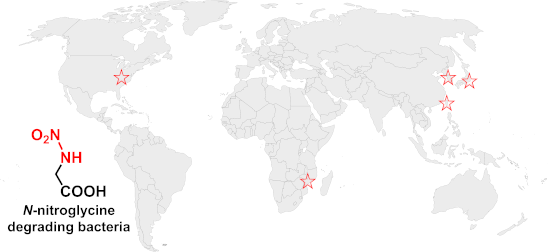
- (Scheme 1) [20][21]. Vs NnlA contains a Per-Arnt-Sim (PAS) domain – protein domains that often bind heme and function as gas or redox sensors [20]. Indeed, Vs NnlA was shown to contain a heme cofactor [21]. Mutagenesis of a predicted histidine ligand to this heme resulted in loss of the heme and the
- variant could not degrade NNG. Additionally, this heme must be reduced to the ferrous (FeII) state to initiate NNG degradation. Therefore, the heme is critical for NnlA’s NNG degradation activity. While the activity of NnlA is established less is known about its physiological function and, for that matter
- , the physiological function of its substrate NNG. This compound is one of the few known nitramine natural products and the only one produced by bacteria instead of fungi [22]. Its only known natural sources are strains of Streptomyces bacteria [23][24]. The abundance and distribution of these NNG