Search results
Search for "diversity" in Full Text gives 586 result(s) in Beilstein Journal of Organic Chemistry. Showing first 200.
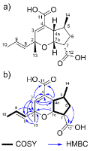
Rhodopyran, a carboxylated hexahydrocyclopenta[b]pyran from Rhodococcus
Beilstein J. Org. Chem. 2026, 22, 1107–1113, doi:10.3762/bjoc.22.89
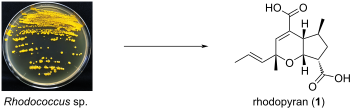
- unusual carboxylated hexahydrocyclopenta[b]pyran and expands the known metabolite diversity of Rhodococcus, highlighting Rhodococcus as a source of uncommon natural-product scaffolds. Keywords: bicyclic compound; cyclopenta[b]pyran; natural products; Rhodococcus; specialized metabolites; Introduction
- metabolites include rhodostreptomycins [7], a quinoline antibiotic [8], rhodopeptins [9], lariatins [10], rhodochelin [11], and the pluramycin-class metabolite rausuquinone [12]. These examples illustrate the chemical diversity within the genus Rhodococcus, but its metabolite space remains far less explored
- of underexplored microbial taxa can directly contribute to expanding structural diversity. The biosynthetic origin of rhodopyran (1) remains to be established (Scheme 1). From a structural viewpoint, the carbon framework of 1 could plausibly arise from a linear acyl- or polyketide-like intermediate


Controlled supramolecular assemblies of luminescent tridentate cyclometalated alkynylgold(III) amphiphiles in aqueous media
Beilstein J. Org. Chem. 2026, 22, 1097–1106, doi:10.3762/bjoc.22.88
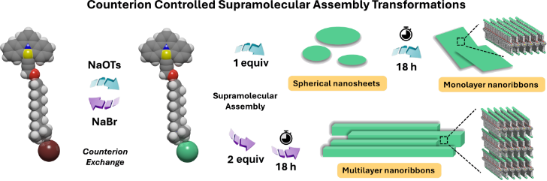
- Supramolecular assemblies in natural systems, such as lipid bilayers and protein complexes, play essential roles in maintaining proper biological functions [1][2][3]. These natural structures have inspired developments of artificial supramolecular systems that offer structural diversity through delicate designed


Amino acid-based surfactants: sustainable synthesis and antimicrobial mechanisms
Beilstein J. Org. Chem. 2026, 22, 1067–1085, doi:10.3762/bjoc.22.85
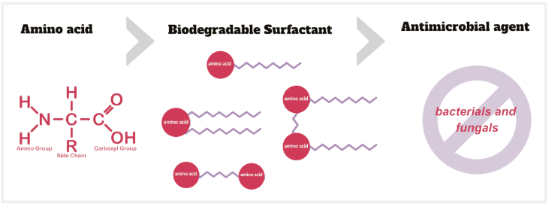
- crystallization to improve economic and environmental viability. The diversity of these molecular architectures enables systematic evaluation of the effects of charge density, alkyl chain length and position, and aromatic moieties on antimicrobial performance, as extensively documented by Pérez and co-workers [4
- (e.g., lysine paired with histidine), while structural diversity can be further expanded by incorporating aromatic amino acids like phenylalanine to modulate the hydrophobicity [62][68][69]. A key advantage lies in their enhanced cationic charge density compared to single-amino-acid surfactants, which
- -busting agents [71][76]. In summary, amino acid-derived surfactants represent a sustainable, adaptable class of amphiphiles, bridging bioinspiration and industrial utility [3][24][45][77]. Their structural diversity allows precise tuning for applications ranging from healthcare to environmental science


The role of spacer length and flexibility in peptide self-assembly
Beilstein J. Org. Chem. 2026, 22, 986–996, doi:10.3762/bjoc.22.77
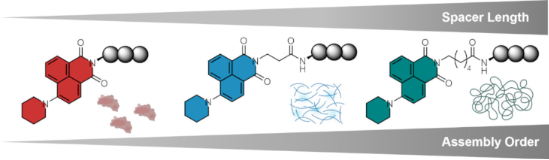
- -assembly; spacer length; Introduction Short self-assembling peptides are an eminent class of materials used in supramolecular chemistry due to their advantageous properties such as facile synthesis, programmable molecular information [1][2][3][4], structural diversity [5][6], biocompatibility [7][8][9


Novel macrocycles: from synthesis to supramolecular function
Beilstein J. Org. Chem. 2026, 22, 982–985, doi:10.3762/bjoc.22.76

- major driving force in the field is the effort to combine synthetic versatility of macrocycles with practical supramolecular performance. This expanding structural diversity has, in turn, enabled increasingly sophisticated supramolecular functions. Precise functionalization strategies allow researchers
Synthesis of sterically shielded piperidine nitroxides via acid-catalyzed heterocyclization of β-aminoketone derivatives with ketones
Beilstein J. Org. Chem. 2026, 22, 948–954, doi:10.3762/bjoc.22.74
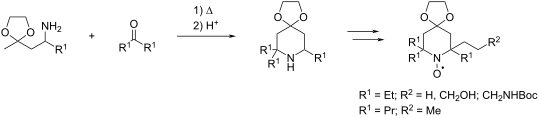
- radicals are based on approaches employing either the tetraethyl analog of phorone or acetonine [11][15][17][18] or the desulfurization of dispirothiapyranone derivatives [19][20][21][22]. Consequently, the structural diversity of radicals bearing acyclic substituents is practically limited to derivatives


Cascade transformation of 2-(diazoacetyl)-2H-azirines to 2-aroyl-3-hydroxy-1H-pyrroles via condensation with aromatic aldehydes
Beilstein J. Org. Chem. 2026, 22, 897–904, doi:10.3762/bjoc.22.70
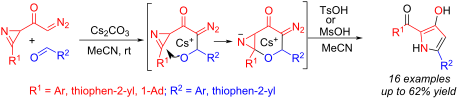
- the ever-growing structural diversity of such molecules and the variety of their transformation pathways [1][2][3][4][5][6][7][8][9][10]. Azirinyl-substituted diazo compounds, which we have recently introduced into the heterocyclic synthesis arsenal [11][12][13][14][15][16][17][18][19], are
- ][18], and heterocyclic hybrids [11][19]. However, the diversity of known azirinyl-substituted diazo compounds is currently limited to diazo ketones [11][12][13][15], 2-(diazoacetyl)-2H-azirines, α-diazo-β-ketoesters [14][16][17][18][19], and alkyl 2-diazo-3-oxo-3-(2H-azirin-2-yl)propanoates


Site-specific labelling of native peptides and proteins: chemical and enzymatic strategies
Beilstein J. Org. Chem. 2026, 22, 857–881, doi:10.3762/bjoc.22.67
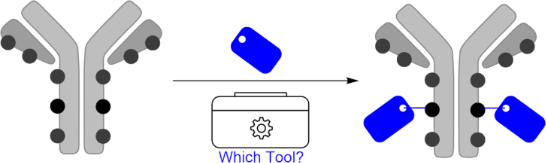
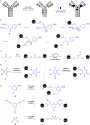
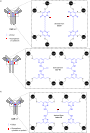
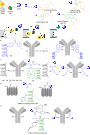
- analysis and outlook on future developments. The strengths, limitations and opportunities are also discussed. Given the diversity and breadth of protein-modification chemistry, more detailed reviews on specific topics are referenced within relevant subsections. Protein terminal modifications The majority
- biology laboratories. The diversity of binder templates has also expanded rapidly with advances in AI-based and high-throughput technologies [65][66][67][68][69][70][71][72][73][74][75][76][77]. Nevertheless, design considerations remain critical; for example, benzophenone could cross-link an entire
- approaches provide scalability due to the relative ease of reagent preparation (see above for detailed discussion). Overall, however, the success of any given method is often case-dependent, reflecting the diversity of protein and peptide sequences and structures. Factors such as protein preparation can also





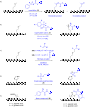

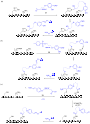
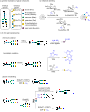


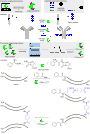

The trans-influence in gold chemistry from a catalytic perspective
Beilstein J. Org. Chem. 2026, 22, 838–856, doi:10.3762/bjoc.22.66
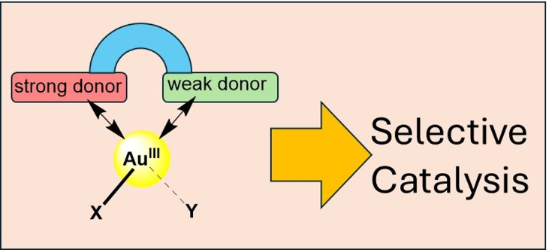
- diversity. Examples of photoemissive gold(III) pyrazine complexes. Dr. J. Fernandez-Cestau is gratefully acknowledged for assistance with this figure. Assessment of ligand influence by kinetic competition experiments. Ligand types employed in the stabilisation of gold(III) complexes. Au(III) π- and σ


Anti-invasive and cytotoxic evaluation of a (+)-pinoresinol-based semisynthetic library against glioblastoma
Beilstein J. Org. Chem. 2026, 22, 691–704, doi:10.3762/bjoc.22.54
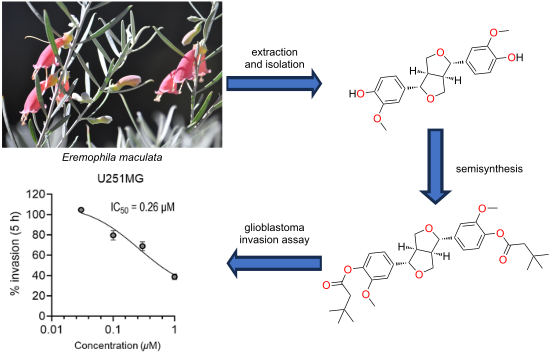
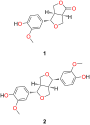
- Engineering, Flinders University, Bedford Park, SA 5042, Australia NatureBank, Griffith University, Brisbane, QLD 4111, Australia 10.3762/bjoc.22.54 Abstract The Australian endemic plant genus Eremophila has long been recognized for its unique chemical diversity, with numerous novel and bioactive compounds
- . longifolia and E. alternifolia as traditional medicines [6][7][8]. In recent times, Eremophila plants have been shown to generate impressive chemical diversity, along with a wide range of biological activities from both extracts or isolated natural products, such as antibacterial, antimalarial, and



Synthesis of depressin, cryptomeridiol and 4-epi-cryptomeridiol enabled by a terpenoid chiral pool-producing platform
Beilstein J. Org. Chem. 2026, 22, 683–690, doi:10.3762/bjoc.22.53
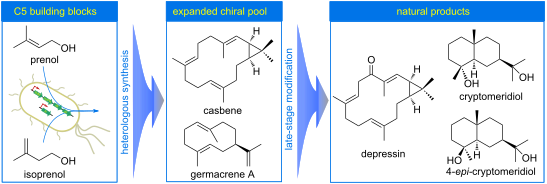
- emerging with the recent advancement in the field of synthetic biology. We have constructed the E. coli-based heterologous hosts harboring the IU pathway in combination with terpene cyclases that produce a diversity of terpene skeletons including casbene (4) and germacrene A (5), by supplementing the five
- the selective late-stage functionalization. In addition, since the precursors for terpene cyclases are general no matter they are provided by the IU pathway or MVA/MEP pathways, a diversity of terpene skeletons would be easily accessible by simply integrating known or newly discovered terpene cyclases


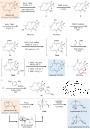
Recent advances in the stereoselective synthesis of distal biaxially chiral molecules
Beilstein J. Org. Chem. 2026, 22, 461–479, doi:10.3762/bjoc.22.34
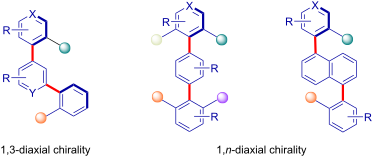
- axes, it constitutes a bi- or multiaxial chiral system, significantly increasing structural complexity and stereochemical diversity, which endows the molecules with unique functionalities and excellent performance in catalysis, pharmaceuticals [33], and materials science [34]. In 1989, Hayashi


Concept-driven strategies in target-oriented synthesis
Beilstein J. Org. Chem. 2026, 22, 451–454, doi:10.3762/bjoc.22.32

- their precursors. Moreover, the architectural diversity across a broad spectrum of target molecules both necessitates and inspires the development of strategically distinct approaches tailored to various structural classes, and as a genuine testament to the creativity and vitality of the field. On the
- of discussion, it may be worth comparing synthetic designs based on a “customized” approach with a “generalized” approach (Figure 2). Although a customized approach restricts structural diversity, it has a proven track record and often enables more efficient access to the target molecule. In contrast


Dialkylaminoalkylation of β-ketosulfones via ring-opening of 3-sulfonylpyrrolidines
Beilstein J. Org. Chem. 2026, 22, 383–389, doi:10.3762/bjoc.22.26
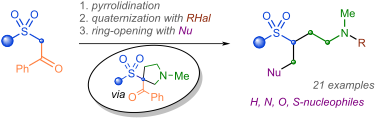
- field is offering diverse methodologies that enable the introduction of either protected nitrogen atoms or aliphatic amine groups. Such diversity has greatly expanded the synthetic arsenal available for constructing aminomethylated compounds. In contrast, methods allowing an aminoethylation process is


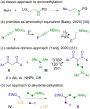


Ring contraction and ring expansion reactions in terpenoid biosynthesis and their application to total synthesis
Beilstein J. Org. Chem. 2026, 22, 289–343, doi:10.3762/bjoc.22.21
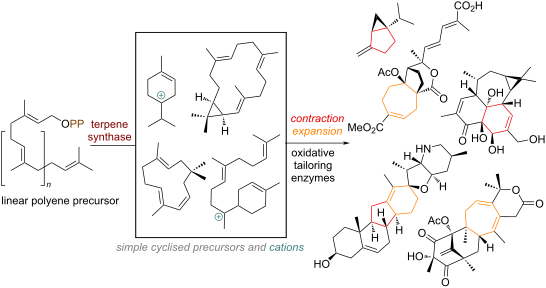
- Nicolas Kratena Nicolas Heinzig Peter Gartner Institute of Applied Synthetic Chemistry, TU Wien, Getreidemarkt 9, A-1060, Vienna, Austria 10.3762/bjoc.22.21 Abstract Terpenoids exhibit remarkable structural diversity, including highly complex ring-expanded or contracted carbocyclic skeletons
- editing; terpenoids; total synthesis; Introduction The vast richness of structural diversity in terpenoid natural products has fascinated organic chemists for more than a century now [1][2][3][4][5]. With more sophisticated techniques for isolation and characterisation emerging over the decades
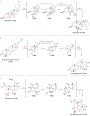
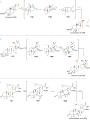
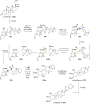
- . Alkyl and hydride shifts, stepwise or dyotropic rearrangements have been described to occur during terpene cyclisation, including multiple ring-size modifications. The CYP450s play a central role for the oxidative functionalisation of terpenes, enabling the rich diversity of secondary metabolites [40






Arene activation via π-bond localization: concepts and opportunities
Beilstein J. Org. Chem. 2026, 22, 257–273, doi:10.3762/bjoc.22.19
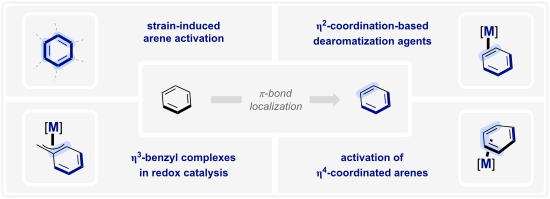
- potential of this activation mode in catalysis. Conclusion and Future Directions Arenes remain privileged scaffolds in synthesis, recognized for their abundance and structural diversity. The deliberate perturbation of aromaticity through π-bond localization has emerged as a powerful strategy for molecular




A mild and atom-efficient four-component cascade strategy for the construction of biologically relevant 4-hydroxyquinolin-2(1H)-one derivatives
Beilstein J. Org. Chem. 2026, 22, 244–256, doi:10.3762/bjoc.22.18
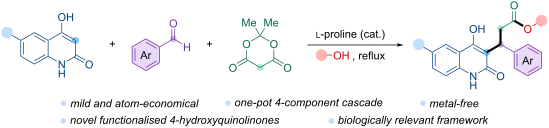
- against Escherichia coli, Staphylococcus aureus, and Pseudomonas aeruginosa [34]. The diversity of pharmacological activities renders 4-hydroxyquinoline-2(1H)-one derivatives highly valuable targets in medicinal chemistry, driving continued interest in their synthesis and exploration [23]. However, the


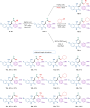
Screwing the helical chirality through terminal peri-functionalization
Beilstein J. Org. Chem. 2026, 22, 205–212, doi:10.3762/bjoc.22.14
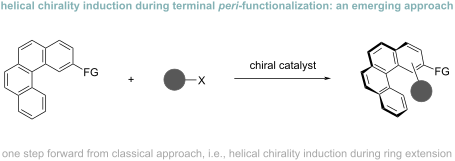
- a functional group installed in the terminal core of helicened with high level of stereocontrol, rather than merely increasing the number of fused rings in a helical system. The direct introduction of suitable functional groups at strategic positions can expand the structure diversity and enhance


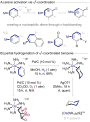
Total synthesis of natural products based on hydrogenation of aromatic rings
Beilstein J. Org. Chem. 2026, 22, 88–122, doi:10.3762/bjoc.22.4
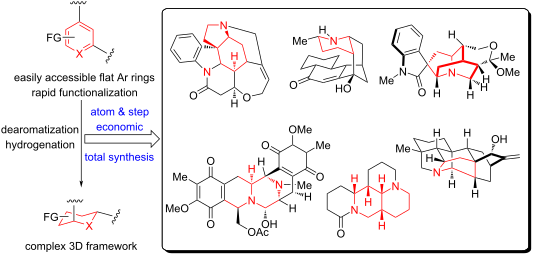
- regioselectivity, degree of saturation, and stereochemical induction – features that are increasingly leveraged in total synthesis to access complex, three-dimensional natural products [68][69][70]. Total synthesis based on hydrogenation of aromatic rings Beyond catalyst and substrate diversity, arene











Sustainable electrochemical synthesis of aliphatic nitro-NNO-azoxy compounds employing ammonium dinitramide and their in vitro evaluation as potential nitric oxide donors and fungicides
Beilstein J. Org. Chem. 2025, 21, 2739–2754, doi:10.3762/bjoc.21.211
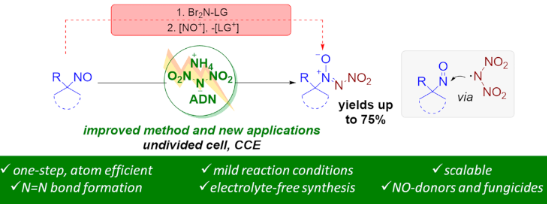
- applications in organic synthesis as precursors for free radicals in selective transformations [5][6][7][8][9][10][11] and polymerization initiators [12], energetic materials [13][14][15], NO donors [16][17], and organic light-emitting diodes (OLEDs) [18]. Despite the wide diversity of their applications





Recent advancements in the synthesis of Veratrum alkaloids
Beilstein J. Org. Chem. 2025, 21, 2657–2693, doi:10.3762/bjoc.21.206
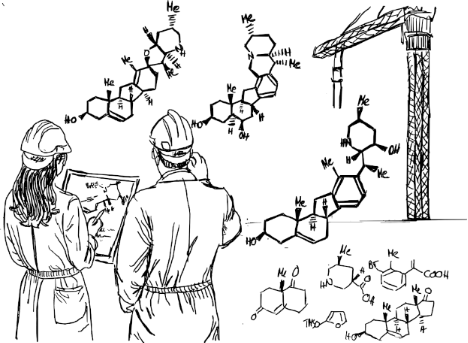
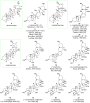
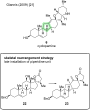
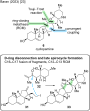
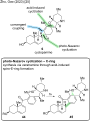
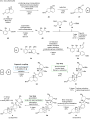
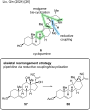
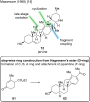
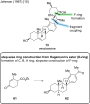
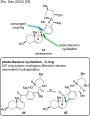
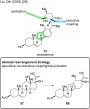
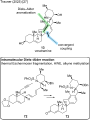
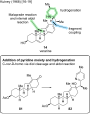
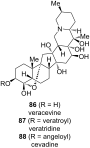
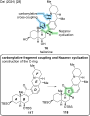
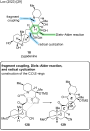
- cevanine-type alkaloids has been reported [13][38][39][40][41][42]. The common hexacyclic framework is often highly oxidized and the hydroxy groups are further functionalized as esters of various carboxylic acids. Apart from the hydroxylation pattern, structural diversity is also imparted through a cis- or
















Thiazolidinones: novel insights from microwave synthesis, computational studies, and potentially bioactive hybrids
Beilstein J. Org. Chem. 2025, 21, 2618–2636, doi:10.3762/bjoc.21.203
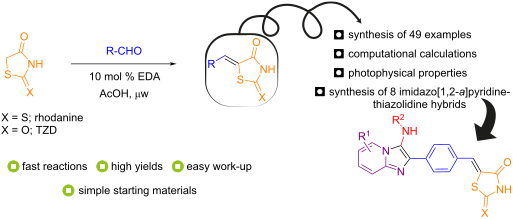
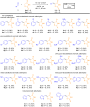
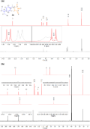
- to excellent yields (66–99%) and may present several advantages, notably their potential to enhance bioactivity, expand structural diversity, and contribute to fluorescence properties. Comprehensive studies to fully evaluate these characteristics are in progress. Spectroscopic study of compounds 3n






Efficient solid-phase synthesis and structural characterization of segetalins A–H, J and K
Beilstein J. Org. Chem. 2025, 21, 2612–2617, doi:10.3762/bjoc.21.202

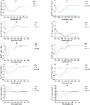
- (Caryophyllaceae), are head-to-tail cyclic oligopeptides comprising 5–9 amino acid residues [5][6][7][8][9][10][11][12][13]. These natural products exhibit a significant diversity of pharmacological activities [14][15][16], including estrogen-like activity (1, 2, 7, 8), antitumor effects (5), and antimicrobial


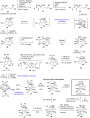
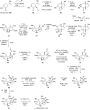
Recent advances in total synthesis of illisimonin A
Beilstein J. Org. Chem. 2025, 21, 2571–2583, doi:10.3762/bjoc.21.199
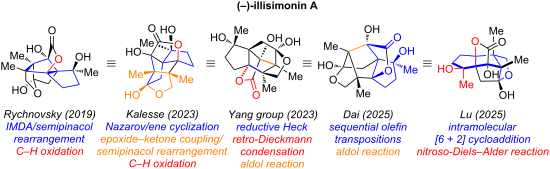
- – particularly the critical reactions responsible for skeletal diversity – Yang and co-workers first introduced a comprehensive and detailed biosynthetic pathway for Illicium sesquiterpenes, with the route to illisimonin A depicted in Scheme 5. The transformations from farnesyl diphosphate to the allo-cedryl
- seco-prezizaane-type Illicium sesquiterpenes have attracted significant interest from synthetic chemists, resulting in numerous elegant total syntheses of molecules within this family. The recent identification of illisimonin A has further expanded the structural diversity of Illicium sesquiterpenes






Total syntheses of highly oxidative Ryania diterpenoids facilitated by innovations in synthetic strategies
Beilstein J. Org. Chem. 2025, 21, 2553–2570, doi:10.3762/bjoc.21.198
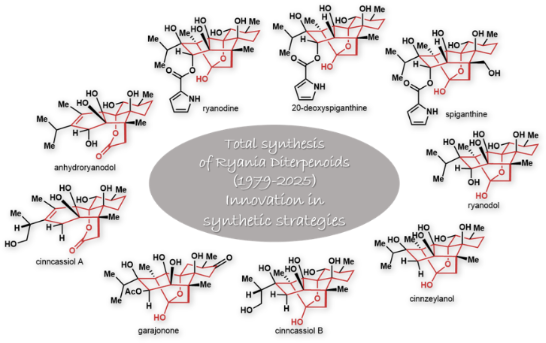
- first total synthesis of garajonone (8) in 20 steps. The structural diversity of ryanodine-type diterpenoid natural products arises primarily from variations in oxidation patterns and stereochemical configurations, particularly at the C3, C8, and C10 positions. These subtle structural differences