Search results
Search for "quaternary carbon" in Full Text gives 134 result(s) in Beilstein Journal of Organic Chemistry.
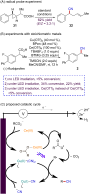
Electrochemical reduction of unsaturated carbon–carbon bonds via 3d transition-metal catalysis
Beilstein J. Org. Chem. 2026, 22, 955–981, doi:10.3762/bjoc.22.75
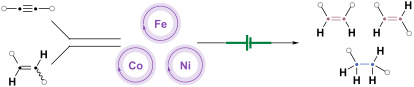
- chemoselectivity that are difficult to achieve under classical HAT conditions. Substrates featuring a quaternary carbon adjacent to the alkyne exhibited diminished E/Z selectivity, which was tentatively attributed to increased steric hindrance surrounding the putative cobalt–alkene intermediate. Interestingly








Synthesis and structural elucidation of a novel bis-spirooxindole from isatin and ethylenediamine
Beilstein J. Org. Chem. 2026, 22, 813–820, doi:10.3762/bjoc.22.63

- retained the four-signal pattern of isatin (H4', H5', H6', H7'), slightly shifted by the new structural environment. In the 13C NMR spectrum, the amide carbonyl appeared at δ 176.5 ppm, while a key quaternary carbon at δ 61.0 ppm (C3‘) – formerly the C-3 isatin carbonyl carbon – confirmed the formation of


Streptoquinolines A and B, new antibacterial meroterpenoids produced by Streptomyces sp. TMPU-A0679
Beilstein J. Org. Chem. 2026, 22, 185–191, doi:10.3762/bjoc.22.12
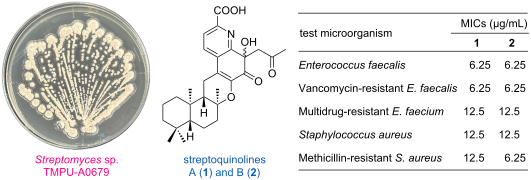
- III (H-9 (δ 1.58)/H2-11 (δ 2.55, 2.48)). 1H,13C HMBC correlations were then observed from the methyl protons H3-12 (δ 0.89) and H3-13 (δ 0.83) to the sp3 methylene carbon C-3 (δ 41.3), the sp3 quaternary carbon C-4 (δ 32.8), and the sp3 methine carbon C-5 (δ 55.2). Correlations were observed from the
- methyl proton H3-14 (δ 0.91) to the sp3 methylene carbon C-1 (δ 38.4), C-5, the sp3 methine carbon C-9 (δ 51.1), and the sp3 quaternary carbon C-10 (δ 36.5) and from the methyl proton H3-15 (δ 1.15) to the sp3 methylene carbon C-7 (δ 39.5), the oxygenated sp3 quaternary carbon C-8 (δ 77.9), and C-9
- correlations were observed from the sp2 methine proton H-7' (δ 7.99) to the sp2 quaternary carbon C-1' (δ 120.8), the sp2 quaternary carbon C-2' (δ 131.6), the nitrogenated sp2 quaternary carbon C-3' (δ 156.1), and the nitrogenated sp2 quaternary carbon C-9' (δ 143.6), from the sp2 methine proton H-8' (δ 7.95


Total synthesis of natural products based on hydrogenation of aromatic rings
Beilstein J. Org. Chem. 2026, 22, 88–122, doi:10.3762/bjoc.22.4
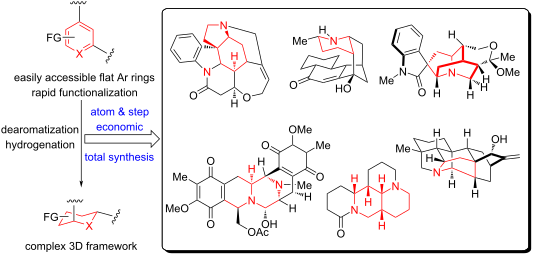
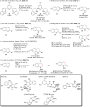
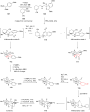
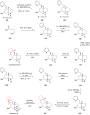
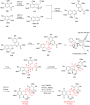
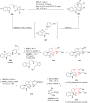
- of the pyridinium, consistent with established reactivity models from prior studies [97]. A three-step sequence involved Raney Ni hydrogenation of the dihydropyridine, TFA-mediated indole deprotection, and base-promoted formation of a C3 quaternary carbon center provided piperidine compound 185. The











Thiazolidinones: novel insights from microwave synthesis, computational studies, and potentially bioactive hybrids
Beilstein J. Org. Chem. 2025, 21, 2618–2636, doi:10.3762/bjoc.21.203
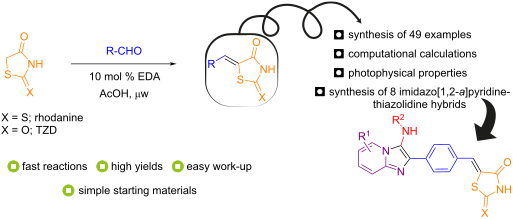
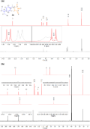
- spectra (Scheme 7b). A remarkable feature of the 13C NMR spectra of compounds 3n and 4n in DMSO is the attenuation/absence of peaks corresponding to the carbon atoms at the ortho and meta positions of the six-membered ring. It is known that quaternary carbon atoms have very long relaxation times, but this






Total syntheses of highly oxidative Ryania diterpenoids facilitated by innovations in synthetic strategies
Beilstein J. Org. Chem. 2025, 21, 2553–2570, doi:10.3762/bjoc.21.198
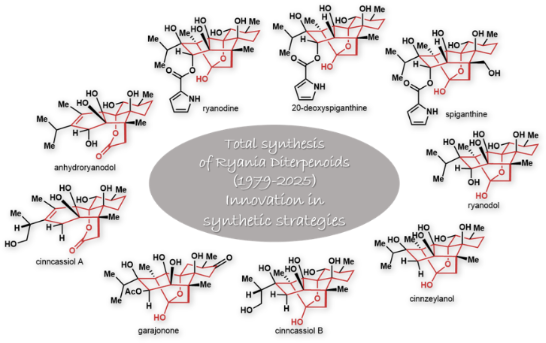
- the simultaneous construction of four quaternary carbon centers (C1, C4, C5, and C12) and the core AB bicyclic skeleton, markedly improving synthetic efficiency. Subsequent oxidative desymmetrization of the C14–C15 olefin in (±)-33 established the sterically hindered C11 quaternary carbon center. An α







Synthesis of the tetracyclic skeleton of Aspidosperma alkaloids via PET-initiated cationic radical-derived interrupted [2 + 2]/retro-Mannich reaction
Beilstein J. Org. Chem. 2025, 21, 2470–2478, doi:10.3762/bjoc.21.189
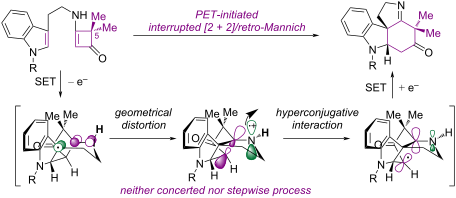
- the formation of benzyl radical IN2, which has a boat-like seven-membered ring. This structural feature may facilitate formation of the C19–C12 bond, even in the presence of critical steric hindrance between the C5 quaternary carbon and the indole moiety. Further DFT investigation proved challenging


Transformation of the cyclohexane ring to the cyclopentane fragment of biologically active compounds
Beilstein J. Org. Chem. 2025, 21, 2416–2446, doi:10.3762/bjoc.21.185
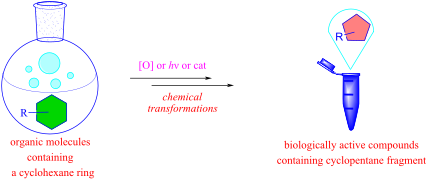
- regioselectivity (>99:1) and complete preservation of the stereochemistry at both quaternary carbon centers (Scheme 17). Through a series of synthetic transformations, the target products (+)-cuparene (91) and (+)-tochuinylacetate (92) were synthesized from acids 96a and 96b with high regioselectivity. In [53
- leukemia cell line (IC50 8 μM). The key step in this approach was the acid-promoted semipinacol rearrangement of epoxide 225 under the action of trifluoromethanesulfonic acid to produce aldehyde 226 with a quaternary carbon atom (C9) as a single diastereomer. The addition of 1,2-bis(trimethylsiloxy)ethane


Recent advances in Norrish–Yang cyclization and dicarbonyl photoredox reactions for natural product synthesis
Beilstein J. Org. Chem. 2025, 21, 2315–2333, doi:10.3762/bjoc.21.177
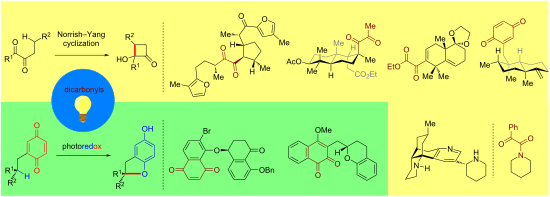
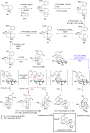
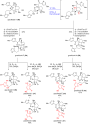
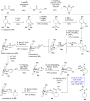
- ingeniously leverages the high selectivity of photochemical reactions and the strain-release property of rearrangement reactions, enabling the precise construction of multiple stereocenters in one step and overcoming the synthetic challenges posed by contiguous quaternary carbon centers and sterically






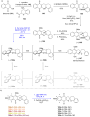

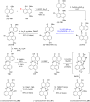
Enantioselective desymmetrization strategy of prochiral 1,3-diols in natural product synthesis
Beilstein J. Org. Chem. 2025, 21, 1932–1963, doi:10.3762/bjoc.21.151

- ), compound 154 underwent epoxidation followed by acid-mediated cyclization to yield bicyclic compound 155. The synthesis was completed through a nine-step conversion of 155 to obtain (−)-dysiherbaine (156). To construct the asymmetric quaternary carbon centers with an amino group, the Kang group developed a
- of compound 248, establishing an expected C6 stereocenter and a chiral quaternary carbon center at C16. This desymmetrization was enabled due to the structural features of diol 246, wherein the proximal hydroxy group was functionalized, while the distal hydroxy group remained intact. The synthesis of


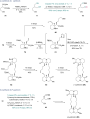

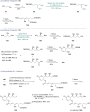









Facile synthesis of hydantoin/1,2,4-oxadiazoline spiro-compounds via 1,3-dipolar cycloaddition of nitrile oxides to 5-iminohydantoins
Beilstein J. Org. Chem. 2025, 21, 1552–1560, doi:10.3762/bjoc.21.118

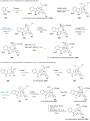
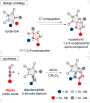
- another cycle via the single quaternary carbon atom C5 demonstrated significant biological activity, greater than analogs with non-spiro-bonded cyclic fragments [3][4]. Hydantoin derivatives also exhibit a wide range of biological activities. Compounds containing the hydantoin pharmacophore group, are
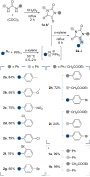
- form two new carbon–heteroatom bonds in a 1,2,4-oxadiazoline ring through both variants of orbital overlap. It should be noted that, in this case, NMR spectroscopy is not applicable to assign the product structure due to the presence of only quaternary carbon atoms in the tetrasubstituted 1,2,4



N-Salicyl-amino acid derivatives with antiparasitic activity from Pseudomonas sp. UIAU-6B
Beilstein J. Org. Chem. 2025, 21, 1388–1396, doi:10.3762/bjoc.21.103
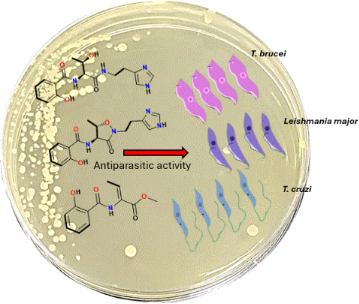
- File 1, Figures S1–S4) of 1 measured in deuterated DMSO revealed well-defined proton signals identified as four aromatic sp2 methines, two aliphatic sp3 methines, a methyl group and four quaternary carbon signals at δC 157.7 (C-1), δC117.8 (C-6), δC 167.2 (C-7), and δC 172.9 (C-10). The presence of a
- signal at δH 8.97 (s, H-18), δH 7.41 (s, H-20) and a quaternary carbon (C-16) assigned at δC 131.4 that reminiscences a histamine subunit absent in compound 1. This observation was supported by the 1H-1H COSY spectrum that displayed a cross-peak coupling of H2-14 to both carboxamide protons H-13 and H2


Recent advances in oxidative radical difunctionalization of N-arylacrylamides enabled by carbon radical reagents
Beilstein J. Org. Chem. 2025, 21, 1207–1271, doi:10.3762/bjoc.21.98
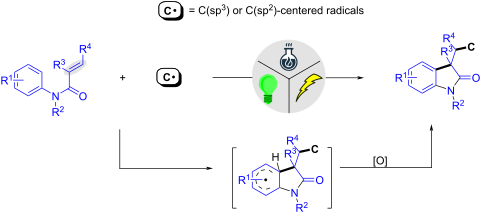
- alkyl chloride and generating an alkyl–PdI–Cl radical hybrid species III. The alkyl radical then adds to the acrylamide double bond, forming a quaternary carbon radical intermediate IV. This intermediate undergoes intramolecular radical cyclization onto the aromatic ring, followed by either β-hydride
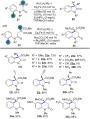
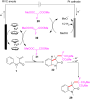
- for constructing quaternary carbon centers in oxindoles via an N-heterocyclic carbene (NHC)-catalyzed intermolecular Heck-type alkyl radical addition and annulation reaction (Scheme 47) [28]. The reaction proceeds through a redox-neutral mechanism, where the NHC catalyst serves a dual role as both a














Recent total synthesis of natural products leveraging a strategy of enamide cyclization
Beilstein J. Org. Chem. 2025, 21, 999–1009, doi:10.3762/bjoc.21.81
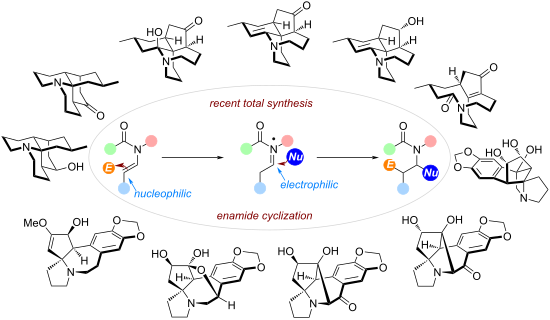
- tertiary enamides as cyclization precursors (Scheme 6). The analogous polycyclization generated a tetracyclic N-heterocycle with three continuous stereogenic centers, one of them being an aza-quaternary carbon [31]. The resulting fused ring-system structurally resembles the nucleus of erysotramidine





A convergent synthetic approach to the tetracyclic core framework of khayanolide-type limonoids
Beilstein J. Org. Chem. 2025, 21, 926–934, doi:10.3762/bjoc.21.75
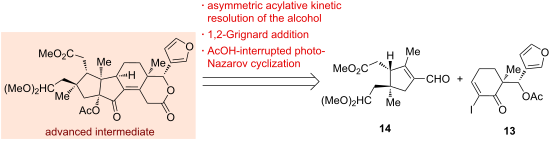
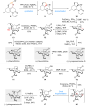
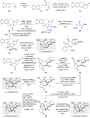
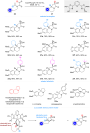
- simultaneously installing the hydroxy group at C30. The latter intermediate could in turn be derived from dienone 11 by an AcOH-interrupted Nazarov cyclization [32][33][34], thereby establishing the B ring with the desired all-cis stereochemical configuration, including the quaternary carbon at C10 and the
- 4.4:1 mixture of regioisomeric alcohols with the desired isomer being the major component, presumably due to the considerable steric hindrance from the quaternary carbon at C4. However, decagram-scale separation of these two isomers by chromatography proved troublesome. Fortunately, the distinct




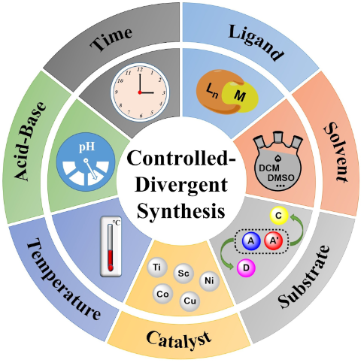
Recent advances in controllable/divergent synthesis
Beilstein J. Org. Chem. 2025, 21, 890–914, doi:10.3762/bjoc.21.73
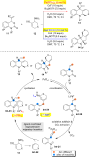
- influence of steric and electronic effects during the hydrometallation process, simultaneously achieving the synthesis of chiral α-quaternary carbon amino acid derivatives 26 and α-chiral β-amino acid derivatives 27. Using a copper catalyst, the chiral α-quaternary carbon amino acid derivatives 26 were







Regioselective formal hydrocyanation of allenes: synthesis of β,γ-unsaturated nitriles with α-all-carbon quaternary centers
Beilstein J. Org. Chem. 2025, 21, 800–806, doi:10.3762/bjoc.21.63
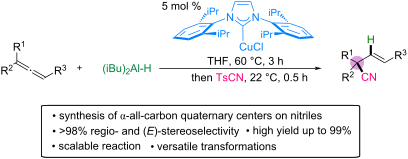
- quaternary centers that contain functional groups is challenging mainly because of their sterically demanding property [9][10][11]. In this context, the incorporation of cyano groups at the quaternary carbon centers is promising for the development of versatile acyclic all-carbon quaternary stereocenters
- with diverse functional groups [12][13][14]. Consequently, the development of selective and predictable strategies for the introduction of cyano groups into quaternary carbon frameworks has become necessary in organic synthesis. The transition-metal-catalyzed hydrocyanation of carbon–carbon double
- catalytic hydrocyanation of alkenes [22], including the industrially relevant DuPont adiponitrile process from 1,3-butadiene using nickel catalysts [23], the hydrocyanation of allenes to produce functionalized β,γ-unsaturated nitriles with quaternary carbon centers has not been investigated extensively [24




Development and mechanistic studies of calcium–BINOL phosphate-catalyzed hydrocyanation of hydrazones
Beilstein J. Org. Chem. 2025, 21, 755–765, doi:10.3762/bjoc.21.59
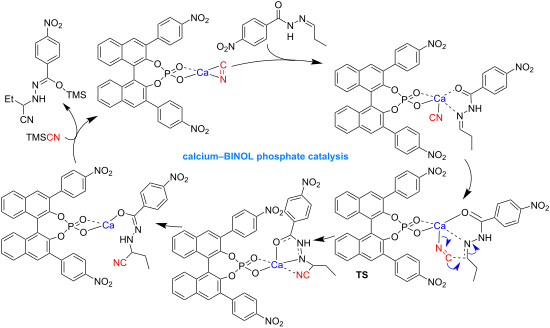
- moiety are non-linear with a Ca–N–C angle of 100°. Due to the stereospecificity of the reaction, racemization would have to occur already in 9 through a topomerization (e.g., similar to a Berry pseudorotation) of the metal complex, considering that species with a quaternary carbon, as they appear in


Total synthesis of (±)-simonsol C using dearomatization as key reaction under acidic conditions
Beilstein J. Org. Chem. 2025, 21, 601–606, doi:10.3762/bjoc.21.47
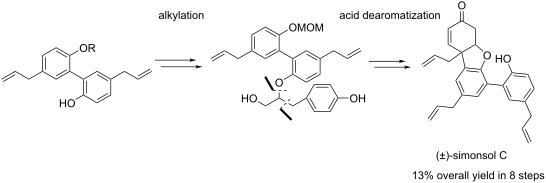
- synapse growth and inhibits acetylcholinesterase. (±)-Simonsol C (Figure 1) has received considerable attention due to the presence of an aryl- and allyl-containing quaternary carbon center, which is common in natural products such as galanthamine and morphine. To construct the quaternary carbon in
- ] and has been used in syntheses of natural products containing aryl quaternary carbon centers [9][10]. Unlike the intramolecular alkylation strategy of a phenol derivative, which can only be applied in basic dearomatization reactions, our approach using an α-iodophenol ether as precursor of the
- route to date. The structural motif of an all-carbon quaternary center containing an aryl group is common in many natural products, such as galanthamine and morphine. Our current strategy provides an alternative approach for the synthesis of aryl-containing quaternary carbon centers, which could be


Synthesis, structure, ionochromic and cytotoxic properties of new 2-(indolin-2-yl)-1,3-tropolones
Beilstein J. Org. Chem. 2025, 21, 358–368, doi:10.3762/bjoc.21.26
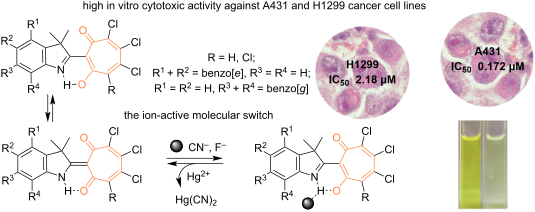
- spectrum of 7a, a correlation of the NH proton with the bridging carbon atoms C(3a'), C(9b'), and the quaternary carbon atom C(1') of the indolenine fragment is observed with δH 136.6 ppm, 134.0 ppm, and 53.6 ppm, respectively (Supporting Information File 2, Figure S20). The most important HMBC




Dioxazolones as electrophilic amide sources in copper-catalyzed and -mediated transformations
Beilstein J. Org. Chem. 2025, 21, 200–216, doi:10.3762/bjoc.21.12
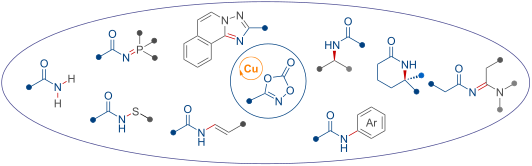
- enantioselectivity. Furthermore, a lactam containing a quaternary carbon center (2g) was prepared. However, a lower enantioselectivity was observed for product 2h due to the similar steric environment of the two alkyl substituents. As shown in Figure 1, a catalytic cycle was proposed for the intramolecular C–H


Non-covalent organocatalyzed enantioselective cyclization reactions of α,β-unsaturated imines
Beilstein J. Org. Chem. 2024, 20, 3221–3255, doi:10.3762/bjoc.20.268
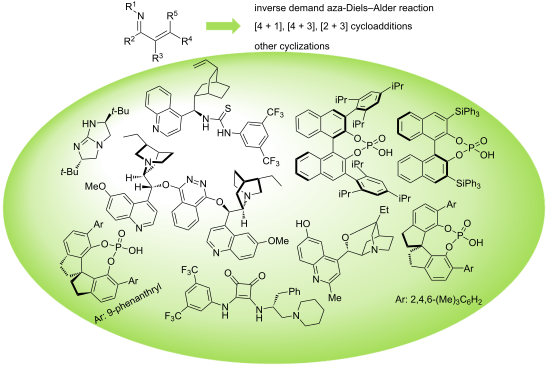
- , Mei and co-workers reported a chiral phosphoric acid-catalyzed asymmetric intermolecular formal (3 + 2) cycloaddition of azoalkenes 53 with azlactones 15 (Scheme 28). This methodology provides fully substituted 4-pyrrolin-2-ones 78 bearing a quaternary carbon atom in high yields (72–95%) and


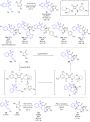
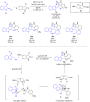
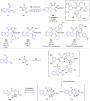
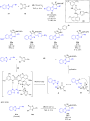
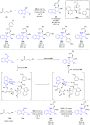
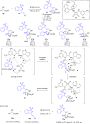


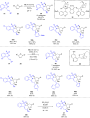
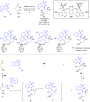

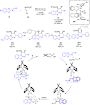


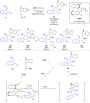

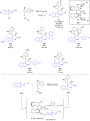


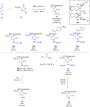
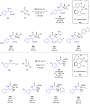

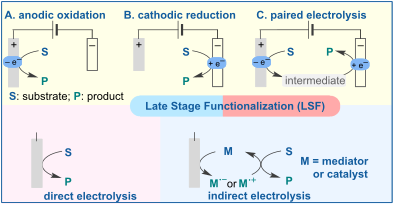
A review of recent advances in electrochemical and photoelectrochemical late-stage functionalization classified by anodic oxidation, cathodic reduction, and paired electrolysis
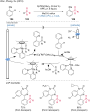
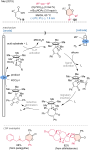
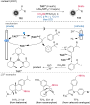
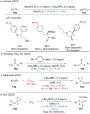
Beilstein J. Org. Chem. 2024, 20, 2500–2566, doi:10.3762/bjoc.20.214


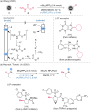


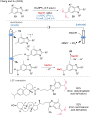

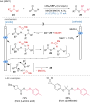
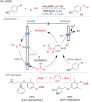


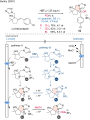


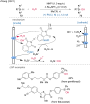
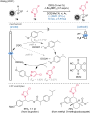
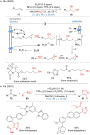

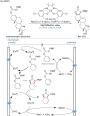


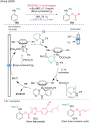








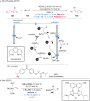


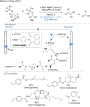


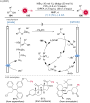
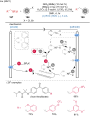
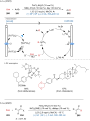


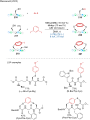


Electrophotochemical metal-catalyzed synthesis of alkylnitriles from simple aliphatic carboxylic acids
Beilstein J. Org. Chem. 2024, 20, 1497–1503, doi:10.3762/bjoc.20.133
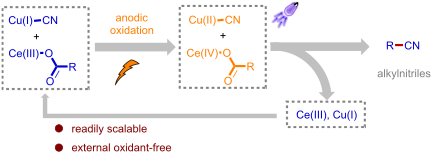
- functional handles for further elaboration. Notably, tertiary arylacetic acids can also be well tolerated to yield nitriles with quaternary carbon centers in good yields (17 and 18). Simple carboxylic acids without functional groups at the alpha position to stabilize the corresponding carbon centered


Domino reactions of chromones with activated carbonyl compounds
Beilstein J. Org. Chem. 2024, 20, 1256–1269, doi:10.3762/bjoc.20.108
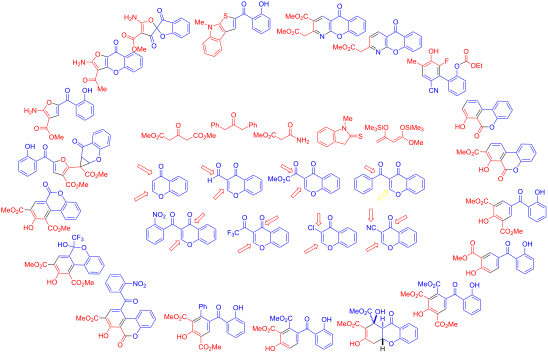
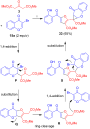
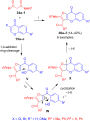
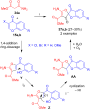
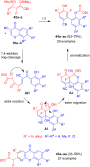
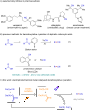
- minor products as well (7–20% yields). The formation of biphenyls 44 can be explained by 1,4-addition and ring-cleavage to give intermediate AH, aldol reaction (intermediate AI), migration of the ester group from the quaternary carbon to the phenolic oxygen atom (intermediate AJ) and aromatization. The