Search results
Search for "radical" in Full Text gives 900 result(s) in Beilstein Journal of Organic Chemistry. Showing first 200.
Construction of CF2 moieties in FDA-approved drugs (2016–2025): industrial routes, mechanisms, and scale-up considerations
Beilstein J. Org. Chem. 2026, 22, 1122–1150, doi:10.3762/bjoc.22.91
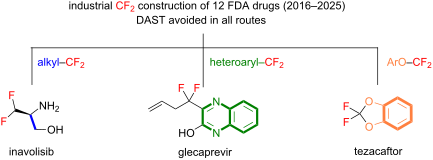
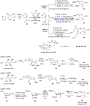
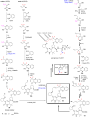
- approaches and building block-based approaches. Key process steps and scale-up data are summarized in Table 1. The article systematically discusses four types of reaction mechanisms – nucleophilic fluorination, electrophilic fluorination, radical pathways, and carbene insertion – and evaluates their
- -ring CF2 fragments, as reviewed in 2024 [4]. In 2025, Sun et al. [5] systematically reviewed recent methods for constructing CF2 groups, categorizing them by reaction mechanism (radical difluoromethylation, transition-metal-catalyzed difluoromethylation, nucleophilic and electrophilic
- 65 can be obtained from methyl lactate (64) and SF4 in a continuous-flow reaction via a nucleophilic fluorination mechanism in 86% for the racemate and 81% for the S-enantiomer with 99% ee [17]). Under the action of a radical initiator, bromination is carried out with NBS (gas-phase purity after






Electrochemical reduction of unsaturated carbon–carbon bonds via 3d transition-metal catalysis
Beilstein J. Org. Chem. 2026, 22, 955–981, doi:10.3762/bjoc.22.75
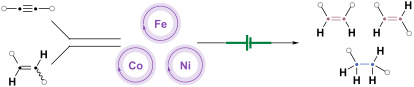
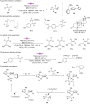
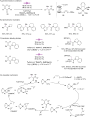
- governed primarily by bond dissociation free energies, radical stabilization, and cage escape or recombination kinetics, rather than by inner-sphere insertion chemistry. In addition, in certain systems, hydride transfer can operate as a distinct mechanistic mode, wherein the M–H unit directly delivers a
- radical-type pathways. Mechanistically, these pathways depart from the classical two-electron noble-metal hydrogenation paradigm and instead operate through low-valent or electronically flexible intermediates, often involving single-electron or electronically asynchronous reactivity, enabled by the
- , and the successful late-stage electrohydrogenative functionalization of structurally complex molecules and drug derivatives further underscored the practical applicability of this strategy in medicinal chemistry contexts. To probe the involvement of catalytically relevant Fe–H species, radical probe








Synthesis of sterically shielded piperidine nitroxides via acid-catalyzed heterocyclization of β-aminoketone derivatives with ketones
Beilstein J. Org. Chem. 2026, 22, 948–954, doi:10.3762/bjoc.22.74
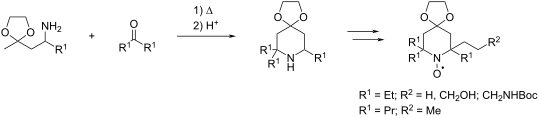
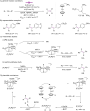
- nitroxide-mediated polymerization (NMP), because shielding with ethyl or bulkier alkyl groups decreases accessibility of the nitroxide moiety and improves the equilibrium parameters in the reversible trapping of alkyl radical of the growing polymer chain [11]. This shielding also alters the redox properties


Recent advances in copper-catalyzed direct hydroamination of alkenes with (hetero)aromatic amines
Beilstein J. Org. Chem. 2026, 22, 925–947, doi:10.3762/bjoc.22.73
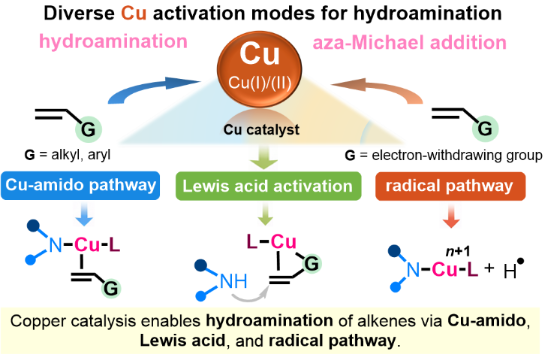
- , including copper–amido-mediated nucleophilic addition or aminocupration, Lewis acid-type alkene activation, and radical-mediated pathways. These complementary mechanisms provide access to diverse alkene classes with control over regioselectivity (Markovnikov vs anti-Markovnikov addition), stereoselectivity
- metals such as palladium or rhodium, copper offers exceptional mechanistic versatility. The accessible Cu(I)/Cu(II)/Cu(III) redox manifold enables classical two-electron pathways and single-electron radical processes within broadly similar catalytic environments [28][29]. This flexibility is particularly
- electrophilicity and lowers the barrier for nucleophilic attack (Scheme 1b). Further, copper can mediate radical-based pathways either by generating hydrogen radicals or intercepting nitrogen-centered radical intermediates in oxidative- or photoredox-assisted systems (Scheme 1c). These radical manifolds often







The trans-influence in gold chemistry from a catalytic perspective
Beilstein J. Org. Chem. 2026, 22, 838–856, doi:10.3762/bjoc.22.66
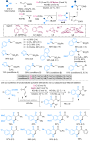
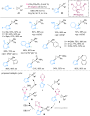
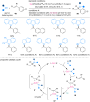
- auto-accelerating radical chain mechanism, to give a stable hydroperoxide complex 23 that was characterised by X-ray diffraction. This reaction was greatly accelerated by AIBN as radical initiator which generates Au(II) radical cations [(P^C^P)Au]+•, as well as RO• and ROO• radicals, which propagate
- complexes of type 8 can react with acetylenes slowly, in a possibly light-induced radical reaction [49]. The addition of radical initiators such as azobis(isobutyronitrile) (AIBN) reduced the reaction times from days to minutes, with quantitative and completely stereoselective formation of Z-vinyl gold
- calculations. Using the same radical-initiated approach it was also possible to realise gold hydride insertions of alkenes [65] and of isocyanides (Scheme 11) [66]. A different reactivity was observed for C^C-stabilised hydrides, with H trans to anionic C. The complexes (C^C)AuH(L) 19 (L = PMe3, Ptol3) and [(C


Unsymmetrical sulfoxides with sterically hindered catechol fragment: synthesis, structure, electrochemical properties, and antiradical activity
Beilstein J. Org. Chem. 2026, 22, 828–837, doi:10.3762/bjoc.22.65
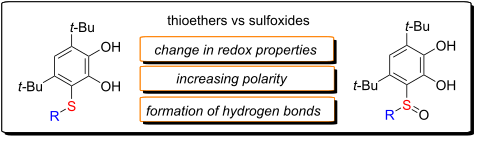
- -withdrawing nature of the S=O group. The second redox stage characterizes the transformation of the sulfoxide fragment and is observed in most cases at 1.82–1.91 V. The radical-scavenging activity and antioxidant properties of the unsymmetrical sulfoxides and their precursor thioethers were evaluated using
- the reaction with the 2,2′-diphenyl-1-picrylhydrazyl radical (DPPH) and the 2,2′-azinobis(3-ethylbenzothiazoline-6-sulfonic acid) radical cation (ABTS+•). In both assays, the lowest IC50 values among the studied catechol sulfoxides were found for compounds bearing isopropyl and tert-butyl substituents
- activities and unusual physicochemical properties, which render them useful in various fields of chemistry. Catechol-containing compounds, in particular, are known for their antioxidant activity through the regulation of free-radical processes [1][2], and are used as antiparkinsonian [3][4][5], antitumor


Synthetic study of vic-bromination of diarylacetylenes, easy purification and separation
Beilstein J. Org. Chem. 2026, 22, 795–802, doi:10.3762/bjoc.22.61
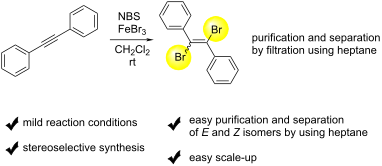
- ) with NBS (N-bromosuccinimide, X equiv), FeBr3 (1.0 equiv), n-Bu4NBr (Y equiv), and TEMPO (2,2,6,6-tetramethylpiperidine 1-oxyl free radical, Z equiv) in solvent (2 mL) at the desired temperature was conducted for 23 h or 2 h. After the reaction, the typical work-up procedure was carried out and the
- , and solvent were examined (Table 1, entries 3–12). Because there was a possibility that a bromine radical was involved, TEMPO was used for the purpose of the ratio-control of E and Z isomers. TEMPO was found to have a tendency to suppress the generation of Z-2a in CH2Cl2 (Table 1, entries 6 and 8) [20



Halogenated azobenzene acrylates: from efficient solution photoswitching to stable solid-state photochromic materials
Beilstein J. Org. Chem. 2026, 22, 782–794, doi:10.3762/bjoc.22.60
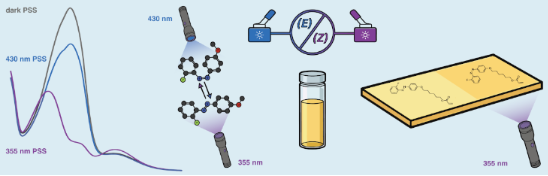
- corresponding radical anion [27]. In contrast, possible reduction of an aliphatic ester substituent, such as our acrylate pendant, generally requires more negative potentials [28]. On the other hand, the first oxidation observed at ca. +1.47 V is most likely associated with the alkoxy donor fragment, in


Rongalite addition to dienones: diastereoselectivity in cyclic sulfone synthesis; stereochemical rationalization and prospects as a general conjugate nucleophile
Beilstein J. Org. Chem. 2026, 22, 742–752, doi:10.3762/bjoc.22.56

- used as a bleaching agent in the dyeing industry for more than a century [5][6]. Over the last 10 years particularly, it has begun to join the toolbox of reagents in organic synthesis, and shows diverse reactivity. It has been employed in reductions, radical processes and as a reagent for C1 transfer




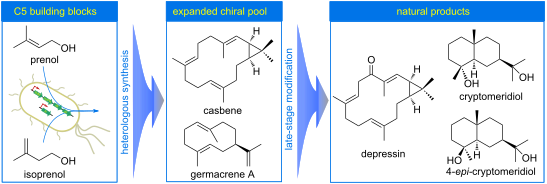
Synthesis of depressin, cryptomeridiol and 4-epi-cryptomeridiol enabled by a terpenoid chiral pool-producing platform
Beilstein J. Org. Chem. 2026, 22, 683–690, doi:10.3762/bjoc.22.53
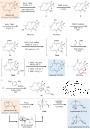
- chlorooxoacetate to give 14a/b in 84% yield, which were subjected to the radical deoxygenation conditions (AIBN, n-Bu3SnH) for 13-hydroxy removal, affording two deoxygenated products that were difficult to be separated from each other. Without further purification, the obtained mixture was treated with tetra-n
- bond of 15 was confirmed to be Z based on the NOESY correlations between 13-H/20-H3. The formation of product 15 could be attributed to the isomerization of the C13 allylic radical, generated by methyl oxalyl ester deoxygenation step, to the C11 allylic radical, followed by hydrogen abstraction from n


Photoorganocatalytic trifluoromethylation of (het)arenes in green conditions
Beilstein J. Org. Chem. 2026, 22, 662–671, doi:10.3762/bjoc.22.50
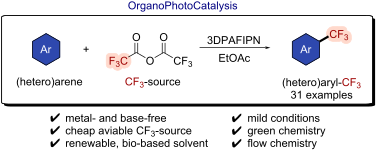
- conditions using an inexpensive and atom-efficient CF3 source, trifluoroacetic anhydride, in ethyl acetate as a green solvent. An organic cyanoarene photocatalyst enables efficient CF3 radical generation under blue-light irradiation, providing a broad range of trifluoromethylated arenes and heteroarenes. The
- reaction displays pronounced sensitivity to substituent patterns rather than electronic effects. Mechanistic investigations, including radical trapping, Stern–Volmer analysis, and DFT calculations, support a reductive quenching pathway involving photocatalyst-mediated reduction of TFAA. The protocol is
- that CF3· behaves as an electrophilic radical [31][32], it was expected to react preferentially with electron-rich substrates compared to electron-neutral or electron-deficient ones. To probe this trend, trifluoromethylation was examined with substrates bearing donor substituents (methoxyarenes) and




Computational prediction of C–H hydricities and their use in predicting the regioselectivity of electron-rich C–H functionalisation reactions
Beilstein J. Org. Chem. 2026, 22, 603–610, doi:10.3762/bjoc.22.46
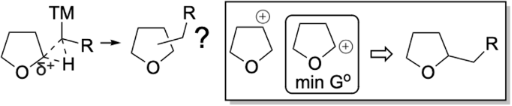
- primarily anthracene derivatives and benzyl C–H bonds, suggesting potential systematic errors in QM computations or experimental measurements. Radical and cation stabilities generally follow the trend: tertiary > secondary > primary methyl carbon stability. Our study also explores the correlation between
- ). Many of these transformations are not formal hydride transfers; however, they commonly involve buildup of positive charge (e.g., via metal–carbene/nitrene insertion transition states, radical cations, or polar hydrogen atom transfer). Hydricity could therefore serve here as an empirical reactivity
- reactive sites, where one of them is the correct site. Not surprisingly, the two reactions where the use of BDEs lead to the correct predictions are photocatalysed and generally thought to involve radical formation. In general, the sites of lowest hydricity and BDE only coincide in three cases (compounds 5


![[Graphic 6]](/bjoc/content/inline/1860-5397-22-46-i8.svg?max-width=637&scale=1.18182)


Melifoliox B, a novel phloroglucin derivative isolated from Melicope barbigera (Rutaceae) and synthesis of new oxidation products from melifoliones A and B
Beilstein J. Org. Chem. 2026, 22, 535–546, doi:10.3762/bjoc.22.39
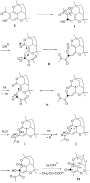
- combination of hydrogen peroxide with ferricyanide reacts with the phenol in a dioxygenase like reaction [12] to give a dioxetane a, followed by opening of the aromatic ring to form the oxonol anion b in alkaline solution, thus explaining the purple color. Oxidation of b leads to the delocalized radical c



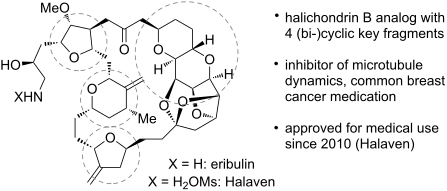
Modern synthetic pathways towards eribulin and its subunits
Beilstein J. Org. Chem. 2026, 22, 495–526, doi:10.3762/bjoc.22.37
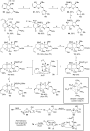
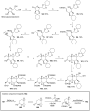
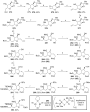
- 166 via radical cyclization, then the TBDPS-protecting group was cleaved and the obtained alcohol oxidized to aldehyde 167. The Cr(II)/Co(II)-induced asymmetric NHK coupling mediated by 172 with vinyl iodide 171 led to tetrahydrofuran 168. Protection of the secondary alcohol enabled the conversion to
- )-methyl-2,3-dihydroxypropanoate, respectively (Scheme 18) [93]. Again, Nicholas etherification of both starting materials was conducted to afford 175 in 5:1 dr. The major isomer was further transformed to 176 in a microwave oven via Kornblum oxidation. Radical cyclization and DMP-oxidation yielded
- also considerable amounts of 183`s epimer were formed (2:1 dr). Oxidation with DDQ removed the Bn-moiety (184) and triggered ketalization towards 185. Eventual mesylation formed key fragment 186 in 95% yield. For the assembly of both heterocyclic subunits of 186, Nicholas etherification and radical








Concept-driven strategies in target-oriented synthesis
Beilstein J. Org. Chem. 2026, 22, 451–454, doi:10.3762/bjoc.22.32
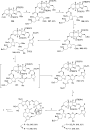
- radical cyclization (prostaglandin D2 metabolite, Jun Huang et al.), reductive cyclization cascade (aglacin B, Jina Xiao, Yu Peng et al.), electrochemical cyclization (review, Bin Li, H. N. C. Wong, Xiao-Shui Peng et al.), photochemical reactions (review, Shao-Min Fu, Bo Liu et al.), carbene insertion
- (vibralactone, Zhi-Yun Liu, Hong-Dong Hao et al.), interrupted [2 + 2]/retro-Mannich (aspidosperma alkaloids, Zhen Yang, Zhong-Chao Zhang et al.), dipolar cycloaddition (malayamycin A, Sha-Hua Huang, Jian Jin, Ran Hong, et al.), Zr-mediated radical transformations (review, Hugh Nakamura and co-worker)]. The


Dialkylaminoalkylation of β-ketosulfones via ring-opening of 3-sulfonylpyrrolidines
Beilstein J. Org. Chem. 2026, 22, 383–389, doi:10.3762/bjoc.22.26
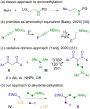
- bond (Figure 2b) [30]. At the same time, Yang et al. presented a domino radical reaction of CH2-active compounds II and N,N-dimethylanilines III promoted by di-tert-butyl peroxide (DTBP), allowing the formation of the ethylene link via a domino-process of the methylenation and subsequent aminomethyl
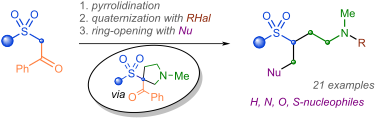
- radical addition (Figure 2c) [31]. In the continuation of our work on application of pyrrolidines as sacrificial framework for the alkylaminomethylation of enones [32][33] we turned our attention to active methylene compounds IV as precursors of pyrrolidines. Preliminary experiments demonstrated that the




Electrosynthetic access to unsymmetrical oxaza[8]helicenes with high chiral stability and strong circularly polarized luminescence (CPL)
Beilstein J. Org. Chem. 2026, 22, 372–382, doi:10.3762/bjoc.22.25
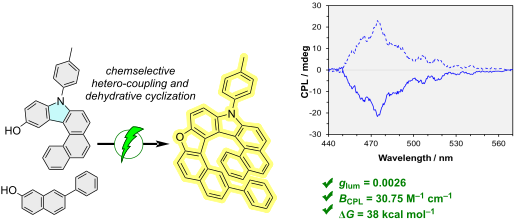
- products were detected under the optimized conditions (Scheme 2). Based on our previous reports [48][56], DFT calculations, and cyclic voltammetry (CV) analyses (Figure 1), anodic single-electron transfer (SET) is expected to occur first from 3, generating the electrophilic radical cation [3]·+ as 3 (Eox
- = 0.735 V vs Fc/Fc+ in CH2Cl2) is oxidized more readily than the 2-naphthol partners (Eox of 4a = 1.081 V and Eox of 4b = 1.286 V vs Fc/Fc+ in CH2Cl2). The radical cation [3]·+ then undergoes rapid deprotonation to form a neutral radical intermediate (Int-I) with high spin density at the reactive site
- , enabling regioselective intermolecular coupling with 4. While a Scholl-type coupling-first scenario cannot be ruled out, the computed acidity of [3]·+ (pKa ≈ −5.2) together with the more spin-density localization in Int-I supports a deprotonation-first, neutral-radical pathway, consistent with related




Recent advances in the cleavage of non-activated amides
Beilstein J. Org. Chem. 2026, 22, 352–369, doi:10.3762/bjoc.22.23
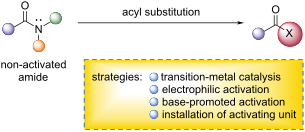
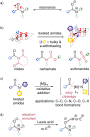
- -transfer (SET)-driven mechanism. Coordination of the arylamine to the potassium cation followed by deprotonation generates potassium amide salt AB. A SET process forms amine radical AC, which then transfers an electron to the amide, generating radical anion AD. Coupling of AC and AD forms a tetrahedral
- a radical pathway. Selectfluor undergoes a single-electron transfer (SET) with Cu(II) to generate the dicationic radical species AI, which abstracts a hydrogen atom from the PMB group to form a benzylic radical intermediate AJ. A subsequent SET process generates an acyliminium intermediate AK, which

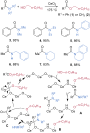

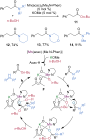
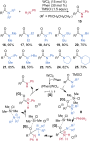
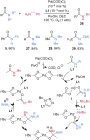


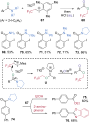
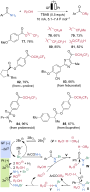

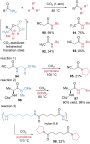
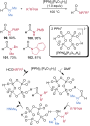





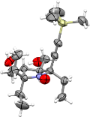
Synthesis of tricyclic fused pyrrolidine nitroxides from 2-alkynylpyrrolidine-1-oxyls
Beilstein J. Org. Chem. 2026, 22, 344–351, doi:10.3762/bjoc.22.22

- , Novosibirsk, 630090, Russia 10.3762/bjoc.22.22 Abstract Rotational correlation time is a key parameter for organic radical contrast agents (ORCA) for magnetic resonance imaging (MRI). Design of polycyclic systems with incorporated nitroxide moieties in which rotation of the radical separately from the
- by ascorbate showed that the formation of the rigid tricyclic framework does not lead to a significant increase in stability of the radical center to chemical reduction. Keywords: annulated tricyclic system; nitroxide; pyrazole; pyrrolidine; triazole; Introduction Stable nitroxides are functional
- components of many high-tech materials, such as energy storage and organoelectronics devices [1][2][3][4][5][6][7][8], catalysts [9][10], bioactive coatings and nanoparticles [11][12], organic radical contrast agents (ORCAs) for magnetic resonance imaging (MRI) [13][14], etc. For these applications, numerous




Ring contraction and ring expansion reactions in terpenoid biosynthesis and their application to total synthesis
Beilstein J. Org. Chem. 2026, 22, 289–343, doi:10.3762/bjoc.22.21
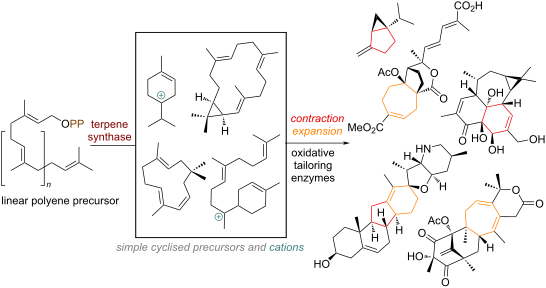
- synthesis, are gathered. Our definition includes both radical and polar ring-size altering reactions, transannular cyclisations of macrocycles and cation-mediated rearrangements where fitting. Goal of this review is to gather and compare mechanistic proposals for the biogenesis of ring-size-altered
- the methyl groups residing at C-4 and the C-7 methylene to ent-7α-hydroxykaurenoic acid (34a). The hydroxy group in 34a can further engage with a CYP450 enzyme at C-6 (different CYP isoforms responsible in different genii) to form an alkyl radical 34b which upon further SET forms an intermediate
- by the enzyme BscF, triggering a Wagner–Meerwein rearrangement after radical-polar crossover (38a to 38b) and elimination at the bridgehead methyl, resulting in the exo-olefin. The final intermediate 38c is further elaborated by enzymatic oxidation to give brassicicene C (39) from brassicicene I (38






Arene activation via π-bond localization: concepts and opportunities
Beilstein J. Org. Chem. 2026, 22, 257–273, doi:10.3762/bjoc.22.19
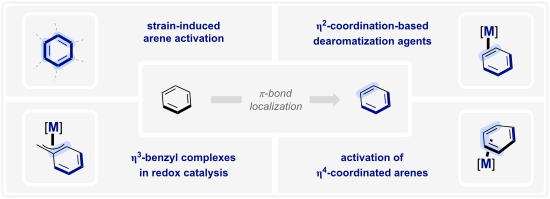
- double-bond character of the benzocyclopropene framework [30][31]. The reaction likely operates through an initial dearomative radical diiodination followed by a norcaradiene–cycloheptatriene rearrangement. Leveraging this enhanced reactivity, benzocyclopropene engages in inverse-electron-demand Diels


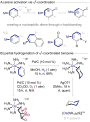


Base-promoted deacylation of 2-acetyl-2,5-dihydrothiophenes and their oxygen-mediated hydroxylation
Beilstein J. Org. Chem. 2026, 22, 192–204, doi:10.3762/bjoc.22.13
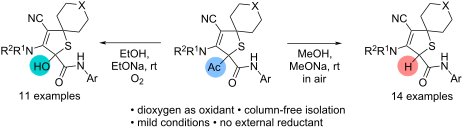
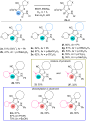
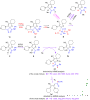
- ). Therefore, the reaction is most likely not proceeding via a free radical mechanism. To clarify the influence of the amide group on the developed transformations, dihydrothiophene 4g bearing a sulfonylimine group instead of an amide was treated with sodium methoxide in methanol or with sodium ethoxide in




A new synthesis of Tyrian purple (6,6’-dibromoindigo) and its corresponding sulfonate salts
Beilstein J. Org. Chem. 2026, 22, 167–174, doi:10.3762/bjoc.22.10
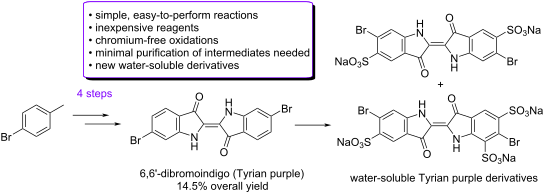
- to produce 4. This reaction sequence would mediate the oxidation of the tolyl methyl group of 3 to an aldehyde without the use of chromium(VI). Benzylic bromination of 3 was accomplished using a combination of a radical initiator and a bromine source. Initial optimization of the benzylic bromination
- , this work performs the oxidation of the methyl group in 4-bromo-2-nitrotoluene to an aldehyde using a strategy of radical bromination followed by a Kornblum oxidation to give 4-bromo-2-nitrobenzaldehyde. This transformation eliminates the need for a chromium trioxide-mediated oxidation and the expenses


Total synthesis of natural products based on hydrogenation of aromatic rings
Beilstein J. Org. Chem. 2026, 22, 88–122, doi:10.3762/bjoc.22.4
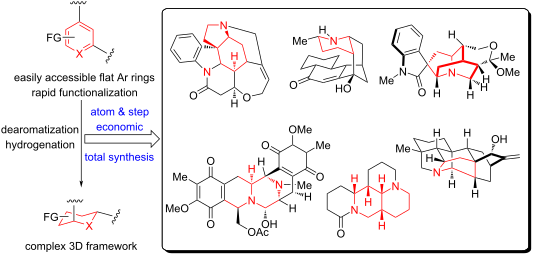
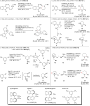
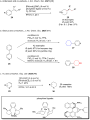
- rearrangement and Lewis acid-promoted acetal–ene reaction provided the tetracyclic skeleton 101. With 101 in hands, a 6 step transformation afforded the alkyne 102 in an overall yield of 45%. After obtaining 102, the authors used a free radical reaction to initiate a one-step 6-exo-trig cyclization
- chloride, and radical reduction. Subsequently, reduction of the cyanide group with DIBAL-H and a Wittig reaction afford alkene 114 in 82% yield. Sodium metal was then used as a single-electron reducing agent to provide the second cycloaddition precursor 115, which was converted to the enamine. The enamine
- ]. Starting from pyridine derivatives 129, they obtained the key intermediate 131 via a Simmon–Smith reaction and a bimetallic-mediated photocatalytic radical coupling reaction. Intermediate 132 was then constructed by Friedel–Crafts alkylation using diethylaluminum chloride as a Lewis acid. The pyridine ring











Advances in Zr-mediated radical transformations and applications to total synthesis
Beilstein J. Org. Chem. 2026, 22, 71–87, doi:10.3762/bjoc.22.3
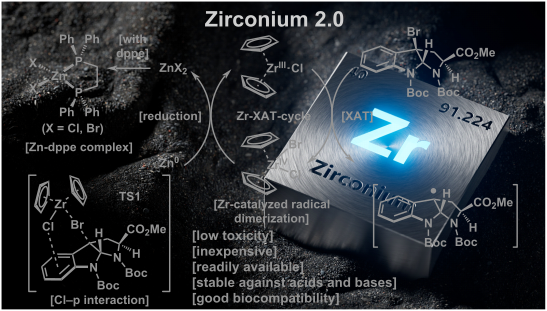
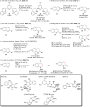
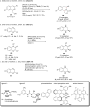
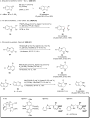
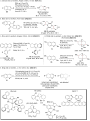
- Hiroshige Ogawa Hugh Nakamura The Hong Kong University of Science and Technology (HKUST), Clear Water Bay, New Territories, Hong Kong SAR, China 10.3762/bjoc.22.3 Abstract Radical reactions, which have been reported in large numbers in recent years, have exerted major influence across fields
- and discovery of two-electron ionic transformations dominated the early stages. Over time, pericyclic reactions exemplified by the Woodward–Hoffmann rules and one-electron radical processes became prominent research topics. Today, many of these classical transformations have been further refined to
- afford reactions that are cheaper, safer, and less toxic. In this context, we focus on mild radical reactions mediated by zirconium (Zr), which has recently attracted attention because of its low toxicity and ease of handling. We discuss the utility of Zr in such radical processes and consider prospects