Search results
Search for "13C NMR" in Full Text gives 1801 result(s) in Beilstein Journal of Organic Chemistry. Showing first 200.
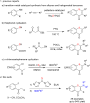
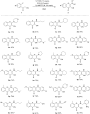
A cascade synthesis of 2-aminothiochromones from 2-fluorophenyl ketone and thiocarbonyldiimidazole
Beilstein J. Org. Chem. 2026, 22, 1151–1159, doi:10.3762/bjoc.22.92
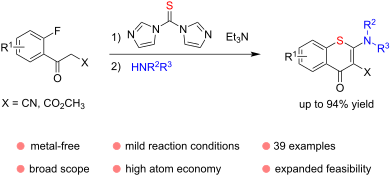
- characterizations of the prepared compounds were performed by 1H NMR and 13C NMR spectroscopy and high-resolution mass spectrometry (HRMS). 1H NMR spectra were obtained on an ECZ-400 spectrometer (JEOL, Tokyo, Japan) at 400 MHz and a Bruker AVANCE 500 (Bruker, Rheinstetten, Germany) at 500 MHz. 13C NMR spectra were



Discovery of sugarnitriles A and B, and structural reassignment of SF-2140, from a sugarcane endophytic actinomycete Amycolatopsis sp. JS-O27
Beilstein J. Org. Chem. 2026, 22, 1114–1121, doi:10.3762/bjoc.22.90
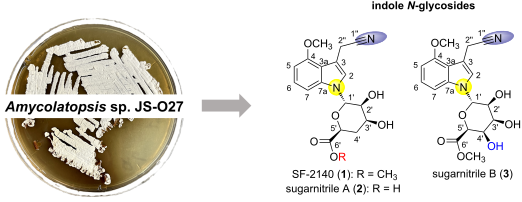
- 347.1238 [M + H]+, calcd. 347.1243). The MS signal of 2 exhibited 14 mass units less than that of 1. A comparison of the 1H and 13C NMR data revealed that the planar structure of 2 was very similar to that of 1 except for the absence of a methyl group at C-6' in 2 (Table 1). The planar and relative
- more than that of 1. The 1H and 13C NMR data of 3 were identical to those of 1 in the indole ring but slightly distinct in the sugar moiety (Table 1). The CH2 signal (δC 33.6 in 1, Figure S6, Supporting Information File 1) was absent in the DEPT135 spectrum, accompanied by an additional CH signal (δC
- and streptomycin (SM) for P. aeruginosa and E. coli. 1H and 13C NMR data of 1, 2, and 3. Supporting Information Supporting Information File 4: NMR data and copies of NMR and MS spectra. Funding This work was supported by the project of the Senior Talent Foundation of Jiangsu University (5501290012


Rhodopyran, a carboxylated hexahydrocyclopenta[b]pyran from Rhodococcus
Beilstein J. Org. Chem. 2026, 22, 1107–1113, doi:10.3762/bjoc.22.89
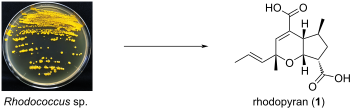
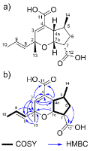
- . The 13C NMR spectrum exhibited 14 signals, including two carbonyl carbons (δC 176.1, 170.6), four olefinic carbons (δC 142.9, 135.5, 130.2, 125.0), an oxygenated quaternary carbon (δC 75.6), an oxygenated methine (δC 77.2), and three methyl carbons (δC 24.3, 21.1, 17.9) (Table 1). The remaining carbon
- resonance (C-7, δC 49.4) was obscured by overlapping with the solvent signal in the 13C NMR spectrum (Figure S2, Supporting Information File 1); however, its presence was confirmed by HSQC and HMBC correlations, as described below (Figures S2, S4, and S5, Supporting Information File 1). COSY and HSQC data
- conditions of 30% aqueous MeCN containing 0.1% HCO2H at 4 mL/min, yielding rhodopyran (1, 22.7 mg) with a retention time of 11.2 min. Rhodopyran (1): colorless amorphous powder; [α]D25 −69 (c 0.01, MeOH); UV (MeOH) λmax (log ε) 217 nm (3.93); IR (ATR) νmax 2965, 2928, 1688, 1640, 1421 cm−1; 1H and 13C NMR


Controlled supramolecular assemblies of luminescent tridentate cyclometalated alkynylgold(III) amphiphiles in aqueous media
Beilstein J. Org. Chem. 2026, 22, 1097–1106, doi:10.3762/bjoc.22.88
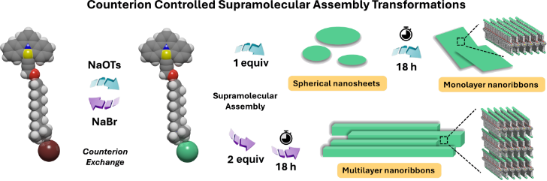
- all newly synthesized compounds and GA were unambiguously characterized by 1H , 13C NMR spectroscopy and high-resolution mass spectrometry (HRMS) (Supporting Information File 1, Figures S8–S13). Photophysical properties and assembly of GA A freshly prepared aqueous solution of GA (13.4 mM, 1.0 wt
- = 5.6 Hz, 6H); 13C NMR (101 MHz, CDCl3) δ 166.85, 165.10, 149.11, 142.35, 136.77, 132.06, 126.85, 125.27, 116.85, 96.68, 86.21, 77.36, 69.56, 60.35, 34.25, 33.00, 29.88, 29.59, 28.89, 28.34, 26.46; HRMS–ESI+ (m/z): [M + H]+ calcd for C29H32AuBrNO, 686.1328; found, 686.1319. GA: A mixture of compound 3
- , 2H), 1.69 (q, J = 7.1 Hz, 2H), 1.48 (d, J = 7.1 Hz, 2H), 1.38 (d, J = 25.2 Hz, 8H); 13C NMR (151 MHz, MeOD) δ 167.70, 166.23, 150.82, 144.43, 137.36, 132.60, 128.01, 126.67, 118.53, 70.40, 60.99, 53.43, 30.61, 30.40, 30.28, 30.06, 27.29, 23.88; HRMS–ESI+ (m/z): [M – Br]+ calcd for C32H40AuN2O


Synthesis and acaricidal activity against Varroa destructor of α- and γ-costic acid dimers
Beilstein J. Org. Chem. 2026, 22, 1088–1096, doi:10.3762/bjoc.22.87
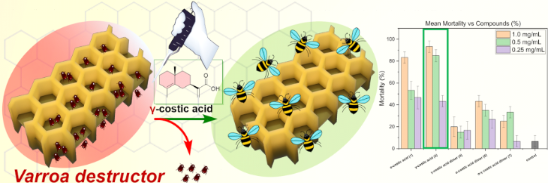
- otherwise stated. Flash chromatography was performed using 60–200 mesh silica gel. 1H NMR and 13C NMR spectra were recorded on Varian (Palo Alto, CA, USA) 400 MHz and 500 MHz and 100 MHz and 125 MHz spectrometers, respectively, at ambient temperature in CDCl3, unless otherwise noted, using the same solvent
- , 2H), 5.58 (s, 2H), 4.42 (s, 4H), 2.62 (m, 2H), 2.38 (m, 2H), 1.91 (m, 4H), 1.81 (m, 2H), 1.63 (m, 2H), 1.59 (s, 6H), 1.55 (m, 6H), 1.43 (m, 2H), 1.36–1.26 (m, 4H), 1.25 (m, 2H), 1.04 (s, 6H); 13C NMR (100 MHz, CDCl3) δ 167.18, 145.55, 134.36, 125.37, 123.23, 62.45, 42.25, 40.72, 40.30, 34.57, 33.26
- , 4H), 0.81 (s, 6H); 13C NMR (125 MHz) δ 166.96, 145.50, 134.63, 123.16, 120.95, 62.18, 46.73, 40.48, 40.02, 37.69, 32.15, 29.18, 27.28, 22.83, 21.01, 15.53; HRESIMS (m/z): [M + Na]+ calcd for C32H46O4Na, 517.3294; found, 517.3297. Synthesis of α-costic-γ-costic acid mixed ester (7) γ-Costic acid (3


Synthesis of functionalized, 13-alkyl-substituted coralyne derivatives and investigation of their interactions with duplex and abasic site-containing DNA
Beilstein J. Org. Chem. 2026, 22, 1057–1066, doi:10.3762/bjoc.22.84
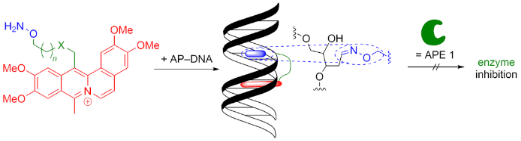
- the hydroxyalkyl-substituted product 3f in 45% yield (over the two reaction steps). All novel compounds were identified and characterized by 1H and 13C NMR spectroscopy (2D, COSY, HSQC, HMBC), mass spectrometry, and elemental analysis (if necessary as hydrochloride salts). Additionally, IR


One-pot four-component sequential synthesis of S-alkyl dithiocarbamates using lipase as a biocatalyst
Beilstein J. Org. Chem. 2026, 22, 1048–1056, doi:10.3762/bjoc.22.83
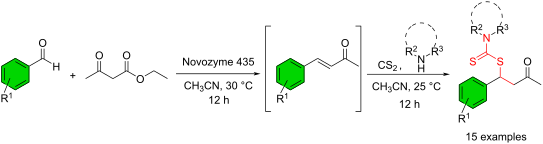
- prepared 20 × 20 cm silica plates) using a mixture of ethyl acetate and n-hexane as a mobile phase. 1H and 13C NMR spectra were recorded at 300 (75) MHz on a Bruker Avance spectrometer using CDCl3 as a solvent. The chemical shifts were referenced to the solvent signals at δH/C 7.26/77 ppm (chloroform-d


Synthesis of novel 1,2,4-oxadiazole-isoxazoline hybrids and their in silico potential with adenosine receptors
Beilstein J. Org. Chem. 2026, 22, 1033–1047, doi:10.3762/bjoc.22.82
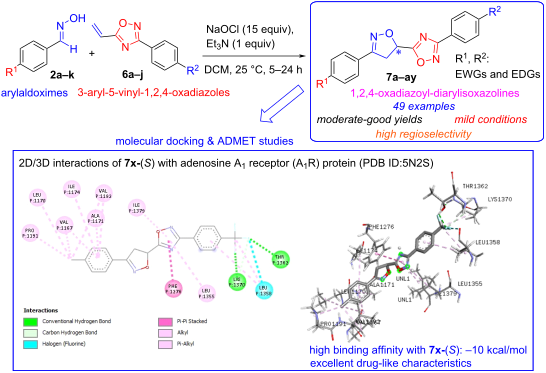
- , corresponding to aromatic C–H, aliphatic C–H, C=N, C–O, and N–O stretching vibrations, respectively. In the 1H NMR spectra, the diastereotopic protons of the isoxazoline ring appeared as doublets of doublets (dd) at around 6.0, 4.0, and 3.9 ppm. The 13C NMR spectra further supported the proposed structures


Semisynthesis, characterisation, and antibacterial evaluation of a novel lecanoric acid-derived amide library
Beilstein J. Org. Chem. 2026, 22, 1023–1032, doi:10.3762/bjoc.22.81
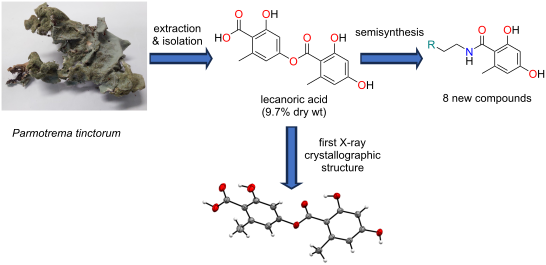
- ). The exchangeable protons were confirmed through a D2O exchange 1H NMR experiment (see Supporting Information File 1, p. S26). The 13C NMR spectrum and HSQC spectra indicated a total of 13 carbons, including three C-methyl groups (δC 22.5, 22.5, 19.7), six aromatic carbons (δC 100.1–158.0), two
- with a cryoprobe. The 1H and 13C NMR chemical shifts were referenced to the solvent peak for DMSO-d6 at δH 2.50 and δC 39.52, CD3OD at δH 3.31 and δC 49.0, and CDCl3 at δH 7.26 and δC 77.00, respectively. LRESIMS data was recorded on an Thermo Fisher Scientific™ Dionex UltiMate™ 3000 RS UHPLC coupled


Cascade transformation of 2-(diazoacetyl)-2H-azirines to 2-aroyl-3-hydroxy-1H-pyrroles via condensation with aromatic aldehydes
Beilstein J. Org. Chem. 2026, 22, 897–904, doi:10.3762/bjoc.22.70
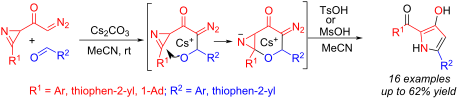
- -methoxyphenyl)-2H-azirine 1b with 4-iodobenzaldehyde (2b) turned out to be well crystallized and precipitated from the reaction medium as a solid (Scheme 2). Although it was also unstable, it was possible to record 1H,1H 2D NOESY and 13C NMR spectra, an IR spectrum in KBr as well as to obtain the accurate mass


Unsymmetrical sulfoxides with sterically hindered catechol fragment: synthesis, structure, electrochemical properties, and antiradical activity
Beilstein J. Org. Chem. 2026, 22, 828–837, doi:10.3762/bjoc.22.65
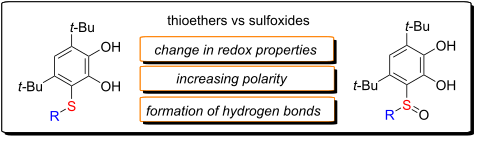
- thioethers (δ 7.11–7.30 ppm) and appears in the range of δ 11.33–11.85 ppm (CDCl₃; see Supporting Information File 1, Section S2). The signal of the second OH proton is also shifted downfield compared to that in the thioethers (δ 5.53–5.58 ppm) and is observed at δ 6.04–6.17 ppm. In the 13C NMR spectra of


Synthesis and structural elucidation of a novel bis-spirooxindole from isatin and ethylenediamine
Beilstein J. Org. Chem. 2026, 22, 813–820, doi:10.3762/bjoc.22.63

- aromatic pattern of the isatin core. The IR spectrum showed a strong imine C=N band at 1610 cm−1, and the absence of the C-3 carbonyl stretching band confirmed complete condensation. The 13C NMR spectrum revealed multiple sets of closely related signals, consistent with the presence of three C=N
- retained the four-signal pattern of isatin (H4', H5', H6', H7'), slightly shifted by the new structural environment. In the 13C NMR spectrum, the amide carbonyl appeared at δ 176.5 ppm, while a key quaternary carbon at δ 61.0 ppm (C3‘) – formerly the C-3 isatin carbonyl carbon – confirmed the formation of
- , 1021, 739; 1H NMR (600 MHz, DMSO-d6) δ (ppm) 10.83 (bs, 2H, NH), 7.84 (bd, J = 7.7 Hz, 2H, H4’, H4’’), 7.45 (td, J = 7.8, 1.1 Hz, 2H, H6’, H6’’), 7.08 (td, J = 7.7, 0.9 Hz, 2H, H5’,H5’’), 6.94 (bd, J = 7.8 Hz, 2H, H7’,H7’’), 4.45 (s, 4H, =NCH2); 13C NMR (125 MHz, DMSO-d6) δ 164.08 (C), 164.05 (C


Synthetic study of vic-bromination of diarylacetylenes, easy purification and separation
Beilstein J. Org. Chem. 2026, 22, 795–802, doi:10.3762/bjoc.22.61
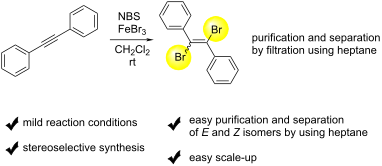
- crude product was purified three times with heptane to obtain (E)-1,2-dibromo-1,2-diphenylethylene (E-2a, 132.6 mg, 0.392 mmol, 78% yield) of high-purity. (E)-1,2-Dibromo-1,2-diphenylethylene (E-2a) [4]: White solid. 1H NMR (400 MHz, CDCl3) δ 7.34–7.46 (m, 6H), 7.50–7.57 (m, 4H) ppm; 13C NMR (100 MHz
- CDCl3) δ 118.0, 128.4, 128.9, 129.1, 140.7 ppm; HRMS (ESI) m/z: [M + Na]+ calcd for C14H10Br2Na, 358.9041; found, 358.9028. (Z)-1,2-Dibromo-1,2-diphenylethylene (Z-2a) [7]: Yellow solid. 1H NMR (300 MHz, CDCl3) δ 7.10–7.22 (m, 10H) ppm; 13C NMR (75 MHz, CDCl3) δ 125.7, 128.0, 128.3, 129.8, 139.4 ppm
- of compounds, and copies of 1H and 13C NMR spectra. Acknowledgements We appreciate Kazuki Miyamoto, Junya Kikuzawa and Ryoichi Tomiyama at Kindai University for useful advice and the cooperation related to this paper. We also thank Akiko Kuwabara and Dr. Masafumi Kobayashi at Kanto Denka Kogyo Co



Halogenated azobenzene acrylates: from efficient solution photoswitching to stable solid-state photochromic materials
Beilstein J. Org. Chem. 2026, 22, 782–794, doi:10.3762/bjoc.22.60
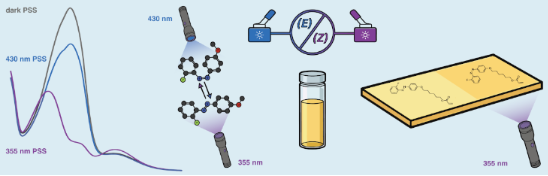
- calorimetry (DSC), thermogravimetric analysis (TGA), cyclic voltammetry (CV), UV–vis absorption spectroscopy, 1H and 13C NMR, and theoretical DFT calculations were employed. Furthermore, the target compounds are designed for incorporation as photoactive copolymers into the structure of functionalized


Synthesis and biological evaluation of new brassinosteroid analogs with C-22 benzoate function
Beilstein J. Org. Chem. 2026, 22, 753–762, doi:10.3762/bjoc.22.57
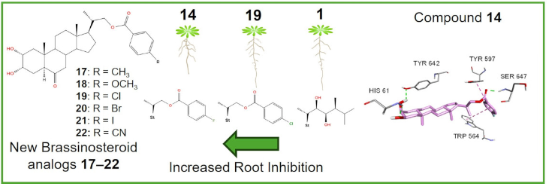
- 7.2 Hz, H-22b), are assigned to carbinolic hydrogens H-22a and H-22b, respectively. In the 13C NMR spectrum, the signals observed at δ = 166.57, 143.31, 129.40, 128.93, 127.65, and 21.52 ppm, are assigned to carbon ArCOO, C-4’, C-2’, C-3’, C-1’, and CH3-Ar of the benzoate group, respectively. All
- dihydroxylation of double bond on C-2 of compounds 23–28, following a described procedure [29], leads to BR analogs 17–22 with good reaction yields (63.4–84.9%) (Scheme 1). Structural characterization of BR analogs 17–22 was accomplished by using 13C NMR data, combined with 2D NMR techniques (HSQC and HMBC). For
- 13C NMR spectrum, the signals observed at δ = 69.65, 68.38, and 68.27, are assigned to carbinolic carbons C-22, C-3, and C-2, respectively (Figure S33, Supporting Information File 1). In this way, the carbinol signals of H and C were confirmed by correlations to 1JHC, 2JHC, and 3JHC from the 1H,13C


Rongalite addition to dienones: diastereoselectivity in cyclic sulfone synthesis; stereochemical rationalization and prospects as a general conjugate nucleophile
Beilstein J. Org. Chem. 2026, 22, 742–752, doi:10.3762/bjoc.22.56

- shift by a remarkable 1.0 ppm. Similarly, in the 13C NMR spectrum, the ortho-disubsituted ring produces 6 aromatic and 2 aliphatic signals, rather than the 4 aromatic and 1 aliphatic signals that would be expected given the symmetrical aromatic substitution pattern. These data indicate that the ortho
- additions. Results of competition experiments. Supporting Information Supporting Information File 4: Experimental procedures, copies of 1H and 13C NMR spectra and further computational details. Acknowledgements S. Finn and R. Murtada (Montclair State) are acknowledged for mass spectra as are Dr N. Dayal




Anti-invasive and cytotoxic evaluation of a (+)-pinoresinol-based semisynthetic library against glioblastoma
Beilstein J. Org. Chem. 2026, 22, 691–704, doi:10.3762/bjoc.22.54
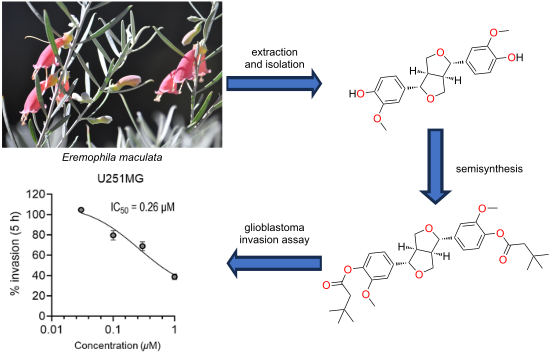
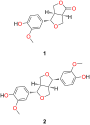
- 7.06 (2H), 6.83 (2H)), as well as two methine (δH 4.75 (2H), 3.11 (2H)), one methylene (δH 4.27/3.90, 4H), and one methoxy signal (δH 3.92, 6H)). The 13C NMR and HSQC spectra of 5 indicated a total of 10 unique carbon signals, including one methoxy (δC 56.6, 2C), two methine (δC 85.4, 53.9, 4C), one
- methylene (δC 71.8, 2C), and six aromatic carbon signals (δC 147.6, 142.9, 133.3, 122.3, 108.4, 108.0, 12C). Comparison of the 1H and 13C NMR data of 5 and (+)-pinoresinol (2) showed a high degree of homology, with the major differences in NMR data associated with a chemical shift of the aryl resonances
- 0.09, MeOH); lit. [α]D25 +56.3 (c 0.06, MeOH) [33]; see Supporting Information File 1 for 1H and 13C NMR data in CDCl3; LRESIMS m/z: [M + H]+ 251, [M − H]− 249. (+)-Pinoresinol (2): brown gum; [α]D25 +55.5 (c 0.07, MeOH); lit. [α]D25 +20.0 (c 0.75, MeOH) [34]; UV–vis (MeOH) λmax (log ε) 230 (3.94), 279



Continuous-flow carbonyl hydrogenation under subatmospheric to atmospheric hydrogen pressure enabled by robust heterogeneous Pt–Fe catalysts
Beilstein J. Org. Chem. 2026, 22, 575–582, doi:10.3762/bjoc.22.43
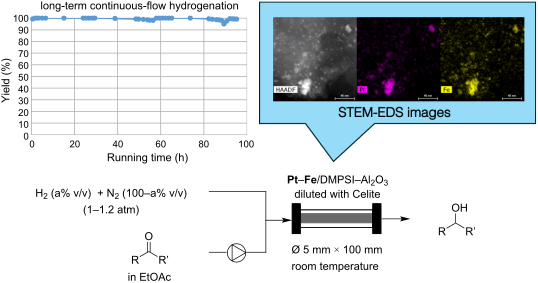
- ) was converted to the corresponding alcohol 2d in 89% yield under continuous-flow conditions at room temperature (Table 2, entry 3). The desired product 2d was obtained quantitatively at 50 °C (Table 2, entry 4). It is noteworthy that an analytically pure compound (confirmed by 1H and 13C NMR) was
- : Additional experimental details, materials, and methods including photographs of reactor systems, STEM-EDS images and XPS spectra of heterogeneous catalysts, and copies of 1H and 13C NMR spectra for isolated compounds. Acknowledgements H. M. also thanks the Joint Usage/Research Center for Catalysis


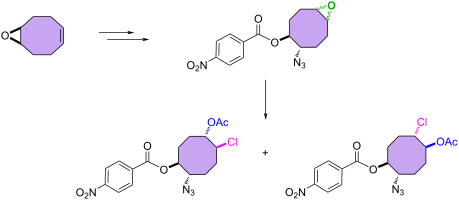
Experimental and DFT studies on the regioselective methanolysis of 5-azido-9-oxabicyclo[6.1.0]nonan-4-yl 4-nitrobenzoate isomers
Beilstein J. Org. Chem. 2026, 22, 547–556, doi:10.3762/bjoc.22.40
- to design pharmacological tools in the future. Experimental General information Melting points are uncorrected. Infrared spectra were obtained from solution in 0.1 mm cells or KBr pellets on an FT-IR Mattson 1000 instrument. The 1H and 13C NMR spectra were recorded on 400 (100) MHz Varian or 400 (100
- slightly yellow crystals; mp 60–62 °C. 1H NMR (400 MHz, CDCl3) δ 8.29–8.19 (m, 4H, aromatic), 5.72–5.59 (m, 2H, H-4 and H-5), 5.36–5.27 (m, 1H, H-1), 3.96 (td, J = 9.2, 3.7 Hz, 1H, H-8), 2.60–1.71 (series of m, 8H, CH2); 13C NMR (100 MHz, CDCl3) δ 163.9, 150.8, 135.7, 131.1, 129.5, 128.3, 123.8, 77.7, 64.1
- –8.22 (m, aromatic, 4H), 5.40–5.33 (m, 1H, H-1), 5.22–5.14 (m, 1H, H-6), 4.25–4.19 (m, 1H, H-5), 3.97 (ddd, J = 9.1, 6.0, 3.4 Hz, 1H, H-2), 2.36–1.90 (series of m, 8H, CH2), 2.16 (s, 3H, OAc); 13C NMR (100 MHz, CDCl3) δ 170.2, 164.0, 150.9, 135.3, 131.1, 123.9, 76.9, 75.8, 64.0, 61.5, 26.7, 25.0, 24.5


Melifoliox B, a novel phloroglucin derivative isolated from Melicope barbigera (Rutaceae) and synthesis of new oxidation products from melifoliones A and B
Beilstein J. Org. Chem. 2026, 22, 535–546, doi:10.3762/bjoc.22.39
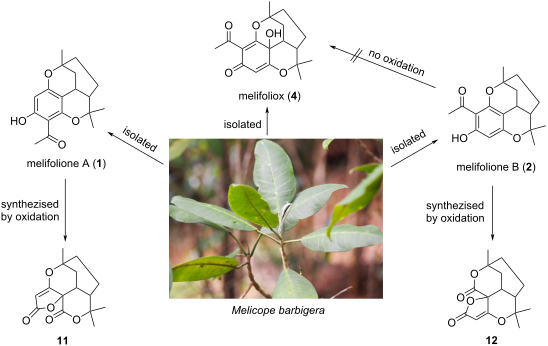
- signals detected in the 13C NMR spectrum of 4 (Table 2) could be assigned by careful analysis of the 2D-NMR spectra (HSQC and HMBC). The position of the acetyl group was confirmed by a cross peak between C-2 and the protons of the acetyl-methyl group in the HMBC spectrum and by interactions between the
- ). The chemical shift values of C-6a and C-10a in the 13C NMR spectrum of 4 compared to 2 can be explained by the effect of the new OH-group at C-10b. The γ-position of C-6a leads to a high field shift (from 46.1 to 35.8 ppm) while C-10a shows the opposite effect (from 27.5 to 44.1 ppm), due to its β
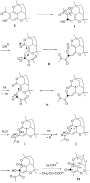
- rigid chair conformation of the cyclohexane ring. The 13C NMR spectrum of 11 (Table 3) shows 15 signals that could be clearly assigned after evaluating the HSQC and HMBC spectra. In the HMBC spectrum, cross peaks occur for C-3 with H-4’ and with the protons of both geminal CH3 groups at C-1. Furthermore



Get a better glimpse on sequential photoreactions of trisnorbornadienes with 19F NMR spectroscopy
Beilstein J. Org. Chem. 2026, 22, 527–534, doi:10.3762/bjoc.22.38
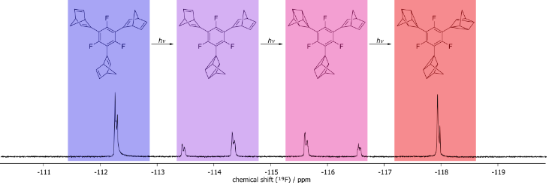
- '-H, 5'''-H, 5'''-H), 6.94 (dd, 3J = 5.0 Hz, 3J = 2.4 Hz, 3H, 6'-H, 6''-H, 6'''-H), 7.00 (d, 3J = 2.4 Hz, 3H, 3'-H, 3''-H, 3'''-H); 13C NMR (125 MHz, CDCl3) δ 50.7 (C4', C4'', C4'''), 54.6 (C1', C1'', C1'''), 73.1 (C7', C7'', C7'''), 111.2 (C1, C3, C5), 143.1 (C5', C5'', C5'''), 143.4 (C6', C6'', C6


Synthesis and uranyl(VI) extraction performance of a calix[4]pyrrole–tetrahydroxamic acid receptor
Beilstein J. Org. Chem. 2026, 22, 486–494, doi:10.3762/bjoc.22.36
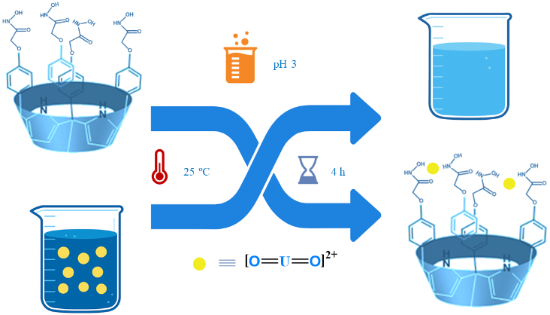
- % yield. Its structure was confirmed by 1H NMR, 13C NMR, and HRMS. The uranium(VI) extraction efficiency of PCP HA was evaluated by solid–liquid extraction experiments, using uranyl acetate as the uranium source, with measurements performed by gamma spectroscopy. PCP HA demonstrated good performance
- %). The structure of PCP HA was fully characterized by 1H NMR and 13C NMR (DMSO-d6) as well as by HRMS (ESI+) (Figures S3–S6, and S9 in Supporting Information File 1). In the 1H NMR spectrum, two sets of singlets at 4.41 and 4.76 ppm (CH2) were attributed to the –O=C–CH2–O– groups of the E/Z isomers of
- industrial effluent remediation or for the challenging task of uranium extraction from seawater [79]. Experimental Detailed synthetic procedures, compound characterization (1H and 13C NMR, HRMS), and uranyl extraction protocols, including pH and ligand-to-metal ratio studies, are described in Supporting


Structural reassignment of compound 968, an allosteric glutaminase inhibitor
Beilstein J. Org. Chem. 2026, 22, 455–460, doi:10.3762/bjoc.22.33
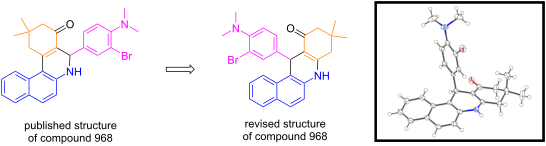
- , 1H), 7.71 (dd, J = 8.7, 2.3 Hz, 1H), 7.04 (d, J = 8.7 Hz, 1H), 2.93 (s, 6H); 13C NMR (100 MHz, CDCl3) δ 189.7, 156.9, 136.1, 131.1, 130.0, 119.5, 116.7, 43.6. 12-(3-Bromo-4-(dimethylamino)phenyl)-8,9,10,12-tetrahydro-9,9-dimethylbenzo[a]acridin-11(7H)-one (2); suggested revised structure for compound
- ), 2.51 (s, 6H), 2.39 (d, J = 16.5 H, 1Hz), 2.18 (d, J = 16.0 Hz, 1H), 2.02 (d, J = 16.0 Hz, 1H), 0.99 (s, 3H), 0.85 (s, 3H). One diastereotopic methylene hydrogen is obscured by the residual solvent peak at 2.47 ppm; 13C NMR (100 MHz, DMSO-d6) δ 193.72, 151.37, 149.50, 143.73, 134.80, 132.80, 131.69


Synthesis and stereochemical analysis of dynamic planar chiral oxa[7]orthocyclophene
Beilstein J. Org. Chem. 2026, 22, 436–442, doi:10.3762/bjoc.22.30

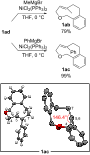
- procedures, characterization data, copies of 1H and 13C NMR spectra, and optimized geometries of DFT calculations. Supporting Information File 26: Crystallographic information file of compound 1ac. Acknowledgements We thank K. Imamura (Evaluation center of material properties, IMCE Kyushu University) for






Cone p-aminocalix[4]arenes enriched with ‘clickable’ alkyne or azide functionalities
Beilstein J. Org. Chem. 2026, 22, 399–415, doi:10.3762/bjoc.22.28
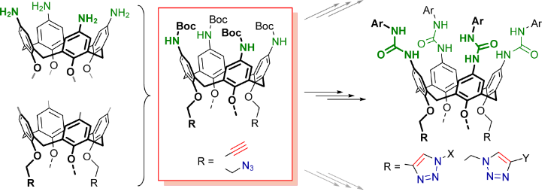
- corresponding tetraureacalix[4]arenes 47–51 (Scheme 9), the structures of which were unambiguously confirmed by their 1H NMR and 13C NMR spectra obtained from solutions in polar DMSO-d6. Being calix[4]arene tetraureas, compounds 47–51 should form homodimeric capsules in H-bond non-competing solvents (e.g
- Supporting Information File 18: Synthesis details, copies of 1H and 13C NMR spectra of novel compounds, details of X-ray diffraction measurements and crystal structure data. Supporting Information File 19: Crystallographic information file for compound 16. Supporting Information File 20: Crystallographic