


Search results
Search for "Cleavage" in Full Text gives 987 result(s) in Beilstein Journal of Organic Chemistry. Showing first 200.
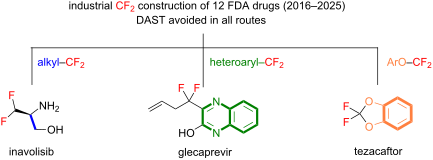
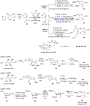
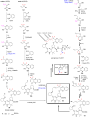
Construction of CF2 moieties in FDA-approved drugs (2016–2025): industrial routes, mechanisms, and scale-up considerations
Beilstein J. Org. Chem. 2026, 22, 1122–1150, doi:10.3762/bjoc.22.91






Synthesis and acaricidal activity against Varroa destructor of α- and γ-costic acid dimers
Beilstein J. Org. Chem. 2026, 22, 1088–1096, doi:10.3762/bjoc.22.87
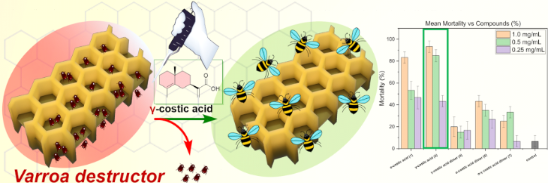
- , alongside that of the corresponding monomeric acids, against the ectoparasite V. destructor. Overall, the dimeric derivatives exhibited approximately 50% lower activity than the parent costic acids 1 and 3. This reduction in efficacy may be attributed to incomplete or inefficient metabolic cleavage within


Synthesis of functionalized, 13-alkyl-substituted coralyne derivatives and investigation of their interactions with duplex and abasic site-containing DNA
Beilstein J. Org. Chem. 2026, 22, 1057–1066, doi:10.3762/bjoc.22.84
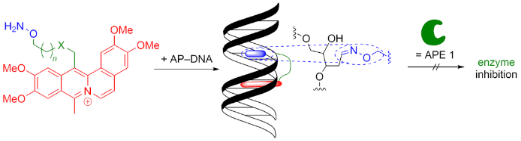
- leads to DNA cleavage or inhibition of AP-site processing, a series of experiments was performed with a fluorescence-based AP-site cleavage assay (Figure 3A) [48]. In this assay, cleavage of the AP site results in separation of a fluorophore–quencher pair, leading to an increase in the fluorescence
- signal [49]. AP sites were generated enzymatically by treatment of uracil-containing DNA with uracil–DNA glycosylase (UNG2), producing the corresponding AP–DNA substrate. The AP–DNA (10 nM) was then incubated with compound 2g at 20 µM to determine whether the ligand induces strand cleavage. The reaction
- conditions no significant increase in fluorescence was detected, demonstrating that compound 2g did not induce detectable DNA strand cleavage. To assess whether the ligand binds to AP sites and interferes with their enzymatic processing, the activity of apurinic/apyrimidinic endonuclease 1 (APE1) was


Electrochemical reduction of unsaturated carbon–carbon bonds via 3d transition-metal catalysis
Beilstein J. Org. Chem. 2026, 22, 955–981, doi:10.3762/bjoc.22.75
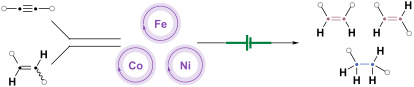
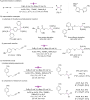
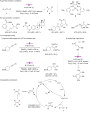
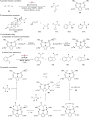
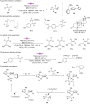
- . Notably, decreasing Co–C BDEs correlate with an increased proportion of trans-alkene formation. This computational trend is consistent with the stereochemical rationale proposed in Baran’s study [94], in which facile homolytic Co–C bond cleavage was implicated in governing trans-selective alkene formation








Synthesis of sterically shielded piperidine nitroxides via acid-catalyzed heterocyclization of β-aminoketone derivatives with ketones
Beilstein J. Org. Chem. 2026, 22, 948–954, doi:10.3762/bjoc.22.74
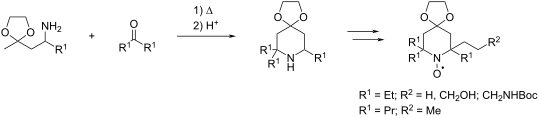
- fragment ions corresponding to α-cleavage adjacent to the nitrogen atom, resulting in loss of the 2- or 6-alkyl substituent ([M−R]+) in agreement with established fragmentation patterns for cyclic amines [33]. The 2,2,6-trisubstituted piperidines 5a,b were oxidized to the corresponding ketonitrones 6a,b
- lower hydrogenation yields for 7b and 7c presumably stem from labile hydrogens in the substituents that promote N–O bond cleavage under hydrogenation conditions, leading to the corresponding amines [37]. It should be noted, however, that this proposed pathway remains speculative and requires further


Recent advances in copper-catalyzed direct hydroamination of alkenes with (hetero)aromatic amines
Beilstein J. Org. Chem. 2026, 22, 925–947, doi:10.3762/bjoc.22.73
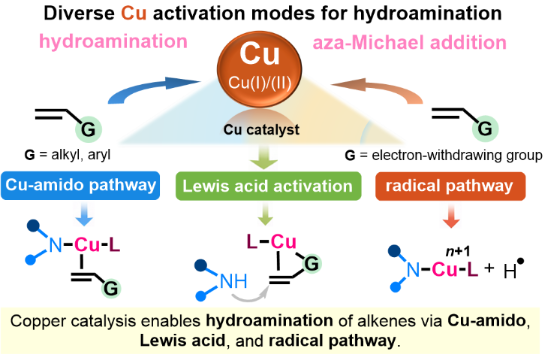
- intermediate II [63]. This intermediate is proposed to undergo homolytic cleavage to generate carbon-centered radical III and a Cu(I) species, following which hydrogen atom transfer from 1,4-cyclohexadiene provides the hydroamination product and regenerates the catalytic copper species. This strategy







Diastereodivergent electrophilic trapping of α-boryl lithium derivatives
Beilstein J. Org. Chem. 2026, 22, 882–887, doi:10.3762/bjoc.22.68
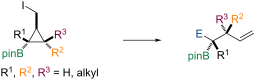
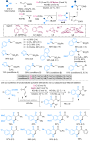
- their stereoselective reactions remains challenging. Here, we examine the diastereoselective generation and trapping of α-boryl lithium species formed by ring opening of substituted iodomethylcyclopropanes. After lithium–iodine exchange and selective C–C bond cleavage, these intermediates react with a
- derivative 1 to afford product 4 as single diastereomers. Specifically, iodide 2 was subjected to tert-butyllithium (t-BuLi) in diethyl ether at −95 °C, efficiently generating cyclopropylmethyllithium 3 via lithium–iodine exchange. Subsequent selective C–C bond cleavage of 3, proceeding exclusively through
- cleavage of the C1–C3 bond rather than the C1–C2 bond, provided direct access to α-boryl carbanion intermediate 1. Reaction of 1 with a range of electrophiles furnished tertiary pinacol boranes with a well-defined adjacent stereocenter in excellent diastereoselectivity (Scheme 1). Theoretical studies




The trans-influence in gold chemistry from a catalytic perspective
Beilstein J. Org. Chem. 2026, 22, 838–856, doi:10.3762/bjoc.22.66
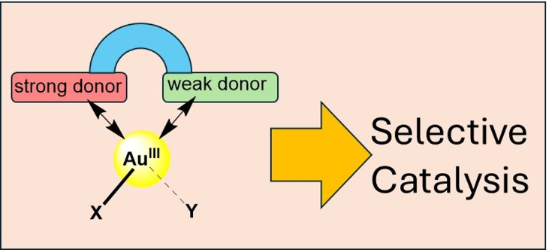
- be underestimated. For example, cleavage of one of the Au–phenyl bonds in A (Scheme 2) with a strong acid provides access to the gold borane and silane σ-complexes [(C^N–CH)Au(C6F5)(H–X)]+, X = B(O2C2Me4) or SiEt3 (Scheme 3) [32]. In the presence of traces of moisture, the Au(III)+ Lewis acidity may
- chemical reactivity. For example, 8a proved stable to air, water and acetic acid, although stronger acids like trifluoroacetic lead to decomposition due to protolytic cleavage of one of the Au–phenyl bonds [31][32]. The stabilising effect of the N-donor in C^N^C ligands is seen quite generally and leads to
- H–H bond cleavage had been reported earlier by Rocchigiani et al. for the highly electrophilic ether adduct [(C^N–CH)Au(C6F5)OEt2]+ which shows “frustrated Lewis pair” (FLP)-like reactivity (Scheme 7) [32]. The electrophilic character of CO ligated to gold explains why gold is more active than


Preparation of 3-(alkylamino)imidazo[1,2-a]pyridine-2-carbaldehydes via Kornblum oxidation and unexpected ring-opening reactions of the corresponding alcohols under oxidative conditions
Beilstein J. Org. Chem. 2026, 22, 763–770, doi:10.3762/bjoc.22.58
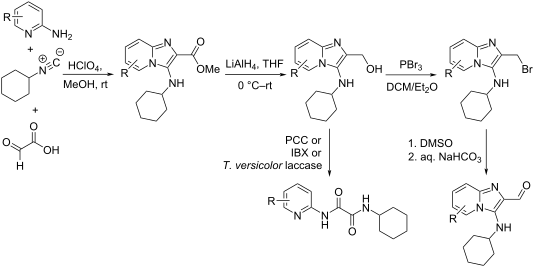
- transcriptase in due course. Examples of biologically active imidazo[1,2-a]pyridines. Compounds envisaged for synthesis. Previously reported 3-amino-2-carboxylic acid derivatives. Single crystal X-ray structure of 18a. ORTEP diagram drawn at 50% probability level. Different oxidative cleavage products obtained


Synthesis of heterocycles based on azomethine ylides from α-amino acids (or amines) and carbonyl compounds
Beilstein J. Org. Chem. 2026, 22, 705–741, doi:10.3762/bjoc.22.55
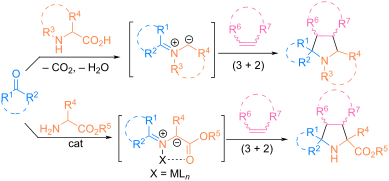
- stereoselectivity. The cycloaddition proceeded with the formation of syn-endo cycloadducts 61 and was accompanied by the cleavage of the cinnamoyl group from triarylideneacetylacetone. In the context of the use of catalytic systems based on metals other than Cu and Ag for the (3 + 2) cycloaddition reactions of N
- -nitro-1,2-diphenylcyclopropene 127 in primary, secondary, and tertiary alcohols, as well as using certain thiols. The authors suggest that the reactions proceed via a stage of heterolytic cleavage of the C–N bond of the starting 3-nitro-1,2-diphenylcyclopropene to form a cyclopropenyl cation, which then
- electron-deficient central multiple bond of triarylidene acetylacetone. The cleavage of the cinnamoyl group that occurs during the formation of spiroheterocycles was additionally confirmed using mass spectrometry [103]. In [104][105], our group investigated three-component one-pot reactions of substituted


Computational prediction of C–H hydricities and their use in predicting the regioselectivity of electron-rich C–H functionalisation reactions
Beilstein J. Org. Chem. 2026, 22, 603–610, doi:10.3762/bjoc.22.46
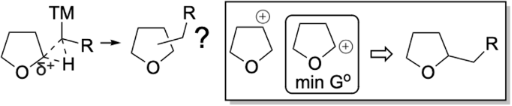
- therefore be essential to determine the robustness and transferability of hydricity-guided predictions. The model is made available at regioselect.org together with a host of other reactivity predictors. Different cleavage methods for C–H bonds. Heterolytic bond dissociation energy with proton dissociation


![[Graphic 6]](/bjoc/content/inline/1860-5397-22-46-i8.svg?max-width=637&scale=1.18182)


Regioselective approach to 5-arylsulfonylisoxazoles and their antimicrobial activity
Beilstein J. Org. Chem. 2026, 22, 592–602, doi:10.3762/bjoc.22.45
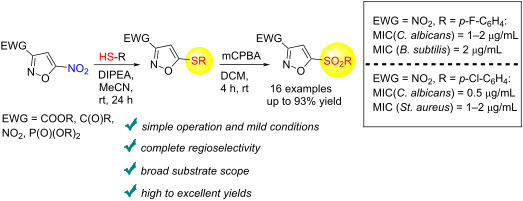
- inhibit DNA polymerase I activity. Next, we examined the potential inhibition of DNA cleavage mediated by DNA gyrase or DNA topoisomerase IV (Topo IV). In this test (Figure 4A), supercoiled DNA is present within the system. Topo IV catalyzes an ATP-dependent cleavage of both DNA strands, followed by the
- isoxazoles 3h, 3g and 4b exhibited no significant difference compared to the control lane with enzyme (Gyrase or Topo IV) added (Figure 4B and 4C), indicating that they did not inhibit DNA gyrase or Topo IV activity. Further, we tested the possibility of similar DNA cleavage mediated by DNA topoisomerase I
- DNA by alleviating torsional strain through the controlled cleavage and rejoining of one DNA strand (Figure 5A). Again, all tested samples 3h, 3g and 4b exhibited no significant difference compared with the control lane corresponding to enzyme without antibiotic (labeled as Topo I) (Figure 5B


Modern synthetic pathways towards eribulin and its subunits
Beilstein J. Org. Chem. 2026, 22, 495–526, doi:10.3762/bjoc.22.37
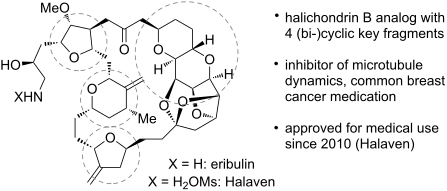
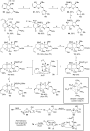
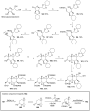
- metathesis with ethyl acrylate, acidic cleavage of the diol protecting group and addition of NaH induced the oxy-Michael reaction towards 18 in 4:1 dr. Reduction of the ester moiety, subsequent protection with TBDPSCl and methylation of the secondary alcohol furnished 19. After Bn-deprotection, iodination
- –Kishi (NHK) coupling and Pd-mediated cyclization. Fragment 31 was synthesized from known precursor 28 [74] in 9 steps via MMTr-protection, replacement of the Bn- with TBDMS-protecting groups, hydroxylation of sulfone 29 to alcohol 30, tosylation, bromide substitution, acidic MMTr-cleavage and DMP
- Liu and co-workers [81]. Regioselective deprotection, oxidative cleavage, reduction with NaBH4 and Bn-protection afforded 50, which was subsequently transformed to aldehyde 51 via ozonolysis and treatment with SMe2. Next, HWE reaction and acidic treatment triggered the cyclizations towards enone 53








Synthesis of a HDAC inhibitor–nanogold probe for cryo-EM visualization in class I HDAC co-repressor complexes
Beilstein J. Org. Chem. 2026, 22, 480–485, doi:10.3762/bjoc.22.35
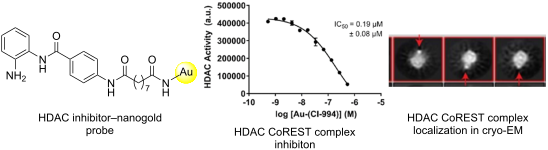
- Boc-Lys-(Ac)-AMC as the HDAC substrate [15][20], which on cleavage by HDAC releases fluorescent 7-amino-4-methylcoumarin. Au–(CI-994) and several controls were evaluated under the HDAC assay conditions in the presence and absence of the CoREST complex (Figure 2). In the absence of the CoREST complex



Recent advances in the stereoselective synthesis of distal biaxially chiral molecules
Beilstein J. Org. Chem. 2026, 22, 461–479, doi:10.3762/bjoc.22.34
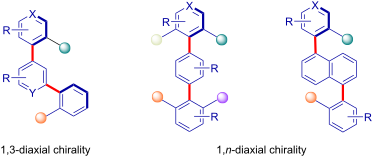
- . Soon after, Shibata and co-workers developed a cycloisomerization strategy that generated various axially chiral polycyclic aromatic hydrocarbons (PAHs) 70 through bond-cleavage followed by successive cyclization reactions with excellent yields and enantioselectivity (Scheme 19) [58]. In 2020, Miller


A facile and practical method for the synthesis of trans-(±)-taxifolin and its derivatives via Darzens reaction
Beilstein J. Org. Chem. 2026, 22, 443–450, doi:10.3762/bjoc.22.31
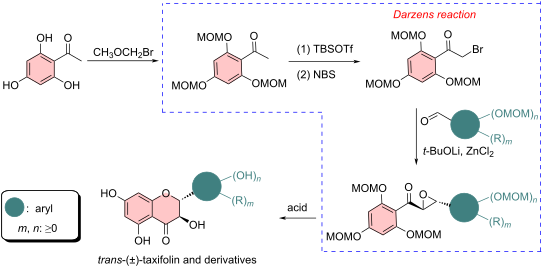
- failed because of concomitant protecting group cleavage (Supporting Information File 1, Table S1, entries 1 and 2). Subsequently, a series of common brominating reagents, such as Br2, PTT (trimethylphenylammonium tribromide) and NBS were attempted, but unfortunately, cleavage of MOM was still observed
- (Supporting Information File 1, Table S1, entries 3–5, and 7). When NaHCO3 was used as an additive to neutralize HBr in the reaction mixture that was responsible for the cleavage of MOM, bromination with PTT was also unsuccessful in that the bromination occurred at the benzene ring and MOM was partially


Cone p-aminocalix[4]arenes enriched with ‘clickable’ alkyne or azide functionalities
Beilstein J. Org. Chem. 2026, 22, 399–415, doi:10.3762/bjoc.22.28
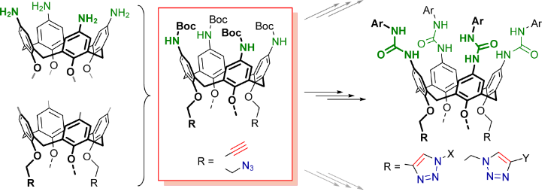
- important functionalities which can be introduced into calix[4]arene structures either through a wide-rim exhaustive nitration followed by reduction of the nitro groups [5][6][7][8][9][10][11][12][13], or through azo coupling followed by cleavage of the calixarene azo compounds thus formed [14][15][16][17
- ]arene. Notably, the alternative strategy of utilizing an azo coupling/cleavage sequence has only been applied thus far for the wide-rim modification of narrow-rim unsubstituted calixarenes. Since the exhaustive nitration and reduction steps proceed under relatively drastic conditions, which are poorly
- formation of side products, due to acid-promoted cleavage and undesired transformations of the TBS-protected propargyl groups and/or due to unwanted oxidation/nitration of the calixarene core [93]. Indeed, nitration of calixarene 6 has been reported to furnish the desired wide-rim exhaustively nitrated




Dialkylaminoalkylation of β-ketosulfones via ring-opening of 3-sulfonylpyrrolidines
Beilstein J. Org. Chem. 2026, 22, 383–389, doi:10.3762/bjoc.22.26
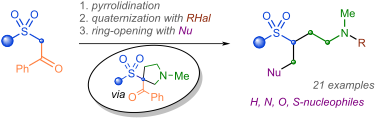
- for the ring-cleavage of the obtained quaternary compound 3a. An application of sodium methylate, suitable for the 3,3-dibenzoylpyrrolidine salt [33], provided only 45% conversion of the substrate (Table 1, entry 1). Treating a methanolic solution of quaternary compound 3a with milder base such as
- possible to use an ester group for the cleavage of 3-sulfonylpyrrolidines, it required a longer reaction time and provided a slightly lower overall product yield (77%) compared to the use of the benzoyl group. With an optimized synthetic route in hand – comprising a multicomponent reaction of ketosulfone
- -1-amines 4c–e,h were isolated in 40–69% yields (Scheme 2). Introduction of the m-nitro substituent led to partial resinification during the ring-cleavage step and significant decrease in the reaction outcome (products 4f,g). We have demonstrated that ethyl bromide, benzyl chloride, allyl bromide




Recent advances in the cleavage of non-activated amides
Beilstein J. Org. Chem. 2026, 22, 352–369, doi:10.3762/bjoc.22.23
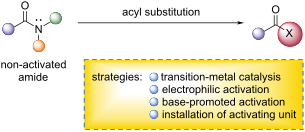
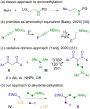
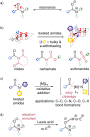
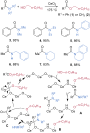
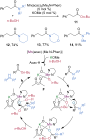
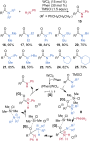
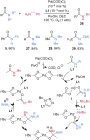
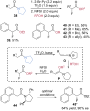
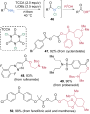
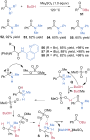
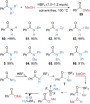
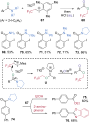
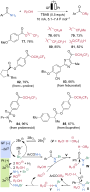
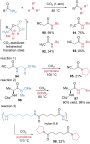
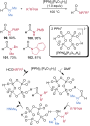
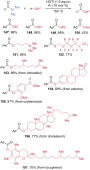
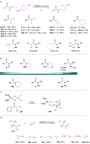
- of conventional, non-activated amides remains far more difficult. This review summarizes recent advances over the past decade in the activation and cleavage of non-activated amide C–N bonds for their conversion into diverse carboxylic acid derivatives. Key strategies covered include transition-metal
- catalysis, electrophilic activation, strong base-counter-cation systems, and N-based activating groups that enable chemoselective bond cleavage. Together, these developments provide powerful tools for amide functionalization and offer new opportunities for efficient, practical, and selective syntheses
- -promoted transformations enhanced by alkali-metal counter-cation effects, and (iii) installation of activating groups on the nitrogen to enable chemoselective cleavage under tailored conditions. These approaches collectively offer promising avenues for the efficient transformation of non-activated amides










Ring contraction and ring expansion reactions in terpenoid biosynthesis and their application to total synthesis
Beilstein J. Org. Chem. 2026, 22, 289–343, doi:10.3762/bjoc.22.21
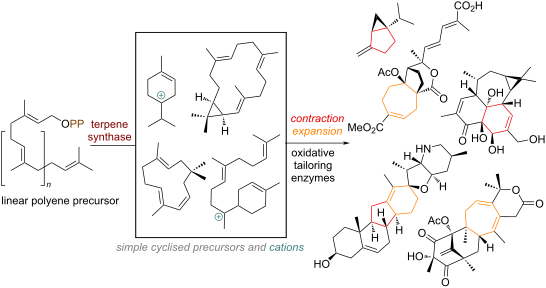
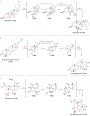
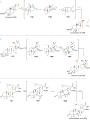
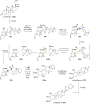
- ) and B (78) the tricyclic precursor 79 was invoked (see Scheme 22B) [129]. This compound could undergo oxidation at the alkene (and C-1) to give intermediate 80, which after oxidative cleavage affords the enolate of diketone 82 which can undergo transannular aldol addition to give either product 77 or
- reaction, starting with a Schenck ene reaction of cholesterol to form the highly reactive hydroperoxide species 112a was the operational pathway [159][160][161][162]. Carbon bond migration in a process called Hock cleavage leads to a cyclic hemiacetal 112b which ring-opens and aldolises (112c) to give the
- towards aegiceradienol (127) for compound 124 and isomerisation towards 128 for compound 125 as depicted in Scheme 30. From here an oxidative cleavage was invoked for both olefins, revealing, e.g., dialdehyde 128a, which can engage in an aldol addition to effect ring contraction. One of the two putative






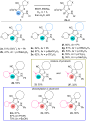
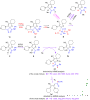
Base-promoted deacylation of 2-acetyl-2,5-dihydrothiophenes and their oxygen-mediated hydroxylation
Beilstein J. Org. Chem. 2026, 22, 192–204, doi:10.3762/bjoc.22.13
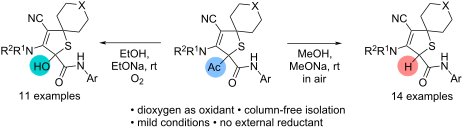
- oxidation of ketones includes C‒C-bond cleavage, and carboxylic acids are predominantly formed. This can be achieved by the treatment of acyclic ketones with hypohalites [13], in the nitroarene-catalyzed oxidation with oxygen under basic conditions [14] or by the use of hypervalent iodine compounds (Scheme




Total synthesis of natural products based on hydrogenation of aromatic rings
Beilstein J. Org. Chem. 2026, 22, 88–122, doi:10.3762/bjoc.22.4
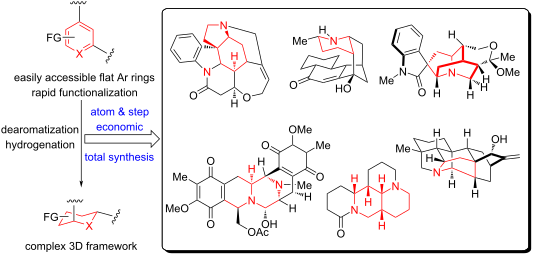
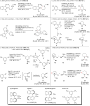
- was introduced via Fe-mediated HAT and sulfone cleavage. This 10-step asymmetric synthesis demonstrates that, in the case of indole monoterpene alkaloids, the rational application of aromatic ring hydrogenation can markedly reduce step count and enhance overall efficiency. Total synthesis of matrine











Advances in Zr-mediated radical transformations and applications to total synthesis
Beilstein J. Org. Chem. 2026, 22, 71–87, doi:10.3762/bjoc.22.3
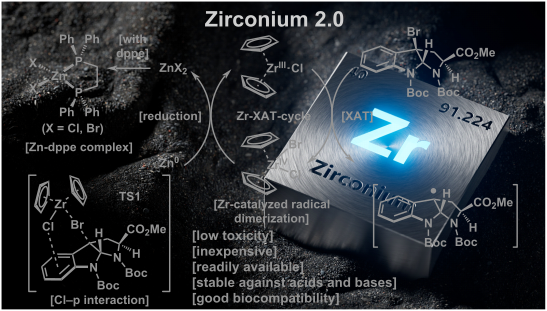
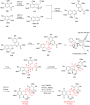
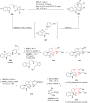
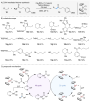
- molecules such as allose (23i) and cholesterol (23k), delivering the desired alcohols in good yields with excellent regioselectivity. The proposed mechanism is shown in Scheme 5C. Homolytic cleavage of the C–O bond in the epoxide generates a strong Zr–O bond, while the resulting alkyl radical abstracts a
- range of α-fluorocarbonyl substrates and olefins (Scheme 9B). In 2025, Ota and Yamaguchi et al. reported a zirconocene-mediated selective cleavage of C–O bonds (Scheme 10A) [35]. The authors had previously demonstrated regioselective ring-opening reactions of epoxides and oxetanes by exploiting the
- strong affinity of zirconium for oxygen atoms [4][21]. Building on this concept, they envisioned that a similar reaction system could be applied to the homolytic cleavage of C–O bonds in alcohols and ethers. When benzyl alcohol and ether derivatives 49 were treated with zirconocene in the presence of a




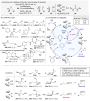

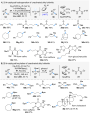
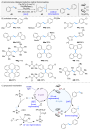


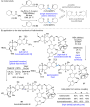

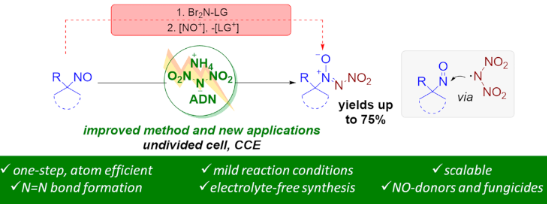
Sustainable electrochemical synthesis of aliphatic nitro-NNO-azoxy compounds employing ammonium dinitramide and their in vitro evaluation as potential nitric oxide donors and fungicides
Beilstein J. Org. Chem. 2025, 21, 2739–2754, doi:10.3762/bjoc.21.211
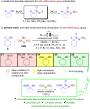
- 68% yield without cleavage of the acetonide protecting group. Note that compound 2f is not accessible using the known approach (see Scheme 1a), because the dioxane ring is opened during the nitration step. Surprisingly, nitro-NNO-azoxylation products 2g and 2h were obtained from methyl and ethyl 2
- further demonstrated by performing the model reaction on a 6 mmol scale of 1f (Scheme 3, reaction 1). The corresponding product 2f was obtained without any erosion of the yield (1.02 g, 4.08 mmol, 68%). The acidic cleavage of the acetonide group in 2f with AcCl in MeOH afforded diol 3f in a 94% yield





Total synthesis of asperdinones B, C, D, E and terezine D
Beilstein J. Org. Chem. 2025, 21, 2730–2738, doi:10.3762/bjoc.21.210
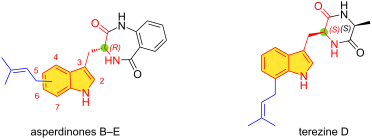
- (6) and ent-asperdinone E, now using an N-Boc protecting group (Scheme 8). Treatment of 3-iodoindole 39 with the iodozinc reagent prepared from N-Boc-ʟ-alanine methyl ester ((R)-35) under Negishi coupling conditions afforded 40 in excellent yield. Cleavage of the N-Boc group and amide formation with





