Search results
Search for "one pot" in Full Text gives 871 result(s) in Beilstein Journal of Organic Chemistry. Showing first 200.
One-pot four-component sequential synthesis of S-alkyl dithiocarbamates using lipase as a biocatalyst
Beilstein J. Org. Chem. 2026, 22, 1048–1056, doi:10.3762/bjoc.22.83
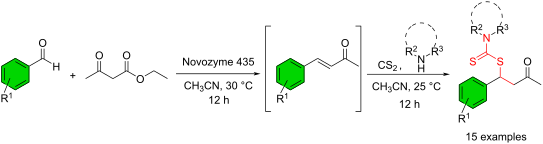
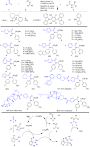
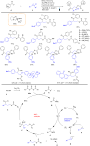
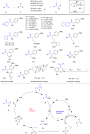
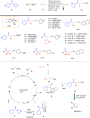
- , where they serve as antifungal and anticancer agents. As a result, their synthesis has garnered significant attention in recent years. In this study, we present an efficient one-pot four-component approach for the synthesis of these scaffolds, utilizing aldehydes, ethyl acetoacetate, carbon disulfide
- ; lipase; one-pot; Introduction Dithiocarbamates, a versatile class of organosulfur compounds, have attracted considerable interest due to their wide range of chemical and biological properties [1][2]. These compounds have been extensively studied for their applications in various fields, including
- alkyl precursors, such as alkyl halides [16], sulfonium salts [19], diazo compounds [20], methylarenes [21], or α,β-unsaturated compounds [8][22]. While three-component reactions are predominant in the synthesis of S-alkyl dithiocarbamates [23][24], the exploration of four-component, one-pot reactions


Novel macrocycles: from synthesis to supramolecular function
Beilstein J. Org. Chem. 2026, 22, 982–985, doi:10.3762/bjoc.22.76

- hydrophobic effects. Complementing this focus on ionic interactions, the thematic issue proceeds with a study by Qi-Qiang Wang, De-Xian Wang, and coworkers [34] that addresses the long-standing challenge of recognizing organic dicarboxylate anions in solution. Using a one-pot synthetic strategy based on
Recent advances in copper-catalyzed direct hydroamination of alkenes with (hetero)aromatic amines
Beilstein J. Org. Chem. 2026, 22, 925–947, doi:10.3762/bjoc.22.73
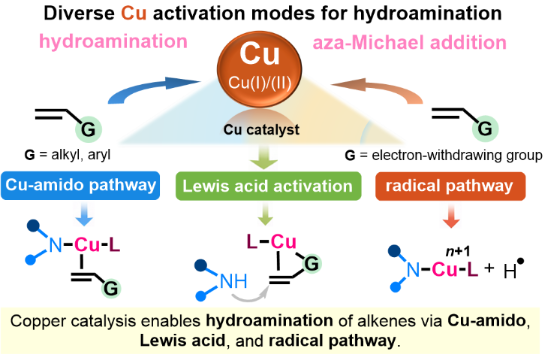
- methodology is demonstrated via a one-pot sequence consisting of copper-catalyzed aza-Michael addition followed by base-mediated cyclization and acid-promoted aerobic oxidation to afford quinolinone derivatives (Scheme 4) [38][39]. In this sequence, 2-aminobenzoate derivatives 4 reacted with α,β-unsaturated
- cyclization. Scheme 9 summarizes representative examples in which copper acts as a Lewis acid to promote the aza-Michael addition and subsequently enables annulation to construct diverse N-heterocycles. As shown in Scheme 9a, Singh et al. reported that a Pybox-diPh–Cu catalytic system enables the one-pot
- arylamines to allylic sulfones. Cyclic(alkyl)(amino)carbene-copper-catalyzed aza-Michael addition. Aza-Michael addition enabled by Lewis acidic copper catalyst. a20 mol % bpy, 50 mol % Na2CO3. One-pot cyclization via aza-Michael addition enabled by Lewis acidic copper catalyst. Lewis acidic Cu-catalyzed







A practical CO2-mediated synthesis of 5,6-carboxylated silicon-rhodamines for targeted probe development
Beilstein J. Org. Chem. 2026, 22, 915–924, doi:10.3762/bjoc.22.72
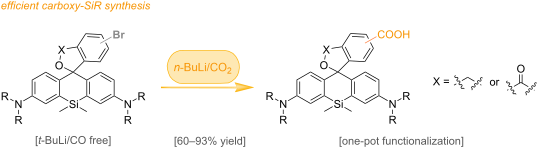
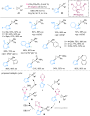
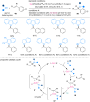
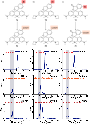
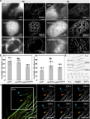
- one-pot access to HaloTag-targeted SiR probes. The resulting probes were successfully applied to long-term live-cell super-resolution imaging, allowing visualization of filopodial dynamics and mitochondrial remodeling. This work establishes a concise and efficient route to functionalized SiR dyes and
- carboxylated SiR derivatives while delivering good to excellent yields. Sequential one-pot functionalization of brominated silicon-rhodamine In the carboxylation of 1b, a prominent side peak was observed in addition to the desired product peak (Figure 3b). NMR (Supporting Information File 1, Figure S17) and
- functionalization with HaloTag ligands through a one-pot sequence (Figure 2b). After treatment of compounds 1a–c with n-BuLi and CO2, the reaction mixtures were extracted with ethyl acetate and concentrated, and the resulting crude carboxylated intermediates were directly subjected to amide coupling with the



Site-specific labelling of native peptides and proteins: chemical and enzymatic strategies
Beilstein J. Org. Chem. 2026, 22, 857–881, doi:10.3762/bjoc.22.67
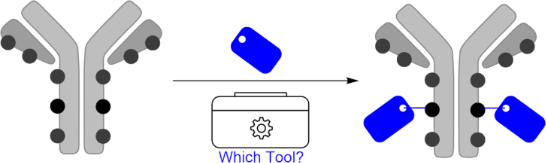
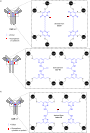
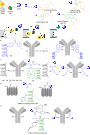
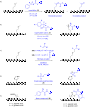
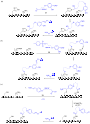
- mass intensity (PMI). Reagents should be near-stoichiometric, purification steps minimal, and catalysts effective in substoichiometric quantities. Compatibility with one-pot system and automation, such as flow chemistry and robotic synthesis, further enhance scalability. Existing tools and techniques
- ) to site-specifically oxidise galactose to galactoaldehyde on the non-reducing end of a glycan represents a mild alternative, as showcased by its combination with Horner–Wadsworth–Emmons (HWE) chemistry in a one-pot oxidation olefination strategy [19], as well as its implementation with tandem








Total synthesis of the capsular polysaccharide repeating unit towards the development of a glycoconjugate vaccine against Klebsiella pneumoniae ST512
Beilstein J. Org. Chem. 2026, 22, 821–827, doi:10.3762/bjoc.22.64
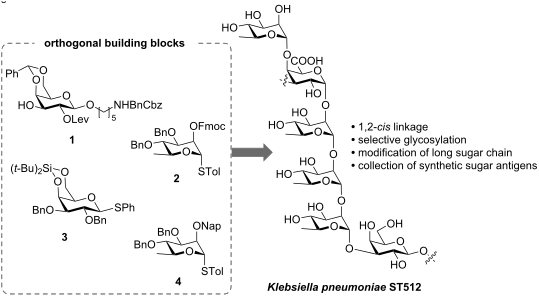
- by a one-pot Fmoc deprotection, afforded disaccharide 13 in 70% yield over two steps. Complete α-selectivity was observed, which can be attributed to the anomeric effect and the neighboring group participation of the C2-Fmoc group [34]. Two sequential cycles of glycosylation and Fmoc removal


Rongalite addition to dienones: diastereoselectivity in cyclic sulfone synthesis; stereochemical rationalization and prospects as a general conjugate nucleophile
Beilstein J. Org. Chem. 2026, 22, 742–752, doi:10.3762/bjoc.22.56

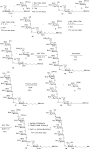
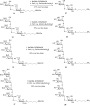
- to resolve a stereochemical ambiguity, the modelling of transition states to explain the diastereoselectivity of the one-pot reaction, a full exploration of its scope and limitations and further mechanistic and competition experiments that place the nucleophilicity of Rongalite in context by




Synthesis of heterocycles based on azomethine ylides from α-amino acids (or amines) and carbonyl compounds
Beilstein J. Org. Chem. 2026, 22, 705–741, doi:10.3762/bjoc.22.55
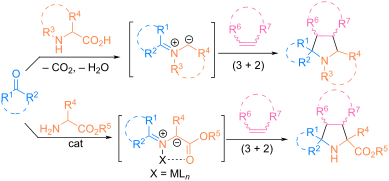
- multicomponent one-pot (3 + 2) cycloaddition reactions involving azomethine ylides from isatins and amino acids [21][35]. The main feature of this review is that we have attempted to consider all currently known systems for generating azomethine ylides based on carbonyl compounds and amino acid derivatives (or
- due to the possibility of cycloaddition at the carbon–oxygen double bond (C=O) of the aldehyde, which acts as an alternative to the carbon–carbon double bond (C=C) [83]. In 2016, Sridharan reported a one-pot iridium-catalyzed three-component dehydrogenation/1,3-dipolar cycloaddition cascade reaction
- formyl steroid 112 and sarcosine 99 (Scheme 41) [86]. The synthesis yielded N-methyl-2-substituted pyrrolidino[3,4:1,2][60]fullerenes (2R/2S)-113 as a mixture of two diastereomers. Azomethine ylides based on cyclic ketones Azomethine ylides from ninhydrin. In [87][88][89][90], four-component one-pot


Modern synthetic pathways towards eribulin and its subunits
Beilstein J. Org. Chem. 2026, 22, 495–526, doi:10.3762/bjoc.22.37
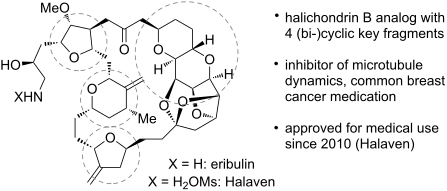
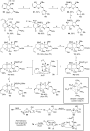
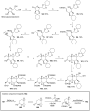
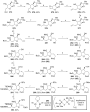
- dicarbonyl via Swern oxidation, and finally olefinated via Wittig reaction. Hence, by the use of one-pot Au(I)-catalyzed cyclization/Kishi reduction for the assembly of the tetrahydropyran and cross metathesis/Sharpless dihydroxylation/etherification for the tetrahydrofuran motifs, this pathway describes a







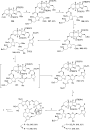

Recent advances in the stereoselective synthesis of distal biaxially chiral molecules
Beilstein J. Org. Chem. 2026, 22, 461–479, doi:10.3762/bjoc.22.34
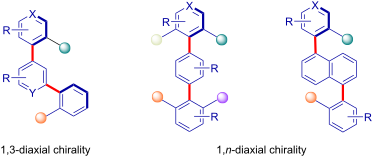
- -containing five-membered rings with iridium complexes and examined the influence of different alcohol protecting groups on the monoalkyne substrates. The reaction proceeded in generally high yields (>70%) with satisfactory enantioselectivity. Building on this work, Shibata and Tsuchikama developed a one-pot


Dialkylaminoalkylation of β-ketosulfones via ring-opening of 3-sulfonylpyrrolidines
Beilstein J. Org. Chem. 2026, 22, 383–389, doi:10.3762/bjoc.22.26
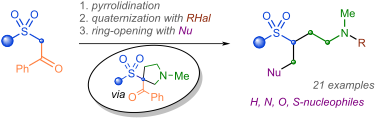
- promote Hofmann elimination. To enhance the leaving ability of the nitrogen atom we prepared ammonium salts 3 of the obtained pyrrolidines via treatment with alkyl halides. Since the preparation of quaternary ammonium salts of pyrrolidines is straightforward, we employed a one-pot method for its synthesis
- pyrrolidines as sacrificial framework and two domino processes used for assembling of the pyrrolidine ring and for the ring-cleavage of it. Thus, one-pot pyrrolidination of β-ketosulfones and alkylation combined with the subsequent debenzoylative ring-cleavage allows for wide range of the incorporated reagents


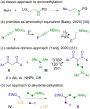


Electrosynthetic access to unsymmetrical oxaza[8]helicenes with high chiral stability and strong circularly polarized luminescence (CPL)
Beilstein J. Org. Chem. 2026, 22, 372–382, doi:10.3762/bjoc.22.25
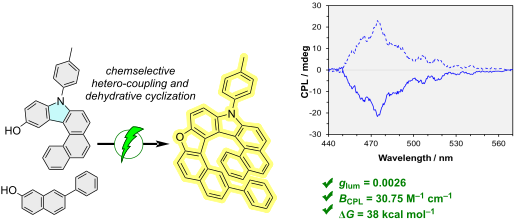
- Supporting Information File 1), we developed a one-pot electrochemical annulation between 3 and β-naphthol derivative 4. Using n-Bu4NPF6 as the electrolyte in CH2Cl2 at room temperature, this protocol furnished oxaza[8]helicenes 5 in good-to-moderate yields with >75% Faradaic efficiency, and no homo-coupling




Synthesis of tricyclic fused pyrrolidine nitroxides from 2-alkynylpyrrolidine-1-oxyls
Beilstein J. Org. Chem. 2026, 22, 344–351, doi:10.3762/bjoc.22.22

- Huisgen cycloaddition or via one-pot Michael addition–cyclocondensation reaction with hydrazine with subsequent intramolecular alkylation of the resulting pyrazoles. Results and Discussion Synthesis We have earlier reported on the synthesis of 2-alkynylpyrrolidine-1-oxyls 2a–c via addition of the




Spirobarbiturates with a pyrrolizidine moiety: synthesis, structure and biological evaluation
Beilstein J. Org. Chem. 2026, 22, 274–288, doi:10.3762/bjoc.22.20
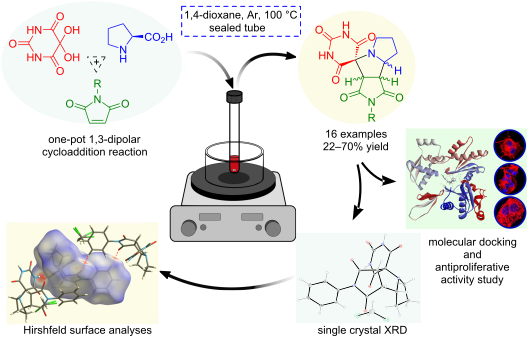
- 10.3762/bjoc.22.20 Abstract Polycyclic spirobarbiturates containing a pyrrolizidine moiety were synthesized via a one-pot three-component 1,3-dipolar cycloaddition reaction of alloxan, ʟ-proline and N-substituted maleimides. The reaction stereoselectivity was found to depend on the nature of substituents
- depolymerization that continuously occur in cells. Conclusion We have developed a novel one-pot three-component method for the synthesis of pyrrolizidine-containing spirobarbiturates via 1,3-dipolar cycloaddition reactions. The study revealed that maleimide derivatives with -H, -Me, -Ph, p-Tol, or 4-NO2С6H4
- . Synthesis of racemic spirobarbiturates 4a–p via one-pot three-component reaction of alloxan (1), ʟ-proline (2) and N-substituted maleimides 3. A plausible mechanism of spirobarbiturate formation from alloxan (1), ʟ-proline (2), and N-substituted maleimides 3a–p. Supporting Information Supporting


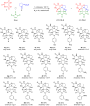


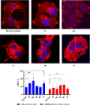
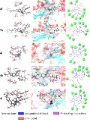
A mild and atom-efficient four-component cascade strategy for the construction of biologically relevant 4-hydroxyquinolin-2(1H)-one derivatives
Beilstein J. Org. Chem. 2026, 22, 244–256, doi:10.3762/bjoc.22.18
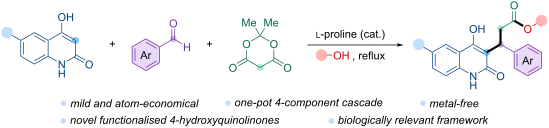
- acids followed by sequential Michael-type addition and subsequent cascade transformations. This versatile one-pot protocol delivers structurally diverse open-chain 3-arylpropanoate esters in moderate to good yields (46–69%), while cyclic pyranoquinolinones are formed under kinetically controlled
- , enabling the one-pot combination of three or more reactants to form multiple bonds in a single step [4][5][6][7][8]. This approach not only facilitates the rapid assembly of structurally complex and functionally diverse molecules, but also aligns with the principles of green and sustainable chemistry
- quantitatively. Although the two-step sequence generally performed well, isolation of malonamides 1a–c was associated with significant material loss, impacting the overall yield. To address this, a one-pot synthesis directly from anilines was developed, avoiding isolation of intermediates. After approximately 4


Total synthesis of natural products based on hydrogenation of aromatic rings
Beilstein J. Org. Chem. 2026, 22, 88–122, doi:10.3762/bjoc.22.4
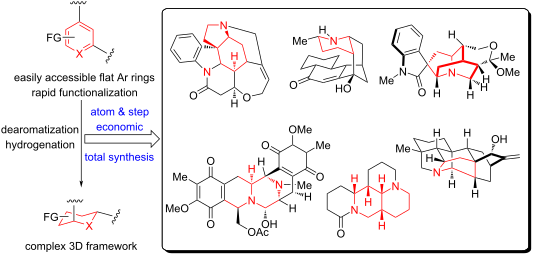
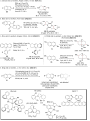
- difficult for the substrate to coordinate with the metal catalyst. In 2021, Glorius and co-workers reported an enantio- and diastereoselective complete hydrogenation of substituted benzofurans 65 in a one-pot cascade reaction (Scheme 8) [62]. This method facilitates the controlled installation of up to six
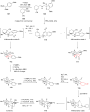
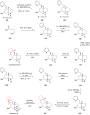
- benzylic alcohol with TFA/Et₃SiH afforded pyridine 95, which underwent a one-pot sequence of indole protection, methylation, and hydrogenation to furnish tetrahydropyridine 96. In contrast to Vollhardt’s synthesis, the unsaturation was misaligned with that of the natural product, most likely arising from
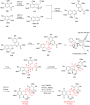
- between 179 and the dicarbonyl compound, followed by in-situ oxidation of the resulting intermediate 180 to afford compound 181 in a one-pot sequence. At this step, the key challenge was to obtain (−)-finerenone with high enantioselectivity through asymmetric hydrogenation of intermediate 181 (Scheme 25











Advances in Zr-mediated radical transformations and applications to total synthesis
Beilstein J. Org. Chem. 2026, 22, 71–87, doi:10.3762/bjoc.22.3
- conditions required. As an alternative, dithiane-based ketone synthesis has long been used, but it suffers from drawbacks in terms of step economy [10][11]. To address these limitations, the authors developed a radical-based one-pot ketone synthesis that proceeds under mild conditions. When thioester 11 and
- synthesis of homohalichondrin B (58). This synthetic strategy proved broadly applicable to multiple members of the halichondrin family, enabling the efficient synthesis of nine natural products: halichondrins A–C, norhalichondrins A–C, and homohalichondrins A–C. The Zr/Ni-mediated one-pot ketone synthesis
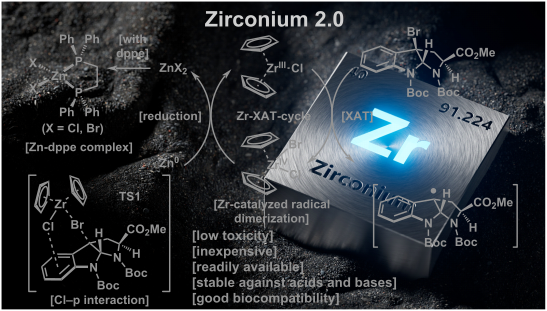
- background of zirconium and its physical properties. Image depicted in the background of Figure 1 was purchased from iStock.com/Just_Super. This content is not subject to CC BY 4.0. Zr-mediated radical cyclization. Ni/Zr-mediated one-pot ketone synthesis. Zirconocene-catalyzed alkylative dimerization of 2








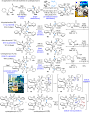
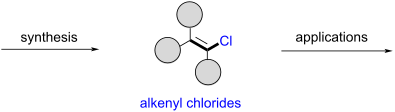
Synthesis and applications of alkenyl chlorides (vinyl chlorides): a review
Beilstein J. Org. Chem. 2026, 22, 1–63, doi:10.3762/bjoc.22.1
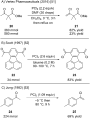
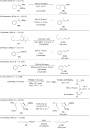
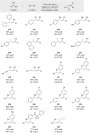
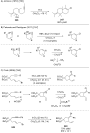
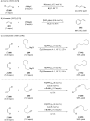
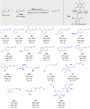
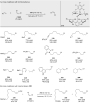
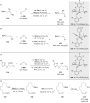
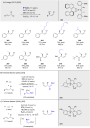
- , only tertiary aliphatic substrates were examined, generating non-stabilized carbocations. While the transformations proceeded cleanly, yields were generally low and the scope was restricted to non-functionalized arylalkynes. A one-pot procedure for the in situ generation of benzylic cations from























One-pot synthesis of ethylmaltol from maltol
Beilstein J. Org. Chem. 2025, 21, 2755–2760, doi:10.3762/bjoc.21.212

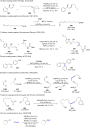
- via methylation of a dianionic intermediate, proved unsuitable due to competing overalkylation and the necessity of sub-zero temperatures. In contrast, a transient protecting group approach enabled selective methylation under mild conditions. This culminated in a scalable, operationally simple one-pot
- one-pot conversion of alcohol 5 to ethylmaltol (1) and various patents have focused on this transformation [14][15][16][17][18][19]. While maltol (2) can be obtained through analogous sequences from kojic acid (3) [4][20][21] or furfural (4) [7][9][11][12][13], it is naturally occurring in the leaves
- ), selective methylation of maltol (2) would represent the most direct access to ethylmaltol (1). Herein, we disclose an operationally simple, one-pot methylation procedure to access ethylmaltol (1) from maltol (2, Scheme 1c). Results and Discussion Inspired by the selective γ-alkylation of dianions of β-keto


Recent advancements in the synthesis of Veratrum alkaloids
Beilstein J. Org. Chem. 2025, 21, 2657–2693, doi:10.3762/bjoc.21.206
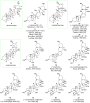
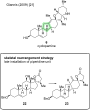
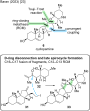
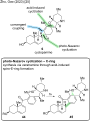
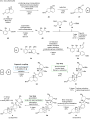
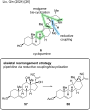
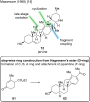
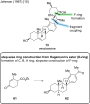
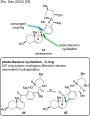
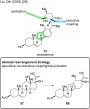
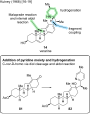
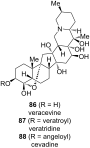
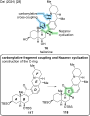
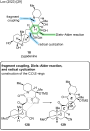
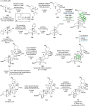
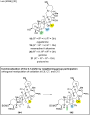
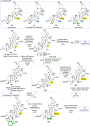
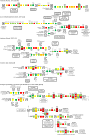
- , color-coding each transformation in this one-pot procedure. Cascade reactions, as well as reactions, where a single set of reaction conditions and reagents transform two or more groups simultaneously (e.g., global deprotections) and reactions, that occur upon work-up, are still regarded as one step and
- formation and reductive coupling with an aldehyde made accessible β-amino alcohol 60 over two steps. A cascade reaction occurred upon treatment with HCl in acetone followed by treatment with KOH. Indeed, a tandem 5-exo-trig cyclization, sulfinyl removal, and lactamization occurred in one-pot. Finally
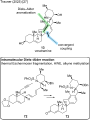
- in C14–C15 via a Horner–Wadsworth–Emmons (HWE) reaction. Interestingly, the left-hand fragment is synthesized in an unusual thermal Eschenmoser fragmentation, the product being directly conjoined in a one-pot fashion. First, commercially available (S)-3-methylpiperidine (74) was N-protected and
















Synthesis of new tetra- and pentacyclic, methylenedioxy- and ethylenedioxy-substituted derivatives of the dibenzo[c,f][1,2]thiazepine ring system
Beilstein J. Org. Chem. 2025, 21, 2645–2656, doi:10.3762/bjoc.21.205
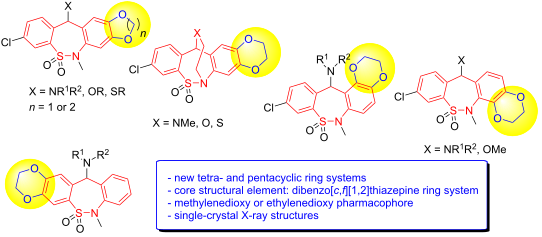
- followed by basic hydrolysis afforded carboxylic acids 14 and 15. Ring closure of the latter compounds to tetracyclic derivatives 6 and 7 was carried out in one pot by SnCl4-catalyzed Friedel–Crafts cyclization of the acid chlorides obtained via reaction of 14 and 15 with phosphorus pentachloride. In the


Visible-light-driven NHC and organophotoredox dual catalysis for the synthesis of carbonyl compounds
Beilstein J. Org. Chem. 2025, 21, 2584–2603, doi:10.3762/bjoc.21.200
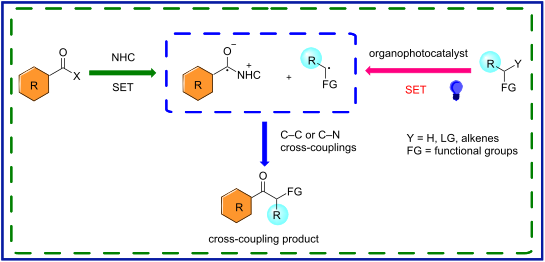
- valuable approach for the α-functionalization of ketones using visible-light irradiation under mild reaction conditions. In a one-pot procedure, the reaction was carried out between alkenes 28 and coupling partner 29 in the presence of NHC (30 mol %) and a photocatalyst (5 mol %). Under these conditions





Recent advances in total synthesis of illisimonin A
Beilstein J. Org. Chem. 2025, 21, 2571–2583, doi:10.3762/bjoc.21.199
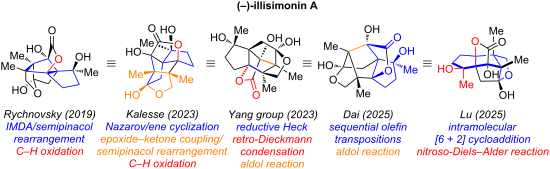
- , which was subsequently subjected to a one-pot desilylation to afford 24. Reduction of both the ester and ketone functionalities in 24, followed by selective protection of the primary alcohol and re-oxidation of the secondary alcohol to ketone, furnished compound 25 in three steps. The ketone in 25 was
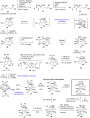
- introduce another side chain, affording a diene intermediate. A subsequent ring-closing metathesis (RCM) reaction formed the cyclopentene ring, and one pot protection of both carbonyl groups with ethylene glycol provided bis-ketal 55. Notably, due to steric hindrance, only one carbonyl group could be
- protected prior to the RCM step. Oxidative cleavage of the cyclopentene followed by Pinnick oxidation of the resulting aldehyde to the carboxylic acid and esterification yielded ketoester 56. Dieckmann condensation of 56, esterification of the resulting enolate with 57, and subsequent one-pot partial




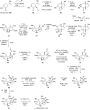


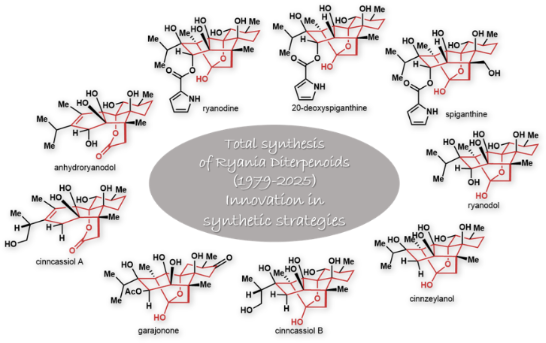
Total syntheses of highly oxidative Ryania diterpenoids facilitated by innovations in synthetic strategies
Beilstein J. Org. Chem. 2025, 21, 2553–2570, doi:10.3762/bjoc.21.198
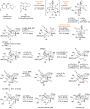
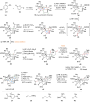
- conditions induces the first intramolecular reductive cyclization, affording hemiacetal 27. This intermediate is then transformed via a one-pot sequence involving epoxidation, fragmentation, and re-epoxidation to give epoxide 29. A second intramolecular reductive cyclization of 29 under Li/NH3 forms the







Assembly strategy for thieno[3,2-b]thiophenes via a disulfide intermediate derived from 3-nitrothiophene-2,5-dicarboxylate
Beilstein J. Org. Chem. 2025, 21, 2489–2497, doi:10.3762/bjoc.21.191
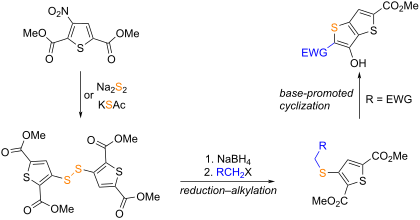
- -dicarboxylates by its one-pot reduction–alkylation using NaBH4 in DMF followed by an alkylating agent. Base-promoted cyclization of electron-deficient 3-alkylthio derivatives furnished 2-aryl-, 2-aroyl-, and 2-cyano-substituted thieno[3,2-b]thiophenes, bearing a 3-hydroxy group. This protocol broadens access to
- -3-yl lithium derivative, followed by electrophilic trapping of the thiolate and base-induced cyclization to afford the 3-hydroxy-TT [25]. Route II is represented by the single example of a one-pot reaction of 2-methylquinoline and 3-bromothiophene-2-carbaldehyde in the presence of elemental S and
- of the S–S bond in disulfide 3 followed by in situ alkylation was investigated for the one-pot synthesis of 3-alkylthio-substituted thiophene-2,5-dicarboxylates. We first focused our efforts on optimizing the conditions of this two-step process to determine suitable reducing agents and solvents