Search for "rearrangements" in Full Text gives 195 result(s) in Beilstein Journal of Organic Chemistry.
Beilstein J. Org. Chem. 2026, 22, 289–343, doi:10.3762/bjoc.22.21
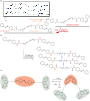
Graphical Abstract
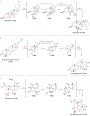
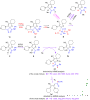
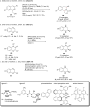
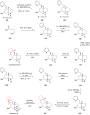
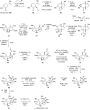
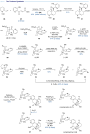
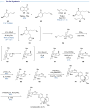
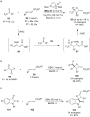
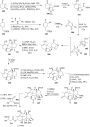
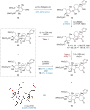
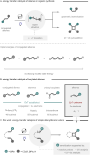
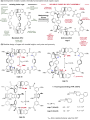
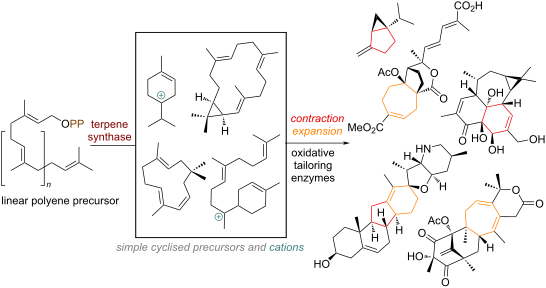
Scheme 1: Mechanistic overview of enzymes involved in ring-size-altering reactions: A: Difference in ionisati...
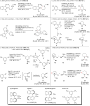
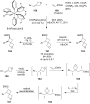
Scheme 2: A: Ring contraction through involvement of carbocationic intermediates in thujane monoterpene biosy...
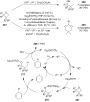
Scheme 3: Examples of concerted ring expansions of carbocation intermediates in PxaTPS8-catalysed cyclisation...
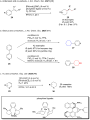
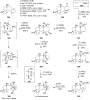
Scheme 4: Sequential ring expansions during astellifadiene (17) synthesis reported by Abe and co-workers.
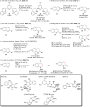
Scheme 5: Cyclobutane ring expansion and sequential ring contractions catalysed by the synthase AITS in the b...
Scheme 6: Ring expansion and transannular ring contraction of a cyclopentane to cyclobutane in the biosynthes...
Scheme 7: Computationally elucidated concerted cyclisations/alkyl/hydride shifts during the biosynthesis of t...
Scheme 8: Cyclisation events and 6→5-ring contraction during the construction of epi-isozizaene (26) catalyse...
Scheme 9: Transannular cyclisations and 4→5-membered ring expansion through dyotropic 1,2-rearrangement of al...
Scheme 10: Ring expansion in presilphiperfolan-8b-ol (31) biosynthesis and ring contraction of the presilphipe...
Scheme 11: Ring contraction via transannular cyclopropanation and opening of cyclopropane in the biosynthesis ...
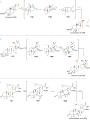
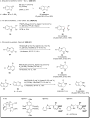
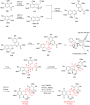
Scheme 12: The crucial CYP450-catalysed oxidative rearrangement defining the skeleton in gibberellin biosynthe...
Scheme 13: CYP450-mediated oxidation of cyclopentane methylene expanding the 8-membered ring in the biosynthes...
Scheme 14: CYP450-mediated oxidation of an exocyclic methyl group to effect transannular cyclisation across th...
Scheme 15: Non-enzymatic transannular aldol reaction enables the formation of the 5/13/3-tricyclic ring system...
Scheme 16: A: Oxidative ring expansion of a cyclopentane by incorporation of a methyl group in the biosynthesi...
Scheme 17: Rearrangement and ring expansion in the construction of the complex bridged carbon framework of and...
Scheme 18: Ketoglutarate-mediated oxidations of preaustinoid A1 (53) en route to complex meroterpenoids, B-rin...
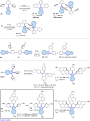
Scheme 19: Proposed putative biosynthetic formation of the tigliane skeleton from an E,E,Z-triene.
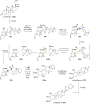
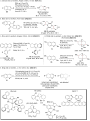
Scheme 20: Photocatalytic tandem ring expansion/contraction of santonin to give photosantonin products and gua...
Scheme 21: A: Proposed biosynthesis of stelleroid B (66) from stelleranoid I (65) by ketol rearrangement; B: o...
Scheme 22: Singular examples of A,B-ring contractions and expansions in the biosynthesis of sesquiterpenoids e...
Scheme 23: A: plausible proposed biosynthetic pathway for the tigliane/ingenane skeletal rearrangement and 1,2...
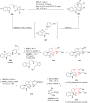
Scheme 24: A: Multiple ring-size alterations during xenovulene A (90) biosynthesis; B: Ring contraction and re...
Scheme 25: Proposed biosyntheses of the complex, polycyclic terpenoid illisimonin A (97) and the bridged antro...
Scheme 26: Proposed biogenetic origin for the meroterpenoid liphagal (104) via epoxide-mediated ring expansion....
Scheme 27: Proposed biogenetic origin for the ring-contracted members of the taiwaniaquinol family.
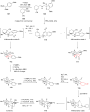
Scheme 28: A: Schenck ene/Hock/Aldol cascade effecting B-ring contraction in atheronal B (113); B: Selective C...
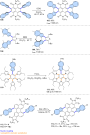
Scheme 29: A: D-ring expansion of buxenone (118) via cyclopropanation towards buxaustroine A (119); B: Propose...
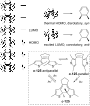
Scheme 30: Biosynthetic origin of alstoscholarinoids A (124) and B (125) via cascade oxidative rearrangement c...
Scheme 31: Biogenetic origin of the hedgehog signalling inhibitor cyclopamine (129) by tandem ring contraction...
Scheme 32: Proposed biogenetic origin of the B-ring contracted spirocyclic triterpenoid spirochensilide A (131...
Scheme 33: A: Proposed B-ring contraction during the biosynthesis of holophyllane A (133); B: B-ring contracti...
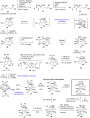
Scheme 34: Radical and ionic/polar mechanisms for the C-ring-contracted triterpenoids phomopsterone B (139) an...
Scheme 35: A: Plausible mechanism for the formation of schiglautone A (144) from anwuweizic acid (145); B: Pro...
Scheme 36: Reported biosynthetic proposal for the formation of B-ring expanded triterpenoids rhodoterpenoids A...
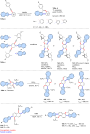
Scheme 37: A: Final reaction step in the synthesis of euphorikanin A (154), benzilic acid-type ring contractio...
Scheme 38: Tricyclic ring expansion in the Gui synthesis of gibbosterol A (158) and sarocladione (160) via Ru-...
Scheme 39: A: A-ring expansion during the Gui synthesis of rubriflordilactone B (161); B: Mechanism for the bi...
Scheme 40: Photosantonin rearrangement effects A/B ring contraction/expansion in Li’s synthesis of the complex...
Scheme 41: Tandem A/B ring expansion/contraction of an ergosterol derivative via pinacol rearrangement in the ...
Scheme 42: Synthetic studies towards cyclocitrinol (179) by A) the semisynthetic approach by Gui et al. using ...
Scheme 43: A: Bioinspired synthesis of spirochensilide A (131) by the Heretsch group via selective 8,9-epoxida...
Scheme 44: Baran’s synthesis of cortistatin A (191), expanding the B-ring through a cyclopropane fragmentation....
Scheme 45: Ding’s total synthesis of retigeranic acid (198) showcasing sequential 6→5 ring contractions.
Scheme 46: A: Oxa-di-π-methane (ODPM) rearrangement of a bicyclic ketone en route to silphiperfolenone (203); ...
Scheme 47: Biomimetic synthesis of liphagal (104) from sclareolide (221) by George and co-workers.
Scheme 48: Wu’s bioinspired synthesis of cucurbalsaminones B (224) and C (225) by photocatalytic oxa-di-π-meth...
Scheme 49: Baran’s total synthesis of maoecrystal V (230) featuring a pinacol rearrangement for ring expansion...
Scheme 50: A: Ketol rearrangement leading to ring contraction in the total synthesis of preaustinoid B; B: Ben...
Scheme 51: A: Scheidt’s synthesis of isovelleral (251) by pinacol rearrangement triggered by Mitsunobu conditi...
Scheme 52: Biomimetic transformations of simplified test substrates related to Euphorbia diterpenoids.
Scheme 53: A: First generation synthesis of taiwaniaquinones by benzilic acid-type rearrangement of the B-ring...
Scheme 54: A: Norrish type 1 radical recombination leading to ring contraction en route to cuparenone (272): 1...
Scheme 55: Ring contraction of a bridged D-ring system in the total synthesis of andrastatin D (280), terrenoi...
Scheme 56: Biomimetic synthesis of hyperjapone A (284) and hyperjaponol C (285) by George et al.
Scheme 57: Heretsch’ synthesis of dankastarones A (288) and B (289), swinhoeisterol A (290), and periconiaston...
Scheme 58: A: Zhang’s ring contraction during the synthesis of stemar-13-ene (295) by pinacol rearrangement; B...
Scheme 59: Trauner’s biomimetic synthesis of preuisolactone A (307) featuring a ring contraction via benzilic ...
Scheme 60: Bioinspired approaches for ring contraction/expansion reactions in the synthesis of alstoscholarino...
Scheme 61: A: Sarpong and Li, Wang and co-workers’ ring expansion of cephanolide A (313) to reach harringtonol...
Beilstein J. Org. Chem. 2026, 22, 192–204, doi:10.3762/bjoc.22.13
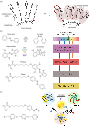
Graphical Abstract
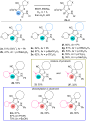
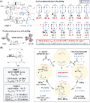
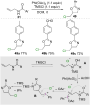
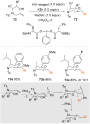
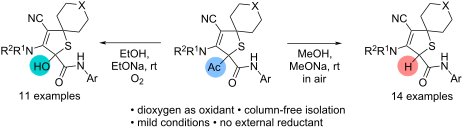
Scheme 1: Previous reports (A‒C) and our work (D, E).
Scheme 2: Oxidation of 2-acetyldihydrothiophenes 1. Conditions: dihydrothiophenes 1 (0.12–0.21 mmol, 1.0 equi...
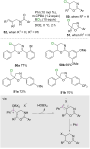
Scheme 3: Deacylation of 2-acetyldihydrothiophenes 1. Conditions: dihydrothiophenes 1 (0.11–0.18 mmol, 1.0 eq...
Scheme 4: Synthesis of dihydrothiophenes 5. Conditions: dihydrothiophenes 4 (0.13–0.22 mmol, 1.0 equiv), sodi...
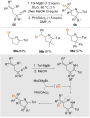
Scheme 5: Control experiments.
Figure 1: HRMS analysis of the crude product.
Figure 2: UV–vis spectra of the crude mixture (5.6 mg of the crude mixture was dissolved in 15 mL of methanol...
Scheme 6: Proposed mechanism.
Beilstein J. Org. Chem. 2026, 22, 88–122, doi:10.3762/bjoc.22.4
Graphical Abstract
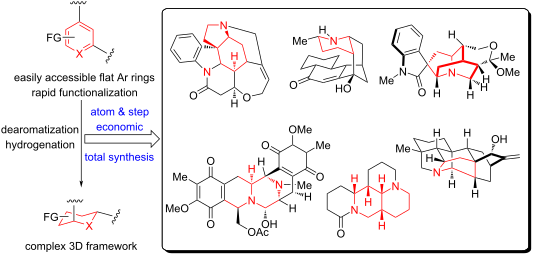
Scheme 1: The association between dearomatization and natural product synthesis.
Scheme 2: Key challenges in hydrogenation of aromatic rings.
Scheme 3: Hydrogenation of heterocyclic aromatic rings.
Scheme 4: Hydrogenation of the carbocyclic aromatic rings.
Scheme 5: Hydrogenation of the heterocycle part in bicyclic aromatic rings.
Scheme 6: Hydrogenation of the heterocycle part in bicyclic aromatic rings.
Scheme 7: Hydrogenation of benzofuran, indole, and their analogues.
Scheme 8: Hydrogenation of benzofuran, indole, and their analogues.
Scheme 9: Total synthesis of (±)-keramaphidin B by Baldwin and co-workers.
Scheme 10: Total synthesis of (±)-LSD by Vollhardt and co-workers.
Scheme 11: Total synthesis of (±)-dihydrolysergic acid by Boger and co-workers.
Scheme 12: Total synthesis of (±)-lysergic acid by Smith and co-workers.
Scheme 13: Hydrogenation of (−)-tabersonine to (−)-decahydrotabersonine by Catherine Dacquet and co-workers.
Scheme 14: Total synthesis of (±)-nominine by Natsume and co-workers.
Scheme 15: Total synthesis of (+)-nominine by Gin and co-workers.
Scheme 16: Total synthesis of (±)-lemonomycinone and (±)-renieramycin by Magnus.
Scheme 17: Total synthesis of GB13 by Sarpong and co-workers.
Scheme 18: Total synthesis of GB13 by Shenvi and co-workers.
Scheme 19: Total synthesis of (±)-corynoxine and (±)-corynoxine B by Xia and co-workers.
Scheme 20: Total synthesis of (+)-serratezomine E and the putative structure of huperzine N by Bonjoch and co-...
Scheme 21: Total synthesis of (±)-serralongamine A and the revised structure of huperzine N and N-epi-huperzin...
Scheme 22: Early attempts to indenopiperidine core.
Scheme 23: Homogeneous hydrogenation and completion of the synthesis.
Scheme 24: Total synthesis of jorunnamycin A and jorumycin by Stoltz and co-workers.
Scheme 25: Early attempt towards (−)-finerenone by Aggarwal and co-workers.
Scheme 26: Enantioselective synthesis towards (−)-finerenone.
Scheme 27: Total synthesis of (+)-N-methylaspidospermidine by Smith, Grigolo and co-workers.
Scheme 28: Dearomatization approach towards matrine-type alkaloids.
Scheme 29: Asymmetric total synthesis to (−)-senepodine F via an asymmetric hydrogenation of pyridine.
Scheme 30: Selective hydrogenation of indole derivatives and application.
Scheme 31: Synthetic approaches to the oxindole alkaloids by Qi and co-workers.
Scheme 32: Total synthesis of annotinolide B by Smith and co-workers.
Beilstein J. Org. Chem. 2025, 21, 2703–2715, doi:10.3762/bjoc.21.208
Graphical Abstract
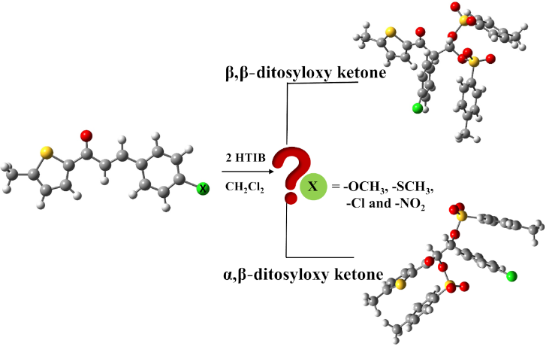
Scheme 1: Structure of reactant (chalcone, compound A), geminal product (compound B), vicinal product (compou...
Scheme 2: Reaction mechanism of ditosyloxylation of chalcones with X = -OCH3 , -SCH3 followed by 1,2-aryl mig...
Scheme 3: Reaction mechanism of ditosyloxylation of chalcones with X = -Cl, -NO2 leading to the formation of ...
Figure 1: Relative Gibbs free energy profile for HTIB-mediated ditosyloxylation of chalcone with X = -SCH3 in...
Figure 2: Relative Gibbs free energy profile for HTIB-mediated ditosyloxylation of chalcone with X = -Cl invo...
Figure 3: Relative Gibbs free energy profile for HTIB-mediated ditosyloxylation of chalcone with X = -NO2 inv...
Scheme 4: Reaction mechanism of ditosyloxylation of chalcones with X = -OCH3, -SCH3, -Cl, -NO2 leading to the...
Figure 4: Relative Gibbs free energy profile for HTIB-mediated ditosyloxylation of chalcone with X = -OCH3 le...
Figure 5: Relative Gibbs free energy profile for HTIB-mediated ditosyloxylation of chalcone with X = -SCH3 le...
Figure 6: Relative Gibbs free energy profile for HTIB-mediated ditosyloxylation of chalcone with X = -Cl lead...
Figure 7: Relative Gibbs free energy profile for HTIB-mediated ditosyloxylation of chalcone with X = -NO2 lea...
Beilstein J. Org. Chem. 2025, 21, 2571–2583, doi:10.3762/bjoc.21.199
Graphical Abstract
Figure 1: The categorization of Illicium sesquiterpenes and representative natural products.
Figure 2: The original assigned (−)-illisimonin A, revised (−)-illisimonin A, and their different draws.
Scheme 1: Proposed biosynthetic pathway of illisimonin A by Yu et al.
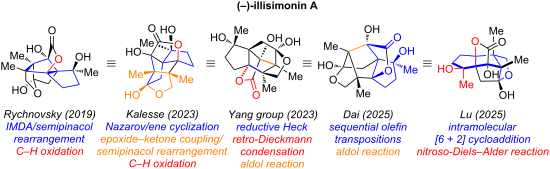
Scheme 2: Rychnovsky’s racemic synthesis of illisimonin A (1).
Scheme 3: The absolute configuration revision of (−)-illisimonin A.
Scheme 4: Kalesse’s asymmetric synthesis of (−)-illisimonin A.
Scheme 5: Yang group proposed biosynthetic pathway of illisimonin A.
Scheme 6: Yang’s bioinspired synthesis of illisimonin A.
Scheme 7: Dai’s asymmetric synthesis of (–)-illisimonin A.
Scheme 8: Lu’s total synthesis of illisimonin A.
Scheme 9: Initial efforts toward the total synthesis of illisimonin A by the Lu Group.
Scheme 10: Suzuki’s synthetic effort towards illisimonin A.
Beilstein J. Org. Chem. 2025, 21, 2416–2446, doi:10.3762/bjoc.21.185
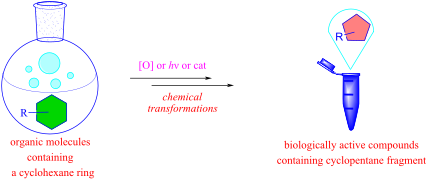
Graphical Abstract
Scheme 1: Ozonolysis–cyclization sequence in the synthesis of echinopine A (3).
Scheme 2: Ozonolysis–cyclization sequence in the synthesis of taiwaniaquinoids 7–12.
Figure 1: Iridoid skeleton.
Scheme 3: Ozonolysis–cyclization sequence in the synthesis of compounds 17a,b, 18 and 19 with iridoid topolog...
Scheme 4: Oxidation–aldol condensation sequence in the synthesis of compounds 21 and 23 with iridoid topology....
Scheme 5: Oxidation–aldol condensation sequence in the synthesis of compounds 29 and 30 with iridoid topology....
Scheme 6: Method for ring contraction in the absence of a double bond in a six-membered ring of triterpenoids....
Scheme 7: Oxidation–Dieckmann cyclization sequence in the synthesis of a new nortriterpenoid 39.
Scheme 8: Oxidation–Dieckmann cyclization sequence in the synthesis of 18,19-di-nor-cholesterol (40).
Scheme 9: Oxidation–cyclization sequence in the synthesis of 3-ethyl-substituted betulinic acid derivatives 49...
Scheme 10: Benzilic acid-type rearrangement in the synthesis of 4β-acetoxyprobotryane-9β,15α-diol (52).
Scheme 11: Benzilic acid-type rearrangement in the synthesis of (−)-taiwaniaquinone H (11).
Scheme 12: Benzilic acid-type rearrangement in the synthesis of dactylicapnosines A (63) and B (64).
Scheme 13: Aza-benzilic acid-type rearrangement in the synthesis of (+)-stephadiamine (71).
Scheme 14: α-Ketol rearrangement in the synthesis of saffloneoside (73).
Scheme 15: Conversion of (−)-preaustinoid A (80) to (−)-preaustinoid B (81) via α-ketol rearrangement.
Scheme 16: α-Ketol rearrangement in the synthesis of 2,8-oxymethano-bridged diquinane 90.
Scheme 17: Oxidative ring contraction during the synthesis of (+)-cuparene (91) and (+)-tochuinylacetate (92).
Scheme 18: Semipinacol rearrangement in the synthesis of diterpenoids 97–100.
Scheme 19: Co-catalyzed homoallyl-type rearrangement in the syntheses of meroterpenes 106–109.
Scheme 20: Ring contraction reaction promoted by TTN·3H2O and HTIB in the synthesis of indanes.
Scheme 21: Rearrangement involving a hypervalent iodine compound in the synthesis of derivative 120.
Scheme 22: Wolff rearrangement in the synthesis of taiwaniaquinones A (7), F (8), taiwaniaquinols B (10), D (1...
Scheme 23: Wolff rearrangement in the synthesis of cheloviolene C (128), seconorrisolide B (129), and seconorr...
Scheme 24: Wolff rearrangement in the synthesis of (−)-pavidolide B (134).
Scheme 25: Wolff rearrangement in the synthesis of presilphiperfolan-8-ol (141).
Scheme 26: Photochemical rearrangement in the synthesis of cyclopentane derivatives 147a,b.
Scheme 27: Synthesis of cyclopentane derivatives 147a and 151.
Scheme 28: Photochemical rearrangement in the synthesis of cyclopentane derivative 153.
Scheme 29: Photochemical rearrangement in the synthesis of tricyclic ketones 155, 156.
Scheme 30: Photochemical rearrangement in the synthesis of cis/trans salts 160.
Figure 2: Scope of the photoinduced carboborative ring contraction of steroids. Reaction conditions: steroid ...
Scheme 31: Photoinduced carboborative ring contraction in the synthesis of artalbic acid (180).
Scheme 32: Synthetic versatility of the photoinduced carboborative ring contraction.
Scheme 33: Methods of disclosure of epoxide 189.
Scheme 34: Methods of disclosure of epoxide 190.
Scheme 35: Rearrangement of α,β-epoxy ketone 197.
Scheme 36: Acid-induced rearrangement in the synthesis of perhydrindane ketones 202 and 205.
Scheme 37: Rearrangement of epoxyketone 208 in the synthesis of huperzine Q (206).
Scheme 38: Rearrangement of epoxide 212 under the action of Grignard reagent.
Scheme 39: Semipinacol rearrangement of epoxide 220 in the synthesis of (−)-citrinadin A (217) and (+)-citrina...
Scheme 40: Semipinacol rearrangement of epoxide 225 in the synthesis of hamigeran G (223).
Scheme 41: Semipinacol rearrangement of epoxide 231 in the synthesis of (−)-spirochensilide A (228).
Scheme 42: Wagner–Meerwein rearrangement in the synthesis of compound 234 with iridoid topology.
Scheme 43: Wagner–Meerwein rearrangement in the synthesis of compound 238 with iridoid topology.
Scheme 44: Wagner–Meerwein rearrangement in the synthesis of compound 241 with iridoid topology.
Scheme 45: Wagner–Meerwein rearrangement in the synthesis of lupane derivatives 245, 246, 248, and 249.
Scheme 46: Wagner–Meerwein rearrangement in the synthesis of weisaconitine D (252) and cardiopetaline (255).
Scheme 47: Wagner–Meerwein rearrangement in the synthesis of cardiopetaline (255).
Beilstein J. Org. Chem. 2025, 21, 2334–2344, doi:10.3762/bjoc.21.178
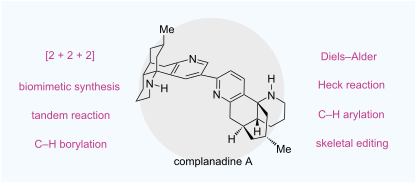
Graphical Abstract
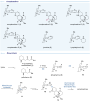
Scheme 1: Complanadine natural products and their plausible biosynthesis.
Scheme 2: The Siegel total synthesis of complanadine A enabled by [2 + 2 + 2] cycloadditions.
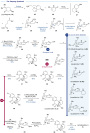
Scheme 3: The Sarpong total synthesis of complanadine A enabled by a biomimetic strategy and C–H activation.
Scheme 4: The Tsukano total synthesis of complanadine A enabled by Diels–Alder cycloaddition, Heck cyclizatio...
Scheme 5: The Dai total synthesis of complanadine A using single-atom skeletal editing.
Scheme 6: Comparative summary of the four complanadine A total syntheses.
Beilstein J. Org. Chem. 2025, 21, 2036–2047, doi:10.3762/bjoc.21.159
Graphical Abstract
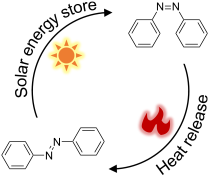
Figure 1: Schematic diagram of molecular solar thermal energy storage system.
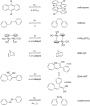
Figure 2: Photoisomerization of different types of molecular optical switches. Figure 2 was redrawn from [8].
Figure 3: Nanocarbon-based azobenzene polymer solar thermal fuels: (a) SWCNT templating. Figure 3a is from [43] (T. J. Kuc...
Figure 4: Conjugated azobenzene polymer solar thermal fuels: (a) Photoisomerization and thermally induced rev...
Figure 5: Linear azobenzene polymer solar thermal fuels: (a) Schematic illustration of the trans-to-cis isome...
Figure 6: Representative examples of azobenzene small-molecule derivative solar thermal fuels. (a) Polarized ...
Figure 7: (a) Deicing test of charged solar thermal fuels under green light irradiation (550 nm). Figure 7a was reprin...
Beilstein J. Org. Chem. 2025, 21, 1984–1994, doi:10.3762/bjoc.21.154
Graphical Abstract
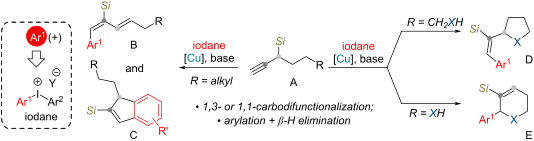
Scheme 1: Alkyne arylation with diaryl-λ3-iodanes in the context of 1,2-silyl shift and potential cyclization....
Scheme 2: Competing mechanistic pathways for diene 10 and indene 11 formation.
Scheme 3: Reaction scope for the synthesis of arylated tetrahydrofurans 8. Conditions: All reactions were per...
Scheme 4: Synthesis of lactone and pyrrolidine derivatives. Conditions: ac7e = 0.1 mmol/mL. bReaction conditi...
Scheme 5: Proposed arylation–heterocyclization mechanism for internal nucleophile-containing silanes 7.
Scheme 6: Arylation of C5-chain containing acylamides 16a–c. aThe reaction was performed under modified condi...
Beilstein J. Org. Chem. 2025, 21, 1909–1916, doi:10.3762/bjoc.21.148
Graphical Abstract
Figure 1: Structures of some pharmacological important phosphorus-containing molecules with oxirane or azirid...
Scheme 1: Synthesis of glycidyl esters of phosphorus acids 1–3.
Figure 2: Dose–response curves for the cytotoxic effects of glycidyl esters of phosphorus acids 1–3 on human ...
Figure 3: Linear sweep voltammograms of 1 × 10⁻⁴ М HSA (black) and HSA mixed with each of the three alkylatin...
Figure 4: Chemical structure of alkylating fragment of 1–3 and the associated chemical pathway of its covalen...
Beilstein J. Org. Chem. 2025, 21, 1808–1853, doi:10.3762/bjoc.21.143
Graphical Abstract
Figure 1: Energy diagram of a two-state photoswitch. Figure 1 was redrawn from [2].
Figure 2: Example of the absorption spectra of the isomers of a photoswitch with most efficient irradiation w...
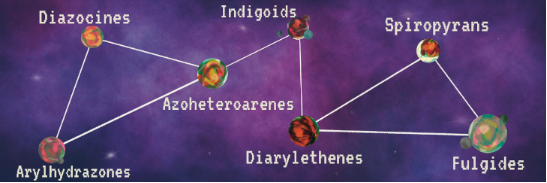
Scheme 1: Photoswitch classes described in this review.
Figure 3: Azoheteroarenes.
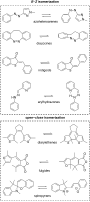
Scheme 2: E–Z Isomerisation (top) and mechanisms of thermal Z–E isomerisation (bottom).
Scheme 3: Rotation mechanism favoured by the electron displacement in push–pull systems. Selected examples of...
Figure 4: A) T-shaped and twisted Z-isomers determine the thermal stability and the Z–E-PSS (selected example...
Figure 5: Effect of di-ortho-substitution on thermal half-life and PSS.
Figure 6: Selected thermal lifetimes of azoindoles in different solvents and concentrations. aConcentration o...
Figure 7: Aryliminopyrazoles: N-pyrazoles (top) and N-phenyl (bottom).
Scheme 4: Synthesis of symmetrical heteroarenes through oxidation (A), reduction (B), and the Bayer–Mills rea...
Scheme 5: Synthesis of diazonium salt (A); different strategies of azo-coupling: with a nucleophilic ring (B)...
Scheme 6: Synthesis of arylazothiazoles 25 (A) and heteroaryltriazoles 28 (B).
Scheme 7: Synthesis of heteroarylimines 31a,b [36-38].
Figure 8: Push–pull non-ionic azo dye developed by Velasco and co-workers [45].
Scheme 8: Azopyridine reported by Herges and co-workers [46].
Scheme 9: Photoinduced phase transitioning azobispyrazoles [47].
Figure 9: Diazocines.
Scheme 10: Isomers, conformers and enantiomers of diazocine.
Scheme 11: Partial overlap of the ππ* band with electron-donating substituents and effect on the PSS. Scheme 11 was ada...
Figure 10: Main properties of diazocines with different bridges. aMeasured in n-hexane [56]. bMeasured in THF. cMe...
Scheme 12: Synthesis of symmetric diazocines.
Scheme 13: Synthesis of asymmetric diazocines.
Scheme 14: Synthesis of O- and S-heterodiazocines.
Scheme 15: Synthesis of N-heterodiazocines.
Scheme 16: Puromycin diazocine photoswitch [60].
Figure 11: Indigoids.
Figure 12: The main representatives of the indigoid photoswitch class.
Scheme 17: Deactivation process that prevents Z-isomerisation of indigo.
Figure 13: Stable Z-indigo derivative synthesised by Wyman and Zenhäusern [67].
Figure 14: Selected examples of indigos with aliphatic and aromatic substituents [68]. Dashed box: proposed π–π in...
Scheme 18: Resonance structures of indigo and thioindigo involving the phenyl ring.
Scheme 19: Possible deactivation mechanism for 4,4'-dihydroxythioindigo [76].
Scheme 20: Effect of different heteroaryl rings on the stability and the photophysical properties of hemiindig...
Figure 15: Thermal half-lives of red-shifted hemithioindigos in toluene [79]. aMeasured in toluene-d8.
Scheme 21: Structures of pyrrole [81] and imidazole hemithioindigo [64].
Figure 16: Examples of fully substituted double bond hemithioindigo (left), oxidised hemithioindigos (centre),...
Scheme 22: Structure of iminothioindoxyl 72 (top) and acylated phenyliminoindolinone photoswitch 73 (bottom). ...
Scheme 23: (top) Transition states of iminothioindoxyl 72. The planar transition state is associated with a lo...
Scheme 24: Baeyer–Drewsen synthesis of indigo (top) and N-functionalisation strategies (bottom).
Scheme 25: Synthesis of hemiindigo.
Scheme 26: Synthesis of hemithioindigo and iminothioindoxyl.
Scheme 27: Synthesis of double-bond-substituted hemithioindigos.
Scheme 28: Synthesis of phenyliminoindolinone.
Scheme 29: Hemithioindigo molecular motor [85].
Figure 17: Arylhydrazones.
Scheme 30: Switching of arylhydrazones. Note: The definitions of stator and rotor are arbitrary.
Scheme 31: Photo- and acidochromism of pyridine-based phenylhydrazones.
Scheme 32: A) E–Z thermal inversion of a thermally stable push–pull hydrazone [109]. B) Rotation mechanism favoured...
Scheme 33: Effect of planarisation on the half-life.
Scheme 34: The longest thermally stable hydrazone switches reported so far (left). Modulation of thermal half-...
Figure 18: Dependency of t1/2 on concentration and hypothesised aggregation-induced isomerisation.
Figure 19: Structure–property relationship of acylhydrazones.
Scheme 35: Synthesis of arylhydrazones.
Scheme 36: Synthesis of acylhydrazones.
Scheme 37: Photoswitchable fluorophore by Aprahamian et al. [115].
Scheme 38: The four-state photoswitch synthesised by the Cigáň group [116].
Figure 20: Diarylethenes.
Scheme 39: Isomerisation and oxidation pathway of E-stilbene to phenanthrene.
Scheme 40: Strategies adapted to avoid E–Z isomerisation and oxidation.
Scheme 41: Molecular orbitals and mechanism of electrocyclisation for a 6π system.
Figure 21: Aromatic stabilisation energy correlated with the thermal stability of the diarylethenes [127,129].
Figure 22: Half-lives of diarylethenes with increasing electron-withdrawing groups [128,129].
Scheme 42: Photochemical degradation pathway promoted by electron-donating groups [130].
Figure 23: The diarylethenes studied by Hanazawa et al. [134]. Increased rigidity leads to bathochromic shift.
Scheme 43: The dithienylethene synthesised by Nakatani's group [135].
Scheme 44: Synthesis of perfluoroalkylated diarylethenes.
Scheme 45: Synthesis of 139 and 142 via McMurry coupling.
Scheme 46: Synthesis of symmetrical derivatives 145 via Suzuki–Miyaura coupling.
Scheme 47: Synthesis of acyclic 148, malonic anhydride 149, and maleimide derivatives 154.
Figure 24: Gramicidin S (top left) and two of the modified diarylethene derivatives: first generation (bottom ...
Scheme 48: Pyridoxal 5'-phosphate and its reaction with an amino acid (top). The analogous dithienylethene der...
Figure 25: Fulgides.
Scheme 49: The three isomers of fulgides.
Scheme 50: Thermal and photochemical side products of unsubstituted fulgide [150].
Figure 26: Maximum absorption λc of the closed isomer compared with the nature of the aromatic ring and the su...
Scheme 51: Possible rearrangement of the excited state of 5-dimethylaminoindolylfulgide [153].
Figure 27: Quantum yields of ring closure (ΦE→C) and E–Z isomerisation (ΦE→Z) correlated with the increasing s...
Scheme 52: Active (Eα) and inactive (Eβ) conformers (left) and the bicyclic sterically blocked fulgide 169 (ri...
Scheme 53: Quantum yield of ring-opening (ΦC→E) and E–Z isomerisation (ΦE→Z) for different substitution patter...
Scheme 54: Stobbe condensation pathway for the synthesis of fulgides 179, fulgimides 181 and fulgenates 178.
Scheme 55: Alternative synthesis of fulgides through Pd-catalysed carbonylation.
Scheme 56: Optimised synthesis of fulgimides [166].
Scheme 57: Photoswitchable FRET with a fulgimide photoswitch [167].
Scheme 58: Three-state fulgimide strategy by Slanina's group.
Figure 28: Spiropyrans.
Scheme 59: Photochemical (left) and thermal (right) ring-opening mechanisms for an exemplary spiropyran with a...
Figure 29: Eight possible isomers of the open merocyanine according to the E/Z configurations of the bonds hig...
Scheme 60: pH-Controlled photoisomerisation between the closed spiropyran 191-SP and the open E-merocyanine 19...
Scheme 61: Behaviour of spiropyran in water buffer according to Andréasson and co-workers [180]. 192-SP in an aqueo...
Scheme 62: (left box) Proposed mechanism of basic hydrolysis of MC [184]. (right box) Introduction of electron-dona...
Scheme 63: Photochemical interconversion of naphthopyran 194 (top) and spirooxazine 195 (bottom) photoswitches...
Scheme 64: Synthesis of spiropyrans and spirooxazines 198 and the dicondensation by-product 199.
Scheme 65: Alternative synthesis of spiropyrans and spirooxazines with indolenylium salt 200.
Scheme 66: Synthesis of 4’-substituted spiropyrans 203 by condensation of an acylated methylene indoline 201 w...
Scheme 67: Synthesis of spironaphthopyrans 210 by acid-catalysed condensation of naphthols and diarylpropargyl...
Scheme 68: Photoswitchable surface wettability [194].
Figure 30: Some guiding principles for the choice of the most suitable photoswitch. Note that this guide is ve...
Beilstein J. Org. Chem. 2025, 21, 1613–1626, doi:10.3762/bjoc.21.125
Graphical Abstract
Scheme 1: (a) Diels–Alder cycloaddition reaction between butadiene and ethylene. (b) Gold(I)-catalyzed propar...
Figure 1: Transition states computed for the Diels–Alder cycloaddition reaction between isoprene and methyl a...
Figure 2: Comparative activation strain analyses (a) and energy decomposition analysis (b) of the Diels–Alder...
Figure 3: (a) Evolution of the NICS(3, +1) values along a z-axis perpendicular to the molecular plane of the ...
Figure 4: Comparative activation strain analyses (a) and energy decomposition analysis (b) of the carbonyl–en...
Figure 5: AICD (a) and EDDB (b) plots for the transition state involved in the DGRT between ethene and ethane....
Figure 6: Comparative activation strain analyses (a) and energy decomposition analysis (b) of the DGRT betwee...
Scheme 2: Representative cycloisomerization reaction of 1,3-hexadien-5-yne.
Figure 7: AICD plots of the transition states associated with the Hopf cyclization reactions involving cis-he...
Figure 8: Comparative activation strain analyses of the Hopf cyclization involving ene–ene–ynes E=CH–CH=CH–C≡...
Scheme 3: 1,3-Dipolar cycloaddition reactions between t-BuN3 and cyaphide complexes.
Figure 9: Evolution of the NICS(3, +1) values along a z-axis perpendicular to the molecular plane of the TSs ...
Figure 10: Comparative activation strain analyses (a) and energy decomposition analysis (b) of the 1,3-dipolar...
Beilstein J. Org. Chem. 2025, 21, 1324–1373, doi:10.3762/bjoc.21.101
Graphical Abstract
Figure 1: Bond lengths and bond angles in oxetane at 140 K [2].
Figure 2: Analogy of 3-substituted oxetanes to carbonyl and gem-dimethyl groups [12].
Figure 3: Use of oxetanes in drug design – selected examples.
Figure 4: Examples of oxetane-containing natural products.
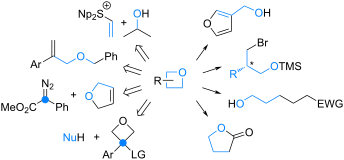
Scheme 1: Synthetic strategies towards construction of the oxetane ring.
Scheme 2: Overview of intramolecular Williamson etherification and competing Grob fragmentation.
Scheme 3: Synthesis of spiro-oxetanes via 1,4-C–H insertion and Williamson etherification.
Scheme 4: Use of phenyl vinyl selenone in the synthesis of spirooxindole oxetanes.
Scheme 5: Synthesis of bicyclic 3,5-anhydrofuranoses via double epoxide opening/etherification.
Scheme 6: Preparation of spirooxetanes by cycloisomerisation via MHAT/RPC.
Scheme 7: Oxetane synthesis via alcohol C–H functionalisation.
Scheme 8: Access to oxetanes 38 from α-acetyloxy iodides.
Scheme 9: The kilogram-scale synthesis of oxetane intermediate 41.
Scheme 10: Overview of the intramolecular opening of 3-membered rings.
Scheme 11: Synthesis of 4,7-dioxatricyclo[3.2.1.03,6]octane skeletons.
Scheme 12: Silicon-directed electrophilic cyclisation of homoallylic alcohols.
Scheme 13: Hydrosilylation–iodocyclisation of homopropargylic alcohols.
Scheme 14: Cu-catalysed intramolecular O-vinylation of γ-bromohomoallylic alcohols.
Scheme 15: Cu-catalysed intramolecular cross-coupling of hydroxyvinylstannanes.
Scheme 16: Isomerisation of oxiranyl ethers containing weakly carbanion-stabilising groups.
Scheme 17: Cyclisation of diethyl haloalkoxymalonates.
Scheme 18: Synthesis of oxetanes through a 1,5-HAT/radical recombination sequence.
Scheme 19: General approach to oxetanes via [2 + 2] cycloadditions.
Scheme 20: Synthesis of tricyclic 4:4:4 oxetanes through a photochemical triple cascade reaction.
Scheme 21: Iridium-catalysed Paternò–Büchi reaction between α-ketoesters and simple alkenes.
Scheme 22: Three-step synthesis of spirocyclic oxetanes 83 via Paternò–Büchi reaction, nucleophilic ring openi...
Scheme 23: Enantioselective Paternò–Büchi reaction catalysed by a chiral iridium photocatalyst.
Scheme 24: Synthesis of polysubstituted oxetanes 92 via Cu(II)-mediated formal [2 + 2] cycloadditions.
Scheme 25: Synthesis of alkylideneoxetanes via NHC- and DBU-mediated formal [2 + 2] cycloadditions.
Scheme 26: Use of sulphur-stabilised carbanions in ring expansions.
Scheme 27: Synthesis of α,α-difluoro(arylthio)methyl oxetanes.
Scheme 28: Ring expansion in an industrial synthesis of PF-06878031.
Scheme 29: Ring contraction of triflated 2-hydroxy-γ-lactones.
Scheme 30: Ring contraction in an industrial synthesis of PF-06878031.
Scheme 31: Photochemical ring contraction of 2,5-dihydrofurans by aryldiazoacetic acid esters.
Scheme 32: Synthesis of 3-oxetanones via O-H insertion of carbenes.
Scheme 33: Synthesis of phosphonate oxetanones via gold-mediated alkyne oxidation/O–H insertion.
Scheme 34: Syntheses and common derivatisations of 3-oxetanone.
Scheme 35: SN1 substitution of 3-aryloxetan-3-ols by thiols and alcohols.
Scheme 36: Fe–Ni dual-catalytic olefin hydroarylation towards 3-alkyl-3-(hetero)aryloxetanes.
Scheme 37: Synthesis of 3-aryloxetan-3-carboxylic acids.
Scheme 38: Decarboxylative alkylation of 3-aryloxetan-3-carboxylic acids.
Scheme 39: Synthesis of 3-amino-3-aryloxetanes via photoredox/nickel cross-coupling catalysis.
Scheme 40: Intermolecular cross-selective [2 + 2] photocycloaddition towards spirooxetanes.
Scheme 41: Synthesis of 3-aryl-3-aminooxetanes via defluorosulphonylative coupling.
Scheme 42: Two-step synthesis of amide bioisosteres via benzotriazolyl Mannich adducts 170.
Scheme 43: Functionalisation of oxetanyl trichloroacetimidates 172.
Scheme 44: Synthesis of oxetane-amino esters 176.
Scheme 45: Tandem Friedel–Crafts alkylation/intramolecular ring opening of 3-aryloxetan-3-ols.
Scheme 46: Synthesis of polysubstituted furans and pyrroles.
Scheme 47: Synthesis of oxazolines and bisoxazolines.
Scheme 48: Tandem, one-pot syntheses of various polycyclic heterocycles.
Scheme 49: Synthesis of 1,2-dihydroquinolines via skeletal reorganisation of oxetanes.
Scheme 50: Synthesis of benzoindolines and 2,3-dihydrobenzofurans and their derivatisations.
Scheme 51: Synthesis of polysubstituted 1,4-dioxanes.
Scheme 52: Preparation of various lactones via ring opening of oxetane-carboxylic acids 219.
Scheme 53: Tsuji-Trost allylation/ring opening of 3-aminooxetanes.
Scheme 54: Arylative skeletal rearrangement of 3-vinyloxetan-3-ols to 2,5-dihydrofurans.
Scheme 55: Reductive opening of oxetanes using catalytic Mg–H species.
Scheme 56: Opening of oxetanes by silyl ketene acetals.
Scheme 57: Rhodium-catalysed hydroacylation of oxetanes.
Scheme 58: Generation of radicals from oxetanes mediated by a vitamin B12-derived cobalt catalyst.
Scheme 59: Reductive opening of oxetanes by B–Si frustrated Lewis pairs.
Scheme 60: Zirconocene-mediated reductive opening of oxetanes.
Scheme 61: Enantioselective syntheses of small and medium-size rings using chiral phosphoric acids.
Scheme 62: Asymmetric synthesis of 2,3-dihydrobenzo[b]oxepines catalysed by a chiral scandium complex.
Scheme 63: Enantioselective synthesis of 1,3-bromohydrins under a chiral squaramide catalysis.
Scheme 64: Enantioselective opening of 2-aryl-2-ethynyloxetanes by anilines.
Scheme 65: Ru-catalysed insertion of diazocarbonyls into oxetanes.
Scheme 66: Ring expansion of oxetanes by stabilised carbenes generated under blue light irradiation.
Scheme 67: Expansion of oxetanes via nickel-catalysed insertion of alkynyltrifluoroborates.
Scheme 68: Nickel-catalysed expansion of oxetanes into ε-caprolactones.
Scheme 69: Expansion of oxetanes via cobalt-catalysed carbonyl insertion.
Scheme 70: Gold-catalysed intramolecular 1,1-carboalkoxylation of oxetane-ynamides.
Scheme 71: Expansion of oxetanes by stabilised sulphoxonium ylides.
Scheme 72: Cu-catalysed ring expansion of 2-vinyloxetanes by diazoesters.
Scheme 73: Total synthesis of (+)-oxetin.
Scheme 74: Total synthesis of racemic oxetanocin A.
Scheme 75: Total synthesis of (−)-merrilactone A.
Scheme 76: Total synthesis of (+)-dictyoxetane.
Scheme 77: Total synthesis of ent-dichrocephone B.
Scheme 78: Total synthesis of (−)-mitrephorone A.
Scheme 79: Total synthesis of (−)-taxol.
Beilstein J. Org. Chem. 2025, 21, 1272–1305, doi:10.3762/bjoc.21.99
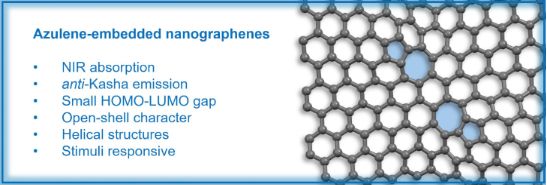
Graphical Abstract
Figure 1: a) Stone–Wales (red) and azulene (blue) defects in graphene; b) azulene and its selected resonance ...
Figure 2: Examples of azulene-embedded 2D allotropic forms of carbon: a) phagraphene and b) TPH-graphene.
Scheme 1: Synthesis of non-alternant isomers of pyrene (2 and 6) using dehydrogenation.
Scheme 2: Synthesis of non-alternant isomer 9 of benzo[a]pyrene and 14 of benzo[a]perylene using dehydrogenat...
Scheme 3: Synthesis of azulene-embedded isomers of benzo[a]pyrene (18 and 22) inspired by Ziegler–Hafner azul...
Figure 3: General strategies leading to azulene-embedded nanographenes: a) construction of azulene moiety in ...
Scheme 4: Synthesis of biradical PAHs possessing significant biradical character using oxidation of partially...
Scheme 5: Synthesis of dicyclohepta[ijkl,uvwx]rubicene (29) and its further modifications.
Scheme 6: Synthesis of warped PAHs with one embedded azulene subunit using Scholl-type oxidation.
Scheme 7: Synthesis of warped PAHs with two embedded azulene subunits using Scholl oxidation.
Scheme 8: Synthesis of azulene-embedded PAHs using [3 + 2] annulation accompanied by ring expansion.
Scheme 9: Synthesis of azulene-embedded isomers of linear acenes using [3 + 2] annulation accompanied by ring...
Scheme 10: Synthesis of azulene-embedded PAHs using intramolecular C–H arylation.
Scheme 11: Synthesis of azulene-embedded isomers of acenes using intramolecular C–H arylation.
Scheme 12: Synthesis of azulene-embedded PAHs using intramolecular condensations.
Scheme 13: Synthesis of azulene-embedded PAH 89 using palladium-catalysed [5 + 2] annulation.
Scheme 14: Synthesis of azulene-embedded PAHs using oxidation of substituents around the azulene core.
Scheme 15: Synthesis of azulene-embedded PAHs using the oxidation of reactive positions 1 and 3 of azulene sub...
Scheme 16: Synthesis of azulene-embedded PAHs using intramolecular C–H arylation.
Scheme 17: Synthesis of an azulene-embedded isomer of terylenebisimide using tandem Suzuki coupling and C–H ar...
Scheme 18: Synthesis of azulene embedded PAHs using a bismuth-catalyzed cyclization of alkenes.
Scheme 19: Synthesis of azulene-embedded nanographenes using intramolecular cyclization of alkynes.
Scheme 20: Synthesis of azulene-embedded graphene nanoribbons and azulene-embedded helicenes using annulation ...
Scheme 21: Synthesis of azulene-fused acenes.
Scheme 22: Synthesis of non-alternant isomer of perylene 172 using Yamamoto-type homocoupling.
Scheme 23: Synthesis of N- and BN-nanographenes with embedded azulene unit(s).
Scheme 24: On-surface synthesis of azulene-embedded nanographenes from benzenoid precursors via dehydrogenatio...
Scheme 25: On-surface synthesis of azulene-embedded nanographenes from benzenoid precursors.
Scheme 26: On-surface synthesis of azulene-embedded nanoribbons.
Beilstein J. Org. Chem. 2025, 21, 926–934, doi:10.3762/bjoc.21.75
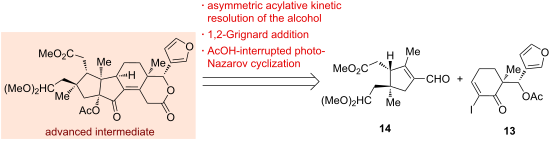
Graphical Abstract
Figure 1: Representative limonoid triterpenes.
Scheme 1: Structures and retrosynthetic analysis of krishnolides A (7) and C (8).
Scheme 2: Construction of α-iodoenone 13.
Scheme 3: Construction of aldehyde 14.
Scheme 4: Synthesis of the advanced intermediate 10 (in the X ray structure of 10 solvent molecule is omitted...
Beilstein J. Org. Chem. 2025, 21, 854–863, doi:10.3762/bjoc.21.69
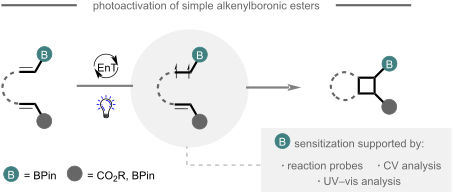
Graphical Abstract
Figure 1: A) Energy transfer catalysis of alkenes in organic synthesis. B) Energy transfer catalysis of conju...
Figure 2: Probing boron effects on reactivity (A) and confirming the generation of a photostationary state eq...
Figure 3: Probing EnT catalysis enabled [2 + 2] cycloaddition of simple alkenylboronic esters.
Scheme 1: Establishing the substrate scope. Conditions: 3 (1 equiv), xanthone (20 mol %), MeCN (0.03 M), unde...
Scheme 2: A) Product derivatization and B) transition-metal EnT catalysis. Reaction conditions A): 4d (1 equi...
Beilstein J. Org. Chem. 2025, 21, 807–816, doi:10.3762/bjoc.21.64
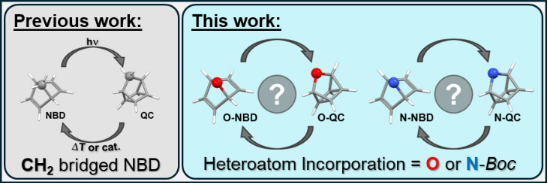
Graphical Abstract
Figure 1: Basic principle of the NBD to QC conversion and vice versa. The bridge-atom at position 7 was varie...
Scheme 1: Synthetic procedure towards new X-NBD derivatives C-NBD1, O-NBD1 and N-NBD1. 1-((Bromoethynyl)sulfo...
Figure 2: Conversion of O-NBD1 to O-QC1 using a 275 nm LED. The UV–vis spectrum was recorded in MeCN; b) the ...
Figure 3: Rearrangement of O-NBD2 to O-QC2 using a 385 nm LED. The UV–vis measurement in the middle were cond...
Figure 4: Rearrangement of N-NBD2 using a 385 nm LED. The UV–vis measurement in the middle were conducted in ...
Beilstein J. Org. Chem. 2025, 21, 458–472, doi:10.3762/bjoc.21.33
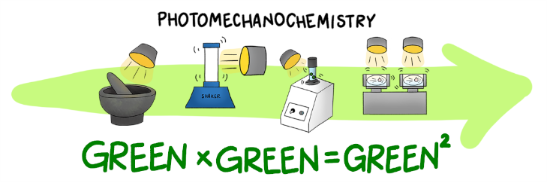
Graphical Abstract
Figure 1: The Grotthuss–Draper, Einstein–Stark, and Beer–Lambert laws. T: transmittance; ε: molar attenuation...
Figure 2: The benefits of merging photochemistry with mechanochemical setups (top). Most common setups for ph...
Scheme 1: Mechanochemically triggered pedal-like motion in solid-state [2 + 2] photochemical cycloaddition fo...
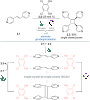
Scheme 2: Mechanically promoted [2 + 2] photodimerization of trans-1,2-bis(4-pyridyl)ethylene (2.1) via supra...
Scheme 3: Photo-thermo-mechanosynthesis of quinolines [65].
Scheme 4: Study of the mechanically assisted [2 + 2] photodimerization of chalcone [66].
Scheme 5: Liquid-assisted vortex grinding (LAVG) for the synthesis of [2.2]paracyclophane [68].
Scheme 6: Photomechanochemical approach for the riboflavin tetraacetate-catalyzed photocatalytic oxidation of...
Scheme 7: Photomechanochemical oxidation of 1,2-diphenylethyne to benzil. The photo in Scheme 7 was republished with ...
Scheme 8: Photomechanochemical borylation of aryldiazonium salts. The photo in Scheme 8 was reproduced from [72] (© 2017 ...
Scheme 9: Photomechanochemical control over stereoselectivity in the [2 + 2] dimerization of acenaphthylene. ...
Scheme 10: Photomechanochemical synthesis of polyaromatic compounds using UV light. The photo in Scheme 10 was reproduc...
Scheme 11: Mechanically assisted photocatalytic reactions: A) atom-transfer-radical addition, B) pinacol coupl...
Scheme 12: Use of mechanoluminescent materials as photon sources for photomechanochemistry. SAOED: SrAl2O4:Eu2+...
Figure 3: SWOT (strengths, weaknesses, opportunities, threats) analysis of photomechanochemistry.
Beilstein J. Org. Chem. 2025, 21, 421–443, doi:10.3762/bjoc.21.30
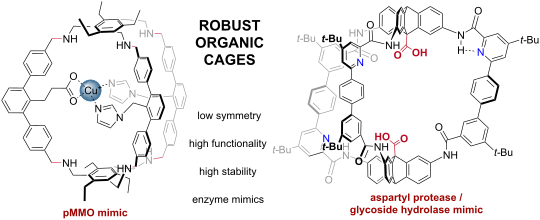
Graphical Abstract
Figure 1: Catalytic rate enhancements from a reduction in the Gibbs free energy transition barrier can be fra...
Figure 2: Typical catalysis modes using macrocycle cavities performing (non-specific) hydrophobic substrate b...
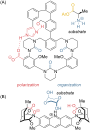
Figure 3: (A) Cram’s serine protease model system [87,88]. The macrocycle showed strong substrate binding (organizat...
Figure 4: (A) Self-assembling capsules can perform hydrophobic catalysis [116,117]. (B) Resorcin[4]arene building bloc...
Figure 5: (A) Metal-organic cages and key modes in catalysis. (B) Charged metals or ligands can result in +/−...
Figure 6: (A) Frameworks (MOFs, COFs) can be catalysts. (B) Example of a 2D-COF, assembled by dynamic covalen...
Figure 7: (A) Examples of dynamic covalent chemistry used to synthesize organic cages. (B) Organic cages are ...
Figure 8: (A) Design and development of soluble, functionalized, robust organic cages. (B) Examples of modula...
Figure 9: (A) There are 13 metastable conformers (symmetry-corrected) for cage 1 due to permutations of amide...
Beilstein J. Org. Chem. 2025, 21, 262–269, doi:10.3762/bjoc.21.18
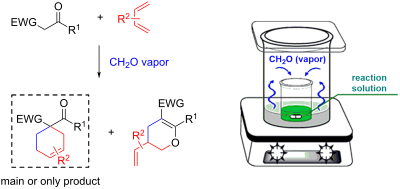
Graphical Abstract
Scheme 1: Knoevenagel and Diels–Alder reactions in the multicomponent synthesis of substituted cyclohexadiene...
Figure 1: Equipment for carrying out reactions by the diffusion mixing method.
Scheme 2: Interaction of diketone 1 with formaldehyde under the diffusion mixing conditions.
Scheme 3: Products of three-component reactions of methylene derivatives, formaldehyde and various dienes.
Scheme 4: Proposed mechanism for the formation of compounds 8 and 9 in the presence of ʟ-proline.
Scheme 5: Interconversion of derivatives 8 and 9.
Scheme 6: Interaction of 4a/4b and 5a/5b mixtures with bromine.
Beilstein J. Org. Chem. 2024, 20, 3113–3133, doi:10.3762/bjoc.20.258
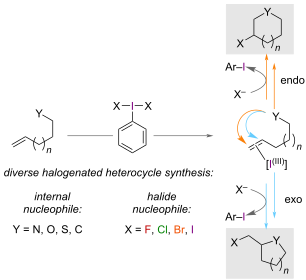
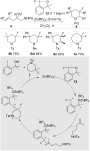
Graphical Abstract
Figure 1: Example bioactive compounds containing cyclic scaffolds potentially accessible by HVI chemistry.
Figure 2: A general mechanism for HVI-mediated endo- or exo-halocyclisation.
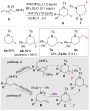
Scheme 1: Metal-free synthesis of β-fluorinated piperidines 6. Ts = tosyl.
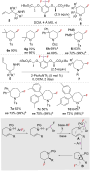
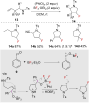
Scheme 2: Intramolecular aminofluorination of unactivated alkenes with a palladium catalyst.
Scheme 3: Aminofluorination of alkenes in the synthesis of enantiomerically pure β-fluorinated piperidines. P...
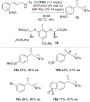
Scheme 4: Synthesis of β-fluorinated piperidines.
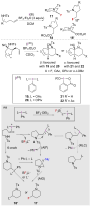
Scheme 5: Intramolecular fluoroaminations of unsaturated amines published by Li.
Scheme 6: Intramolecular aminofluorination of unsaturated amines using 1-fluoro-3,3-dimethylbenziodoxole (12)...
Scheme 7: 3-fluoropyrrolidine synthesis. aDiastereomeric ratio (cis/trans) determined by 19F NMR analysis.
Scheme 8: Kitamura’s synthesis of 3-fluoropyrrolidines. Values in parentheses represent the cis:trans ratio.
Scheme 9: Jacobsen’s enantio- and diastereoselective protocol for the synthesis of syn-β-fluoroaziridines 15.
Scheme 10: Different HVI reagents lead to different diastereoselectivity in aminofluorination competing with c...
Scheme 11: Fluorocyclisation of unsaturated alcohols and carboxylic acids to make tetrahydrofurans, fluorometh...
Scheme 12: Oxyfluorination of unsaturated alcohols.
Scheme 13: Synthesis and mechanism of fluoro-benzoxazepines.
Scheme 14: Intramolecular fluorocyclisation of unsaturated carboxylic acids. Yield of isolated product within ...
Scheme 15: Synthesis of fluorinated tetrahydrofurans and butyrolactone.
Scheme 16: Synthesis of fluorinated oxazolines 32. aReaction time increased to 40 hours. Yields refer to isola...
Scheme 17: Electrochemical synthesis of fluorinated oxazolines.
Scheme 18: Electrochemical synthesis of chromanes.
Scheme 19: Synthesis of fluorinated oxazepanes.
Scheme 20: Enantioselective oxy-fluorination with a chiral aryliodide catayst.
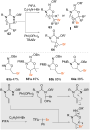
Scheme 21: Catalytic synthesis of 5‑fluoro-2-aryloxazolines using BF3·Et2O as a source of fluoride and an acti...
Scheme 22: Intramolecular carbofluorination of alkenes.
Scheme 23: Intramolecular chlorocyclisation of unsaturated amines.
Scheme 24: Synthesis of chlorinated cyclic guanidines 44.
Scheme 25: Synthesis of chlorinated pyrido[2,3-b]indoles 46.
Scheme 26: Chlorolactonization and chloroetherification reactions.
Scheme 27: Proposed mechanism for the synthesis of chloromethyl oxazolines 49.
Scheme 28: Oxychlorination to form oxazine and oxazoline heterocycles promoted by BCl3.
Scheme 29: Aminobromocyclisation of homoallylic sulfonamides 53. The cis:trans ratios based on the 1H NMR of t...
Scheme 30: Synthesis of cyclic imines 45.
Scheme 31: Synthesis of brominated pyrrolo[2,3-b]indoles 59.
Scheme 32: Bromoamidation of alkenes.
Scheme 33: Synthesis of brominated cyclic guanidines 61 and 61’.
Scheme 34: Intramolecular bromocyclisation of N-oxyureas.
Scheme 35: The formation of 3-bromoindoles.
Scheme 36: Bromolactonisation of unsaturated acids 68.
Scheme 37: Synthesis of 5-bromomethyl-2-oxazolines.
Scheme 38: Synthesis of brominated chiral morpholines.
Scheme 39: Bromoenolcyclisation of unsaturated dicarbonyl groups.
Scheme 40: Brominated oxazines and oxazolines with BBr3.
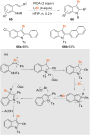
Scheme 41: Synthesis of 5-bromomethtyl-2-phenylthiazoline.
Scheme 42: Intramolecular iodoamination of unsaturated amines.
Scheme 43: Formation of 3-iodoindoles.
Scheme 44: Iodoetherification of 2,2-diphenyl-4-penten-1-carboxylic acid (47’) and 2,2-diphenyl-4-penten-1-ol (...
Scheme 45: Synthesis of 5-iodomethyl-2-oxazolines.
Scheme 46: Synthesis of chiral iodinated morpholines. aFrom the ʟ-form of the amino acid starting material. Th...
Scheme 47: Iodoenolcyclisation of unsaturated dicarbonyl compounds 74.
Scheme 48: Synthesis of 5-iodomethtyl-2-phenylthiazoline (87).
Beilstein J. Org. Chem. 2024, 20, 2108–2113, doi:10.3762/bjoc.20.181
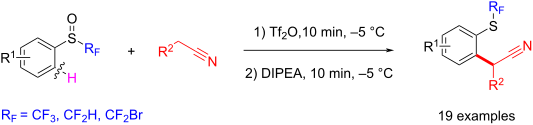
Graphical Abstract
Scheme 1: [3,3]-Rearrangement of aryl sulfoxides.
Scheme 2: The scope of aryl perfluoromethyl sulfoxides and a selenoxide.
Scheme 3: The scope of alkyl nitriles.
Beilstein J. Org. Chem. 2024, 20, 2084–2107, doi:10.3762/bjoc.20.180
Graphical Abstract
Figure 1: Carbohydrate conformational variability. a) Illustration of Φ, Ψ and ω dihedral angles for a repres...
Figure 2: Monosaccharides diversity in eukaryotes and bacteria. a) Eukaryotic monosaccharides. b) Examples of...
Figure 3: Different glycan representations. The 3’-sialyllactosamine is depicted according to the a) IUPAC no...
Figure 4: Visualisation programs. Different representation of a protein–ligand complex by using the most used...
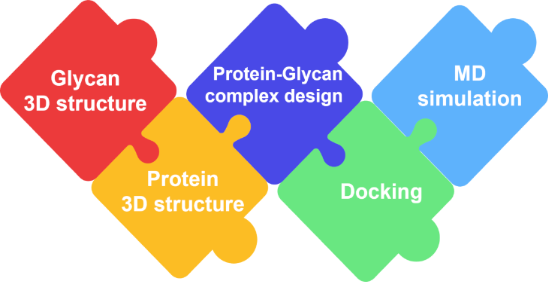
Figure 5: A schematic representation of useful computational methods to study protein–glycan interactions. a)...
Beilstein J. Org. Chem. 2024, 20, 2005–2015, doi:10.3762/bjoc.20.176
Graphical Abstract
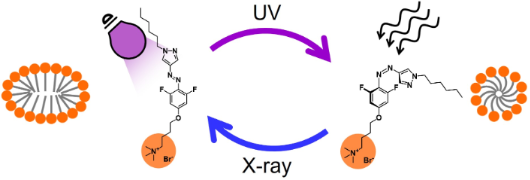
Figure 1: E–Z isomerisation of (a) AzoTAB and (b) AAPTAB under UV light (365 nm) results in a change in shape...
Figure 2: SAXS curves for AzoTAB (50 mM in water) showing the transition from the Z-rich PSS to the E-rich st...
Figure 3: SAXS curves for the Z-rich PSS of AAPTAB (50 mM) in (a) water (H2O) and (b) deuterium dioxide (D2O)...
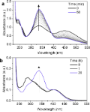
Figure 4: Addition of excess acid (pH = 0.4) induces Z–E isomerisation in AzoTAB and AAPTAB. UV–vis absorbanc...
Figure 5: Effect of X-ray exposure time on high-concentration samples of AAPTAB in water, (a) 10 wt % and (b)...
Beilstein J. Org. Chem. 2024, 20, 1693–1712, doi:10.3762/bjoc.20.151
Graphical Abstract
Scheme 1: Targeted natural products and key enzymatic transformations in the chemo-enzymatic total syntheses ...
Scheme 2: Biosynthetic pathway to brassicicenes in Pseudocercospora fijiensis [14]. (A) Cyclization phase catalyz...
Scheme 3: Chemo-enzymatic total synthesis of cotylenol (1) and brassicicenes. (A) Chemical cyclization phase....
Scheme 4: (A) Biosynthetic pathway for trichodimerol (2) in Penicillium chrysogenum. (B) Chemo-enzymatic tota...
Scheme 5: (A) Proposed biosynthetic pathway for chalcomoracin (3) in Morus alba. (B) Outline of the biosynthe...
Scheme 6: (A) Chemo-enzymatically synthesized natural products by using the originally identified MaDA. (B) M...
Scheme 7: Proposed biosynthetic mechanism of tylactone (4) in Streptomyces fradiae.
Scheme 8: (A) Chemical synthesis and cascade enzymatic transformations of cyclization precursors. (B) Late-st...
Scheme 9: Proposed biosynthetic mechanism of saframycin A (5) in Streptomyces lavendulae.
Scheme 10: (A) Chemo-enzymatic total synthesis of saframycin A (5) and jorunnamycin A (103). (B) Chemo-enzymat...