Search results
Search for "stereogenic centers" in Full Text gives 135 result(s) in Beilstein Journal of Organic Chemistry.
Synthesis of heterocycles based on azomethine ylides from α-amino acids (or amines) and carbonyl compounds
Beilstein J. Org. Chem. 2026, 22, 705–741, doi:10.3762/bjoc.22.55
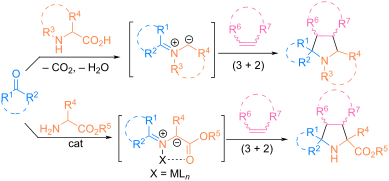
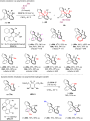
- platform for the preparation of spiro systems with the simultaneous creation of multiple stereogenic centers. Theoretical calculations showed that in the transition state, the dipole and dipolarophile are simultaneously activated by bisphosphoric acid, forming a chiral catalytic cell in which the


Recent advances in the stereoselective synthesis of distal biaxially chiral molecules
Beilstein J. Org. Chem. 2026, 22, 461–479, doi:10.3762/bjoc.22.34
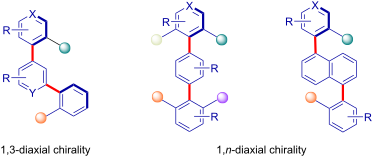
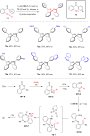
- induce axial chirality. In this approach, the initial formation of one or more stereogenic centers establishes a defined three-dimensional framework, which subsequently guides the generation of one or more chiral axes through cyclization, oxidative aromatization, or related transformations. This central


Rapid access to the core of malayamycin A by intramolecular dipolar cycloaddition
Beilstein J. Org. Chem. 2025, 21, 2542–2547, doi:10.3762/bjoc.21.196
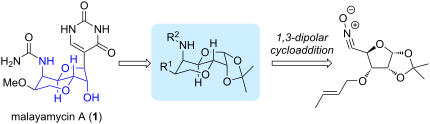
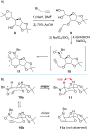
- three contiguous stereogenic centers (Scheme 1A). The pyran ring was constructed by a RCM reaction [16]. Subsequent functionalization of the alkene to install the 1,2-cis-hydroxy amine required 6 steps from the sterically more demanding side. In continuing our recent interest in accessing unusual
- cleavage of the N–O bond, oxidation and Baeyer–Villiger oxidation. The starting functional groups (including alkyne and nitrone) for the proposed oxazoline were established in literature precedents [29][30][31]. Moreover, the readily available intermediate 8 [32] bearing three defined stereogenic centers
- from the INOC cycloaddition can be converted to a single stereoisomer of 20. With all required stereogenic centers embedded in the 6-5 trans-fused bicyclic skeleton, the remaining problem is converting C to O to install the secondary alcohol at C2 with retention of the β-configuration. The programmed




Synthesis of the tetracyclic skeleton of Aspidosperma alkaloids via PET-initiated cationic radical-derived interrupted [2 + 2]/retro-Mannich reaction
Beilstein J. Org. Chem. 2025, 21, 2470–2478, doi:10.3762/bjoc.21.189
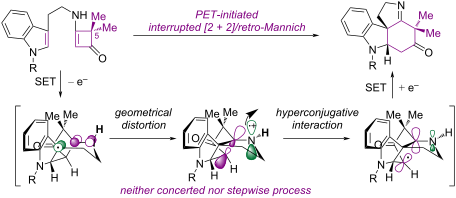
- were obtained in 70% and 72% yield, respectively. However, when C15 was substituted with a methyl group, the yield of 10d decreased slightly to 63%. Product 10e, which has two contiguous quaternary stereogenic centers at C2 and C12, was obtained in 74% yield without a significant change in the yield


Transformation of the cyclohexane ring to the cyclopentane fragment of biologically active compounds
Beilstein J. Org. Chem. 2025, 21, 2416–2446, doi:10.3762/bjoc.21.185
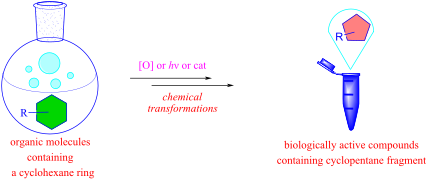
- challenging [6-5-5-7]-tetracyclic ring system embedded within a fully functionalized cyclopentane, as well as seven contiguous stereogenic centers. In 2017, (−)-pavidolide B (134) was prepared in 13 steps from the known chiral alcohol 135, which in turn was synthesized from commercially available (+)-carvone


Synthetic study toward vibralactone
Beilstein J. Org. Chem. 2025, 21, 2376–2382, doi:10.3762/bjoc.21.182

- lactone 13 through allylic oxidation and cross metathesis. For the construction of the cyclopentene ring, an alkylidene carbene-mediated C–H insertion would be applied [35]. The synthetic route could be traced back to β-lactone 14, which contains two continuous stereogenic centers with trans configuration


Further elaboration of the stereodivergent approach to chaetominine-type alkaloids: synthesis of the reported structures of aspera chaetominines A and B and revised structure of aspera chaetominine B
Beilstein J. Org. Chem. 2025, 21, 2072–2081, doi:10.3762/bjoc.21.162
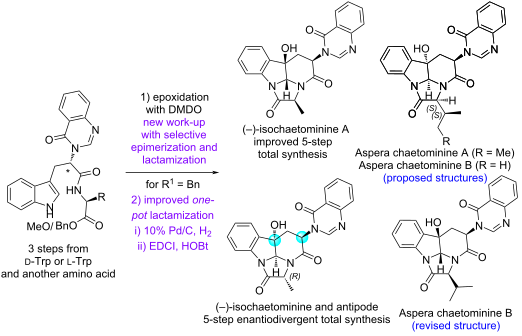
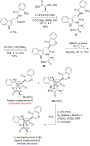
- ][49][50][51][52][53][54]. This is the case for (−)-chaetominine (1 in Figure 1), which is a hexacyclic quinazolinone alkaloid possessing four stereogenic centers, first isolated from a solid-substrate culture of Chaetomium sp. IFB-E015 [21]. Subsequently, several homologues, diastereomers, and



Measuring the stereogenic remoteness in non-central chirality: a stereocontrol connectivity index for asymmetric reactions
Beilstein J. Org. Chem. 2025, 21, 1995–2006, doi:10.3762/bjoc.21.155
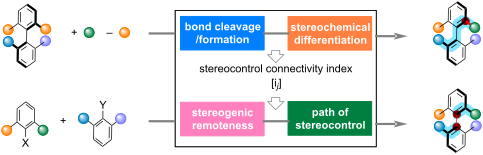
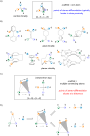
- by the reaction types, the mode of catalysis, or the nature of the stereogenic centers. Unlike central chirality, the stereogenic remoteness of non-central chirality could not be measured using a central stereogenic atom as the starting point. The stereocontrol connectivity index allows
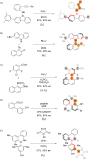
- parameterization for reactions that establish axially chirality and planar chirality regardless of the absence of stereogenic centers. Applications to reactions that forge axial chirality follow the same 3-step procedure. The two substituents at each end of the stereogenic axis are ranked based on the CIP priority




Asymmetric total synthesis of tricyclic prostaglandin D2 metabolite methyl ester via oxidative radical cyclization
Beilstein J. Org. Chem. 2025, 21, 1964–1972, doi:10.3762/bjoc.21.152
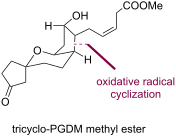
- stereoselectively access the syn-anti-cyclopentanol ring system with three vicinal stereogenic centers at C11, C12, and C8 via the oxidative radical cyclization that led to the asymmetric total synthesis of compound 4. Results and Discussion First generation asymmetric total synthesis of tricyclic-PGDM methyl ester
- , C11, and C12 contiguous stereogenic centers, provided important insights that influenced the design of our second-generation total synthesis. Compared with the Snider-type radical cyclization using stoichiometric amounts of metal oxidants, visible-light-induced photoredox-catalyzed radical cyclization
- construct cyclopentanols with three contiguous stereogenic centers in compound 4. Our total synthesis also features an efficient cross-metathesis reaction to produce photoredox-catalyzed radical cyclization reaction precursor 27, a one-pot transesterification and palladium-catalyzed decarboxylative



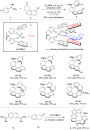
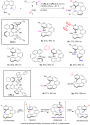
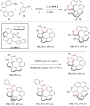
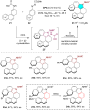
Chiral phosphoric acid-catalyzed asymmetric synthesis of helically chiral, planarly chiral and inherently chiral molecules
Beilstein J. Org. Chem. 2025, 21, 1864–1889, doi:10.3762/bjoc.21.145
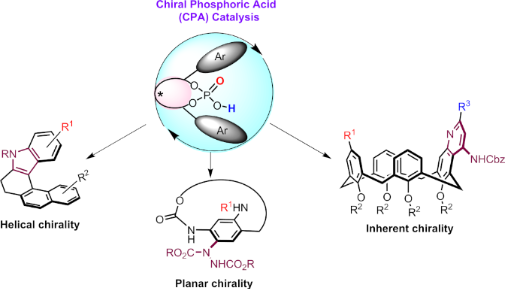
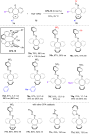
- has been recognized as the most straightforward and efficient strategy for synthesizing chiral molecules, with early development primarily targeting compounds featuring stereogenic centers. In the past decade, significant progress has been made in the asymmetric synthesis of diverse axially chiral
- asymmetric catalytic reactions to synthesize chiral molecules with stereogenic centers has been developed. Moreover, the rapid advancement of axially chiral molecules in asymmetric synthesis has been made possible by employing CPA catalysis, notably pioneered by Akiyama [10], Tan [11] and others. However
- terminal aromatic rings [17]. Despite lacking asymmetric stereogenic centers, this nonplanar scaffold exhibits intrinsic P/M chirality due to the helical arrangement of the π-extended skeleton. Renowned for their high thermal stability and structural rigidity, chiral helicenes have emerged as prominent










Catalytic asymmetric reactions of isocyanides for constructing non-central chirality
Beilstein J. Org. Chem. 2025, 21, 1648–1660, doi:10.3762/bjoc.21.129

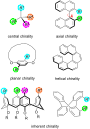
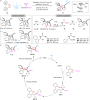
- and manifests in diverse forms (Figure 1a). While central chirality based on stereogenic centers (e.g., C, P, S, etc.) is the most conventional type, non-central chirality, such as axial [1][2][3][4], planar [5][6][7], helical [8][9][10], and inherent chirality [11][12], has gained increasing





Recent total synthesis of natural products leveraging a strategy of enamide cyclization
Beilstein J. Org. Chem. 2025, 21, 999–1009, doi:10.3762/bjoc.21.81
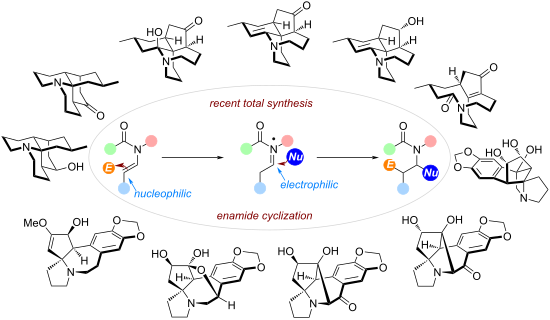
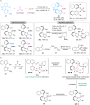
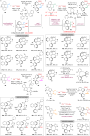
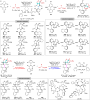
- tertiary enamides as cyclization precursors (Scheme 6). The analogous polycyclization generated a tetracyclic N-heterocycle with three continuous stereogenic centers, one of them being an aza-quaternary carbon [31]. The resulting fused ring-system structurally resembles the nucleus of erysotramidine





A convergent synthetic approach to the tetracyclic core framework of khayanolide-type limonoids
Beilstein J. Org. Chem. 2025, 21, 926–934, doi:10.3762/bjoc.21.75
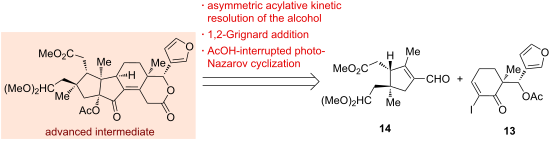
- tricyclo[4.2.110,30.11,4]decane ring system. Additionally, krishnolides A and C contain 9–11 stereogenic centers and exhibit diverse oxidation patterns. Their relative and absolute configurations were determined through NMR, HRESIMS and ECD experiments, as well as single crystal X-ray diffraction analysis




Recent advances in allylation of chiral secondary alkylcopper species
Beilstein J. Org. Chem. 2025, 21, 639–658, doi:10.3762/bjoc.21.51
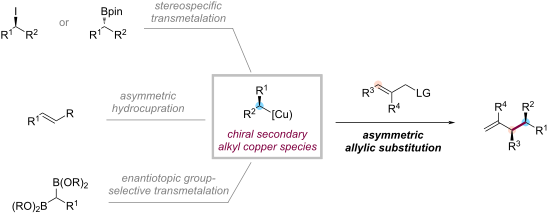
- crucial advancement in this field. In particular, a key objective is developing regio-, diastereo-, and enantioselective allylic substitution reactions that can effectively construct enantioenriched stereogenic centers from either allylic electrophiles or organometallic nucleophiles [39][40]. This
- consistent stereochemical outcome highlight its practical utility. Their subsequent work with chiral tertiary boronic esters 25 revealed an effective strategy for constructing quaternary stereogenic centers through allylic substitution reactions (Scheme 8) [48]. By employing in situ-generated
- bearing quaternary stereogenic centers with high stereospecificity. This methodology represents a significant advancement in the construction of challenging all-carbon quaternary stereogenic centers through stereospecific allylic substitution reactions. To elucidate the origin of the selective boron group





Asymmetric synthesis of β-amino cyanoesters with contiguous tetrasubstituted carbon centers by halogen-bonding catalysis with chiral halonium salt
Beilstein J. Org. Chem. 2025, 21, 547–555, doi:10.3762/bjoc.21.43
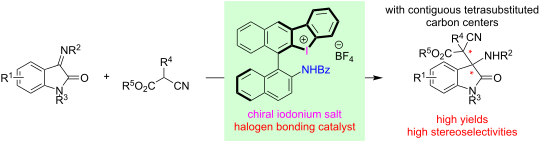
- , which formed the corresponding products in high to excellent enantioselectivities. In this paper, the asymmetric synthesis of β-amino cyanoesters with contiguous tetrasubstituted carbon stereogenic centers by the Mannich reaction through chiral halonium salt catalysis is presented, which provided the
- corresponding products in excellent yields with up to 86% ee. To the best of our knowledge, the present paper is the first to report the asymmetric construction of β-amino cyanoesters with contiguous tetrasubstituted carbon stereogenic centers by the catalytic Mannich reaction. Keywords: asymmetric catalysis
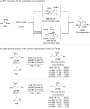
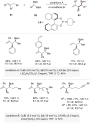
- alcohols [38]. In this context, their asymmetric syntheses are important and have also been researched mainly using chiral catalysts [39][40]. Previously, the Mannich reaction has been applied in the construction of contiguous stereogenic centers (Figure 2). In 2005, Jørgensen and co-workers reported the


Dioxazolones as electrophilic amide sources in copper-catalyzed and -mediated transformations
Beilstein J. Org. Chem. 2025, 21, 200–216, doi:10.3762/bjoc.21.12
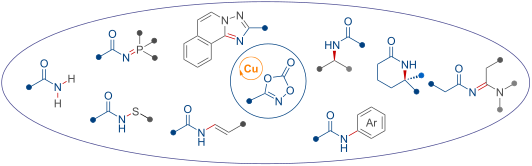
- 20 is afforded through protonolysis, regenerating the active copper species to complete the catalytic cycle. 2 Amidation via oxidative insertion to N–O bonds and reductive elimination 2.1 Hydroamidation of vinylarenes Amines bearing stereogenic centers have been widely investigated in the research


Non-covalent organocatalyzed enantioselective cyclization reactions of α,β-unsaturated imines
Beilstein J. Org. Chem. 2024, 20, 3221–3255, doi:10.3762/bjoc.20.268
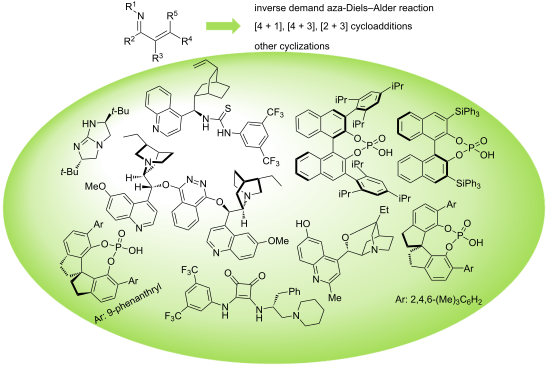
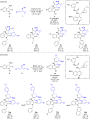
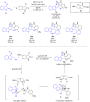
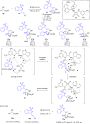
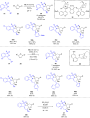
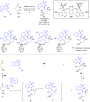
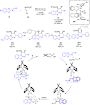
- phosphoric acid-catalyzed enantioselective [4 + 2] cycloaddition of benzothiazolimines 21 and enecarbamates 45 [41]. With this novel methodology benzothiazolopyrimidines 47 bearing three contiguous stereogenic centers were synthesized in good to excellent yields (58–98%), complete diastereoselectivities and
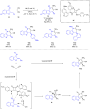
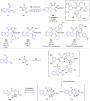
- + 3) cycloaddition of 3-alkyl-2-vinylindoles 59 and azoalkenes 53 (Scheme 22). This methodology afforded chiral pyrroloindolines 60 bearing two tetrasubstituted stereogenic centers in good yields (61–96%) and excellent stereoselectivities (all >95:5 dr, 86–99% ee) by using chiral phosphoric acid XVII
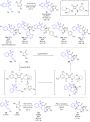
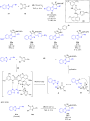
- enables the synthesis of benzofuran-fused tetrahydropyridines 62 bearing three contiguous stereogenic centers in good yields (80–99%), and excellent diastereoselectivities (>20:1 dr) and good to excellent enantioselectivities (63–99% ee) [45]. In general, good enantioselectivities were obtained with all











Multicomponent reactions driving the discovery and optimization of agents targeting central nervous system pathologies
Beilstein J. Org. Chem. 2024, 20, 3151–3173, doi:10.3762/bjoc.20.261

- strategic approach allows precise control of the stereogenic centers at the C3-position during cyclization (Scheme 16). Ugi-4CR/metal-catalyzed reaction: The fusion of MCRs with cross-coupling reactions represents an attractive approach as a result of the increased intricacy and effectiveness [62]. Moreover


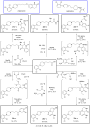


Natural resorcylic lactones derived from alternariol
Beilstein J. Org. Chem. 2024, 20, 2171–2207, doi:10.3762/bjoc.20.187
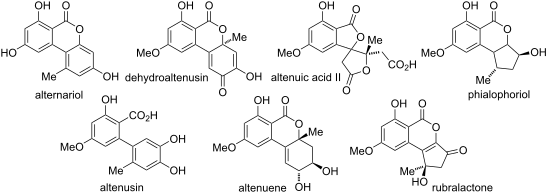

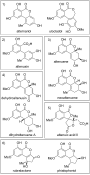
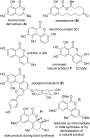


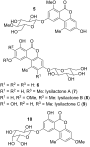


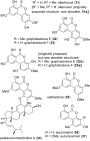

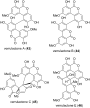


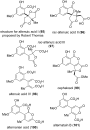


Access to 2-oxoazetidine-3-carboxylic acid derivatives via thermal microwave-assisted Wolff rearrangement of 3-diazotetramic acids in the presence of nucleophiles
Beilstein J. Org. Chem. 2024, 20, 1894–1899, doi:10.3762/bjoc.20.164

- yield (78% vs 96%) was observed upon scaling up. In the case of products with two stereogenic centers (3r–t), the formation of a single trans-diastereomer was observed. According to literature data, the vicinal coupling constants in the 3,4-disubsituted β-lactam cycle have characteristic values for the


Chemical and biosynthetic potential of Penicillium shentong XL-F41
Beilstein J. Org. Chem. 2024, 20, 597–606, doi:10.3762/bjoc.20.52
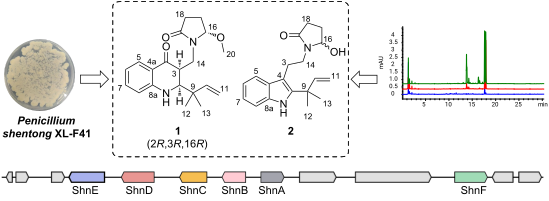
- correlations linking three different fragments. Compound 1 features three stereogenic centers at C-2, C-3, and C-16. The relative configuration of C-2 and C-3 was determined as (2R*,3R*) by 1H-1H NOESY correlations (Figure 3), while the relative configuration of C-16 remains unresolved due to the




Pseudallenes A and B, new sulfur-containing ovalicin sesquiterpenoid derivatives with antimicrobial activity from the deep-sea cold seep sediment-derived fungus Pseudallescheria boydii CS-793
Beilstein J. Org. Chem. 2024, 20, 470–478, doi:10.3762/bjoc.20.42
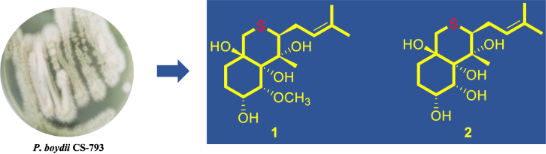
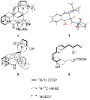
- stereogenic centers in compound 1 as 1R, 2R, 3R, 6R, 7R, 8S. This is likely the first characterized crystal structure of an ovalicin-type sesquiterpenoid. The molecular formula of pseudallene B (2) was assigned as C15H26O5S (three unsaturations), with one CH2 unit less than 1, based on positive HRESIMS data
- of 0.048(7), which suggested all the stereogenic centers in compound 2 as 1R, 2R, 3R, 6R, 7R, 8S. In addition to compounds 1 and 2, three related ovalicin-type sesquiterpenoid derivatives 3 [10], 4 [11], and chlovalicin (5) [12][13] were isolated and identified from the fungus P. boydii CS-793. It


Anion–π catalysis on carbon allotropes
Beilstein J. Org. Chem. 2023, 19, 1881–1894, doi:10.3762/bjoc.19.140
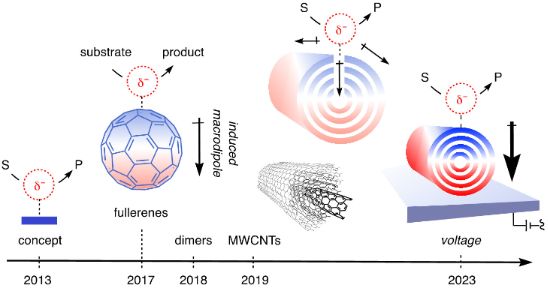
- . Asymmetric anion–π catalysis of intrinsically disfavored exo-selective Diels–Alder reactions on fullerene catalyst 21, with notional endo and exo transition states VI and VII, respectively. Asymmetric anion–π catalysis to install remote stereogenic centers on fullerene catalyst 21, with notional transition




Application of N-heterocyclic carbene–Cu(I) complexes as catalysts in organic synthesis: a review
Beilstein J. Org. Chem. 2023, 19, 1408–1442, doi:10.3762/bjoc.19.102
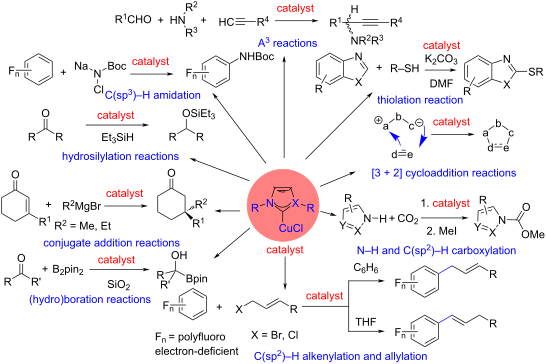
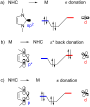
- -workers [61] extended the application of NHC–copper catalysts to the conjugate addition of boronates to acyclic α,β-unsaturated carboxylic esters, ketones, and thioesters leading to the enantioselective formation of boron-substituted quaternary carbon stereogenic centers (Scheme 43). All transformations










Acetaldehyde in the Enders triple cascade reaction via acetaldehyde dimethyl acetal
Beilstein J. Org. Chem. 2023, 19, 1243–1250, doi:10.3762/bjoc.19.92
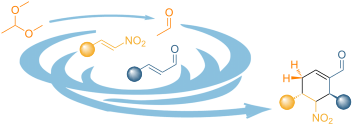
- last step involves the enamine intermediate which drives an intramolecular aldol condensation to form the final product 5. In this elegant cascade process, catalyst 1 promotes three consecutive carbon–carbon bond forming steps generating four stereogenic centers with high diastereoselectivity and
- simple flash chromatography. Conclusion An unprecedented methodology for the synthesis of 4,6-disubstituted 5-nitrocyclohexene carbaldehydes with three contiguous stereogenic centers using acetaldehyde as one of the reaction components of an Enders cascade reaction has been developed. The masked form of