


Search results
Search for "trifluoroacetic acid" in Full Text gives 316 result(s) in Beilstein Journal of Organic Chemistry. Showing first 200.
Synthesis of functionalized, 13-alkyl-substituted coralyne derivatives and investigation of their interactions with duplex and abasic site-containing DNA
Beilstein J. Org. Chem. 2026, 22, 1057–1066, doi:10.3762/bjoc.22.84
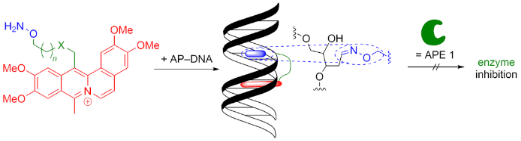
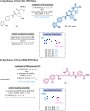
- to give the coralyne derivative 2f (Scheme 4), which was identified and characterized by 1D and 2D NMR spectroscopy (1H, 13C, 19F), high-resolution mass spectrometry, and elemental analysis. The Boc protection group in coralyne 2f was removed by the reaction with trifluoroacetic acid (TFA) in CH2Cl2
- -diisopropylethylamine (DIPEA, 99%), trifluoroacetic acid (TFA, 99%); Fermentas (Vilnius, LTU): pBR322; Fluka (Darmstadt, DE): 4-aminobutyric acid (98%); KMF Laborchemie-Handels GmbH (Köln, DE): benzaldehyde (99%); Merck KGaA (Darmstadt DE): ct DNA (type 1); Sigma-Aldrich (St. Louis, US): 4-bromobutanoate (95%); n-BuLi
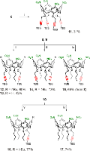
- coralyne derivatives 2b–d. Synthesis of coralyne derivatives 2e–h (Boc: tert-butyloxycarbonyl; DIPEA: N,N-diisopropylethylamine; PyBOB: benzotriazol-1-yl-oxytripyrrolidinophosphonium hexafluorophosphate; TFA: trifluoroacetic acid). Supporting Information Supporting Information File 10: Complete


Photoorganocatalytic trifluoromethylation of (het)arenes in green conditions
Beilstein J. Org. Chem. 2026, 22, 662–671, doi:10.3762/bjoc.22.50
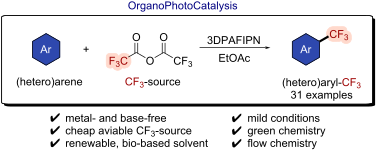
- ) under blue-light irradiation in acetonitrile (Scheme 1d) [17]. Also, photoelectrochemical trifluoromethylation procedures using trifluoroacetic acid or its salt were published recently [18][19]. Inspired by these methodologies, we sought to combine their advantages to develop a metal- and base-free
- originally reported by Bazyar and Hosseini-Sarvari [20]. A comparison of the atom efficiencies of various CF3 sources clearly indicates that trifluoroacetic acid (TFA) is the most atom-efficient and, moreover, the least expensive CF3 source (Table 1). Although iodotrifluoromethane, triflyl chloride, and the
- Langlois and Ruppert–Prakash reagents formally exhibit higher atom efficiencies than trifluoroacetic anhydride (TFAA), they are significantly costlier and challenging to prepare. In contrast, trifluoroacetic acid generated as a by-product can be readily converted back into TFAA, especially in large-scale




Hydrogen production from formic acid catalyzed by NHC–Cu complexes
Beilstein J. Org. Chem. 2026, 22, 620–627, doi:10.3762/bjoc.22.48
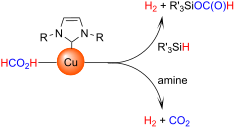
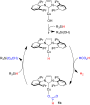
- steric reasons rather than electronics. In fact, the reaction of trifluoroacetic acid led to the same outcome as acetic acid (Scheme 4, see Supporting Information File 1, section 8). Theoretical as well as experimental investigations to assess the mechanism of this transformation are still ongoing. The



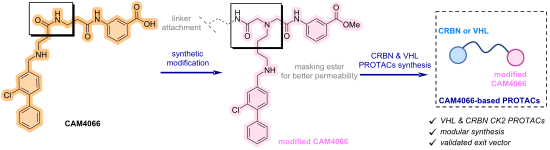
Towards the targeted protein degradation of CK2: design and synthesis of CAM4066-based PROTACs
Beilstein J. Org. Chem. 2026, 22, 611–619, doi:10.3762/bjoc.22.47
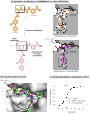
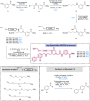
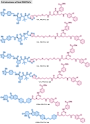
- -diisopropylethylamine; DME = 1,2-dimethoxyethane; DMF = dimethylformamide; HOBt = 1-hydroxybenzotriazole; TFA = trifluoroacetic acid. (A) Synthesis of final VHL PROTACs; (B) Synthesis of final CRBN PROTACs. Abbreviations: Boc = tert-butoxycarbonyl; CRBN = cereblon; DIPEA = N,N-diisopropylethylamine; DMF
- = dimethylformamide; HATU = O-(7-azabenzotriazol-1-yl)-N,N,N′,N′-tetramethyluronium hexafluorophosphate; THPTA = tris(3-hydroxypropyltriazolylmethyl)amine; TFA = trifluoroacetic acid; VHL = von Hippel–Lindau. Supporting Information Supporting Information File 14: Experimental part and copies of NMR spectra

Cone p-aminocalix[4]arenes enriched with ‘clickable’ alkyne or azide functionalities
Beilstein J. Org. Chem. 2026, 22, 399–415, doi:10.3762/bjoc.22.28
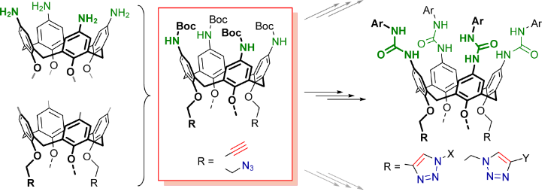
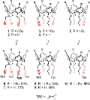
- conditions using trifluoroacetic acid, and after basification, free p-aminocalix[4]arenes 42–46 substituted at the narrow rims with either 1-benzyltriazol-4-ylmethyl or 2-(4-phenyltriazol-1-yl)ethyl groups were obtained (Scheme 8). Then, amines 42–46 were reacted with excess p-tolyl isocyanate to afford the




Synthesis and applications of alkenyl chlorides (vinyl chlorides): a review
Beilstein J. Org. Chem. 2026, 22, 1–63, doi:10.3762/bjoc.22.1
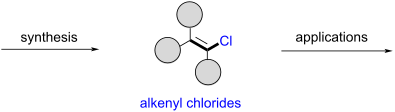
- first synthesis of alkenyl chlorides from acyl chlorides was reported by Moughamir and Mestdagh in 1999 (Scheme 18A) [71]. They observed that strongly acidic solvents, including trifluoroacetic acid and methanesulfonic acid, provided the corresponding products in good yields with excellent























Synthesis and characterization of a isothiouronium-calix[4]arene derivative: self-assembly and anticancer activity
Beilstein J. Org. Chem. 2025, 21, 2535–2541, doi:10.3762/bjoc.21.195
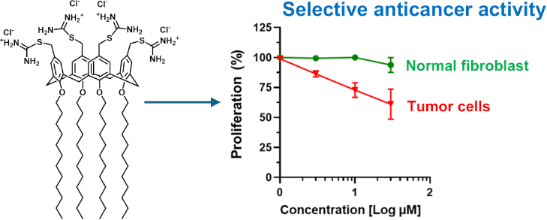
- chains were tethered to the calixarene hydroxy groups (lower rim) by reaction with dodecyl iodide in the presence of NaH. At the upper rim of this derivative, four formyl groups were introduced by reaction with hexamethylenetetramine in trifluoroacetic acid. The formyl groups were reduced to alcohol


Insoluble methylene-bridged glycoluril dimers as sequestrants for dyes
Beilstein J. Org. Chem. 2025, 21, 2302–2314, doi:10.3762/bjoc.21.176
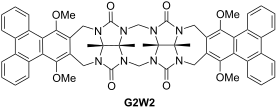
- reaction of methylene-bridged glycoluril dimer G2BCE with aromatic walls W1–W4 conducted in trifluoroacetic acid (TFA) as both solvent and acid catalyst. The new hosts G2W1–G2W4 were obtained in 28, 33, 59, and 62% yield, respectively, after washing and recrystallization processes. Hosts G2W1–G2W4 are
- and were used without further purification. H2 was synthesized according to a previously published procedure [39]. NMR spectra were measured on commercial spectrophotometers at 400 MHz for 1H and 100 MHz for 13C in trifluoroacetic acid with a capillary tube containing deuterated water (D2O) for



C2 to C6 biobased carbonyl platforms for fine chemistry
Beilstein J. Org. Chem. 2025, 21, 2103–2172, doi:10.3762/bjoc.21.165


Discovery of cytotoxic indolo[1,2-c]quinazoline derivatives through scaffold-based design
Beilstein J. Org. Chem. 2025, 21, 2062–2071, doi:10.3762/bjoc.21.161
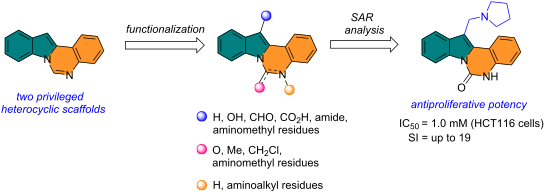
- trifluoroacetic acid affords intermediate compound 6, bearing a trifluoroacetyl group on the indole moiety. Treatment of 6 with the base yielded the acid 3 in high yield (Scheme 2). The carboxyl group of 3 was converted to the corresponding amides via coupling with mono-N-Boc-protected C2–C4 diamines using PyBOP


Enantioselective desymmetrization strategy of prochiral 1,3-diols in natural product synthesis
Beilstein J. Org. Chem. 2025, 21, 1932–1963, doi:10.3762/bjoc.21.151

- tetracyclic core of arboridine. In the presence of trifluoroacetic acid (TFA) and paraformaldehyde, compound 189, prepared from 188 in four steps, underwent aza-Prins cyclization to form the caged skeleton, and the following acetate hydrolysis afforded arboridinine (190) in 38% yield over two steps. In 2024
- trifluoroacetic acid (TFA) and Ac2O, along with acetylation of the free hydroxy group, to deliver compound 239 in high yield. A further six-step sequence completed the synthesis of (−)-vincamajinine (240). With the same strategy, (−)-11-methoxy-17-epivincamajine (245) was prepared from (+)-Na-methyl-16








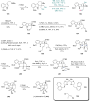
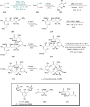


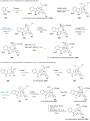


Fe-catalyzed efficient synthesis of 2,4- and 4-substituted quinolines via C(sp2)–C(sp2) bond scission of styrenes
Beilstein J. Org. Chem. 2025, 21, 1799–1807, doi:10.3762/bjoc.21.142
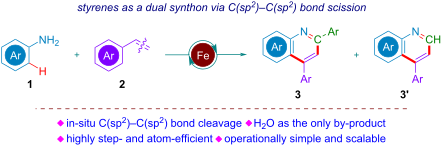
- , the present C–H annulation reaction of aniline (1a) with styrene (2a) was initially carried out in TFE (trifluoroethanol) as solvent in the presence of 25 mol % FeCl3·6H2O as a catalyst and 1.5 equiv of TFA (trifluoroacetic acid) as an additive (Table 1, entry 1). For this reaction, 12% of 2,4
- observed when the amount of trifluoroacetic acid (TFA) was reduced from 1.5 equiv to 1.0 equiv (Table 1, entry 12). Consequently, in the absence of the additive, the yield was significantly diminished due to the incomplete consumption of 1a (Table 1, entry 13). Lowering the temperature to 100 °C




[3 + 2] Cycloaddition of thioformylium methylide with various arylidene-azolones in the synthesis of 7-thia-3-azaspiro[4.4]nonan-4-ones
Beilstein J. Org. Chem. 2025, 21, 1791–1798, doi:10.3762/bjoc.21.141
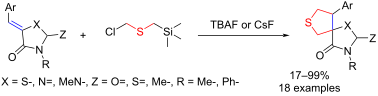
- 1–5e with para-methoxy group in the aromatic ring (Table 1, Supporting Information File 1, part 2). Typically thioformylium methylide is generated from compound I by action of CsF or TBAF [16][23][24]. We also tested other fluorides and trifluoroacetic acid (Supporting Information File 1, part 2

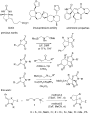


Convenient alternative synthesis of the Malassezia-derived virulence factor malassezione and related compounds
Beilstein J. Org. Chem. 2025, 21, 1730–1736, doi:10.3762/bjoc.21.135

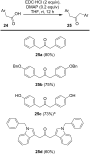
- , 38.7, 28.3 ppm; HRESIMS (m/z): [M + Na]+ calcd for C29H32N2NaO5, 511.2203; found, 511.2222. 1,3-Di(1H-indol-3-yl)propan-2-one (1): The ketone 23 (200 mg, 0.4 mmol, 1 equiv) was dissolved in DCM (6 mL) in a 25 mL round bottom flask equipped with a magnetic stirrer. Trifluoroacetic acid (3 mL) was then


Azobenzene protonation as a tool for temperature sensing
Beilstein J. Org. Chem. 2025, 21, 1528–1534, doi:10.3762/bjoc.21.115
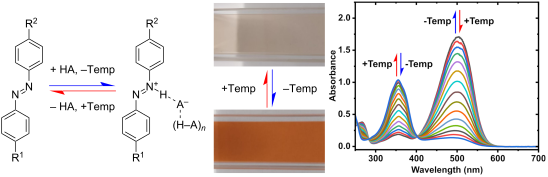
- mixtures, as well as for 3 in MSA/acetonitrile mixture and for a weaker acid (trifluoroacetic acid), are shown in Supporting Information File 1, Figures S3–S6. Given the large reversible absorption shift upon protonation, azobenzenes can act as pH indicators with tunable sensitivity through substituent
- 1,2-Dichloroethane was purchased from Acros Organics (99.8% purity), acetonitrile from Honeywell (≥99.9% purity), methanesulfonic acid (MSA) from Sigma-Aldrich (≥99.5% purity), and trifluoroacetic acid (TFA) from TCI (≥99.0% purity). Azobenzene (98% purity) was bought from TCI and 4-methoxyazobenzene


Advances in nitrogen-containing helicenes: synthesis, chiroptical properties, and optoelectronic applications
Beilstein J. Org. Chem. 2025, 21, 1422–1453, doi:10.3762/bjoc.21.106
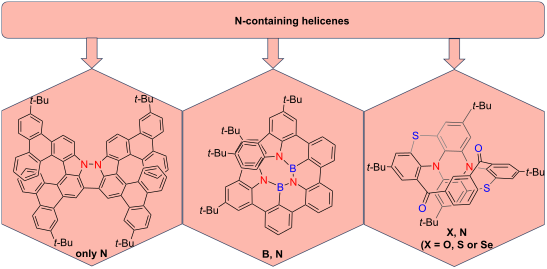
- approximately 500 nm upon trifluoroacetic acid treatment. Both the neutral and protonated forms of 19 exhibited mirror-image CD and CPL spectra, with high |glum| values of 1.4 × 10⁻³ and 1.3 × 10⁻³, respectively, underscoring their potential for responsive chiral optoelectronic applications. Concurrently, Liu

Tautomerism and switching in 7-hydroxy-8-(azophenyl)quinoline and similar compounds
Beilstein J. Org. Chem. 2025, 21, 1404–1421, doi:10.3762/bjoc.21.105
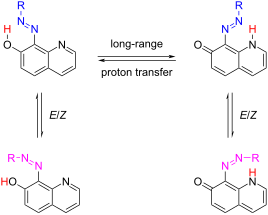
- seen from Figure 5, in the spectrum of 2 in acetonitrile a single band is observed at 500 nm. Upon addition of a very small amount of trifluoroacetic acid this band disappears and a new band at 400 nm appears, suggesting that the red-shifted band can be attributed to E−. The spontaneous deprotonation
- . Changes in the absorption spectrum of 2 in acetonitrile upon addition of trifluoroacetic acid (TFA) and triethylamine (TEA). The addition of more TFA or TE does not cause further spectral changes. Ground (M06-2X/TZVP) and excited (CAM-B3LYP/TZVP) state potential energy surface of compound 1 in toluene




Oxetanes: formation, reactivity and total syntheses of natural products
Beilstein J. Org. Chem. 2025, 21, 1324–1373, doi:10.3762/bjoc.21.101
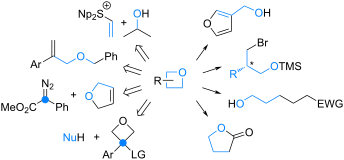
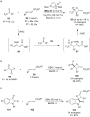
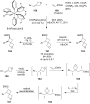
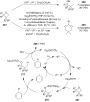
- (necessary for aromatisation) are promoted by trifluoroacetic acid under similarly mild conditions. In case of the pyrrole synthesis, the same precursors are treated with a primary amine in DCM and the reaction mixture is heated at 40 °C for 12–24 h. As 1,4-addition also takes place during this process, two








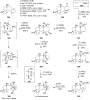


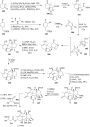
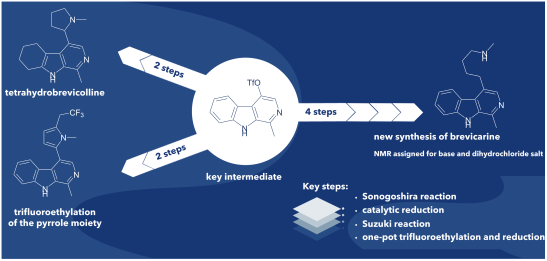
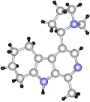
Studies on the syntheses of β-carboline alkaloids brevicarine and brevicolline
Beilstein J. Org. Chem. 2025, 21, 955–963, doi:10.3762/bjoc.21.79
- 21 under extremely harsh conditions (100 °C, 130 bar), followed by N-acetylation gave a mixture of diastereomeric racemates 22, which was cyclized to a diastereomeric mixture of β-carboline derivatives 23. Heating of 23 in pivalic acid in the presence of a catalytic amount of trifluoroacetic acid


Semisynthetic derivatives of massarilactone D with cytotoxic and nematicidal activities
Beilstein J. Org. Chem. 2025, 21, 607–615, doi:10.3762/bjoc.21.48
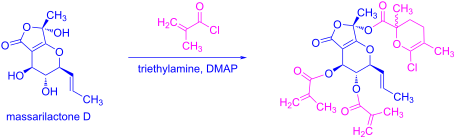
- Agilent 1100 series preparative HPLC system [ChemStation software (Rev. B.04.03 SP1); binary pump system; column: Kinetex 5u RP C18, dimensions 250 × 21.20 mm; mobile phase: ACN + 0.05% trifluoroacetic acid (TFA) and water + 0.05% TFA; flow rate: 20 mL/min; diode array UV detector; 226 fraction collector
- software (Rev. B.04.03 SP1); binary pump system; column: Kinetex 5u RP C18, dimensions 250 × 21.20 mm; mobile phase: ACN + 0.05% trifluoroacetic acid (TFA) and water + 0.05% TFA; flow rate 20 mL/min; diode array UV detector; 226 fraction collector. A gradient from 47 to 72% solvent B in 50 min was used


Cryptophycin unit B analogues
Beilstein J. Org. Chem. 2025, 21, 526–532, doi:10.3762/bjoc.21.40
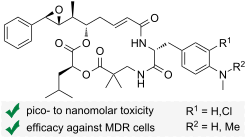
- , HOAt, N,N-dimethylformamide 0 °C for 2 h and at rt for 20 min, 11%; f) Grubbs II catalyst, CH2Cl2, reflux, 3 h, 84%; g) TFA, H2O, CH2Cl2, 0 °C to rt, 5 h, 91%. EDC·HCl = 1-ethyl-3-(3-dimethylaminopropyl)carbodiimide hydrochloride; DMAP = 4-(dimethylamino)pyridine; TFA = trifluoroacetic acid; HOAt = 1



Synthesis of N-acetyl diazocine derivatives via cross-coupling reaction
Beilstein J. Org. Chem. 2025, 21, 490–499, doi:10.3762/bjoc.21.36
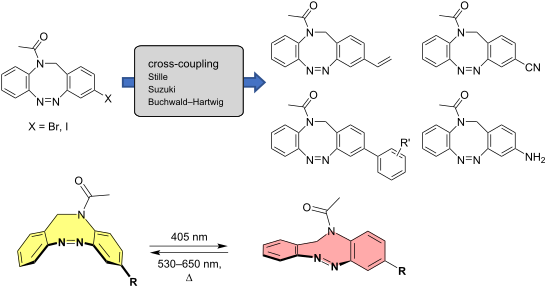
- . Using diphenylamine as a more electron-rich amine resulted in the formation of diphenylamino-substituted N-acetyl diazocine 20 in a significantly lower yield of 25% starting from the bromide 2 and 47% starting from the iodo precursor 3 (Table 5). Deprotection of carbamate 19 with trifluoroacetic acid


Synthesis of electrophile-tethered preQ1 analogs for covalent attachment to preQ1 RNA
Beilstein J. Org. Chem. 2025, 21, 483–489, doi:10.3762/bjoc.21.35
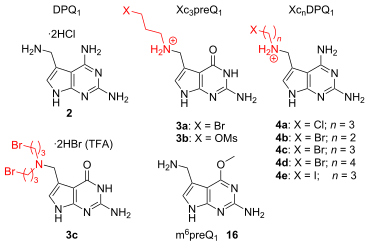
- by displacement of the mesyl group to give a six-membered cyclic carbamate, a reactivity that has been described earlier [34]. Thus, care was taken to quickly isolate compound 14 and use it immediately in the next step. Deblocking of the secondary amine by treatment with trifluoroacetic acid afforded


Advances in the use of metal-free tetrapyrrolic macrocycles as catalysts
Beilstein J. Org. Chem. 2024, 20, 3085–3112, doi:10.3762/bjoc.20.257
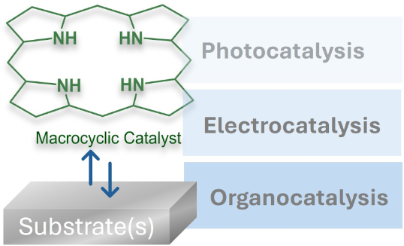
- activity in electrocatalytic HER [123]. Although free base corrole ligands demonstrated activity in HER, they were unstable in trifluoroacetic acid (TFA), a common proton source, leading to rapid degradation during catalysis. Subsequently, the same group introduced metal-free xanthene-bridged biscorroles
- were further explored using 18 (H2TPP) as a catalyst, Fc as an external reductant, DCE as a solvent, and two different compounds as proton sources: tetrakis(pentafluorophenyl)boric acid (HTB) and trifluoroacetic acid (TFA) [118]. After HTB was added to 18 (H2TPP) in 1:2.5 molar ratio, the Soret band in


Tunable full-color dual-state (solution and solid) emission of push–pull molecules containing the 1-pyrindane moiety
Beilstein J. Org. Chem. 2024, 20, 3016–3025, doi:10.3762/bjoc.20.251
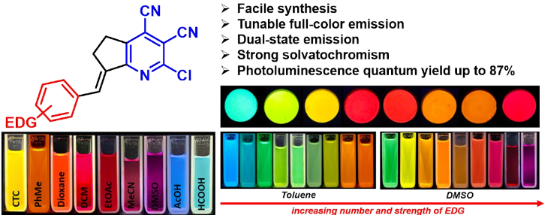
- 511 nm), in the region of solvents with medium polarity. Protonation of the dimethylamino group was additionally confirmed by titration of pyrindane 1i in toluene using trifluoroacetic acid (see Figure S2, Supporting Information File 1). According to the data obtained, an increasing amount of acid
- caused a blue shift of the maximum at 511 nm, and a new maximum in the region of 380–400 nm appeared in the absorption spectra. The intensity of the short-wavelength band also increased upon addition of trifluoroacetic acid. At the same time, a second band centered at 440 nm also appeared in the emission
- , compound 1i could form the salt 1iH+. Therefore, the effect of acid vapors on the solid-state emission was studied. It was found that pyrindane 1i was sensitive to formic and trifluoroacetic acid vapors. As a result of protonation, a significant blue shift of the emission maximum from 762 nm down to 493 nm





