Search results
Search for "13C" in Full Text gives 2038 result(s) in Beilstein Journal of Organic Chemistry. Showing first 200.
Get a better glimpse on sequential photoreactions of trisnorbornadienes with 19F NMR spectroscopy
Beilstein J. Org. Chem. 2026, 22, 527–534, doi:10.3762/bjoc.22.38
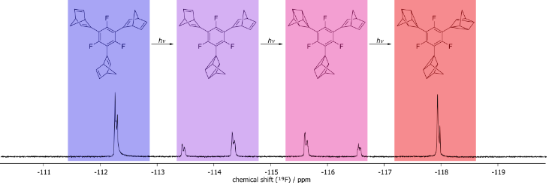
- trisnorbornadiene 1f was synthesized in 36% yield through a Suzuki–Miyaura coupling reaction of tribromotrifluorobenzene 3 with the 2-borononorbornadiene 1e (Scheme 2) [43]. The product 1f was identified and fully characterized by NMR spectroscopy (1H, 13C, 19F, COSY, HSQC, HMBC), mass spectrometry, melting point
- '-H, 5'''-H, 5'''-H), 6.94 (dd, 3J = 5.0 Hz, 3J = 2.4 Hz, 3H, 6'-H, 6''-H, 6'''-H), 7.00 (d, 3J = 2.4 Hz, 3H, 3'-H, 3''-H, 3'''-H); 13C NMR (125 MHz, CDCl3) δ 50.7 (C4', C4'', C4'''), 54.6 (C1', C1'', C1'''), 73.1 (C7', C7'', C7'''), 111.2 (C1, C3, C5), 143.1 (C5', C5'', C5'''), 143.4 (C6', C6'', C6


Synthesis and uranyl(VI) extraction performance of a calix[4]pyrrole–tetrahydroxamic acid receptor
Beilstein J. Org. Chem. 2026, 22, 486–494, doi:10.3762/bjoc.22.36
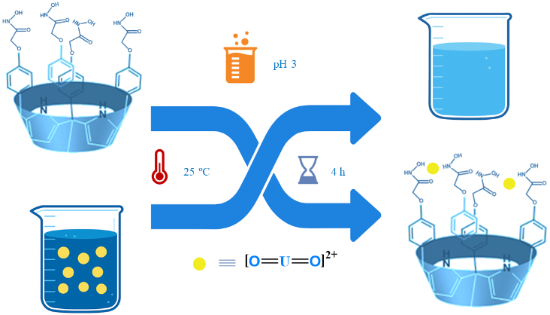
- % yield. Its structure was confirmed by 1H NMR, 13C NMR, and HRMS. The uranium(VI) extraction efficiency of PCP HA was evaluated by solid–liquid extraction experiments, using uranyl acetate as the uranium source, with measurements performed by gamma spectroscopy. PCP HA demonstrated good performance
- %). The structure of PCP HA was fully characterized by 1H NMR and 13C NMR (DMSO-d6) as well as by HRMS (ESI+) (Figures S3–S6, and S9 in Supporting Information File 1). In the 1H NMR spectrum, two sets of singlets at 4.41 and 4.76 ppm (CH2) were attributed to the –O=C–CH2–O– groups of the E/Z isomers of
- industrial effluent remediation or for the challenging task of uranium extraction from seawater [79]. Experimental Detailed synthetic procedures, compound characterization (1H and 13C NMR, HRMS), and uranyl extraction protocols, including pH and ligand-to-metal ratio studies, are described in Supporting


Structural reassignment of compound 968, an allosteric glutaminase inhibitor
Beilstein J. Org. Chem. 2026, 22, 455–460, doi:10.3762/bjoc.22.33
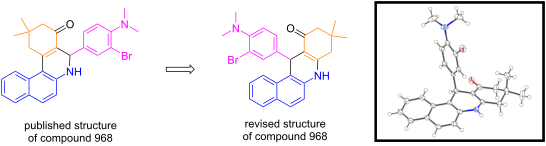
- , 1H), 7.71 (dd, J = 8.7, 2.3 Hz, 1H), 7.04 (d, J = 8.7 Hz, 1H), 2.93 (s, 6H); 13C NMR (100 MHz, CDCl3) δ 189.7, 156.9, 136.1, 131.1, 130.0, 119.5, 116.7, 43.6. 12-(3-Bromo-4-(dimethylamino)phenyl)-8,9,10,12-tetrahydro-9,9-dimethylbenzo[a]acridin-11(7H)-one (2); suggested revised structure for compound
- ), 2.51 (s, 6H), 2.39 (d, J = 16.5 H, 1Hz), 2.18 (d, J = 16.0 Hz, 1H), 2.02 (d, J = 16.0 Hz, 1H), 0.99 (s, 3H), 0.85 (s, 3H). One diastereotopic methylene hydrogen is obscured by the residual solvent peak at 2.47 ppm; 13C NMR (100 MHz, DMSO-d6) δ 193.72, 151.37, 149.50, 143.73, 134.80, 132.80, 131.69


Synthesis and stereochemical analysis of dynamic planar chiral oxa[7]orthocyclophene
Beilstein J. Org. Chem. 2026, 22, 436–442, doi:10.3762/bjoc.22.30

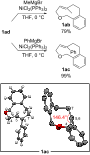
- procedures, characterization data, copies of 1H and 13C NMR spectra, and optimized geometries of DFT calculations. Supporting Information File 26: Crystallographic information file of compound 1ac. Acknowledgements We thank K. Imamura (Evaluation center of material properties, IMCE Kyushu University) for






Synthesis and anti-cancer activity of naphthalimide–organylselanyl conjugates
Beilstein J. Org. Chem. 2026, 22, 416–435, doi:10.3762/bjoc.22.29
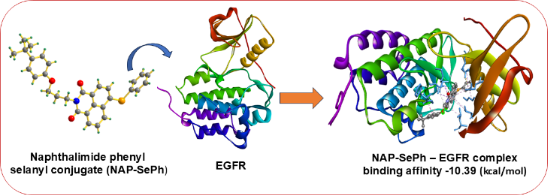
- 1.80 ppm and one triplet at 3.13 ppm were attributed to the remaining methylene protons located near the selenium atom [51]. In the 13C NMR spectra, distinct chemical shift differences were observed between compounds 7 and 8, due to the small structural differences between them. For compound 7, with
- reference to 13C NMR signals of the starting material 12, the 13C NMR spectrum of compound 7 exhibits four additional aromatic carbon resonances, which are consistent with the phenyl ring carbons of phenyl selanyl function tethered to the naphthalimide core. The signal at 142 ppm is assigned to the ipso
- equivalence of the ortho and meta carbon pairs, confirming the proposed structure. In contrast, with reference to the 13C NMR signals of starting material 12, compound 8 exhibited eight new 13C NMR peaks in the aliphatic region (14–32 ppm), which is attributed to the incorporation of an octyl selenide unit


Cone p-aminocalix[4]arenes enriched with ‘clickable’ alkyne or azide functionalities
Beilstein J. Org. Chem. 2026, 22, 399–415, doi:10.3762/bjoc.22.28
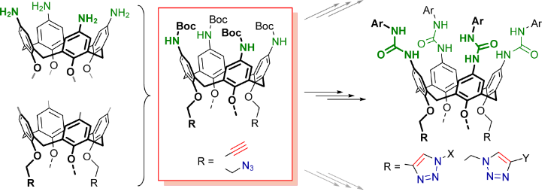
- calixarenes 12 and 13, 1H,13C HMBC spectra were acquired (Figure 2), which clearly showed that the nitro groups are attached to the propylated aromatic units of the macrocycle in both cases. Notably, the correlations showed that the signals from the nitrated calixarene aromatic units appeared upfield-shifted
- corresponding tetraureacalix[4]arenes 47–51 (Scheme 9), the structures of which were unambiguously confirmed by their 1H NMR and 13C NMR spectra obtained from solutions in polar DMSO-d6. Being calix[4]arene tetraureas, compounds 47–51 should form homodimeric capsules in H-bond non-competing solvents (e.g
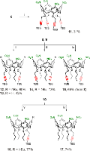
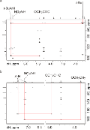
- ]arenes by joining propargyl/2-azidoethyl and p-amino groups on a common platform. Parts of 1H,13C HMBC spectra of calixarenes 12 (a) and 13 (b) recorded in CDCl3 solutions at 600 MHz. Red lines show the key correlations between signals from the calixarene narrow-rim substituents and aromatic units




Design, synthesis and biological evaluation of 2,5-diaryloxazolo[4,5-d]pyrimidin-7-ylamines as selective cytotoxic agents against HeLa cells
Beilstein J. Org. Chem. 2026, 22, 390–398, doi:10.3762/bjoc.22.27

- Analytique, Université d’Orléans, Pôle de chimierue de Chartres, BP 6759, 45067 Orléans Cedex 2, France 10.3762/bjoc.22.27 Abstract Nine novel functionalized 2,5-diaryloxazolo[4,5-d]pyrimidin-7-ylamines were designed, synthesized and characterized using 1H, 13C NMR, IR spectroscopy, elemental analysis, and
- cyclocondensation products – [1,3]oxazolo[4,5-d]pyrimidines. Subsequent reaction with phosphoryl chloride in the presence of N,N-dimethylaniline converted these intermediates into 2,5-diaryl-7-chloro[1,3]oxazolo[4,5-d]pyrimidines II. The structures of compounds 1–9 were proven and confirmed by 1H and 13C NMR, IR
- were followed by TLC (Silica gel, aluminum sheets 60 F254, Merck). Melting points were recorded on a Fisher-Johns apparatus. 1H and 13C NMR spectra were recorded on a Varian Mercury spectrometer (400 and 101 MHz, respectively) or Bruker Avance DRX 500 spectrometer (500 MHz and 126 MHz, respectively) in


Spirobarbiturates with a pyrrolizidine moiety: synthesis, structure and biological evaluation
Beilstein J. Org. Chem. 2026, 22, 274–288, doi:10.3762/bjoc.22.20
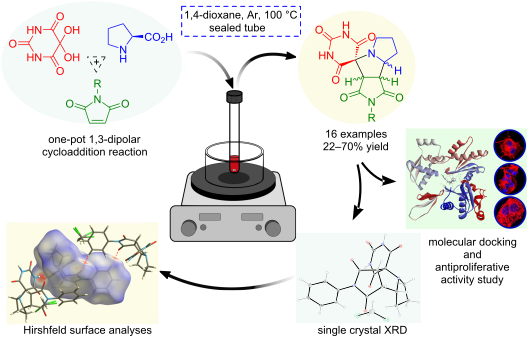
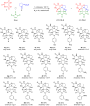
- were established using 1H,13C HSQC NMR spectroscopy. The chemical shift values, signal shapes, and spin–spin coupling constants are provided in Table S1 in Supporting Information File 1. The aromatic protons of compounds 4c–e appear in the downfield region of the spectrum. For product 4c, the aromatic
- the diastereotopic H6/H6’ methine protons of different atropisomeric forms. The NH protons of the barbiturate ring resonate as broad singlets at δ 11.5–11.7 ppm, while compound 4a shows an additional broad singlet at δ 11.30 ppm corresponding to the succinimide NH group. In the 13C NMR spectra of endo
- –169.4, 171.2–171.5, 175.5–176.8, and 176.4–177.9 ppm. The spiro carbon appears at δC 70.1–70.3 ppm. For diastereomers 4f–p, the 13C NMR spectra proved more informative than the 1H NMR spectra, clearly displaying a duplicate set of nearly all signals. The chemical shifts of carbons in rings A, B, and C




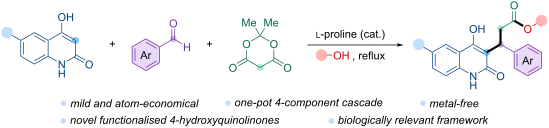
A mild and atom-efficient four-component cascade strategy for the construction of biologically relevant 4-hydroxyquinolin-2(1H)-one derivatives
Beilstein J. Org. Chem. 2026, 22, 244–256, doi:10.3762/bjoc.22.18
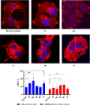
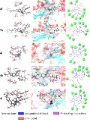
- well-known topoisomerase II inhibitor doxorubicin (see Supporting Information File 1, page S52), whose toxicity correlates with the cell proliferation rate. Compounds 13b and 13c exhibited non-specific toxicity across all tested cell lines. Antibacterial activities of compounds 9–14 were evaluated in


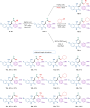
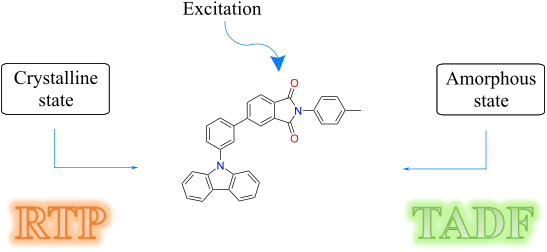
Configuration–packing synergy enabling integrated crystalline-state RTP and amorphous-state TADF
Beilstein J. Org. Chem. 2026, 22, 224–236, doi:10.3762/bjoc.22.16
- without further purification. Instruments and measurements Low-resolution mass spectra were recorded on a DSQ electron-impact (EI) mass spectrometer. High-resolution mass spectra (HRMS) were acquired on a Thermo MAT95XP instrument using fast atom bombardment (FAB) ionization. 1H and 13C NMR spectra were
- ), 7.30 (d, 2H), 2.37 (s, 3H); 13C NMR (126 MHz, DMSO-d6) δ 167.23, 145.94, 140.78, 140.61, 138.29, 133.75, 133.11, 132.41, 131.58, 131.15, 129.34, 128.56, 127.85, 127.57, 127.08, 126.82, 126.05, 124.56, 123.30, 122.35, 121.02, 120.64, 110.24; EIMS (m/z): [M]+ calcd for C33H22N2O2, 478.1681; found


Synthesis of diaryl phosphates using phytic acid as a phosphorus source
Beilstein J. Org. Chem. 2026, 22, 213–223, doi:10.3762/bjoc.22.15
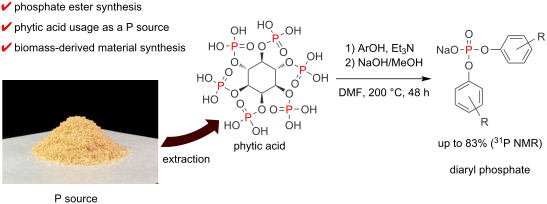
- acid molecule (Figure 6 and Figure S3 in Supporting Information File 1) [57][58][59]. The full 1H, 13C, and 31P NMR spectra are provided in Supporting Information File 1. Next, the extracted phytic acid was used for phosphate synthesis. Although the reaction was conducted under the same conditions as
- File 1. The isolated compounds were characterized via NMR (1H, 13C, 19F, and 31P) and low-resolution mass spectrometry measurements. The NMR measurements were conducted using a Varian NMR 400 MHz system (400 MHz) and a Bruker AVANCE NEO console (400 MHz). Mass spectrometry was performed using LCMS-2020




Streptoquinolines A and B, new antibacterial meroterpenoids produced by Streptomyces sp. TMPU-A0679
Beilstein J. Org. Chem. 2026, 22, 185–191, doi:10.3762/bjoc.22.12
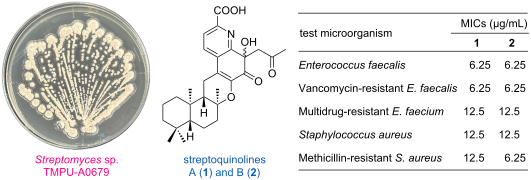
- and 1620–1680 cm−1 indicated the presence of hydroxy and carbonyl groups, respectively. Streptoquinoline A (1): The molecular formula of 1 was elucidated as C28H35NO6 based on HRESIMS measurements. The 13C NMR spectrum (in DMSO-d6) showed 28 signals, which were classified into five methyl carbons
- III (H-9 (δ 1.58)/H2-11 (δ 2.55, 2.48)). 1H,13C HMBC correlations were then observed from the methyl protons H3-12 (δ 0.89) and H3-13 (δ 0.83) to the sp3 methylene carbon C-3 (δ 41.3), the sp3 quaternary carbon C-4 (δ 32.8), and the sp3 methine carbon C-5 (δ 55.2). Correlations were observed from the
- . Streptoquinoline B (2): The molecular formula of compound 2 was elucidated as C28H35NO6 based on HRESIMS measurements. The 13C NMR and 1H NMR spectra (in DMSO-d6) of compound 2 showed chemical shift values that were almost identical to those of compound 1 (Table 2). Furthermore, 2D NMR experiments revealed similar


Improved synthesis and physicochemical characterization of the selective serotonin 2A receptor agonist 25CN-NBOH
Beilstein J. Org. Chem. 2026, 22, 175–184, doi:10.3762/bjoc.22.11
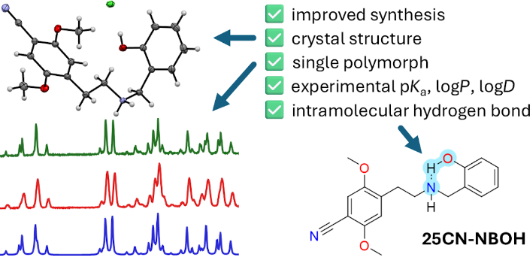
- isotope effect observable as changes in the 13C NMR chemical shift [18][19]. DFT calculations were based on a truncated model (Figure 6a) containing the essential elements for intramolecular hydrogen bonding. The structure was considered both in vacuum as well as with DMSO or water as implicit solvents
- , in the latter two cases with water molecules hydrogen-bonded to the OH and NH groups. The calculated 13C chemical shift was compared to the experimentally observed values in Supporting Information File 1. A slightly better correlation between the calculated and experimentally observed chemical shift
- was obtained for the structure with two water molecules hydrogen-bonded to the OH and NH groups. The predicted isotope effect was calculated as the difference between the computationally predicted 13C chemical shift for the regular model and for models where each O–H and N–H bond was shortened by 0.01


Design and synthesis of an axially chiral platinum(II) complex and its CPL properties in PMMA matrix
Beilstein J. Org. Chem. 2026, 22, 143–150, doi:10.3762/bjoc.22.7
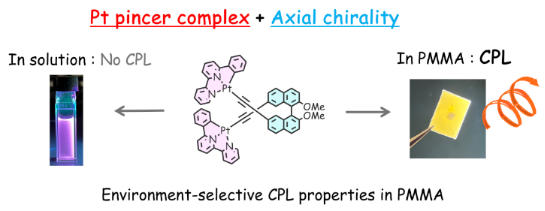
- platinum(II) complexes with pincer ligand moieties [12]. Thus, the reaction of S/R-3 with platinum(II) precursor 4 in the presence of CuI and diisopropylamine afforded the target platinum(II) complex S/R-Pt in moderate yield. The identification of the complex S/R-Pt were carried out with 1H and 13C NMR
- optoelectronic applications. Experimental General information All reagents and solvents were of commercial reagent grade and used without further purification. Dichloromethane for spectroscopy was purchased from FUJIFILM Wako Pure Chemical Corporation. All compounds were identified by 1H , 13C NMR and ESI-MS. 1H
- and 13C NMR spectra were recorded on a Bruker Avance III 400 or JEOL JNM-ECZ600R spectrometer at 25 °C in chloroform-d1 or DMSO-d6. 1H NMR chemical shifts are expressed in parts per million (δ) relative to trimethylsilane (TMS) as a reference. Mass spectra were obtained with a Thermo Scientific


Symmetrical D–π–A–π–D indanone dyes: a new design for nonlinear optics and cyanide detection
Beilstein J. Org. Chem. 2026, 22, 131–142, doi:10.3762/bjoc.22.6
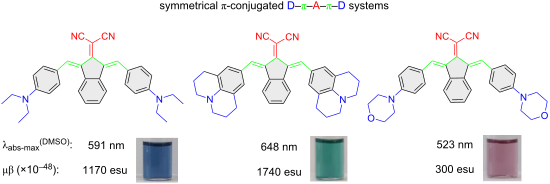
- , 13C NMR, and mass spectrometry methods. Dye structures were designed with alkylaminophenyl groups, known for their various electron-donating properties, as donors, and the dicyanovinyl group, with its strong electron-withdrawing properties, as acceptors, conjugated with an indan-2-one core (Figure 1
- method (CM)) (Scheme 1, Table 1). All syntheses were also carried out with microwave irradiation (MWI), which had a short reaction time; however, no improvement in yield was achieved (see Supporting Information File 1). The structural analyses of the compounds were performed using 1H/13C NMR and mass


Highly electrophilic, gem- and spiro-activated trichloromethylnitrocyclopropanes: synthesis and structure
Beilstein J. Org. Chem. 2026, 22, 123–130, doi:10.3762/bjoc.22.5
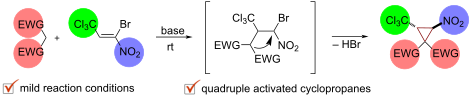
- conditions. The reaction is carried out either in tetrahydrofuran in the presence of triethylamine or in methanol in the presence of fused potassium acetate. The structures of the isolated individual products were characterized by 1H and 13C NMR, IR spectroscopy, mass spectrometry, and confirmed by single
- Diffraction Research Methods of the A. E. Arbuzov Institute of Organic and Physical Chemistry, the Kazan Scientific Center of the Russian Academy of Sciences. The 1H-13C{1H}, 1H-1H dqfCOSY, 1H-1H NOESY, 1H-13C HMQC, 1H-13C HMBC NMR spectra were recorded on a Jeol ECX400A spectrometer operating at 399.78 MHz
- (1H), 100.53 MHz (13C) in CDCl3 using residual signals of the nondeuterated solvent (δH 7.26, δC 77.16) as the references. The vibrational spectra were measured on a Shimadzu IR-Prestige-21 Fourier-transform IR spectrometer in KBr pellets over 400–4000 cm−1 range (resolution was 2 cm−1). Mass spectra


Reactivity umpolung of the cycloheptatriene core in hexa(methoxycarbonyl)cycloheptatriene
Beilstein J. Org. Chem. 2026, 22, 64–70, doi:10.3762/bjoc.22.2
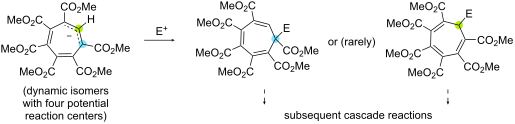
- partial positive charge on the i-positioned carbon atom [36], confirmed by an unusually downfield shifted signal of the CH fragment in the 13C NMR spectrum (δ 160.4 ppm in CD3CN) [21]. Moreover, anion 2 underwent a nucleophilic attack onto the i-position by amines to form fluorescent 5


Sustainable electrochemical synthesis of aliphatic nitro-NNO-azoxy compounds employing ammonium dinitramide and their in vitro evaluation as potential nitric oxide donors and fungicides
Beilstein J. Org. Chem. 2025, 21, 2739–2754, doi:10.3762/bjoc.21.211
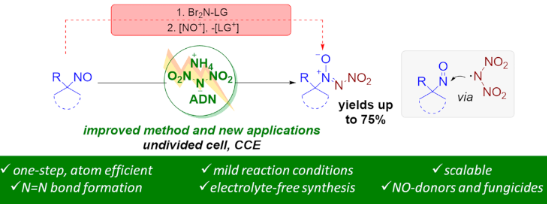
- hygroscopic nature. Any manipulations must be carried out by using appropriate standard safety precautions. 1H, 13C, 14N NMR spectra were recorded with Bruker DRX-500 (500.1, 125.8, 36.1 MHz, respectively) and Bruker AV600 (600.1, 150.9, 43.4 MHz, respectively) spectrometers. Chemical shifts are reported in
- delta (δ) units, parts per million (ppm) downfield from internal TMS (1H, 13C) or external CH3NO2 (14N negative values of δN correspond to upfield shifts). The IR spectra were recorded with a Bruker ALPHA-T spectrometer in the range of 400–4000 cm−1 (resolution 2 cm−1) as pellets with KBr or as a thin
- all compounds, XRD of 2c, computational details, and copies of 1H, 13C, 14N, 1H,13C HSQC, and 1H,13C HMBC NMR spectra. Supporting Information File 5: Crystallographic information for compound 2c. Supporting Information File 6: CheckCIF report for the data of 2c. Acknowledgements Crystal structure





Competitive cyclization of ethyl trifluoroacetoacetate and methyl ketones with 1,3-diamino-2-propanol into hydrogenated oxazolo- and pyrimido-condensed pyridones
Beilstein J. Org. Chem. 2025, 21, 2716–2729, doi:10.3762/bjoc.21.209
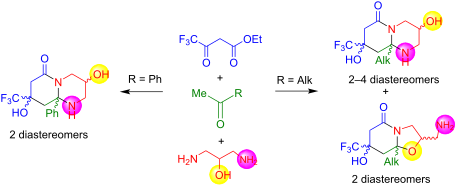
- , causes the formation of two to four diastereomers, the structure of which has been determined with 1H, 19F, 13C, 2D 1H-13C HSQC/HMBC, 1H-1H COSY/NOESY NMR and X-ray diffraction analysis. Keywords: condensed pyridones; 1,3-diamino-2-propanol; ethyl 4,4,4-trifluoroacetoacetate; methyl ketones; three
- octahydropyrido[1,2-a]pyrimidinones 4a–d and hexahydrooxazolo[3,2-a]pyridones 5a–c was determined by IR, 1H, 19F, 13C NMR spectroscopy, two-dimensional NMR experiments, and X-ray diffraction analysis (XRD). The IR spectra of octahydropyrido[1,2-a]pyrimidinones 4a–d are characterized by reduced vibrational
- crystal 4a–d and 5a–c are in excellent agreement with the results of 1D and 2D NMR studies, enabling us to extend these structural assignments to other synthesized bicycles. The complete assignment of signals in 1H and 13C NMR spectra was performed using two-dimensional 1H-1H COSY, NOESY and 1H-13C HSQC


Tandem hydrothiocyanation/cyclization of CF3-iminopropargyl alcohols with NaSCN in the presence of AcOH
Beilstein J. Org. Chem. 2025, 21, 2694–2702, doi:10.3762/bjoc.21.207
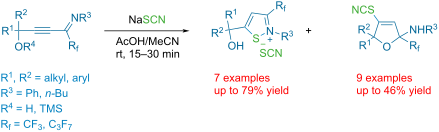
- available starting materials were used without further purification. CF3/n-C3F7-substituted iminopropargyl alcohols 1 were prepared according to published methods [31][32]. The structures of synthesized products have been proven by 1H, 13C and 2D (1Н,13С HMBC) NMR, 19F NMR techniques, as well as IR spectra



Synthesis of new tetra- and pentacyclic, methylenedioxy- and ethylenedioxy-substituted derivatives of the dibenzo[c,f][1,2]thiazepine ring system
Beilstein J. Org. Chem. 2025, 21, 2645–2656, doi:10.3762/bjoc.21.205
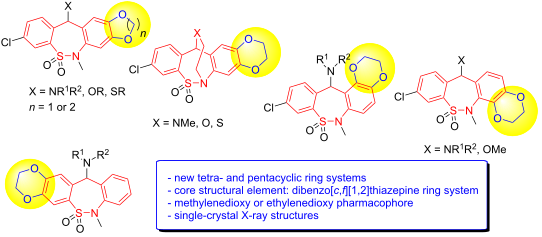
- standard open 40 μL aluminum pan under 50 mL/min nitrogen atmosphere. IR spectra were obtained on a Bruker ALPHA FT-IR spectrometer in KBr pellets or in neat. NMR spectra were recorded at 295 K on a Bruker Avance III HD 600 (600 and 150 MHz for 1H and 13C NMR spectra, respectively) spectrometer equipped
- with a Prodigy cryo-probehead or a Varian Unity Inova 500 (500 and 125 MHz for 1H and 13C NMR spectra, respectively), or a Varian Unity Inova 400 (400 and 100 MHz for 1H and 13C NMR spectra, respectively), or a Varian Gemini 200 (200 and 50 MHz for 1H and 13C NMR spectra, respectively) spectrometer
- . The pulse programs were taken from the Bruker software library (TopSpin 3.5) and full 1H and 13C assignments were achieved with widely accepted strategies. 1H assignments were accomplished using general knowledge of chemical shift dispersion with the aid of the 1H–1H coupling pattern. CDCl3 or DMSO-d6


Thiazolidinones: novel insights from microwave synthesis, computational studies, and potentially bioactive hybrids
Beilstein J. Org. Chem. 2025, 21, 2618–2636, doi:10.3762/bjoc.21.203
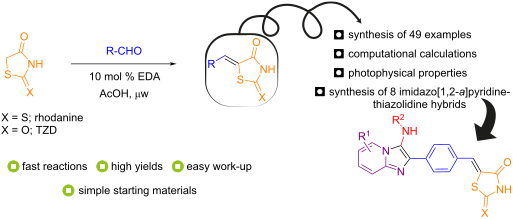
- compounds 3n and 4n was carried out using torsion angle analysis and 13C NMR chemical shift calculations to evaluate the absence of expected signals in the NMR spectra of these compounds. Their photophysical properties were also assessed, confirming a preference for a fluorescence mechanism via an ICT
- efficient synthesis of eight novel imidazo[1,2-a]pyridine–thiazolidinone hybrids in high yields (up to 99%). A spectroscopic analysis of selected compounds was carried out, including torsion angle evaluation and 13C NMR chemical shift calculations, justifying the absence of expected signals in some cases
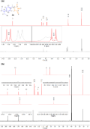
- scans) and 151 MHz for 13C NMR (20,480 scans), using an overnight experiment in DMSO-d6 at a concentration of 0.1 M. Specifically, the spectra showed either an absence of expected signals or a lack of signal multiplicity, which was apparent in both the 1H NMR and, more prominently, in the 13C NMR






Ni-promoted reductive cyclization cascade enables a total synthesis of (+)-aglacin B
Beilstein J. Org. Chem. 2025, 21, 2548–2552, doi:10.3762/bjoc.21.197
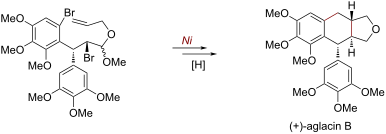
- structures of aglacins A, B, C, and E. Retrosynthetic analysis of (+)-aglacin B (2). Synthesis of cyclization precursor 5. Synthesis of (+)-aglacin B (2). Supporting Information Supporting Information File 16: Experimental procedures, characterization data, and copies of 1H/13C NMR spectra


Synthesis and characterization of a isothiouronium-calix[4]arene derivative: self-assembly and anticancer activity
Beilstein J. Org. Chem. 2025, 21, 2535–2541, doi:10.3762/bjoc.21.195
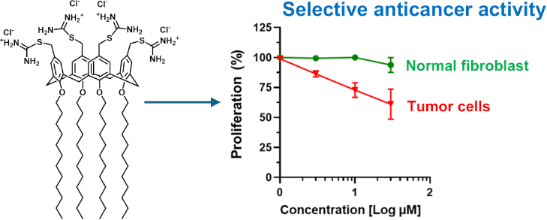
- groups by sodium borohydride and then converted to chloromethyl groups by treatment with thionyl chloride, to give compound 2. The reaction of compound 2 with thiourea in THF gave compound 3 as a white solid in 96% yield. Compound 3 was characterized by 1H and 13C NMR in DMSO-d6 as a solvent (Figure 1
- = 14.3 Hz, 4H, 2 × 4 ArCH2Ar), 6.66 (s, 8H, 8 × ArH); 13C NMR (100.6 MHz, DMSO-d6, 297 K) δ 13.9 (q, dodecyl CH3), 22.2, 26.2, 29.0, 29.5, 29.8, 30.1 (t, dodecyl CH2), 31.5 (t, ArCH2Ar), 34.7 (t, CH2S), 75.0 (t, OCH2), 127.8 (d, ArH), 128.8 (s, ArC-CH2S), 135.0 (s, ArC-CH2S), 156.0 (s, ArCO), 169.4 (s, C
- 10.4.1 (GraphPad Software, Inc., San Diego, CA). Selectivity index determination: The selectivity index of compound 3 was calculated as the ratio of the IC50 in the cancer cell line to the IC50 in the non-malignant cell line, according to the following formula 1H NMR (left) and 13C NMR (right) spectra


Effect of a photoswitchable rotaxane on membrane permeabilization across lipid compositions
Beilstein J. Org. Chem. 2025, 21, 2498–2512, doi:10.3762/bjoc.21.192
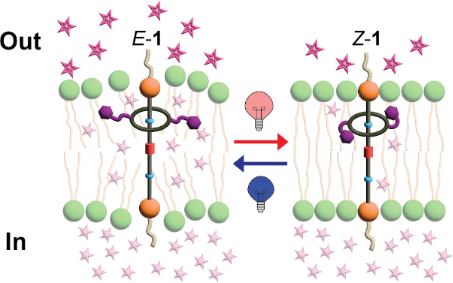
- the compounds, while chloroform was used for cholesterol and lipid stock solutions. 1H NMR spectra were recorded using Bruker AV III 400 and Bruker AV III 500 spectrometers. 13C NMR was conducted on a Bruker AV III 500 spectrometer. All chemical shifts (δ) are reported in ppm, referencing residual non