Search results
Search for "monitoring" in Full Text gives 396 result(s) in Beilstein Journal of Organic Chemistry. Showing first 200.
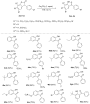
Organocatalytic kinetic resolution of 1,5-dicarbonyl compounds through a retro-Michael reaction
Beilstein J. Org. Chem. 2025, 21, 473–482, doi:10.3762/bjoc.21.34
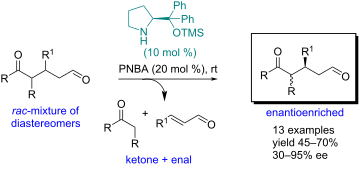
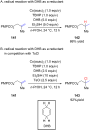
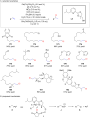
- . Solvent screening for the kinetic resolution of rac-1. Screening of catalyst and co-catalyst for kinetic resolution. Monitoring the kinetic resolution of 1 over time. Study of the concentration's effect on kinetic resolution. Substrate the scope of kinetic resolution reactions. Study of the kinetic


Photomechanochemistry: harnessing mechanical forces to enhance photochemical reactions
Beilstein J. Org. Chem. 2025, 21, 458–472, doi:10.3762/bjoc.21.33

- technique for high-throughput experimentation [83]. A further area of development would be the possibility of integrating options for the in-situ monitoring of reactions, such as X-ray and Raman techniques [47][48][84][85][86][87]. In conclusion, in recognizing that both photochemistry and mechanochemistry




The effect of neighbouring group participation and possible long range remote group participation in O-glycosylation
Beilstein J. Org. Chem. 2025, 21, 369–406, doi:10.3762/bjoc.21.27
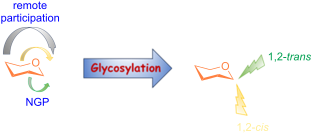
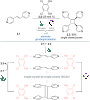
- significantly spurred the scientific curiosity of researchers over the past few decades [1]. Intensive studies revealed that this subtle code of cell surface glycans is extensively responsible for monitoring a plethora of diverse biological phenomena like post-translational modification of proteins [2][3




Quantifying the ability of the CF2H group as a hydrogen bond donor
Beilstein J. Org. Chem. 2025, 21, 189–199, doi:10.3762/bjoc.21.11
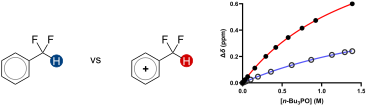
- assigning specific contributions of each to the observed binding affinities. Even so, 1H NMR titration experiments with phosphine oxides still allow us to partially resolve these two forces by monitoring the proton of the CF2H group. Such issues are particularly salient when quantification methods that rely



Emerging trends in the optimization of organic synthesis through high-throughput tools and machine learning
Beilstein J. Org. Chem. 2025, 21, 10–38, doi:10.3762/bjoc.21.3
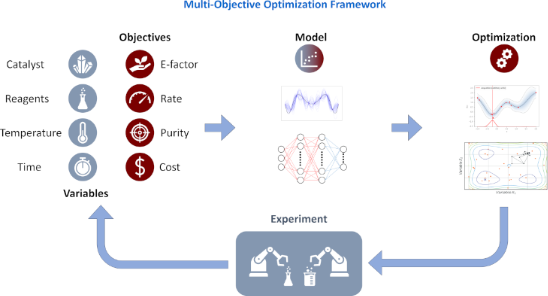
- , stirring, heating, and cooling modules for enhanced versatility. In addition, the platform is capable of performing under inert and low-pressure atmospheres, handling separation steps, and pressure sensing for reaction monitoring. Its efficacy and robustness were confirmed through the successful synthesis
- medium for enhancing the optimization of the Buchwald–Hartwig amination intermediate, which is crucial for synthesizing the drug olanzapine [47]. The reactor setup was integrated with spectroscopic and chromatographic in-line analytical tools, enabling real-time monitoring of products and reaction
- , each comprising 650 µL within a slug flow reactor [48]. This innovative system features precise monitoring of the reaction slug through a dedicated array of phase sensors and an algorithm designed for detecting its passage. As a result, the workflow delivers a notable boost in productivity, surpassing


Synthesis, characterization, and photophysical properties of novel 9‑phenyl-9-phosphafluorene oxide derivatives
Beilstein J. Org. Chem. 2024, 20, 3299–3305, doi:10.3762/bjoc.20.274
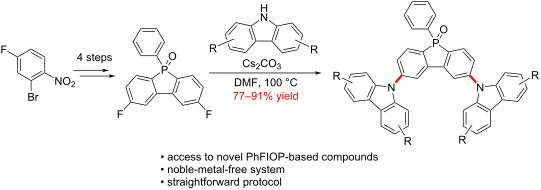
- was funded by the Youth Innovation Talents Project of Guangdong Universities (natural science) in China (No. 2022KQNCX052), Research and Innovation Team for Wastewater Treatment and Monitoring of Guangdong University of Education (No. 2024KYCXTD016), the quality and reform project of Guangdong




Extension of the π-system of monoaryl-substituted norbornadienes with acetylene bridges: influence on the photochemical conversion and storage of light energy
Beilstein J. Org. Chem. 2024, 20, 3061–3068, doi:10.3762/bjoc.20.254
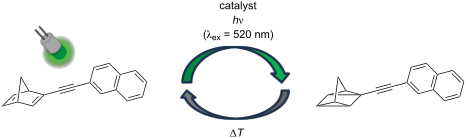
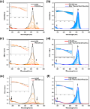
- bis- and tris-norbornadienyl-substituted benzene derivatives. Photometric monitoring of the irradiation of 1h (A), 1i (B), 1j (C), 1k (D), 1l (E), and 1n (F); λex = 315 nm (1h, 1i, 1k, and 1l) or 340 nm (1j, 1n). Insets: plot of absorption at long-wavelength maximum versus irradiation time t
- . Photometric monitoring of the irradiation of 1i (A) and 1l (B) in the presence of [Ru(phen)3](PF6)2; λex = 520 nm. For clarity, the absorption of the sensitizer has been deducted. Insets: plot of absorption at long-wavelength maximum versus irradiation time t [38]. Photoinduced [2 + 2]-cycloaddition


Investigation of a bimetallic terbium(III)/copper(II) chemosensor for the detection of aqueous hydrogen sulfide
Beilstein J. Org. Chem. 2024, 20, 2818–2826, doi:10.3762/bjoc.20.237
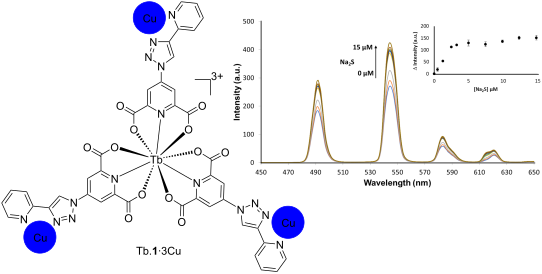
- − in the aqueous state at a pH of 7.4 due to its weak acidic nature and high solubility in water (80 mM at 37 °C) [6]. Elevated levels of H2S in groundwater pose high risks to both human health and aquatic ecosystems [7], compelling rigorous monitoring of water sources. Even though sensors for


Photoluminescence color-tuning with polymer-dispersed fluorescent films containing two fluorinated diphenylacetylene-type fluorophores
Beilstein J. Org. Chem. 2024, 20, 2682–2690, doi:10.3762/bjoc.20.225
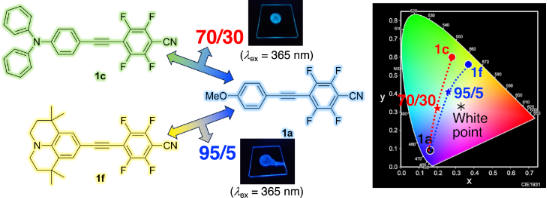
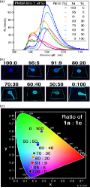
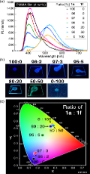
- clearly indicates that the PL originates from a single fluorophore. Using a 1 wt % PMMA film blended with 1a and 1c in an 80:20 ratio (Figure S2g in Supporting Information File 1), the excitation spectrum obtained by monitoring the long PL wavelength derived from 1c was also in good agreement with the
- EFRET values were 55% and 46%. Both mixtures showed a relatively fast energy transfer, which likely caused the PL of 1f to be the major component. Furthermore, the excitation spectrum obtained by monitoring the long PL wavelength originating from 1f using a 1 wt % PMMA film blended with 1a and 1f in an


Transition-metal-free decarbonylation–oxidation of 3-arylbenzofuran-2(3H)-ones: access to 2-hydroxybenzophenones
Beilstein J. Org. Chem. 2024, 20, 2655–2667, doi:10.3762/bjoc.20.223
- restricted to the recommended one. The reactions should be monitored continuously, and to be quenched as and when recommended in this section. Prolonged heating without monitoring is not recommended. A picture of the experimental set-up is included in Supporting Information File 1 (Figure S31). Single




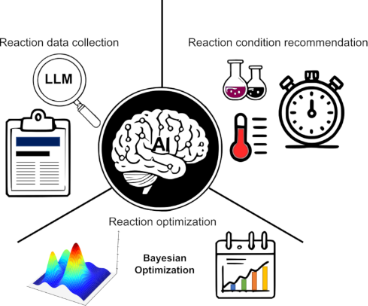
Machine learning-guided strategies for reaction conditions design and optimization
Beilstein J. Org. Chem. 2024, 20, 2476–2492, doi:10.3762/bjoc.20.212
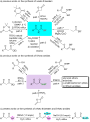
- algorithm for the shell growth of core-shell semiconductor nanoparticles. This involves various unit operations such as phase separation, washing, and continuous in-situ spectral monitoring. Although the process conditions for this reaction system do not have as extensive a literature base for training data


Selective hydrolysis of α-oxo ketene N,S-acetals in water: switchable aqueous synthesis of β-keto thioesters and β-keto amides
Beilstein J. Org. Chem. 2024, 20, 2225–2233, doi:10.3762/bjoc.20.190
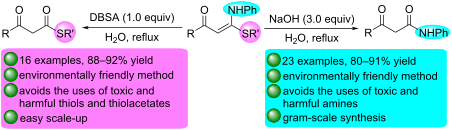
- thioesters 2 (2a as an example) A mixture of (E)-3-(ethylthio)-1-phenyl-3-(phenylamino)prop-2-en-1-one (1a, 70.8 mg, 0.25 mmol) and DBSA (87.9 mg, 0.25 mmol) in water (2 mL) was stirred at reflux in an oil bath under air for 5 h until 1a was completely consumed, as confirmed by TLC monitoring. Then, the pH
- water (2 mL) was stirred at reflux in an oil bath under air for 24 h until 1a was completely consumed, as confirmed by TLC monitoring. Then, the pH value of the reaction mixture was adjusted to neutral using a 10% CH3COOH solution, and the reaction mixture was extracted with CH2Cl2 (3 × 20 mL). The



Novel truxene-based dipyrromethanes (DPMs): synthesis, spectroscopic characterization and photophysical properties
Beilstein J. Org. Chem. 2024, 20, 2163–2170, doi:10.3762/bjoc.20.186
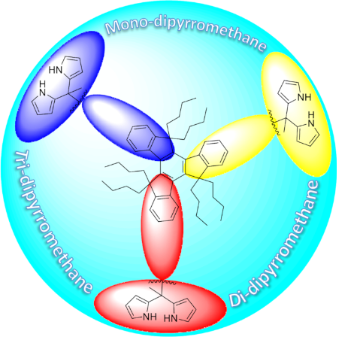
- atmosphere. The flask was cooled to 0 ºC, and stirred vigorously after that n-BuBr (11.30 mL, 105.12 mmol) was slowly added to the RB-flask, and the mixture was stirred for 24 h at room temperature (rt), until the reaction completed (TLC monitoring). Then the reaction mixture was quenched with water, and the
- different equivalents (2 equiv for 12, 6 equiv for 15 and 9 equiv for 17) at 0 °C under N2 atmosphere. The red reaction mixture was stirred for 30 min at 0 °C, and further stirred at room temperature for 1 to 6 hours. After the reaction completion (TLC monitoring), the mixture was poured gradually into
- , 18) for 8 h. After the reaction completion (TLC monitoring), excess of triethylamine (TEA) was added to quench the reaction mixture. After the removal of the unreacted pyrrole in vacuo (the temperature of the water bath and the pressure were set to 80 °C and 80 mbar, respectively), the dark brown


Computational toolbox for the analysis of protein–glycan interactions
Beilstein J. Org. Chem. 2024, 20, 2084–2107, doi:10.3762/bjoc.20.180
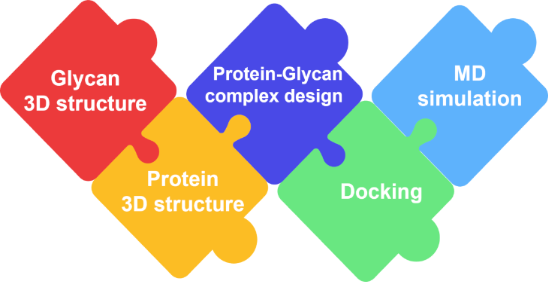
- ) sample the glycan conformational space; ii) investigate how the glycan behaves in a solution (if the MD is performed in explicit solvent), describing carbohydrate–water interactions; iii) monitoring the intramolecular interactions. Usually, this information has to be further validated by performing


Supramolecular assemblies of amphiphilic donor–acceptor Stenhouse adducts as macroscopic soft scaffolds
Beilstein J. Org. Chem. 2024, 20, 1590–1603, doi:10.3762/bjoc.20.142
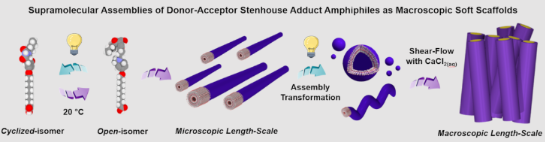
- Information Supporting Information File 5: Experimental details, supporting figures, and copies of spectra. Supporting Information File 6: Monitoring of DA11 under visible-light irradiation. Supporting Information File 7: Monitoring of DA7 under visible-light irradiation. Supporting Information File 8
- : Monitoring of DA6 under visible-light irradiation. Acknowledgements We acknowledge the technical support from UCEA and ULS of PolyU. All authors sincerely appreciate Prof. Dr. Takanori Fukushima (Laboratory for Chemistry and Life Science, Institute of Innovative Research, Tokyo Institute of Technology) for




Photoswitchable glycoligands targeting Pseudomonas aeruginosa LecA
Beilstein J. Org. Chem. 2024, 20, 1486–1496, doi:10.3762/bjoc.20.132
- (1.0 equiv) in anhydrous DMF (≈3.5 mL per mmol) was added K2CO3 (2.0–4 equiv) and BocNHCH2CH2Br (1.5–4 equiv), then stirred overnight at 60 °C. After the reaction was completed (TLC monitoring), the mixture was evaporated to dryness under reduced pressure. The residue was dissolved in EtOAc
- compound in anhydrous MeOH (≈10 mL per mmol) was added dropwise AcCl (1.0–3.0 equiv) at 0 °C, slowly warmed to rt, and stirred overnight. After the reaction was completed (TLC monitoring), the mixture was evaporated to dryness under reduced pressure. The residue was dissolved in MeOH, acetone was added


Challenge N- versus O-six-membered annulation: FeCl3-catalyzed synthesis of heterocyclic N,O-aminals
Beilstein J. Org. Chem. 2024, 20, 1412–1420, doi:10.3762/bjoc.20.123
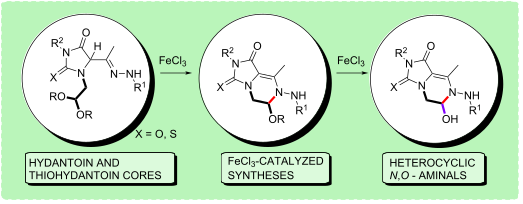
- dissolved in DCM (10 mL), FeCl3 (30 mol %) added and magnetically stirred at room temperature. Within 2–30 h, the reactions went to completion (TLC monitoring), affording, at last, N,O-aminals 5a–r (42–82%) and the corresponding hemiaminals 6a–p (4–35%) after column chromatography (Scheme 3). An increased




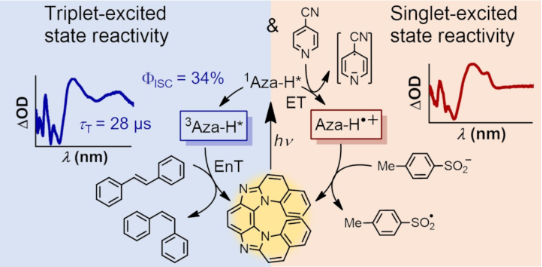
Mechanistic investigations of polyaza[7]helicene in photoredox and energy transfer catalysis
Beilstein J. Org. Chem. 2024, 20, 1236–1245, doi:10.3762/bjoc.20.106
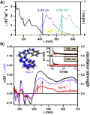
- determine the ISC quantum yield, ΦISC, using the well-studied photosensitizer [Ru(bpy)3]Cl2 (Rubpy) as reference for actinometry [78][79][80]. This approach involved employing identical excitation conditions at 355 nm (Figure 4A) and monitoring the GSB of Rubpy with a literature-reported difference




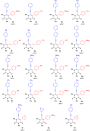
Synthesis of 1,4-azaphosphinine nucleosides and evaluation as inhibitors of human cytidine deaminase and APOBEC3A
Beilstein J. Org. Chem. 2024, 20, 1088–1098, doi:10.3762/bjoc.20.96
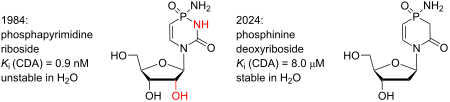
- resulting DNA hairpin. The β-anomer of Va was introduced instead of the target dC in the DNA hairpin with TTC loop and tested in the 1H NMR-based assay monitoring A3A-catalysed deamination of dC hairpin (T(GC)2TTC(GC)2T, wherein C is deaminated) at a 150 mM salt concentration at pH 7.4. Recently, FdZ (IId


Monitoring carbohydrate 3D structure quality with the Privateer database
Beilstein J. Org. Chem. 2024, 20, 931–939, doi:10.3762/bjoc.20.83



Synthesis and properties of 6-alkynyl-5-aryluracils
Beilstein J. Org. Chem. 2024, 20, 898–911, doi:10.3762/bjoc.20.80
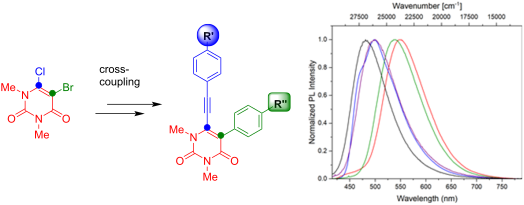
- be beneficial to the yield. Finally, by monitoring the reaction time, it was discovered that reducing the reaction time to 1 h further improved the yield to 62%. Finally, using the optimized conditions (Table 1, entry13), the scope was carried out and afforded the desired products 5a–t (Scheme 5





Activity assays of NnlA homologs suggest the natural product N-nitroglycine is degraded by diverse bacteria
Beilstein J. Org. Chem. 2024, 20, 830–840, doi:10.3762/bjoc.20.75
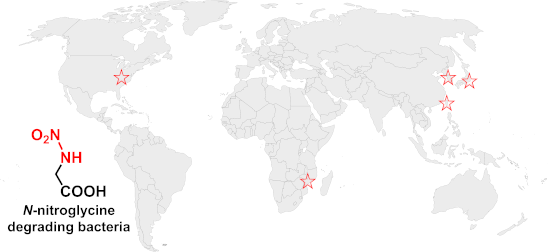
- ]. The discovery of the nnlA gene resulted from screening a JS1663 genomic library by monitoring for E. coli transformants that produced nitrite (NO2−) in the presence of NNG. Analysis of the mass balance via in vitro experiments showed that NnlA degraded NNG into NO2−, ammonium (NH4+), and glyoxylate
- degradation was unrelated to E. coli being unable to uptake 2-NAE, in vitro experiments with purified, reduced Vs NnlA incubated with 2 mM 2-NAE at pH 7.5 were performed. The LC–MS EICs monitoring 2-NAE (m/z 105.03 ± 100 ppm) show the prominent peak characteristic for 2-NAE. The intensity of this peak does
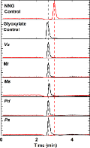
- (160 μM), Ms (38 μM), and Ps (28 μM). Representative LC–MS EICs monitoring molecular anions of NNG (m/z 119.01 ± 100 ppm) and glyoxylate (m/z 72.99 ± 100 ppm) in samples containing 350 μM NNG, 10 μM dithionite, and 5 μM of indicated NnlA homolog. Samples were incubated for approximately one hour at 21




Advancements in hydrochlorination of alkenes
Beilstein J. Org. Chem. 2024, 20, 787–814, doi:10.3762/bjoc.20.72
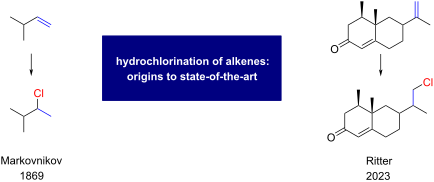
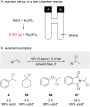
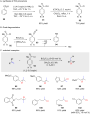
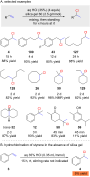
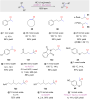
- dependence (higher temperature results in higher rates). In 1966, Brown and co-worker reported a specialized apparatus enabling the monitoring and control of HCl gas consumption during the reaction [40]. They observed full conversion of α-methylstyrene (11) within minutes and suggested that the












New variochelins from soil-isolated Variovorax sp. H002
Beilstein J. Org. Chem. 2024, 20, 692–700, doi:10.3762/bjoc.20.63
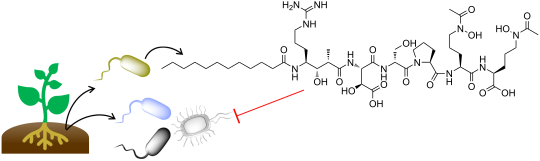
- chromatography, with methanol as the mobile phase. After monitoring the fractions by a CAS assay, the positive fractions were concentrated and purified by semi-preparative HPLC on a Cosmosil 5C18-MS-II column (10 mm ID × 250 mm, Nacalai Tesque), using a gradient system with MeCN/H2O (3:7 to 7:3) as the mobile


Enhanced reactivity of Li+@C60 toward thermal [2 + 2] cycloaddition by encapsulated Li+ Lewis acid
Beilstein J. Org. Chem. 2024, 20, 653–660, doi:10.3762/bjoc.20.58
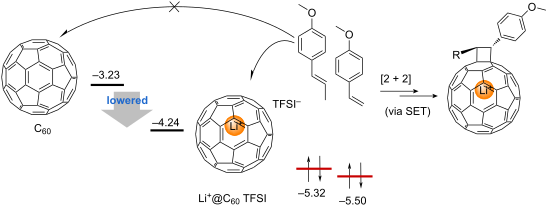
- reactant 4, which has a larger energy gap between its HOMO and LUMO of Li+@C60 (1.92 eV). All reactions were conducted in the dark to avoid photoinduced SET reactions (Scheme 2). First, the reactivity was assessed by monitoring the reaction progress using a previously developed electrolyte-added HPLC