Search results
Search for "network" in Full Text gives 338 result(s) in Beilstein Journal of Organic Chemistry. Showing first 200.
Cyclodextrin-based rotaxanes for polymer materials: challenge on simultaneous realization of inexpensive production and defined structures
Beilstein J. Org. Chem. 2024, 20, 3026–3049, doi:10.3762/bjoc.20.252
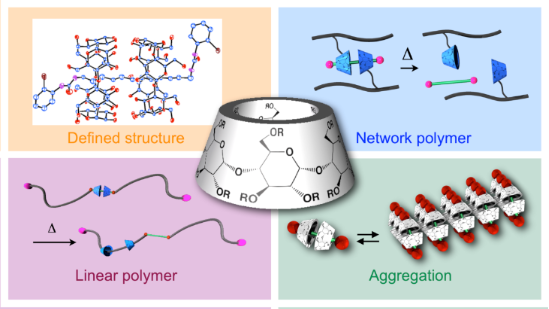
- consists of the rotaxane crosslinking structure, as a tough material or ultra-stretchable/swelling polymer [79][80]. A typical slide ring gel has a network structure of polyrotaxane, which consists of a linear polymer chain like PEG and many α-CD rings on it, meaning that the crosslinking points are made
- ) on it, besides it has a thick ring structure. The electrochemical properties of the modified CD-based conjugative polymers have been intensively studied by Terao and co-workers [83]. Apart from a typical CD-based polyrotaxane network, which contains CDs and linear polymer chain-based polyrotaxane as
- -responsive nature became much faster than the system without VSC. This fast responsiveness was induced by the dynamic rotaxane crosslinking structure. This method can be applied in various vinyl polymer systems, and induces the rotaxane crosslinking nature to the resulting network polymer, suggesting its






Applications of microscopy and small angle scattering techniques for the characterisation of supramolecular gels
Beilstein J. Org. Chem. 2024, 20, 2608–2634, doi:10.3762/bjoc.20.220
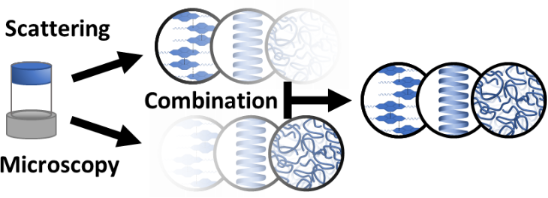
- utilise the self-assembly of small molecules into a network of long anisotropic structures which can entangle or cross-link. This network can immobilise the solvent, resulting in a material with both solid-like and liquid-like characteristics. The versatility of these compounds arises from their self
- techniques Imaging is the most widely used and accessible technique for characterising these gel materials. Researchers are looking for the presence of fibrous structures, coils, entanglements, spherulites and other such features that can give them some insight into how the gel is formed in the network via
- the assembly of interlocking nanostructures and microstructures. Imaging is often inexpensive and accessible both in terms of access and interpretation of the data given. These images are attractive and give an instant visual summary of the network. Depending on the type of imaging used, multiple


Machine learning-guided strategies for reaction conditions design and optimization
Beilstein J. Org. Chem. 2024, 20, 2476–2492, doi:10.3762/bjoc.20.212
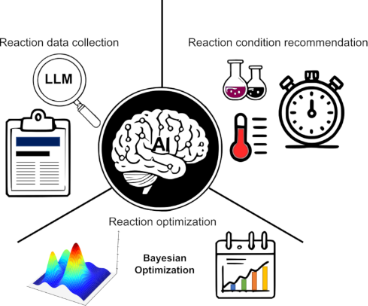
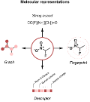
- architectures that can learn latent patterns from the reactants and products, but they require sufficient data to train both the feature extractor and the neural network. These methods also reduce the need for manual feature selection by chemists. Descriptor-based representation Descriptor-based methods are
- nodes and edges through recursive message passing and a readout function, resulting in a molecular representation. There are many variants of GNN models [140][141][142][143], most of which are based on the message passing neural network (MPNN) framework proposed by Gilmer et al. [144]. Encoding


Phenylseleno trifluoromethoxylation of alkenes
Beilstein J. Org. Chem. 2024, 20, 2434–2441, doi:10.3762/bjoc.20.207
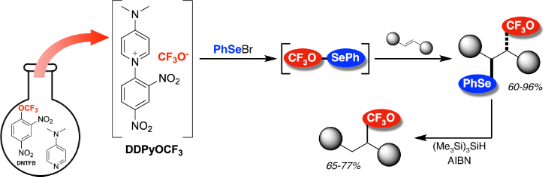
- and Research and CPE Lyon are thanked for funding. The French Fluorine Network (GIS-FLUOR) is also acknowledged for its support.



Catalysing (organo-)catalysis: Trends in the application of machine learning to enantioselective organocatalysis
Beilstein J. Org. Chem. 2024, 20, 2280–2304, doi:10.3762/bjoc.20.196
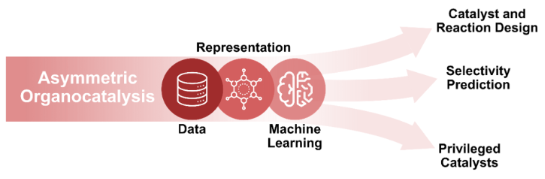
- enantioselectivities (Figure 9B). In their model, molecules were represented as graphs, where local steric and electronic information was added to each node (atom). Additionally, the used graph neural network contains a molecular interaction module that allows the model to learn synergistic effects between molecules
- , crucial for reactivity prediction tasks. While reaching state-of-the art performance in predicting ∆∆G‡ on the data set from Denmark and co-workers, the designed neural network also enables to interpret the effects leading to the observed enantioselectivity by eliminating the atom features and observing




Synthesis and reactivity of the di(9-anthryl)methyl radical
Beilstein J. Org. Chem. 2024, 20, 2254–2260, doi:10.3762/bjoc.20.193
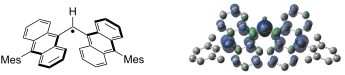
- ), Osaka University, Osaka, Japan Spintronics Research Network Division, Institute for Open and Transdisciplinary Research Initiatives (SRN-OTRI), Osaka University, Osaka, Japan 10.3762/bjoc.20.193 Abstract The di(9-anthryl)methyl (DAntM) radical was synthesized and investigated to elucidate its optical


Finding the most potent compounds using active learning on molecular pairs
Beilstein J. Org. Chem. 2024, 20, 2152–2162, doi:10.3762/bjoc.20.185
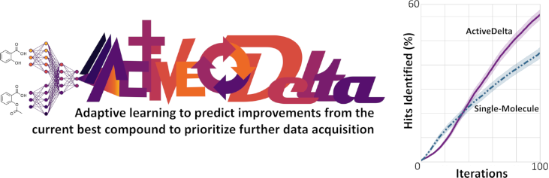
- were not used during active learning but were used only in the test set evaluation of all algorithms. Model architecture and implementation To evaluate ActiveDelta with a deep machine learning model, we used the previously established, two-molecule version of the directed Message Passing Neural Network
- pairing to identify the most potent inhibitors in adaptive learning campaigns. When comparing the performance of the tree-based and the deep neural network-based ActiveDelta approaches, we observed that AD-CP and AD-XGB showed no statistically significant difference at 100 iterations (p = 0.2, Figure 2A,B


From perfluoroalkyl aryl sulfoxides to ortho thioethers
Beilstein J. Org. Chem. 2024, 20, 2108–2113, doi:10.3762/bjoc.20.181
- novel compounds. Acknowledgements We thank Matthias George for preparing some of the initial material during his master's degree. Funding Y.L. thanks the CNRS for Ph.D. grant. French Fluorine Network (GIS Fluor) is acknowledged for financial support.



Computational toolbox for the analysis of protein–glycan interactions
Beilstein J. Org. Chem. 2024, 20, 2084–2107, doi:10.3762/bjoc.20.180
- modelling, and some of the most popular include: 1. AlphaFold2 [88]: It is an open-access protein structure prediction system based on artificial intelligence and machine learning. It is based on a neural network that can predict the 3D protein structure at a high accuracy level. The AlphaFold solution is
- composed of two steps. First, given a protein sequence, it generates multiple alignments with sequences from all the species, including evolutionary profiles from different sources. In the second step, a model refinement is generated based on structural refinement (where the network optimises the torsion
- ://github.com/BojarLab/LectinOracle). 4. CAPSIF [109]: CArbohydrate-Protein Site IdentiFier is a convolutional neural network able to predict protein–carbohydrate binding interface from a protein structure. In contrast to other DN algorithms, as GlyNet and LectinOracle, which predict lectin-carbohydrate binding


Cage-like microstructures via sequential Ugi reactions in aqueous emulsions
Beilstein J. Org. Chem. 2024, 20, 2078–2083, doi:10.3762/bjoc.20.179
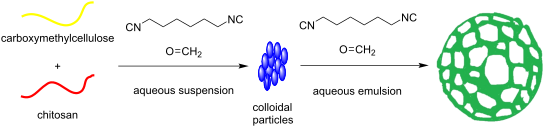
- principle, two possible mechanisms were considered: (1) Soft CMC/chitosan gel particles interacted with the surface and flattened to form discs. (2) When particles were deposited on the surface, they did not completely cover it, forming a network. In this work, we tested these hypotheses and found arguments
- removing the solvent, the resulting structure could be easily identified using optical microscopy. They were cage-like microspheres with an average diameter corresponding to the diameter of droplets in the Pickering emulsion (Figure 2). The surface of the droplets was covered with a network of individual
- network. The repeated Ugi reaction resulted in the formation of a strong cage-like structure that was not destroyed upon removal of the solvent. We noticed a connection between the structure of the colloidal particles and their behavior at the interface. The developed surface of the particles, consisting


A new platform for the synthesis of diketopyrrolopyrrole derivatives via nucleophilic aromatic substitution reactions
Beilstein J. Org. Chem. 2024, 20, 1933–1939, doi:10.3762/bjoc.20.169
- /2020, UIDP/50006/2020 doi:10.54499/UIDP/50006/2020 and UIDB/50006/2020 doi:54499/UIDB/50006/2020, through PT national funds within the PT2020 Partnership Agreement, and to the Portuguese NMR Network. Vítor A. S. Almodovar thanks FCT/MCTES for his doctoral grant (SFRH/BD/135598/2018).


Discovery of antimicrobial peptides clostrisin and cellulosin from Clostridium: insights into their structures, co-localized biosynthetic gene clusters, and antibiotic activity
Beilstein J. Org. Chem. 2024, 20, 1800–1816, doi:10.3762/bjoc.20.159
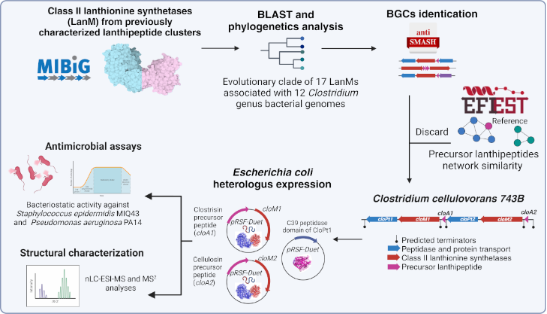
- cluster of C. cellulovorans 743, clostrisin and cellulosin were compared with known lanthipeptides, generating a similarity network made using the percent identity between the precursor peptides from all experimentally characterized lanthipeptides to date (Figure 3A). We found it noteworthy to examine the
- Supporting Information File 1). For the similarity network, a database was created containing 145 precursor peptides of lanthipeptides reported in the MIBiG [38], RiPPMiner [5], and UniProt [57] databases. This input was utilized in the EFI-EST [51] web platform, employing the "FASTA" analysis option with
- the following parameters: E-value: 0.001; Fragments: disabled. Upon completion of the initial calculation, in the SNN Finishing section, an alignment score threshold of 40% was chosen, with default values for sequence length constraint, and neighborhood connectivity disabled. Network similarity was




pKalculator: A pKa predictor for C–H bonds
Beilstein J. Org. Chem. 2024, 20, 1614–1622, doi:10.3762/bjoc.20.144
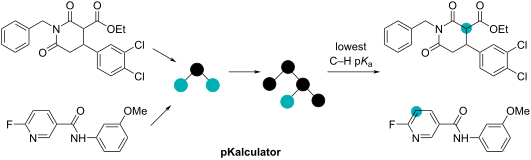
- (DMSO) using a graph convolutional neural network (GCNN) [3]. Using a mix of experimental and computed pKa data, they achieved a mean absolute error (MAE) of 2.1 pKa units. Lee and co-workers also addressed this problem by creating a general machine learning (ML) model using either a neural network or


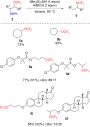
![[Graphic 9]](/bjoc/content/inline/1860-5397-20-144-i12.svg?max-width=637&scale=1.3000021)


Mining raw plant transcriptomic data for new cyclopeptide alkaloids
Beilstein J. Org. Chem. 2024, 20, 1548–1559, doi:10.3762/bjoc.20.138
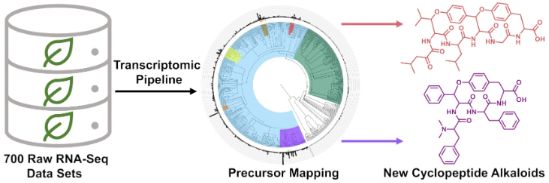
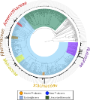
- . ameranicus using UHPLC-HRMS/MS. Finally, we generated a global natural product social (GNPS) network to show the correlation between metabolites from these different plant species (Figure 5) [29]. Cyclopeptides in Ceanothus americanus The GNPS network showed the presence of multiple features from C
- , Figures S16–S26, Table S1). Indeed, our results support the proposed structure of ceanothine B while also assigning absolute stereochemistry consistent with all ʟ-amino acids (Figure 5). We next explored the GNPS network for new cyclopeptide alkaloids from C. americanus. We previously noted the presence
- analysis, which confirmed the presence of all ʟ-Phe in the structure (Supporting Information File 1, Figure S27). Beyond this, multiple other features in the GNPS network appeared to represent new molecules for C. americanus (Supporting Information File 1, Figures S4–S11). Xylopyrine-C was previously



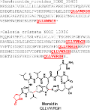


Predicting bond dissociation energies of cyclic hypervalent halogen reagents using DFT calculations and graph attention network model
Beilstein J. Org. Chem. 2024, 20, 1444–1452, doi:10.3762/bjoc.20.127
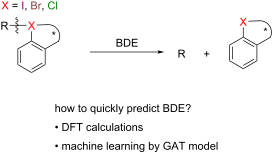
- results of this study could aid in estimating the chemical stability and functional group transfer capabilities of hypervalent bromine(III) and chlorine(III) reagents, thereby facilitating their development. Keywords: BDE; cyclic hypervalent halogen reagents; DFT calculation; graph attention network
- DFT calculations for predicting key properties of organic molecules such as BDE, nucleophilicity, and electrophilicity [48][49][50][51][52][53][54][55][56][57][58][59][60]. Recently, applications of the Elastic Net model with Avalon fingerprints [55] and the deployment of artificial neural network
- reagents, we can obtain a rough estimation of the BDEs for others with different halogen centers. With these homolytic and heterolytic BDEs in hand, we next attempted to develop a predictive model for BDEs of hypervalent halogen compounds using machine learning algorithms. Graph attention network (GAT) [85


Synthesis and physical properties of tunable aryl alkyl ionic liquids based on 1-aryl-4,5-dimethylimidazolium cations
Beilstein J. Org. Chem. 2024, 20, 1278–1285, doi:10.3762/bjoc.20.110
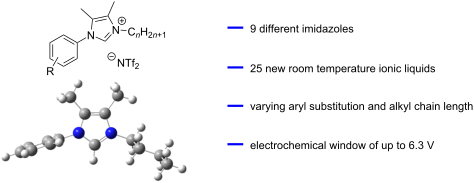
- blocked at the C2 position [33]. The use of a substituent at the C2 position was found to have a strong influence on the properties of these ionic liquids due to changes in the hydrogen-bonding network. Here, we investigate the properties of TAAILs based on the 1-aryl-4,5-dimethylimidazolium cation. It is


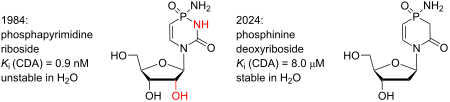
Synthesis of 1,4-azaphosphinine nucleosides and evaluation as inhibitors of human cytidine deaminase and APOBEC3A
Beilstein J. Org. Chem. 2024, 20, 1088–1098, doi:10.3762/bjoc.20.96
- Molecular Biodiscovery, Massey University Research Fund (MURF 2015, 7003 and RM20734), Kiwi Innovation Network (KiwiNet), Massey Ventures Ltd (MU002391) and the School of Natural Sciences, Massey University.


Spin and charge interactions between nanographene host and ferrocene
Beilstein J. Org. Chem. 2024, 20, 1011–1019, doi:10.3762/bjoc.20.89
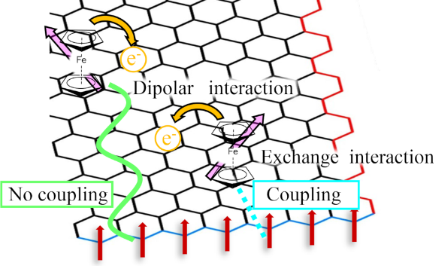
- three-dimensional disordered network of nanographite domains, each of which is a loose stack of 3–4 nanographene sheets with a mean in-plane size of 2–3 nm. ACFs have huge specific surface areas (about 2000 m2/g [24][25]) due to the presence of nanopores of ca. 1 nm in diameter between the nanographite
- as charge transfer and electromagnetic shielding. This is well consistent with the observed partial cationization of the guest molecules for FeCp2-ACFs-150 in XPS due to nanopore structure of the nanographene network in ACFs. The host–guest interaction between guest FeCp2 and host ACFs is most


Methodology for awakening the potential secondary metabolic capacity in actinomycetes
Beilstein J. Org. Chem. 2024, 20, 753–766, doi:10.3762/bjoc.20.69
- undecylprodigiosin (21) is always triggered in the dying zone of the mycelial network of Streptomyces coelicolor M145 prior to morphological differentiation, right after an initial round of cell death [98]. They hypothesized that under certain circumstances, production of antiproliferative agents could play a role


A myo-inositol dehydrogenase involved in aminocyclitol biosynthesis of hygromycin A
Beilstein J. Org. Chem. 2024, 20, 589–596, doi:10.3762/bjoc.20.51
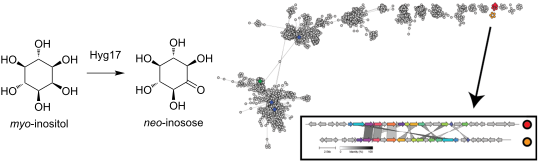
- efficiency can be attributed to the reduced kcat and increased KM for scyllo-inositol over myo-inositol. We also found that the catalytic efficiency for NAD+ was 452.4 ± 54.49 M−1 s−1 (Table 1 and Figure 2f). Sequence similarity network We generated a sequence similarity network (SSN) for the protein family
- determining the slope of the reaction from 0 to 5 min. Results were analyzed using Microsoft Excel and GraphPad Prism version 9.5.1 for Windows, GraphPad Software, Boston, Massachusetts USA, https://www.graphpad.com. SSN network generation and genome mining The sequence similarity network was generated using
- sequences and the UniRef50 function was used along with an E-value cut off of 1 × 10−55 and node network with 80% ID. Clusters with a single node were removed for simplicity. This produced an SSN with 28,698 nodes. A second SSN was generated for the IolG cluster from the PF01408 SSN. The Uniprot IDs for all


Possible bi-stable structures of pyrenebutanoic acid-linked protein molecules adsorbed on graphene: theoretical study
Beilstein J. Org. Chem. 2024, 20, 570–577, doi:10.3762/bjoc.20.49
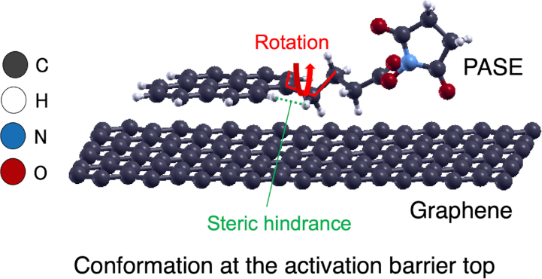
- , the magnitude of the activation barrier is expected to be close to that in PASE. This is expected to be the case since a protein weakly bound to the carbon graphitic network can be supplemented onto graphene only by linkers as PASE, which has often been observed experimentally [1]. This type of


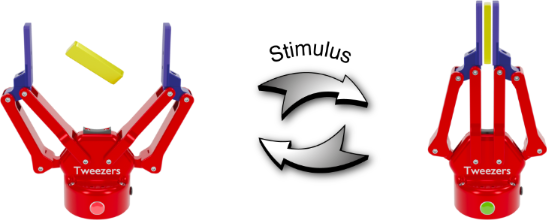
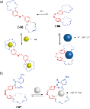
Switchable molecular tweezers: design and applications
Beilstein J. Org. Chem. 2024, 20, 504–539, doi:10.3762/bjoc.20.45




Ligand effects, solvent cooperation, and large kinetic solvent deuterium isotope effects in gold(I)-catalyzed intramolecular alkene hydroamination
Beilstein J. Org. Chem. 2024, 20, 479–496, doi:10.3762/bjoc.20.43
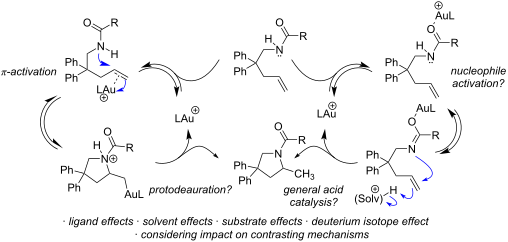
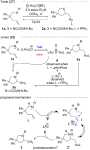
- not correspond to alkylgold buildup. In protic solvents perhaps the strength of the H-bonding network controls the rate of reaction [82]. • Stronger donor ligands that would enhance protodeauration do not increase the rate of reaction. • Rates correlate most significantly with nucleophile effects



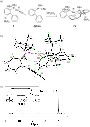


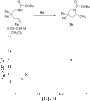
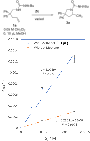

Green and sustainable approaches for the Friedel–Crafts reaction between aldehydes and indoles
Beilstein J. Org. Chem. 2024, 20, 379–426, doi:10.3762/bjoc.20.36
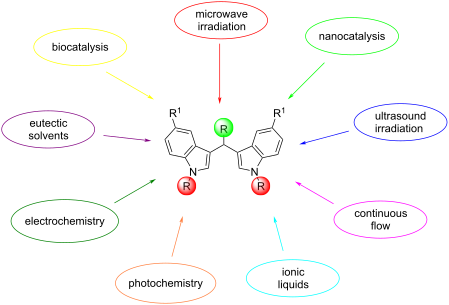
- hollow open interconnected network of CdS nanoparticles emerged as the optimal catalyst structure. This structure was found to promote the reaction between indole and p-chlorobenzaldehyde in solvent-free conditions after 5 hours at a catalyst loading of 3 mol %. Several aromatic aldehydes were also




Additive-controlled chemoselective inter-/intramolecular hydroamination via electrochemical PCET process
Beilstein J. Org. Chem. 2024, 20, 264–271, doi:10.3762/bjoc.20.27
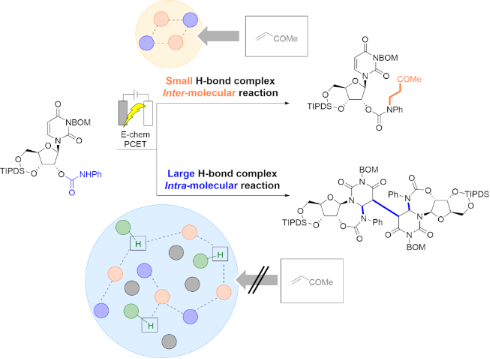
- phenoxide in PhOH, the PhOH molecule is included in the hydrogen bond network along with the tetrabutylammonium cation (Bu4N+) to form a large aggregate. The hydrogen bonding between the amide and phosphate base in the small aggregates was stronger than in the large aggregates, which significantly enhanced
- 1. Detailed CV analysis indicated that the size of the hydrogen bond complex determined the selectivity, and HFIP played a crucial role in expanding the hydrogen bond network. These results provide fundamental insights beneficial for the design of PCET-based redox reaction systems under