


Search results
Search for "olefins" in Full Text gives 342 result(s) in Beilstein Journal of Organic Chemistry. Showing first 200.
Biobased carbon dots as photoreductants – an investigation by using triarylsulfonium salts
Beilstein J. Org. Chem. 2025, 21, 1024–1030, doi:10.3762/bjoc.21.84
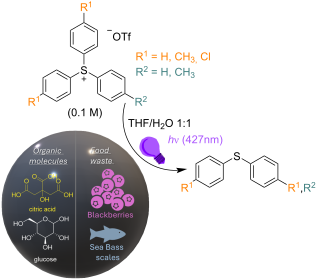
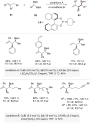
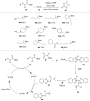
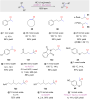
- , with particular attention to the 1,2-difunctionalization of olefins by alkyl halides via atom transfer radical addition processes in the presence of amorphous nitrogen-doped carbon dots (Scheme 1a) [20]. In the framework of this research topic, we decided to investigate the use of carbon dots as


Recent advances in controllable/divergent synthesis
Beilstein J. Org. Chem. 2025, 21, 890–914, doi:10.3762/bjoc.21.73
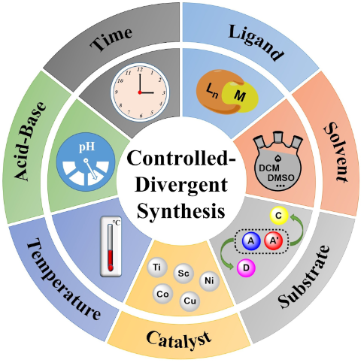
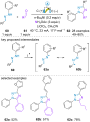
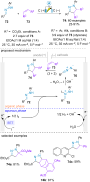
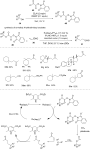
- regulating the chemical selectivity of a three-component radical cascade reaction involving α-brominated aryl ketones 72, olefins 73, and 1-methylquinoxalin-2(1H)-one (74) with an inorganic base, they were able to obtain two important types of products with high yield and enantioselectivity. Through







Recent advances in allylation of chiral secondary alkylcopper species
Beilstein J. Org. Chem. 2025, 21, 639–658, doi:10.3762/bjoc.21.51
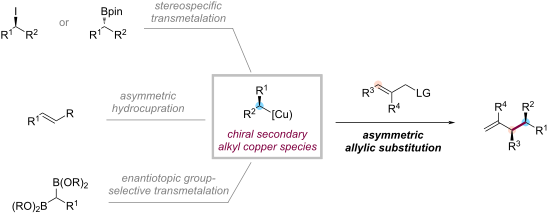
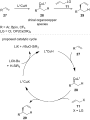
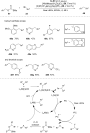
- without requiring stoichiometric organometallic reagents [49] (Scheme 10). The distinctive reactivity of the CuH species allows for precise control over the stereochemical outcome through the regio- and enantioselective hydrocupration of olefins 27, followed by stereospecific trapping with allylic
- styrenes with diverse electronic properties as well as those containing sensitive functional groups such as esters, amides, and vinyl halides, to yield the desired β-chiral olefins in high enantioselectivity. Notably, the methodology could even be applied to vinylferrocene and vinylsilane derivatives
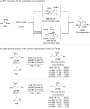
- inherent limitations with molecules possessing unsaturated functionalities due to competitive hydrocupration pathways. The approach using 1,1-diborylalkanes 47 circumvents these chemoselectivity issues and enables a selective allylic substitution of substrates containing olefins and alkynes with excellent





Unprecedented visible light-initiated topochemical [2 + 2] cycloaddition in a functionalized bimane dye
Beilstein J. Org. Chem. 2025, 21, 500–509, doi:10.3762/bjoc.21.37
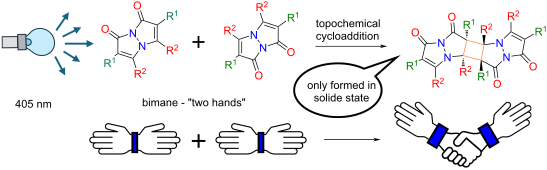
- topochemical reactions. Currently, topochemically active monomers are limited to large, planar aromatic molecules, aryl-substituted olefins, and polyenes, often complexed with metals. These compounds are frequently employed in the construction of metal-organic frameworks [13][14][15]. The limited range of


Organocatalytic kinetic resolution of 1,5-dicarbonyl compounds through a retro-Michael reaction
Beilstein J. Org. Chem. 2025, 21, 473–482, doi:10.3762/bjoc.21.34
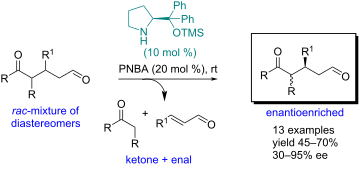
- olefins with a wide range of nucleophiles, with many organocatalyzed asymmetric examples highlighted in the literature [23][24]. We have observed that the enantioenriched 1,5-dicarbonyl Michael adducts, synthesized via organocatalyzed reaction of cinnamaldehyde with benzyl phenyl ketone, undergo


Photomechanochemistry: harnessing mechanical forces to enhance photochemical reactions
Beilstein J. Org. Chem. 2025, 21, 458–472, doi:10.3762/bjoc.21.33
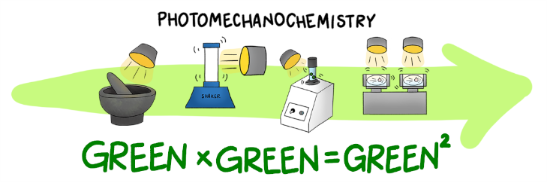
- acylation of electrophilic olefins (Scheme 11C). Compared to solution-phase photocatalysis, photomechanochemical conditions allowed to reduce the reaction time from 24 h to 3 h while maintaining comparable yields. Finally, the authors proved that photomechanochemistry contributes to the initial rate




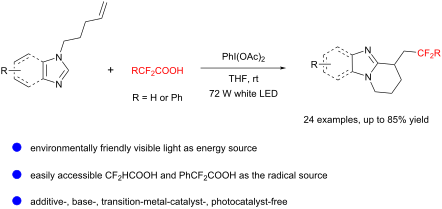
Visible-light-promoted radical cyclisation of unactivated alkenes in benzimidazoles: synthesis of difluoromethyl- and aryldifluoromethyl-substituted polycyclic imidazoles
Beilstein J. Org. Chem. 2025, 21, 234–241, doi:10.3762/bjoc.21.15
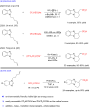
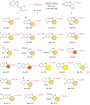
- . Furthermore, terminal olefins with varying chain lengths also reacted successfully, resulting in 5-membered and 7-membered cyclized products (3l–p) with yields between 44% and 66%. The lower yields in these cases might be due to the low reactivity of the intermediate C (Scheme 3), which may have made it less


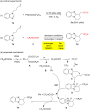
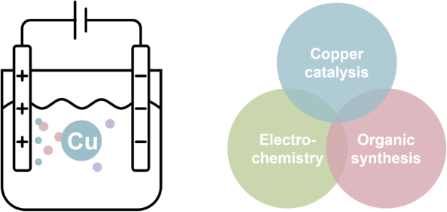
Recent advances in electrochemical copper catalysis for modern organic synthesis
Beilstein J. Org. Chem. 2025, 21, 155–178, doi:10.3762/bjoc.21.9
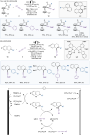
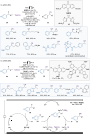
- the enantioselective dicarbofunctionalization of olefins, using photoelectrocatalysis with asymmetric copper catalysis (Figure 8) [57]. This asymmetric heteroarylcyanation of arylalkenes 27 via C–H functionalization has a broad substrate scope, including various arylalkenes and heteroarenes, yielding
- intermediate 82 undergoes enantiodetermining reductive elimination to deliver the chiral phosphinoylcyanation products 81 and regenerate the Cu(I) species. The Lin group developed an electrochemical approach for the asymmetric hydrocyanation of olefins, facilitated by a Cu/Co dual electrocatalytic system
- enantioenriched nitrile products 89 and a reduced Cu(I) complex 94, which is reoxidized through anodic oxidation. The 1,2-diamine moiety is present in numerous natural products and bioactive compounds. In 2022, Xu et al. reported the Cu-catalyzed electrocatalytic diazidation of olefins with ppm-level catalyst








Cu(OTf)2-catalyzed multicomponent reactions
Beilstein J. Org. Chem. 2025, 21, 122–145, doi:10.3762/bjoc.21.7

- ] cycloaddition reaction with the nitroalkene produces the pyrrolidine XXVII, which then aromatizes by extrusion of HNO2 (Scheme 21) [38]. Substituted pyrrolidines 30 were achieved in an enantioselective form starting from amino acid esters, electron-poor olefins and 4-substituted-2-picolinaldehydes or 4








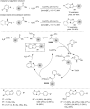


Giese-type alkylation of dehydroalanine derivatives via silane-mediated alkyl bromide activation
Beilstein J. Org. Chem. 2024, 20, 3274–3280, doi:10.3762/bjoc.20.271
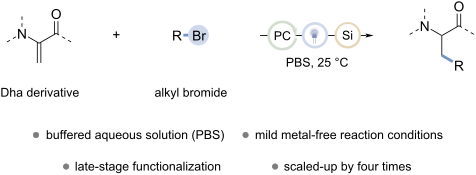
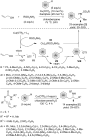
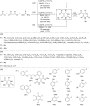
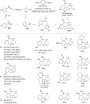
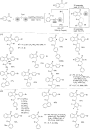
- slight increase in chemical yield. Giese reaction: Radical addition on olefins with an electron-withdrawing group (EWG) followed by a HAT or SET and protonation; halogen-atom transfer: (a) tin-mediated XAT, (b) XAT initiated by a photocatalyst (PC) and mediated by boranes (B), silanes (Si) or alkylamines


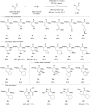

Recent advances in transition-metal-free arylation reactions involving hypervalent iodine salts
Beilstein J. Org. Chem. 2024, 20, 2891–2920, doi:10.3762/bjoc.20.243

- olefins, showcasing an efficient utilization of aryliodonium salts in the process. Later in the same year, Song and colleagues reported a protocol for the efficient synthesis of 2-aryl-substituted quinolines 27 and pyridine N-oxides 29 [63]. This reaction involved the selective arylation at the C2




Synthesis of pyrrole-fused dibenzoxazepine/dibenzothiazepine/triazolobenzodiazepine derivatives via isocyanide-based multicomponent reactions
Beilstein J. Org. Chem. 2024, 20, 2870–2882, doi:10.3762/bjoc.20.241
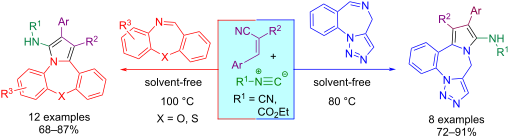
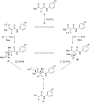
- .20.241 Abstract An efficient and facile synthesis of pyrrole-fused dibenzoxazepine/dibenzothiazepine/triazolobenzodiazepine derivatives was developed through the isocyanide-based multicomponent reaction of isocyanides, gem-diactivated olefins, and cyclic imines such as dibenzoxazepine, dibenzothiazepine
- addition to the application of isocyanides in a variety of MCRs, one of the unique reactions involves the formation of zwitterions from isocyanides upon reaction with acetylene and active olefin compounds such as alkyl acetylenedicarboxylates and gem-diactivated olefins. Due to having nucleophilic and
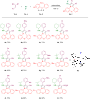
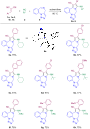
- ]. Here, we report an efficient and facile approach for the synthesis of pyrrole-fused dibenzoxazepine, dibenzothiazepine, and triazolobenzodiazepine derivatives via I-MCRs of gem-diactivated olefins, isocyanides, and cyclic imines (dibenzoxazepines, benzothiazepine, and triazolobenzodiazepine) under





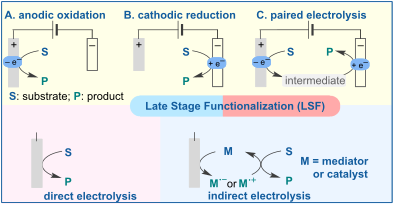
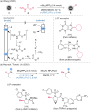
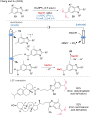
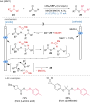
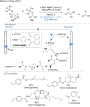
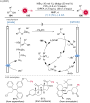
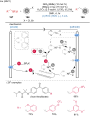
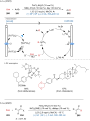
A review of recent advances in electrochemical and photoelectrochemical late-stage functionalization classified by anodic oxidation, cathodic reduction, and paired electrolysis
Beilstein J. Org. Chem. 2024, 20, 2500–2566, doi:10.3762/bjoc.20.214









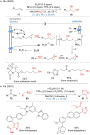

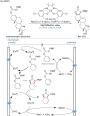


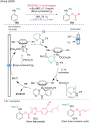
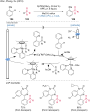
















Hydrogen-bond activation enables aziridination of unactivated olefins with simple iminoiodinanes
Beilstein J. Org. Chem. 2024, 20, 2305–2312, doi:10.3762/bjoc.20.197
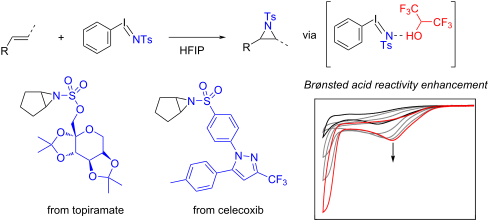
- general, transition metal catalysts are required to effect efficient NGT to unactivated olefins because iminoiodinanes are insufficiently electrophilic to engage in direct aziridination chemistry. Here, we demonstrate that 1,1,1,3,3,3-hexafluoroisopropanol (HFIP) activates N-arylsulfonamide-derived
- iminoiodinanes for the metal-free aziridination of unactivated olefins. 1H NMR and cyclic voltammetry (CV) studies indicate that hydrogen-bonding between HFIP and the iminoiodinane generates an oxidant capable of direct NGT to unactivated olefins. Stereochemical scrambling during aziridination of 1,2
- -disubstituted olefins is observed and interpreted as evidence that aziridination proceeds via a carbocation intermediate that subsequently cyclizes. These results demonstrate a simple method for activating iminoiodinane reagents, provide analysis of the extent of activation achieved by H-bonding, and indicate


Metal-free double azide addition to strained alkynes of an octadehydrodibenzo[12]annulene derivative with electron-withdrawing substituents
Beilstein J. Org. Chem. 2024, 20, 2234–2241, doi:10.3762/bjoc.20.191
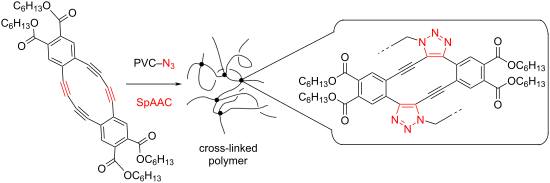
- ] cycloaddition–retroelectrocyclization (CA-RE) between electron-rich alkynes and electron-deficient olefins [8]. The [2 + 2] CA-RE click reactions were employed to produce a variety of functional materials, such as nonlinear optical chromophores [9][10], super acceptors [11][12], ion sensing D–A systems [13




Harnessing the versatility of hydrazones through electrosynthetic oxidative transformations
Beilstein J. Org. Chem. 2024, 20, 1988–2004, doi:10.3762/bjoc.20.175
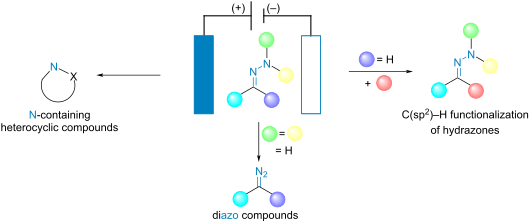
- have been harnessed as valuable intermediates in Wolff–Kishner reduction reactions [12][13][14] or for the synthesis of various olefins via diazo or vinyllithium intermediates in the Bamford–Stevens reaction [15] and Shapiro reaction [16], respectively [17]. SAMP/RAMP ((S)/(R)-1-amino-2
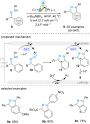
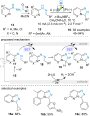
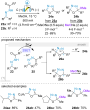
- this procedure involved the (3 + 2)-cycloaddition reaction between electrogenerated diphenyldiazomethane and methyl acrylate delivering the corresponding pyrazoline in good yield (68%). Olefins are highly common structural motifs in natural and synthetic organic compounds. They are also often employed







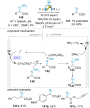
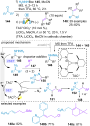

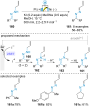
1,2-Difluoroethylene (HFO-1132): synthesis and chemistry
Beilstein J. Org. Chem. 2024, 20, 1955–1966, doi:10.3762/bjoc.20.171
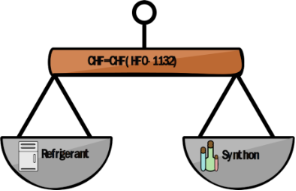
- be stereounspecific, although the addition product was reported to form in high yield. In the same publication [90], it was mentioned that (FSO2)2NH did not form an addition product in the reaction with (Z)-1,2-difluoroethylene, although the reaction of (FSO2)2NH with other olefins, including
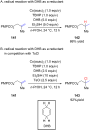
- converted into polyfluorinated olefins RFCF=CFH by HI elimination. Cyclization reactions Carbocyclizations: A series of articles devoted to structural investigations of 1,2-difluorocyclopropanes was published [96][97][98]. For this purpose, cis- and trans-1,2-difluorocyclopropanes were synthesized by liquid


Selectfluor and alcohol-mediated synthesis of bicyclic oxyfluorination compounds by Wagner–Meerwein rearrangement
Beilstein J. Org. Chem. 2024, 20, 1462–1467, doi:10.3762/bjoc.20.129
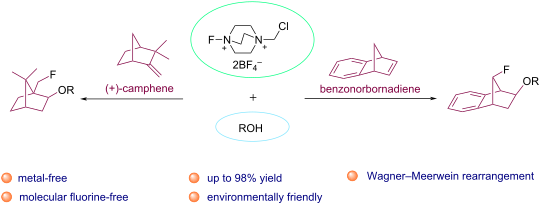
- materials, supramolecular and bioactive compounds [13][14][15][16][17]. To the best of our knowledge, although the oxyfluorination of various olefins with water and alcohols is known in the literature [18][19][20][21][22][23][24][25][26], there is no systematic study on the oxyfluorination of bicyclic


Hypervalent iodine-catalyzed amide and alkene coupling enabled by lithium salt activation
Beilstein J. Org. Chem. 2024, 20, 1405–1411, doi:10.3762/bjoc.20.122

- simple lithium salts for hypervalent iodine catalyst activation. The activated hypervalent iodine catalyst allows the intermolecular coupling of soft nucleophiles such as amides onto electronically activated olefins with high regioselectivity. Keywords: amide coupling; hypervalent iodine catalysis
- electrophilicity of the halogen source could be modulated to render different classes of nucleophiles for additions onto olefins in various olefin difunctionalization reactions [48][49][50][51][52]. In particular, we demonstrated that addition of either a Lewis acid or a base could activate amides to couple with
- -rich iodoarene catalysts are likely to be worse at activating the olefins than the electron-deficient hypervalent iodine catalysts. Therefore, the faster rate with the electron-rich catalyst precursor is because the electron-rich iodoarene catalyst precursors are more easily oxidized to the hypervalent



Generation of alkyl and acyl radicals by visible-light photoredox catalysis: direct activation of C–O bonds in organic transformations
Beilstein J. Org. Chem. 2024, 20, 1348–1375, doi:10.3762/bjoc.20.119
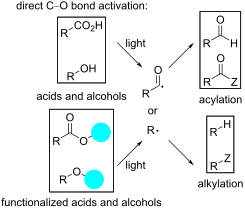
- using tertiary alkyl oxalates and aryl bromides (Scheme 10). This is achieved through the synergistic combination of photoredox and nickel catalysis. This approach facilitates the formation of diverse trisubstituted olefins with outstanding regioselectivity and syn-stereoselectivity. The proposed
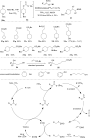
- bond homolysis. In 2022, MacMillan and co-workers [56] outlined a comprehensive and direct deoxygenative hydroalkylation method for various types of electrophilic olefins (Scheme 20). This method involved primary, secondary, and tertiary alcohols and was facilitated by the use of a newly developed NHC
- products in good yield (i.e., 80a–d, 48–80%). Cyclic olefins also performed well under these conditions and generated products with a β-ring moiety (i.e., 80e–g, 60–64%), which would have been challenging to synthesize otherwise. 2-Substituted ethyl vinyl ethers also provided α-branched aldehyde products






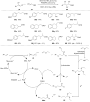
Competing electrophilic substitution and oxidative polymerization of arylamines with selenium dioxide
Beilstein J. Org. Chem. 2024, 20, 1221–1235, doi:10.3762/bjoc.20.105
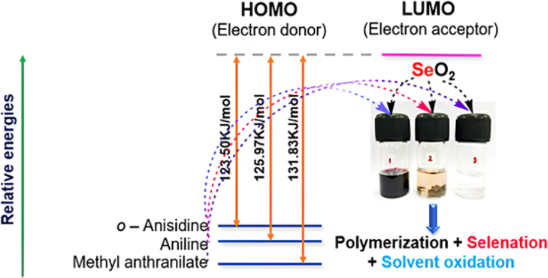
- been used in oxyselenenylation of olefins, which follows an electrophilic addition mechanism [23][24][25]. However, such reagents are rarely used for electrophilic substitution of aromatic systems. Recently, notable progress has been made in the use of aromatic electrophilic substitution to synthesize


Enantioselective synthesis of β-aryl-γ-lactam derivatives via Heck–Matsuda desymmetrization of N-protected 2,5-dihydro-1H-pyrroles
Beilstein J. Org. Chem. 2024, 20, 940–949, doi:10.3762/bjoc.20.84
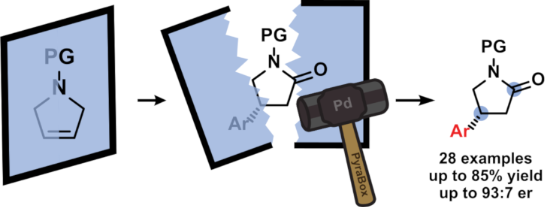
- complexity in a synthetic route. The palladium-catalyzed coupling of arenediazonium salts with olefins, the Heck–Matsuda reaction, has been instrumental in this strategy involving the desymmetrization of cyclic systems [3], especially five-membered substrates [4][5][6][7]. As we have demonstrated previously
- , key five-membered olefins bearing heteroatoms can provide direct access to chiral sulfones, sulfoxides, phosphine oxides [8], phthalides, isochromanones, and lactones [9] in a very efficient and convenient manner. Despite our previous results in this area, the desymmetrization of 2,5-dihydro-1H




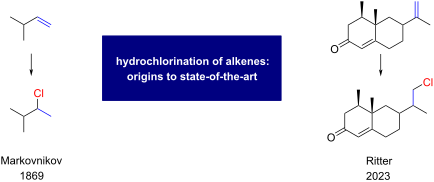
Advancements in hydrochlorination of alkenes
Beilstein J. Org. Chem. 2024, 20, 787–814, doi:10.3762/bjoc.20.72
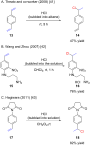
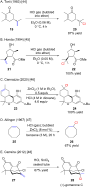
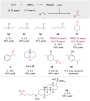
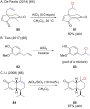
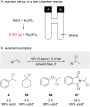
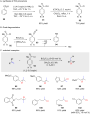
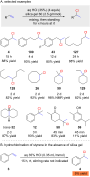
- conclusion we wish to point out that this reaction provides a convenient procedure to achieve anti Markovnikov addition of alcohols to olefins which can presumably be extended to other systems. Furthermore, the addition of other nucleophiles to photochemically generated cation radicals would make this type












New variochelins from soil-isolated Variovorax sp. H002
Beilstein J. Org. Chem. 2024, 20, 692–700, doi:10.3762/bjoc.20.63
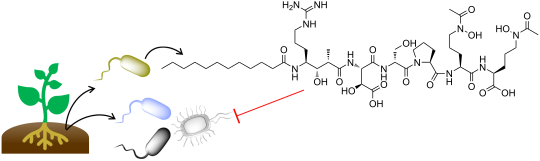
- ][18]. The absolute configurations of the amino acid constituents, Pro, Ser and two modified ornithine residues, in 3–5 were assigned as ʟ, ᴅ, and ʟ, respectively (Figures S25, S33, and S41, Supporting Information File 1). The geometry of the olefins in 4 and 5 was determined to be Z based on the 13C


Isolation and structure determination of a new analog of polycavernosides from marine Okeania sp. cyanobacterium
Beilstein J. Org. Chem. 2024, 20, 645–652, doi:10.3762/bjoc.20.57
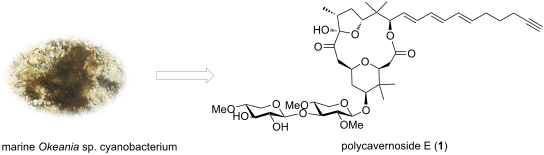
- HMBC, δH 3.64 (H-3’)/δC 103.0 (C-1”), indicated that these two sugar structures were connected through a glycosidic bond. The geometries of the two olefins at C-16 and C-20 were determined to be trans based on the large coupling constants, 3JH-16/H-17 15.0 Hz and 3JH-20/H-21 15.0 Hz, respectively. The





