Search results
Search for "CM" in Full Text gives 1163 result(s) in Beilstein Journal of Organic Chemistry. Showing first 200.
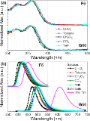
Synthesis, structure, ionochromic and cytotoxic properties of new 2-(indolin-2-yl)-1,3-tropolones
Beilstein J. Org. Chem. 2025, 21, 358–368, doi:10.3762/bjoc.21.26
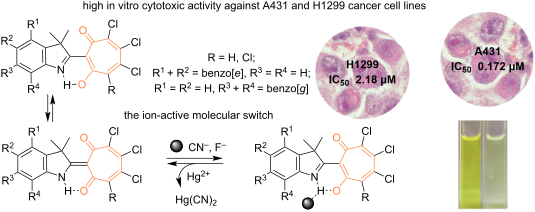
- decrease to normal values of 1800–2000 cm−1, indicating a complete inhibition of the ESIPT process. These spectral transformations are usually caused by the formation of a strong N–H(O–H)···CN− (F−) hydrogen bond up to deprotonation [28]. Using the principle of “relay recognition” [29], we investigated the
- , CN) (Aldrich) were used to prepare the solutions. Spectral fluorescent experiments were performed using quartz cells (lcuvette 1.0 cm, volume V 2 mL). Stock solutions of compounds 7 or 8 (c 5.0 × 10⁻⁵ mol L−1) and tetrabutylammonium salts (c 1.0 × 10⁻⁴ mol L−1) in acetonitrile were used. The
- (6) Å, β = 102.590(3)°, V = 1821.55(9) Å3, Z = 4, ρcalc = 1.527 g cm−3, μ(Мо Кα) = 0.520 mm−1, P21/c space group. Intensities of 15441 reflections were measured in the reciprocal space (2θ ≤ 64.14°) using the ω/2θ-scanning method from a single crystal with dimensions of 0.31 × 0.25 × 0.20 mm. An




Synthesis of new condensed naphthoquinone, pyran and pyrimidine furancarboxylates
Beilstein J. Org. Chem. 2025, 21, 340–347, doi:10.3762/bjoc.21.24
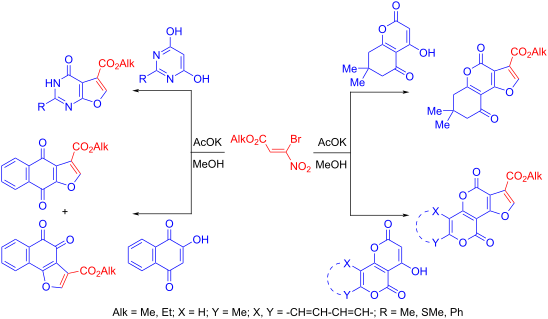
- IR spectra of compounds 5a–6d containing an alkoxyfuropyran fragment shows that in the case of methyl esters 5a, 6a, and 6c the absorption band of the alkoxycarbonyl function is shifted to a lower frequency region (1714–1721 cm−1), while ethyl esters 5b, 6b, and 6d are characterized by higher
- frequency values (1725–1731 cm−1). This observation may be due to the position of the ester fragment relative to the heterocyclic system. The analysis of the results of X-ray diffraction analysis shows that the torsion angle C(10)–C(3)–C(16)–O(17) of methyl esters 5a and 6c is −0.8(2), and 5(2)°, and of
- . In turn, in the IR spectra (KBr) of compounds 7a–f, absorption bands of the ester fragment in the region of 1714–1750 cm−1 and absorption bands of the carbonyl group of the amide fragment in the region of 1674–1688 cm−1 are observed, which suggests the existence of these compounds in the solid phase


Oxidation of [3]naphthylenes to cations and dications converts local paratropicity into global diatropicity
Beilstein J. Org. Chem. 2025, 21, 277–285, doi:10.3762/bjoc.21.20
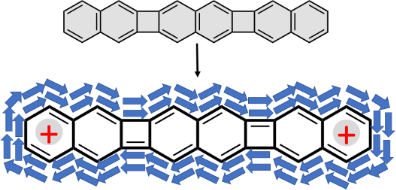
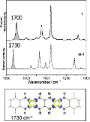
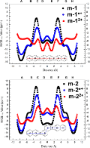
- neutral species was measured at 1700 cm−1 and was predicted at 1730 cm−1 for m-1. This band was assigned to the symmetric CC stretching mode of the four bonds that are exocyclic to CBD, ν(CC)exo-CBD, or CBD breathing mode, as indicated by the atomic displacements shown in Figure 4. Other two strong Raman
- features were measured at 1448 and 1355 cm−1. They were predicted at 1468 and 1354 cm−1, respectively, for m-1, being assigned to CC stretching modes with slight contributions of aromatic CH bending vibrations. The complete eigenvector for these vibrations can be seen in Figure S2 in Supporting Information
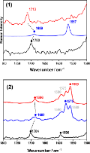
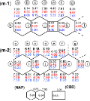
- File 1. Given that former normal mode mainly involves the CBD moieties, the observed feature at 1700 cm−1 can be considered a suitable marker band of the structural and electronic changes of the antiaromatic CBD rings upon oxidation. The Raman spectra of 1, 1•+, and 12+ are shown in Figure 5. Relative


Synthesis and characterizations of highly luminescent 5-isopropoxybenzo[rst]pentaphene
Beilstein J. Org. Chem. 2025, 21, 270–276, doi:10.3762/bjoc.21.19
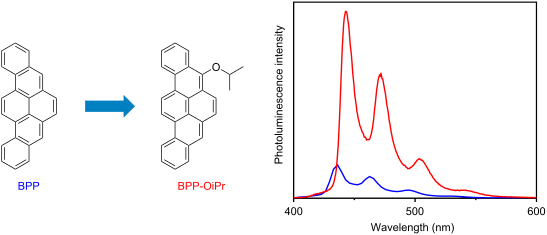
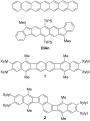
- well-structured absorption peaks clearly showing the vibronic progressions. BPP-OiPr 3 also exhibited a small peak located at 442 nm with the molar extinction coefficient (ε) of 1800 M−1 cm−1, which was similar to the previous observations of the dark S1 states for BPP 2 and its mesityl- and tert-butyl
- (Supporting Information File 1, Table S2). The longest-wavelength absorption maximum (S0 → S1), attributed to the HOMO → LUMO transition, was calculated to be at 432 nm (f = 0.5674) for 4. Compared to the S1 states in BPP 2 (ε = 1200 M−1 cm−1) and BPP-OiPr 3 (ε = 1800 M−1 cm−1), corresponding to forbidden
- transitions as previously discussed for other BPP derivatives [21][22], the strikingly enhanced molar extinction coefficient observed for the lowest-energy band of BPP-dione 4 (ε = 17000 M−1 cm−1) indicates that the optical transition to the S1 state becomes allowed by this oxidation. BPP 2 and BPP-OiPr 3




Three-component reactions of conjugated dienes, CH acids and formaldehyde under diffusion mixing conditions
Beilstein J. Org. Chem. 2025, 21, 262–269, doi:10.3762/bjoc.21.18
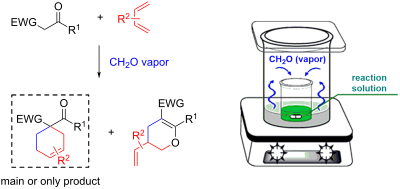
- obtained are summarized in Scheme 2 and Table 1. It was found that the size of the vial used to carry out the reaction significantly affected the reaction rate. Thus, in an apparatus consisting of two vials with diameters of 1.3 and 2.8 cm, the conversion of the starting compound was 37 and 31
- %, respectively, when carrying out the reaction in chloroform or methanol over two days (Table 1, entries 3 and 7). In turn, in a system of two vials with diameters of 3.7 and 7.5 cm, and with a loading of diketone 1 that was five times greater, more than two thirds of the starting compound reacted within 24 h
- (1 equiv), 0.05 mmol ʟ-proline and 2.0–5.0 mmol diene (2–5 equiv) in 3–5 mL acetonitrile was placed into a 15 mL vial (diameter 1.3 cm). This vial was then placed into a closed 50 mL vial (diameter 2.8 cm) containing 3–5 mL of formalin, and the reaction mixture was stirred at room temperature for 2


Effect of substitution position of aryl groups on the thermal back reactivity of aza-diarylethene photoswitches and prediction by density functional theory
Beilstein J. Org. Chem. 2025, 21, 242–252, doi:10.3762/bjoc.21.16
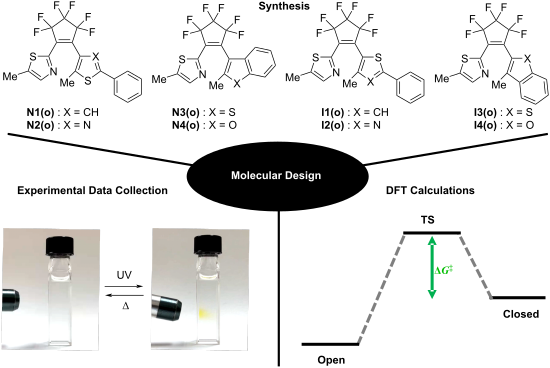
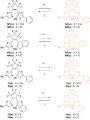
- absorption maxima (λmax) at 299, 307, 291, 301, 307, and 369 nm, respectively. The molar absorption coefficients at λmax of N3(o), N4(o), and I1(o)–I4(o) were determined to be 12200, 12700, 47800, 22700, 12900, and 12700 M−1 cm−1, respectively. Upon irradiation with 365 nm, a new absorption band appeared in



Nickel-catalyzed cross-coupling of 2-fluorobenzofurans with arylboronic acids via aromatic C–F bond activation
Beilstein J. Org. Chem. 2025, 21, 146–154, doi:10.3762/bjoc.21.8
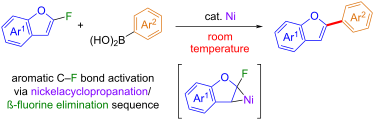
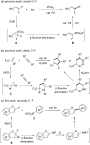
- , 1255, 1163, 1053, 991, 935, 789, 690 cm–1; HREIMS m/z: [M]+ calcd for C19H14O, 258.1045; found, 258.1035. C–F bond activation through β-fluorine elimination via metalacyclopropanes. Synthesis of 2-arylbenzofurans 3 via the coupling of 1 with 2. Isolated yields are given. aNi(cod)2 (10 mol %), PCy3 (20



Emerging trends in the optimization of organic synthesis through high-throughput tools and machine learning
Beilstein J. Org. Chem. 2025, 21, 10–38, doi:10.3762/bjoc.21.3
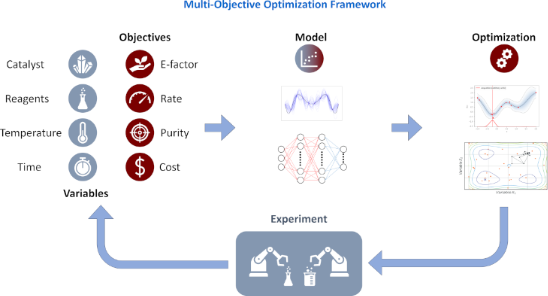
- stretch (≈1630 cm−1), which we calibrated against signals from p-xylene (≈830 cm−1). To resolve overlapping peaks, we employed curve-fitting techniques utilizing Lorentzian functional forms, facilitated by the lmfit Python package. This methodology (Figure 8) allowed us to accurately calculate conversion


Efficient synthesis of fluorinated triphenylenes with enhanced arene–perfluoroarene interactions in columnar mesophases
Beilstein J. Org. Chem. 2024, 20, 3263–3273, doi:10.3762/bjoc.20.270
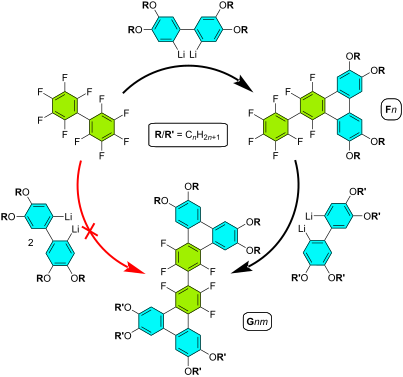
- molecular density of 1.688 g cm−3. In more details, the crystal structure reveals two short intramolecular F···H hydrogen contacts in the triphenylene core part with lengths of 2.047 Å and 2.114 Å, respectively (see Figure S33 in Supporting Information File 1). The triphenylene part of the molecule is
- values in the range of 104 and 105 L·mol−1·cm−1, respectively, as G66 possesses two triphenylene units whereas F6 only one. Both compounds, however, display substantially different photoluminescent behavior. Both F6 and G66 show a single, broad emission band with a peak maximum around 410–430 nm for F6



Intramolecular C–H arylation of pyridine derivatives with a palladium catalyst for the synthesis of multiply fused heteroaromatic compounds
Beilstein J. Org. Chem. 2024, 20, 3256–3262, doi:10.3762/bjoc.20.269
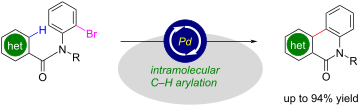
- , 126.3, 123.8, 122.7, 118.3, 115.4, 43.3, 31.9, 29.5, 29.3, 27.3, 27.1, 22.7, 14.2; IR (ATR): 2959, 2929, 2856, 1661, 751 cm−1; HRMS–DART+ (m/z): [M + H]+ calcd for C24H27N2O, 359.2123; found, 359.2134. Structures of multiply fused heterocyclic compounds composed of pyridine rings. Synthesis of C–H


Ceratinadin G, a new psammaplysin derivative possessing a cyano group from a sponge of the genus Pseudoceratina
Beilstein J. Org. Chem. 2024, 20, 3215–3220, doi:10.3762/bjoc.20.267
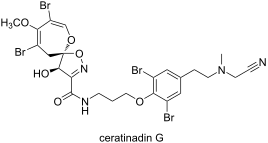
- existence of a substituted benzenoid chromophore was suggested by the UV absorption maximum at 258 nm. The presence of hydroxy and/or amino groups and a carbonyl group was indicated by IR absorptions at 3337 cm−1 and 1671 cm−1, respectively. The analysis of the HSQC spectrum, along with the 1H and 13C NMR
- cyano group in compound 1 [13][14][15]. In the IR spectrum of 1, an absorption attributed to the stretching vibration of the C≡N bond was observed at 2234 cm−1, although its intensity was very weak (Figure S8 in Supporting Information File 1). It is known that when an atom with an electron-withdrawing
- 28138) and 258 (ε 10233); IR (film/KBr) νmax: 3337, 2935, 2878, 2849, 2234 (weak), 1671, 1624, 1595, 1542, 1457, 1257, 1199, 1145, 1119, 1046, 954, 898, 738 cm−1; ECD (MeOH) λmax, nm: 211 (Δε −15.84), 239 (Δε 7.99), 281 (Δε 0.07); 1H and 13C NMR data (Table 1); HRESIMS (m/z): [M + Na]+ calcd for


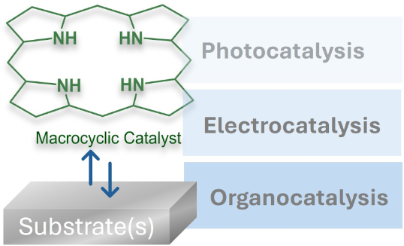
Advances in the use of metal-free tetrapyrrolic macrocycles as catalysts
Beilstein J. Org. Chem. 2024, 20, 3085–3112, doi:10.3762/bjoc.20.257
- -containing macrocycles and metalloporphyrins. Despite the impressive progress in photoredox catalysis, due to their most intensive electronic absorption band at 420 nm (Soret band, extinction coefficient of 105 M−1 cm−1), most porphyrin photocatalysts reported so far have been mainly utilized under blue
- coefficients around 104 M−1 cm−1), but they had not been used as photocatalysts in red light-induced processes until very recently. In 2022, Gryko and co-workers screened metal-free porphyrin macrocycles for various organic photochemical reactions that proceed via both oxidative and reductive quenching under


Extension of the π-system of monoaryl-substituted norbornadienes with acetylene bridges: influence on the photochemical conversion and storage of light energy
Beilstein J. Org. Chem. 2024, 20, 3061–3068, doi:10.3762/bjoc.20.254
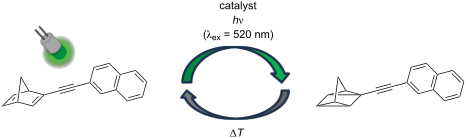
- spectra during irradiation as upon direct irradiation, although the reaction times were significantly higher, most likely because of the much weaker molar absorption coefficient of [Ru(phen)3](PF6)2 at 520 nm (≈900 M−1 cm−1), and the fact that the photosensitization process is bimolecular (Figure 3


Tunable full-color dual-state (solution and solid) emission of push–pull molecules containing the 1-pyrindane moiety
Beilstein J. Org. Chem. 2024, 20, 3016–3025, doi:10.3762/bjoc.20.251
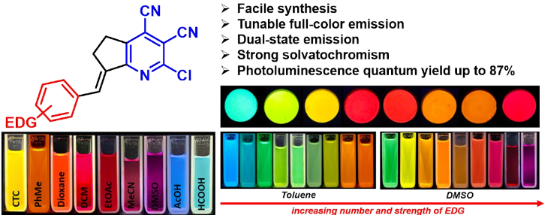
- ) in tetrachloromethane (CTC) to 588 nm (orange) in formic acid. Therefore, it was found that compound 1c was characterized by a large Stokes shift upon increasing the solvent polarity, which reached 150 nm (5824 cm−1) in formic acid. This was associated with the bathochromic shift of the emission band
- highest fluorescence efficiency of 53.4% was observed for the para-methyl derivative 1b. Solutions of stilbazoles 1 in DMSO were also characterized by large Stokes shift values, reaching 207 nm (5846 cm−1) and showing nonradiative loss of excitation energy. It should be noted that stilbazoles 1, in


The charge transport properties of dicyanomethylene-functionalised violanthrone derivatives
Beilstein J. Org. Chem. 2024, 20, 2921–2930, doi:10.3762/bjoc.20.244
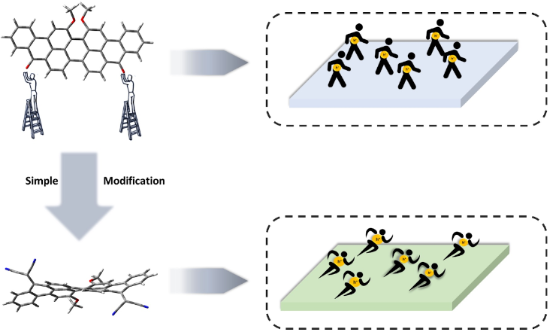
- properties of violanthrone is traced back to 1950, when Akamatu and Inokuchi measured its electrical conductivity (σ), which was found to be 3.4 × 10⁻⁴ Ω−1 cm−1 [27][28]. The chemical structure of violanthrone allows for its modification and hence the synthesis of materials with interesting spectral
- , and a λmax at 701 nm with ε of 4.69 × 10⁴ L mol−1 cm−1 which might lead to the contribution of 3b to the photocurrent. All previous studies suggested that violanthrone and its derivatives display electronic functionality and could be potentially used in organic electronics. Nevertheless, to the best
- nm for all compounds. Compound 3a shows a slight hypsochromic shift (λmax = 741 nm) in comparison with 3b (λmax = 745 nm) and 3c (λmax = 746 nm). All compounds displayed very similar extinction coefficients between 45000 and 48000 L mol−1 cm−1. The optical gaps (Eopt) were estimated from the onset


Synthesis of pyrrole-fused dibenzoxazepine/dibenzothiazepine/triazolobenzodiazepine derivatives via isocyanide-based multicomponent reactions
Beilstein J. Org. Chem. 2024, 20, 2870–2882, doi:10.3762/bjoc.20.241
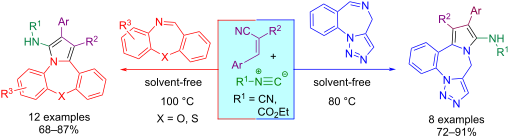
- on a Bruker Avance spectrometer at 300.13 MHz and 75.47 MHz, respectively. IR spectra were created on a Thermo Nicolet Nexus 470 FT-IR spectrometer in cm−1. Mass spectra with an HP (Agile Technologies) 5975C Mass Selective Detector were used to confirm the mass of the synthesized products. The PL





Synthesis of tricarbonylated propargylamine and conversion to 2,5-disubstituted oxazole-4-carboxylates
Beilstein J. Org. Chem. 2024, 20, 2827–2833, doi:10.3762/bjoc.20.238

- ), 84.9 (C), 82.6 (C), 63.8 (CH2), 61.0 (C), 21.6 (CH3), 14.0 (CH3); IR (KBr, ATR) vmax: 1754, 1672, 1477, 1281, 1214, 1071, 751 cm−1; HRMS–APCI-TOF (m/z): [M + H]+ calcd for C23H24NO5, 394.1649; found, 394.1672. When other alkynes and N,O-acetals were used, the experiments were conducted in the same way
- ), 128.5 (CH), 128.3 (C), 128.1 (CH), 126.8 (CH), 126.2 (CH), 123.4 (C), 60.9 (CH2), 31.6 (CH2), 20.2 (CH3), 13.3 (CH3); IR (KBr, ATR) vmax: 1735, 1710, 1178, 1087, 1054, 720 cm−1; HRMS–APCI-TOF (m/z): [M + H]+ calcd for C20H20NO3, 322.1438; found, 322.1458. When other propargylamines were used, the


Interaction of a pyrene derivative with cationic [60]fullerene in phospholipid membranes and its effects on photodynamic actions
Beilstein J. Org. Chem. 2024, 20, 2732–2738, doi:10.3762/bjoc.20.231
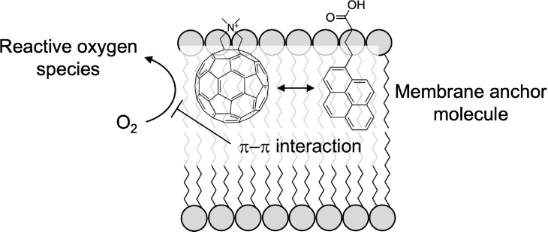
- (LUMITRONIX LED-Technik GmbH, Hechingen, Germany) containing 120 LED lamps assembled in an aluminium cylindrical container with a diameter of 8.5 cm. ESR measurements conditions: microwave frequency 9.78 GHz, microwave power 10 mW, receiver gain 5.02 × 10⁴, modulation amplitude 1.00 G, modulation frequency


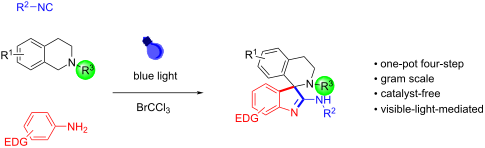
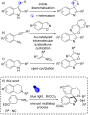
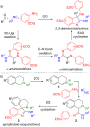
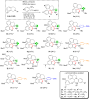
Synthesis of spiroindolenines through a one-pot multistep process mediated by visible light
Beilstein J. Org. Chem. 2024, 20, 2722–2731, doi:10.3762/bjoc.20.230
- with Hanessian stain (dipping into a solution of (NH4)4MoO4·4H2O (21 g) and Ce(SO4)2·4H2O (1 g) in H2SO4 (31 mL) and H2O (469 mL) and warming). Rf were measured after an elution of 7–9 cm. Column chromatographies were done with the "flash" methodology using 220–400 mesh silica or 150 mesh aluminum
- (cm−1): 3393, 3367, 3051, 2995, 2967, 2923, 2860, 2828, 1916, 1851, 1706, 1623, 1598, 1562, 1525, 1491, 1472, 1464, 1451, 1437, 1422, 1387, 1359, 1327, 1296, 1274, 1250, 1222, 1207, 1186, 1176, 1151, 1119, 1096, 1080, 1057, 1040, 1026, 1009, 972, 964, 951, 943, 929, 909, 898, 854, 818, 810, 805, 782




Synthesis of benzo[f]quinazoline-1,3(2H,4H)-diones
Beilstein J. Org. Chem. 2024, 20, 2708–2719, doi:10.3762/bjoc.20.228
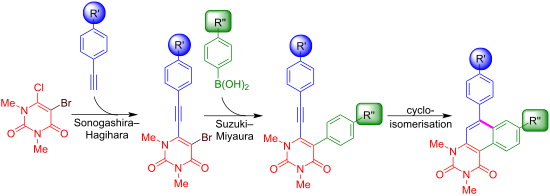
- )-dione (4g). Compound 4g was obtained as a brown solid in 58% yield (58.3 mg, 184 µmol, Rf 0.19 (heptane/ethyl acetate 3:2)); mp 152–154 °C; IR (ATR) ν̃: 1695 (s), 1642 (vs), 1582 (s), 1493 (s), 1440 (s), 1421 (s), 1176 (m), 1079 (m), 756 (s) cm−1; 1H NMR (500 MHz, chloroform-d) δ 7.51–7.48 (m, 2H), 7.45
- acetate 3:2)); mp 187–189 °C; IR (ATR) ν̃: 1708 (s), 1654 (vs), 1574 (s), 1514 (s), 1506 (s), 1446 (s), 1423 (s), 1232 (s), 1158 (s) cm−1; 1H NMR (500 MHz, chloroform-d) δ 7.48–7.44 (m, 2H), 7.26–7.22 (m, 2H), 7.15–7.10 (m, 2H), 7.06–7.02 (m, 2H), 3.70 (s, 3H), 3.44 (s, 3H); 19F NMR (471 MHz, chloroform-d
- 54% yield (189 mg, 488 µmol, Rf 0.21 (heptane/ethyl acetate 3:2)); mp 162–164 °C; IR (ATR) ν̃: 1695 (s), 1640 (vs), 1582 (s), 1510 (s), 1446 (s), 1428 (s), 1219 (m), 813 (s) cm−1; 1H NMR (300 MHz, chloroform-d) δ 7.94–7.87 (m, 1H), 7.65–7.59 (m, 1H), 7.58 (s, 1H), 7.39–7.31 (m, 2H), 7.06–7.01 (m, 2H




The scent gland composition of the Mangshan pit viper, Protobothrops mangshanensis
Beilstein J. Org. Chem. 2024, 20, 2644–2654, doi:10.3762/bjoc.20.222
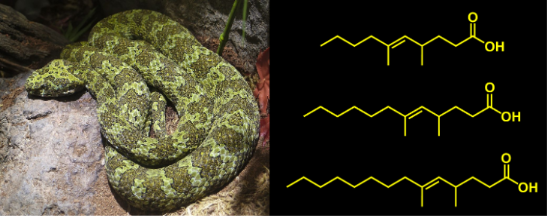
- , Figure S1), confirming the acid functional group in the natural compounds. In support of these data, GC/IR analysis of Dm (Supporting Information File 1, Figure S2) showed strong carbonyl bands at 1741 cm−1 accompanied by two intermediate bands at 1198 cm−1 and 1177 cm−1, characteristic of ester valence
- , 1456, 1438, 1357, 1276, 1195, 1170, 1061, 986, 901, 851, 725 cm−1; E-isomer: vmax 2956, 2925, 2856, 1741, 1456, 1438, 1372, 1294, 1262, 1195, 1167, 1060, 989, 859, 729 cm−1. Total ion chromatogram of an extract of the scent gland of a Mangshan pit viper. Compounds A–F are the acids discussed in this


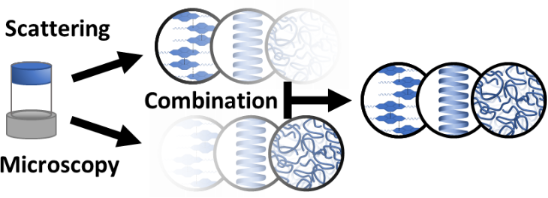
Applications of microscopy and small angle scattering techniques for the characterisation of supramolecular gels
Beilstein J. Org. Chem. 2024, 20, 2608–2634, doi:10.3762/bjoc.20.220


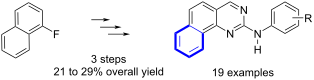
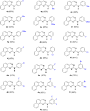
Synthesis and cytotoxicity studies of novel N-arylbenzo[h]quinazolin-2-amines
Beilstein J. Org. Chem. 2024, 20, 2592–2598, doi:10.3762/bjoc.20.218
- used to hold mp samples for capillary mp determination. FTIR spectra were recorded on a Bruker Alpha apparatus with spectra further analysed with spectragryph 1.2.4 version. The absorption bands were reported in cm−1. High-resolution mass spectra were recorded in the Centre Régional de Mesures
- , 129.07, 128.36, 126.72, 124.51, 124.38, 122.67, 116.44; 1H-13C NMR ((300, 75) MHz, DMSO-d6, δ ppm) (9.09 161.23), (8.95 124.31), (7.95 128.17), (7.76 129.93), (7.69 126.77), (7.61 124.66), (7.58 122.55); FTIR (KBr 1%, cm−1) ν̃: 3440, 3316, 3192, 1625, 1611, 1598, 1571, 1496, 1471, 1460, 1410, 801, 763
- MHz, DMSO-d6, δ ppm) δ 161.2, 158.1, 151.2, 141.0, 136.1, 130.5, 129.2, 129.1, 128.6, 127.4, 124.5, 124.4, 124.3, 122.1, 119.3, 117.6; FTIR (KBr 1%, cm−1) ν̃: 3423, 3274, 1643, 1601, 1591, 1542, 1504, 1450, 1393, 1025, 993, 804, 750; HRESIMS (m/z): [M + H]+ calcd for C18H14N3, 272.1182; found


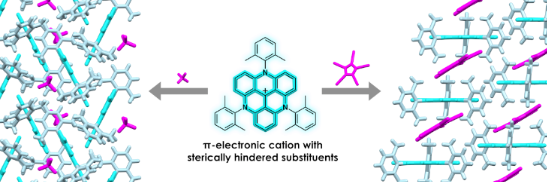
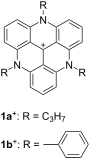
Anion-dependent ion-pairing assemblies of triazatriangulenium cation that interferes with stacking structures
Beilstein J. Org. Chem. 2024, 20, 2567–2576, doi:10.3762/bjoc.20.215
- ) 142.15, 140.66, 138.90, 136.12, 134.80, 130.88, 130.80, 110.29, 106.31, 17.63; 19F NMR (564 MHz, CDCl3, 20 °C) δ (ppm) −157.91 (s, 10BF4−), −157.96 (s, 11BF4−); UV–vis (CH3CN) λmax, nm (ε, 105 M−1 cm−1): 272 (1.28), 337 (0.06), 349 (0.09), 524 (0.21); MALDI–TOF MS (m/z) (% intensity): (positive) 594.3
- , TATA-H), 2.11 (s, 18H, CH3); 13C NMR (151 MHz, CDCl3, 20 °C) δ (ppm) 142.40, 140.77, 138.59, 136.46, 135.03, 130.73, 130.69, 110.66, 106.15, 17.61; 19F NMR (564 MHz, CDCl3, 20 °C) δ (ppm) −77.26 (d, J = 712 Hz, 6F); UV–vis (CH3CN), λmax, nm (ε, 105 M−1 cm−1): 272 (1.30), 337 (0.07), 349 (0.09), 523
- –19F = 246 Hz), 134.76, 131.00, 130.84, 124.30, 110.24, 106.33, 17.37; 19F NMR (564 MHz, CDCl3, 20 °C) δ (ppm) −135.76 (s, 8F, Ar-F), −166.67 (t, J = 21.4 Hz, 4F, Ar-F), −170.25 (t, J = 18.0 Hz, 8F, Ar-F); UV–vis (CH3CN, λmax, nm (ε, 105 M−1 cm−1): 272 (1.26), 337 (0.07), 349 (0.10), 524 (0.20); MALDI



Visible-light-mediated flow protocol for Achmatowicz rearrangement
Beilstein J. Org. Chem. 2024, 20, 2493–2499, doi:10.3762/bjoc.20.213
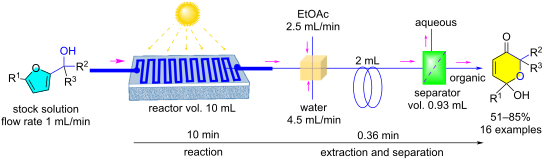
- illustrated in Figure S1, Supporting Information File 1, a flat photo-flow reactor was predesigned comprising a wide-surface polystyrene sheet (length 50 cm × width 50 cm × height 5 cm) bearing a reactor (PFA tubing) that was manually put and hooked on the polystyrene surface (Figure S1b, Supporting