Search results
Search for "ligands" in Full Text gives 1021 result(s) in Beilstein Journal of Organic Chemistry. Showing first 200.
Transition-metal-free synthesis of arylboronates via thermal generation of aryl radicals from triarylbismuthines in air
Beilstein J. Org. Chem. 2024, 20, 2577–2584, doi:10.3762/bjoc.20.216
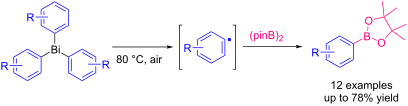
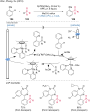
- with halogen or triflate groups. Recently, transition-metal-catalyzed direct borylation of arenes via C–H bond activation has been reported, although the design of the substrate and ligands is somewhat complicated [16][17][18][19][20][21][22]. Since the complete removal of catalyst-derived metal

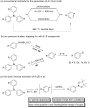


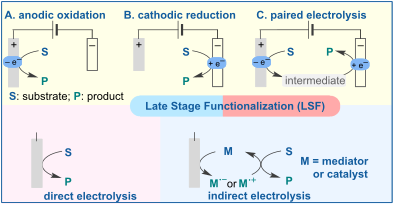
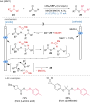
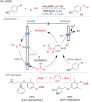
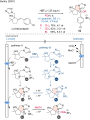
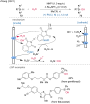
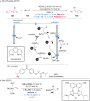
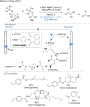
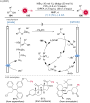
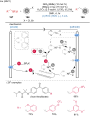
A review of recent advances in electrochemical and photoelectrochemical late-stage functionalization classified by anodic oxidation, cathodic reduction, and paired electrolysis
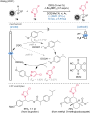
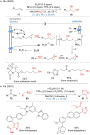
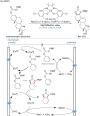
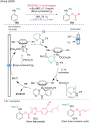
Beilstein J. Org. Chem. 2024, 20, 2500–2566, doi:10.3762/bjoc.20.214


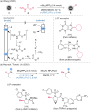


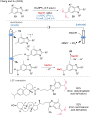
























HFIP as a versatile solvent in resorcin[n]arene synthesis
Beilstein J. Org. Chem. 2024, 20, 2469–2475, doi:10.3762/bjoc.20.211
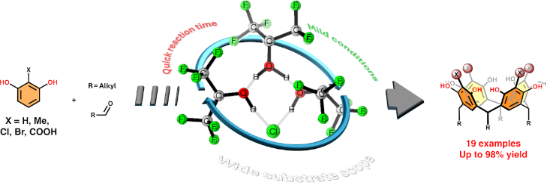
- tetracarboxylic acid head group and short-to-long aliphatic tails from ethyl to n-undecyl may find applications in the development of novel materials, e.g., as ligands in nanoparticle synthesis. We were surprised to find out that 2-iodoresorcinol did not produce the desired resorcin[n]arene. Repeated experiments


Hypervalent iodine-mediated cyclization of bishomoallylamides to prolinols
Beilstein J. Org. Chem. 2024, 20, 2455–2460, doi:10.3762/bjoc.20.209
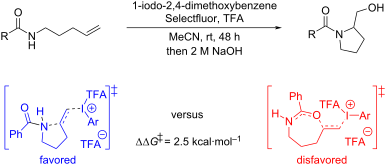
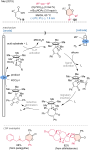
- an associative pathway where one of the TFA ligands dissociates from 8 upon approaching the substrate and forms the intermediate 9. The calculated ΔG‡ value is quite high here, which could explain the low yield obtained after 16 hours. However, for the cyclization of N-allylbenzamide (1a), we found


Efficient one-step synthesis of diarylacetic acids by electrochemical direct carboxylation of diarylmethanol compounds in DMSO
Beilstein J. Org. Chem. 2024, 20, 2392–2400, doi:10.3762/bjoc.20.203
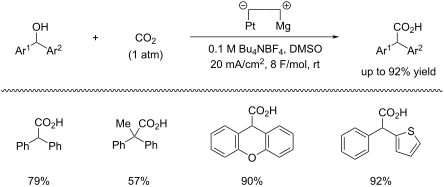
- a carboxy group using carbon dioxide as carboxy source is generally difficult under neutral and mild conditions without the use of metal catalysts and/or ligands. This protocol represents a novel method for synthesizing diarylacetic acids 2 from the corresponding alcohols 1 in one step by using an


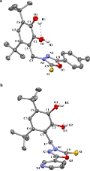
Synthesis, electrochemical properties, and antioxidant activity of sterically hindered catechols with 1,3,4-oxadiazole, 1,2,4-triazole, thiazole or pyridine fragments
Beilstein J. Org. Chem. 2024, 20, 2378–2391, doi:10.3762/bjoc.20.202
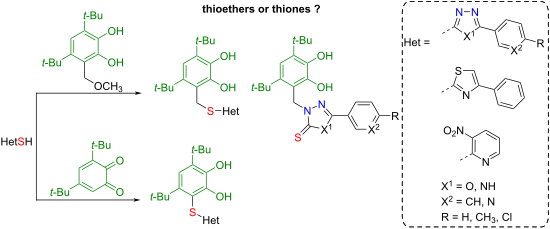
- derivatives are used as ligands in the synthesis of metal complexes (Ni(II), Pd(II), Pt(II), Cu(I), Ag(I) etc.) exhibiting antibacterial and antitumor activity [34]. In most cases, polyfunctional catechol thioethers were obtained by Michael reaction via the interaction of o-, p-benzoquinone and the




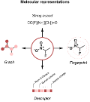
Catalysing (organo-)catalysis: Trends in the application of machine learning to enantioselective organocatalysis
Beilstein J. Org. Chem. 2024, 20, 2280–2304, doi:10.3762/bjoc.20.196
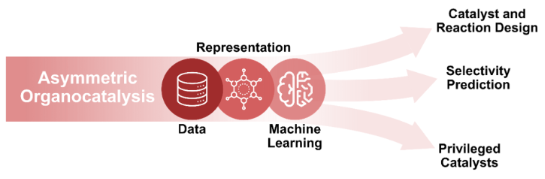
- and type II’ β-hairpin. Even though the latter was consistently lower in ground state energy (up to 6 kcal/mol for some catalysts), predictive models for enantioselectivity were found for both catalyst conformers in separate MLR models. For organophosphorous ligands of transition metal complexes, the
- minimum buried volume in a conformer ensemble was identified to determine the ligation state towards a metal centre as either mono- or bis-ligated and thus providing a threshold for catalytically active ligands [87]. All of these examples demonstrate that not only the type of descriptor is important, but




Factors influencing the performance of organocatalysts immobilised on solid supports: A review
Beilstein J. Org. Chem. 2024, 20, 2129–2142, doi:10.3762/bjoc.20.183
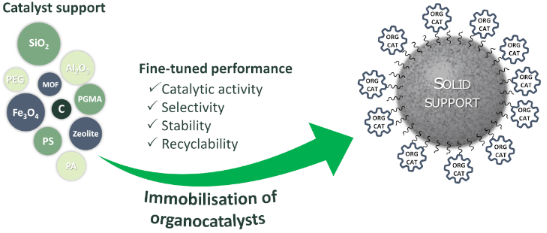
- modifications play a more important role. MOFs are a type of porous crystalline polymers where organic ligands are coordinated to metal clusters [80][81][82][83][84][85][86][87][88][89][90]. The framework can be post-synthetically modified by functional organic sites, often specifically chiral functionalities
- , giving easily recyclable asymmetric catalysts. The asymmetric sites can be different types, commonly they are binaphthyl-, biphenyl- [91][92][93] and proline-based [94][95]. COFs are a type of crystalline porous material, consisting of covalently linked organic ligands [96][97]. Since the framework only
- has organic building blocks, both condensation [98] and post-synthetic modification [99] methods can be used to immobilise organocatalysts. Asymmetric organocatalysis is commonly achieved by pyrrolidone ligands, with great results in a variety of reactions, such as Michael [100] and aldol [101


Efficacy of radical reactions of isocyanides with heteroatom radicals in organic synthesis
Beilstein J. Org. Chem. 2024, 20, 2114–2128, doi:10.3762/bjoc.20.182
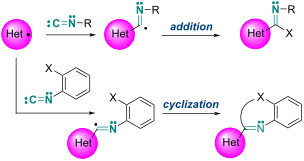
- conditions (as mentiond above), they worked well for the photoinduced radical cyclization of o-diisocyanoarenes (Scheme 18d) [39]. The obtained quinoxaline-2,3-diphosphines 28 are promising ligands for transition metal catalysts such as palladium catalysts. Aza-Bergman cyclization of o-alkynylaryl


Computational toolbox for the analysis of protein–glycan interactions
Beilstein J. Org. Chem. 2024, 20, 2084–2107, doi:10.3762/bjoc.20.180
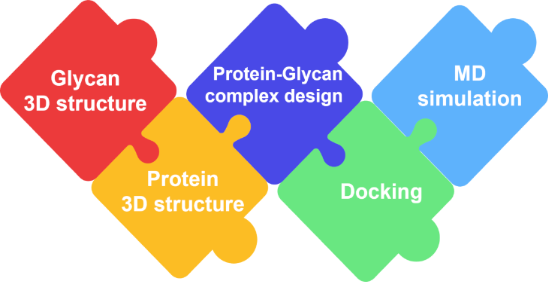
- involving unusual ligands, useful tools can be employed to provide the parameters needed for running MD simulations. Charge calculations and electron density computations for glycan units can be performed using tools like the online RED Server [70]. Although information on force fields is usually available
- structural information on lectins and their interactions with carbohydrate ligands, but also predicting the occurrence of lectins in genomes. UniLectin3d is one of the modules integrated in UniLectin, which provides curated information on 3D structures of lectins [94][95][96] a classification system based on
- automatically recognises putative binding sites to determine their centre and size, with the aim to adjust the docking box to suit specific query ligands. Finally, molecular docking calculations are performed with Autodock Vina (see below). 2. Fpocket [114]: It is an open-source pocket detection package based


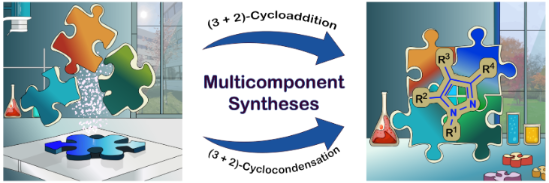
Multicomponent syntheses of pyrazoles via (3 + 2)-cyclocondensation and (3 + 2)-cycloaddition key steps
Beilstein J. Org. Chem. 2024, 20, 2024–2077, doi:10.3762/bjoc.20.178
- phosphane ligands is crucial for the selectivity in this reaction. Suzuki coupling can also serve for the functionalization of iodochromones 55, which, as α,β-unsaturated ketones, undergo ring opening under the reaction conditions, followed by Michael addition–cyclocondensation. Xie et al. devised a method




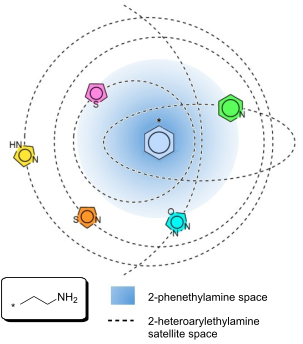
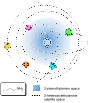
2-Heteroarylethylamines in medicinal chemistry: a review of 2-phenethylamine satellite chemical space
Beilstein J. Org. Chem. 2024, 20, 1880–1893, doi:10.3762/bjoc.20.163
- α4β2 nicotinic cholinergic receptor ligands with nanomolar activities in rat brain homogenates (Scheme 2). The idea behind these AEP structures was to check activity correlation against a nicotine series. The comparison of Ki values of both series showed a moderate correlation, which opens the
- et al. (Scheme 13) [41]. Isoxazole: Homoibotenic acid (HIBO) analogues are known ligands with pharmacological bioactive profile towards ionotropic and metabotropic glutamate receptors (iGluR and mGluR). 4-Substituted HIBO compounds 97 and 98 (Scheme 14) portrayed by Madsen et al. [68] and Kromann et
- 1-[2-thiazol-4-yl-(2-aminoethyl)]-4-N-propylpiperazine derivatives as substrates for acetylcholinesterase (AChE) and butyrylcholinesterase (BuChE). Compounds 106 and 107 showed good inhibitory potency as multitarget-directed ligands (MTD, Scheme 15). Oxadiazole: In their seminal work, Chiaramonte




The Groebke–Blackburn–Bienaymé reaction in its maturity: innovation and improvements since its 21st birthday (2019–2023)
Beilstein J. Org. Chem. 2024, 20, 1839–1879, doi:10.3762/bjoc.20.162
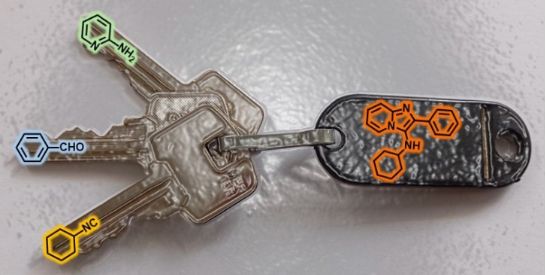
- cyclophanyl-imidazole-based library of ligands. The synthesis of ligands based on the [2.2]paracyclophane (PCP) moiety, thanks to its structural features and inherent planar chirality upon selective substitution, has been recently reviewed by the same author [46]. Starting from 4-formylcyclophane 37, a GBB
- -3CR with different isocyanides and amidines was exploited to synthesize PCP-based imidazo[1,2-a]pyridyl-substituted ligands 38 (Scheme 15). During the study of the scope, it was observed that 2-aminopyrazines afforded lower yields (12–48%) than 2-aminopyridines (42–87%), and this was attributed to






Hetero-polycyclic aromatic systems: A data-driven investigation of structure–property relationships
Beilstein J. Org. Chem. 2024, 20, 1817–1830, doi:10.3762/bjoc.20.160
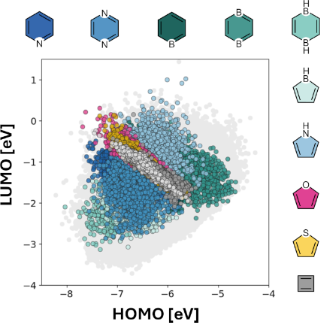
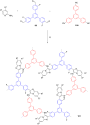
- from ligands for catalysts [2], through pharmaceuticals [3], to organic semiconductors [4][5]. Despite their fundamental and applicative importance to many fields, the vast chemical space of PASs has remained largely unexplored. As a result, the relationships between the arrangement and composition of



Oxidative fluorination with Selectfluor: A convenient procedure for preparing hypervalent iodine(V) fluorides
Beilstein J. Org. Chem. 2024, 20, 1785–1793, doi:10.3762/bjoc.20.157
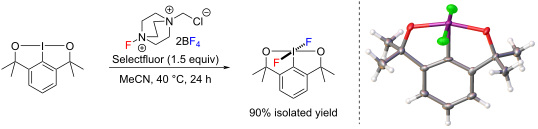
- disappointingly, no fluorination was observed. The disparity in reactivity between difluoroiodane 6 and trifluoroiodane 3 towards aryl Grignard reagents could be attributed to the different relationships between the fluorine ligands on the iodine(V) centre. In difluoroiodane 6 the fluorine ligands are restricted
- to a trans-configuration because of the bicyclic carbon skeleton. Trifluoroiodane 3, on the other hand, has both trans- and cis-configurations of the fluorine ligands which could play a key role in the reductive elimination step in the fluorination of phenylmagnesium bromide. Trifluoroiodane 3 also


pKalculator: A pKa predictor for C–H bonds
Beilstein J. Org. Chem. 2024, 20, 1614–1622, doi:10.3762/bjoc.20.144
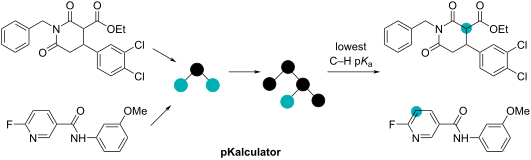
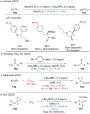
- ] and experimentally validated their approach using six pharmaceutical intermediates from medicinal chemistry programs. In the article, they state that ”Iridium catalysts ligated by bipyridine ligands catalyze the borylation of the aryl C–H bonds that are most acidic and least sterically hindered…”[45


![[Graphic 9]](/bjoc/content/inline/1860-5397-20-144-i12.svg?max-width=637&scale=1.3000021)


Benzylic C(sp3)–H fluorination
Beilstein J. Org. Chem. 2024, 20, 1527–1547, doi:10.3762/bjoc.20.137

- , non-photochemical, silver-catalysed HAT radical-polar crossover mechanism for nucleophilic benzylic fluorination (Figure 34) [85]. The authors proposed a similar mechanistic pathway to the photochemical methods, citing the use of amide ligands as important for modulating the silver catalyst stability




















Electrophotochemical metal-catalyzed synthesis of alkylnitriles from simple aliphatic carboxylic acids
Beilstein J. Org. Chem. 2024, 20, 1497–1503, doi:10.3762/bjoc.20.133
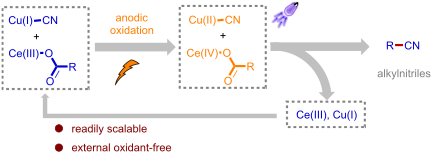
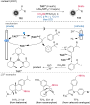
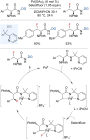
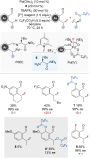
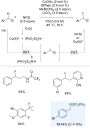
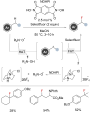
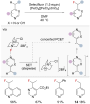
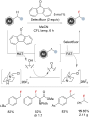
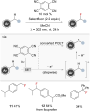
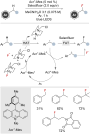
- available CeCl3 (10 mol %) and Cu(OTf)2 (5.0 mol %) together with bidentate nitrogen ligands such as BPhen, Phen, dtbbpy, and bpy with TMSCN as the cyanating reagent promoted the direct conversion of flurbiprofen (1) to the desired product (2) in good yields (Table 1, entries 1 and 2). Cu ions are well
- -known to be highly susceptible to electroplating on the cathode and thus require the use of ligands to avoid detrimental cathode deposition during electrolysis (Table 1, entry 3). In addition, we discovered that the additional use of DMF as co-solvent is beneficial to the reaction efficiency–reactions


Photoswitchable glycoligands targeting Pseudomonas aeruginosa LecA
Beilstein J. Org. Chem. 2024, 20, 1486–1496, doi:10.3762/bjoc.20.132
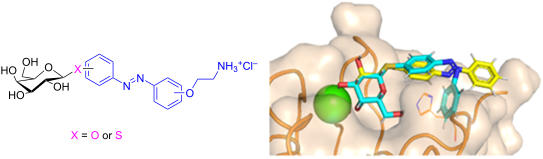
- antibiotic-sparing anti-infective drugs. Building synthetic glycoconjugates for the inhibition and modulation of bacterial lectins have shown promising results. Light-sensitive lectin ligands could allow the modulation of lectins activity with precise spatiotemporal control. Despite the potential of
- photoswitchable tools, few photochromic lectin ligands have been developed. We have designed and synthesized several O- and S-galactosyl azobenzenes as photoswitchable ligands of LecA and evaluated their binding affinity with isothermal titration calorimetry. We show that the synthesized monovalent glycoligands
- due to stronger unfavorable entropy, they are in general of lower affinity. The validation of this proof-of-concept and the dissection of thermodynamics of binding will help for the further development of lectin ligands that can be controlled by light. Keywords: carbohydrates; glycosyl azobenzenes


A comparison of structure, bonding and non-covalent interactions of aryl halide and diarylhalonium halogen-bond donors
Beilstein J. Org. Chem. 2024, 20, 1428–1435, doi:10.3762/bjoc.20.125
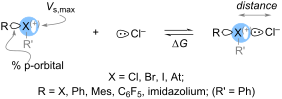
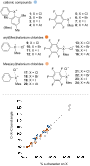
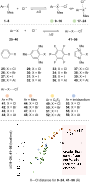
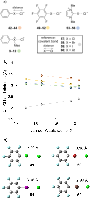
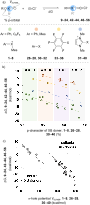
- consistent with Bent’s rule in which greater p-character is directed toward more electronegative ligands [44]. We also consider a correlation between Vs,max of the halogen-bond donor and ΔG of the halogen bond (Scheme 6c) [45]. Although a modest linear correlation (R2 = 0.90) was observed over all data




Challenge N- versus O-six-membered annulation: FeCl3-catalyzed synthesis of heterocyclic N,O-aminals
Beilstein J. Org. Chem. 2024, 20, 1412–1420, doi:10.3762/bjoc.20.123
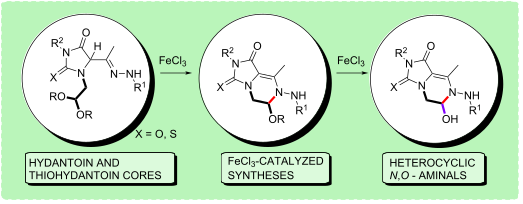
- related to Ewing sarcoma [8], IGF-1 receptor inhibitors [9] or act as ligands on corticotropin releasing hormone (CRH) [10], γ-aminobutyric acid (GABA) [11] and melanocortin receptors [12]. Given the established potencies of this class of N-ring-fused compounds, planned syntheses that simplify their




Hypervalent iodine-catalyzed amide and alkene coupling enabled by lithium salt activation
Beilstein J. Org. Chem. 2024, 20, 1405–1411, doi:10.3762/bjoc.20.122

- will then enable soft nucleophiles such as unadorned amides to readily participate in the ensuing olefin addition. In this regard, we wondered if the hypervalent iodine with difluoro ligands could undergo salt metathesis with lithium salts such as LiBF4 or LiPF6 to afford the more reactive cationic
- iodine catalyst with difluoro ligands. Interestingly, the use of different lithium salts also impacted the overall reaction rate, with the reaction using the less coordinating LiAsF6 salt proceeding faster than LiPF6 and LiBF4. This time study suggested that the hypervalent iodine precatalyst with the



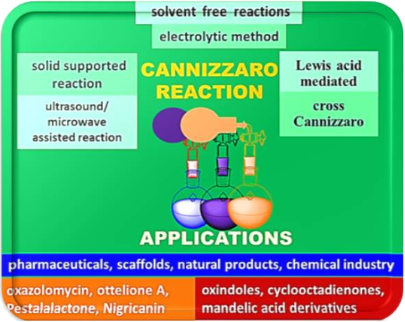
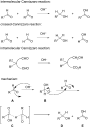
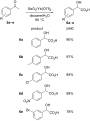
Synthetic applications of the Cannizzaro reaction
Beilstein J. Org. Chem. 2024, 20, 1376–1395, doi:10.3762/bjoc.20.120
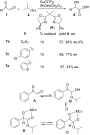
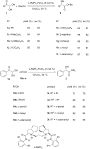
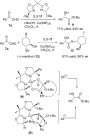
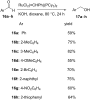
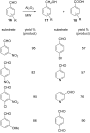
- represented in the table below. The yields and selectivity were found to be superior compared to bisoxazoline (BOX) ligands, which was attributed to the steric bulk imparted by the ligand at the stereoinduction step. Increasing the steric size of the alcohol also contributed to the increased







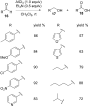


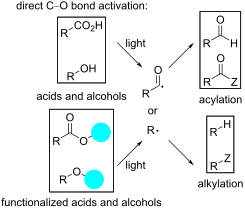
Generation of alkyl and acyl radicals by visible-light photoredox catalysis: direct activation of C–O bonds in organic transformations
Beilstein J. Org. Chem. 2024, 20, 1348–1375, doi:10.3762/bjoc.20.119
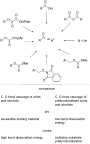
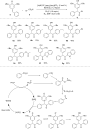
- conventional metal hydrides, such as tin or silicon hydrides. The reaction mechanism is interesting since first, a Lewis acid–base adduct is generated by interaction of Et3N with a boron atom of bis(catecholato)diboron (B2cat2, 19). As a result, one of the catecholate ligands experiences an increase in






Synthesis and optical properties of bis- and tris-alkynyl-2-trifluoromethylquinolines
Beilstein J. Org. Chem. 2024, 20, 1246–1255, doi:10.3762/bjoc.20.107
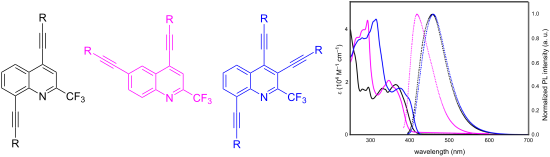
- ][23], dyes, preservatives and as ligands in complex chemistry [24][25][26][27]. In the context of our interest in the application of cross-coupling reactions to polyhalogenated heterocycles [28][29][30][31], we studied Sonogashira reactions of brominated 2-trifluoromethylquinolines. The optical