


Search results
Search for "selective" in Full Text gives 1589 result(s) in Beilstein Journal of Organic Chemistry. Showing first 200.
General method for the synthesis of enaminones via photocatalysis
Beilstein J. Org. Chem. 2025, 21, 1535–1543, doi:10.3762/bjoc.21.116
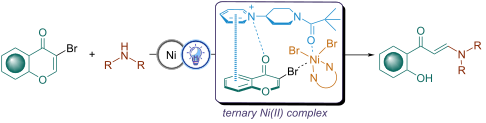
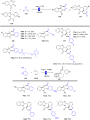
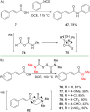
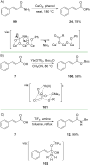
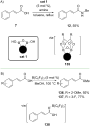
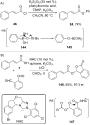
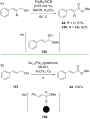
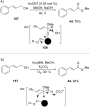
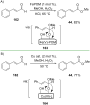
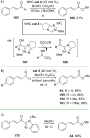
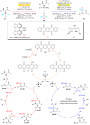
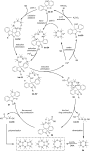
- enaminones has attracted much attention over the past decades. Kuwano’s group described the synthesis of enaminones from ethyl ketones via a nickel-catalyzed selective β-amination (Scheme 1A) [31]. The preparation of enaminones can also be achieved by the reaction of aldehydes and calcium carbide in the


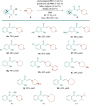


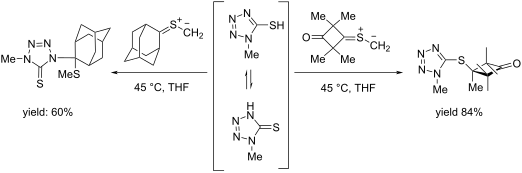
Ambident reactivity of enolizable 5-mercapto-1H-tetrazoles in trapping reactions with in situ-generated thiocarbonyl S-methanides derived from sterically crowded cycloaliphatic thioketones
Beilstein J. Org. Chem. 2025, 21, 1508–1519, doi:10.3762/bjoc.21.113
- demonstrate that the compounds exhibit selective activity towards HeLa cells. Conclusion The presented study showed that the sterically crowded thioketones 7c,d smoothly undergo the anticipated [3 + 2]-cycloaddition with diazomethane and 1,3,4-thiadiazolines 2c and 2d, respectively, were formed with complete


Photoredox-catalyzed arylation of isonitriles by diaryliodonium salts towards benzamides
Beilstein J. Org. Chem. 2025, 21, 1480–1488, doi:10.3762/bjoc.21.110
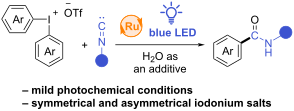
- isonitrile remained when only 1 equivalent was employed. The limited scope of iodonium salts for arylations usually arose from the poor range of synthetically accessible symmetrical salts compared to their unsymmetrical analogues. However, the selective transfer of one of the aryl groups is a main challenge
- evaluated and their reactivity was systematically analyzed in relation to the structural features of the iodonium salts and isonitriles. The study revealed that EWG-substituted diaryliodonium salts exhibited superior performance compared to EDG-substituted ones. Furthermore, the potential for selective


Copper catalysis: a constantly evolving field
Beilstein J. Org. Chem. 2025, 21, 1477–1479, doi:10.3762/bjoc.21.109
- hydride catalysis, and enantiotopic group-selective allylations of 1,1-diborylalkanes as core strategies. At the same time, the authors provide detailed mechanistic insights into the stereocontrol and provide a perspective on currently unresolved challenges in the field. Concerning Full Research Papers
Microwave-enhanced additive-free C–H amination of benzoxazoles catalysed by supported copper
Beilstein J. Org. Chem. 2025, 21, 1462–1476, doi:10.3762/bjoc.21.108
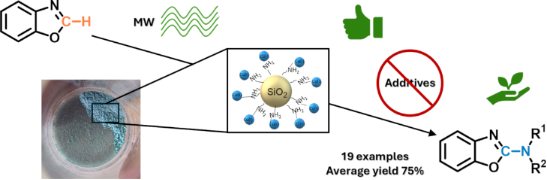
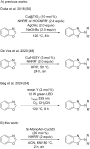
- catalysts for direct C–H amination processes could be a significant breakthrough in optimising these reactions. Despite recent progress in site-selective C–H functionalisation [49], most reactions have remained reliant on homogeneous catalysis due to its molecularly defined nature. By contrast, the
- reported in numerous green protocols, offer significant advantages over the use of conventional heating. The goal was to utilise selective, volumetric dielectric heating to save time and energy, enable selective catalysis and generally achieve higher selectivity and yields [53][55][56]. Building on the



Advances in nitrogen-containing helicenes: synthesis, chiroptical properties, and optoelectronic applications
Beilstein J. Org. Chem. 2025, 21, 1422–1453, doi:10.3762/bjoc.21.106
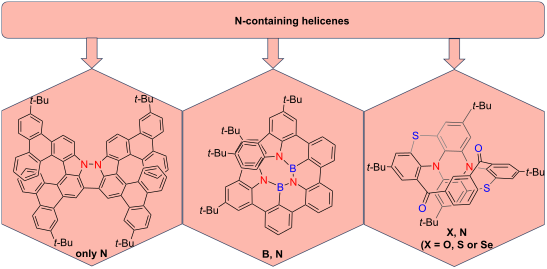
- (FWHM = 36 nm), |glum| = 1.1 × 10⁻³, |gEL| = 1.5 × 10⁻³, and an external quantum efficiency (EQE) of 0.14 – demonstrating promise for CPL-OLED applications [22]. Wanichacheva’s team reported urazole-functionalized aza[5]helicene 10, exhibiting selective Fe(III) sensing, marked solvatochromism, and a
- −1 (Table 3). Importantly, both dimers displayed selective fluoride ion recognition through hydrogen bonding, with (M,M)-12c exhibiting a high binding constant (Ka = 2 × 10⁵ M−1). The resulting [12c·F−] and [12d·F−] complexes exhibited red-shifted circular dichroism (CD), fluorescence, and CPL

Oxetanes: formation, reactivity and total syntheses of natural products
Beilstein J. Org. Chem. 2025, 21, 1324–1373, doi:10.3762/bjoc.21.101
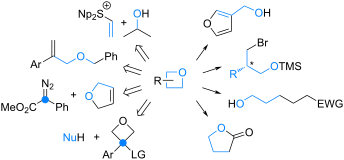
- previous need for strong base-induced alkylations with alkyl halides. The protocol is similarly mild, employs a Brønsted acid catalyst and affords the ether products 144 in moderate to high yields. In 2018, Shenvi and colleagues reported a Markovnikov-selective olefin hydroarylation based on an
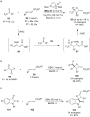
- 2020, Bull et al. published a short synthesis of 3-aryloxetan-3-carboxylic acids 152 employing a Friedel–Crafts alkylation (which builds on their previous alkylation of phenols [87]) and a selective furan oxidative cleavage (Scheme 37) [88]. The oxidation protocol uses a catalytic amount of a high
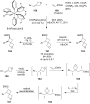
- . published a light-induced cross-selective [2 + 2] cycloaddition between 3-(arylmethylidene)oxetanes 159 and electron-deficient alkenes 160 (Scheme 40) [91]. The methodology used a commercially available iridium-based photosensitiser and blue-light irradiation at a slightly elevated temperature. The










Recent advances in amidyl radical-mediated photocatalytic direct intermolecular hydrogen atom transfer
Beilstein J. Org. Chem. 2025, 21, 1306–1323, doi:10.3762/bjoc.21.100
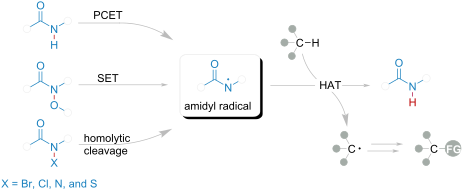
- of amidyl radicals as HAT reagents, with a particular emphasis on their role in the intermolecular HAT process. We highlight key developments, mechanistic insights, and emerging strategies that harness the unique reactivity of amidyl radicals in the selective functionalization of a variety of
- radicals, while halogenation was promoted by the introduced halogen atom [26]. In 2014, Alexanian’s group reported a site-selective aliphatic C–H bromination utilizing modified HRP as both the bromination reagent and HAT reagent (Scheme 11) [25]. Initiated by visible light, HRP-10 underwent homolytic
- that regenerated amidyl radical 45. This system effectively examined the site selectivity of aliphatic C–H bromination, yielding products 80–82, and 83 with 54% to 63% yields at selective positions. This bromination system provided a mild reaction environment suitable for aliphatic C–H bonds. In 2016






Recent advances in oxidative radical difunctionalization of N-arylacrylamides enabled by carbon radical reagents
Beilstein J. Org. Chem. 2025, 21, 1207–1271, doi:10.3762/bjoc.21.98
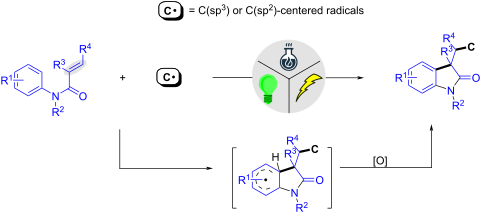
- oxidant and initiator, enabling an efficient intermolecular cascade cyclization process (Scheme 5) [5]. In this strategy, a novel, selective, metal-free synthetic method was introduced for the synthesis of isoxazoline-featured oxindoles through iminoxyl radical-promoted cascade oxyalkylation
- ) [6]. This methodology enabled the selective functionalization of one or two C(sp3)–H bonds adjacent to the nitrile group, leading to the formation of diverse polycycles with high selectivity. Various reaction parameters were systematically examined, including Lewis acids, oxidants, bases, reaction
- -coupling, using Cp2Fe-catalyzed electrochemical oxidation. This method leveraged the selective activation of the acidic α-C–H bond within the 1,3-dicarbonyl moiety to generate a carbon-centered radical, which was crucial for the subsequent cyclization. The reaction was carried out under reflux conditions














Synthesis of β-ketophosphonates through aerobic copper(II)-mediated phosphorylation of enol acetates
Beilstein J. Org. Chem. 2025, 21, 1192–1200, doi:10.3762/bjoc.21.96
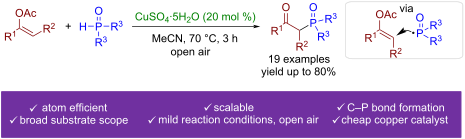
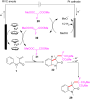
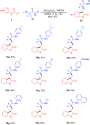
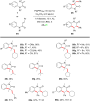
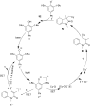
- reaction times, and scope limitations. In the present work, the selective copper(II)-mediated phosphorylation of enol acetates with the formation of substituted β-ketophosphonates employing cheap copper sulfate as a catalyst and atmospheric oxygen as a terminal oxidant was carried out (Scheme 1c). Results


Selective monoformylation of naphthalene-fused propellanes for methylene-alternating copolymers
Beilstein J. Org. Chem. 2025, 21, 1183–1191, doi:10.3762/bjoc.21.95
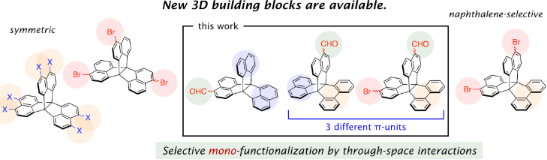
- blocks, we herein report electrophilic formylation of naphthalene-fused [3.3.3]- and [4.3.3]propellanes as the first selective single-point functionalization by virtue of through-space electronic communications between the naphthalene units. The propellane skeletons have well-defined 3D structures and
- display good solubility in CHCl3 and THF and adsorption properties for CO2 gas. Results and Discussion Selective monoformylation Initially, we tried introducing formyl groups into a fully π-fused [4.3.3]propellane via organometal species, which had been effective for functional π-extended systems [57][58
- ) [55][56][63][64][65][66] yielded the monoformyl product [4.3.3]_CHO, in a selective manner (Table 1, entry 1). To suppress decomposition in the overnight reaction at room temperature, the reaction time was reduced to 1.5 h, which afforded [4.3.3]_CHO in an isolated yield of 80% (Table 1, entry 2). The


Enhancing chemical synthesis planning: automated quantum mechanics-based regioselectivity prediction for C–H activation with directing groups
Beilstein J. Org. Chem. 2025, 21, 1171–1182, doi:10.3762/bjoc.21.94
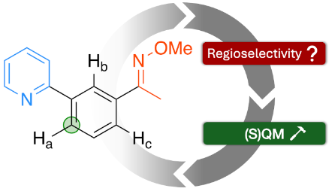
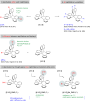
- Julius Seumer Nicolai Ree Jan H. Jensen Department of Chemistry, University of Copenhagen, Copenhagen, Denmark 10.3762/bjoc.21.94 Abstract The mild and selective functionalization of carbon–hydrogen (C–H) bonds remains a pivotal challenge in organic synthesis, crucial for developing complex
- bonds in organic chemicals. Therefore, their selective functionalization is essential for advancing the synthesis of complex molecules like pharmaceuticals, polymers, or agrochemicals [1][2][3]. Advancements in organometallic catalysis have facilitated significant progress in this area through C–H
- module [18]. Similarly to previous works [9][14], we focus on the CMD step, the first and commonly the rate-determining step in C–H activation, and consider the prototypical Pd(OAc)2 catalyst. Using a selective approach, we calculate the relative energies of all relevant palladacycle intermediates using


Synthetic approach to borrelidin fragments: focus on key intermediates
Beilstein J. Org. Chem. 2025, 21, 1135–1160, doi:10.3762/bjoc.21.91
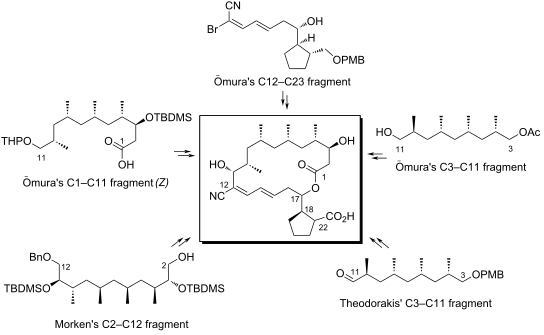
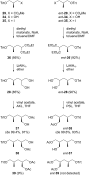
- with vinyl acetate as the acylating agent, Amano lipase AK (AKL) was identified as the most effective biocatalyst for achieving selective acetylation, converting diol 28 to the monoacetate 37 in 91% yield with >99.4% de (by HPLC). The diacetate byproduct 39 was formed in a small amount (9%). A similar








Gold extraction at the molecular level using α- and β-cyclodextrins
Beilstein J. Org. Chem. 2025, 21, 1116–1125, doi:10.3762/bjoc.21.89
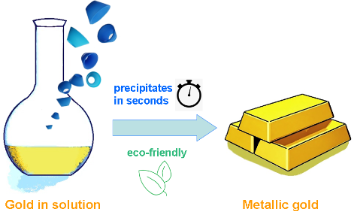
- . Practical applications of this ability are directed to the selective isolation of gold from a variety of sources, spanning from gold-rich mining ores and tailings/mining wastes to gold-bearing metal scraps obtained from disposed electronic devices. Moreover, it describes the development of a method based on
- sections of this review. The combination of interactions linking cyclodextrin channels with infinite polymer chains of tetrahaloaurate ions and their counterions affords a highly specific and stable superstructure that is the working pillar for the efficient and selective process of gold recovery from
- by hydrogen-bond interactions and oriented in alternating head-to-head and tail-to-tail modes comprising a continuous channel filled by an alternating [K(OH2)6]+ and [AuBr4]− polyionic chain (Figure 1). The authors further demonstrated that the process is selective for gold by determining, using ICP


Recent advances in synthetic approaches for bioactive cinnamic acid derivatives
Beilstein J. Org. Chem. 2025, 21, 1031–1086, doi:10.3762/bjoc.21.85
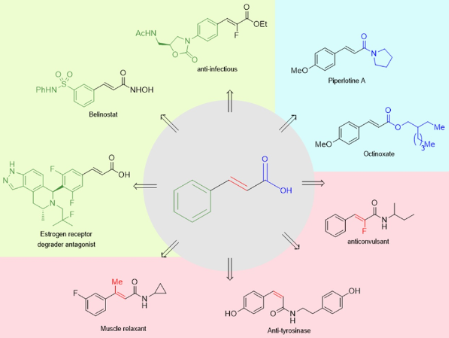
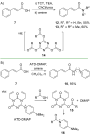
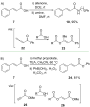
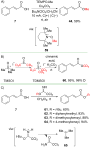
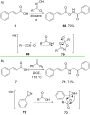
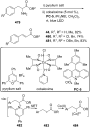
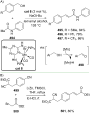
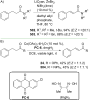
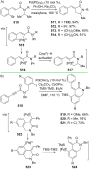
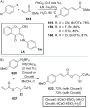
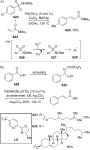
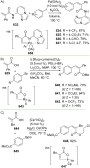
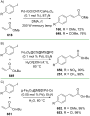
- the past five years is presented, particularly emphasizing the active scaffolds of bioactive cinnamic acid derivatives. The review provides a strategic overview of alternative synthetic routes and highlights the latest innovations, including more efficient, highly selective, and environmentally
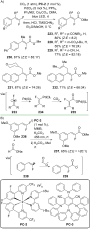
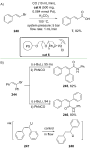
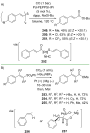
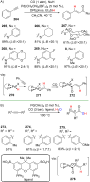
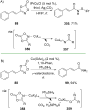
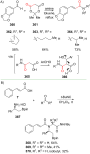
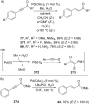
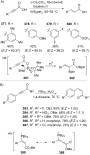
- acid possesses three distinct functional groups: carboxyl, alkenyl, and aromatic (Scheme 1). Therefore, highly selective reaction strategies are immensely desired for cinnamic acid derivatizations, preventing other functional groups from interfering. This review is partitioned into specific
- significantly to the efficient and cost-effective production of cinnamic acid derivatives. This review focuses on diverse, one-step strategies to access cinnamic acid derivatives with more efficient, highly selective, and sustainable approaches. By examining recent advancements in the design and synthesis of










































Recent total synthesis of natural products leveraging a strategy of enamide cyclization
Beilstein J. Org. Chem. 2025, 21, 999–1009, doi:10.3762/bjoc.21.81
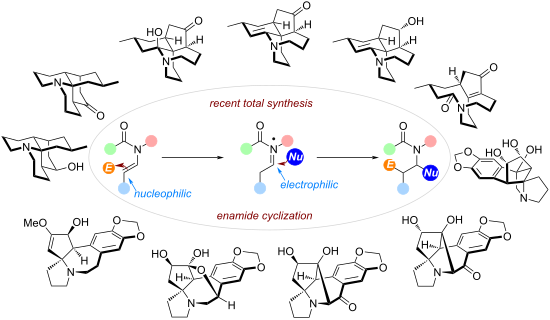
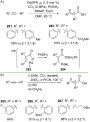
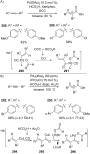
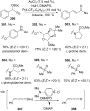
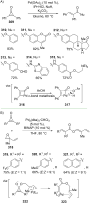
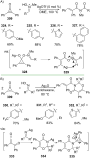
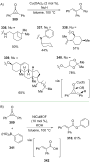
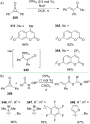
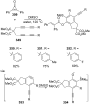
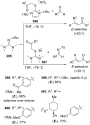
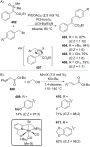
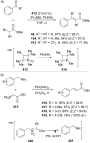
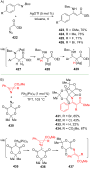
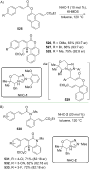
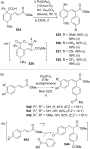
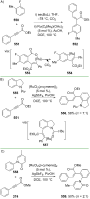
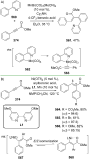
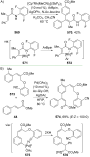
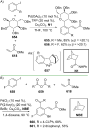
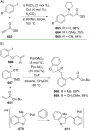
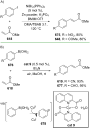
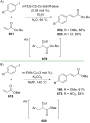
- the terminal alkene and the conformational strain of forming a bridge[3.2.1]bicycle might be responsible for a selective 6-exo-trig cyclization. From tricyclic compound 4, anti-Markovnikov oxidation catalyzed by palladium led to the formation of aldehyde 5. When treated with p-TsOH, the intramolecular
- divergent total synthesis of several Cephalotaxus alkaloids. The α-hydroxylation of cyclopentanone, followed by amide reduction and methanol elimination in one-pot, produced (−)-cephalotaxine in 9 steps. Alternatively, Riley SeO2 oxidation of 31, benzylic bromination/hydrolyzation, facial selective ketone





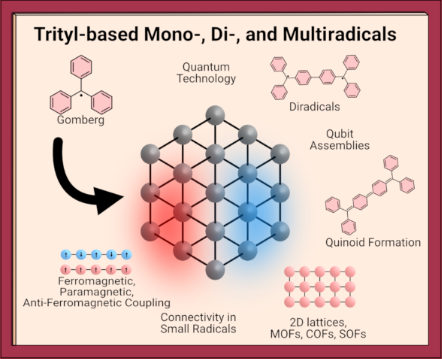
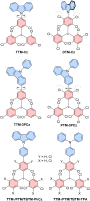
On the photoluminescence in triarylmethyl-centered mono-, di-, and multiradicals
Beilstein J. Org. Chem. 2025, 21, 964–998, doi:10.3762/bjoc.21.80



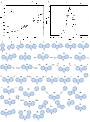


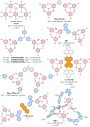


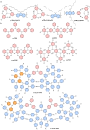
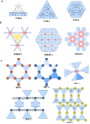


Studies on the syntheses of β-carboline alkaloids brevicarine and brevicolline
Beilstein J. Org. Chem. 2025, 21, 955–963, doi:10.3762/bjoc.21.79
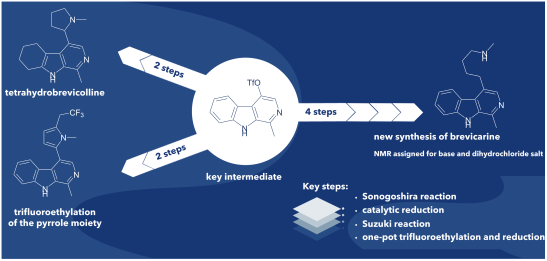
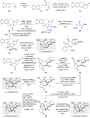
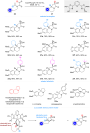
- ester 29 gave pyrrolo-β-carboline 30 in excellent yield (Scheme 7). Our attempts for the selective saturation of the pyrrole ring of 30 by catalytic reduction were unsuccessful. When the hydrogenation was carried out under mild conditions (ambient temperature, 15 bar H2) in the presence of PtO2.H2O
- ) were also ineffective. Based on literature data [42][43], we attempted the selective reduction of the pyrrole ring of compound 30 with NaCNBH3 in TFA as well. Surprisingly, trifluoroethylated product 32 was isolated. The formation of this compound can also be explained on the basis of analogies


Harnessing tethered nitreniums for diastereoselective amino-sulfonoxylation of alkenes
Beilstein J. Org. Chem. 2025, 21, 947–954, doi:10.3762/bjoc.21.78

- ring was opened in a diastereoselective (SN2 type) and exo-selective manner by a trifluoroacetate anion. The trifluoroacetate anion was conveniently derived from (bis(trifluoroacetoxy)iodo)benzene (PIFA), which was used as the stoichiometric oxidant in the reaction. Overall, this amounted to a highly
- single regioisomer and diastereomer of B was formed (within the limits of 1H NMR detection), attesting to very selective reactivity. Here and in related projects, we found that many I(III) sources could generate a nitrenium ion, including iodosobenzene (PhIO) and iodomesitylene diacetate. However, unless
- , which attacks the pendant olefin to form an aziridinium cation (Scheme 2). A sulfonate counter-anion then opens this aziridinium ring in an exo-selective, SN2 reaction. We were successful in scaling the reaction from 0.3 mmol to 11.5 mmol (38-fold increase) without any erosion in yield or selectivity


A convergent synthetic approach to the tetracyclic core framework of khayanolide-type limonoids
Beilstein J. Org. Chem. 2025, 21, 926–934, doi:10.3762/bjoc.21.75
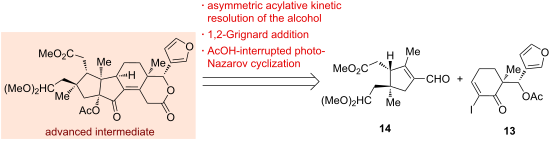
- reactivity of those two alcohols toward oxidation allowed for the selective conversion of desired alcohol to ketone 24 using PCC, producing a 50% overall yield, while the recovered undesired alcohol could be reverted to 21 by Swern oxidation. Direct enol triflation (Et3N/Tf2O, NaH/PhNTf2, DTBMP/Tf2O, etc




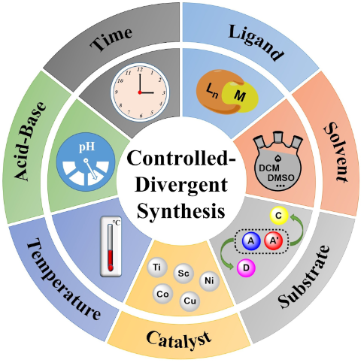
Recent advances in controllable/divergent synthesis
Beilstein J. Org. Chem. 2025, 21, 890–914, doi:10.3762/bjoc.21.73
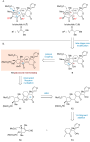
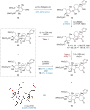
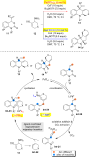
- insertion to achieve C3 selectivity, whereas nickel catalysis involved alkene isomerization to generate a (2,3-dihydropyrrolyl) intermediate Int-35, followed by C2-selective coupling. In 2024, the Zheng group reported a catalyst-controlled cyclization reaction of bicyclo[1.1.0]butanes (BCBs) 32 with α
- activation induces selective migration of the less sterically hindered secondary carbon center with concomitant dinitrogen elimination, yielding 3-aza-BCHepe as the final product. Solvent control The solvent microenvironment emerged as a critical determinant in governing stereochemical outcomes, exerting
- achieved selective synthesis of either enantiomer of a target product by controlling the reaction duration (Scheme 13) [42]. When performing the asymmetric intermolecular allylic amination of 6-hydroxyisoquinoline (49) with tert-butyl(1-phenylallyl)carbonate ((rac)-50) using an Ir catalyst derived from [Ir







Dicarboxylate recognition based on ultracycle hosts through cooperative hydrogen bonding and anion–π interactions
Beilstein J. Org. Chem. 2025, 21, 884–889, doi:10.3762/bjoc.21.72
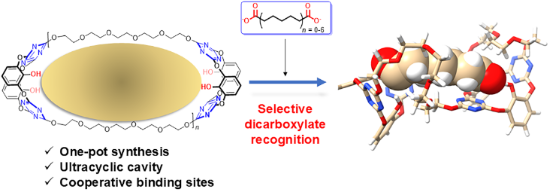
- carbon skeletons of many dicarboxylates make selective recognition particularly difficult. To address these challenges, we envisioned that ultracycles composed of macrocycles with anion-binding capabilities could serve as suitable hosts for efficient and selective dicarboxylate recognition. In this study
- introduction of lower-rim hydroxy substituents effectively enhances the dicarboxylate binding through cooperative hydrogen bonding and anion–π interactions. The selective recognition of long and flexible dicarboxylates holds exciting promise for the use of dicarboxylate sensors in medicine and industry. (a, b


Cu–Bpin-mediated dimerization of 4,4-dichloro-2-butenoic acid derivatives enables the synthesis of densely functionalized cyclopropanes
Beilstein J. Org. Chem. 2025, 21, 877–883, doi:10.3762/bjoc.21.71
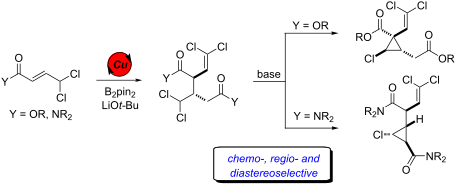
- organoboron compound with CuOt-Bu and subsequent SN2’-selective allylic alkylation of 1. The densely functionalized structure of these dimerization products offers a versatile synthetic handle for further chemoselective functionalization. Considering the presence of two enolizable esters together with the
- details). In contrast, the use of CsF in dioxane at 70 °C proved to be efficient and selectively provided cyclopropane 9 in good yield, albeit with no diastereoselectivity (Table 2, entry 1). Cs2CO3 was also selective for this cyclization and provided a slight increase in diastereoselectivity, although
- . However, when the reaction was carried out with KOt-Bu, we observed the selective conversion of 9 into product 20 featuring a different cyclopropane scaffold. Slight modification of the reaction conditions allowed us to obtain product 20 in 56% yield as a single diastereomer (Scheme 5a). Taking advantage


Light-enabled intramolecular [2 + 2] cycloaddition via photoactivation of simple alkenylboronic esters
Beilstein J. Org. Chem. 2025, 21, 854–863, doi:10.3762/bjoc.21.69
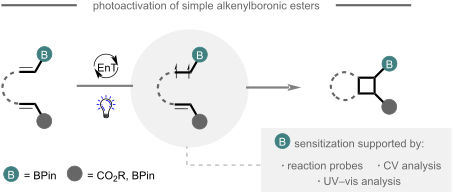
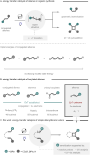
- prohibitively high in energy for selective reactivity [5]. The inception of energy transfer catalysis (EnT) has expedited discoveries concerning the photoactivation of organic molecules [15][16][17], enabling direct access to the triplet excited state through the use of a photocatalyst (Figure 1A, top
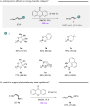
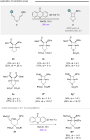
- achieved. It is pertinent to note the enhanced levels of diastereoselectivity obtained for this reaction further underscore the potential of gold catalysts for future EnT reactions. Control reactions indicate selective activation of the α,β-unsaturated ester (see Supporting Information File 1 for full



Unraveling cooperative interactions between complexed ions in dual-host strategy for cesium salt separation
Beilstein J. Org. Chem. 2025, 21, 845–853, doi:10.3762/bjoc.21.68
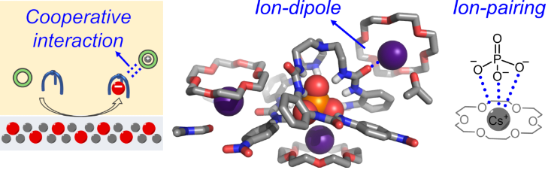
- dual-host systems for selective ion separation. Keywords: anion binding; cesium extraction; dual-host strategy; ion-pair interaction; solid–liquid extraction; Introduction Ion-pair interaction, defined as the electrostatic attraction between a positively charged cation and a negatively charged anion
- ]. According to our previous results, the binding affinity of L with chloride, sulfate and phosphate is determined to be 2.2 × 10² M−1, 9.9 × 10⁴ M−1, and 3.8 × 10⁶ M−1, respectively (in DMSO) [31]. Such strong anion binding affinity has led to selective extraction of sulfate and phosphate from basic aqueous
- accessibility of the dual-host strategy and suggest that cooperative interactions between receptor-complexed ions can be fine-tuned for selective ion separation. Ongoing work aims to explore diverse combinations of anion and cation receptors for targeted ion separation applications. (a) Schematic illustration





