Search results
Search for "carbon" in Full Text gives 2159 result(s) in Beilstein Journal of Organic Chemistry. Showing first 200.
Recent total synthesis of natural products leveraging a strategy of enamide cyclization
Beilstein J. Org. Chem. 2025, 21, 999–1009, doi:10.3762/bjoc.21.81
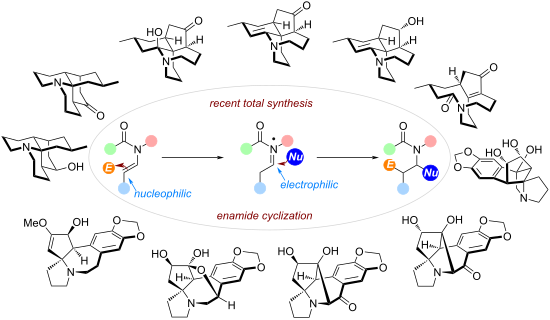
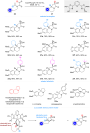
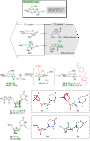
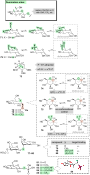
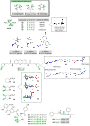
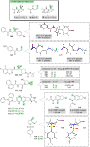
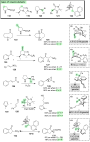
- tertiary enamides as cyclization precursors (Scheme 6). The analogous polycyclization generated a tetracyclic N-heterocycle with three continuous stereogenic centers, one of them being an aza-quaternary carbon [31]. The resulting fused ring-system structurally resembles the nucleus of erysotramidine





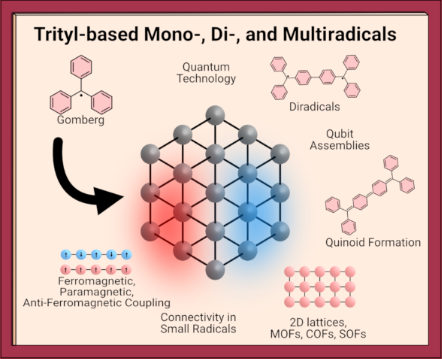
On the photoluminescence in triarylmethyl-centered mono-, di-, and multiradicals
Beilstein J. Org. Chem. 2025, 21, 964–998, doi:10.3762/bjoc.21.80
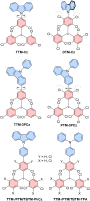
- ΔEST of order 10−7 kcal mol−1 (see Figure 12a) [98]. No photoluminescence has been reported for bPTM; however, this diradical shows extremely long coherence times of order T1 = 1 s (thermalization, spin lattice relaxation) and TM ≈ 67 µs (phase memory time), both determined in carbon disulfide as a









A convergent synthetic approach to the tetracyclic core framework of khayanolide-type limonoids
Beilstein J. Org. Chem. 2025, 21, 926–934, doi:10.3762/bjoc.21.75
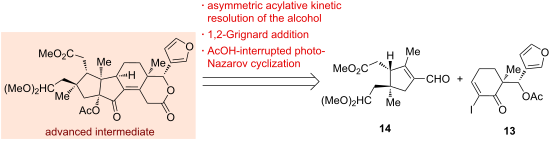
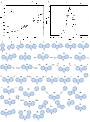
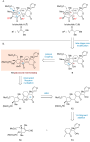
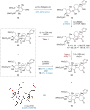
- simultaneously installing the hydroxy group at C30. The latter intermediate could in turn be derived from dienone 11 by an AcOH-interrupted Nazarov cyclization [32][33][34], thereby establishing the B ring with the desired all-cis stereochemical configuration, including the quaternary carbon at C10 and the
- 4.4:1 mixture of regioisomeric alcohols with the desired isomer being the major component, presumably due to the considerable steric hindrance from the quaternary carbon at C4. However, decagram-scale separation of these two isomers by chromatography proved troublesome. Fortunately, the distinct




Recent advances in controllable/divergent synthesis
Beilstein J. Org. Chem. 2025, 21, 890–914, doi:10.3762/bjoc.21.73
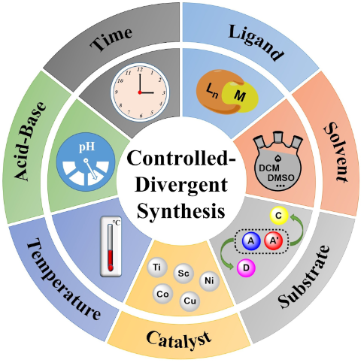
- carbon monoxide were used as starting materials, and two natural product frameworks of phenanthridone and acridone alkaloids could be selectively obtained by controlling ligands. The reaction of o-iodoaniline with in situ-generated arynes under CO atmosphere under ligand-free conditions selectively
- to substrate 11, followed by oxidative addition and release of carbon dioxide to form the zwitterionic π-allylpalladium intermediate Int-21. Under the reaction conditions, silyl triflate 12 undergoes a fluoride-mediated 1,2-elimination to generate the cyclic allene intermediate Int-22. Through a
- influence of steric and electronic effects during the hydrometallation process, simultaneously achieving the synthesis of chiral α-quaternary carbon amino acid derivatives 26 and α-chiral β-amino acid derivatives 27. Using a copper catalyst, the chiral α-quaternary carbon amino acid derivatives 26 were







Dicarboxylate recognition based on ultracycle hosts through cooperative hydrogen bonding and anion–π interactions
Beilstein J. Org. Chem. 2025, 21, 884–889, doi:10.3762/bjoc.21.72
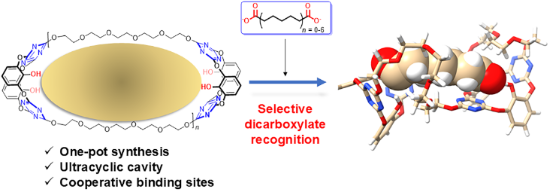
- carbon skeletons of many dicarboxylates make selective recognition particularly difficult. To address these challenges, we envisioned that ultracycles composed of macrocycles with anion-binding capabilities could serve as suitable hosts for efficient and selective dicarboxylate recognition. In this study


4-(1-Methylamino)ethylidene-1,5-disubstituted pyrrolidine-2,3-diones: synthesis, anti-inflammatory effect and in silico approaches
Beilstein J. Org. Chem. 2025, 21, 817–829, doi:10.3762/bjoc.21.65
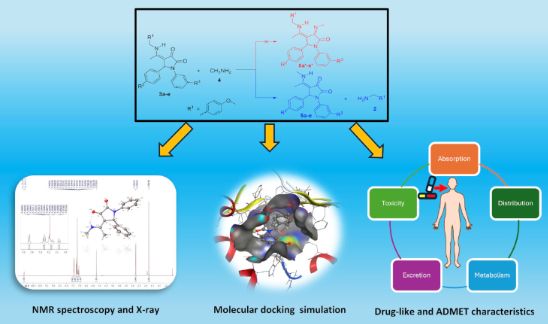
- ) has occurred at the exocyclic sp2-hybridized carbon atom, leading to the substitution of the 4-methoxybenzylamino group by a methylamino group. Therefore, the presence of substituents (electron-donating or electron-withdrawing groups) on the benzene rings attached to the 1- and 5-positions of the
- ). Furthermore, the 2D 1H–13C HMBC NMR spectrum of 5a also exhibited the correlation between protons of two methyl groups and the same carbon atom resonance at 165.52 ppm, respectively (see Supporting Information File 1). Consequently, the signal at 165.52 ppm in the 13C NMR spectrum corresponds to the sp2
- -hybridized carbon atom directly bonded to the nitrogen atom of the secondary amino group of compound 5a. In the structure of each pyrrolidine-2,3-dione derivative 3a–e, there is an α,β-unsaturated ketone moiety in which the π systems of the C=C and C=O bonds could overlap each other to yield an extended


Synthesis and photoinduced switching properties of C7-heteroatom containing push–pull norbornadiene derivatives
Beilstein J. Org. Chem. 2025, 21, 807–816, doi:10.3762/bjoc.21.64
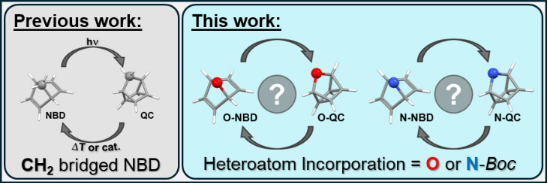
- , it is essential not only to achieve a high storage density and good quantum efficiency for the isomerization process but also to ensure large half-lifes and durability in switching reliability [20]. By making structural adjustments to the parent carbon scaffold, it is possible to target specific
- considering the carbon-based scaffold as superior regarding their properties, while also highlighting some unique properties exhibited by heterocyclic derivatives [21]. C7-substituted NBD species have been scarcely investigated in terms of their switching behavior but have been employed as synthetic
- synthesized (Scheme 1, bottom). In contrast to the previously synthesized large library carbon-based NBDs [40], only a few heterocyclic derivatives were successfully isolated. During the monitoring of additional reactions attempting to reproduce the literature scope, in most cases traces of new NBD species


Regioselective formal hydrocyanation of allenes: synthesis of β,γ-unsaturated nitriles with α-all-carbon quaternary centers
Beilstein J. Org. Chem. 2025, 21, 800–806, doi:10.3762/bjoc.21.63
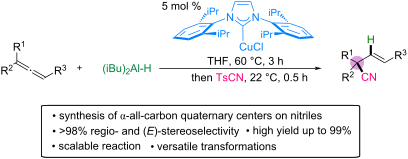
- by the regio- and stereoselective allylation with p-toluenesulfonyl cyanide. The proposed methodology is efficient for accessing acyclic β,γ-unsaturated nitriles with α-all-carbon quaternary centers and achieves yields up to 99% and excellent regio- and E-selectivity. The reaction proceeds under mild
- catalysis; hydrocyanation; regioselectivity; tosyl cyanide; Introduction Acyclic nitriles that incorporate α-all-carbon quaternary centers are highly valuable structural motifs typically found in natural products, biologically active compounds, and synthetic pharmaceuticals [1][2][3][4][5]. These compounds
- are important intermediates in organic syntheses because of the versatility of the cyano group, which can be readily transformed into a wide range of functional groups, including amides, carboxylic acids, amines, aldehydes, ketones, and N-heterocycles [6][7][8]. However, the synthesis of all-carbon




Carbon-rich materials: from polyaromatic molecules to fullerenes and other carbon allotropes
Beilstein J. Org. Chem. 2025, 21, 798–799, doi:10.3762/bjoc.21.62
- Hiroko Yamada Yoko Yamakoshi Institute for Chemical Research, Kyoto University, Gokasho, Uji, Kyoto, 611-0011, Japan Department of Chemistry and Applied Biosciences, ETH Zürich, Zürich CH8093, Switzerland 10.3762/bjoc.21.62 Keywords: carbon allotropes; carbon-rich materials; fullerenes
- ; polyaromatic molecules; In addition to diamond and graphite, traditional carbon allotropes in our old high-school textbook, new types of carbon allotropes, molecular carbons, were discovered in the last decades. These include fullerenes (1985) [1], carbon nanotubes (1991) [2], and graphene (2004) [3]. Due to
- their unique electronic and photophysical properties, research in the area of carbon-rich molecules and polyaromatic molecules became explosive in their activity and a numerous new studies and directions have emerged. Because of dramatic expansion and development of these research areas, these molecules
Recent advances in the electrochemical synthesis of organophosphorus compounds
Beilstein J. Org. Chem. 2025, 21, 770–797, doi:10.3762/bjoc.21.61
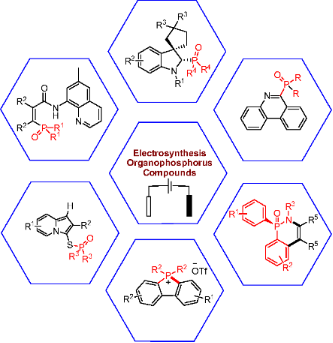
- synthesis of various organophosphorus compounds through the formation of phosphorus–carbon, phosphorus–nitrogen, phosphorus–oxygen, phosphorus–sulfur, and phosphorus–selenium bonds. The impact of different electrodes is also discussed in this matter. Graphite, platinum, RVC, and nickel electrodes have been
- organophosphorus compounds, in which phosphorus is attached to carbon or heteroatom centers. In this article, we describe recent advances in electrochemical green methods for the synthesis of various organophosphorus compounds through the formation of phosphorus–carbon, phosphorus–nitrogen, phosphorus–oxygen
- , phosphorus–sulfur, and phosphorus–selenium bonds. The impact of different electrodes is also discussed in this matter. Graphite, platinum, reticulated vitreous carbon (RVC), and nickel electrodes have been used extensively for the electrochemical synthesis of organophosphorus compounds. Review


New advances in asymmetric organocatalysis II
Beilstein J. Org. Chem. 2025, 21, 766–769, doi:10.3762/bjoc.21.60
- commonly defined as a form of catalysis where a small organic molecule, an organocatalyst, accelerates a chemical reaction. Unlike previously regarded traditional catalysts involving metals or enzymes, organocatalysts are composed of nonmetal elements, such as carbon, hydrogen, nitrogen, oxygen, phosphorus

Development and mechanistic studies of calcium–BINOL phosphate-catalyzed hydrocyanation of hydrazones
Beilstein J. Org. Chem. 2025, 21, 755–765, doi:10.3762/bjoc.21.59
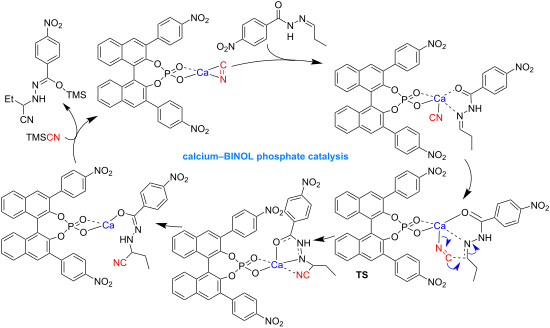
- , resulting in detachment of the cyanide carbon from the calcium atom to yield an isocyanide complex 9 [55], in which the preferred side of attack on the imine carbon of the hydrazone is already predetermined (i.e., from either Re or Si face). Notably, in both complexes formed from E- and Z-hydrazone, an
- moiety are non-linear with a Ca–N–C angle of 100°. Due to the stereospecificity of the reaction, racemization would have to occur already in 9 through a topomerization (e.g., similar to a Berry pseudorotation) of the metal complex, considering that species with a quaternary carbon, as they appear in
- isomer, with a more acute Ca–N–C angle of 92°, has greater resemblance to a (here absent) side-on form (found to dominate computationally for Ca(CN)2 in the gas phase) [54]. Fortunately, that isomer in which the isonitrile carbon is closer to the imine carbon (i.e., the hydrocyanation reaction center


Synthesis of HBC fluorophores with an electrophilic handle for covalent attachment to Pepper RNA
Beilstein J. Org. Chem. 2025, 21, 727–735, doi:10.3762/bjoc.21.56
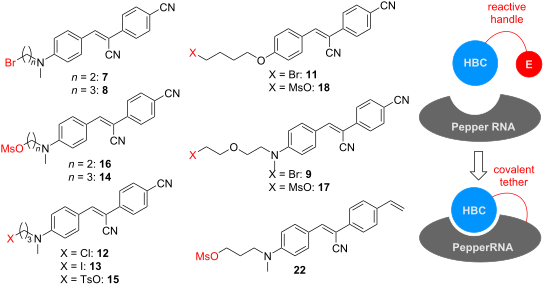
- -cyanophenylacetonitrile afforded HBC 4 and HBC-like ligands 5 and 6 as bright orange solids. Finally, the bromo group was introduced under Appel conditions with carbon tetrabromide and triphenylphosphine to give the fluorophores 7, 8, and 9, with linker lengths of two, three, and five atoms. Unfortunately, this strategy
- obtained in general procedure B was dissolved in dichloromethane and cooled to 0 °C under argon atmosphere. Then, triphenylphosphine and carbon tetrabromide were added and stirred at room temperature for two hours. Afterwards, the entire mixture was loaded on a silica gel column and eluted with 100

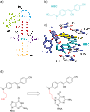


Origami with small molecules: exploiting the C–F bond as a conformational tool
Beilstein J. Org. Chem. 2025, 21, 680–716, doi:10.3762/bjoc.21.54
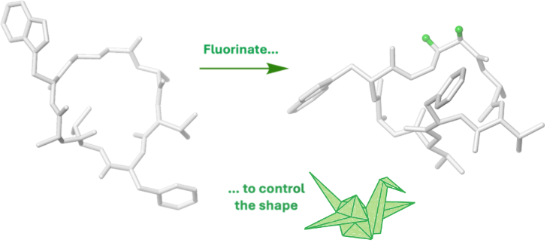
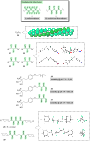
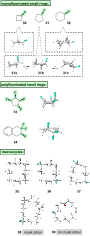
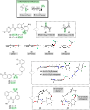
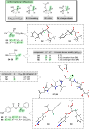
- oriented antiparallel to another dipole within the molecule, or in which the fluorine atom is located close to a positively charged atom, will be stabilised. Third, the C–F bond has a low-lying σ* antibonding orbital, the larger lobe of which is located behind the carbon atom. This empty orbital is
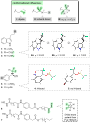
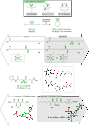
- fluorinated motif with its gauche-aligned C–F bonds [22]. We will now consider what happens when fluorine is introduced into the middle of an alkyl chain. If two fluorines are attached to the same carbon (i.e., a 1,1-difluoro pattern), a subtle but important perturbation occurs to the shape of the alkyl chain
- this phenomenon is provided by Bent’s rule [24], which predicts that the C–F bonds will have greater p character and the C(F2)–C bonds will have greater s character, with an accompanying deviation of the central carbon atom away from a perfectly tetrahedral shape. A functional outcome of C–C(F2)–C



Recent advances in allylation of chiral secondary alkylcopper species
Beilstein J. Org. Chem. 2025, 21, 639–658, doi:10.3762/bjoc.21.51
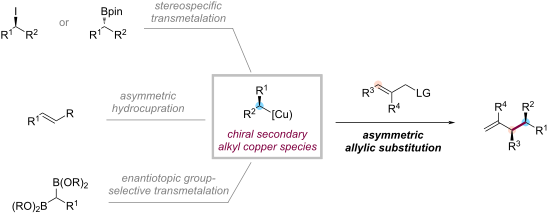
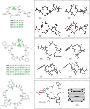
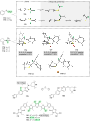
- significance of this transformation lies in its unique ability to efficiently create a stereogenic center while forming new carbon–carbon or carbon–heteroatom bonds (e.g., C–N, C–O, and C–S) with excellent selectivities. The field of metal-catalyzed allylic substitution has evolved significantly since its
- into a powerful and versatile tool in asymmetric synthesis, capable of employing a wide array of organometallic reagents that furnish the desired compounds with high efficiency and selectivity. The regioselective asymmetric construction of stereogenic carbon centers from prochiral allylic substrates
- largely depends on the choice of the nucleophilic organometallic species (Scheme 2). For example, the asymmetric copper-catalyzed allylic alkylation utilizing organometallic species 5 bearing a primary carbon–metal bond predominantly constructs the stereogenic center derived from electrophiles. The





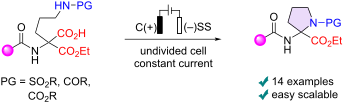
Entry to 2-aminoprolines via electrochemical decarboxylative amidation of N‑acetylamino malonic acid monoesters
Beilstein J. Org. Chem. 2025, 21, 630–638, doi:10.3762/bjoc.21.50
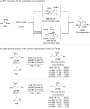
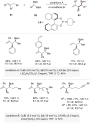
- addressed. Initially, we hypothesized that 11a may form by a single-electron oxidation/decarboxylation (Kolbe reaction) of 9a to generate carbon-centered radical, followed by hydrogen abstraction from solvent. To verify the hypothesis, an electrolysis of acid 9d was performed under optimized conditions
- observed by LC–MS when the electrolysis was performed in 5:1 MeCN/D2O (Scheme 2, reaction 2). The considerably higher O–H bond dissociation energy (119 kcal/mol) [12] as compared to that of the C–H bond in MeCN (86 kcal/mol) [13] renders the hydrogen atom abstraction from water by a carbon-centered radical
- column chromatography. Cyclic voltammetry studies CV experiments were carried out in an SVC-2 (ALS, Japan) three-electrode cell using a PalmSens4 (PalmSens). A glassy carbon disk (diameter: 1.6 mm) served as the working electrode and a platinum wire as the counter electrode. The glassy carbon disk was



Semisynthetic derivatives of massarilactone D with cytotoxic and nematicidal activities
Beilstein J. Org. Chem. 2025, 21, 607–615, doi:10.3762/bjoc.21.48
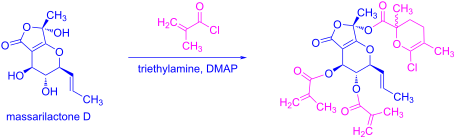
- molecular ion at m/z 633.2077 [M + H]+ (calcd. for C38H32O9+: 633.2119). This implies that compound 4 has 390 more atomic mass units than massarilactone D, suggesting the presence of three additional cinnamoyl groups. The presence of three cinnamoyl moieties was supported by carbon signals observed at δC
- signals observed at δH 6.92 (dddd, J = 8.5, 7.1, 5.6, 1.5 Hz, H-3'), 1.81 (dq, J = 7.1, 1.2 Hz, 3H-4'), and 1.77 (q, J = 1.2 Hz, 3H-5') as well as carbon resonances depicted at δC 165.6 (C-1'), 141.0 (C-3'), 128.8 (C-2'), 14.7 (C-4'), and 12.0 (C-5'). Due to the upfield shifts of H-3 (δH 3.82, dd, J = 5.1


Total synthesis of (±)-simonsol C using dearomatization as key reaction under acidic conditions
Beilstein J. Org. Chem. 2025, 21, 601–606, doi:10.3762/bjoc.21.47
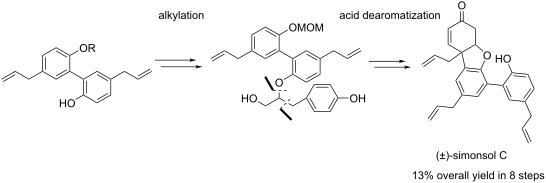
- synapse growth and inhibits acetylcholinesterase. (±)-Simonsol C (Figure 1) has received considerable attention due to the presence of an aryl- and allyl-containing quaternary carbon center, which is common in natural products such as galanthamine and morphine. To construct the quaternary carbon in
- carbon center. In the first report on the total synthesis of simonsol C (Scheme 1), in 2016 Banwell’s group employed an intramolecular Heck reaction as key step to furnish the aryl-containing quaternary center and simultaneously construct the benzofuran skeleton [7]. This synthesis involved a total of 12
- ] and has been used in syntheses of natural products containing aryl quaternary carbon centers [9][10]. Unlike the intramolecular alkylation strategy of a phenol derivative, which can only be applied in basic dearomatization reactions, our approach using an α-iodophenol ether as precursor of the


Formaldehyde surrogates in multicomponent reactions
Beilstein J. Org. Chem. 2025, 21, 564–595, doi:10.3762/bjoc.21.45
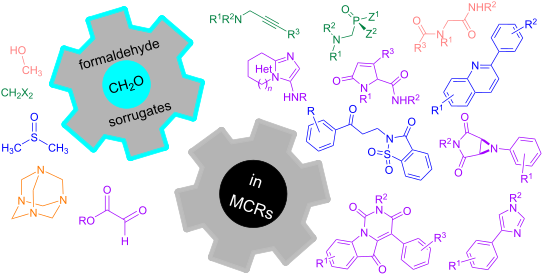
- carbon atom, due to the readiness for losing a water molecule. Formaldehyde is commonly used in its polymeric form (paraformaldehyde) or in a 37% aqueous solution (formalin). The exceptional solubility of formaldehyde in water or biobased solvents, such as ethanol and glycerol, enhances the feasibility
- . Application of glyoxylate derivatives in post-cyclization reactions as a C1 building block Glyoxylate derivatives have been used in Ugi- and Passerini-type reactions, since the adduct generated in both cases has two reactive centers for post-cyclization possibilities: the ester moiety and the α-carbon to the
- ][101][102][103][104]), or with a carbanion generated by a strong base in an Ugi/Dieckmann cyclization [105]. In all these cases, the glyoxylate derivative incorporates two carbon atoms into the final product, thus serving as a C2-building block. Similarly, the ester group increases the acidity of the


Study of the interaction of 2H-furo[3,2-b]pyran-2-ones with nitrogen-containing nucleophiles
Beilstein J. Org. Chem. 2025, 21, 556–563, doi:10.3762/bjoc.21.44
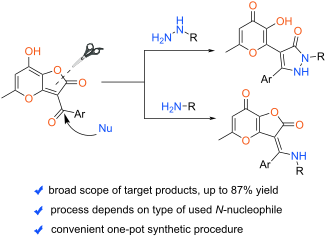
- established by X-ray analysis. The proposed mechanism of the considered processes is outlined at Scheme 8. Initially, the free nitrogen nucleophile is reversibly generated from the corresponding hydrochloride or acetate. Next, acid-catalyzed addition of the amine component to the carbon atom of the aroyl


Asymmetric synthesis of β-amino cyanoesters with contiguous tetrasubstituted carbon centers by halogen-bonding catalysis with chiral halonium salt
Beilstein J. Org. Chem. 2025, 21, 547–555, doi:10.3762/bjoc.21.43
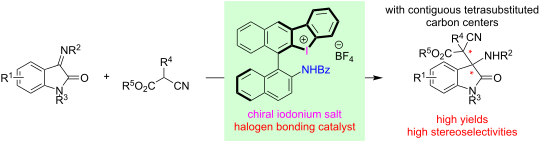
- , which formed the corresponding products in high to excellent enantioselectivities. In this paper, the asymmetric synthesis of β-amino cyanoesters with contiguous tetrasubstituted carbon stereogenic centers by the Mannich reaction through chiral halonium salt catalysis is presented, which provided the
- corresponding products in excellent yields with up to 86% ee. To the best of our knowledge, the present paper is the first to report the asymmetric construction of β-amino cyanoesters with contiguous tetrasubstituted carbon stereogenic centers by the catalytic Mannich reaction. Keywords: asymmetric catalysis
- tetrasubstituted carbon stereogenic centers [42][43][44][45][46]. In 2011, Shibasaki, Matsunaga and co-workers reported strontium or magnesium-catalyzed stereodivergent asymmetric Mannich reactions of an α-isothiocyanato ester with ketimines, which provided the products in excellent yields and


Vinylogous functionalization of 4-alkylidene-5-aminopyrazoles with methyl trifluoropyruvates
Beilstein J. Org. Chem. 2025, 21, 533–540, doi:10.3762/bjoc.21.41
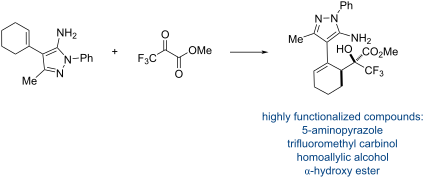
- 3aa–ca in good yields (47–69%). On the other hand, the reaction with tetrahydro-4H-pyran-4-one (1d) occurred with a significant decrease in yield, dropping to 11%. The yield is also affected by the number of carbon atoms of the starting cyclic ketone 1. In the case of structure 3ea, which involves 2



Unprecedented visible light-initiated topochemical [2 + 2] cycloaddition in a functionalized bimane dye
Beilstein J. Org. Chem. 2025, 21, 500–509, doi:10.3762/bjoc.21.37
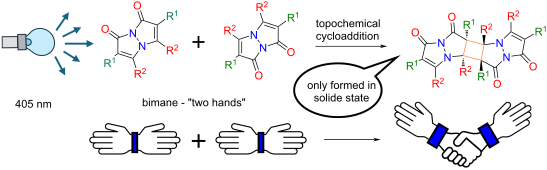
- reacts with hydrazine hydrate and is heated to reflux, forming a pyrazolinone 2. This product is then chlorinated at the α-carbon, introducing a leaving group, to yield 3. The parent pyrazolinone 3 is subsequently treated with a base (either K2CO3 or N,N-diisopropylethylamine) to form the bimane 4. For
- is 0(0°), indicating that the reacting double bonds are coplanar and parallel. Furthermore, the intermolecular distances between the reacting carbons are identical. The distance between two carbon double bonds in Cl2B (B) was determined to be 3.487(4) Å (Table 1). The key question is why did Cl2B
- refined isotropic on calculated positions using a riding model with their Uiso values constrained to 1.5 times the Ueq of their pivot atoms for terminal sp3 carbon atoms and 1.2 times for all other carbon atoms. Disordered moieties were refined using bond length restraints and displacement parameter


Synthesis of N-acetyl diazocine derivatives via cross-coupling reaction
Beilstein J. Org. Chem. 2025, 21, 490–499, doi:10.3762/bjoc.21.36
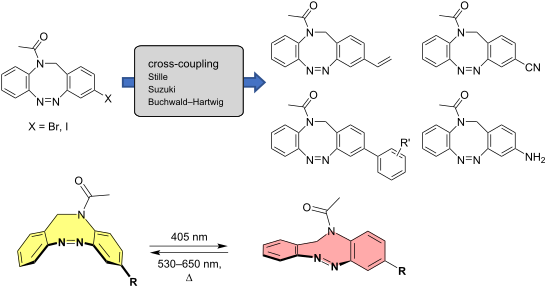
- provided the corresponding amino-substituted N-acetyl diazocine 21 (Scheme 1). Another option for carbon–heteroatom bond formation reactions are copper-catalyzed Ullmann-type reactions, which have already been applied to the parent diazocine [36][37]. The attempted synthesis of azide-functionalized N


Photomechanochemistry: harnessing mechanical forces to enhance photochemical reactions
Beilstein J. Org. Chem. 2025, 21, 458–472, doi:10.3762/bjoc.21.33
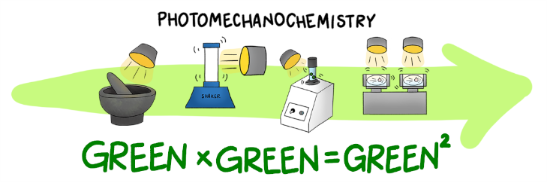
- yield of 79%. Scanning electron microscopy (SEM) analysis revealed the deformation and reduction in size of SAOED particles upon milling. Interestingly, carbon determination experiments revealed that SAOED is quickly poisoned by organic matter, thus hampering recyclability. This can be to some extent