Search results
Search for "cyclic" in Full Text gives 1336 result(s) in Beilstein Journal of Organic Chemistry. Showing first 200.
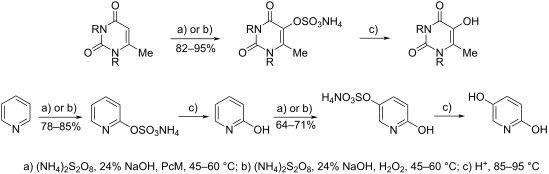
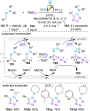
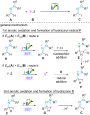
Efficient modification of peroxydisulfate oxidation reactions of nitrogen-containing heterocycles 6-methyluracil and pyridine
Beilstein J. Org. Chem. 2024, 20, 2599–2607, doi:10.3762/bjoc.20.219
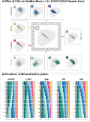
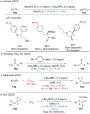
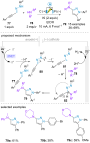
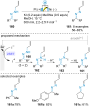
- ][19][20]. The catalytic activity of metallophthalocyanines originates from their planar, cyclic structure with a developed π-conjugation system. This makes the fifth and sixth coordination sites of the central metal ion available for coordination with the reactant molecules of the catalytic reaction


A review of recent advances in electrochemical and photoelectrochemical late-stage functionalization classified by anodic oxidation, cathodic reduction, and paired electrolysis
Beilstein J. Org. Chem. 2024, 20, 2500–2566, doi:10.3762/bjoc.20.214
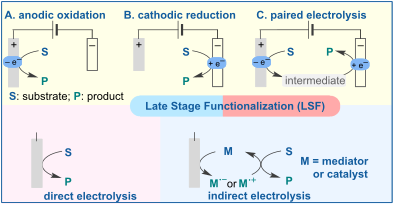
- functionalization. Difunctionalizations of double and triple bonds are of high interest as they allow the introduction of two functional groups in a single step. An interesting electrochemical difunctionalization of styrene and cyclic olefin derivatives has been reported by the Hu group [23]. They combined
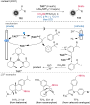
- involves building a ring onto a preexisting system, whether cyclic or non-cyclic. The Lei group developed an electrooxidative annulation reaction that facilitates LSF [28]. A regio- and stereoselective protocol was established for the [4 + 2] annulation of indole derivatives, allowing access to highly
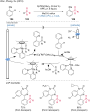
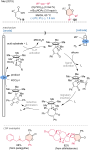
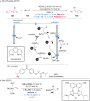
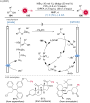
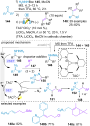
- form a cyclic alkyl radical. The alkyl radical is further oxidized by [Co(III)] to produce the target amination product and a [Co(II)–H] species via direct hydrogen transfer or β-hydride elimination. Deprotonation of [Co(II)–H] by MeO− regenerates the [Co(I)] complex, which is subsequently oxidized


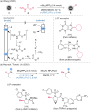






















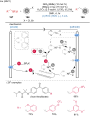
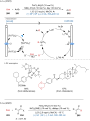


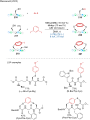


Photoredox-catalyzed intramolecular nucleophilic amidation of alkenes with β-lactams
Beilstein J. Org. Chem. 2024, 20, 2461–2468, doi:10.3762/bjoc.20.210
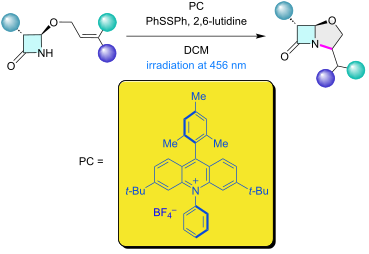
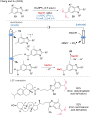
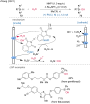
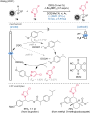
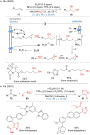
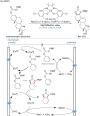
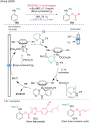
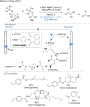
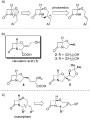
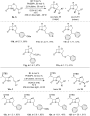
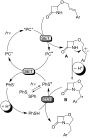
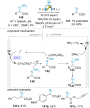
- •] = +2.09 V vs SCE) [55][56]. The *PC+ species can oxidize the unsaturated lactam, thereby producing the corresponding radical cation intermediate A. The low stabilization by amide-bond resonance of the cyclic four-membered β-lactam [57][58] ensures a good nucleophilicity of the nitrogen atom to efficiently




Phenylseleno trifluoromethoxylation of alkenes
Beilstein J. Org. Chem. 2024, 20, 2434–2441, doi:10.3762/bjoc.20.207
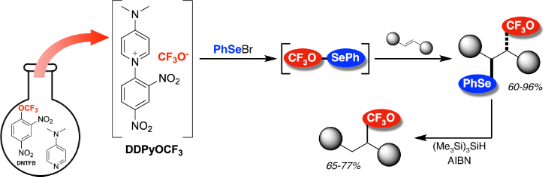
- . Consequently, the mechanism described in Scheme 1 can be proposed. Under optimal conditions (Table 1, entry 8), various alkenes were functionalized (Scheme 2). In general, the reaction gave good yields for both cyclic (2a–d, 2j) and aliphatic alkenes (2e–2i, 2k, l). Similar results were observed regardless of



Evaluating the halogen bonding strength of a iodoloisoxazolium(III) salt
Beilstein J. Org. Chem. 2024, 20, 2401–2407, doi:10.3762/bjoc.20.204
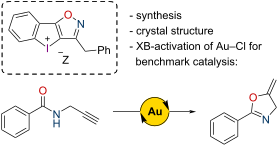
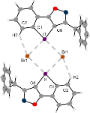
- donors in recent years. Herein, a new structural motif for this compound class was developed: iodoloisoxazolium salts, bearing a cyclic five-membered iodolium core fused with an isoxazole ring. A derivative of this class was synthesized and investigated in the solid state by X-ray crystallography
- obtained: in a titration study by Mayer and Legault it was determined that cyclic five-membered DAI salts, so-called iodolium compounds, are significantly stronger Lewis acids than their less-stable acyclic counterparts [12]. By using the activation of alkyl halides as a benchmark, our group later reported
- ). When applying the six-membered cyclic DAI salt 3BArF as an activator, the lowest activity was observed, reaching ≈80% conversion after 18 h (≈5% after 2 h). It has to be noted that a sigmoidal curve was observed. This indicates that the activity of the catalyst system increases over time. A




Efficient one-step synthesis of diarylacetic acids by electrochemical direct carboxylation of diarylmethanol compounds in DMSO
Beilstein J. Org. Chem. 2024, 20, 2392–2400, doi:10.3762/bjoc.20.203
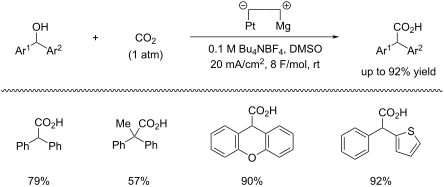
- applicable to the reaction. When 1,1-diphenylethanol (1i) was subjected to electrochemical carboxylation, electroreductive C(sp3)–O bond cleavage and subsequent carboxylation also took place, similarly to that of secondary alcohols, to give 2,2-diphenylpropanoic acid (2i) in 57% yield. Cyclic alcohols and


Synthesis, electrochemical properties, and antioxidant activity of sterically hindered catechols with 1,3,4-oxadiazole, 1,2,4-triazole, thiazole or pyridine fragments
Beilstein J. Org. Chem. 2024, 20, 2378–2391, doi:10.3762/bjoc.20.202
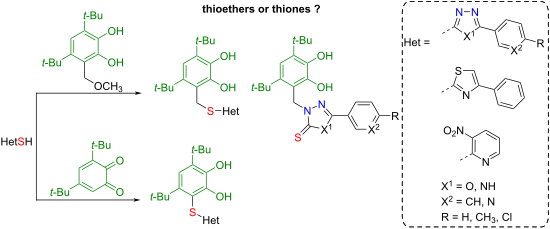
- starting mercapto-substituted heterocycles were studied. Based on cyclic voltammetry data, the starting compounds can be arranged in increasing order of the anodic peak potentials: 5-(3-pyridyl)-1,2,4-triazole-3-thiol (0.87 V) < 2-mercapto-4-phenylthiazole (0.94 V) < 3-nitropyridine-2-thiol (1.18 V
- ) < 1,3,4-oxadiazole derivatives (1.37–1.39 V). The redox properties of catechols 1–9 were studied by cyclic voltammetry (CV) (Table 1). In the anodic area, the electrochemical profile for catechol thioethers 1–5 represents two successive irreversible oxidative stages. The first two-electron peak is




Asymmetric organocatalytic synthesis of chiral homoallylic amines
Beilstein J. Org. Chem. 2024, 20, 2349–2377, doi:10.3762/bjoc.20.201
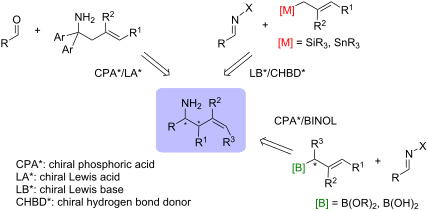
- as a key methodology in the synthesis of alkaloids and natural products with 4-, 5- and 6-membered cyclic amine motifs. Initially reliant on stoichiometric reagents, synthetic chemists predominantly used N-substituted chiral imines, organometallic chiral reagents and achiral reagents with an
- -methylcrotylsilane (product 52) and disubstituted cyclic silanes (such as the silane, leading to 53), locked in syn-conformation. For the 2,3-disubstituted allylation products such as 52 and 53, the diastereomeric ratio spanned across 18:1 to >50:1. Notably, all 2,3-disubstituted silanes required an increased
- . The limitations in the scope of this methodology include a poor stereoselectivity achieved with 5-membered cyclic 2,3-disubstituted silanes in contrast to the 6-membered analogues (53). A lower efficiency was recorded with 2-substituted allylsilanes bearing either a halogen or an alkyl group with








Stereoselective mechanochemical synthesis of thiomalonate Michael adducts via iminium catalysis by chiral primary amines
Beilstein J. Org. Chem. 2024, 20, 2313–2322, doi:10.3762/bjoc.20.198
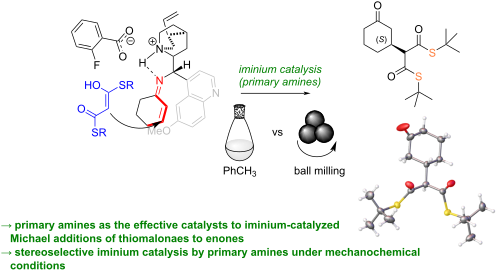
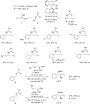
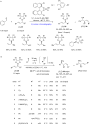
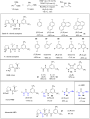
- significant advancement in mechanocatalysis. The stereoselective addition of bisthiomalonates 1–4 to cyclic enones and 4-chlorobenzylideneacetone proceeds stereoselectively under iminium activation conditions secured by chiral primary amines, in contrast to oxo-esters as observed in dibenzyl malonate addition
- nitroalkenes or guanidine-mediated addition of bisthiomalonates to maleimides, cyclic enones, and acyclic 1,4-dicarbonylbutenes, albeit at low temperatures and with relatively long reaction times, further limited to a narrow scope of thioesters (Scheme 1) [31]. Recently, we described a cinchona-squaramide
- low conversions and stereoselectivities when applied to benzylidene acetones or cyclic enones (vide infra). In our latest research in establishing a mild organocatalytic protocol for incorporating benzyl malonates and bisthiomalonates into cyclic enones and benzylidene acetones, we have developed a


Hydrogen-bond activation enables aziridination of unactivated olefins with simple iminoiodinanes
Beilstein J. Org. Chem. 2024, 20, 2305–2312, doi:10.3762/bjoc.20.197
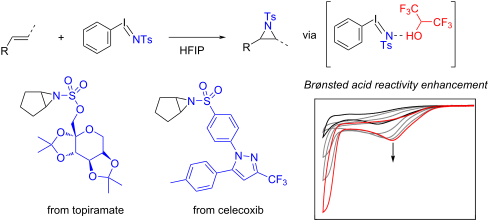
- iminoiodinanes for the metal-free aziridination of unactivated olefins. 1H NMR and cyclic voltammetry (CV) studies indicate that hydrogen-bonding between HFIP and the iminoiodinane generates an oxidant capable of direct NGT to unactivated olefins. Stereochemical scrambling during aziridination of 1,2
- with PhINTs (Table 1, entry 12) [42][43]. With metal-free aziridination conditions in hand, we explored the scope and limitations of the HFIP-promoted aziridination of unactivated olefins (Scheme 2). For cyclic substrates, aziridination of cyclopentene, cyclohexene, and cycloheptene afforded the
- unprotected alcohol is tolerated in our procedure, with product 3l delivered at 50% NMR yield; 3l is sensitive to column chromatography, and thus aziridine-opening to a cyclic ether was observed (31% isolated yield) during purification. Aziridination of cis- or trans-4-octene afforded aziridine 3m as a 1.3


Synthesis and reactivity of the di(9-anthryl)methyl radical
Beilstein J. Org. Chem. 2024, 20, 2254–2260, doi:10.3762/bjoc.20.193
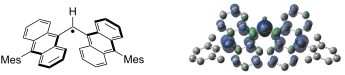
- O–O bond cleavage to give compounds 1 and 5 (Scheme 2). Owing to the high reactivity of the DAntM radical, cyclic voltammogram (CV) was measured by using the stable DAntM cation, prepared from compound 3 oxidized by antimony(V) chloride, which can be characterized by 1H, 13C NMR, and UV–vis
- ) ESR spectrum of anthroxyl radical 5 (black line, Exp.) and its simulated pattern (red line, Sim.). (b) Hyperfine coupling constant of 5. (c) X-ray structure of 5. Hydrogen atoms are omitted for clarity. Cyclic voltammogram (CV) of DAntM cation. (a) CV measured with scan rate at 3.0 V s−1. (b) Scan


Cell-free protein synthesis with technical additives – expanding the parameter space of in vitro gene expression
Beilstein J. Org. Chem. 2024, 20, 2242–2253, doi:10.3762/bjoc.20.192
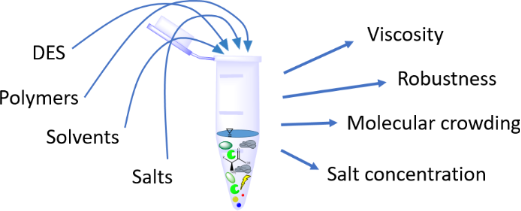
- osmolarity using ten different technical additives including organic solvents, polymers, and salts. It is shown that the synthesis of two model proteins, namely superfolder GFP (sfGFP) and the enzyme truncated human cyclic GMP-AMP synthase fused to sfGFP (thscGAS-sfGFP), is very robust against most of the
- properties beyond physiological ranges. We also tested several organic solvents that are miscible and non-miscible with water. For the experiments, two model proteins, the superfolder GFP (sfGFP) and the enzyme human cyclic GMP-AMP synthase-sfGFP, were used, which differ in their size (sfGFP: 27 kDa, thscGAS
- the production of non-ribosomal peptide synthetases with a molecular weight higher than 100 kDa [57]. However, these enzymes are often of great interest for specific applications in biomanufacturing. Cyclic GMP-AMP synthase (cGAS) is one of these enzymes. cGAS and its biocatalytic product 2’3’-cyclic

Selective hydrolysis of α-oxo ketene N,S-acetals in water: switchable aqueous synthesis of β-keto thioesters and β-keto amides
Beilstein J. Org. Chem. 2024, 20, 2225–2233, doi:10.3762/bjoc.20.190
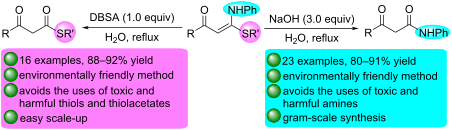
- ][62][63][64], we conducted research on their organic reactions in water and reported some good results, such as thioacetalization using ketene dithioacetals as odorless thiol equivalent [65], Friedel–Crafts alkylation of cyclic ketene dithioacetals with alcohols [66], the hydrolysis of chain α-oxo



Heterocycle-guided synthesis of m-hetarylanilines via three-component benzannulation
Beilstein J. Org. Chem. 2024, 20, 2208–2216, doi:10.3762/bjoc.20.188
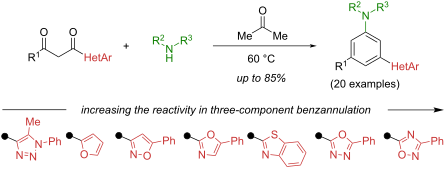
- intramolecular addition of enamine I to the C3=O to form intermediate II, which dehydrates to cyclic carbinol III. Finally, dehydration of intermediate III yields anilines 3. Conclusion In summary, a method for the synthesis of substituted meta-hetarylanilines under mild conditions starting from 1,3-diketones


O,S,Se-containing Biginelli products based on cyclic β-ketosulfone and their postfunctionalization
Beilstein J. Org. Chem. 2024, 20, 2143–2151, doi:10.3762/bjoc.20.184
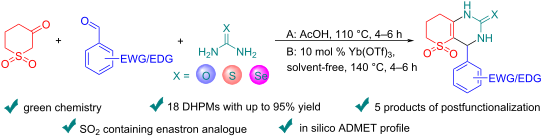
- original Biginelli reaction shown in Scheme 1A was significantly extended by variation of the 1,3-dicarbonyl-containing building blocks. Many groups have elegantly demonstrated the synthetic versatility of numerous enolizable carbonyl components, including β-keto esters, cyclic/acyclic β-diketones, β-keto



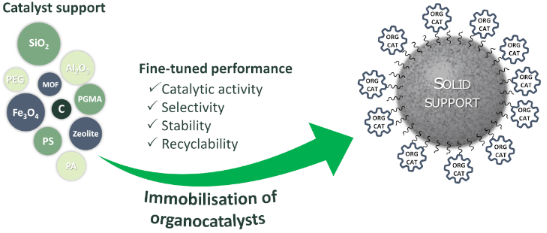
Factors influencing the performance of organocatalysts immobilised on solid supports: A review
Beilstein J. Org. Chem. 2024, 20, 2129–2142, doi:10.3762/bjoc.20.183
- (93% ee) to the homogeneous catalyst (94% ee) in the alcoholytic desymmetrisation of a cyclic anhydride 34 albeit requiring a slightly longer reaction time. Compared to polymer films, textile fibres offer a significantly higher surface area, potentially contributing to the maintenance of high
- asymmetric Michael addition of pentane-2,4-dione (32) and trans-β-nitrostyrene (11). Alcoholytic desymmetrisation of a cyclic anhydride 34 catalysed by polyamide-supported cinchona sulfonamide 36. Funding This research was funded by the National Research, Development, and Innovation Office (grant number


Efficacy of radical reactions of isocyanides with heteroatom radicals in organic synthesis
Beilstein J. Org. Chem. 2024, 20, 2114–2128, doi:10.3762/bjoc.20.182
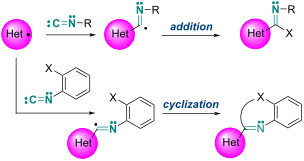
- Lewis acid–base complexes (t-BuNC→BH3) to generate the corresponding isocyanide–boryl radicals 17 (t-BuNC→BH2•), which can be observed by ESR (Scheme 10b) [47]. However, the synthetic application of this boryl radical has not been investigated. Among the cyclic diboron compounds, a series of five
- -membered cyclic diboron compounds 18 undergo an insertion reaction of isocyanides into the boron–boron single bond of 18 under mild conditions without the addition of any additives (Scheme 11a) [48]. The reaction is thought to proceed by an ionic mechanism. Recently, several insertion-type reactions of
- radical, which induces 5-exo cyclization. The following hydrogen abstraction, intramolecular ionic cyclization, and hydrolysis during chromatography on silica gel affords the cyclic amide in good yield. They further applied this radical cyclization reaction as a key step in the synthesis of (±)-α-kainic


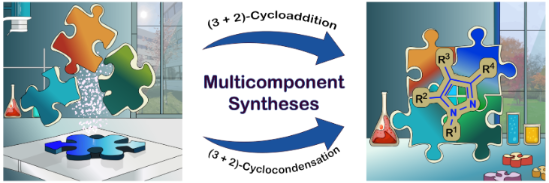
Multicomponent syntheses of pyrazoles via (3 + 2)-cyclocondensation and (3 + 2)-cycloaddition key steps
Beilstein J. Org. Chem. 2024, 20, 2024–2077, doi:10.3762/bjoc.20.178
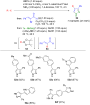
- -oxodithioesters 48 react with primary or cyclic aliphatic amines, resulting in the formation of β-oxothioamides 50, which can then be directly converted into the corresponding 5-aminopyrazoles 49 with aromatic hydrazines in the presence of catalytic amounts of acetic acid (Scheme 14) [68]. The process exhibits
- regioselectivity, with 3,4-fused pyrazoles being accessible when cyclic β-oxodithioesters are employed as substrates. However, aromatic amines cannot be successfully employed in the sequence. Alkenoyl derivatives as key intermediates The Michael addition and cyclocondensation of hydrazines and α,β-unsaturated
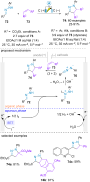
- generated hydrazones were cyclized with simple ketones to pyrazolines. The oxidation to the corresponding 4-halo-substituted pyrazoles 69 can be achieved in a one-pot fashion by halogenation with iodine chloride or elemental bromine (Scheme 24) [102]. When cyclic ketones are used, fused products 70 are




Harnessing the versatility of hydrazones through electrosynthetic oxidative transformations
Beilstein J. Org. Chem. 2024, 20, 1988–2004, doi:10.3762/bjoc.20.175
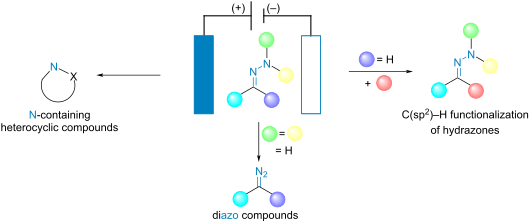
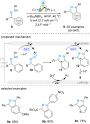
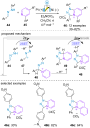
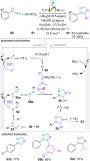
- formation of dimeric side products. Cyclic voltammetry analysis suggested an initial anodic single electron transfer (SET) to radical cation 5, cyclization and deprotonation. Subsequent SET oxidation in solution by 5 led to cation 7. Final deprotonation furnished aromatic cycle 4. In 2022, Zhang et al
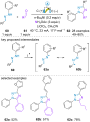
- hydrazones initiated with the SET anodic oxidation of the hydrazone and deprotonation to form the N-centered radical 10. After aza-cyclization on the aromatic ring, a second SET oxidation and deprotonation delivered the heterocycle 9. This mechanism was supported by cyclic voltammetry analysis of a model
- electromediated by iodine would furnish aldehyde 56. Electrogenerated iodine would further assist the reaction with ammonia to form N-iodo aldimine intermediate 57. Subsequent radical cycloaddition between 56 and 57 would furnish cyclic hydrazinyl radical 58. Finally, the triazole would be obtained after hydrogen








Radical reactivity of antiaromatic Ni(II) norcorroles with azo radical initiators
Beilstein J. Org. Chem. 2024, 20, 1967–1972, doi:10.3762/bjoc.20.172
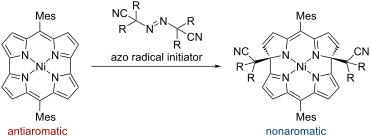
- CH2Cl2 were examined using cyclic voltammetry (Figure 4). Macrocycle 2a exhibited one reversible oxidation wave at 0.44 V and two reversible reduction waves at −0.85 V and −1.14 V. The electrochemical HOMO–LUMO gap of 2a is 1.29 V, which is larger than that of 1a (1.08 V) [2]. DFT calculations We next
- CH2Cl2. Cyclic voltammogram of 2a in CH2Cl2. Supporting electrolyte: 0.1 M Bu4NPF6; working electrode: glassy carbon; counter electrode: Pt; reference electrode: Ag/AgNO3; scan rate: 50 mV⋅s−1. Reaction of norcorrole 1 with AIBN. Reaction of norcorrole 1 with V-40. Plausible reaction mechanism


Regioselective alkylation of a versatile indazole: Electrophile scope and mechanistic insights from density functional theory calculations
Beilstein J. Org. Chem. 2024, 20, 1940–1954, doi:10.3762/bjoc.20.170
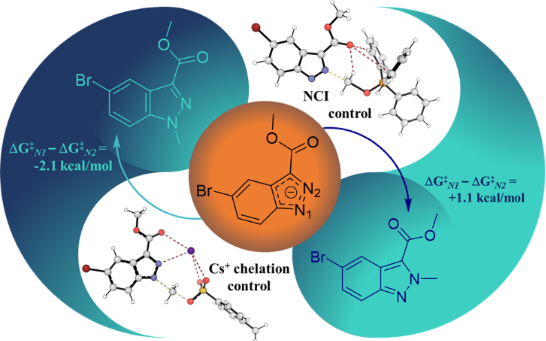
- the treatment of paroxysmal nocturnal hemoglobinuria, and CPI-637 (2), an inhibitor of both cyclic-AMP response element binding protein (CBP) and adenoviral E1A binding protein [14][15][16]. The N2-substituted indazole analogs pazopanib (3), an FDA-approved tyrosine kinase inhibitor used for the


Solvent-dependent chemoselective synthesis of different isoquinolinones mediated by the hypervalent iodine(III) reagent PISA
Beilstein J. Org. Chem. 2024, 20, 1914–1921, doi:10.3762/bjoc.20.167
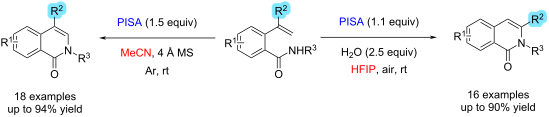
- the substrate, and thus preventing the possible interaction between the amide moiety and PISA, as opposed to CH3CN. The olefin moiety of the complex then interacts with the exposed central iodine(III) atom in PISA [25], forming the intermediate D. Similar cyclic iodonium intermediates were also




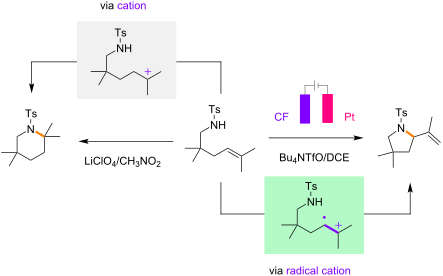
Electrochemical radical cation aza-Wacker cyclizations
Beilstein J. Org. Chem. 2024, 20, 1900–1905, doi:10.3762/bjoc.20.165
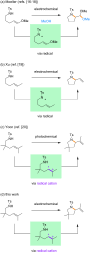
- compatible to give the respective five-membered pyrrolidines, except for that possessing a 2-nitro group 7. As discussed later with cyclic voltammetric studies, the electron density in the aryl rings does not seem to have a significant impact on the reaction. While benzyl sulfonamide 8 was productive under
- tetrasubstituted alkene 14. Cyclic voltammetric studies have provided further mechanistic insights into electrochemical aza-Wacker cyclizations. As reported by Yoon, a trisubstituted alkene is oxidized at significantly lower potential than aryl sulfonamides, suggesting that the reactions were initiated by single
- -electron oxidation of the alkenes. Although a drop in oxidation potential for the alkene was observed when tethered to an aryl sulfonamide, as detailed by Moeller, rapid intramolecular cyclization would be the key [26][27][28]. We also measured cyclic voltammograms for aryl sulfonamides with and without




The Groebke–Blackburn–Bienaymé reaction in its maturity: innovation and improvements since its 21st birthday (2019–2023)
Beilstein J. Org. Chem. 2024, 20, 1839–1879, doi:10.3762/bjoc.20.162
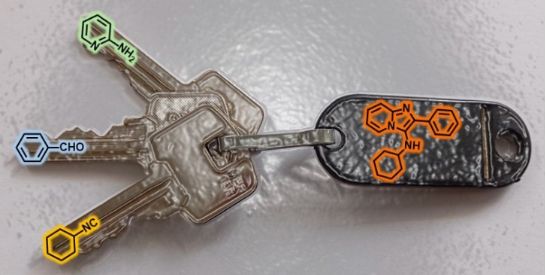
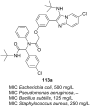
- Bienaymé. On the other hand, the GBB reaction, compared with the Ugi and Passerini reactions, has an undeniable advantage, namely, the possibility of obtaining cyclic, aromatic, and drug-like compounds, rather than linear structures. The immediate consequence of this fact is that there are numerous studies
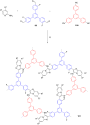
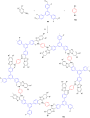
- -bromoethyl)benzaldehyde 79 was utilized to form the highly reactive cyclic iminium intermediates 81 through the condensation with amidines 80. The subsequent formal [4 + 1] cycloaddition with the isocyanide and the 1,3-H-shift occurred to afford pentacycles 82. Performing the one-pot reaction under the






Hetero-polycyclic aromatic systems: A data-driven investigation of structure–property relationships
Beilstein J. Org. Chem. 2024, 20, 1817–1830, doi:10.3762/bjoc.20.160
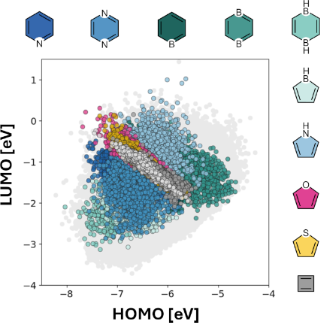
- nature on the molecular properties of PASs. Our goal is to delineate specific structure–property relationships that may shed light on these prevalent, yet still mysterious, compounds and serve as design principles for future PASs. Data The molecules in COMPAS-2 contain 11 cyclic building blocks varying
- demonstrates that increasing the diversity of conjugated cyclic building blocks does not have a notable impact on the relative distribution of molecular shapes. In contrast to their relatively high geometric similarity, the molecular properties of the two datasets vary substantially. We compared the