


Search results
Search for "LED" in Full Text gives 2063 result(s) in Beilstein Journal of Organic Chemistry. Showing first 200.
Beyond symmetric self-assembly and effective molarity: unlocking functional enzyme mimics with robust organic cages
Beilstein J. Org. Chem. 2025, 21, 421–443, doi:10.3762/bjoc.21.30
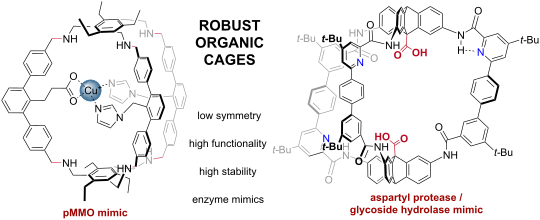
- popularization of dynamic covalent chemistry in the 1990s [251][252][253][254][255], macrocycle and cage synthesis using reversible reactions [256][257][258][259] like imine formation (Figure 7A) have led to advances in the synthesis of COFs [223][224] and discrete organic cages [260][261][262][263][264][265


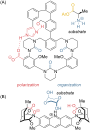


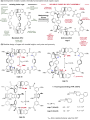
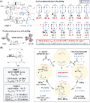
Unraveling aromaticity: the dual worlds of pyrazole, pyrazoline, and 3D carborane
Beilstein J. Org. Chem. 2025, 21, 412–420, doi:10.3762/bjoc.21.29
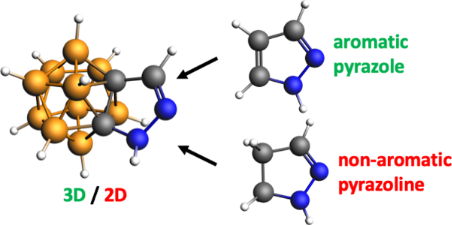
- materials [28][29][30]. As a result, developing efficient methods for selectively introducing functional groups into carboranes has become a key area of research [29][31]. Moreover, replacing planar aryl rings in biologically active molecules with spherical carborane units has led to novel alternatives [32


Identification and removal of a cryptic impurity in pomalidomide-PEG based PROTAC
Beilstein J. Org. Chem. 2025, 21, 407–411, doi:10.3762/bjoc.21.28
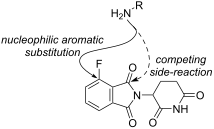
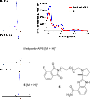
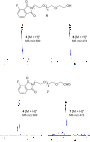
- develop a method to facilitate the elimination of this impurity. We first attempted scavenging 6 by solid-phase supported amines. Incubating a mixture of 3 and 6 with TentaGel S-NH2 in DMF led to a gradual decrease of 6 over four days. Whereas this method is applicable to removing 9 of different PEG-OH




The effect of neighbouring group participation and possible long range remote group participation in O-glycosylation
Beilstein J. Org. Chem. 2025, 21, 369–406, doi:10.3762/bjoc.21.27
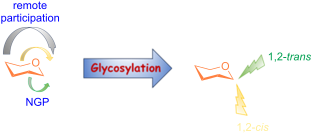
- in the subsequent nucleophilic attack by the acceptor [137]. This α-glycosyl triflate was readily converted to its skew-boat conformation 62 which led to the attack of the glycosyl acceptor 64 from the β-face of the sugar pyranoside ring exclusively to form the 1,2-trans glycoside 65. Thus, the N
- glycoside in moderate 43% yield. However, a five-membered cyclic acetal 88 as the side product was obtained which led to the determination of the plausible mechanism involving participation of the alkoxymethyl group of the C-2 position (Scheme 15). Path A in Scheme 15 designates the expected participating
- -(phenylsulfanyl)ethyl moiety in the C-2 position led to the stereoselective formation of 1,2-cis glucoside and 1,2-cis galactoside in high yield by the formation of a quasi-stable anomeric sulphonium ion intermediate [150]. In continuation with the use of auxiliary protecting groups as the O-2 protection for




Antibiofilm and cytotoxic metabolites from the entomopathogenic fungus Samsoniella aurantia
Beilstein J. Org. Chem. 2025, 21, 327–339, doi:10.3762/bjoc.21.23
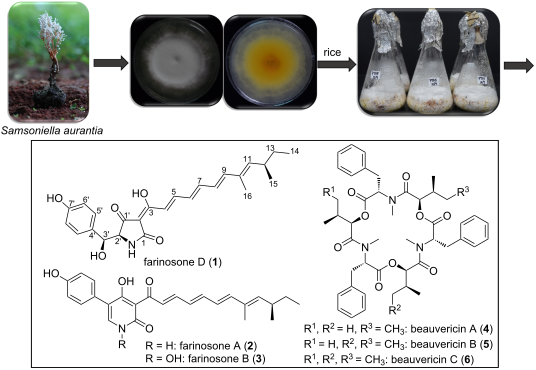
- solvent B from 30% to 100% over 85 minutes. Subsequently, it was maintained at 100% for 15 minutes. This purification protocol led to the isolation of 1 (9.1 mg, tR = 67 min), 3 (19.5 mg, tR = 81 min), and 5 (2.8 mg, tR = 89 min). For fraction 6 (489 mg), a gradient elution was applied starting from 50% B


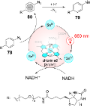
Red light excitation: illuminating photocatalysis in a new spectrum
Beilstein J. Org. Chem. 2025, 21, 296–326, doi:10.3762/bjoc.21.22
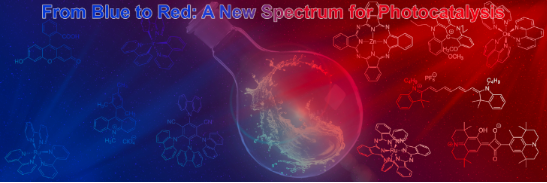
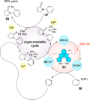
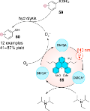
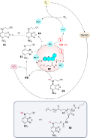
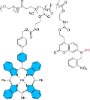
- sacrificial reducing agents (Scheme 6), contrasting with traditional blue-light photocatalysis which led to substrate decomposition [33][34]. The axial ligands on the ruthenium phthalocyanin complex, particularly electron-deficient pyridyl groups, were found to influence the catalytic activity by stabilizing
- source at 660 nm led to a reduction in the isolated yield from 70% to 56%. Despite the full conversion of the starting material, the overall efficiency was hindered by the formation of side-products. Furthermore, various nucleophiles were found to be compatible with this transformation. In parallel the




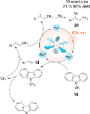
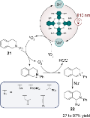
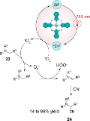

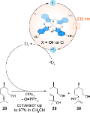











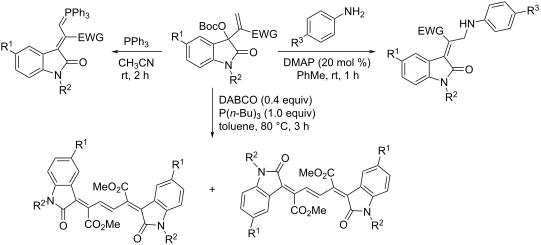
Molecular diversity of the reactions of MBH carbonates of isatins and various nucleophiles
Beilstein J. Org. Chem. 2025, 21, 286–295, doi:10.3762/bjoc.21.21
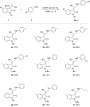
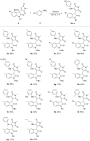
- also led to the development of a synthetic protocol for the convenient synthesis of 30 diversely substituted oxindole derivatives. Single crystal structure of compound 5a. Single crystal structure of compound 5j. Single crystal structure of compound 6e. Single crystal structure of compound 7a. Single



Three-component reactions of conjugated dienes, CH acids and formaldehyde under diffusion mixing conditions
Beilstein J. Org. Chem. 2025, 21, 262–269, doi:10.3762/bjoc.21.18
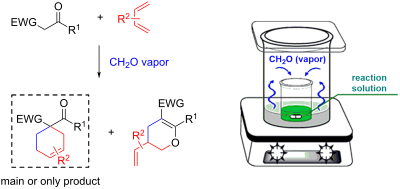
- (Table 1, entries 11 and 13). Apparently, an increase in the surface area of the reaction solution promoted more efficient absorption of CH2O molecules, which accelerated the condensation reaction. The reaction of formaldehyde and diketone 1 in chloroform and acetonitrile predominantly led to diketo
- 9 in toluene for 7 h led to the formation of an equilibrium mixture of these compounds in a ratio of ≈2:1 (Scheme 5). We propose that the reversible transformation of 8 to 9 proceeded via the intermediate formation of zwitterion 21, in which the charges were stabilized by mesomeric effects under
- participation of the C=C bond. Apparently, the ratio of the adducts of the Diels–Alder (i.e., I) and the hetero-Diels–Alder reaction (i.e., II) was strongly influenced by steric factors; a decreased steric hindrance in the initial CH acid derivatives led to a more selective formation of the structures I. This


Synthesis of disulfides and 3-sulfenylchromones from sodium sulfinates catalyzed by TBAI
Beilstein J. Org. Chem. 2025, 21, 253–261, doi:10.3762/bjoc.21.17
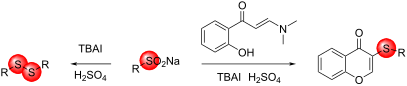
- . For example, electron-donating groups (Me, tert-butyl, MeO, naphthyl) and electron-withdrawing groups (F, Cl, Br) attached to the benzene ring led to products 2a–i with yields ranging from 60% to 89%. Interestingly, products with strong electron-withdrawing substituents were obtained in moderate
- intermediate in the reaction. When the asymmetric thiosulfonate was used as the substrate, unexpectedly a mixture of three disulfide ethers rather than a single disulfide was obtained under the standard reaction conditions (Scheme 5, reaction 1), which led us to conclude that the reaction might be a process in



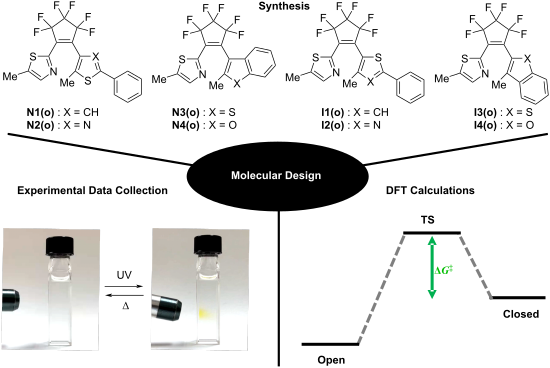
Effect of substitution position of aryl groups on the thermal back reactivity of aza-diarylethene photoswitches and prediction by density functional theory
Beilstein J. Org. Chem. 2025, 21, 242–252, doi:10.3762/bjoc.21.16
- recorded using a JASCO V-560 absorption spectrometer or an Ocean Optics FLAME-S multichannel analyzer. Photoirradiation (365 nm) to solution samples was carried out using a 200 W mercury–xenon lamp (MORITEX MSU-6) with a band-pass filter or a 365 nm UV-LED lamp (Keyence UV-400) as a light source. The



Visible-light-promoted radical cyclisation of unactivated alkenes in benzimidazoles: synthesis of difluoromethyl- and aryldifluoromethyl-substituted polycyclic imidazoles
Beilstein J. Org. Chem. 2025, 21, 234–241, doi:10.3762/bjoc.21.15
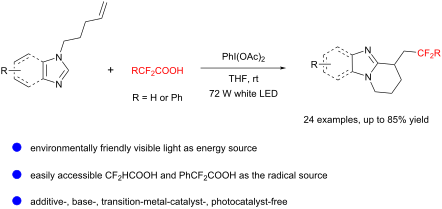
- reaction (Table 1). Employing PIDA as the promoter, THF as the solvent, and 72 W white LED as the light source, the desired product 3a formed in 85% isolated yield at room temperature (Table 1, entry 1). We found that the hypervalent iodine reagent was of significant importance for the present
- transformation (Table 1, entries 2 and 3), and PIDA was the most efficient promoter. Changing THF to other solvents, such as DCM, EtOH, DMF, CH3CN, EtOAc, or DMSO, resulted in a lower yield (Table 1, entries 4–9). Furthermore, variations in the amounts of PIDA or CF2HCOOH led to diminished yields (Table 1


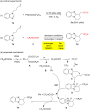
Streamlined modular synthesis of saframycin substructure via copper-catalyzed three-component assembly and gold-promoted 6-endo cyclization
Beilstein J. Org. Chem. 2025, 21, 226–233, doi:10.3762/bjoc.21.14
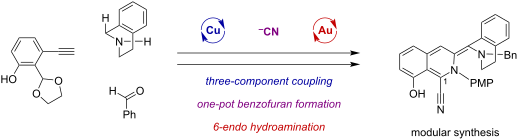
- led by Corey [23], Myers [24][25], Liu [26][27], and Saito [28] also efficiently exploited PS-type reactions to accomplish the total synthesis of saframycin A (1) (Scheme 1b) [3][4][5][29][30][31][32][33][34][35][36][37][38][39][40][41]. However, PS-type reactions impose constraints due to the
- , was obtained in one-pot, presumably via generation of the aminonitrile 17 and subsequent nucleophilic attack of the phenolic hydroxy group to form the five-membered ring. Our efforts to optimize this one-pot sequence led to the best results, affording 11 in 73% isolated yield, when acetone cyanohydrin


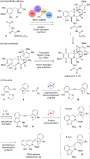


Dioxazolones as electrophilic amide sources in copper-catalyzed and -mediated transformations
Beilstein J. Org. Chem. 2025, 21, 200–216, doi:10.3762/bjoc.21.12
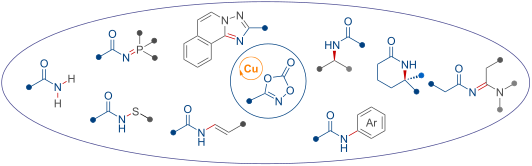
- terminal alkynes did not result in the desired N-acyl amidine 10l. Based on the substrate scope of acetylenes, the authors noted that the lower acidity of terminal acetylenes led to a diminished formation of the copper acetylide intermediate. Based on several mechanistic experiments and density functional
- substrate scope of boronic acids was limited in this transformation. To elucidate the reaction process, kinetic and control experiments were conducted, which led to the proposed reaction pathway for the copper-mediated synthesis of N-arylamides from dioxazolones as shown in Figure 4. Initially, copper(I


Recent advances in electrochemical copper catalysis for modern organic synthesis
Beilstein J. Org. Chem. 2025, 21, 155–178, doi:10.3762/bjoc.21.9
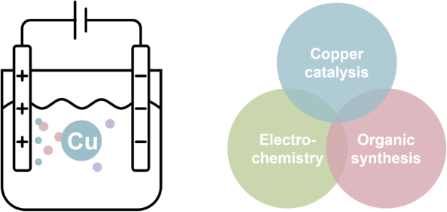
- sustainable chemistry, the combination of copper catalysis and electrochemistry is particularly attractive for overcoming challenges associated with conventional methods, and it has led to extensive research in recent years. In this review, we highlight the unique contributions of electrochemical copper
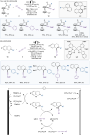
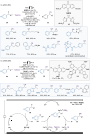
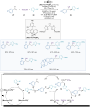
- catalytic systems (merging electrochemistry with transition-metal catalysis) has led to the development of new, efficient, and chemo- and stereoselective synthetic transformations. This review highlighted the recent developments in dual catalytic reactions involving copper and electrocatalysis, including C








Recent advances in organocatalytic atroposelective reactions
Beilstein J. Org. Chem. 2025, 21, 55–121, doi:10.3762/bjoc.21.6
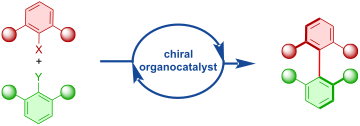
- -axial chirality conversion and formation of axially chiral products 21a–e (Scheme 7). This critical aromatization was later studied in more detail, and the team was able to achieve enantiodivergent aromatization, which led to different atropoisomers based on the oxidation reagent used [26]. The use of
- NBS and AgOTf led to the formation of the (Sa)-atropoisomers, whereas NIS afforded the (Ra)-atropoisomers. Non-biaryl atropoisomers are characterized by at least one non-aryl substituent on the stereogenic axis. Among them, compounds featuring a conformationally stable C(sp2)–C(sp3) stereogenic axis
- [27]. This transformation led to a series of axially chiral cycl[3.2.2]azines 24 in good yields and high enantiomeric purities (Scheme 8). The proposed mechanism comprises enamine activation, condensation with nitroolefin 23, ring closure, and catalyst elimination to provide the axially chiral product











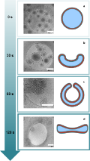
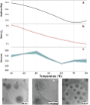
Hot shape transformation: the role of PSar dehydration in stomatocyte morphogenesis
Beilstein J. Org. Chem. 2025, 21, 47–54, doi:10.3762/bjoc.21.5
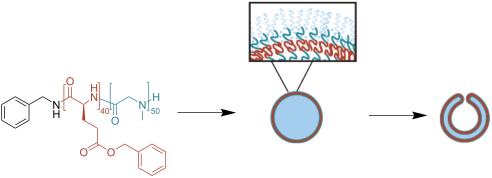
- of the non-degradable PEG segment is still ongoing as PEG is regarded as the benchmark for hydrophilic polymers used in drug delivery [7]. The non-biodegradability of PEG under most conditions, coupled with recently discovered immunogenic responses to it, has led to increasing concerns [8][9]. This


Facile one-pot reduction of β-nitrostyrenes to phenethylamines using sodium borohydride and copper(II) chloride
Beilstein J. Org. Chem. 2025, 21, 39–46, doi:10.3762/bjoc.21.4
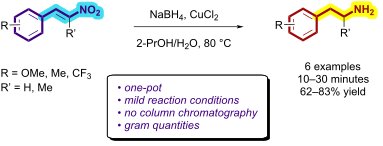
- extraction process and copper(II) removal. However, the addition of DETA led to decreased yields and a deterioration of the phase separation. It was observed that using a 20% aqueous sodium hydroxide solution, instead of 35%, negatively impacted phase separation, making the extraction process more time


Emerging trends in the optimization of organic synthesis through high-throughput tools and machine learning
Beilstein J. Org. Chem. 2025, 21, 10–38, doi:10.3762/bjoc.21.3
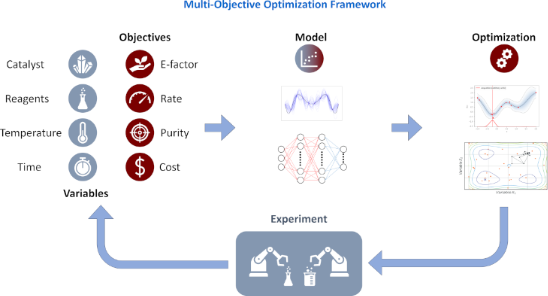
- with feedback DOE facilitated the rapid identification of appropriate solvents. Notably, the use of DMSO, DMF, and pyridine led to an enhanced yield of the monoalkylated product. An experimental setup was developed for single-droplet studies of visible-light photoredox catalysis using an oscillatory
- Bédard et al. [62] to mitigate some of the challenges in traditional organic synthesis by the integration of hardware, software, and analytics. Comprising an array of modular components, including units for heating, cooling, LED light exposure, and packed bed reactors, it provides a flexible platform for


Synthesis, structure and π-expansion of tris(4,5-dehydro-2,3:6,7-dibenzotropone)
Beilstein J. Org. Chem. 2025, 21, 1–7, doi:10.3762/bjoc.21.1
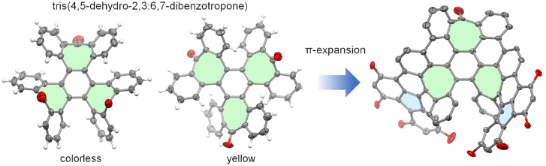
- , expanding its π-skeleton through the Barton–Kellogg and Scholl reactions led to the successful synthesis of a curved polycyclic arene containing three heptagons and two pentagons. Keywords: carbon schwarzites; polycyclic arenes; Scholl reaction; seven-membered carbocycle; Yamamoto coupling; Introduction
- yield of 90%. Then, the Ni-mediated Yamamoto coupling reaction of 6 enabled cyclotrimerization to give trione 1 in a yield of 30%. It is worth mentioning that using 1,10-phenanthroline as the ligand in the Yamamoto coupling [25][26] led to a higher yield of compound 1 than using 2,2’-bipyridine. With
- room temperature yielded partially fused nanographene 3 (20%), with formation of six C–C bonds giving four six-membered rings and two five-membered rings. Performing this reaction at a higher temperature led to a lower yield of compound 3 and the formation of byproducts with lower Rf values on thin


Synthesis of acenaphthylene-fused heteroarenes and polyoxygenated benzo[j]fluoranthenes via a Pd-catalyzed Suzuki–Miyaura/C–H arylation cascade
Beilstein J. Org. Chem. 2024, 20, 3290–3298, doi:10.3762/bjoc.20.273
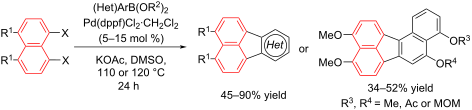
- via the deprotection of the -OTIPS silyl ether under the reaction conditions. A final MOM-deprotection under acidic conditions led to the formation of the desired benzo[j]fluoranthene 28 in 82% yield. Conclusion In conclusion, we have demonstrated the successful synthesis of heterocyclic fluoranthene




Reactivity of hypervalent iodine(III) reagents bearing a benzylamine with sulfenate salts
Beilstein J. Org. Chem. 2024, 20, 3281–3289, doi:10.3762/bjoc.20.272
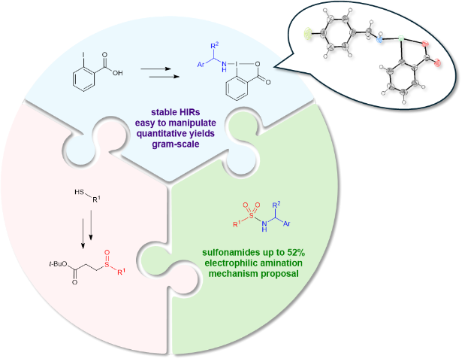
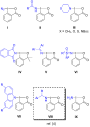
- longer reaction time was tested, with the reaction running overnight, which led to an increase of 52% in the reaction yield (Table 1, entry 7), consisting of the best conditions achieved for this electrophilic amination. The reaction time was extended to 72 hours in an attempt to promote the transfer



Giese-type alkylation of dehydroalanine derivatives via silane-mediated alkyl bromide activation
Beilstein J. Org. Chem. 2024, 20, 3274–3280, doi:10.3762/bjoc.20.271
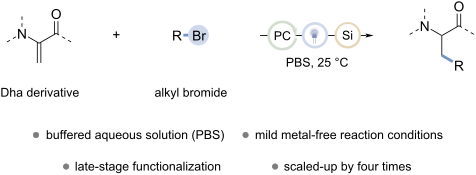
- Vergata” Via della Ricerca Scientifica, 1, 00133 Rome, Italy, Department of Chemical Sciences, University of Padova Institution, Via Francesco Marzolo, 1, 35131 Padova, Italy 10.3762/bjoc.20.271 Abstract The rising popularity of bioconjugate therapeutics has led to growing interest in late-stage
- photochemistry has introduced new ways of generating radicals like photoredox catalysis and via electron donor–acceptor (EDA) complexes [10][11][12][13]. These advances, coupled with modern electrochemical methods, chemical reactor engineering and light emitting diodes (LED), have eliminated the need for thermal
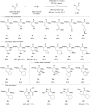
- initial reaction, using CH3CN as solvent, led to formation of methyl 3-cyclohexyl-2-(1,3-dioxoisoindolin-2-yl)propanoate (3, 51% yield, 85% conv.; Table 1, entry 1). To demonstrate the importance of the photocatalyst, BP l was excluded (Table 1, entry 2), resulting in a slightly higher conversion and a



Non-covalent organocatalyzed enantioselective cyclization reactions of α,β-unsaturated imines
Beilstein J. Org. Chem. 2024, 20, 3221–3255, doi:10.3762/bjoc.20.268
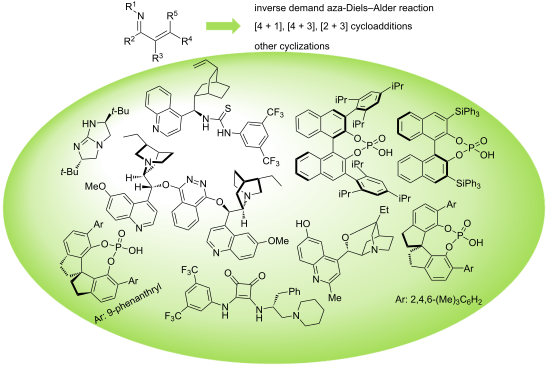
- (Scheme 3). The reaction of 3-isothiocyanatooxindoles 4 and ketimines 7 led to the (3 + 2) cycloaddition through the C=C bond of the α,β-unsaturated imine instead of the C=N bond, affording various spirocyclic derivatives 8 with excellent yields (92–98%), diastereoselectivities (15:1–20:1 dr), and
- the α-position led to the desired products albeit with unsatisfactory results. The bifunctional squaramide catalyst V has two functions; firstly it deprotonates the enolic form of the azlactone through the Brønsted-base moiety, and secondly it activates the 1-azadiene and enolate form of the
- 92%, complete diastereoselectivities and moderate to excellent enantioselectivities (62–99% ee) (Scheme 7). The 1-azadienes bearing electron-rich or electron-poor groups on the meta or para-position of the phenyl ring led to the derivatives 20 with excellent enantioselectivities. However, when 1


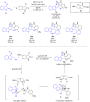
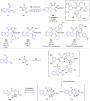
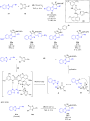
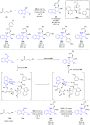









Ceratinadin G, a new psammaplysin derivative possessing a cyano group from a sponge of the genus Pseudoceratina
Beilstein J. Org. Chem. 2024, 20, 3215–3220, doi:10.3762/bjoc.20.267
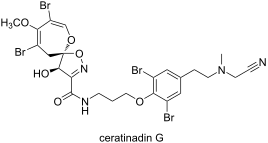
- have identified various bioactive bromotyrosine alkaloids [8]. Previously, we isolated two psammaplysin derivatives, ceratinadins E and F, containing two or three 11-N-methylmoloka’iamine units, from the Okinawan marine sponge Pseudoceratina sp. [9]. Further investigation of this sponge has led to the
- ), as well as additional signals not matching those of any known psammaplysin derivatives. Further separation of this fraction using C18 HPLC led to the isolation of ceratinadin G (1, 0.4 mg, 3.2 × 10⁻⁴%) along with psammaplysin F (2) [10][11][12]. Ceratinadin G (1) was isolated as an optically active


Discovery of ianthelliformisamines D–G from the sponge Suberea ianthelliformis and the total synthesis of ianthelliformisamine D
Beilstein J. Org. Chem. 2024, 20, 3205–3214, doi:10.3762/bjoc.20.266
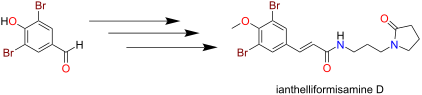
- and fauna have evolved over billions of years to survive within this unique environment [1][2], which has led to the production and diversification of unique and novel metabolites with specialised biological functions [3][4]. The richest diversity of marine metabolites are derived from invertebrates
- HPLC (RP-HPLC), which led to the purification of the known metabolites, ianthelliformisamines A–C (1–3) [7] and aplysterol (8) [13], and four new natural products, ianthelliformisamines D–G (4–7) (Figure 1). This extraction and isolation process was repeated twice to obtain sufficient quantities of the


![[Graphic 1]](/bjoc/content/inline/1860-5397-20-266-i2.svg?max-width=637&scale=1.18182)
![[Graphic 2]](/bjoc/content/inline/1860-5397-20-266-i3.svg?max-width=637&scale=1.18182)
![[Graphic 3]](/bjoc/content/inline/1860-5397-20-266-i4.svg?max-width=637&scale=1.18182)

![[Graphic 4]](/bjoc/content/inline/1860-5397-20-266-i5.svg?max-width=637&scale=1.18182)
![[Graphic 5]](/bjoc/content/inline/1860-5397-20-266-i6.svg?max-width=637&scale=1.18182)




