


Search results
Search for "preparation" in Full Text gives 2125 result(s) in Beilstein Journal of Organic Chemistry. Showing first 200.
Investigation of a bimetallic terbium(III)/copper(II) chemosensor for the detection of aqueous hydrogen sulfide
Beilstein J. Org. Chem. 2024, 20, 2818–2826, doi:10.3762/bjoc.20.237
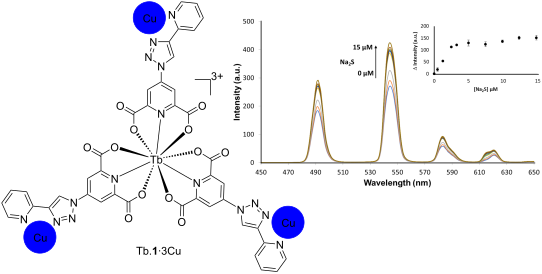
- each addition. In situ preparation of the [Tb.1·3Cu]3+ sensor. Solutions of 5 μM [Tb.1·3Cu]3+ were prepared by combining a DMSO stock solution of Tb.1 (100 μM) with 1 mM Cu(NO3)2·5H2O(aq). Solutions were then diluted with the appropriate amount of buffer (final concentration 10 mM Tris–HCl or 10 mM


Access to optically active tetrafluoroethylenated amines based on [1,3]-proton shift reaction
Beilstein J. Org. Chem. 2024, 20, 2776–2783, doi:10.3762/bjoc.20.233
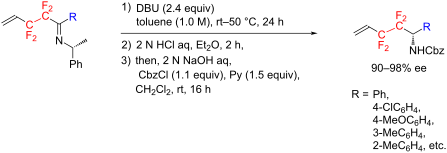
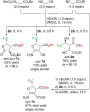
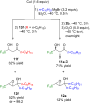
- reports on the preparation of chiral molecules possessing a tetrafluoroethylene unit on an asymmetric carbon center in a high optical purity, and to the best of our knowledge, only the following have been published so far (Scheme 1). As a highly enantioselective synthesis, there has been a pioneering work
- diastereomers 12 and 13 are often easily separable, and each diastereomer of optically active alcohols or amines can be obtained with an excellent optical purity (reactions 3 and 4 in Scheme 1). To the best of our knowledge, these are the only four works for the preparation of optically active substances having
- ]-proton shift reaction of various tetrafluoroethylenated imines. Results and Discussion The preparation of substrates used in this study was as outlined in Scheme 3. Namely, the zinc reagent was prepared from commercially available 3,3,4,4-tetrafluoro-1-butene (18) [33] and reacted with various acid



Copper-catalyzed yne-allylic substitutions: concept and recent developments
Beilstein J. Org. Chem. 2024, 20, 2739–2775, doi:10.3762/bjoc.20.232
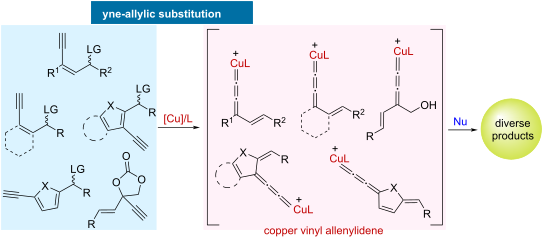
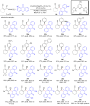
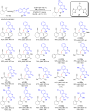
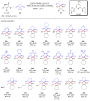
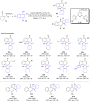
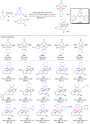
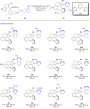
- , which further limits the preparation of the related compounds. He et al. [65] used tetramethyldiaminomethane as a suitable surrogate of dimethylamine to achieve the asymmetric dimethylamination of yne-allylic esters, providing an efficient and convenient pathway for the synthesis of enantioenriched 1,4













Interaction of a pyrene derivative with cationic [60]fullerene in phospholipid membranes and its effects on photodynamic actions
Beilstein J. Org. Chem. 2024, 20, 2732–2738, doi:10.3762/bjoc.20.231
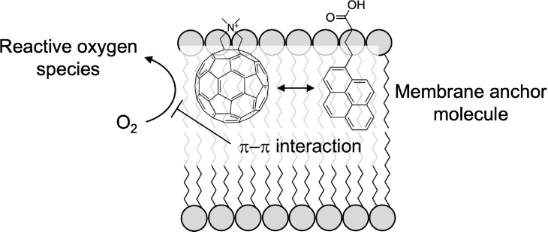
- the photocontrol of the plasma membrane potential (Vm) using fullerene-containing triad molecules on a millisecond scale. Experimental Preparation of liposomes with catC60 (catC60-lip) or C60 (C60-lip) Liposomes were prepared using a thin-film hydration method. DMPC (NOF AMERICA Corporation, White


Synthesis of spiroindolenines through a one-pot multistep process mediated by visible light
Beilstein J. Org. Chem. 2024, 20, 2722–2731, doi:10.3762/bjoc.20.230
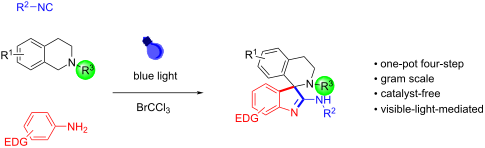
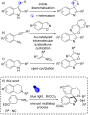
- -catalyzed protocol to obtain spiro[benzo[e][1,3]oxazine-2,3’-indoles] starting from 2-alkynylphenyl azides and 1,2-benzisoxazoles [12] (Scheme 1b). However, all these processes generally involve the preparation of starting materials, often not trivial. On the other hand, in 2018 Aksenov and Rubin reported
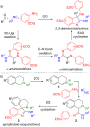
- –N bond oxidation to generate α-iminoamidines and then a final cyclization takes place (Scheme 2a). Although the synthetic procedure allowed the preparation of highly substituted complex structures under mild reaction conditions and on gram scale, it suffers from a limited structural diversity. Since
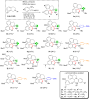
- the preparation of complex structures without using catalysts, and purification of intermediates. Remarkably, the reaction can be performed even on gram scale without loss of efficiency. Studies directed toward evaluating the biological activities of the spiroindolenines are currently underway in our




Synthesis of benzo[f]quinazoline-1,3(2H,4H)-diones
Beilstein J. Org. Chem. 2024, 20, 2708–2719, doi:10.3762/bjoc.20.228
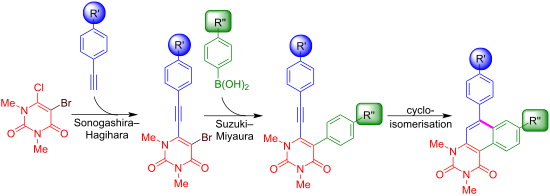
- (51), 271 (18), 268 (26); HRESIMS-TOF (m/z): [M + H]+ calcd for C23H19N2O2S, 387.1167; found, 387.1171. General procedure for the preparation of 5 A mixture of the corresponding starting material 4 (0.145 mmol) and p-TsOH·H2O (20 equiv; 2.94 mmol; 559 mg) was dissolved in dry toluene (2 mL) and




5th International Symposium on Synthesis and Catalysis (ISySyCat2023)
Beilstein J. Org. Chem. 2024, 20, 2704–2707, doi:10.3762/bjoc.20.227
- easily recovered by precipitation using polar solvents. This catalyst proved to be excellent for the preparation of (S)-baclofen on a gram scale, furnishing the main chiral intermediate in high yield and enantioselectivity. Furthermore, the catalyst was recycled over five cycles while maintaining its
- preparation of biologically active compounds [15]. The synthesis was achieved via a sulfonyl group rearrangement driven by the azide–tetrazole equilibrium in quinazolines. The researchers utilized two synthetic pathways to prepare the target compounds. The first pathway involved a nucleophilic aromatic
- values in the range of 1–10 μM. Teixeira et al. reported the preparation of new triazinephosphonate-based dopants and their application in the production of Nafion proton exchange membranes, which exhibited higher conductivity with only 1 wt % loading [19]. These new triazinephosphonate dopants could

The scent gland composition of the Mangshan pit viper, Protobothrops mangshanensis
Beilstein J. Org. Chem. 2024, 20, 2644–2654, doi:10.3762/bjoc.20.222
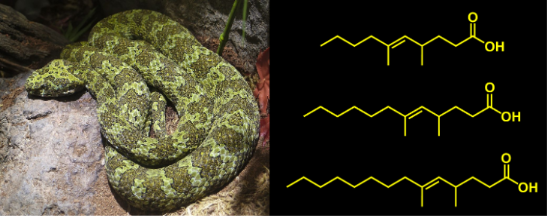
- occurring DKPs usually consist only of the ʟ,ʟ-diastereomer, here both syn- and anti-diastereomers were observed. This may be due to slow epimerization due to enolization within the gland or during sample preparation and storage, as the ᴅ,ʟ-diastereomers of proline DKPs are more stable than the ʟ,ʟ


Applications of microscopy and small angle scattering techniques for the characterisation of supramolecular gels
Beilstein J. Org. Chem. 2024, 20, 2608–2634, doi:10.3762/bjoc.20.220
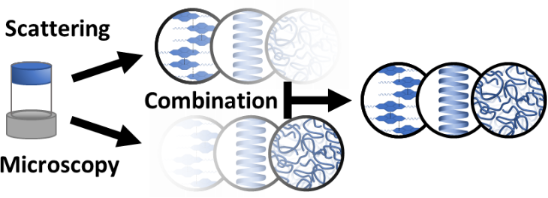
- be feasibly analysed [15]. A recent review by Kubota et al. summarised both the spatiotemporal advantages and disadvantages, as well as the artefacts arising from sample preparation and imaging conditions in the microscopy of molecular self-assemblies [16]. When imaging supramolecular gels, atomic
- number of structural features, but the sample preparation required can lead to significant changes in the materials morphology. EM requires many preparative steps to allow structures to be imaged including the application of an ultrathin coating of carbon, gold, or platinum. These are applied to conduct
- number of reviews discussing its pivotal nature in supramolecular material characterisation [32]. One of the most common methods of vitrification involves plunging the hydrogel into a liquid propane/ethane mixture, transferred under vacuum to a preparation chamber where it is fractured, sublimed, and


Efficient modification of peroxydisulfate oxidation reactions of nitrogen-containing heterocycles 6-methyluracil and pyridine
Beilstein J. Org. Chem. 2024, 20, 2599–2607, doi:10.3762/bjoc.20.219
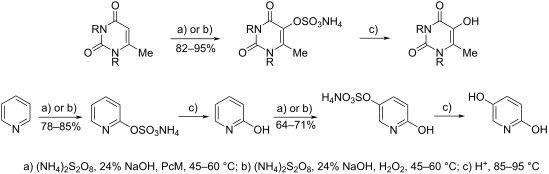
- was 88% and for compound 5 70%. Preparation of compounds 6-Methyluracil-5-ammonium sulfate (2). The spectral characteristics are given in [13]. 1,3,6-Trimethyluracil-5-ammonium sulfate (5). The spectral characteristics are given in [13]. General procedure for the hydrolysis of uracils 2 and 5. As


Synthesis and cytotoxicity studies of novel N-arylbenzo[h]quinazolin-2-amines
Beilstein J. Org. Chem. 2024, 20, 2592–2598, doi:10.3762/bjoc.20.218
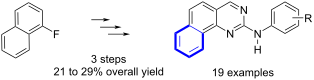
- describe a short and efficient synthesis for this type of novel skeleton and to prepare a focused library for these targets C. Further, we will report results on their cytotoxic activities. Results and Discussion Chemical synthesis For the preparation of our targets, we selected a flexible strategy which
- tested (25 μM). For these more potent molecules, further studies will be required to rationalize their activities and selectivities and explore their mechanism(s) of action. Conclusion In conclusion, we have designed a short and versatile strategy for the preparation of new N-arylbenzo[h]quinazoline-2
- -amines and it was exemplified through the preparation of a focused chemical library with 19 members. In addition, the cytotoxicity assays afforded interesting results demonstrating that the substitution on the anilino part can have significant effects on their bioactivity. Two molecules (4a and 4i


Base-promoted cascade recyclization of allomaltol derivatives containing an amide fragment into substituted 3-(1-hydroxyethylidene)tetronic acids
Beilstein J. Org. Chem. 2024, 20, 2585–2591, doi:10.3762/bjoc.20.217
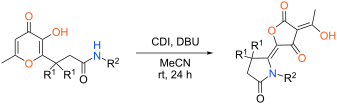
- purification procedure are the advantages of the considered method. The synthetic utility of obtained tetronic acids was demonstrated by preparation of enamine and enehydrazine derivatives. The structures of one target tetronic acid and synthesized enehydrazine were established by X-ray analysis. Experimental


Transition-metal-free synthesis of arylboronates via thermal generation of aryl radicals from triarylbismuthines in air
Beilstein J. Org. Chem. 2024, 20, 2577–2584, doi:10.3762/bjoc.20.216
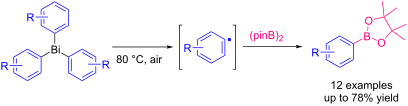
- variety of transition-metal-catalyzed reactions and photoredox reactions using arylboronates as aryl sources have been energetically investigated for the construction of carbon–carbon or carbon–heteroatom bonds [12][13][14][15]. The preparation of arylboronates often requires pre-functionalized substrates



Anion-dependent ion-pairing assemblies of triazatriangulenium cation that interferes with stacking structures
Beilstein J. Org. Chem. 2024, 20, 2567–2576, doi:10.3762/bjoc.20.215
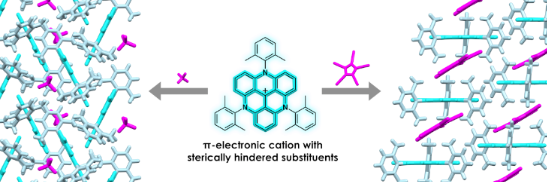
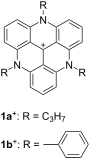
- sheets coated with silica gel 60 (Merck 5554). Column chromatography was performed on Wakogel C-300. Preparation of ion pairs 4,8,12-Tris(2,6-dimethylphenyl)-4,8,12-triazatriangulenium as a BF4− ion pair, 2+-BF4−. According to the literature procedure [26], to a Schlenk tube were added 2,6



A review of recent advances in electrochemical and photoelectrochemical late-stage functionalization classified by anodic oxidation, cathodic reduction, and paired electrolysis
Beilstein J. Org. Chem. 2024, 20, 2500–2566, doi:10.3762/bjoc.20.214
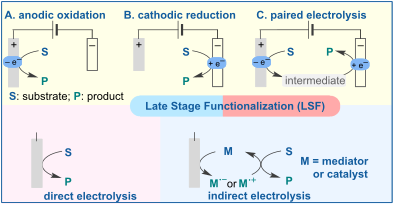
- celestolide showed high yields and good selectivity (Scheme 9). The Lei group also disclosed another C(sp3)–H functionalization involving C–O-bond formation [18]. The reported method allows the straightforward preparation of α-acyloxy sulfides from ubiquitous carboxylic acids and sulfides, providing an
- leads to an intermediate product, which is then deprotonated, generating the thiol radical. This allowed for the preparation of the para-thiolation product (Scheme 11). Sulfonamides are an important class of bioactive molecules. In 2021, the Waldvogel group disclosed the first C(sp2)–H functionalization
- functionalization of complex molecules without the need for directing groups, thereby simplifying the synthesis process and enhancing the exploration of new drug candidates. 1.3.7 Ir-assisted anodic oxidation. An Ir-electrocatalyzed vinylic C(sp2)–H activation method for the preparation of α-pyrones via annulation




























Machine learning-guided strategies for reaction conditions design and optimization
Beilstein J. Org. Chem. 2024, 20, 2476–2492, doi:10.3762/bjoc.20.212
- Computing (NCHC) and the Computer and Information Networking Center at NTU for the support of computing facilities. During the preparation of this work, the authors used AI tools in order to correct grammatical mistakes and enhance the fluency of the manuscript. After using this tool, the authors reviewed


Photoredox-catalyzed intramolecular nucleophilic amidation of alkenes with β-lactams
Beilstein J. Org. Chem. 2024, 20, 2461–2468, doi:10.3762/bjoc.20.210
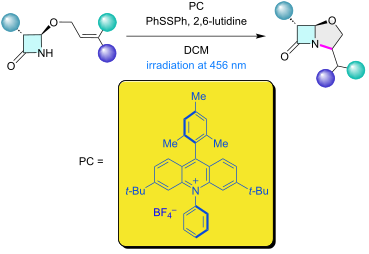
- from the commercially available β-lactam 9, a key intermediate for the industrial preparation of carbapenems. Starting from the reaction conditions reported by Nicewicz and Morse [28], we optimized the conditions with compound 8c as the model substrate for the photoredox cyclization (Table 1). The
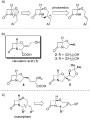
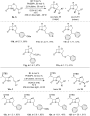
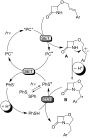
- variants. A) Access of clavam derivatives by intramolecular photoredox reaction of alkenes. B) Clavulanic acid and its derivatives. C) Construction of the oxacepham scaffold by radical cyclization. Tentative mechanism for the photo-cyclization reaction. Preparation of alkenyl β-lactam derivatives for the




Hypervalent iodine-mediated cyclization of bishomoallylamides to prolinols
Beilstein J. Org. Chem. 2024, 20, 2455–2460, doi:10.3762/bjoc.20.209
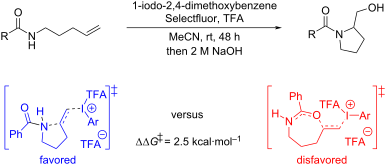
- was the five-membered prolinol 7a rather than the initially assigned isomeric seven-membered tetrahydrooxazepine 6 [16]. Subsequently, we set out to understand the O- versus N-chemoselectivity by DFT modelling, and to develop an effective synthetic protocol for the preparation of prolinols 7 in high
- yield (Scheme 1B). Notably, we are unaware of any reported method to achieve this specific transformation in the literature. Although, Tellitu and co-workers have reported a related preparation of indoline derivatives mediated by bis(trifluoroacetoxy)iodobenzene (PIFA) [17]. Results and Discussion In


Phenylseleno trifluoromethoxylation of alkenes
Beilstein J. Org. Chem. 2024, 20, 2434–2441, doi:10.3762/bjoc.20.207
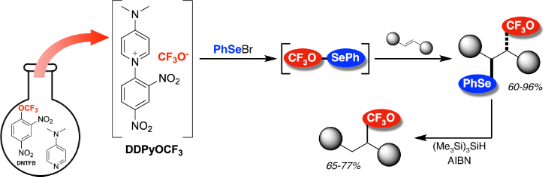
- such as their volatility, their tedious and expensive synthesis and the use of toxic reagents [55][56][57][58][59][60][61][62][63][64][65]. Recently, we reported the preparation of a stable solution of the CF3O− anion (DDPyOCF3) from the cheap and commercially available 2,4-dinitro(trifluoromethoxy



Facile preparation of fluorine-containing 2,3-epoxypropanoates and their epoxy ring-opening reactions with various nucleophiles
Beilstein J. Org. Chem. 2024, 20, 2421–2433, doi:10.3762/bjoc.20.206
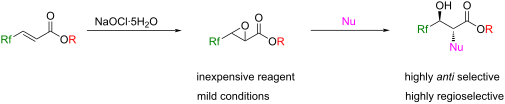
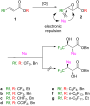
- preparation of 2a. Moreover, the fact that only very limited examples are known for their synthetic application except for the synthesis of 4,4,4-trifluorothreonine [29][33], stereoselective ring opening with organometallic species [29], and so on [32] also stimulated our interest. In this article, we would
- like to describe in detail the results of the preparation of epoxyesters 2 with various Rf groups as well as their reactivity with diverse nucleophiles [39]. Results and Discussion Preparation of (E)-2,3-epoxypropanoates 2 with Rf groups at the 3 position Because the urea·H2O2 complex proved its
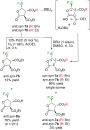
- ]. Changing the solvent to THF (Table 5, entry 8) or the Cu species to CuCN (entry 9) both did not have a positive effect on the present reaction, and we eventually found out that the temperature for the preparation of the cuprate was important and lowering it to −40 °C nicely allowed to record 79% isolated





Homogeneous continuous flow nitration of O-methylisouronium sulfate and its optimization by kinetic modeling
Beilstein J. Org. Chem. 2024, 20, 2408–2420, doi:10.3762/bjoc.20.205
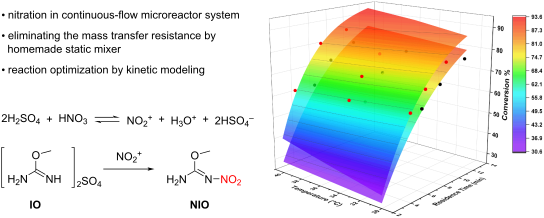
- insecticides is increasing as the world’s food crisis intensifies due to the changes in the natural environment and ongoing geopolitical crises [1]. O-Methyl-N-nitroisourea (NIO) is a pivotal pesticide intermediate in the preparation of nitroguanidine derivatives, which are the raw material for highly


![[Graphic 1]](/bjoc/content/inline/1860-5397-20-205-i17.svg?max-width=637&scale=1.18182)


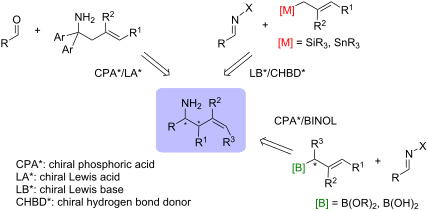
Asymmetric organocatalytic synthesis of chiral homoallylic amines
Beilstein J. Org. Chem. 2024, 20, 2349–2377, doi:10.3762/bjoc.20.201
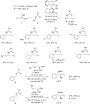
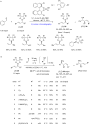
- -assisted chloride abstraction–allylation of N-carbamoyl α-chloroglycinates with trimethylsilane and tri-(n-butyl)stannane reagents [34]. aThe reaction was conducted at −5 °C. One-pot preparation procedure for oxazaborolidinium ion (COBI) 63 [37]. Chiral oxazaborolidinium ion (COBI)-catalysed allylation of








Tandem diazotization/cyclization approach for the synthesis of a fused 1,2,3-triazinone-furazan/furoxan heterocyclic system
Beilstein J. Org. Chem. 2024, 20, 2342–2348, doi:10.3762/bjoc.20.200
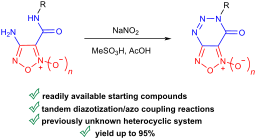
- pharmacological properties and may find application in the design of new promising medications. Herein, we present a convenient synthetic approach for the preparation of previously unknown [1,2,5]oxadiazolo[3,4-d][1,2,3]triazin-7(6H)-one heterocyclic systems containing both a furoxan/furazan fragment condensed to
- obtained using NaNO2 in an AcOH + MeSO3H [1:1] solution (Table 1, entry 7). Organic solvents (CH2Cl2, MeCN) were not applied due to a known rapid decomposition of the generated (1,2,5-oxadiazolyl)diazonium salts [42]. The optimized conditions were applied for the preparation of [1,2,5]oxadiazolo[3,4-d
- found to be suitable for the preparation of a library of new biheterocyclic molecules bearing aromatic and aliphatic substituents as well as incorporating amino acid residues. The obtained furoxanotriazinones have demonstrated a moderate NO-releasing ability across a wide range of concentrations under


Improved deconvolution of natural products’ protein targets using diagnostic ions from chemical proteomics linkers
Beilstein J. Org. Chem. 2024, 20, 2323–2341, doi:10.3762/bjoc.20.199
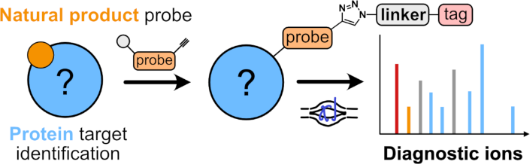
- identifications [17][18][19][20][21][22]. All parts of the chemical proteomics experimental procedure, the sample preparation together with MS measurement and evaluation can be performed in a streamlined or automated way using sophisticated pipelines [13][17][21][25][26][27]. These are highly optimized to provide
- -azido-1-propanamine to give the desired AzidoTMT linker. Furthermore, Makarov et al. developed a linker containing a sulfoxide (SOX) group, which is well-known for specific fragmentation releasing the reporter ion at m/z 179.0849 (Figure 7C) [81][86][87]. The preparation of the tag is based on a five
- enzymatic cleavage. In particular, when considering the linker preparation, the biotin–DADPS–azide can be synthetized in only two steps [112]. Finally, the development of multifunctional linkers enables to combine the in-gel and MS-based analysis in one experiment [116][117][118][119][120]. The




Hydrogen-bond activation enables aziridination of unactivated olefins with simple iminoiodinanes
Beilstein J. Org. Chem. 2024, 20, 2305–2312, doi:10.3762/bjoc.20.197
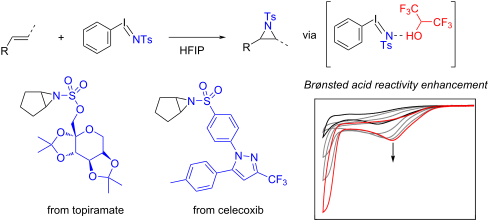
- challenging iminoiodinanes). In situ preparation of the iminoiodinane intermediates is possible, and for those reagents that undergo facile decomposition, aziridination is more efficient using these conditions (yields for in situ-generated iminoiodinanes are in parentheses in Scheme 3, with N-o-methyl (6g





