


Search results
Search for "LED" in Full Text gives 2063 result(s) in Beilstein Journal of Organic Chemistry. Showing first 200.
Synthesis of 2H-azirine-2,2-dicarboxylic acids and their derivatives
Beilstein J. Org. Chem. 2024, 20, 3191–3197, doi:10.3762/bjoc.20.264
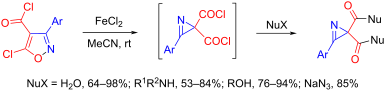
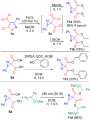
- situation. Dibenzyl ester 11c was prepared using traditional activation of carboxylic acid 6a, although the yield was only 23%. A higher yield of the branched ester 11d (86%, as a mixture of diastereomers) was obtained by carbene insertion, generated by blue LED irradiation of methyl 2-diazo-2-phenylacetate





Direct trifluoroethylation of carbonyl sulfoxonium ylides using hypervalent iodine compounds
Beilstein J. Org. Chem. 2024, 20, 3182–3190, doi:10.3762/bjoc.20.263
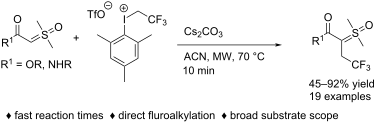
- ) hypervalent iodonium salts, for the efficient synthesis of fluorinated sulfoxonium ylides (Scheme 1c). Results and Discussion Since the introduction of hypervalent iodonium salts in organic chemistry, these valuable reagents have led to many new strategies for carbon–carbon bond formation [31][32]. Our


Synthesis of extended fluorinated tripeptides based on the tetrahydropyridazine scaffold
Beilstein J. Org. Chem. 2024, 20, 3174–3181, doi:10.3762/bjoc.20.262
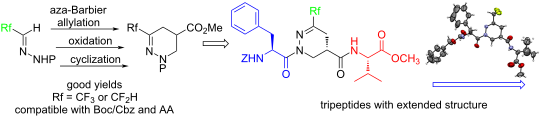
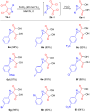
- lead to the corresponding hydrazones 6a–d in good yields (69–80%). Surprisingly, these conditions were unsuitable for compounds 5e and 5f and led to the formation of numerous byproducts. Fortunately, the replacement of iodine with N-bromosuccinimide (NBS), previously reported for the oxidation of


Surprising acidity for the methylene of 1,3-indenocorannulenes?
Beilstein J. Org. Chem. 2024, 20, 3144–3150, doi:10.3762/bjoc.20.260
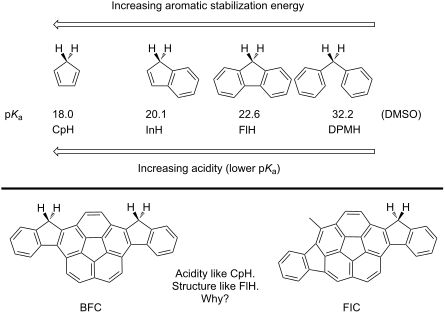
- . The CL perspective provided us a different way to look at these compounds and interpret them as phenyl-substituted CpHs, thus reconciling their higher acidity. That perspective led us to a CL graph representation that predicted/rationalized additional acidic CpH-PAHs and sharpened our understanding of


Hypervalent iodine-mediated intramolecular alkene halocyclisation
Beilstein J. Org. Chem. 2024, 20, 3113–3133, doi:10.3762/bjoc.20.258
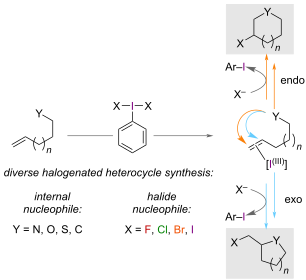
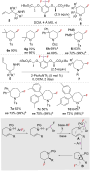
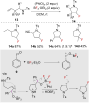
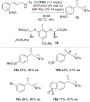
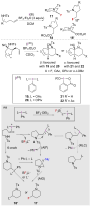
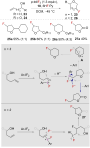
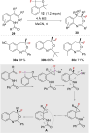
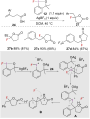
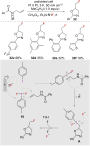
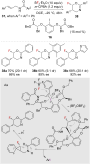
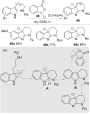
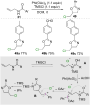
- from the styrenyl starting materials is stereoselective, giving the syn-diasteroisomer in high yields. A chiral iodoarene catalyst 16 was employed, along with a stoichiometric sacrificial oxidant, to give good to excellent levels of enantioselectivity. This elegant strategy led to a variety of β
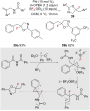
- . The authors studied the stereo-, regio, and chemoselectivity in both cyclic and acyclic substrates. It was observed that the use of acyclic iodane reagents 19 and 20 predominantly led to products with β-stereochemistry, whereas the cyclic iodanes 21 and 22 favour pathways leading to α-stereochemistry
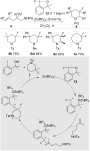
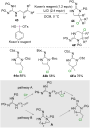
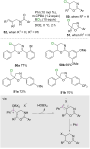
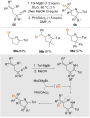
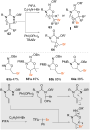
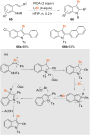
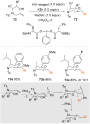
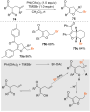
- . Substrates with a range of substituents on the alkyl chain were cyclised in good yields, yet introduction of substituents on the alkene led to a reduction of yield. The authors proposed a standard mechanism for the reaction (Scheme 23) in which PhI(OAc)2 activates the alkene, intramolecular attack of





















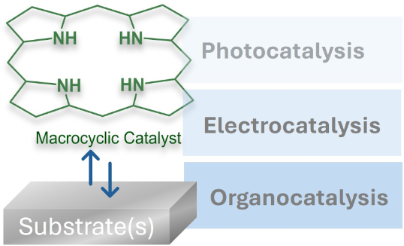
Advances in the use of metal-free tetrapyrrolic macrocycles as catalysts
Beilstein J. Org. Chem. 2024, 20, 3085–3112, doi:10.3762/bjoc.20.257
- . Although meso-tetrakis(4-sulfonatophenyl)porphyrin (TPPS4, 54) is an achiral molecule, the respective J-aggregates reveal supramolecular chirality caused by spontaneous mirror symmetry breaking (SMSB) during the aggregation process in an aqueous acidic solution. Using of these aggregates led to
- various amines tested, only the secondary amines (morpholine) led to product formation, confirming the formation of enamine in the catalytic cycle. The proposed mechanism suggested that the amine, photocatalyst, and light each played crucial roles (Figure 14). The porphyrin acted as both a photoredox unit
- porphyrin radical anion. Ultimately, protonation of intermediate E led to the final product. Formation of intermediates, such as enamine A and cation radical B, was confirmed using techniques like ESIMS, 1H NMR, and EPR, Stern–Volmer quenching experiments, respectively. All these mechanistic studies


Extension of the π-system of monoaryl-substituted norbornadienes with acetylene bridges: influence on the photochemical conversion and storage of light energy
Beilstein J. Org. Chem. 2024, 20, 3061–3068, doi:10.3762/bjoc.20.254
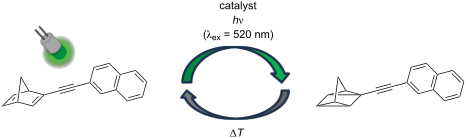
- derivatives, and is, thus, more pronounced for the naphthalene-bridged compounds. Likewise, the increased size of the conjugated π-system also led to a red shift of the absorption bands in comparison with the ones of the corresponding norbornadiene derivatives without acetylene bridges (1b,e) [29][30
- - and 2,6-position of the naphthalene unit resulted in low quantum yields, whereas the attachment of the norbornadiene at the 1- or 1,4-position led to significantly higher quantum yields, which is in accordance with previous observations with naphthyl-substituted derivatives [29][30]. Apparently, there


Chemical structure metagenomics of microbial natural products: surveying nonribosomal peptides and beyond
Beilstein J. Org. Chem. 2024, 20, 3050–3060, doi:10.3762/bjoc.20.253
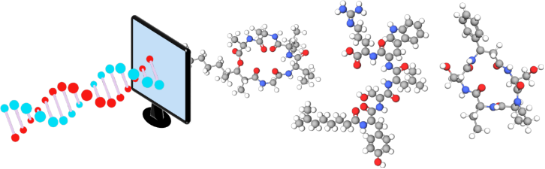
- molecules were screened for various bioactivities and led to the discovery of new antibiotics, antifungals, as well as anticancer compounds (Figure 4). Importantly, the underlying mechanism of bacterial growth suppression has been identified for several Syn-BNP antibiotics, which includes both general mode


Tunable full-color dual-state (solution and solid) emission of push–pull molecules containing the 1-pyrindane moiety
Beilstein J. Org. Chem. 2024, 20, 3016–3025, doi:10.3762/bjoc.20.251
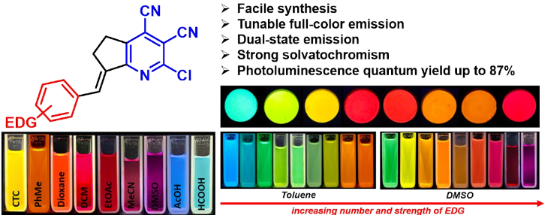
- maxima of compounds 1a–i were in the range of 402–510 nm (Figure 5, left). The most blue-shifted absorbance was observed for stilbazole 1a, bearing no conjugated donor groups. Depending on their number and donor strength, the introduction of electron-donating substituents led to a bathochromic shift. The
- color from blue to orange (Figure 7, top). The most blue-shifted emission was observed for stilbazole 1a without additional substituents. The introduction of an electron-donating group led to a red shift of the emission in accordance with increasing donor strength and number of substituents. Stilbazoles
- dimethylene bridge in arylidene derivatives of pyrindane 1 led to an increase in the emission quantum yield and caused an appearance of solid-state photoluminescence, in contrast to the previously synthesized analogues (stilbazoles A, Figure 1) without such a bridge (Tables S3 and S4, Supporting Information


Advances in radical peroxidation with hydroperoxides
Beilstein J. Org. Chem. 2024, 20, 2959–3006, doi:10.3762/bjoc.20.249
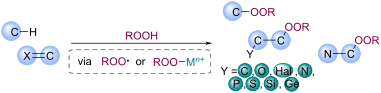
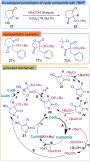
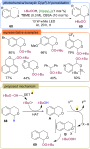
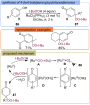
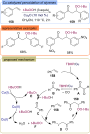
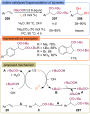
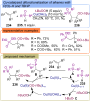
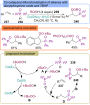
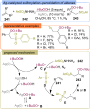
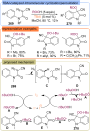
- , phenylacetonitrile (55), with TBHP under Cu-catalysis led to a mixture of the oxidation products 56–59 including tert-butyl perbenzoate (57, Scheme 21) [25]. This discovery was later used to develop the synthesis of tert-butyl perbenzoates 61 from phenylacetonitriles 60 and TBHP (Scheme 21) [64]. The process was
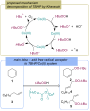
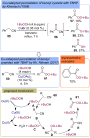
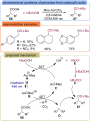
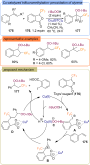
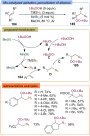
- -AcrClO4 as the photocatalyst has been disclosed (Scheme 24) [67]. According to the authors, the irradiation of the photocatalyst (Acr+-Mes) A with a blue LED leads to the excited state (Acr·-Mes·+) B. The aliphatic carboxylic acid 66 is converted by deprotonation to the corresponding carboxylate, which is
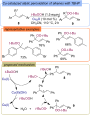
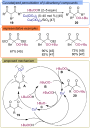
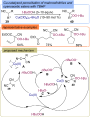
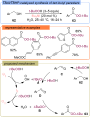
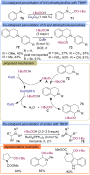
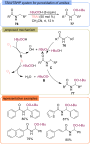
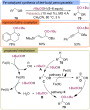
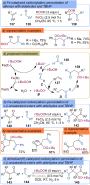
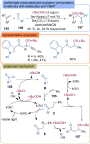
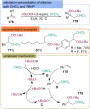
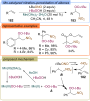
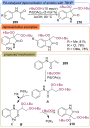
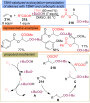
- tert-butylperoxy radical В. Fe(acac)3-catalyzed oxidation of benzyl, allyl and propargyl ethers 78 with TBHP led to the formation of tert-butylperoxyacetals 79 (Scheme 28) [75]. Probably, in the first step TBHP oxidizes Fe(II) to Fe(III) with the formation of tert-butoxy radical A. Then the second





























The charge transport properties of dicyanomethylene-functionalised violanthrone derivatives
Beilstein J. Org. Chem. 2024, 20, 2921–2930, doi:10.3762/bjoc.20.244
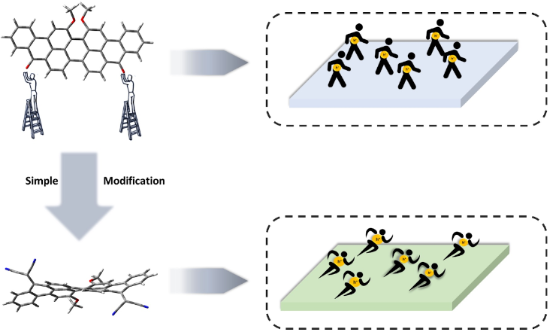
- × 10−4 cm2 V−1 s−1) and 2-ethylhexyl chains (4.93 × 10⁻⁵ cm2 V−1 s−1). The stronger π–π interactions led to a higher power conversion efficiency (PCE) as a result of the higher short-circuit current density (Jsc), due to films with higher crystallinity providing a smoother pathway to charge carriers to


Recent advances in transition-metal-free arylation reactions involving hypervalent iodine salts
Beilstein J. Org. Chem. 2024, 20, 2891–2920, doi:10.3762/bjoc.20.243

- -arylations utilizing diaryliodonium salts, marked by significant contributions, notably from research teams led by Sanford [53] and Gaunt [54]. The synthesis of carbon–carbon bonds through metal-free approaches serves as a valuable complement to transition-metal-catalyzed couplings. This is particularly
- photosensitizer and DIPEA was effective as a base (Scheme 12). The reaction yielded the E-isomers in a solvent mixture of methanol/water 5:1 under blue LED light (467 nm) irradiation in good yields. Various DAIRs substituted at different positions were found to be suitable for the reaction giving the respective
- electron-donating substituents at the para-position of the N-arylacrylamide led to good yields. In cases of meta-substitution, a mixture of C6 and C4-substituted oxindole products were obtained, whereas ortho-substitution resulted in the desired oxindoles in moderate yields. Nitrogen substitution was also




Synthesis of pyrrole-fused dibenzoxazepine/dibenzothiazepine/triazolobenzodiazepine derivatives via isocyanide-based multicomponent reactions
Beilstein J. Org. Chem. 2024, 20, 2870–2882, doi:10.3762/bjoc.20.241
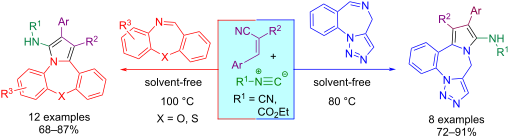
- reaction conditions giving the products 4 in yields ranging from 68% to 87% (Scheme 3, 4a–l). In this reaction, the presence of electron-withdrawing substituents in the aromatic rings of the gem-diactivated olefins led to slightly better yields of the products 4 when compared to the substrates having
- -diactivated olefins, the desired products were also obtained in good yields (Scheme 3, 4k and 4l). On the other hand, the presence of electron-donating and electron-withdrawing substitutions in the dibenzoxazepine core were also investigated and it was observed, that electron-withdrawing substituent led to an
- increase and the electron-donating substituents led to a decrease in the reaction efficiency (Scheme 3, 4a–k). In addition, benzothiazepine was used in this protocol and the corresponding pyrrole-fused benzothiazepine was obtained with a yield of 73% (Scheme 3, 4l). Also, various isocyanides were suitable





Multicomponent synthesis of α-branched amines using organozinc reagents generated from alkyl bromides
Beilstein J. Org. Chem. 2024, 20, 2834–2839, doi:10.3762/bjoc.20.239
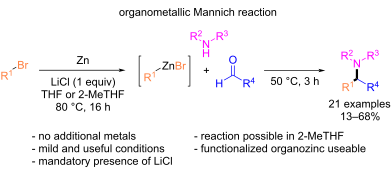
- amines. Interestingly, whereas previously reported work describing the preparation and reaction of organozinc iodides in acetonitrile showed higher reactivity of secondary organozinc reagents over primary ones, reactions in THF in the presence of LiCl led to opposite results, with higher reactivity of
- use of biosourced 2-MeTHF led to a comparable result (Table 1, entry 8). With these results in hands, we evaluated the scope of the zincation. The results are presented in Scheme 1. The zincation conditions proved to be general, with a good yield of the organozinc compounds being obtained after 16 h
- . In addition, whereas tert-butylzinc iodide was efficient in the multicomponent coupling (99% yield), tert-butylzinc bromide led to a very low yield (16% 5kaa). The coupling presented some other limitations. It was not possible to carry out the reaction when a primary amine was employed. In addition


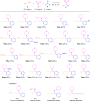
Investigation of a bimetallic terbium(III)/copper(II) chemosensor for the detection of aqueous hydrogen sulfide
Beilstein J. Org. Chem. 2024, 20, 2818–2826, doi:10.3762/bjoc.20.237
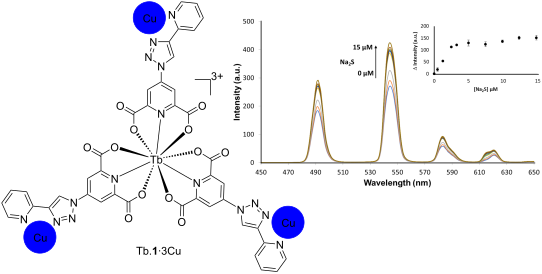
- equivalents (25 μM) were added (Figure S3 in Supporting Information File 1). The addition of 5 equivalents of Cu2+ ions led to 70% reduction in the luminescence signal, though complete quenching of luminescence could not be achieved, even with additional Cu2+ ions. However, as greater than 50% of emission


Mechanochemical difluoromethylations of ketones
Beilstein J. Org. Chem. 2024, 20, 2799–2805, doi:10.3762/bjoc.20.235
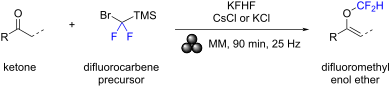
- chromatography, which afforded the products in 53% and 39% yield, respectively. Product 3e with an isobutyl group in para-position was obtained in 63% yield and isolated in 35% yield. Changing the position of the methyl group to the ortho-position led to a decrease in yield (3f: 34%). ortho-Methoxy-substituted


Access to optically active tetrafluoroethylenated amines based on [1,3]-proton shift reaction
Beilstein J. Org. Chem. 2024, 20, 2776–2783, doi:10.3762/bjoc.20.233
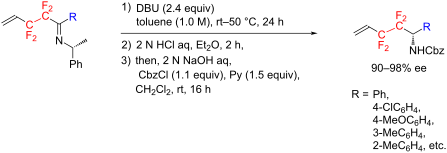
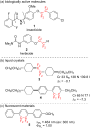
- Science and Engineering, Ibaraki University, 4-12-1 Nakanarusawa, Hitachi, Ibaraki 316-8511, Japan 10.3762/bjoc.20.233 Abstract Treatment of various (R)-N-(2,2,3,3-tetrafluoropent-4-en-1-ylidene)-1-phenylethylamine derivatives with 2.4 equiv of DBU in toluene at room temperature to 50 °C for 24 h led to
- by Linclau et al. They have reported that the asymmetric Sharpless dihydroxylation of readily available (E)-5-bromo-4,4,5,5-tetrafluoro-2-penten-1-ol derivative 6 led to the corresponding chiral diols 7 with an excellent enantiomeric excess, 96% ee (reaction 1 in Scheme 1) [20][21]. It has also been



Interaction of a pyrene derivative with cationic [60]fullerene in phospholipid membranes and its effects on photodynamic actions
Beilstein J. Org. Chem. 2024, 20, 2732–2738, doi:10.3762/bjoc.20.231
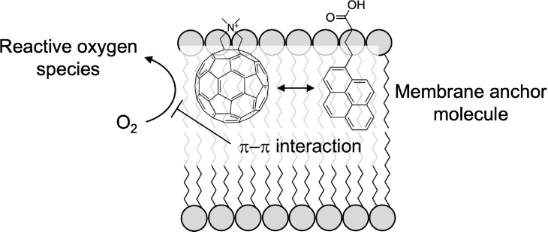
- -methyl-1-pyrrolidone-N-oxide (DEPMPO) were respectively used (schemes in Figure 5). Our previous study demonstrated that both 1O2 and O2•– were generated under irradiation of triad molecules in DMSO/H2O [8]. Under irradiation by a blue LED (464–477 nm, 23 lm·W–1), significant ESR signals corresponding to
- Sciences AG (Farmingdale, NY, USA). FeSO4, DETAPAC and NADH was bought from Sigma-Aldrich (St. Louis, Missouri, USA). DMPO was bought from TCI (Tokyo Chemical Industry Co. Ltd., Tokyo, Japan). Irradiation was performed by blue LED light (464–477 nm, 23 lm·W–1) from Lumiflex300 Pro RGB LED Stripes
- (LUMITRONIX LED-Technik GmbH, Hechingen, Germany) containing 120 LED lamps assembled in an aluminium cylindrical container with a diameter of 8.5 cm. ESR measurements conditions: microwave frequency 9.78 GHz, microwave power 10 mW, receiver gain 5.02 × 10⁴, modulation amplitude 1.00 G, modulation frequency


Synthesis of spiroindolenines through a one-pot multistep process mediated by visible light
Beilstein J. Org. Chem. 2024, 20, 2722–2731, doi:10.3762/bjoc.20.230
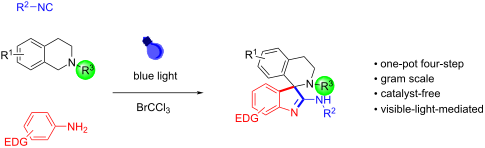
- point, allowing the easy purification of the products. As expected, the reaction conducted in the absence of the carbocatalyst led to the obtainment of 2a with comparable yield (Table 1, entries 3 and 4), demonstrating that 1a is a sufficiently activated substrate for the 3C Ugi-type reaction to occur




Young investigators in natural products chemistry, biosynthesis, and enzymology
Beilstein J. Org. Chem. 2024, 20, 2720–2721, doi:10.3762/bjoc.20.229

- . Their privileged structures have led organic and bioorganic chemists to develop methods to construct them. Our fundamental knowledge in enzymology is continually expanded by enzymes involved in natural products biosynthesis, as their production requires evolved enzymes to perform chemical reactions
Synthesis of benzo[f]quinazoline-1,3(2H,4H)-diones
Beilstein J. Org. Chem. 2024, 20, 2708–2719, doi:10.3762/bjoc.20.228
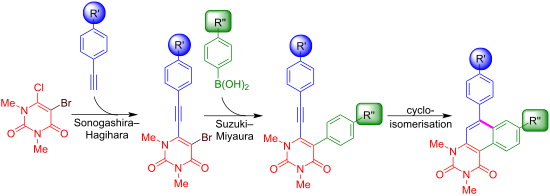
- investigation or modulation of desired properties. Conclusion In summary, we have developed the synthesis of novel polycyclic uracil-based compounds. Careful optimisation of the reaction conditions led to the isolation of the desired products in excellent to moderate yields. The developed methodology tolerates


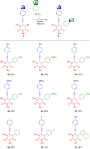
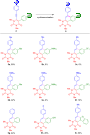


Synthesis of fluoroalkenes and fluoroenynes via cross-coupling reactions using novel multihalogenated vinyl ethers
Beilstein J. Org. Chem. 2024, 20, 2691–2703, doi:10.3762/bjoc.20.226

- blocks. When using them as nucleophilic reagents [15][16][17][18][19][20], the reaction between anion species, such as fluorine-containing Horner–Wadsworth–Emmons reagents, and carbonyl compounds led to E-selective olefination (Scheme 1A) [15]. On the other hand, some reactions with electrophilic
- to 4 mol % led to the conversion of 1a into 3a in 77% yield (Table 2, entry 13). In addition, using 2.0 equiv of 5a gave 3a in high 80% yield (Table 2, entry 14). Based on these results, we determined entry 13 in Table 1 and entry 14 in Table 2 as the optimum reaction conditions. We used 1 as a


Transition-metal-free decarbonylation–oxidation of 3-arylbenzofuran-2(3H)-ones: access to 2-hydroxybenzophenones
Beilstein J. Org. Chem. 2024, 20, 2655–2667, doi:10.3762/bjoc.20.223
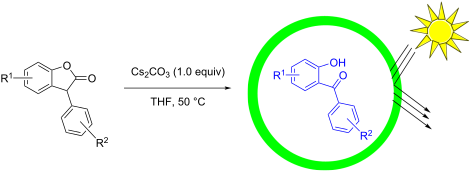
- a 4-methoxy substituent, has been reported to be associated with allergy reactions, Hirschsprung's disease, as endocrine disruptor, and toxic to the environment [30]. This has led researchers to search for alternatives, particularly regarding the backbone of 2-hydroxybenzophenones [11]. As reported


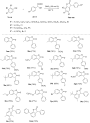


The scent gland composition of the Mangshan pit viper, Protobothrops mangshanensis
Beilstein J. Org. Chem. 2024, 20, 2644–2654, doi:10.3762/bjoc.20.222
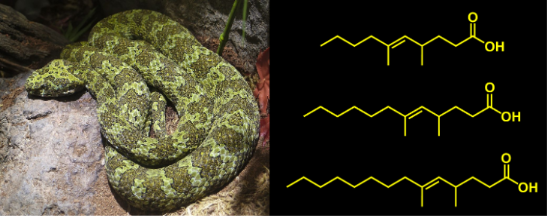
- GC–HRMS. Additional chemical derivatization of the extracts and final synthesis of the proposed structure candidates led to the structures of compounds A–F. Unknown compounds A–F Compounds A–F showed closely related mass spectra (Figure 2) and mostly occurred as pairs of diastereomers, labeled, e.g
- gap between m/z 192 and 232 indicates a methyl group either at either C-5 or C-6. Taken together, the data from the derivatizations led to the conclusion that one methyl group is located at C-4 and a second at C-6. This is consistent with regular fatty acid biosynthesis of mid-chain methyl


Deciphering the mechanism of γ-cyclodextrin’s hydrophobic cavity hydration: an integrated experimental and theoretical study
Beilstein J. Org. Chem. 2024, 20, 2635–2643, doi:10.3762/bjoc.20.221
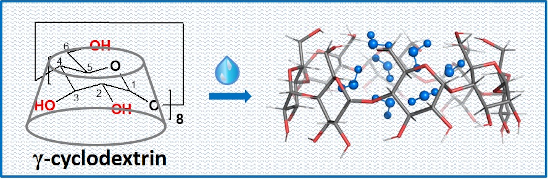
- increased solubility of the entrapped molecules, led to the wide range of applications in the pharmaceutical, food, cosmetic, agricultural, and other industries. It is well established that in the absence of other candidates, water molecules fill the CDs void [6][7][8][9][10]. The number and geometric





