


Search results
Search for "coupling" in Full Text gives 2093 result(s) in Beilstein Journal of Organic Chemistry. Showing first 200.
Synthesis of the 1,5-disubstituted tetrazole-methanesulfonylindole hybrid system via high-order multicomponent reaction
Beilstein J. Org. Chem. 2024, 20, 3077–3084, doi:10.3762/bjoc.20.256
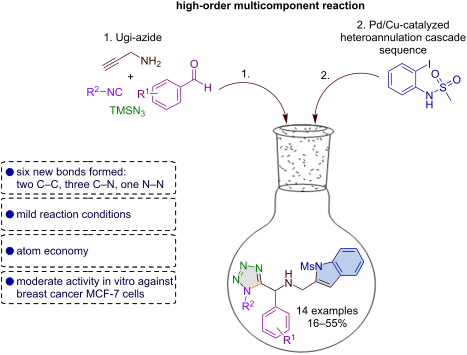
- ]. Therefore, the key component for this reaction was methanesulfonyl 2-iodoaniline 17, as it has been reported that the use of 2-iodoaniline results in the formation of only the Sonogashira coupling product [29][30]. Moreover, as shown in Scheme 2, this high-order multicomponent protocol yielded fourteen 1,5
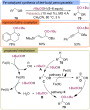
- to obtain the 1,5-disubstituted tetrazole-alkyne 19 is well-documented and hence, it is not herein described in detail [1][26][31]. Thus, based on Pal and co-workers’ proposal [32][33], the second process involves two catalytic cycles: 1) a Sonogashira coupling, and 2) a 5-endo-dig cyclization. The
- first catalytic cycle begins with the coupling of 1,5-disubstituted tetrazole-alkyne 19 and methanesulfonyl-2-iodoaniline 17 forming the intermediate 23. Following a reductive elimination, the Sonogashira-like product 24 is produced, which then progresses into the second catalytic cycle. In this cycle



Enantioselective regiospecific addition of propargyltrichlorosilane to aldehydes catalyzed by biisoquinoline N,N’-dioxide
Beilstein J. Org. Chem. 2024, 20, 3069–3076, doi:10.3762/bjoc.20.255
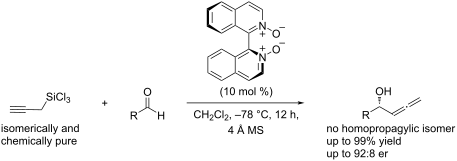
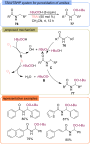
- -difunctionalization of borylenynes by catalytic conjugative cross-coupling [42]. Allenylation reagents that require regio-controlling auxiliaries such as a trimethylsilyl group (Scheme 2a) add steps before and/or after the reaction, thus they are less efficient in terms of atom- and step-economy [21][22][23][24][33


Extension of the π-system of monoaryl-substituted norbornadienes with acetylene bridges: influence on the photochemical conversion and storage of light energy
Beilstein J. Org. Chem. 2024, 20, 3061–3068, doi:10.3762/bjoc.20.254
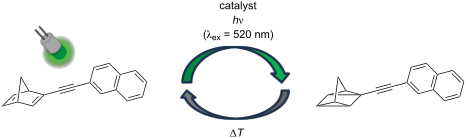
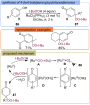
- molecular system. Herein, we present the synthesis of mono-, bis-, and tris-norbornadiene derivatives with alkynylbenzene and alkynylnaphthalene core units, along with studies of their photochemical properties. The target compounds were synthesized by Sonogashira–Hagihara coupling reactions of 2
- ; Sonogashira–Hagihara coupling; Introduction The application of sustainable energy storage and supply has become a very important issue both from an economic and ecological point of view. In particular, the global energy demand is continuously expanding because of the increasing population, the development of
- . Results and Discussion The norbornadiene derivatives 1h–l,n were synthesized by Sonogashira–Hagihara coupling reaction of 2-bromonorbornadiene (1g) [36] with the corresponding arylacetylenes 3a–g (Scheme 2). As an exception, 1,4-bis-norbornadienylnaphthalene (1m) could not be obtained by this route


Chemical structure metagenomics of microbial natural products: surveying nonribosomal peptides and beyond
Beilstein J. Org. Chem. 2024, 20, 3050–3060, doi:10.3762/bjoc.20.253
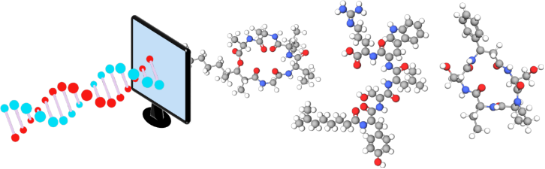
- the glycopeptide antibiotic family [62][63]. Their aromatic rings undergo oxidative coupling to form biaryl moieties that restrict atropisomerism; the resulting rigid structure is key to their high affinity binding to peptidoglycan intermediates [64][65]. Glycopeptide antibiotics include vancomycin


Cyclodextrin-based rotaxanes for polymer materials: challenge on simultaneous realization of inexpensive production and defined structures
Beilstein J. Org. Chem. 2024, 20, 3026–3049, doi:10.3762/bjoc.20.252
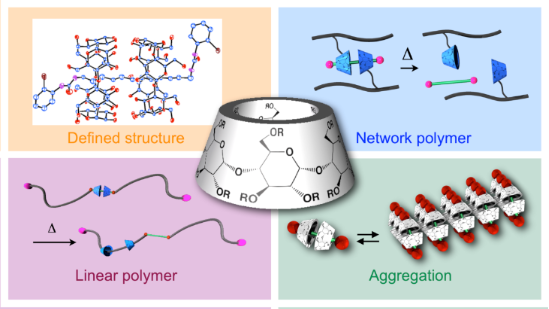
- substitution/addition reactions became the standard for end-capping reactions, although a transition metal–catalyzed cross-coupling reaction has also been used to synthesize CD-based rotaxane. Typically, water-soluble components are prepared, after which the Suzuki coupling reaction in water is used to
- α-CD-based rotaxane comprising a stilbene axle that was synthesized by the Suzuki coupling reaction to light irradiation (Figure 6, right) [58]. In this structure, α-CD was first located on the trans-stilbene moiety, after which it moved to the benzene ring moiety via the cis-isomerization of the
- into the polymer system, further modification and structural analyses were performed [48][74]. The axle end was easily modified by bromination of the benzene ring and successive transition metal–catalyzed cross-coupling reaction, such as Suzuki or Sonogashira coupling (Figure 10A). Furthermore, the






Advances in radical peroxidation with hydroperoxides
Beilstein J. Org. Chem. 2024, 20, 2959–3006, doi:10.3762/bjoc.20.249
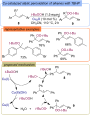
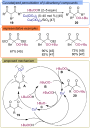
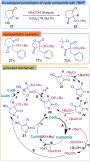
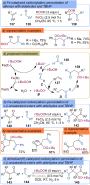
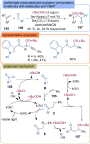
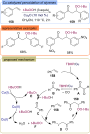
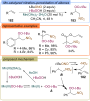
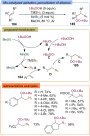
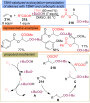
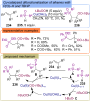
- -coupling between cyclohexyl radical B and C-center radical D provides the difunctionalized product 103. Related methods were subsequently proposed for the modification of indene 104 [42] (Scheme 37). The target peroxides 106 were synthesized in good yields. In the case of indenes 104 a different
- the presence of Cu/TBHP. The cyclohexyl radical C attacks at the α-carbon of α,β-unsaturated ketone D generating a benzylic radical E. Finally, a radical cross-coupling between B and benzylic radical E furnish the formation of cycloalkyl–peroxy product 106. The acid-catalyzed radical additions of
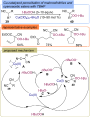
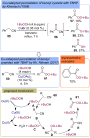
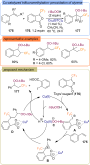
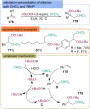
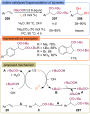
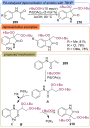
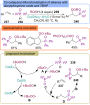
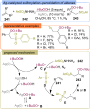
- provides radical E. tert-Butylperoxy group transfer from Co(III)OO-t-Bu A to E gives the coupling product F, which gives the final three-component product 118 and releases the Co(II) catalyst. A copper(0)- and cobalt(II)-catalyzed difunctionalization of enynes 119 with the sp3 α-carbon of alcohols 120 and





























gem-Difluorovinyl and trifluorovinyl Michael acceptors in the synthesis of α,β-unsaturated fluorinated and nonfluorinated amides
Beilstein J. Org. Chem. 2024, 20, 2946–2953, doi:10.3762/bjoc.20.247
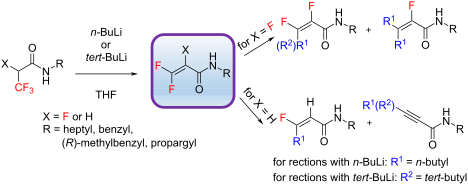
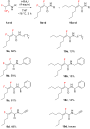
- E-isomer of products 9 were identified. The fluorine atom signals of 9a–d were located at approximately −112 ppm (triplets, J ≈ 27 Hz, Fβ) and at −155 to −159 ppm (multiplets, Fα). The stereochemistry was determined by 19F{1H} NMR spectroscopy. The observed coupling constants J ≈ 2 Hz between
- vinylic fluorine atoms were typical and confirmed that the Z isomers were obtained predominantly [41]. The vicinal coupling constant between the Fβ and Hγ atoms amounted approximately 27 Hz in cases of 9a–d. Based on these findings, we concluded that the dihedral angle between the Fβ and Hγ atoms is
- was confirmed by the observed coupling constants (J ≈ 21 Hz) between the vinylic proton and the fluorine atom [41]. Moreover, the vicinal coupling constants between the Fβ and Hγ atoms ranging from 25–26 Hz for 11a–d suggest a dihedral angle of approximately 170° between these atoms [42][43][44][45




Recent advances in transition-metal-free arylation reactions involving hypervalent iodine salts
Beilstein J. Org. Chem. 2024, 20, 2891–2920, doi:10.3762/bjoc.20.243

- five to seven-membered cyclic compounds [47]. Arylation reactions using diaryliodonium salts can occur through four distinct mechanisms. First, the arylation can occur under metal-free conditions, involving the formation of a three-membered ring transition state through ligand coupling, leading to the
- upon binding of the enolate molecule to iodine either through a carbon–iodine or an oxygen–iodine bond. Both intermediates, I and II, are in rapid equilibrium with each other and further undergo two different types of reactions: [1,2]-ligand coupling and [2,3]-rearrangement (Scheme 2). Either of these
- salt, subsequently leading to decarboxylative C–C coupling. Notably, this method achieves the incorporation of two fluorine atoms in the benzyl position without resorting to hazardous fluorination reagents, transition-metal catalysts, or organometallic compounds. The utility of this reaction is




Multicomponent synthesis of α-branched amines using organozinc reagents generated from alkyl bromides
Beilstein J. Org. Chem. 2024, 20, 2834–2839, doi:10.3762/bjoc.20.239
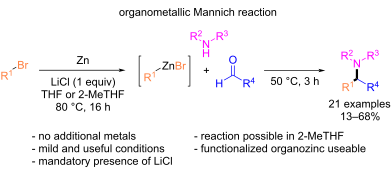
- stoichiometric amount of LiCl was essential for the efficiency of the subsequent three-component coupling with aldehydes and amines. A variety of primary, secondary, and tertiary organozinc reagents as well as secondary amines and aromatic aldehydes could be used for the straightforward preparation of α-branched
- ]. In this context, while significant contributions have highlighted the reliable use of diverse organometallic species in the three-component coupling, most examples of sp3-hybridized compounds have remained restricted to allyl [5] or benzyl [5][6] organometallic reagents. Conversely, examples of
- 16 h at 80 °C (Table 1, entry 2). However, its suitability in the multicomponent coupling with an amine and an aldehyde still had to be demonstrated as there was no precedent for such a Mannich multicomponent coupling involving nonstabilized organozinc halides using THF or 2-MeTHF as solvent. To our


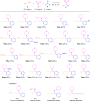
C–C Coupling in sterically demanding porphyrin environments
Beilstein J. Org. Chem. 2024, 20, 2784–2798, doi:10.3762/bjoc.20.234
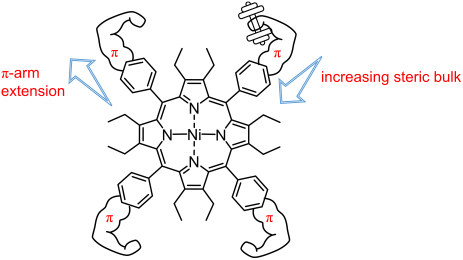
- porphyrin architectures, which could be used in supramolecular assemblies, catalysis, or sensing. In this work a library of arm-extended dodecasubstituted porphyrins was synthesized through the optimization of the classic Suzuki–Miyaura coupling of peripheral haloaryl substituents with a range of boronic
- acids. We report on palladium-catalyzed coupling attempts on the ortho-, meta-, and para-meso-phenyl position of sterically demanding dodecasubstituted saddle-shaped porphyrins. While para- and meta-substitutions could be achieved, ortho-functionalization in these systems remains elusive. Furthermore
- , borylation of a dodecasubstituted porphyrin’s meso-phenyl position was explored and a subsequent C–C coupling showed the polarity of the reaction can be reversed resulting in higher yields. X-ray analysis of the target compounds revealed the formation of supramolecular assemblies, capable of accommodating


Access to optically active tetrafluoroethylenated amines based on [1,3]-proton shift reaction
Beilstein J. Org. Chem. 2024, 20, 2776–2783, doi:10.3762/bjoc.20.233
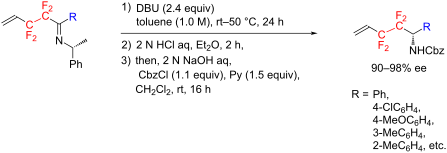
- ]. As a diastereoselective synthesis, reductive coupling reactions of commercially available 4-bromo-3,3,4,4-tetrafluoro-1-butene and glyceraldehyde 10a, its imine derivative 11, or Garner's aldehyde 10b have been reported [23][24]. Although the diastereoselectivities were low in some cases, the



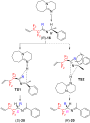
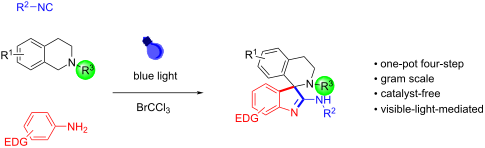
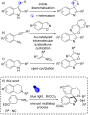
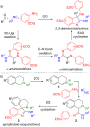
Synthesis of spiroindolenines through a one-pot multistep process mediated by visible light
Beilstein J. Org. Chem. 2024, 20, 2722–2731, doi:10.3762/bjoc.20.230
- NMR: TMS = 0.00; (CD3)2SO = 2.50; and 13C NMR: CDCl3 = 77.16; (CD3)2SO = 39.52. Data for 1H NMR spectra are reported as follows: chemical shift (δ ppm), multiplicity, coupling constants (Hz) and integration. Data for 13C NMR spectra are reported in terms of chemical shift (δ ppm). Interpretation of


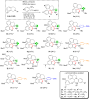


Synthesis of benzo[f]quinazoline-1,3(2H,4H)-diones
Beilstein J. Org. Chem. 2024, 20, 2708–2719, doi:10.3762/bjoc.20.228
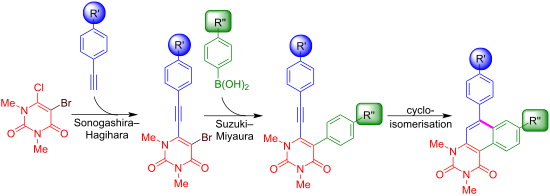
- and Suzuki–Miyaura cross-coupling reactions followed by Brønsted acid-mediated cycloisomerisation. The developed methodology tolerates various functional groups and leads to moderate up to quantitative yields of the final products. The impact of different functional groups on the optical properties
- was studied by UV–vis and fluorescence spectroscopy. Keywords: cross-coupling; cyclization; heterocycles; palladium; Introduction Nucleobases contain the coded information and give DNA and RNA their typical structure. As a nucleobase, uracil is involved in numerous vital processes and is therefore a
- known which allow for an individual introduction of substituents at both positions [37][38][51][52][53][54][55][56][57][58][59][60][61]. In our previous work, we developed a new method which enables both positions to be independently functionalised by Sonogashira- and Suzuki–Miyaura cross-coupling




5th International Symposium on Synthesis and Catalysis (ISySyCat2023)
Beilstein J. Org. Chem. 2024, 20, 2704–2707, doi:10.3762/bjoc.20.227
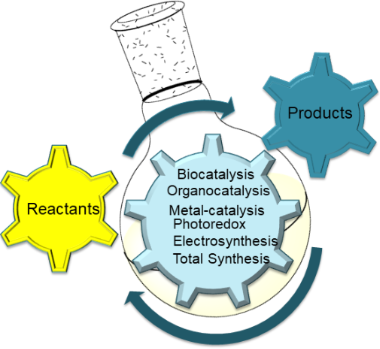
- performance. In their contribution “Metal-catalyzed coupling/carbonylative cyclizations for accessing dibenzodiazepinones: an expedient route to clozapine and other drugs”, Moutayakine and Burke described a new synthetic route for the synthesis of 10,11-dihydro-5H-dibenzo[b,e][1,4]diazepinone (DBDAP

Synthesis of fluoroalkenes and fluoroenynes via cross-coupling reactions using novel multihalogenated vinyl ethers
Beilstein J. Org. Chem. 2024, 20, 2691–2703, doi:10.3762/bjoc.20.226

- fluoroenynes via Suzuki–Miyaura and Sonogashira cross-coupling reactions using novel multihalogenated fluorovinyl ethers, which are easily prepared from the reaction between phenols and 2-bromo-2-chloro-1,1,1-trifluoroethane (halothane). These reactions make use of the unique structure of multihalogenated
- fluorovinyl ethers, which contains a reactive bromine atom, to afford a series of fluoroalkenes and fluoroenynes in moderate to high yields. Keywords: fluoroalkenes; fluoroenynes; multihalogenated vinyl ethers; Suzuki–Miyaura cross-coupling reactions; Sonogashira cross-coupling reactions; Introduction
- fluorine-containing building blocks have been developed [21][22][23][24][25]. Jubault and Poisson et al. reported SN2’ reactions of hydride or alcohols to electrophilic fluorine-containing alkenes gave the corresponding fluoroalkenes (Scheme 1B) [21]. In recent years, many fluorine-containing coupling


Computational design for enantioselective CO2 capture: asymmetric frustrated Lewis pairs in epoxide transformations
Beilstein J. Org. Chem. 2024, 20, 2668–2681, doi:10.3762/bjoc.20.224
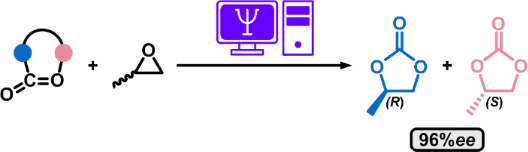
- fluoride ion, respectively. Volcanic 1.3.3, a Python package for the NaviCat platform, was used to generate 3D volcano plots, facilitating the identification of the most appropriate catalyst for the coupling reaction being considered [27]. Volcano plots Volcano plots are a visualisation of the Sabatier
- ), S1 is the substituent on the LB, and S2 is the substituent on the LA. Capture of CO2 and PO by an FLP Chemoselectivity Our investigations began by examining the uncatalysed coupling reaction between CO2 and PO (Scheme 1), which exhibits a calculated activation barrier (ΔG‡) greater than 55 kcal·mol−1
- (Figure S6, Supporting Information File 1). Therefore, in order to observe the coupling between these two moieties under standard conditions, the presence of a catalyst is necessary. In the literature, metal-based and organocatalysts have been reported as efficient catalysts for this reaction [24][25]. As


Transition-metal-free decarbonylation–oxidation of 3-arylbenzofuran-2(3H)-ones: access to 2-hydroxybenzophenones
Beilstein J. Org. Chem. 2024, 20, 2655–2667, doi:10.3762/bjoc.20.223
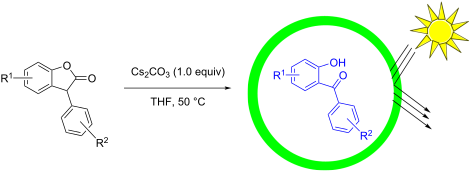
- oxidative coupling of salicylaldehyde with arylboronic acids to successfully produce 2-hydroxybenzophenones [14]. Recently, a Ni-catalyzed decarbonylation–oxidation of 3-arylbenzofuran-2(3H)-ones emerged as an innovative route to access 2-hydroxybenzophenones [2]. The use of transition metals poses




The scent gland composition of the Mangshan pit viper, Protobothrops mangshanensis
Beilstein J. Org. Chem. 2024, 20, 2644–2654, doi:10.3762/bjoc.20.222
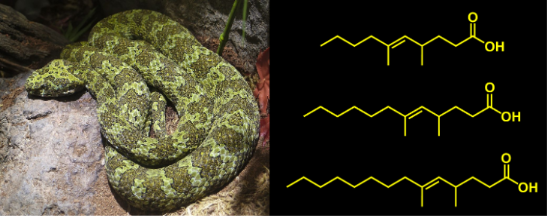
- diastereomers were then subjected to silver nitrate column chromatography to separate the geometric isomers. This separation was only partially achieved (Supporting Information File 1, Figure S10), but one diastereomer was enriched and the sample was subjected to NOESY NMR experiments. Coupling was observed
- between H-5 (4.82 ppm) and C-6-methyl (1.66 ppm) (Supporting Information File 1, Figure S11) for the minor compound eluting earlier in GC, indicating that both hydrogen atoms are close together and that the double bond has a Z-configuration. The other diastereomer showed no coupling between H-5 (4.84 ppm


Deciphering the mechanism of γ-cyclodextrin’s hydrophobic cavity hydration: an integrated experimental and theoretical study
Beilstein J. Org. Chem. 2024, 20, 2635–2643, doi:10.3762/bjoc.20.221
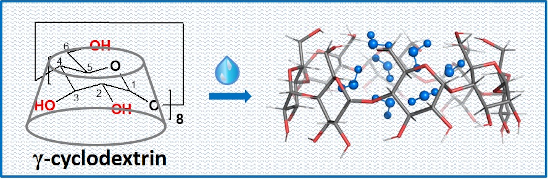
- properties of γ-CD (the largest of the three most abundant native CDs), the main experimental methods applied in this study were differential scanning calorimetry (DSC) and thermogravimetric analysis (TGA). By coupling these techniques with density functional theory (DFT) calculations we try to shed some


Applications of microscopy and small angle scattering techniques for the characterisation of supramolecular gels
Beilstein J. Org. Chem. 2024, 20, 2608–2634, doi:10.3762/bjoc.20.220
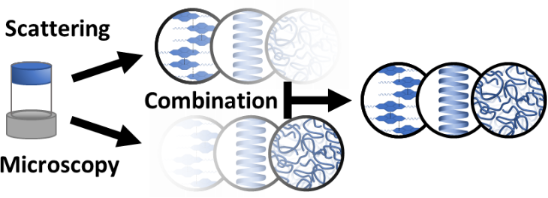
- , cells that allow for the coupling of SAS with non-X-ray techniques continue to be developed; these include spectroscopy, rheology, and electrochemistry [62][63][64]. Ascribing changes in properties of interest directly to changes in the structure further elucidates the interesting properties of self
- structural characteristics that give material properties of interest. However, care must be taken to sure a truly representative environment is probed. Coupling rheology with SAS (rheo-SAS) is of particular interest for soft matter applications due to its ability to identify and rationalise how changes in


Synthesis and cytotoxicity studies of novel N-arylbenzo[h]quinazolin-2-amines
Beilstein J. Org. Chem. 2024, 20, 2592–2598, doi:10.3762/bjoc.20.218
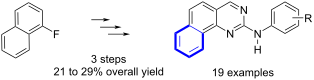
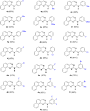
- attractive results in this area. Keywords: Buchwald–Hartwig coupling; cytotoxicity; heterocycles; Pd catalysis; quinazolines; Introduction Nitrogen-containing heterocyclic molecules are ubiquitous in living systems. Among them, quinazolines, and especially the 4-aminoquinazolines (type A molecules, Figure
- afforded the known aldehyde 2 in 65% yield [13]. Then, reaction with guanidinium carbonate in DMA at high temperature [12], gave the desired intermediate 2-aminobenzo[h]quinazoline (3). In a final step, classical Buchwald–Hartwig coupling [14][15][16][17] with bromobenzene under the conditions described
- better accuracy on small coupling constants, resolution in 1H NMR was enhanced using Traficante. All compounds were purified by flash column chromatography on silca gel unless otherwise noted. Melting points were obtained using an Electrothermal IA9200 series digital apparatus with thin-wall glass tube


Transition-metal-free synthesis of arylboronates via thermal generation of aryl radicals from triarylbismuthines in air
Beilstein J. Org. Chem. 2024, 20, 2577–2584, doi:10.3762/bjoc.20.216
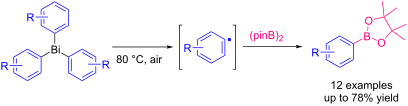
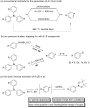
- are one of the fundamental aryl compounds in organic synthesis, especially in cross-coupling reactions [1][2][3][4][5][6][7][8][9], and their applications are widespread, including dye synthesis, pharmaceutical and agrochemical synthesis, and industrial manufacturing [10][11]. In recent years, a



A review of recent advances in electrochemical and photoelectrochemical late-stage functionalization classified by anodic oxidation, cathodic reduction, and paired electrolysis
Beilstein J. Org. Chem. 2024, 20, 2500–2566, doi:10.3762/bjoc.20.214
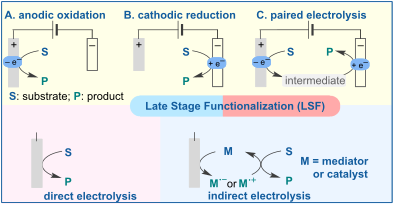
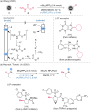
- amination: Direct and selective CH-aminations and amidations are challenging reactions. In this context, the regioselective sulfonamidation of (hetero)aromatic groups was achieved by the Lei group via dehydrogenative aryl C–H/N–H cross-coupling [9]. A crucial step in this transformation is the generation of
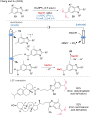
- )–H functionalization C–N coupling reaction by developing an electrochemical method for the bioconjugation of tyrosine in proteins/polypeptides with phenothiazine residues, achieving excellent site- and chemoselectivity (Scheme 4a). This method was inspired by an earlier work from the Gouin group
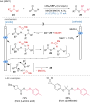
- cathodic reduction and to prevent the reoxidation of the reduced SO2 at the anode, a divided cell setup is required (Scheme 12). C–H bond halogenation: Aryl and alkyl halides are important synthetic building blocks for cross-coupling reactions as well as bioactive molecules with applications in




























Machine learning-guided strategies for reaction conditions design and optimization
Beilstein J. Org. Chem. 2024, 20, 2476–2492, doi:10.3762/bjoc.20.212
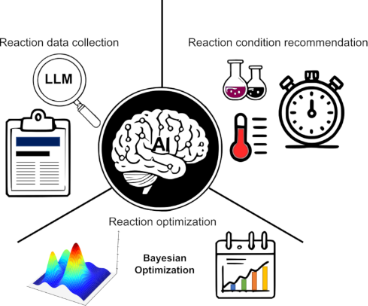
- of SMILES without affecting their molecular structures or modifying specific functional groups in coupling reactions with chemistry-informed reaction templates. Despite the need for large amounts of data to train base models, the main advantage of text-based reaction representation is that it can be
- simply memorize the most frequently reported solvents and reagents in the literature. Beker et al. [178] showed that some machine learning models could not outperform simple statistical analyses based on the popularity of reported conditions in the literature, using the Suzuki–Miyaura coupling as an
- ML and automated robotic experimentation to accelerate the exploration of general reaction conditions for heteroaryl Suzuki–Miyaura cross-coupling. They achieved an average yield that was twice as high as that of previous human-guided experiments. Recently, Wang et al. [65] formulated the


Synthesis and conformational analysis of pyran inter-halide analogues of ᴅ-talose
Beilstein J. Org. Chem. 2024, 20, 2442–2454, doi:10.3762/bjoc.20.208
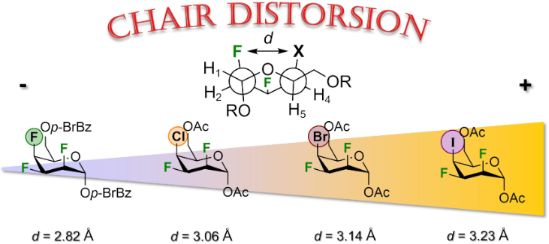
- order to decipher the key physical properties of complex pyran inter-halides, we performed 19F NMR analysis of halogenated talose analogues 12–15 (Figure 2). First, all analogues adopt standard 4C1-like conformations. Comparison of the vicinal and geminal coupling constants for each organohalogen
- Kohn–Sham orbitals produced from DFT are localized to describe the system as one dominant resonance structure. As the Fock matrix is not diagonal in terms of the NBOs, coupling between orbitals can be quantified with second order perturbation theory. These couplings represent donation from an occupied





