


Search results
Search for "hybrid" in Full Text gives 374 result(s) in Beilstein Journal of Organic Chemistry. Showing first 200.
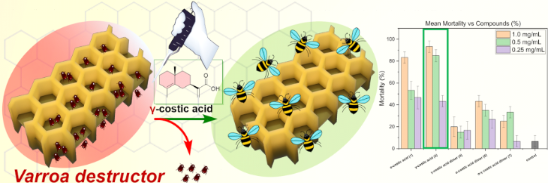
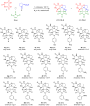
Synthesis and acaricidal activity against Varroa destructor of α- and γ-costic acid dimers
Beilstein J. Org. Chem. 2026, 22, 1088–1096, doi:10.3762/bjoc.22.87
- ) and integration. Low and high-resolution mass spectra (LR- and HRESIMS) were acquired on a Q-Exactive hybrid quadrupole-orbitrap mass spectrometer (Thermo Scientific, San Jose, CA, USA). Analytical and preparative thin-layer chromatography (TLC) was carried out on silica gel, Kieselgel 60, F254, 0.25


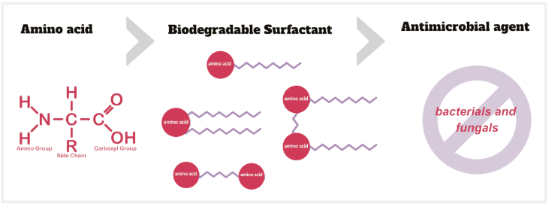
Amino acid-based surfactants: sustainable synthesis and antimicrobial mechanisms
Beilstein J. Org. Chem. 2026, 22, 1067–1085, doi:10.3762/bjoc.22.85


Synthesis of novel 1,2,4-oxadiazole-isoxazoline hybrids and their in silico potential with adenosine receptors
Beilstein J. Org. Chem. 2026, 22, 1033–1047, doi:10.3762/bjoc.22.82
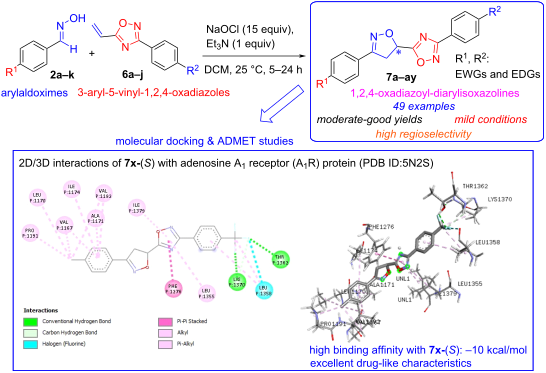
- dipolarophiles [54][55][56][57]. Despite the proven efficacy of both heterocyclic rings as pharmacophores, reports focusing on the synthesis of 1,2,4-oxadiazole-isoxazoline hybrids remain scarce. Previous studies have suggested that such hybrid structures may exhibit phosphodiesterase IV inhibitory activity or
- ) have been explored as A2A antagonists for neurodegenerative diseases like Parkinson’s, there are currently no reported studies on isoxazoline derivatives functioning as adenosine receptor modulators (Figure 2) [72][73][74]. Consequently, identifying new lead compounds with hybrid structures presents a


Unsymmetrical sulfoxides with sterically hindered catechol fragment: synthesis, structure, electrochemical properties, and antiradical activity
Beilstein J. Org. Chem. 2026, 22, 828–837, doi:10.3762/bjoc.22.65
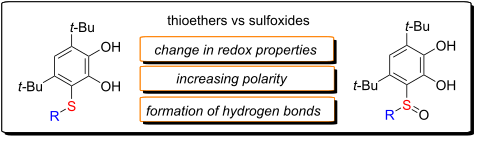
- ]. We have previously shown that hybrid molecules based on sterically hindered catechol thioethers, bearing various polar and hydrocarbon groups, exhibit pronounced chelating [15][16], antiradical, and cryoprotective activity [17][18][19][20]. The ability of the sulfur atom to exist in various oxidation


Knoevenagel condensation of 4,5- and 1,8-diazafluorenes
Beilstein J. Org. Chem. 2026, 22, 803–812, doi:10.3762/bjoc.22.62
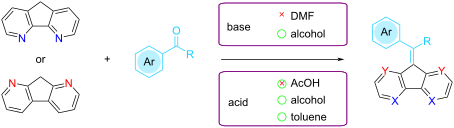
- and Tongda TD-5000 diffractometer with Mo Kα radiation (λ = 0.71073 Å), equipped with a hybrid photon-counting detector (Supporting Information File 1, Table S1). Integration and scaling of the intensity data for Bruker were accomplished with SAINT [26]. Absorption corrections were applied using




Preparation of 3-(alkylamino)imidazo[1,2-a]pyridine-2-carbaldehydes via Kornblum oxidation and unexpected ring-opening reactions of the corresponding alcohols under oxidative conditions
Beilstein J. Org. Chem. 2026, 22, 763–770, doi:10.3762/bjoc.22.58
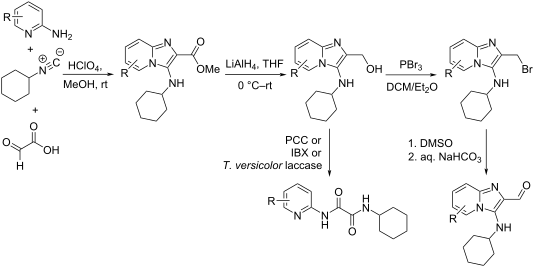
- a dual-wavelength hybrid diamond anode X-ray diffractometer (Bruker D8 Discovery Bio equipped with Mo and Cu X-ray sources) under NEP Grant No 129920.


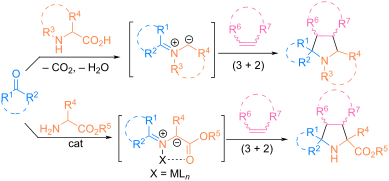
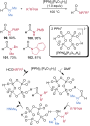
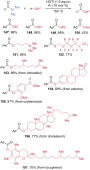
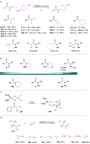
Synthesis of heterocycles based on azomethine ylides from α-amino acids (or amines) and carbonyl compounds
Beilstein J. Org. Chem. 2026, 22, 705–741, doi:10.3762/bjoc.22.55


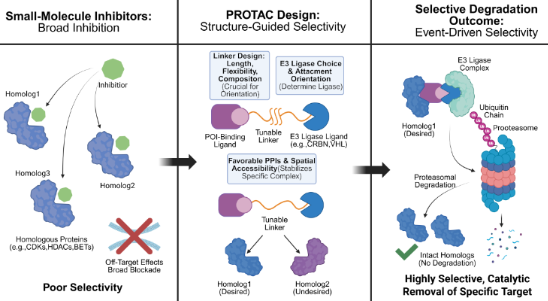
Advantages of PROTACs in achieving selective degradation of homologous protein families
Beilstein J. Org. Chem. 2026, 22, 628–661, doi:10.3762/bjoc.22.49









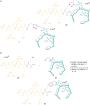
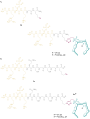
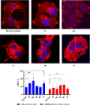
Molecular tweezer–peptide conjugates disrupt the protein–protein interaction between survivin and histone H3 essential in mitosis
Beilstein J. Org. Chem. 2026, 22, 557–567, doi:10.3762/bjoc.22.41
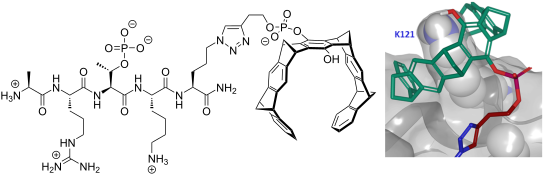
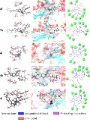
- lysines 129 and 130 which are not buried in the known crystal forms, nor in the CPC complex (Figure 5). A 3D structure of the complex between the full CPC trimer and the hybrid H3-peptide–tweezer constructs would be very desirable to validate the binding mode in the physiological setting. New tweezer–H3




Experimental and DFT studies on the regioselective methanolysis of 5-azido-9-oxabicyclo[6.1.0]nonan-4-yl 4-nitrobenzoate isomers
Beilstein J. Org. Chem. 2026, 22, 547–556, doi:10.3762/bjoc.22.40
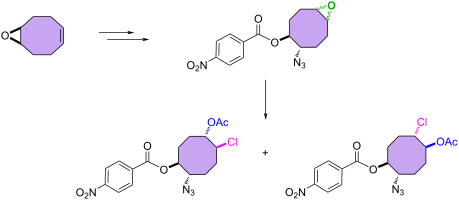
- were carried out with DFT at the M06-2X hybrid functional [27] augmented by Grimme’s dispersion correction DFT-D3 to improve the description of long-range dispersion interactions [28]. For this purpose, a Pople-type polarized triple-ζ split valence basis set with diffuse functions on all atoms, 6-311G


Recent advances in the cleavage of non-activated amides
Beilstein J. Org. Chem. 2026, 22, 352–369, doi:10.3762/bjoc.22.23
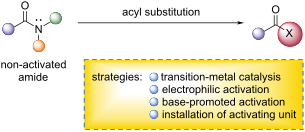
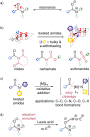
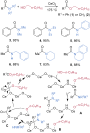
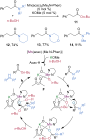
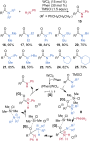
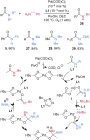
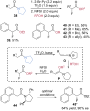
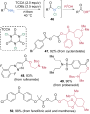
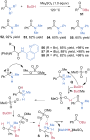
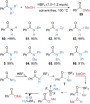
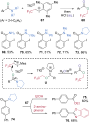
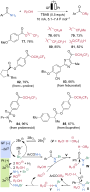
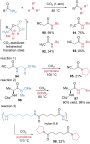
- -mediated transamidation of an acrylamide polymer. Zn-catalyzed chemoselective cleavage of amides directed by tert-butyl nicotinate. Chemoselective cleavage of N-PMB anilide for transamidation via acyl fluoride 194 generation. a) Cu(II) bromide/Selectfluor hybrid system for cleavage of N-PMB anilide. b










Spirobarbiturates with a pyrrolizidine moiety: synthesis, structure and biological evaluation
Beilstein J. Org. Chem. 2026, 22, 274–288, doi:10.3762/bjoc.22.20
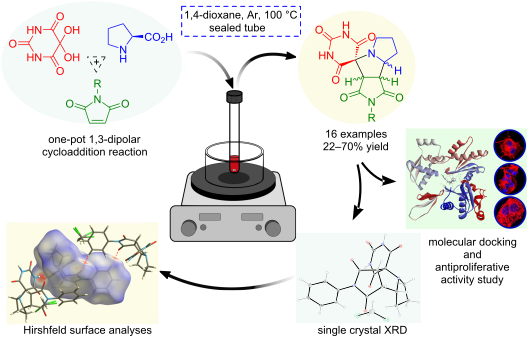
- synthesis of spirobarbiturates via a [3 + 2] cycloaddition reaction of azomethine ylides, we present for the first time a three-component diastereoselective synthesis of hybrid systems containing spiro-fused cyclic fragments of barbituric acid and pyrrolo[3,4-a]pyrrolizidine. It was found that azomethine




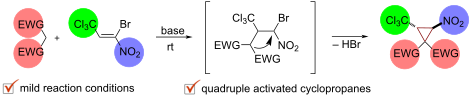
Highly electrophilic, gem- and spiro-activated trichloromethylnitrocyclopropanes: synthesis and structure
Beilstein J. Org. Chem. 2026, 22, 123–130, doi:10.3762/bjoc.22.5
- /far, HyPix3000' automatic four-circle diffractometer with a Hybrid Pixel Array two-dimensional detector and a micro-focus sealed X-ray tube (λ [Cu Kα] = 1.54184 Å) at cooling conditions (100 K). Data collection and processing of diffraction data were performed using an CrysAlisPro 1.171.41.103a


Mechanistic insights into hydroxy(tosyloxy)iodobenzene-mediated ditosyloxylation of chalcones: a DFT study
Beilstein J. Org. Chem. 2025, 21, 2703–2715, doi:10.3762/bjoc.21.208
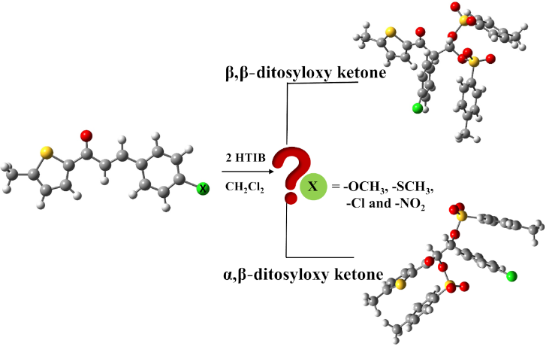
- computationally. The results obtained for chalcones are in qualitative agreement with results reported for substituted styrenes [31]. Computational Methodology Quantum chemical calculations were carried out using Gaussian 09 package [37]. The hybrid exchange-correlation functional B3LYP-D3 (including dispersion


Thiazolidinones: novel insights from microwave synthesis, computational studies, and potentially bioactive hybrids
Beilstein J. Org. Chem. 2025, 21, 2618–2636, doi:10.3762/bjoc.21.203
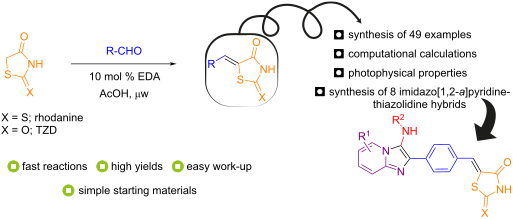
- demonstrate the effectiveness of our protocol, we explored the synthesis of novel imidazo[1,2-a]pyridine–thiazolidinone hybrid compounds, based on recent works from our group involving the chemistry of imidazo[1,2-a]pyridine derivatives synthesized via the Groebke–Blackburn–Bienaymé three-component reaction
- , hybrid compounds combining the imidazo[1,2-a]pyridine scaffold with the thiazolidine nucleus were synthesized. Initially, aldehyde derivatives of the GBB adducts 8 were prepared from 2-aminopyridines 5, terephthalaldehyde (6), and isocyanides 7 using a green methodology that employed phosphotungstic acid
- (H3PW12O40, HPW) as a catalyst in ethanol under microwave (μw) heating (Scheme 5) [63]. These intermediates were then subjected to the previously optimized Knoevenagel condensation conditions with rhodanine or thiazolidine-2,4-dione (Scheme 6). Notably, the hybrid compounds 9a–d, 10a–d were obtained in good






Silica gel with covalently attached bambusuril macrocycle for dicyanoaurate sorption from water
Beilstein J. Org. Chem. 2025, 21, 2604–2611, doi:10.3762/bjoc.21.201
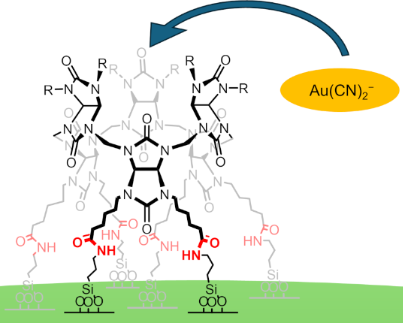
- report a new material, SG-NHCO-BU1, in which the BU1 macrocycle is covalently grafted onto the surface of silica gel. We demonstrate that this hybrid material can be used for the selective dicyanoaurate(I) sorption from water. Moreover, it is shown that unlike SG-BnBU, SG-NHCO-BU1 exhibits good stability
- during previous washing step (Figure S6B, Supporting Information File 1). Conclusion In summary, we have developed organic–inorganic hybrid materials for anion extraction. Through a two-step modification of silica gel, two materials were obtained: SG-NHCO-BU1, in which the BU1 macrocycle is covalently


Transformation of the cyclohexane ring to the cyclopentane fragment of biologically active compounds
Beilstein J. Org. Chem. 2025, 21, 2416–2446, doi:10.3762/bjoc.21.185
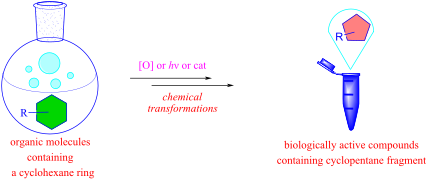
- acid (DMOA), are a large series of hybrid natural products with a huge structural diversity and impressive biological activity [50]. Attempts by the authors to use acidic (TiCl4, TMSI, SnCl4), basic (NaOMe, t-BuONa, Et3N, DBU, DMAP) and thermal conditions (PhMe, 110 °C) failed to give the desired


Insoluble methylene-bridged glycoluril dimers as sequestrants for dyes
Beilstein J. Org. Chem. 2025, 21, 2302–2314, doi:10.3762/bjoc.21.176
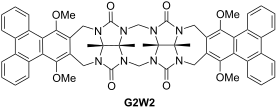
- due to its simplicity, efficiency, low cost, and the absence of hazardous byproducts [6]. Many different adsorptive materials have been investigated including activated carbon [7][8][9], hybrid nanomaterials [10], metal oxide-based hybrid materials [11], metal organic frameworks [12], polymers [13



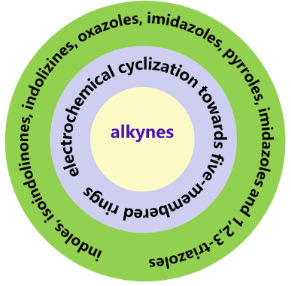
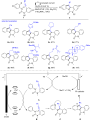
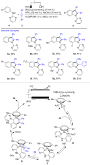
Electrochemical cyclization of alkynes to construct five-membered nitrogen-heterocyclic rings
Beilstein J. Org. Chem. 2025, 21, 2173–2201, doi:10.3762/bjoc.21.166
- ][45][46][47][48][49][50][51][52][53][54][55] have been extensively applied as facilely available starting materials to build five-membered rings for their hybrid structures with appropriate reactivities [56][57][58][59]. For example, cyclizations of silyloxyenyne [60], anionic cyclization of enediyne








Bioinspired total syntheses of natural products: a personal adventure
Beilstein J. Org. Chem. 2025, 21, 2048–2061, doi:10.3762/bjoc.21.160
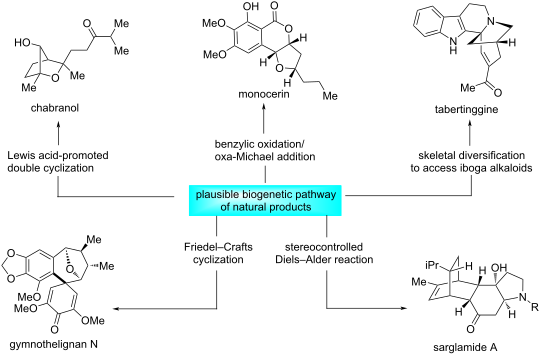
- , bioinspired total synthesis of three types of natural products, namely diterpenoids (chabranol, and monocerin), alkaloids (indole, hydroquinoline, and monoterpenoid−indolidinoid hybrid), and gymnothelignans are discussed. Based on these achievements on bioinspired total synthesis, we provide some information
- [2.2.2] carbocycle fused to CD rings. For sarglamides D and E, another oxygen-bridged E ring shows up at different positions. Overall, sarglamides A–E exhibit unusual unprecedented skeletons as they contain both monoterpenoid and indolidinoid subunits. Such a hybrid structure is rarely found in natural



Solar thermal fuels: azobenzene as a cyclic photon–heat transduction platform
Beilstein J. Org. Chem. 2025, 21, 2036–2047, doi:10.3762/bjoc.21.159
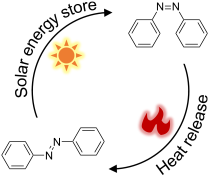
- perspective, we systematically analyze four representative azobenzene-based solar thermal fuel systems including nanocarbon-hybrid, conjugated polymer, linear polymer, and small-molecule derivative formulations to trace their developmental trajectories and identify key limitations. Through this comparative
- investigated their solar thermal energy storage performance [46]. Key parameters governing the performance of azobenzene–RGO hybrid solar thermal fuels include hydrogen-bonding interactions, intermolecular distances between adjacent azobenzene groups, and electronic coupling effects. Conjugated azobenzene





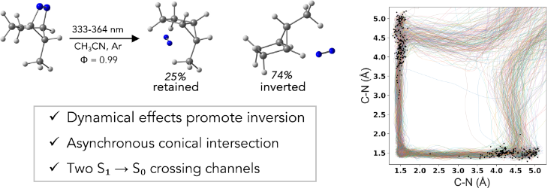
Understanding the origin of stereoselectivity in the photochemical denitrogenation of 2,3-diazabicyclo[2.2.1]heptene and its derivatives with non-adiabatic molecular dynamics
Beilstein J. Org. Chem. 2025, 21, 2007–2020, doi:10.3762/bjoc.21.156
- TD-DFT calculations were performed using the range-separated hybrid density functional ωB97X-D [89] with the aug-cc-pVTZ [90][104] basis set. All single reference methods were run using the Gaussian 16 software [105]. Multiconfigurational methods The multiconfigurational calculations were performed


Synthesis of an aza[5]helicene-incorporated macrocyclic heteroarene via oxidation of an o-phenylene-pyrrole-thiophene icosamer
Beilstein J. Org. Chem. 2025, 21, 1561–1567, doi:10.3762/bjoc.21.119
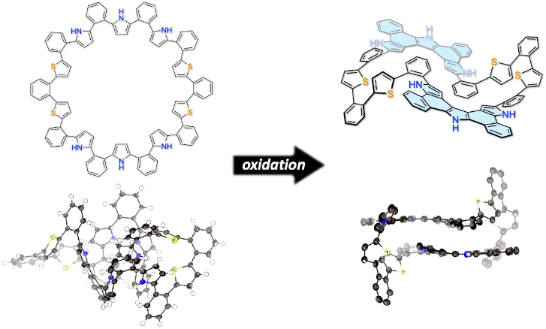
- , Japan 10.3762/bjoc.21.119 Abstract The intramolecular oxidative fusion reaction of macrocyclic heteroaromatic arrays has provided strained polycyclic heteroaromatic macrocycles as promising functional molecules. In this study, we prepared an ortho-phenylene-pyrrole-thiophene hybrid icosamer, as the
- largest macrocycle ever synthesized is a dodecameric hybrid array of 1,2-phenylene, 2,5-thienylene, and 2,5-pyrrolylene units [22][23]. The intramolecular oxidative coupling of these arrays afforded heterohelicene-incorporated macrocycles D and E, depending on the relative arrangements of the pyrrole and
- thiophene units [24][25]. The influence of heteroaromatic positioning on the reaction outcome has been rationalized in our previous work [25]. As a further extension of this molecular design, herein we report the synthesis of an o-phenylene-pyrrole-thiophene hybrid icosamer and its oxidative fusion to yield


Facile synthesis of hydantoin/1,2,4-oxadiazoline spiro-compounds via 1,3-dipolar cycloaddition of nitrile oxides to 5-iminohydantoins
Beilstein J. Org. Chem. 2025, 21, 1552–1560, doi:10.3762/bjoc.21.118

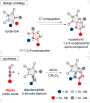
- oxindole [3][8][9], chrysenequinone [10], cycloheptatriene [11][12], thiazole [13], and matrine-type alkaloids [14]. The hybrid pharmacophore design is a frequently employed approach in the development of potential antitumor and other drugs [15][16]. This method involves the merging of two distinct
- similarities, the molecules produced by the first method are markedly different from those produced by the latter. This is primarily due to the presence of conformational flexibility, which has a substantial impact on the compounds’ biological properties. Hybrid compounds are believed to exhibit enhanced
- therapeutic efficacy (lower IC50 values) [18] but greater toxicity to healthy cells in comparison with spiro compounds [19]. Such hybrid-designed molecules may contain a third heterocycle as a linker, spiro-joined with one of the pharmacophore moieties. In this case, another pharmacophore fragment is included



Azobenzene protonation as a tool for temperature sensing
Beilstein J. Org. Chem. 2025, 21, 1528–1534, doi:10.3762/bjoc.21.115
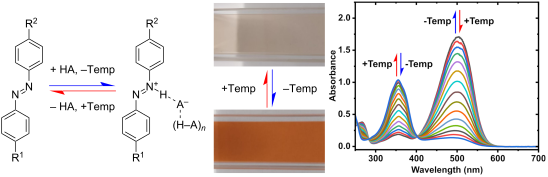
- programme Life-Inspired Hybrid Materials Research (LIBER; no. 346107) and the Flagship programme on Photonics Research and Innovation (PREIN, no. 320165), and by the European Research Council (Consolidator Grant project MULTIMODAL, No. 101045223). S.V. gratefully acknowledges the Vilho, Yrjö and Kalle





