


Search results
Search for "azide" in Full Text gives 497 result(s) in Beilstein Journal of Organic Chemistry. Showing first 200.
Construction of CF2 moieties in FDA-approved drugs (2016–2025): industrial routes, mechanisms, and scale-up considerations
Beilstein J. Org. Chem. 2026, 22, 1122–1150, doi:10.3762/bjoc.22.91
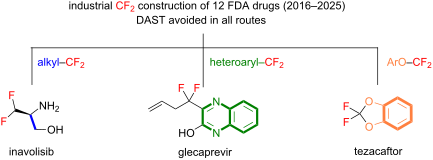
- . It is noteworthy that a study [13] found that the yield of the difluoro acid 38 in route c decreased significantly during scale-up when using diphenyl phosphoryl azide (DPPA) for the Curtius rearrangement (the reason for the decrease was not described). Switching to the Schmidt reaction using NaN3
- gave a yield of 68%, but the safety profile of sodium azide is far less favorable than that of DPPA. Route d also starts from compound 39 and proceeds through fluorination of 40 to 41 using DAST, followed by conversion of 41 to 38 in two steps with a combined yield of 85% [12]. This route avoids the
- use of azide reagents. The continuous-flow technology has become a key means of reducing operational risks associated with handling hazardous chemicals. Explosive, toxic, and corrosive intermediates and by-products (such as hydrofluoric acid) can be quenched online immediately after the reaction






Synthesis of functionalized, 13-alkyl-substituted coralyne derivatives and investigation of their interactions with duplex and abasic site-containing DNA
Beilstein J. Org. Chem. 2026, 22, 1057–1066, doi:10.3762/bjoc.22.84
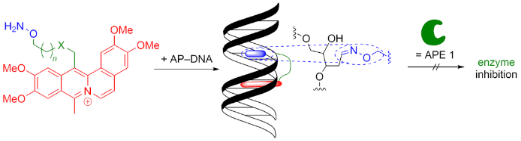
- -spectroscopic analysis of the reaction mixtures showed either no conversion or decomposition. In another approach, the reaction of the bromopentyl-substituted papaverine 3b with NaN3 or potassium acetate yielded the azide 3e in 83% and the ester (Scheme 2). The direct alkaline hydrolysis of the latter furnished
- -spectroscopic analysis of the azide 3e revealed characteristic bands for the azide group at 2094 cm−1. The papaverine derivatives 3b and 3e were firstly transformed to their corresponding hydrochloride salts, which were subsequently treated with acetic anhydride in the presence of conc. H2SO4 at 90 °C (Scheme 3
- ). Under these conditions, the azide 3e decomposed, as indicated by 1H NMR-spectroscopic analysis of the reaction mixture, whereas the bromoalkyl-substituted papaverine 3b gave the coralyne derivative 2b, albeit in a very low yield of 1%. The product 2b was identified by NMR spectroscopy, mass spectrometry


Synthesis and optical resolution of 4,5-diaminohomoadamantane: a promising scaffold for chiral ligands and bioactive compounds
Beilstein J. Org. Chem. 2026, 22, 1013–1022, doi:10.3762/bjoc.22.80
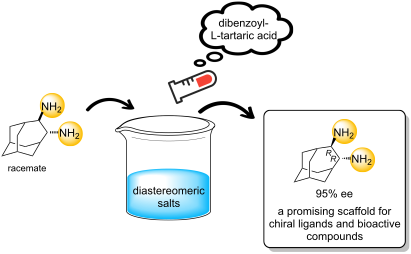
- easily when the aziridine bears an electron-withdrawing group at the N-atom, we synthesized N-substituted aziridines 10–12 by reactions of 9 with Boc2O, TsCl, and Tf2O, respectively (Scheme 3). Compounds 10–12 were studied in the aziridine ring-opening reaction with sodium azide. Typically, N-Boc
- -substituted aziridines easily give the corresponding ring-opened products [77][88][89], however in our case only the starting compound 10 was isolated. In the reaction of tosylated compound 11 with sodium azide in the presence of ammonium chloride, trans- and cis-diastereomers of 13a,b were obtained (Scheme 4


Site-specific labelling of native peptides and proteins: chemical and enzymatic strategies
Beilstein J. Org. Chem. 2026, 22, 857–881, doi:10.3762/bjoc.22.67
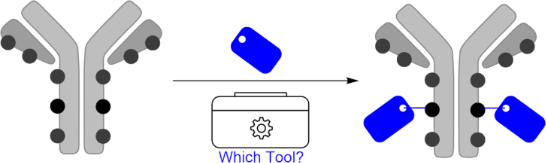
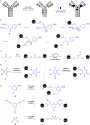
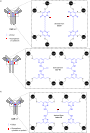
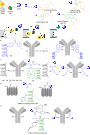
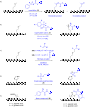
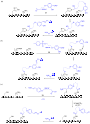
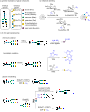
- branches: metabolic and in vitro glycoengineering. Metabolic glycoengineering introduces a non-natural sugar precursor, such as Ac4GlcNAz (34), Ac4ManNAz (35) and Ac4GalNAz (36, Scheme 12b) into living cells. These analogues enter the cellular glycosylation pathway, thereby incorporating azide motifs into
- native glycans for chemical attachment through bioorthogonal chemistry (e.g. strain-promoted azide–alkyne cycloaddition/SPAAC) [114][115][116][117][118][119]. While this strategy enables visualisation and derivatisation of native glycoproteins in their natural environment, metabolic labelling rarely








Towards the targeted protein degradation of CK2: design and synthesis of CAM4066-based PROTACs
Beilstein J. Org. Chem. 2026, 22, 611–619, doi:10.3762/bjoc.22.47
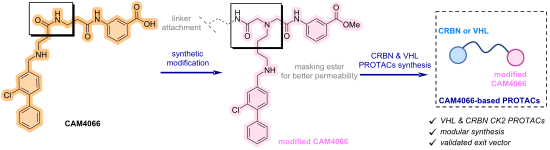
- complex. The azide–alkyne-derived triazole linkage may also impose a rigid orientation not compatible with CK2’s topology. Moreover, PROTACs typically display reduced cellular permeability owing to their high molecular weight and polar surface area [12]. This is particularly relevant given that CAM4066

Molecular tweezer–peptide conjugates disrupt the protein–protein interaction between survivin and histone H3 essential in mitosis
Beilstein J. Org. Chem. 2026, 22, 557–567, doi:10.3762/bjoc.22.41
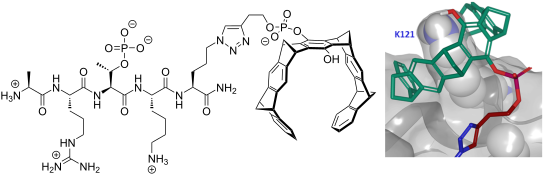
- as a barrier for the rearrangement of survivin’s side chains and the interaction diagram reveals contacts to all nine accessible acidic amino acids on the protein surface [14]. The new tweezer H3 conjugate 2a has a C4 spacer between the Lys-4 amide and the azide, very close to 1 with its C3 spacer




Experimental and DFT studies on the regioselective methanolysis of 5-azido-9-oxabicyclo[6.1.0]nonan-4-yl 4-nitrobenzoate isomers
Beilstein J. Org. Chem. 2026, 22, 547–556, doi:10.3762/bjoc.22.40
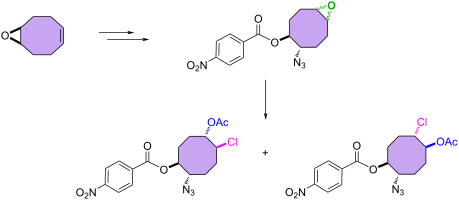
- process, highlighting its precision and efficiency. Keywords: azides; 8-azidocyclooct-4-en-1-yl 4-nitrobenzoate; DFT; epoxycyclooctane azide; methanolysis; Introduction Organic azides are very important precursors for the preparation and synthesis of various nitrogen-containing compounds, as well as
- -ray analysis (Figure 2) [25]. X-ray analysis of azido compound 10 confirmed the trans configuration of the azide group with chloride and the cis configuration with the acetate. Our suggested mechanism for the ring-opening of the epoxides 9 with HCl(g) in MeOH proceeded as described in Scheme 3. As
- shown, the syn-face of the epoxide isomers 9a and 9b with the benzoate in 9a and the azide in 9b is more blocked than the anti-face. Therefore, the sterically hindering effect of these groups is observed in the syn-face. We assume that the chloride anion prefers to first attack the epoxide ring of


Modern synthetic pathways towards eribulin and its subunits
Beilstein J. Org. Chem. 2026, 22, 495–526, doi:10.3762/bjoc.22.37
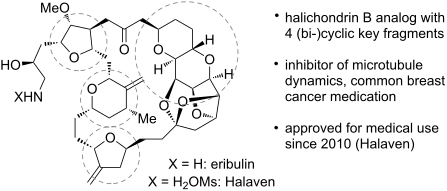
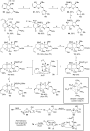
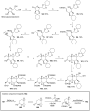
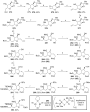
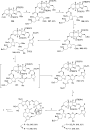
- . Hydrolytic kinetic resolution of 209 afforded enantioenriched epoxide (S)-209, which was opened regioselectively with lithium acetylide. The allylation and [3 + 2]-cycloaddition with tosyl azide led to 212. Treatment with Rh2(OAc)4 induced a [2,3]-Wittig rearrangement and subsequent hydrolysis afforded 213








Cone p-aminocalix[4]arenes enriched with ‘clickable’ alkyne or azide functionalities
Beilstein J. Org. Chem. 2026, 22, 399–415, doi:10.3762/bjoc.22.28
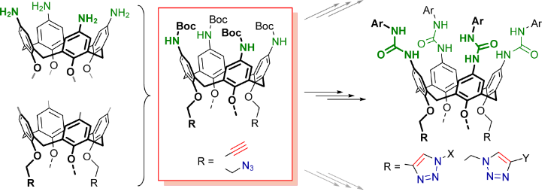
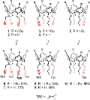
- were ipso-nitrated followed by reduction of the nitro groups. To prepare 2-azidoethylated macrocycles, the ipso-nitration/reduction sequence was applied to p-tert-butylcalix[4]arenes containing 2-tosyloxyethyl groups at the narrow rims followed by replacement of the tosyloxy groups with azide ones. In
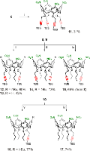
- excess benzyl azide or phenylacetylene, taken as representatives, under copper(I) catalysis, resulting in the narrow-rim triazolated macrocycles. By removing the Boc protecting groups and involving the free amino groups in reactions with p-tolyl isocyanate, a series of narrow-rim triazolated
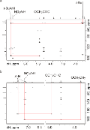
- -aminocalix[4]arenes enriched with alkyne or azide functionalities can be readily used as multifunctional platforms to obtain even higher functionalized macrocycles. As an example, they can be used for the preparation of sophisticated supramolecular assemblies with homo- or heterodimeric calixarene cores and




Recent advancements in the synthesis of Veratrum alkaloids
Beilstein J. Org. Chem. 2025, 21, 2657–2693, doi:10.3762/bjoc.21.206
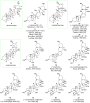
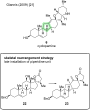
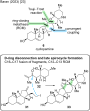
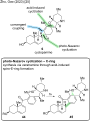
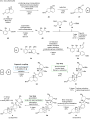
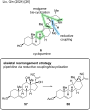
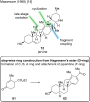
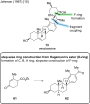
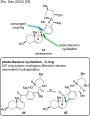
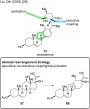
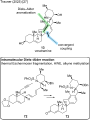
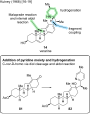
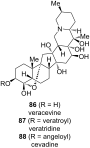
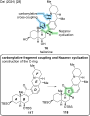
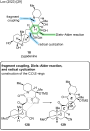
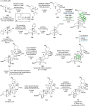
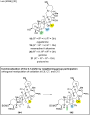
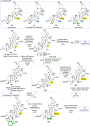
- -valerolactone). This was followed by an azide-Mitsunobu reaction and auxiliary removal with LiOBn to yield β-azido ester 115. Staudinger reduction of the azide moiety with PPh3 was accompanied by spontaneous cyclization to the lactam. The benzyl ester was converted to the aldehyde (2 steps), followed by
















Efficient solid-phase synthesis and structural characterization of segetalins A–H, J and K
Beilstein J. Org. Chem. 2025, 21, 2612–2617, doi:10.3762/bjoc.21.202

- synthetic approaches have encountered significant challenges. Sonnet et al. reported the first total synthesis of segetalin A (1) via Sasrin resin-based SPPS, followed by cyclization under highly dilute conditions (10−4 M) with diphenylphosphoryl azide (DPPA) [17]. While successful, this approach suffers


Pentacyclic aromatic heterocycles from Pd-catalyzed annulation of 1,5-diaryl-1,2,3-triazoles
Beilstein J. Org. Chem. 2025, 21, 2524–2534, doi:10.3762/bjoc.21.194
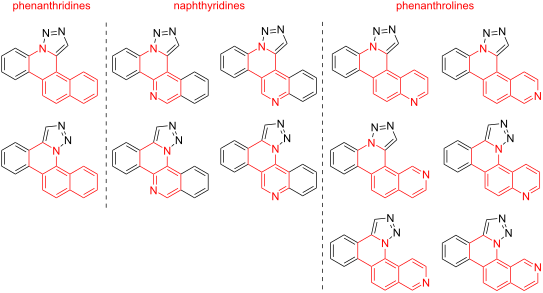
- where the attachment of alkyne and azide functional groups was reversed, as summarized in Table 2. The azide analogs 19–24 [25][28][31][43] used in this study were prepared from commercially available amines using the Sandmeyer reaction (Table S2, Supporting Information File 1). Reaction of each azide
- prepared using non-brominated azide and alkyne reactants (Figure 4). Although 1,4-disubstituted-1,2,3-triazoles possessing quinoline and isoquinoline subunits are known [25][26][27][28][29][30][31][32][33][34][35][36][37][38][39][40][41][42][43][44], no prior examples of analogous 1,5-regioisomers have
- been reported. 1,5-Diaryl-1,2,3-triazole control compounds 37–42 were prepared via tandem deprotection/click reactions of TMS-protected alkynes with phenyl azide in yields similar to bromophenyl annulation precursors 7–12 and 25–30. Compounds 43–48, inverting the diaryltriazole connectivity, were


Transformation of the cyclohexane ring to the cyclopentane fragment of biologically active compounds
Beilstein J. Org. Chem. 2025, 21, 2416–2446, doi:10.3762/bjoc.21.185
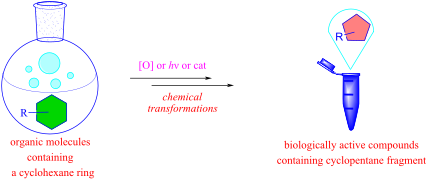
- in two steps [70]. The intermediate tricyclic ketone 137 was converted to the corresponding α-diazoketone through treatment with 2,4,6-triisopropylbenzenesulfonyl azide (trisylN3), KOH, tetrabutylammonium bromide (TBAB), and 18-crown-6. Concurrent cleavage of the benzoyl group under basic conditions


Comparative analysis of complanadine A total syntheses
Beilstein J. Org. Chem. 2025, 21, 2334–2344, doi:10.3762/bjoc.21.178
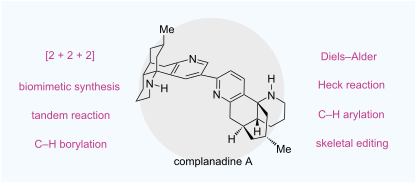
- Barton–McCombie deoxygenation. The extra ethyl carboxylate was removed via a sequence of LiOH hydrolysis and a Curtius rearrangement using DPPA to form the corresponding acyl azide. Ketone 50 was produced in 98% yield over two steps. The newly formed ketone functionality enabled the introduction of the
- Scheme 5, the Dai synthesis starts with compound 58 which can be prepared from (+)-pulegone in three steps or via an organocatalyzed tandem sequence in one step. The terminal olefin of 58 was then converted to a primary azide via an anti-Markovnikov hydroazidation reaction with a combination of 59 and
- Paal–Knorr pyrrole synthesis delivered 63, which was unstable and spontaneously cyclized to provide 64. Compound 64 was then advanced to tetracyclic intermediate 67 in a one-pot tandem process, which initiated with Staudinger azide reduction with PPh3 to form a primary amine. After reversible



Research towards selective inhibition of the CLK3 kinase
Beilstein J. Org. Chem. 2025, 21, 2250–2259, doi:10.3762/bjoc.21.172
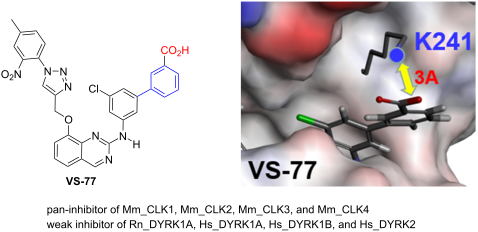
- anilinoquinazoline 3a. Deprotection of the methoxy group by BBr3 gave phenol 4a which was propargylated to intermediate 5a. A final click-type reaction [27][28][29][30][31] with azide 6 gave the first target intermediate 7a. The second key intermediate 7b was prepared in a very similar manner, but starting from 3


Synthesis of triazolo- and tetrazolo-fused 1,4-benzodiazepines via one-pot Ugi–azide and Cu-free click reactions
Beilstein J. Org. Chem. 2025, 21, 2202–2210, doi:10.3762/bjoc.21.167
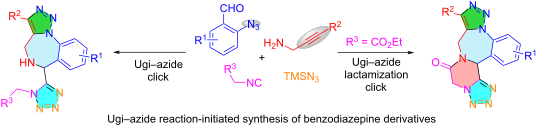
- /bjoc.21.167 Abstract A one-pot Ugi–azide reaction followed by intramolecular Cu-free azide–alkyne cycloaddition generates a polycyclic scaffold 7 bearing polycyclic triazole, tetrazole, and benzodiazepine rings. This method could be extended for obtaining a more complicated scaffold 8 containing a
- piperazinone ring. Keywords: benzodiazepine; click reaction; multicomponent reaction; one-pot; piperazinone; polycyclic; triazole; tetrazole; Ugi–azide reaction; Introduction Triazole, tetrazole, and benzodiazepine are privileged heterocyclic rings commonly found in drug molecules and functional materials [1
- methods for the synthesis of tetrazoles [25][26][27][28], the Ugi–azide reaction is a good approach for constructing 1,5-disubstituted-tetrazoles (1,5-DS-T) [29][30][31]. This scaffold can be subsequently linked to 1,2,3-triazole [32], 4H-chromen-4-one [33], pyrrolo[3,4-b]indolizine [34], and other


Electrochemical cyclization of alkynes to construct five-membered nitrogen-heterocyclic rings
Beilstein J. Org. Chem. 2025, 21, 2173–2201, doi:10.3762/bjoc.21.166
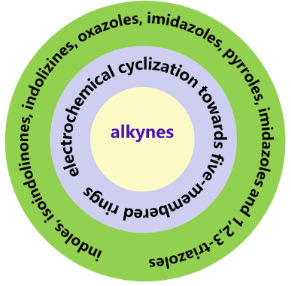
- of carbamates as well [271]. Notably, the above approach provided imidazopyridines in high yields under aqueous solution without any metal catalysts. Early in 2008, an electrochemical copper(I)-catalyzed azide–alkyne cycloaddition (CuAAC) to access 1,2,3-triazole was realized by Finn [272]. But the








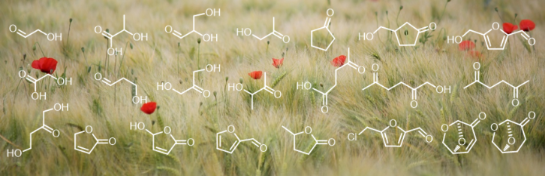
C2 to C6 biobased carbonyl platforms for fine chemistry
Beilstein J. Org. Chem. 2025, 21, 2103–2172, doi:10.3762/bjoc.21.165


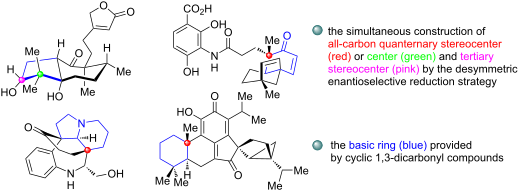
The application of desymmetric enantioselective reduction of cyclic 1,3-dicarbonyl compounds in the total synthesis of terpenoid and alkaloid natural products
Beilstein J. Org. Chem. 2025, 21, 2085–2102, doi:10.3762/bjoc.21.164
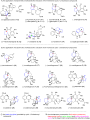
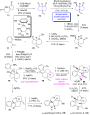
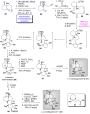
- 77 and subsequent deprotection produced tertiary alcohol 78. Starting from this common intermediate, on the one hand, through successive manipulations by diazotization and in situ azide substitution, AgNO3-mediated aza-Cope/Mannich [62] reaction delivered ketone 79. Subsequently, a three-step
- operation including azide–alkene dipolar cycloaddition, irradiation of the resulting triazoline to aziridine 80 and in situ ring opening followed by deacetylation achieved the first total synthesis of (−)-hunterine A (14). On the other hand, aza-Cope/Mannich reaction of 78 produced imine intermediate 81







α-Ketoglutaric acid in Ugi reactions and Ugi/aza-Wittig tandem reactions
Beilstein J. Org. Chem. 2025, 21, 2021–2029, doi:10.3762/bjoc.21.157
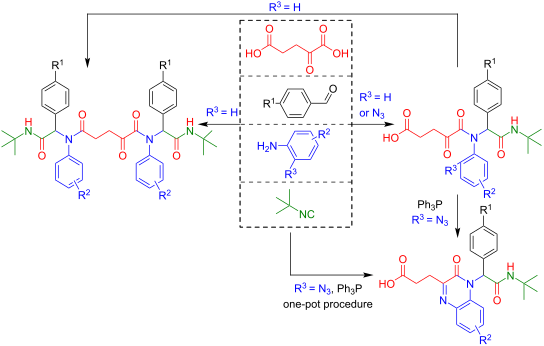
- for the preparation of benzodiazepinone derivatives, which showed promising psychotropic effects [20][21][22][23][24], using a tandem combination of Ugi/azide–alkyne cycloaddition reactions. From this point of view, azido amines are promising reagents for use in the Ugi reaction, opening up the
- further purification after filtration. The use of starting components containing highly reactive groups, for example, an azide group, in the Ugi reaction provides opportunities for various post-cyclizations to obtain nitrogen-containing heterocyclic systems with potential biological activity [18]. To
- this case a carboxyl proton. In order to avoid the step of isolation of the intermediate azide derivatives 8, we also studied a one-pot method for the synthesis of compounds 9. For this KGA 1, aldehydes 2a,b, azidoanilines 7b,c, and tert-butyl isocyanide (4) were stirred in methanol at 45 °C for 24


Rhodium-catalysed connective synthesis of diverse reactive probes bearing S(VI) electrophilic warheads
Beilstein J. Org. Chem. 2025, 21, 1924–1931, doi:10.3762/bjoc.21.150
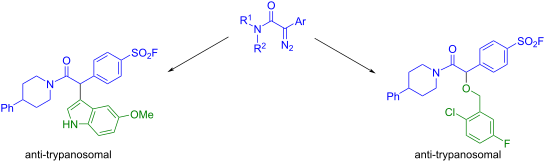
- isoindoline – were reacted with 2,2,6-trimethyl-4H-1,3-dioxin-4-one to give the corresponding β-ketoamides 4. Treatment of the β-ketoamides 4 with 4-acetamidobenzenesulfonyl azide (p-ABSA) and triethylamine gave the α-diazo-β-ketoamides 5. Subsequent KOH-mediated deacetylation yielded the corresponding α


Photoswitches beyond azobenzene: a beginner’s guide
Beilstein J. Org. Chem. 2025, 21, 1808–1853, doi:10.3762/bjoc.21.143
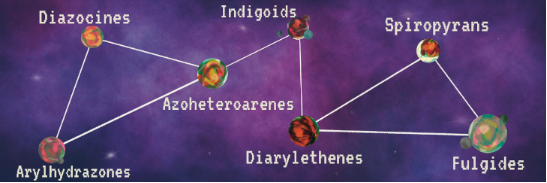
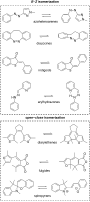
- -triazoles 28 can be obtained by click chemistry (Scheme 6B) via one-pot deprotection of 26 and Cu(I)-catalysed reaction with an azide [43][44]. Heteroarylimines 31a,b can be easily obtained by condensation of a (hetero)aromatic aldehyde 30a,b with a (hetero)aromatic amine 29a,b [36][37][38] (Scheme 7). The






Transition-state aromaticity and its relationship with reactivity in pericyclic reactions
Beilstein J. Org. Chem. 2025, 21, 1613–1626, doi:10.3762/bjoc.21.125

- triazaphospholes (Scheme 3) which can be further transformed into protio- and iodotriazaphospholes [101]. We first compared these metal cyaphide/azide cycloadditions with the analogous non-metallic process involving t-BuC≡P as dipolarophile [102][103]. Interestingly, we found that, although in all cases the
- electropositive magnesium atom whereas the stronger orbital interactions derive from a more stabilizing direct π(C≡P)→π*(azide) molecular orbital interaction coupled with a stronger reverse π(azide)→π*(C≡P) interaction. Conclusion Through selected representative examples, in this perspective article the interplay


Facile synthesis of hydantoin/1,2,4-oxadiazoline spiro-compounds via 1,3-dipolar cycloaddition of nitrile oxides to 5-iminohydantoins
Beilstein J. Org. Chem. 2025, 21, 1552–1560, doi:10.3762/bjoc.21.118

- '-disubstituted ureas were initially reacted with oxalyl chloride to form imidazolidinetriones 1a,b, which were then added to an iminophosphorane formed in situ from an aryl azide and triphenylphosphine. As a result of the aza-Wittig reaction, 5-iminohydantoins 2a–i were then used as dipolarophiles in the 32CA

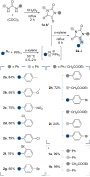


Azide–alkyne cycloaddition (click) reaction in biomass-derived solvent CyreneTM under one-pot conditions
Beilstein J. Org. Chem. 2025, 21, 1544–1551, doi:10.3762/bjoc.21.117
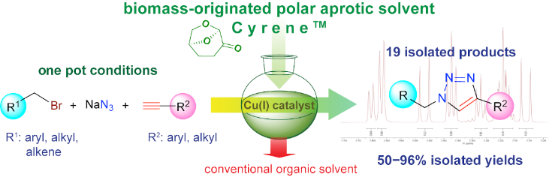
- CyreneTM, as a biomass-originated polar aprotic solvent, could be utilized as an alternative reaction medium for one-pot copper(I)-catalyzed azide–alkyne cycloaddition (click or CuAAC) reactions, for the synthesis of various 1,2,3-triazoles under mild conditions. Nineteen products involving N-substituted-4
- methods, the copper(I)-catalyzed azide–alkyne cycloaddition (CuAAC) reaction, the so-called click reaction [7], has received substantial attention for the selective synthesis of various 1,2,3-triazoles that are of utmost importance in the synthesis of biologically active compounds such as active
- -triazoles in a less toxic and recyclable medium could further control and reduce the environmental impacts of this synthetically very important transformation. Herein, we report a study on the copper(I)-catalyzed azide–alkyne cycloaddition (CuAAC) reaction in CyreneTM under mild conditions. Results and





