


Search results
Search for "catalyst" in Full Text gives 1888 result(s) in Beilstein Journal of Organic Chemistry. Showing first 200.
A cascade synthesis of 2-aminothiochromones from 2-fluorophenyl ketone and thiocarbonyldiimidazole
Beilstein J. Org. Chem. 2026, 22, 1151–1159, doi:10.3762/bjoc.22.92
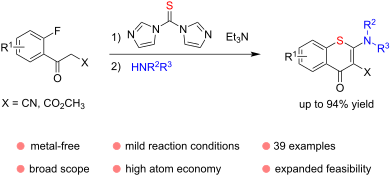
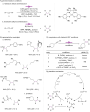
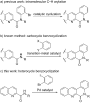
- using a combined Lewis acid and palladium(II) catalyst system [29]. As a part of our ongoing efforts to synthesize versatile thiochromones, this study was to establish a more economical and efficient synthetic route. Recently, Imming and co-workers developed a method for preparing N,N-dialkylthioureas

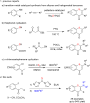
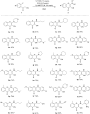


Construction of CF2 moieties in FDA-approved drugs (2016–2025): industrial routes, mechanisms, and scale-up considerations
Beilstein J. Org. Chem. 2026, 22, 1122–1150, doi:10.3762/bjoc.22.91
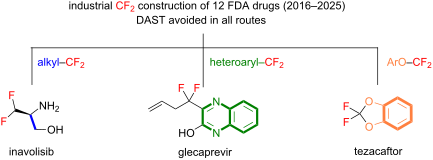
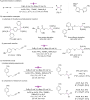
- . In route b, 78 underwent chiral cyano addition to the imine under 0.1 equiv of Y(OTf)3 catalysis, with stereoselectivity highly dependent on the Lewis acid catalyst, followed by hydrolysis and reduction to give the chiral amino alcohol (containing 11% enantiomer). In route c, intermediate 80 – upon






One-pot four-component sequential synthesis of S-alkyl dithiocarbamates using lipase as a biocatalyst
Beilstein J. Org. Chem. 2026, 22, 1048–1056, doi:10.3762/bjoc.22.83
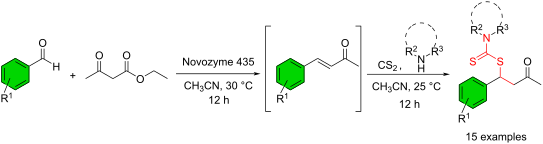
- quantity from 30 mg to 15 mg which resulted in a decreased yield of 54% (Table 1, entry 4). Thus, 30 mg of enzyme was selected as the optimal catalyst amount. Extending the reaction time to 24 hours did not lead to a notable change in yield (Table 1, entry 5). To explore the impact of different solvents


Z-Selective semihydrogenation of alkynes via Ni/Lewis acid synergistic catalyzed system using DMF as hydrogen source and solvent
Beilstein J. Org. Chem. 2026, 22, 1004–1012, doi:10.3762/bjoc.22.79
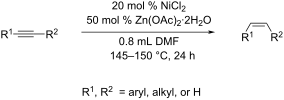
- the stereoselective semihydrogenation of alkynes a fundamental transformation in synthesis [1][2][3][4][5]. Among available methods, transition-metal catalysis has played a dominant role. The classical Lindlar catalyst remains the most widely applied heterogeneous system [6], yet it suffers from
- this field. Synergistic catalysis, which combines two distinct catalytic components, has become a valuable approach for overcoming the limitations of single-catalyst systems [34][35][36]. Lewis acids are well known for their ability to activate polar functional groups and stabilize reactive
- application in reduction chemistry [45][46]. In this work, we describe a new synergistic catalytic system for the cis-selective semihydrogenation of alkynes, utilizing a Lewis acid together with a nickel catalyst and DMF as the hydrogen source. This method achieves excellent Z-selectivity (up to 98:2 Z/E



Rh(III)-catalyzed chelation-assisted C–H activation/annulation of 2-arylimidazolines with cyclic diazo-1,3-dicarbonyl compounds: a novel approach to tetracyclic annulated derivatives of 2,3-dihydroimidazo[2,1-a]isoquinoline
Beilstein J. Org. Chem. 2026, 22, 997–1003, doi:10.3762/bjoc.22.78
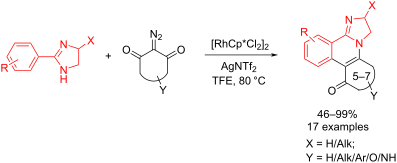
- reaction mixtures by NMR, none of them could be isolated in pure form by column chromatography. The following reaction mechanism can be proposed according to the literature data [18] (Figure 3a). The catalytic cycle begins with the formation of monomeric Rh(III)-catalyst A from the reaction of [RhCp*Cl2]2
- performed a reaction of substrate 2a with an equimolar amount of rhodium catalyst, which allowed isolation of compound 5 (intermediate B) in 35% yield (Figure 3b). Conclusion In conclusion, we have successfully extended the strategy of Rh(III)-catalyzed chelation-assisted C–H activation/annulation with
- by 1H NMR of crude reaction mixtures. a) Proposed reaction mechanism; b) Experimental isolation of intermediate B (compound 5) from equimolar reaction of substrate 2a and the catalyst. C–H activation/annulation of 2-arylimidazolines with diazo-1,3-dicarbonyl compounds. aReaction conditions


Electrochemical reduction of unsaturated carbon–carbon bonds via 3d transition-metal catalysis
Beilstein J. Org. Chem. 2026, 22, 955–981, doi:10.3762/bjoc.22.75
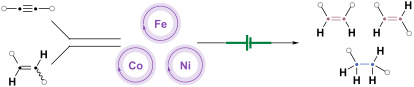
- unsaturated C–C bonds, enabling precise control without molecular hydrogen or stoichiometric reductants. This review summarizes recent advances in iron-, cobalt-, and nickel-catalyzed electroreduction of alkynes and alkenes, highlighting how electrochemical parameters and catalyst design unlock distinct
- conventionally achieved by exposing substrates to molecular hydrogen in the presence of homogeneous transition-metal catalysts or supported catalysts, thereby affording the corresponding alkanes. In sharp contrast, when selective reduction of alkynes is required, the use of Lindlar’s catalyst provides a
- through the applied potential while expanding access to fundamentally distinct mechanistic manifolds [40]. In particular, this electrochemical toolbox enables catalyst-controlled engagement of reaction pathways that are difficult to access under thermochemical conditions, thereby broadening the scope of








Synthesis of sterically shielded piperidine nitroxides via acid-catalyzed heterocyclization of β-aminoketone derivatives with ketones
Beilstein J. Org. Chem. 2026, 22, 948–954, doi:10.3762/bjoc.22.74
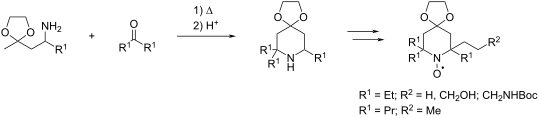
- bonds afforded the corresponding saturated derivatives 8a–d. Specifically, alkynyl derivatives 7a–c were hydrogenated with H2 over a palladium catalyst, while the allyl derivative 7d was reduced with hydrazine over Raney nickel (Scheme 4). The absence of signals corresponding to alkene protons in the 1H


Recent advances in copper-catalyzed direct hydroamination of alkenes with (hetero)aromatic amines
Beilstein J. Org. Chem. 2026, 22, 925–947, doi:10.3762/bjoc.22.73
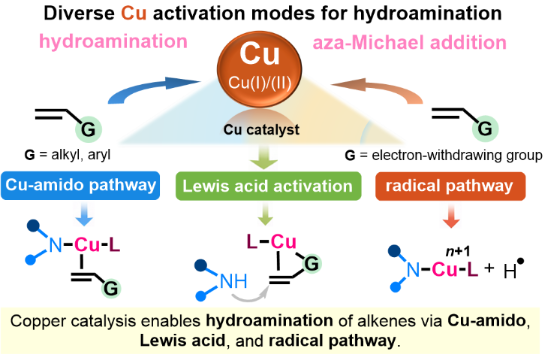
- predictable control over regioselectivity, stereoselectivity, and functional group tolerance. By organizing the field according to the catalyst role and the selectivity-determining step, this review aims to provide a coherent framework for understanding the role of copper catalysis in shaping efficient and
- ) were subsequently evaluated by adding aniline to activated olefins (Scheme 3) [35][36]. Using 5 mol % of the copper–amido catalyst at room temperature, the α,β-unsaturated substrates including acrylonitrile, methyl vinyl ketone, methyl acrylate, and cyclic enones were converted to the corresponding β
- using an inexpensive CuCl catalyst in combination with electron-donating phosphine ligands (L1, L2) or NHC salts (L3, L4) and KOt-Bu [37]. Various aromatic amines and heteroaromatic N–H nucleophiles reacted efficiently with electron-deficient alkenes 2, such as vinyl sulfones, acrylonitrile derivatives







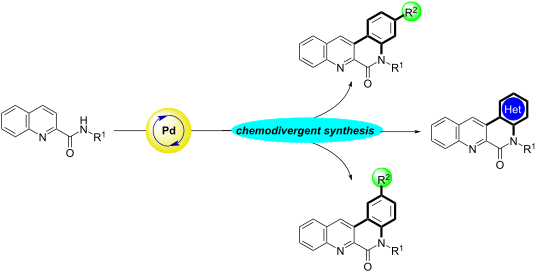
Palladium-catalyzed benzocyclization reactions of quinoline-2-carboxamides via sequential C–H/N–H functionalization
Beilstein J. Org. Chem. 2026, 22, 905–914, doi:10.3762/bjoc.22.71
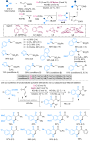
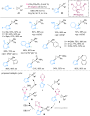
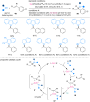
- with an increased catalyst loading of 20 mol %. The reaction affords lactams in up to 83% yield using amides containing various functional groups and substituted 1-bromo-2-iodobenzenes. Furthermore, 1,2-dibromo heteroarenes, such as benzothiophene and pyridine, undergo annulation to give the
- allow facile preparation of aromatic amines (Scheme 1c) [28][29][30][31]. In general, intramolecular C–H arylation reactions in the presence of a transition-metal catalyst have been reported extensively in recent years. These reactions enable an efficient formation of fused-ring systems [32][33][34][35
- -metal catalysts. This can reveal their selectivity in terms of reaction position(s) in chemodivergent synthesis (Scheme 2c). The present report explores benzocyclization reactions involving sequential C–H/N–H functionalization by a palladium catalyst. Results and Discussion First, the C–H/N–H annulation




Cascade transformation of 2-(diazoacetyl)-2H-azirines to 2-aroyl-3-hydroxy-1H-pyrroles via condensation with aromatic aldehydes
Beilstein J. Org. Chem. 2026, 22, 897–904, doi:10.3762/bjoc.22.70
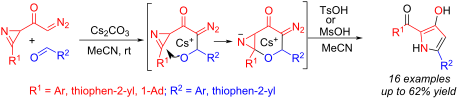
- mixture containing 4a (after separation of Cs2CO3) with TsOH at 100 °C or MsOH at 25 °C, with the acid clearly acting as a catalyst. Other protic acids, such as aq HCl, aq HI, and TFA, as well as a Lewis acid (FeCl3), also facilitated the conversion of 4a to 5a. Meanwhile, resinification of the reaction


Chiral cyclopropenimine-catalyzed enantioselective Michael reactions of phenol and benzofuran-derived α,β-unsaturated pyrazolamides with benzophenone-imine of glycine esters
Beilstein J. Org. Chem. 2026, 22, 888–896, doi:10.3762/bjoc.22.69
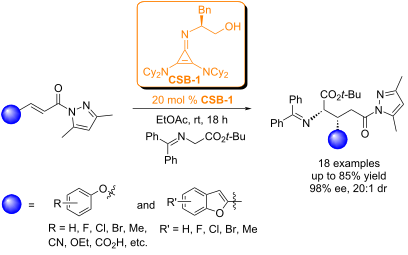
- (Lambert catalyst, CSB-1) as an organocatalyst. In the presence of 20 mol % CSB-1, the Michael adducts were obtained in up to 85% yield and 98% ee under mild conditions. The configurations of these Michael products were deduced by X-ray single crystal diffraction of a pyroglutamic acid ester containing two
- and pyroglutamic acid esters were also produced by enantioselective Michael additions of β-aryl-substituted α,β-unsaturated pyrazolamides with benzophenone-imine of glycine ester in excellent ee and de values by using a chiral cyclopropenimine (Lambert catalyst, Figure 2b) as an organosuperbase
- catalyst [7][8]. Due to the importance of unnatural amino acids in the development of new medicines [9], we want to introduce phenol and benzofuran motifs to glutamic acids. For our continuous interest on the synthesis of chiral 3-substituted glutamic and pyroglutamic acids, herein, we present Michael






Site-specific labelling of native peptides and proteins: chemical and enzymatic strategies
Beilstein J. Org. Chem. 2026, 22, 857–881, doi:10.3762/bjoc.22.67
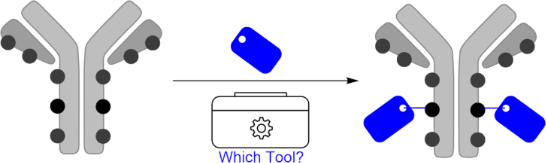
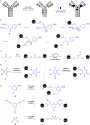
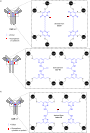
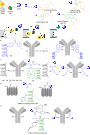
- 4-dimethylaminopyridine-containing binder 20, in which dimethylaminopyridine (DMAP) acts as nucleophilic base catalyst mediating acyl cation transfer, that was successfully applied to label lectins and cell-surface receptors (HER2 and EGFR; Scheme 7d) [62][63]. More recently, genetic code expansion








The trans-influence in gold chemistry from a catalytic perspective
Beilstein J. Org. Chem. 2026, 22, 838–856, doi:10.3762/bjoc.22.66
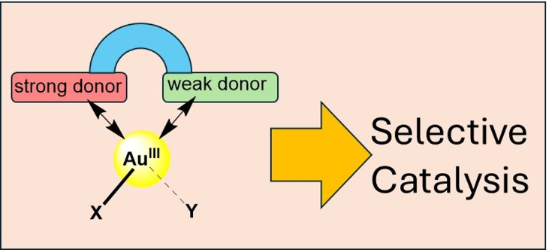
- > PPh3 > H− > CH3− > C6H5−, NO2−, I− > Br−, Cl− > py, NH3, H2O Catalyst precursors in gold chemistry most commonly consist either of linear, two-coordinate Au(I) complexes LAuX, or square-planar Au(III) complexes, often supported by bidentate or tridentate ligands. In both cases the trans-influence plays
- into gold hydrides by stepwise O-transfer reactions to phosphine (Scheme 6) [55]. Quite a different mechanism for the conversion of Au–OH into Au–H was found by Goldberg and co-workers for the hydrogenolysis of [(P^C^P)AuOH]+, which requires an acid catalyst [56]. A mechanistically similar heterolytic
- (sp3) bond by the weak trans-influence of N, renders the catalyst more stable against Au-aryl protonolysis and thus catalyst deactivation, resulting in higher turnover numbers [87]. The inequivalence of the two trans-coordination sites in C^N complexes contrasts starkly with the behaviour of the C^P


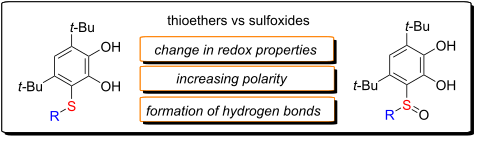
Unsymmetrical sulfoxides with sterically hindered catechol fragment: synthesis, structure, electrochemical properties, and antiradical activity
Beilstein J. Org. Chem. 2026, 22, 828–837, doi:10.3762/bjoc.22.65
- , frequently employed as a model system to study the activity of catechol oxidase and tyrosinase. Although hydrogen peroxide is a strong oxidant, its reaction with 3,5-DTBC is often slow at room temperature in the absence of a catalyst, typically requiring metal ions such as Cu2+, Fe3+, or Co2+ [43]. Moreover


Preparation of 3-(alkylamino)imidazo[1,2-a]pyridine-2-carbaldehydes via Kornblum oxidation and unexpected ring-opening reactions of the corresponding alcohols under oxidative conditions
Beilstein J. Org. Chem. 2026, 22, 763–770, doi:10.3762/bjoc.22.58
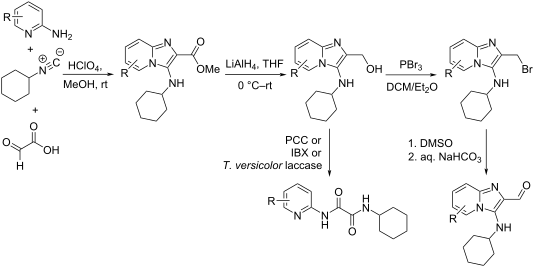
- ]pyridine-2-carbaldehydes is reported. A Groebke–Blackburn–Bienaymé reaction between 2-aminopyridine derivatives, cyclohexyl isocyanide and glyoxylic acid in the presence of methanol and an acid catalyst gave the 2-ester derivatives that were reduced to give the corresponding alcohols. Mild Kornblum
- isocyanide, the glyoxylic acid had undergone in situ esterification in the presence of methanol and the acid catalyst. On scaling the reaction (≈2 g aminopyridine), the originally anticipated unsubstituted products 12a–d were prepared as the sole products in yields ranging from 31% to 57%. Once again, only
- taken place before addition of the other reagents. Increasing the amount of acid catalyst to 0.2 equiv significantly increased the yield of the ester products 13, although the yields were still modest (Table 1). A further increase to 0.3 equiv of acid catalyst did not lead to further yield improvement


Synthesis of heterocycles based on azomethine ylides from α-amino acids (or amines) and carbonyl compounds
Beilstein J. Org. Chem. 2026, 22, 705–741, doi:10.3762/bjoc.22.55
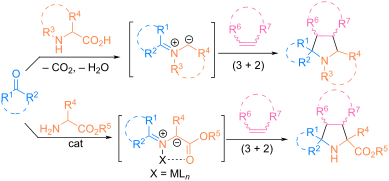
- strategy is that the synthesis is often carried out under mild conditions without the use of a catalyst, and despite this, the resulting cycloadducts exhibit pronounced regio- and stereoselectivity [9][10][11]. In the second case, the generation of azomethine ylides from iminoesters is often realized using
- enantioselectivity was observed. In a similar study, Wang et al. reported the CuI/TF-BiphamPhos (L3) complex, a new and highly efficient catalyst for the asymmetric 1,3-dipolar cycloaddition reaction [38]. The authors noted excellent reactivity, selectivity, and a wide range of structural variants for various
- authors proposed a model for the intermediate complex in 1,3-dipolar cycloaddition reactions. This intermediate consists of an azomethine ylide coordinated to a Zn(II)-t-Bu-BOX catalyst and is an 18-electron complex with a tetrahedral arrangement of ligands around the zinc center. Excellent results for


Harnessing light energy with molecules
Beilstein J. Org. Chem. 2026, 22, 680–682, doi:10.3762/bjoc.22.52
- heat. This process is preferably induced by an external stimulus or by a catalyst, which enables a controlled energy release when needed. Overall, the process corresponds to a closed cycle of energy uptake and release. This thematic issue has a strong focus on MOST systems and showcases various
- singlet-state photoredox catalyst in the sulfonylation/arylation of styrenes and as a triplet sensitizer in energy transfer catalysis. In addition to the photoredox contribution mentioned above, this thematic issue contains two publications on photochemical reactions beyond photoisomerizations. In the
Photoorganocatalytic trifluoromethylation of (het)arenes in green conditions
Beilstein J. Org. Chem. 2026, 22, 662–671, doi:10.3762/bjoc.22.50
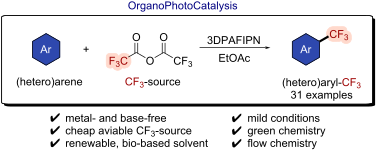
- improved outcome, delivering the product in 41% yield at only 1 mol % catalyst loading (Table 1, entry 3). On this basis, subsequent optimization was performed using 3DPAFIPN as the photocatalyst. Metal-containing catalysts were not used due to their lower environmental compatibility; moreover, they are
- , entries 4 and 5). The influence of catalyst loading was then examined. Raising the photocatalyst concentration to 2 mol % led to yields of 64%, 64%, and 78% under white, violet, and blue light, respectively (Table 1, entries 3–5). A further increase to 5 mol % (Table 1, entry 5) afforded 87% yield
- ; however, this 2.5-fold increase in catalyst loading did not provide a commensurate improvement in efficiency. Moreover, owing to the high molecular weight of 3DPAFIPN, a 5 mol % loading cannot be considered compatible with the development of a green methodology. Consequently, 2 mol % 3DPAFIPN under blue




Hydrogen production from formic acid catalyzed by NHC–Cu complexes
Beilstein J. Org. Chem. 2026, 22, 620–627, doi:10.3762/bjoc.22.48
- have also been explored. Beller and co-workers reported the first Fe catalyst bearing a phosphine ligand able to produce H2 with a TON of 1942 in the absence of additives [32]. A well-defined pincer–Fe complex allowing FA decomposition was reported by Milstein and co-workers [33]. While high TONs (up
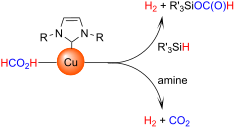
- performances than copper salts, even with lower catalyst loading and under milder conditions [49][50][51]. Based on this background, the first potential formic acid dehydrogenation catalyzed by NHC–Cu complexes (Figure 1) was investigated. Results and Discussion We have shown that the reaction of [Cu(OH)(IPr
- ); conversely, by increasing the catalyst loading to 30 mol % (with respect to FA), an encouraging 26% conversion was observed at 110 °C (see Supporting Information File 1, Table S1, entry 5). However, to decrease the temperature and the catalyst loading, the generation of the Cu–H species by means of a silane



Computational prediction of C–H hydricities and their use in predicting the regioselectivity of electron-rich C–H functionalisation reactions
Beilstein J. Org. Chem. 2026, 22, 603–610, doi:10.3762/bjoc.22.46
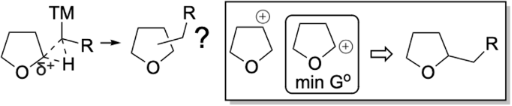
- sterically very crowded with %Vbur = 73%. While a reaction occurs at an even more crowded site in compound 10 (%Vbur = 74.5%), this reaction is catalysed by a significantly less bulky catalyst (a Cu(II) salt) (see below). In contrast to the hydricity, the reactive site has only the fifth-smallest BDE
- against a much larger and more chemically diverse dataset. In particular, steric accessibility is inherently catalyst-dependent, and its predictive integration will need to account for variations in catalyst size, shape, and approach geometry. Large-scale benchmarking across multiple catalyst classes will


![[Graphic 6]](/bjoc/content/inline/1860-5397-22-46-i8.svg?max-width=637&scale=1.18182)


Continuous-flow carbonyl hydrogenation under subatmospheric to atmospheric hydrogen pressure enabled by robust heterogeneous Pt–Fe catalysts
Beilstein J. Org. Chem. 2026, 22, 575–582, doi:10.3762/bjoc.22.43
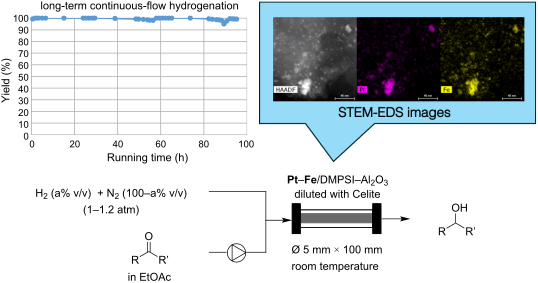
- bimetallic Pt–Fe nanoparticle catalyst immobilized on a composite support of dimethylpolysilane and alumina. Both ketones and aldehydes, including highly bulky and sterically hindered substrates, were smoothly hydrogenated using the newly developed catalysts under continuous-flow conditions at room
- : bimetallic nanostructure; carbonyl reduction; continuous-flow reaction; heterogeneous catalyst; subatmospheric hydrogen; Introduction The reduction of carbonyl compounds, ketones and aldehydes to alcohols is a fundamental and important reaction in organic synthesis that can provide valuable chemicals such
- ][10][11][12]. In this context, advanced technologies represented by the precise control of the bimetallic structure of a heterogeneous catalyst, mechanochemical hydrogenation, and continuous-flow methods using packed-bed reactors greatly contributed to advancing this transformation [9][11][12][13


Kinetic resolution of racemic planar-chiral vinylcymantrenes by molybdenum-catalyzed asymmetric metathesis dimerization
Beilstein J. Org. Chem. 2026, 22, 568–574, doi:10.3762/bjoc.22.42
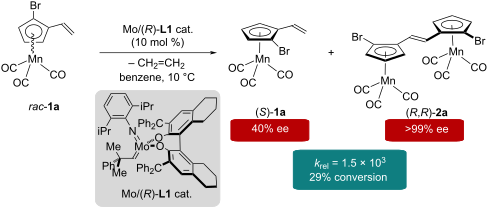
- by the desymmetrization of the Cs-symmetric substrates [17][18][19] by the use of an appropriate chiral catalyst (see the drawing in Table 1 for the structures of the representative chiral molybdenum precatalysts used in this study) [20][21][22][23]. Planar-chiral transition-metal complexes have been
- of rac-1a giving (R,R)-2a of 99% ee and (S)-1a of 45% ee with 37% conversion (krel = 754; Table 1, entry 4). The lower catalyst loading (5 mol %) led to an unsatisfactory conversion (18%) probably due to the decomposition of the molybdenum catalyst prior to the completion of the reaction (Table 1
- in Figure 2) likely inhibits the effective interaction of the substrate with the chiral catalyst, resulting in highly enantioselective kinetic resolution. Cymantrene is far less electron-poor than ferrocene due to the presence of the three carbonyl ligands, which are strong π-acids, on the manganese


Get a better glimpse on sequential photoreactions of trisnorbornadienes with 19F NMR spectroscopy
Beilstein J. Org. Chem. 2026, 22, 527–534, doi:10.3762/bjoc.22.38
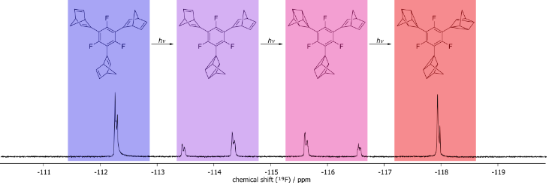
- (see Supporting Information File 1, Figure S10). The photosensitized reaction in the presence of Ir(ppy)3 or 1-butyl-7,8-dimethoxy-3-methylalloxazin (4) as an alternative catalyst [44][45] with λex = 405 nm (LED) was investigated by in situ 1H NMR spectroscopy. In both cases, the photoreaction was
- mass, indicating decomposition above this temperature (see Supporting Information File 1, Figure S3). The cycloreversion of trisquadricyclane 2f0,3 was also initiated in a ground-state reaction with magic blue (5), which has already been shown to be an effective catalyst for this reaction [46][47][48
- ]. Upon addition of magic blue (5, 7.5 mol %) to a solution of quadricyclane 2f0,3 in CDCl3, the norbornadiene 1f was formed almost quantitatively in addition to very small traces of tri(4-bromophenyl)amine, i.e., the reduced catalyst (see Supporting Information File 1, Figure S12). Discussion A


Modern synthetic pathways towards eribulin and its subunits
Beilstein J. Org. Chem. 2026, 22, 495–526, doi:10.3762/bjoc.22.37
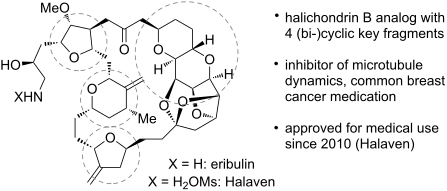
- and further treated with Lindlar catalyst and DIBAL-H to afford the alkene and aldehyde motifs of 195, respectively. Oxime formation and oxidation yielded an intermediate nitrile oxide, which underwent an intramolecular [3 + 2]-cycloaddition with the adjacent ethene substituent towards isoxazoline 196
- -Tol2IOTf led to the formation of salt 239. Additionally, building block 247 was synthesized from commercial 240 (Scheme 27). Again, stereoselective chlorination using NCS and MacMillan catalyst 248 was perfomed to yield 241 [101]. Subsequently, ketone 249 was added to aldehyde 241 within a stereoselective
- macrocycle. Hence, this pathway enables the quick assembly of multiple derivatives. The late-stage allene-Prins reaction also facilitates the application of other substituents on the central 3-methylenetetrahydropyran unit. On top of that, the commonly used NHK reaction involving a Cr(II)-catalyst is


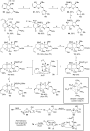

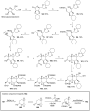


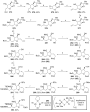



Recent advances in the stereoselective synthesis of distal biaxially chiral molecules
Beilstein J. Org. Chem. 2026, 22, 461–479, doi:10.3762/bjoc.22.34
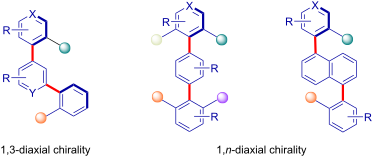
- potential applications in ligand and catalyst development. In a complementary direction, Smith’s group achieved the highly enantioselective synthesis of axially chiral naphthamides (Scheme 6) [47]. Their strategy employed transition-state hydrogen bonding to induce substrate deracemization, followed by
- biaxially chiral compounds. In 1989, Ito and co-workers reported the synthesis of the first distally biaxially chiral compound (Scheme 12) [35]. This reaction employed nickel as transition-metal catalyst, for the cross-coupling of 2-methyl-1-naphthylmagnesium bromide (43) with 1,5- (44) and 1,4
- (Scheme 13) [29]. The reactions were carried out under mild conditions and required only low catalyst loading. The key to achieving high enantioselectivity lies in the stereoselective synthesis of the starting compounds which relies on polar–π interactions between an aryl component containing a highly





