


Search results
Search for "epoxide" in Full Text gives 270 result(s) in Beilstein Journal of Organic Chemistry. Showing first 200.
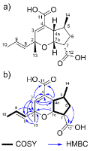
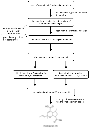
Rhodopyran, a carboxylated hexahydrocyclopenta[b]pyran from Rhodococcus
Beilstein J. Org. Chem. 2026, 22, 1107–1113, doi:10.3762/bjoc.22.89
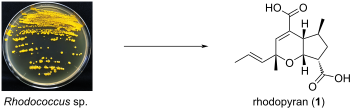
- Michael-type C–C cyclization, whereas closure of the pyran ring could proceed by intramolecular oxa-Michael addition or an epoxide-opening-type O-cyclization. The order of these two ring-forming events cannot be determined from the present data. An alternative catabolic contribution should also be


Site-specific labelling of native peptides and proteins: chemical and enzymatic strategies
Beilstein J. Org. Chem. 2026, 22, 857–881, doi:10.3762/bjoc.22.67
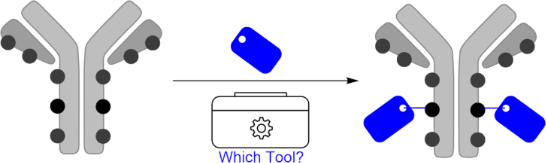
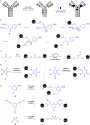
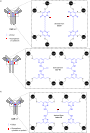
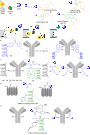
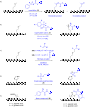
- , such as an epoxide, sulfonate ester or ester, enables targeted covalent modification of amino acids [105][106][107]. In addition to the choice of electrophiles, selectivity can be refined by tuning the length and flexibility of the linker, which controls the spatial proximity of the reactive groups








Design, synthesis, and biological evaluation of FXR/ASK1 dual-target modulators
Beilstein J. Org. Chem. 2026, 22, 771–781, doi:10.3762/bjoc.22.59
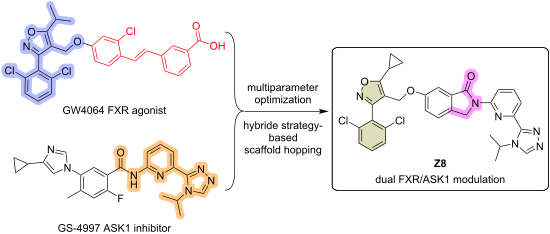
- reported many dual-target drug molecules based on FXR and other relevant therapeutic targets, such as FXR/sEH (soluble epoxide hydrolase), FXR/PPARδ (peroxisome proliferators activated receptor δ), FXR/LTA4H (leukotriene A4 hydrolase), and FXR/FABP 1 (fatty acid binding protein 1) [12][29][30][31]. In this


Synthesis of depressin, cryptomeridiol and 4-epi-cryptomeridiol enabled by a terpenoid chiral pool-producing platform
Beilstein J. Org. Chem. 2026, 22, 683–690, doi:10.3762/bjoc.22.53
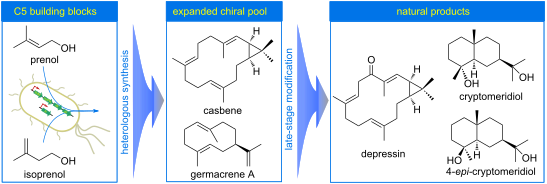
- -eudesmol (featuring a reductive epoxide ring-opening) [35], and ilicic acid (featuring a Curtius rearrangement reaction) [36]. It is interesting to note that compound 2 was obtained as the sole product when (+)-hedycaryol of the germacrene-type skeleton was incubated with a suspension of the root of


Experimental and DFT studies on the regioselective methanolysis of 5-azido-9-oxabicyclo[6.1.0]nonan-4-yl 4-nitrobenzoate isomers
Beilstein J. Org. Chem. 2026, 22, 547–556, doi:10.3762/bjoc.22.40
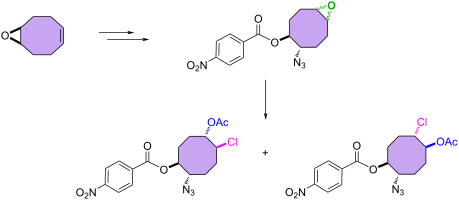
- epoxide ring and acetylation resulted in the formation of two corresponding chloro-acetate isomers. The structure of one of the chloro-acetate isomers was determined via crystallographic analysis and the other by 1D and 2D NMR spectroscopy. DFT computations confirm the regioselectivity of the methanolysis
- observed regioselectivity, steric drawings of epoxides 9a and 9b were constructed using a bathtub-like representation of the cyclooctane ring (Table 1). For epoxide 9a, the majority of dihedral angles fall within the ±60–80° range, consistent with a regular boat-chair geometry. The limited deviation from
- ideal gauche values and the absence of severely over-twisted dihedrals indicate a relatively low-strain conformation. In contrast, epoxide 9b exhibits a more distorted dihedral distribution, including a strongly twisted dihedral (≈90°) together with unevenly distributed gauche and near-planar torsions


Modern synthetic pathways towards eribulin and its subunits
Beilstein J. Org. Chem. 2026, 22, 495–526, doi:10.3762/bjoc.22.37
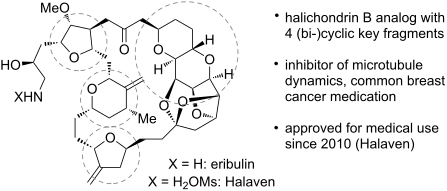
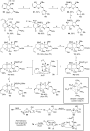
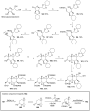
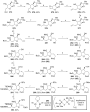
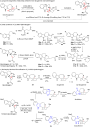
- epoxide 98. Deprotection of the alcohol motif of 98 enabled the cyclization towards tetrahydropyran 99. Next, 99 underwent an esterification with acrylic acid, was cyclized via Grubbs metathesis and the remaining double bond was hydrogenated leading to bicyclic core structure of 101. Notably, during the
- , intramolecular ring opening of epoxide 98 and metathesis led to target 104 with high regio- and stereoselectivity. A novel approach towards C1–C10 fragment of 1 was reported by Kathravath and co-workers (Scheme 11) [87]. From ʟ-ascorbic acid (108), protection of the diol motif and treatment with H2O2, then EtI
- benzyltrimethylammonium hydroxide induced the oxy-Michael reaction towards an unseparable mixture of 137 and 138, and 136. A plausible explanation for the formation of 138 could be a [1,2]-rearrangement of the deprotonated alcohol motif and the OTBDMS-moiety of 137 via an epoxide intermediate (indicated in arrows) and








Synthesis and stereochemical analysis of dynamic planar chiral oxa[7]orthocyclophene
Beilstein J. Org. Chem. 2026, 22, 436–442, doi:10.3762/bjoc.22.30

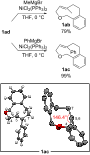
- oxacyclophene can be transformed into central chirality without loss of enantiomeric purity. For example, (S)-1ab obtained by chiral HPLC separation using an OJ-H column was treated with m-CPBA, in which (S)-1ab was smoothly consumed at 0 °C within 30 minutus to afford epoxide 8 in 61% yield (Scheme 4). HPLC






Ring contraction and ring expansion reactions in terpenoid biosynthesis and their application to total synthesis
Beilstein J. Org. Chem. 2026, 22, 289–343, doi:10.3762/bjoc.22.21
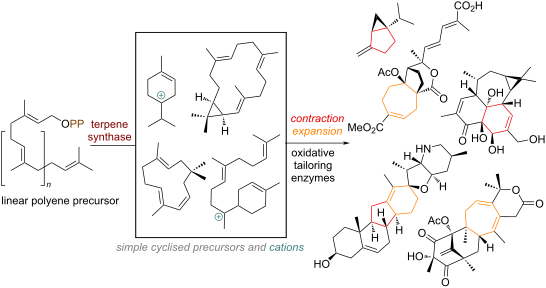
- the activation of the diphosphate group and ionisation) [25][37] and Class II (ionisation by olefin or epoxide protonation via a carboxylic acid in the active site) [26][38][39] and their reactions thus are mediated by carbocations and olefins, through careful preorganisation of the linear substrate
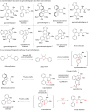
- crokonoid B (67) by oxidation, carbocation formation and 1,2-alkyl shift in a semi-pinacol rearrangement [127]. The authors of the isolation report proposed an epoxide 67a as initiating species, but a diol could also serve in this function (see Scheme 21B). Upon formation of the secondary carbocation 67b, a
- were proposed by the group responsible for their isolation [128] to be built up through oxidation of precursor 71 at C-5 and C-6 to give an epoxide 72, which could undergo semi-pinacol rearrangement to the 7-membered ketone 73. From here, a simple follow up oxidation could give both compounds (see






Advances in Zr-mediated radical transformations and applications to total synthesis
Beilstein J. Org. Chem. 2026, 22, 71–87, doi:10.3762/bjoc.22.3
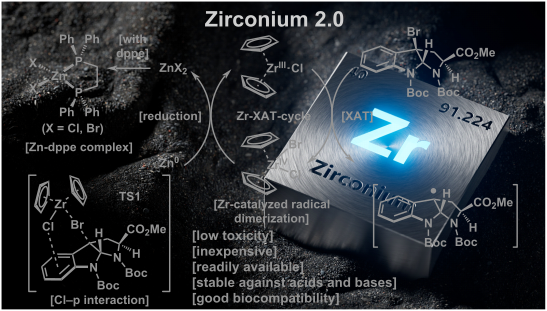
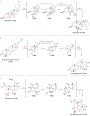
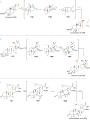
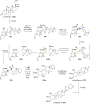
- molecules such as allose (23i) and cholesterol (23k), delivering the desired alcohols in good yields with excellent regioselectivity. The proposed mechanism is shown in Scheme 5C. Homolytic cleavage of the C–O bond in the epoxide generates a strong Zr–O bond, while the resulting alkyl radical abstracts a
- experiments, coordination of thiourea 26 to the Zr center was suggested. This effect is considered to have tuned the reactivity of the Zr-catalyst, thereby having a positive effect on the reaction process. Finally, the regioselectivity of epoxide ring opening was compared between low-valent titanocene and








Recent advancements in the synthesis of Veratrum alkaloids
Beilstein J. Org. Chem. 2025, 21, 2657–2693, doi:10.3762/bjoc.21.206
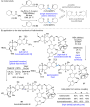
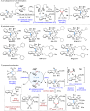
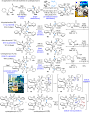
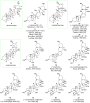
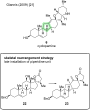
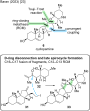
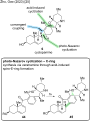
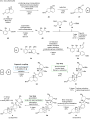
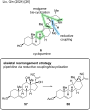
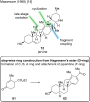
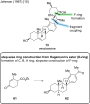
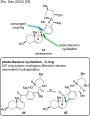
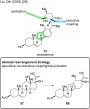
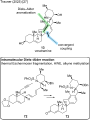
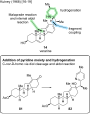
- the hydroxy moiety in C12 was performed, followed by Grignard addition of ethynylmagnesium bromide and then hydrocyanation to result in vinyl nitrile 57 over five steps. The key Wagner–Meerwein-type rearrangement occurred in 68% yield furnishing epoxide 58. Hydrogenation of the alkene moiety as well
- as transformation of the epoxide to a diene in the D-ring (with tetramethyldiamidophosphoric acid chloride) and reduction of the cyano-group gave triene 59 in 45% yield over three steps. The acetyl group was also cleaved in the reduction step. For forging the E- and F-ring of cyclopamine, sulfinyl
- 63. The D-ring was saturated and the remaining alkene epoxidized – a strategy that we have observed in cyclopamine synthesis before. The sequence needed several protecting group manipulations. Therefore, epoxide 64 was synthesized in eleven steps from ketone 62. The key spirocyclization was performed
















Recent advances in total synthesis of illisimonin A
Beilstein J. Org. Chem. 2025, 21, 2571–2583, doi:10.3762/bjoc.21.199
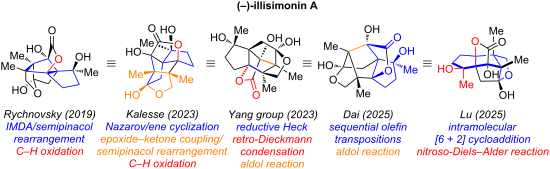
- substructure hidden inside the natural product’s cage-like ring system, Kalesse’s group chose to construct this architecture first using a tandem Nazarov/ene cyclization [36]. The cis-pentalene was subsequently assembled via a Ti(III)-mediated epoxide–ketone coupling reaction. Starting from the known
- , deprotonation, and intramolecular addition to ketone. Treatment of the silacycle with MeMgCl cleaved the Si–O bond and subsequent intramolecular nucleophilic substitution of the chloride with the adjacent hydroxy group yielded TMS-epoxide 41. Protonic acid-mediated opening of the TMS-epoxide, accompanied by TES
- ). Chemoselective epoxidation of the enone double bond in 69 yielded epoxide 70. A Wittig reaction of 70 with (methoxymethyl)triphenylphosphonium chloride and t-BuOK generated a methyl enol ether, which was unstable in the presence of the epoxide. During aqueous workup, simultaneous hydrolysis of the enol ether and






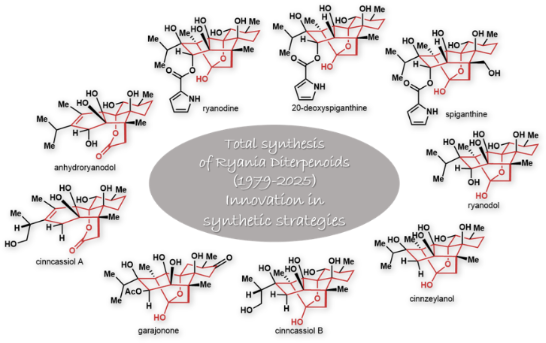
Total syntheses of highly oxidative Ryania diterpenoids facilitated by innovations in synthetic strategies
Beilstein J. Org. Chem. 2025, 21, 2553–2570, doi:10.3762/bjoc.21.198
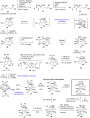
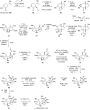
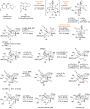
- compound 19. This intermediate is converted to lactone 20 via base-promoted Grob fragmentation followed by acid-mediated MOM deprotection. Epoxidation of the C10–C11 double bond in 20, lactone hydrolysis-promoted epoxide ring opening, and inversion of the C10 hydroxy configuration, yield the key
- conditions induces the first intramolecular reductive cyclization, affording hemiacetal 27. This intermediate is then transformed via a one-pot sequence involving epoxidation, fragmentation, and re-epoxidation to give epoxide 29. A second intramolecular reductive cyclization of 29 under Li/NH3 forms the
- epoxidation of the tetrasubstituted alkene followed by Grieco elimination yielded diene 92. Subsequent oxidation of the hemiacetal, saponification of the lactone, intramolecular epoxide opening, and Hoveyda–Grubbs (II)-catalyzed RCM afforded tetracyclic compounds 94 and its transesterification product 93



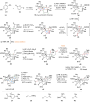

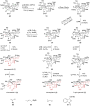


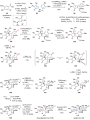

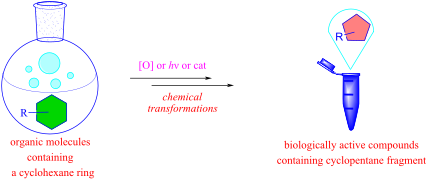
Transformation of the cyclohexane ring to the cyclopentane fragment of biologically active compounds
Beilstein J. Org. Chem. 2025, 21, 2416–2446, doi:10.3762/bjoc.21.185
- of cyclopentane derivatives, promising for the synthesis of iridoids and compounds, that stimulate the formation of receptors that prevent platelet aggregation [75]. The derivatives of the Diels–Alder adduct of LG and piperylene, keto epoxide 146 and its analogue 152 lacking the spiro-fused
- products of epoxide ring opening. It should be noted that the position of the epoxy ring in the 6-membered ring has a major influence on the composition of reaction products. Catalysts only affect the yield of the reaction. A striking confirmation of this is the work of Berteina-Raboin and co-workers [87
- in the formation of a cyclopentane derivative 193 in the presence of InCl3 or Bi(OTf)3. The action of the same Lewis acids on the angular epoxide 190, a regioisomer of epoxide 189, led to other products (Scheme 34). According to the authors [87], depending on the nature of the Lewis acid, the


Recent advances in Norrish–Yang cyclization and dicarbonyl photoredox reactions for natural product synthesis
Beilstein J. Org. Chem. 2025, 21, 2315–2333, doi:10.3762/bjoc.21.177
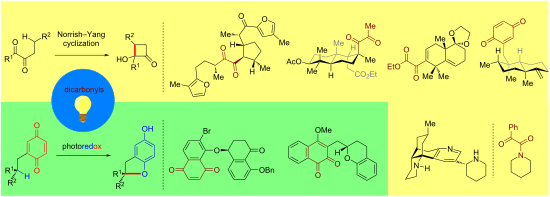
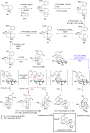
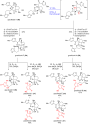
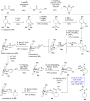
- , employing a late-stage biomimetic Norrish−Yang cyclization to construct the highly compact cyclobutanone motif [21]. The task commenced with epoxide 2 (Scheme 2), which was accessible via a known five-step protocol from geranyl acetate (1). Compound 2 was advanced to 3 using a tandem cyclization developed
- intramolecular aldehyde α-alkylation using MacMillan's protocol, subsequently undergoing Shi's asymmetric epoxidation to give rise to epoxide 60 as a 3:1 mixture of diastereomers. These were not separated until step 8 due to poor separability at this stage. Concurrently, diosgenin was then processed through a
- – was prepared from (+)-pulegone (77) through a six-step manipulation involving epoxidation, epoxide opening with sodium thiophenolate and subsequent concomitant retro-aldol, sulfoxidation, a one pot α-alkylation with acrylonitrile proceeding to thermal syn-elimination of phenylsulfenic acid, ketone







Bioinspired total syntheses of natural products: a personal adventure
Beilstein J. Org. Chem. 2025, 21, 2048–2061, doi:10.3762/bjoc.21.160
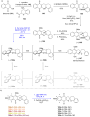
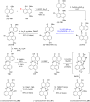
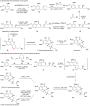
- , derived from phenylthiol and geranyl bromide, coupled with chiral epoxide 6, prepared through Sharpless epoxidation and TBS protection of 2-methylprop-2-en-1-ol, under strong basic conditions to generate intermediate 7 to further reduce the sulfide moiety with sodium, furnishing diol 8 with the loss of
- , Wittig reaction with MOMPPh3Cl and LDA gave the putative methyl enol ether, which could be directly converted into 1,3-dithiane 12 with propane-1,3-dithiol. Nucleophilic addition to chiral epoxide 13 and oxidative hydrolysis of 1,3-dithiane to ketone delivered chiral β-hydroxyketone 14. Evans−Tishchenko



Enantioselective desymmetrization strategy of prochiral 1,3-diols in natural product synthesis
Beilstein J. Org. Chem. 2025, 21, 1932–1963, doi:10.3762/bjoc.21.151

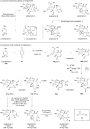
- . Epoxidation of 131 followed by methylation generated epoxide 132. Construction of the lactone moiety commenced with the oxidative cleavage of the double bond, and the resulting carboxylic acid underwent intramolecular cyclization in the presence of BF3·Et2O to give lactone 133. Subsequent hydride reduction
- 139, epoxide 136 was first prepared from (R)-130 in two steps. Parikh–Doering oxidation of 136 followed by addition with Et2Zn in the presence of ligand 137 afforded alcohol 138, which was subsequently converted into amine 139 via a seven-step sequence. With the fragments 135 and 139 in hand
- monobenzoate 142 in 94% yield along with 4% yield of its diastereomer (dr = 24:1). Following a four-step conversion of 142 to epoxide 143, reductive cleavage produced a diol intermediate, which was subjected to chemoselective glycosylation with compound 144 to provide compound 145. After a four-step












Preparation of spirocyclic oxindoles by cyclisation of an oxime to a nitrone and dipolar cycloaddition
Beilstein J. Org. Chem. 2025, 21, 1890–1896, doi:10.3762/bjoc.21.146
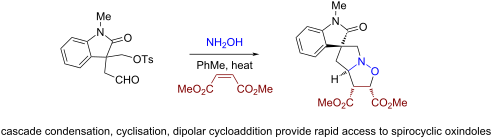
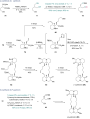
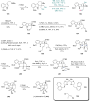
- that can be explored for its ability to undergo dipolar cycloaddition chemistry. Results and Discussion The oxindole core was prepared from isatin following known chemistry to give the spirocyclic epoxide 1 (Scheme 2) [28]. This was subjected to regioselective ring-opening with allyltrimethylsilane in
- g, 1.3 mmol) was added to epoxide 1 [28] (2.2 g, 12.7 mmol) and allyltrimethylsilane (6.1 mL, 38 mmol) in dry MeCN (90 mL) at 0 °C. After 1 h, saturated aqueous NaHCO3 (50 mL) was added, and the mixture was extracted with EtOAc (2 × 50 mL). The combined organic layers were washed with brine (20 mL


Oxetanes: formation, reactivity and total syntheses of natural products
Beilstein J. Org. Chem. 2025, 21, 1324–1373, doi:10.3762/bjoc.21.101
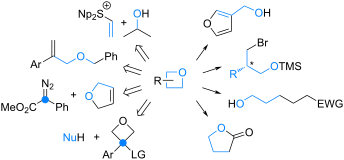
- epoxide-opening cyclisation for the oxetane formation (Scheme 11b) [45]. The highest yield was obtained for the PhSH/I2 10:1 activator under unusually mild conditions – the authors believed it is due to the oxa-bridge which facilitates the Lewis acid coordination. In 2001, Rousseau and colleagues reported
- , vinyl, ethynyl or sulphide are sufficient if a superbase such as LIDAKOR or LICKOR is used (Scheme 16) [54][55]. The reaction tends to be remarkably regioselective (in terms of the epoxide opening) and stereoselective, however, it should be treated with caution in case of allyl ethers as they can also
- opened by SnCl4 at −78 °C in a syn manner to give the corresponding chlorohydrins 122, which then upon treatment with BF3·OEt2 underwent the O–H insertion producing oxetanones 123 in good yields. The authors also found that increasing the temperature to rt during the epoxide opening afforded the










Recent advances in amidyl radical-mediated photocatalytic direct intermolecular hydrogen atom transfer
Beilstein J. Org. Chem. 2025, 21, 1306–1323, doi:10.3762/bjoc.21.100
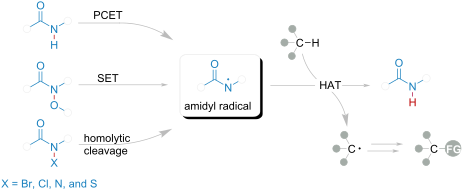
- range of functionalized polyolefins, showcasing the applicability of this xanthylated polyolefin in various reactions, including trifluoromethylthiolation, polymer grafting, Michael addition, and epoxide opening. Amidyl radical from N–X bond cleavage Direct halogenation of C–H bonds is of significant






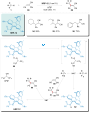
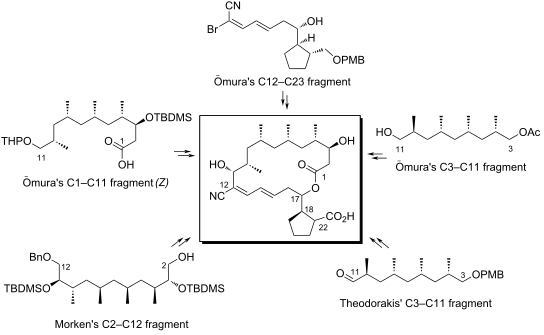
Synthetic approach to borrelidin fragments: focus on key intermediates
Beilstein J. Org. Chem. 2025, 21, 1135–1160, doi:10.3762/bjoc.21.91
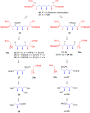
- prepared via PMB removal of compound 21, which, in turn, was obtained through desulfonylation of compound 22. Compound 22 originated from the condensation of epoxide 23a with sulfone 26, which was produced by desilylation of 25 followed by converting the resulting primary alcohol into a sulfone group
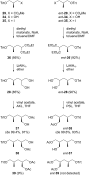
- . Intermediate 25 was prepared through TBDMS protection and desulfonylation of 24, itself derived from the condensation of epoxide 23b and sulfone 27. The precursor 27 was synthesized from Roche ester 29 via a sequence of steps, including reduction, three-carbon homologation, and enzymatic desymmetrization. An
- failure may have been due to the low reactivity of sulfones 27 and ent-27 under the reaction conditions. Additionally, treating ent-42 with excess tert-butyllithium to form the corresponding lithiated derivative and reacting it with epoxide 23a, both with or without BF3·OEt2, also led to unsatisfying








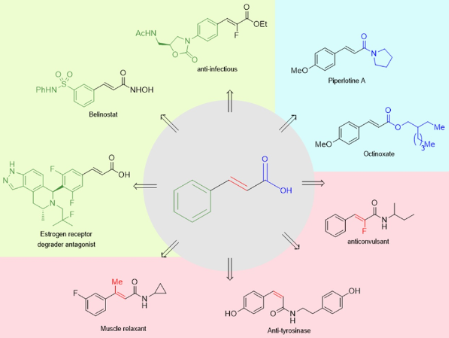
Recent advances in synthetic approaches for bioactive cinnamic acid derivatives
Beilstein J. Org. Chem. 2025, 21, 1031–1086, doi:10.3762/bjoc.21.85
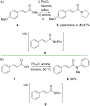
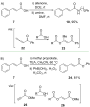
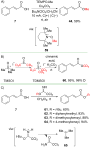
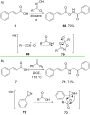
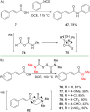
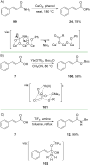
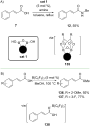
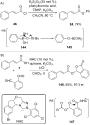
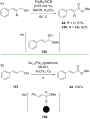
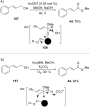
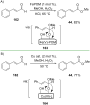
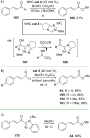
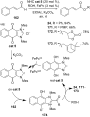
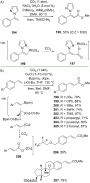
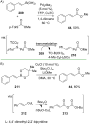
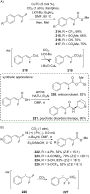
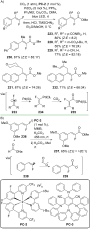
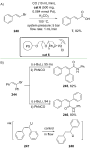
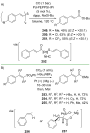
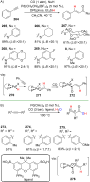
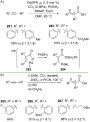
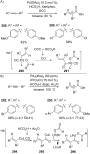
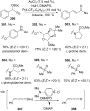
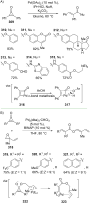
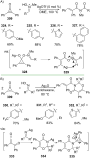
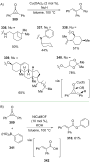
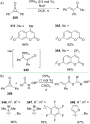
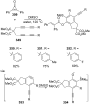
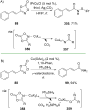
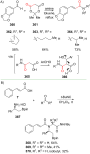
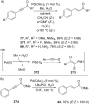
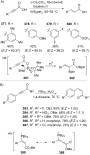
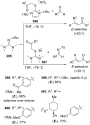
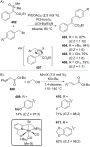
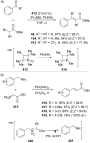
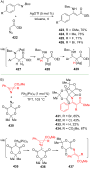
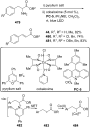
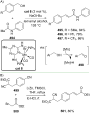
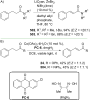
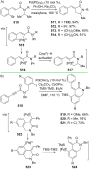
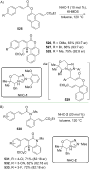
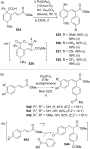
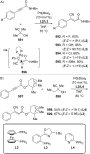
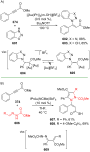
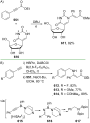
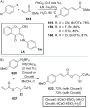
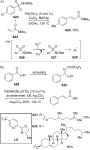
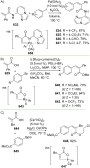
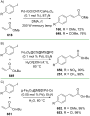
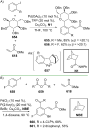
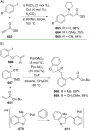
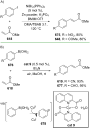
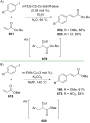
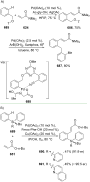
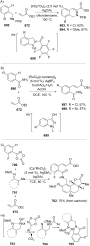
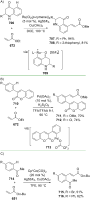
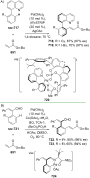
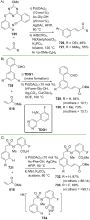
- bond of cyclopropenone to give a cyclic intermediate 316 (Scheme 74A) [125]. On the other hand, Wu and co-workers (2022) developed a Pd-catalyzed selective ring-opening of cyclopropenones and vinyl epoxide 318 to give the corresponding esters 319–321 in good yields via a π–allyl palladium intermediate










































Recent total synthesis of natural products leveraging a strategy of enamide cyclization
Beilstein J. Org. Chem. 2025, 21, 999–1009, doi:10.3762/bjoc.21.81
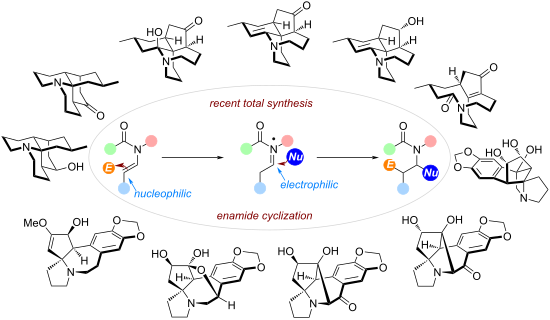
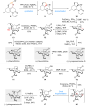
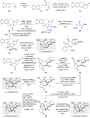
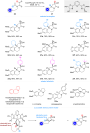
- a fragmentation process for the total synthesis of (−)-phlegmariurine B. A one-pot epoxidation/nucleophilic epoxide opening introduced both a hydroxy group and a chloride across the cyclopentene, producing 14 in 57% yield. After oxidation of alcohol 14 to ketone 15, the Mukaiyama hydration then





Cryptophycin unit B analogues
Beilstein J. Org. Chem. 2025, 21, 526–532, doi:10.3762/bjoc.21.40
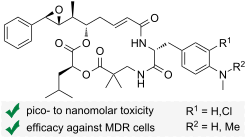
- -phenyl position of unit A [9][10][11] or derivatisation of unit A’s epoxide moiety into a halohydrin (-glycinate) [5][12][13][14][15][16][17]. Cryptophycins modified at the α-position of unit C [18] and, most recently, various derivatives with modifications in unit D [19] were established as potent and
- obtained through Grubbs metathesis and subsequent acetonide cleavage in a superior yield of 76%. The finalising steps to obtain epoxides 26 and 2 (Scheme 3) were a diol–epoxide transformation [11][19][32], including firstly the formation of a cyclic orthoester, secondly the formation of a bromohydrin
- -hydroxy-7-azabenzotriazole; HATU = 1-[bis(dimethylamino)methyliumyl]-1H-1,2,3-triazolo[4,5-b]pyridinium 3-oxide hexafluorophosphate. Three-step diol–epoxide transformation starting from diols 24 and 25. a) (MeO)3CH, pyridinium p-toluenesulfonate, CH2Cl2, rt, 3 h; b) AcBr, CH2Cl2, rt, 3–4 h; c) K2CO3



Advances in the use of metal-free tetrapyrrolic macrocycles as catalysts
Beilstein J. Org. Chem. 2024, 20, 3085–3112, doi:10.3762/bjoc.20.257
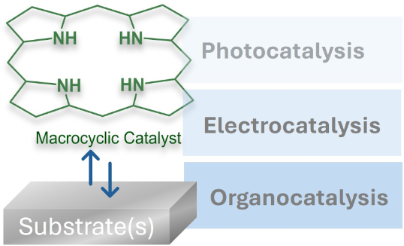
- , with TBAI as a co-catalyst, up to 74% yields (Table 1). The inactivity of porphyrin 18 was attributed to the inaccessibility of the inner core imine due to its planar structure. The mechanism of the epoxide ring-opening reaction was elucidated by DFT calculations, which suggested that the macrocycle
- adopts a 1,3-alternate conformation and binds simultaneously to the epoxide O-atom and iodide anion via (NH···O and NH···I) hydrogen-bonding interactions. The TBA countercation is bound to the O-atom of the epoxide ring with hydrogen bonds and is situated away from the I− anion. This crucial transition
- state stabilizes the anionic species generated during the reaction pathway and facilitates a backside attack of I− on the epoxide thus resulting in the initial ring opening (Figure 4b). Apart from acting as an organocatalyst, calix[4]pyrrole 11 has been used for the promotion of cuprous chloride


Computational design for enantioselective CO2 capture: asymmetric frustrated Lewis pairs in epoxide transformations
Beilstein J. Org. Chem. 2024, 20, 2668–2681, doi:10.3762/bjoc.20.224
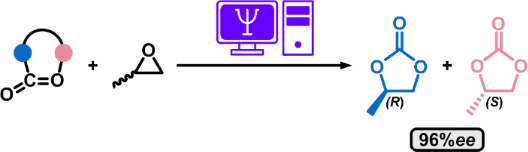
- strategy to mitigate rising atmospheric carbon dioxide levels. Despite extensive research on the CO2 insertion into epoxides to form cyclic carbonates, the stereochemical implications of this reaction have been largely overlooked, despite the prevalence of racemic epoxide solutions. This study introduces
- strategically modifying LB substituents to induce asymmetry, a stereoselective catalytic scaffold was developed, favouring one enantiomer from both epoxide enantiomers. This work advances the in silico design of FLPs, highlighting their potential as asymmetric CCU catalysts with implications for optimising
- catalyst efficiency and selectivity in sustainable chemistry applications. Keywords: asymmetric catalysis; carbon dioxide; CO2; epoxide; frustrated Lewis pairs (FLPs); volcano plot; Introduction The field of frustrated Lewis pairs (FLPs) has flourished since their seminal discovery in 2006 by Stephan and





