Search results
Search for "hydrolysis" in Full Text gives 945 result(s) in Beilstein Journal of Organic Chemistry. Showing first 200.
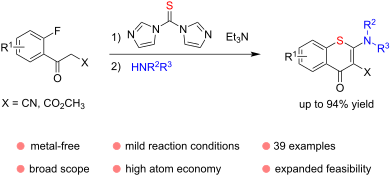
A cascade synthesis of 2-aminothiochromones from 2-fluorophenyl ketone and thiocarbonyldiimidazole
Beilstein J. Org. Chem. 2026, 22, 1151–1159, doi:10.3762/bjoc.22.92
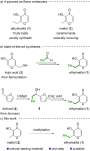
- carbanion is the key step in this reaction. To evaluate the application prospects of the cascade reaction, the cyano group or methyl ester was functionalized under different conditions (Scheme 5). For instance, hydrolysis of the cyano group in compound 3a under mild conditions afforded the corresponding
- amide 6. Under more violent conditions, such as concentrated sulfuric acid, the cyano group underwent concomitant hydrolysis and decarboxylation to yield compound 7. Alternatively, basic hydrolysis of the methyl ester in compound 5k provided the carboxylic acid 8, which allows for further structural



Construction of CF2 moieties in FDA-approved drugs (2016–2025): industrial routes, mechanisms, and scale-up considerations
Beilstein J. Org. Chem. 2026, 22, 1122–1150, doi:10.3762/bjoc.22.91
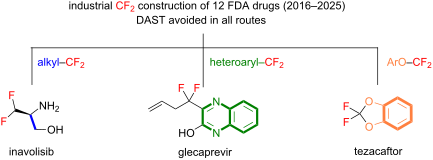
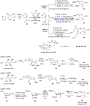
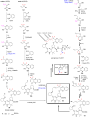
- -product 29 was formed in up to 90% yield, both 28 and 29 were competent substrates in the subsequent cyclopropanation, giving an 83% two-step overall yield. Subsequent steps, including selective ester hydrolysis (56% yield), Curtius rearrangement (70% yield), chiral resolution, and ester hydrolysis (40
- carbonyl group to give 62, followed by hydrolysis to afford 63. For the difluorination of β-keto esters, synthetic methods using SF4 have been reported [29], and safety and efficiency evaluations indicate that SF4 holds promise for such transformations. However, whether the continuous-flow difluorination
- . In route b, 78 underwent chiral cyano addition to the imine under 0.1 equiv of Y(OTf)3 catalysis, with stereoselectivity highly dependent on the Lewis acid catalyst, followed by hydrolysis and reduction to give the chiral amino alcohol (containing 11% enantiomer). In route c, intermediate 80 – upon






Discovery of sugarnitriles A and B, and structural reassignment of SF-2140, from a sugarcane endophytic actinomycete Amycolatopsis sp. JS-O27
Beilstein J. Org. Chem. 2026, 22, 1114–1121, doi:10.3762/bjoc.22.90
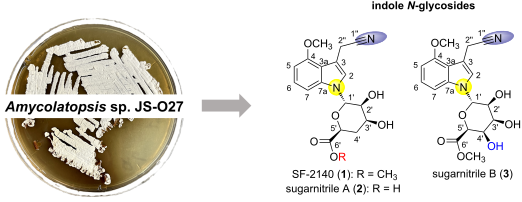
- correlations of 1, 2, and 3. (a) Comparison of the experimental ECD spectra of 1, 2, and 3 in MeOH. (b) Hydrolysis of 1 to 2 (YMC Hydrosphere C18, ∅ 3 × 150 mm, 0.5 mL/min, 0–20 min, grad. 20–100% aq MeCN, PDA: 220 nm). Antibacterial activity of 1, 2, and 3. Positive controls: penicillin G (PG) for S. aureus


Synthesis of functionalized, 13-alkyl-substituted coralyne derivatives and investigation of their interactions with duplex and abasic site-containing DNA
Beilstein J. Org. Chem. 2026, 22, 1057–1066, doi:10.3762/bjoc.22.84
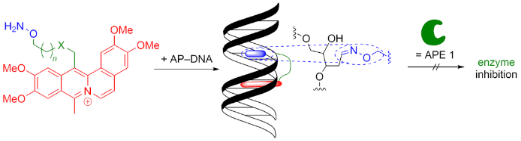
- -spectroscopic analysis of the reaction mixtures showed either no conversion or decomposition. In another approach, the reaction of the bromopentyl-substituted papaverine 3b with NaN3 or potassium acetate yielded the azide 3e in 83% and the ester (Scheme 2). The direct alkaline hydrolysis of the latter furnished
- hydrolysis to give the coralyne carboxylic acid derivative 2d in 93% yield (Scheme 3). The novel compounds 2c and 2d were identified and characterized by NMR spectroscopy (1H, 13C, COSY, HSQC, HMBC), mass spectrometry, and elemental analysis. For the synthesis of a reference compound without alkoxyamine unit


Semisynthesis, characterisation, and antibacterial evaluation of a novel lecanoric acid-derived amide library
Beilstein J. Org. Chem. 2026, 22, 1023–1032, doi:10.3762/bjoc.22.81
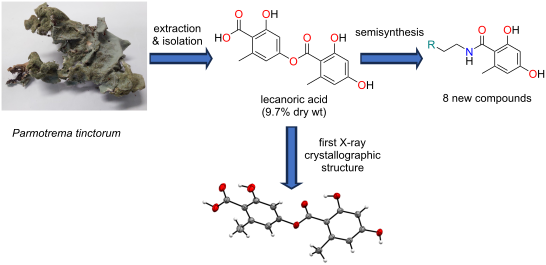
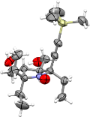
- natural product to be obtained; the ORTEP drawing of 1 is shown in Figure 2. The abundant depside scaffold 1 (970 mg) was subsequently utilised to generate a novel series of semisynthetic amides. This particular scaffold is known to undergo ester hydrolysis in basic environments (i.e., pH > 7), resulting


Z-Selective semihydrogenation of alkynes via Ni/Lewis acid synergistic catalyzed system using DMF as hydrogen source and solvent
Beilstein J. Org. Chem. 2026, 22, 1004–1012, doi:10.3762/bjoc.22.79
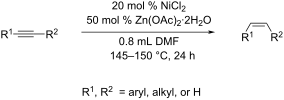
- . Simultaneously, the Lewis acid promotes the hydrolysis of DMF with trace water existing in the solvent system to gradually liberate formic acid (HCOOH) and HNMe2. This in situ formation of HCOOH appears critical; analogous systems relying on DMF/water to generate HCOOH for the reduction of metal catalysts have
- been documented for both nickel and palladium catalysis in prior literature [11][40][49]. Maintaining an appropriate concentration of HCOOH via its gradual release from DMF hydrolysis thus seems essential for efficient semihydrogenation, a requirement that parallels findings in related transfer



Chiral cyclopropenimine-catalyzed enantioselective Michael reactions of phenol and benzofuran-derived α,β-unsaturated pyrazolamides with benzophenone-imine of glycine esters
Beilstein J. Org. Chem. 2026, 22, 888–896, doi:10.3762/bjoc.22.69
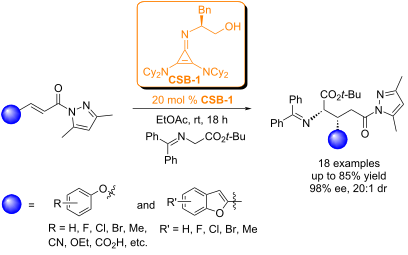
- adjacent stereocenters, which was obtained from in-situ acidic hydrolysis and lactamization of the corresponding Michael product. Keywords: α,β-unsaturated pyrazolamide; chiral cyclopropenimine; glutamic acid; lactamization; Michael addition; Introduction Phenols and benzofurans are feedstock chemicals
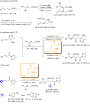
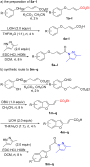
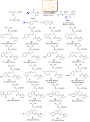
- Michael adducts in high yields and enantioselectivities in the presence of Lambert catalyst CSB-1. Therefore, the phenol-derived pyrazolamides 5a–l were prepared from phenols, ethyl 4-bromocrotonate and 3,5-dimethyl-1H-pyrazole in three steps including alkylation, hydrolysis and amidation (Scheme 2a). The
- benzofuran-derived pyrazolamides 5m–q were synthesized through DBU-mediated cyclocondensation of 2-hydroxybenzaldehydes with 4-bromocrotonates to afford (E)-2-benzofuranyl-3-acrylates followed hydrolysis and coupling with 3,5-dimethyl-1H-pyrazole (Scheme 2b) [12]. Initially, the Michael reaction between α,β






Site-specific labelling of native peptides and proteins: chemical and enzymatic strategies
Beilstein J. Org. Chem. 2026, 22, 857–881, doi:10.3762/bjoc.22.67
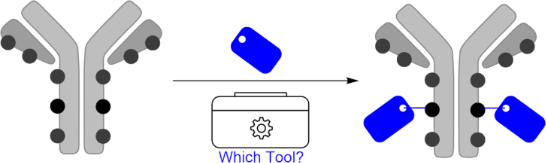
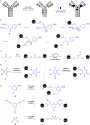
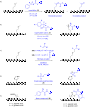
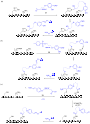
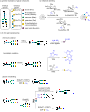
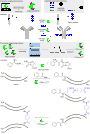
- -sequence protease substrates through site-specific hydrolysis and isopeptide-bond formation (Scheme 6) [47]. Labelling residues on protein surfaces is noticeably more challenging due to a lack of residues with heightened reactivity. Substantial progress has been made to address this issue, with current
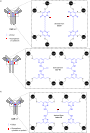
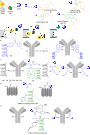
- substitution → hydrolysis; Scheme 8) [79], laying the groundwork for ligase development [80][81]. Lysine residues are abundant and typically solvent-exposed [82], hyper-reactive variants have been reported, and have led to the development of tools such as “K-lock” [83][84][85]. Unfortunately, the reactivity








The trans-influence in gold chemistry from a catalytic perspective
Beilstein J. Org. Chem. 2026, 22, 838–856, doi:10.3762/bjoc.22.66
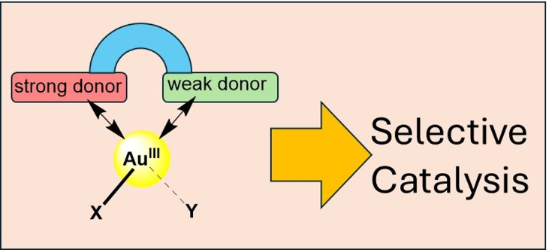
- proved not possible due to the trans-influence of the N donor, which renders (C^N^C)AuH stable to hydrolysis (Scheme 8) [30]. A by-product of this cycle is the gold(III)–CO2 complex 14, also obtainable from [(C^N^C)Au]2O by insertion of CO into the Au–O bond. More recently, Nevado et al. isolated a


Design, synthesis, and biological evaluation of FXR/ASK1 dual-target modulators
Beilstein J. Org. Chem. 2026, 22, 771–781, doi:10.3762/bjoc.22.59
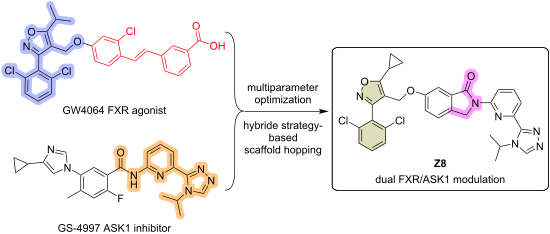
- dioxaborolane 7 or boronic acid 9 and IXa–c. Next, Z16–18 and Z23–25 were obtained by Williamson ether synthesis from the intermediates 8, 10 and isoxazole intermediates 2. Finally, hydrolysis in the presence of LiOH and reduction in the presence of lithium aluminum hydride provided target compounds Z19–22 and


Preparation of 3-(alkylamino)imidazo[1,2-a]pyridine-2-carbaldehydes via Kornblum oxidation and unexpected ring-opening reactions of the corresponding alcohols under oxidative conditions
Beilstein J. Org. Chem. 2026, 22, 763–770, doi:10.3762/bjoc.22.58
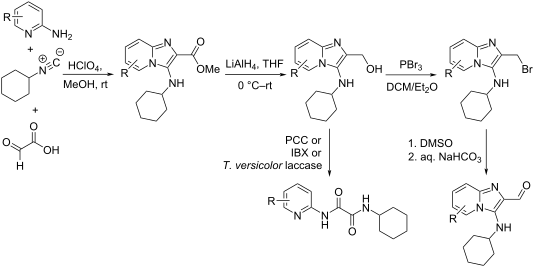
- ester 13b into the corresponding amide using AlCl3 were not promising and therefore the hydrolysis of this ester to corresponding carboxylic acid 14 was tested. Using KOH in MeOH at 35–40 °C for the ester hydrolysis reaction resulted in decarboxylated compound 12b being isolated as the sole product in
- , rt, 20–24 h. Ester hydrolysis and in situ decarboxylation. Ester reduction to the corresponding alcohols. Reaction yields are provided in parentheses. Oxidative ring-opening with loss of one carbon atom. Yields are provided in parentheses. Oxidative conditions applied to decarboxylated compound 12b


Regioselective approach to 5-arylsulfonylisoxazoles and their antimicrobial activity
Beilstein J. Org. Chem. 2026, 22, 592–602, doi:10.3762/bjoc.22.45
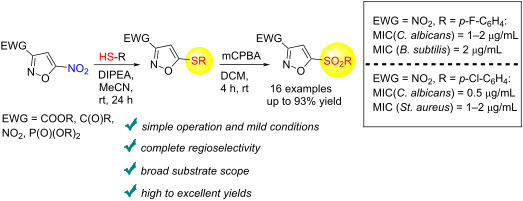
- passage of the strands through the break and subsequent ligation, leading to DNA relaxation. DNA gyrase performs a similar function but without the requirement for ATP hydrolysis. The antibiotic ciprofloxacin (Cip), which inhibits DNA gyrase, was used as the positive control. In this test, all tested
- (Topo I). Unlike previously discussed DNA gyrase and Topo IV, which perform double-strand breaks and strand passage, Topo I catalyzes the introduction of a transient single-strand break in the DNA. This process occurs without the requirement for ATP hydrolysis, allowing for the relaxation of supercoiled


Modern synthetic pathways towards eribulin and its subunits
Beilstein J. Org. Chem. 2026, 22, 495–526, doi:10.3762/bjoc.22.37
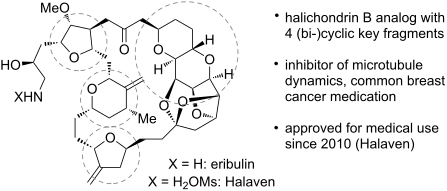
- -oxidation (Scheme 4, above). For the assembly of 33, only the hydrolysis of previously reported 32 [75] with Me3SnOH and thioesterification using EtSH and DCC were necessary (Scheme 4, below). Both fragments (31 and 33) were fused together via NHK coupling to furnish 34 in 86% yield. The addition of SrCO3
- . Hydrolytic kinetic resolution of 209 afforded enantioenriched epoxide (S)-209, which was opened regioselectively with lithium acetylide. The allylation and [3 + 2]-cycloaddition with tosyl azide led to 212. Treatment with Rh2(OAc)4 induced a [2,3]-Wittig rearrangement and subsequent hydrolysis afforded 213








Synthesis of a HDAC inhibitor–nanogold probe for cryo-EM visualization in class I HDAC co-repressor complexes
Beilstein J. Org. Chem. 2026, 22, 480–485, doi:10.3762/bjoc.22.35
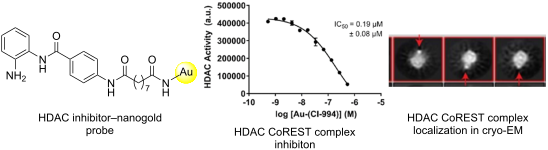
- domain within the CoREST complex. Keywords: CI-994; co-repressor complex; CoREST; cryo-EM; gold nanoparticle; HDAC; Introduction Histone deacetylase (HDAC) enzymes catalyze the hydrolysis of acetyl groups from N-acetylated lysine residues in histone proteins. HDACs are also capable of the deacetylation
- of non-histone proteins [1], and the hydrolysis of other acyl functional groups [2]. The human genome encodes 18 histone deacetylases (HDACs), which are divided into two main groups based on their catalytic mechanisms [3]. Eleven HDACs are zinc-dependent enzymes, while the remaining seven, known as



Structural reassignment of compound 968, an allosteric glutaminase inhibitor
Beilstein J. Org. Chem. 2026, 22, 455–460, doi:10.3762/bjoc.22.33
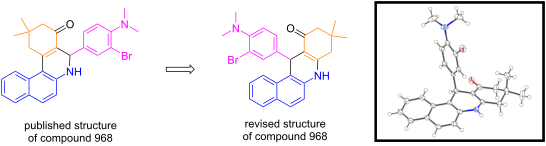
- . Glutaminases catalyze the hydrolysis of glutamine to glutamate, which supports the biosynthesis of amino acids, lipids, and glutathione and can also be oxidatively deaminated to α-ketoglutarate and enter the citric acid cycle. The “glutamine addiction” of cancer cells has made glutaminase an attractive
- glutaminase enzymes GLS1 and GLS2 catalyze the hydrolysis of glutamine to glutamate and ammonia. Compound 968 is a dual inhibitor of GLS1 and GLS2. The cycloaddition reaction between an arylaldehyde (shown here is the specific aldehyde that produces compound 968), dimedone, and 2-naphthylamine was originally


Recent advances in the cleavage of non-activated amides
Beilstein J. Org. Chem. 2026, 22, 352–369, doi:10.3762/bjoc.22.23
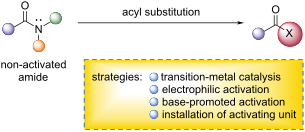
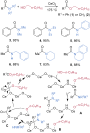
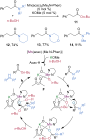
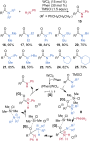
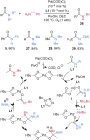
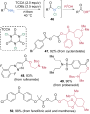
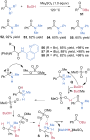
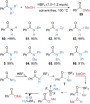
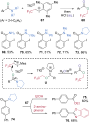
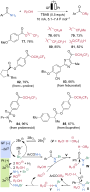
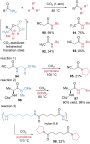
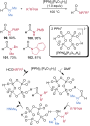
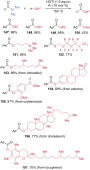
- for the hydrolysis of amides (Scheme 3) [47]. In the presence of a catalytic amount of Nb2O5, N,N-dialkylamides 3 and 4 and anilides 5 and 10 were efficiently converted into the corresponding carboxylic acids 9 in high yields, and the Nb2O5 catalyst could be successfully recycled. The authors proposed
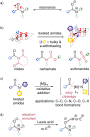
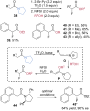
- undergoes hydrolysis to afford the benzyl ester 30. Under the optimized conditions, primary, secondary, and tertiary amides 12, 31–33 were successfully converted to benzyl esters in high yields. Notably, loss of enantiopurity of chiral amide 33 was not observed during esterification. Sulfuryl fluoride
- electrophilic activation of pyrrolidine-derived amides with Tf2O and 2-bromopyridine generates a keteniminium ion O, which undergoes nucleophilic addition to form an enamine intermediate P. Subsequent electrophilic α-fluorination followed by hydrolysis produces the α-fluoroester products. Notably, the C2-chiral










Synthesis of tricyclic fused pyrrolidine nitroxides from 2-alkynylpyrrolidine-1-oxyls
Beilstein J. Org. Chem. 2026, 22, 344–351, doi:10.3762/bjoc.22.22

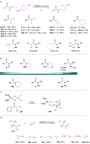
- acetoxy groups and reduction of the nitroxyl fragment to the corresponding hydroxylamine. Primary products were stirred with a solution of NaOH in methanol under aerobic conditions to achieve complete hydrolysis and regeneration of the nitroxide group. Pyrazole 9a was isolated with an overall yield of 33




Ring contraction and ring expansion reactions in terpenoid biosynthesis and their application to total synthesis
Beilstein J. Org. Chem. 2026, 22, 289–343, doi:10.3762/bjoc.22.21






A mild and atom-efficient four-component cascade strategy for the construction of biologically relevant 4-hydroxyquinolin-2(1H)-one derivatives
Beilstein J. Org. Chem. 2026, 22, 244–256, doi:10.3762/bjoc.22.18
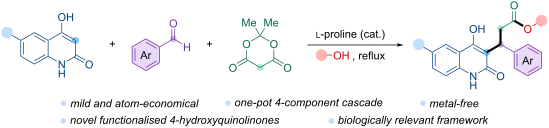
- conditions. Subsequent transformations afford isopropyl and cyclohexyl analogues via hydrolysis–esterification. A preliminary biological evaluation revealed low cytotoxicity and modest antibacterial activity against Escherichia coli ΔtolC strains. This sustainable synthetic approach constitutes the first
- NaCN, wet DMSO, 160 °C) failed to yield the target product. Acidic and alkaline hydrolysis followed by decarboxylation also proved unsuccessful (Scheme 4E). Subsequently, following the second retrosynthetic approach (Scheme 2), compounds 2b and 2c were reacted with 3,4-dimethoxybenzaldehyde via Michael
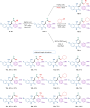
- cyclohexyl esters directly via the four-component reaction, an alternative synthetic route was employed (Scheme 7). The corresponding acids 11a–c, derived from hydrolysis of methyl esters 10a–c and ethyl esters 9a–c with 5 M aqueous alkali in refluxing THF, were isolated in high yields (85–97%). Subsequent


Synthesis of diaryl phosphates using phytic acid as a phosphorus source
Beilstein J. Org. Chem. 2026, 22, 213–223, doi:10.3762/bjoc.22.15
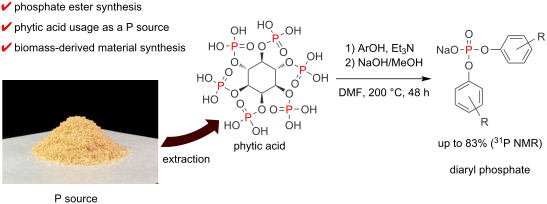
- hydrolysis of phytic acid without phytases is extremely difficult because of its hydrolysis resistance, and only a few studies have considered the utilization of phytic acid as a phosphorus source [6]. In recent years, industrial applications of phytic acid have been investigated for its potential
- groups [49][50][51][52], and thus phosphate esters easily undergo transesterification or hydrolysis reactions. Considering these factors, we assumed that shifting the reaction equilibrium of compounds derived from phenols containing strong electron-withdrawing groups toward phosphate diester formation
- S2 in Supporting Information File 1, phytic acid decomposed immediately after the oil bath temperature increased to 200 °C and released phosphoric acid into the reaction mixture. We assume that two types of phytic acid degradation occurred. One is a simple hydrolysis of the phosphate ester bond, and




Base-promoted deacylation of 2-acetyl-2,5-dihydrothiophenes and their oxygen-mediated hydroxylation
Beilstein J. Org. Chem. 2026, 22, 192–204, doi:10.3762/bjoc.22.13
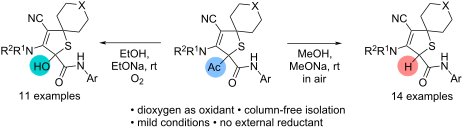
- migration in the formed tetrahedral intermediate to afford formate ester; c) hydrolysis of the latter to form phenols [28]. The development of methods for the construction of heterocycles and their modification is an important area of organic synthesis [29]. Although the Dakin oxidation has become a




A new synthesis of Tyrian purple (6,6’-dibromoindigo) and its corresponding sulfonate salts
Beilstein J. Org. Chem. 2026, 22, 167–174, doi:10.3762/bjoc.22.10
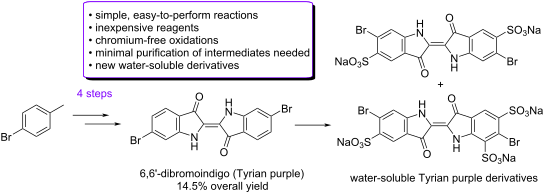
- expense of waste treatment raise issues [8][9][11][12]. Others have produced the desired aldehyde by formation and subsequent hydrolysis of a nitrone, a route which requires four distinct steps, making it less desirable [13][14][15][16][17]. While there have been several syntheses of 1 using 3 as a key
- synthesis that does not require the use of chromium(VI) and, therefore, does not generate chromium waste that is costly to dispose of [23]. The literature reports that the oxidation of 3 to 4 can be performed using a high-valent chromium oxidation, followed by hydrolysis of the formed benzylidene diacetate
- with yields ranging from 18 to 60.5% yield relative to starting 3 [8][9][11][12]. Chromium-free oxidation of 3 to 4 has been reported via the condensation of 3 with an alkyl nitrate to yield an oxime. Subsequent hydrolysis of the oxime yields the desired aldehyde 4, but only in low yield [6][7


Total synthesis of natural products based on hydrogenation of aromatic rings
Beilstein J. Org. Chem. 2026, 22, 88–122, doi:10.3762/bjoc.22.4
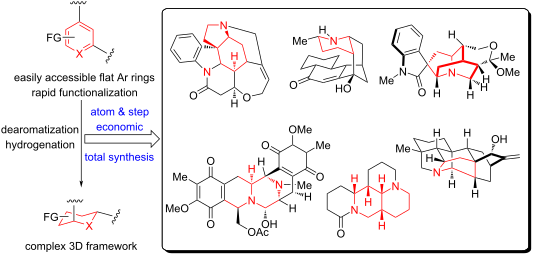
- % yield over two steps [76]. Alkylation with MeI furnished pyridinium 91, which was hydrogenated in two steps with NaBH3CN to the fully saturated piperidine 92. Acidic removal of the benzoyl group triggered auto-oxidation to the indole, and subsequent hydrolysis of methyl ester delivered the target
- , including hydroxylation of aryl halide, partial lactam reduction with cyanide trapping, and oxidation of the phenol, enabled the total synthesis of jorunnamycin A in 15 steps. The acetylation of the hydroxy group in jorunnamycin A followed by cyano hydrolysis led to the total synthesis of another natural











Synthesis and applications of alkenyl chlorides (vinyl chlorides): a review
Beilstein J. Org. Chem. 2026, 22, 1–63, doi:10.3762/bjoc.22.1
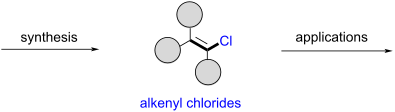
- can subsequently undergo hydrolysis in the presence of trace water to furnish the corresponding ketone (see Scheme 27, formation of ketone 167) [92]. Furthermore, Melloni were the first to demonstrate that highly hindered internal alkynes resist double HCl addition (Scheme 25) [93]. In cases where a























One-pot synthesis of ethylmaltol from maltol
Beilstein J. Org. Chem. 2025, 21, 2755–2760, doi:10.3762/bjoc.21.212

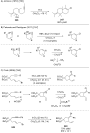
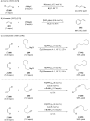
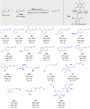
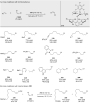
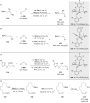
- hydrolysis of 9e furnished ethylmaltol (1) in 95% yield. Screening of different bases for the methylation step of 8e revealed LiHMDS to be superior to NaHMDS. Various tert-butoxide bases as well as 1,8-diazabicyclo[5.4.0]undec-7-ene (DBU) were ineffective for deprotonation (see Supporting Information File 1