Search results
Search for "methods" in Full Text gives 2523 result(s) in Beilstein Journal of Organic Chemistry. Showing first 200.
Construction of CF2 moieties in FDA-approved drugs (2016–2025): industrial routes, mechanisms, and scale-up considerations
Beilstein J. Org. Chem. 2026, 22, 1122–1150, doi:10.3762/bjoc.22.91
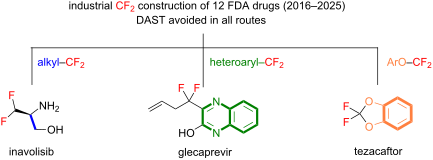
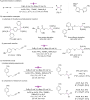
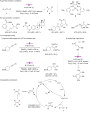
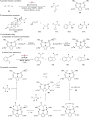
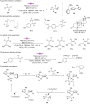
- chemical environment of the CF2 group (alkyl-CF2, heteroaryl-CF2, and ArO-CF2). For each drug, the industrial routes for CF2 construction and the reasons for eliminating alternative routes are analyzed. Methods for CF2 formation are classified into two major strategies: fluorinating reagent-based
- traditional fluorination methods. For heteroaryl-CF2 groups, metal-catalyzed direct introduction of the CF2 unit still faces challenges for industrial application, whereas the difluorocarbene route for ArO-CF2 has been validated. This review provides a reference for process development of new CF2-containing
- drugs, from strategic design to scale-up evaluation. Keywords: difluoromethylene group (-CF2-); difluoromethyl group (-CF2H); FDA-approved drugs; fluorination methods; process scale-up; Introduction In recent years, the CF2 group has demonstrated unique advantages in drug discovery and clinical






Amino acid-based surfactants: sustainable synthesis and antimicrobial mechanisms
Beilstein J. Org. Chem. 2026, 22, 1067–1085, doi:10.3762/bjoc.22.85
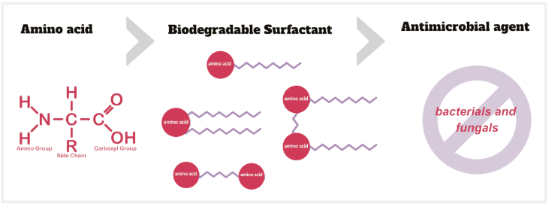
- related to their antimicrobial activity; b) To describe their possible mechanisms of action in the interaction with microorganisms; and c) To present the novel approaches and perspectives on the use of these innovative molecules. Materials and Methods The methodology for this integrative review was


Synthesis of functionalized, 13-alkyl-substituted coralyne derivatives and investigation of their interactions with duplex and abasic site-containing DNA
Beilstein J. Org. Chem. 2026, 22, 1057–1066, doi:10.3762/bjoc.22.84
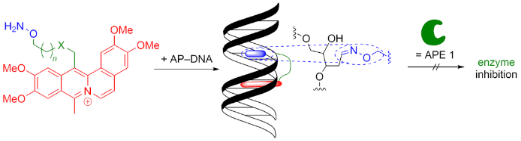
- : Enzymes (UNG, APE1, NEIL1, NTHL1, NEIL3, OGG1) and mutants were produced as reported previously [59]. General methods The reaction mixtures were stirred with a magnetic stirrer equipped with a stirring bar. The average room temperature (rt) was 22–24 °C. If not stated otherwise, operations were conducted


Synthesis of novel 1,2,4-oxadiazole-isoxazoline hybrids and their in silico potential with adenosine receptors
Beilstein J. Org. Chem. 2026, 22, 1033–1047, doi:10.3762/bjoc.22.82
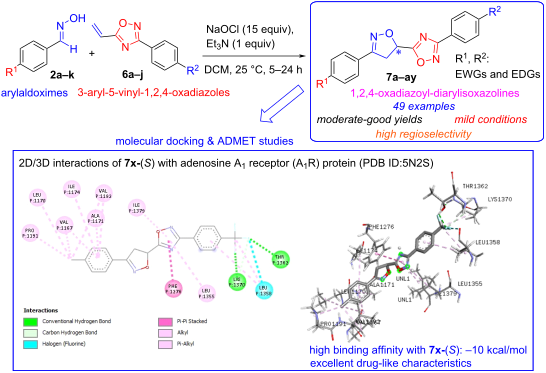
- , such as sulfisoxazole, oxacillin, and acivicin, have been clinically utilized for many years [21][22][23][24][25][26][27][28] (Figure 1). The synthesis of 1,2,4-oxadiazole derivatives can be achieved through various efficient methods, such as the cyclocondensation of amidoximes with carbonyl compounds
- –hydrogen bond; dark-pink region: pi–pi stacked connections. Recent studies for the synthesis of 1,2,4-oxadiazole-isoxazoline hybrids. Synthesis of novel 1,2,4-oxadiazole-isoxazoline lead compounds by 1,3-DC. Synthetic methods for accessing the starting compounds (2a–k, 6a–j). Reagents and conditions: a


Semisynthesis, characterisation, and antibacterial evaluation of a novel lecanoric acid-derived amide library
Beilstein J. Org. Chem. 2026, 22, 1023–1032, doi:10.3762/bjoc.22.81
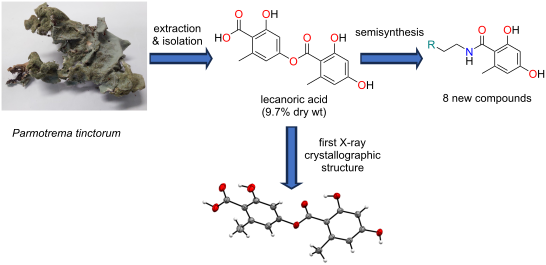
- diffractometer using Cu Kα radiation at 200.0(1) K using an Oxford Cryostream cooling device. The structures were solved by direct methods and difference Fourier synthesis [35]. Hydrogen atoms bound to the carbon atom were placed at their idealized positions and included in subsequent refinement cycles. The


Synthesis and optical resolution of 4,5-diaminohomoadamantane: a promising scaffold for chiral ligands and bioactive compounds
Beilstein J. Org. Chem. 2026, 22, 1013–1022, doi:10.3762/bjoc.22.80
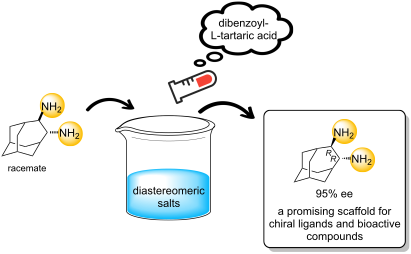
- in clinical practice [64][65][66], as well as auxiliaries and ligands in important asymmetric transformations [67][68][69][70]. Bi- and polycyclic vicinal diamines can also be considered as potential ligands for asymmetric catalysis [71][72][73][74], but little attention has been paid to methods for
- obtaining compounds of this type. Vicinal diamines with an adamantyl substituent I–K have already been obtained [75][76][77][78] and 1,2-diaminoadamantane L has been synthesized by different methods [79][80][81]. For 1,2-diaminonoradamantane M there are even fewer data [82]. Polycyclic vicinal diamines N


Z-Selective semihydrogenation of alkynes via Ni/Lewis acid synergistic catalyzed system using DMF as hydrogen source and solvent
Beilstein J. Org. Chem. 2026, 22, 1004–1012, doi:10.3762/bjoc.22.79
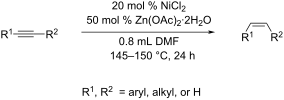
- the stereoselective semihydrogenation of alkynes a fundamental transformation in synthesis [1][2][3][4][5]. Among available methods, transition-metal catalysis has played a dominant role. The classical Lindlar catalyst remains the most widely applied heterogeneous system [6], yet it suffers from
- . Overall, this work provides a practical and cost-effective alternative to existing semihydrogenation methods and highlights the potential of base metal synergistic catalysis in stereocontrolled synthetic transformations. Experimental All experiments were performed under air. An oven-dried reaction vessel



Rh(III)-catalyzed chelation-assisted C–H activation/annulation of 2-arylimidazolines with cyclic diazo-1,3-dicarbonyl compounds: a novel approach to tetracyclic annulated derivatives of 2,3-dihydroimidazo[2,1-a]isoquinoline
Beilstein J. Org. Chem. 2026, 22, 997–1003, doi:10.3762/bjoc.22.78
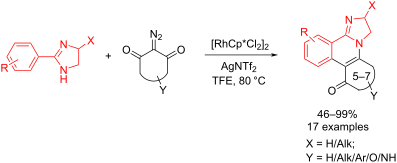
- -heterocycle. Keywords: annulation; 2-arylimidazolines; catalysis; С–H activation; diazodiketones; 2,3-dihydroimidazo[2,1-a]isoquinolines; dimedone; tetraheterocycles; Introduction The advancement of organic synthesis techniques, especially methods for creating nitrogen-containing heterocycles, is essential
- many drug candidates and marketed drugs for the treatment of hypertension [2], diabetes [3], and various central nervous system disorders [4]. Recently, imidazolines that exhibit anticancer activity, like nutlins [5][6], have also garnered a lot of interest. There are numerous general methods for


Electrochemical reduction of unsaturated carbon–carbon bonds via 3d transition-metal catalysis
Beilstein J. Org. Chem. 2026, 22, 955–981, doi:10.3762/bjoc.22.75
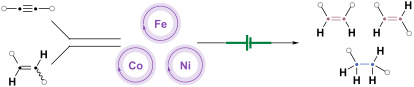
- strategy enables the trans-selective semireduction of unactivated internal alkynes, addressing a limitation in previous methods that typically rely on electronically biased substrates. Moreover, simple substitution of the proton source with HFIP-d1 or iPrOD-d1 enabled efficient trans-selective deuteration








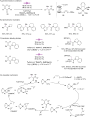
Synthesis of sterically shielded piperidine nitroxides via acid-catalyzed heterocyclization of β-aminoketone derivatives with ketones
Beilstein J. Org. Chem. 2026, 22, 948–954, doi:10.3762/bjoc.22.74
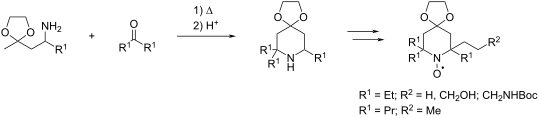
- Chemical Kinetics and Combustion, Siberian Branch of the Russian Academy of Sciences, Novosibirsk, 630090, Russia 10.3762/bjoc.22.74 Abstract The capabilities of modern methods for the synthesis of sterically shielded piperidine nitroxides with acyclic substituents are largely limited to symmetrical
- of nitroxides and increases their lifetimes in biological systems [12], which makes these radicals promising MRI contrast agents [13], spin probes for in vivo EPRI [14][15] and antioxidant tissue protectors [16]. Existing methods for the synthesis of such sterically hindered piperidine nitroxide
- be prepared by any of the previously used methods. Taking into account the fact that piperidine nitroxides are traditionally used as precursors of nitroxyl radicals of other types, especially the pyrroline and pyrrolidine series, this method may open up new possibilities in the chemistry of nitroxide


Recent advances in copper-catalyzed direct hydroamination of alkenes with (hetero)aromatic amines
Beilstein J. Org. Chem. 2026, 22, 925–947, doi:10.3762/bjoc.22.73
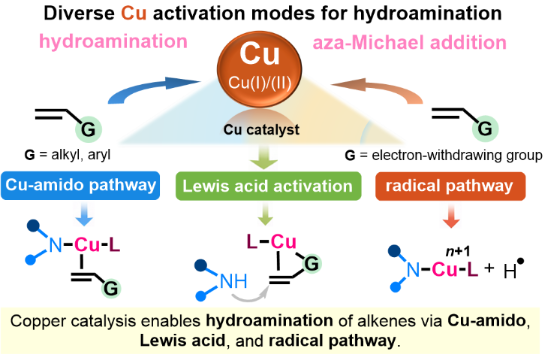
- system development have further expanded the scope and efficiency of copper-catalyzed hydroamination. Despite these achievements, extending these methods to electron-neutral and sterically hindered unactivated alkenes, such as simple aliphatic terminal alkenes and internal alkenes, as well as achieving







A practical CO2-mediated synthesis of 5,6-carboxylated silicon-rhodamines for targeted probe development
Beilstein J. Org. Chem. 2026, 22, 915–924, doi:10.3762/bjoc.22.72
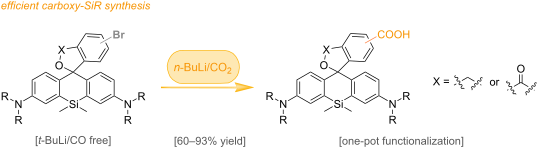
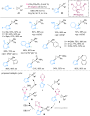
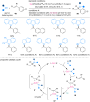
- substituent reduces substrate reactivity, thereby diminishing the efficiency of the key ring-closing step and often resulting in low overall yields [45]. Moreover, these methods commonly rely on strongly basic conditions, particularly the use of highly reactive tert-butyllithium, which further reduces their
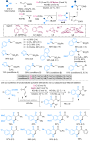
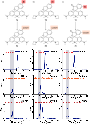
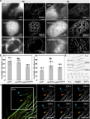
- operational complexity, safety concerns, and overall cost. Herein, inspired by the limitations of existing methods, we report a direct CO2-mediated carboxylation strategy for the efficient synthesis of 5,6-carboxylated SiR derivatives from brominated SiR precursors (Figure 1c). By introducing the classical



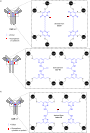
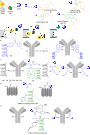
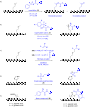
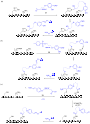
Site-specific labelling of native peptides and proteins: chemical and enzymatic strategies
Beilstein J. Org. Chem. 2026, 22, 857–881, doi:10.3762/bjoc.22.67
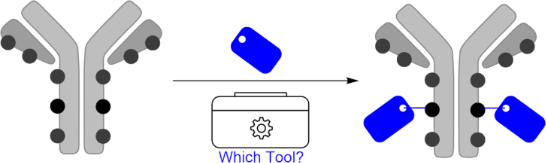
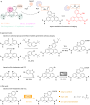
- and peptide modifications introduce functionalities not achievable through recombinant methods alone, making them vital for fundamental research and biomedical applications [1][2][3][4]. Such chemistry underpins wide-ranging biological investigations including microscopy, proteomic analyses and tissue
- reagents, organic solvents or chaotropic agents must be avoided to preserve protein stability, preventing folding heterogeneity and supporting sustainability. Scalability. For therapeutic and industrial applications, modification methods should minimise waste and curtail costs, reflected in low process
- difference is often not sufficient for site-specific modifications. Consequently, recent effort has shifted towards targeting alternative less-frequent amino acid residues [82], as well as novel mechanisms such as linchpin-directed modifications summarized below. Various chemoselective methods for









Unsymmetrical sulfoxides with sterically hindered catechol fragment: synthesis, structure, electrochemical properties, and antiradical activity
Beilstein J. Org. Chem. 2026, 22, 828–837, doi:10.3762/bjoc.22.65
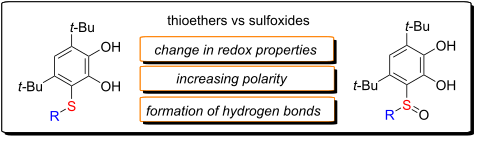
- thiol [22][23][24][25], through nucleophilic aromatic substitution on the catechol ring [26][27], or under electrochemical conditions [28][29][30][31][32]. A number of methods exist for the conversion of sulfides into sulfoxides, proceeding via either oxidative or non-oxidative pathways. The controlled
- catechol moiety were detected. The yields of the target sulfoxides ranged from 42% to 89%. Compounds 3–6 were prepared and characterized as described previously (3, 4, and 6 [23], 5 [42]). The structures of new thioethers 1, 2, 7 and sulfoxides 1a–7a were confirmed by the spectral methods IR-, 1H NMR, 13C
- -R) were studied by cyclic voltammetry (CV) (Table 1). All experimental electrochemical methods and conditions are presented in Supporting Information File 1. In the anodic area, the electrochemical profile of thioethers 1, 2, and 7 exhibit two successive oxidative stages consistent with previous


Synthesis and structural elucidation of a novel bis-spirooxindole from isatin and ethylenediamine
Beilstein J. Org. Chem. 2026, 22, 813–820, doi:10.3762/bjoc.22.63

- Olex2 [22]. The structure was solved by intrinsic phasing with SHELXT [23] and refined by full-matrix least-squares methods on F2 using SHELXL [24]. Commercially available chemicals were obtained from Scharlau, TCI and Acros and used as received. Synthesis of 25: Isatin (1, 2.98 g, 19.85 mmol, 1 equiv


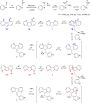
Knoevenagel condensation of 4,5- and 1,8-diazafluorenes
Beilstein J. Org. Chem. 2026, 22, 803–812, doi:10.3762/bjoc.22.62
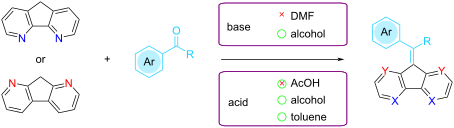
- . However, there are currently only limited methods for their synthesis, which are complicated and typically based on modifications of 4,5-diazafluorenone. Herein, we systematically studied the Knoevenagel condensation of both 4,5- and 1,8-diazafluorenes with aromatic aldehydes and evaluated the




Halogenated azobenzene acrylates: from efficient solution photoswitching to stable solid-state photochromic materials
Beilstein J. Org. Chem. 2026, 22, 782–794, doi:10.3762/bjoc.22.60
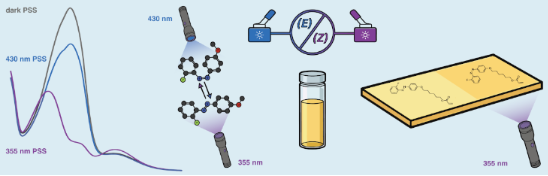
- functionals (Table 3 and Supporting Information File 1, Figures S65–88). Both methods afforded the spectra that are similar in shape but either red or blue-shifted compared to the experimental data. The range-separated CAM-B3LYP functional was used to better describe the excited states and charge-transfer
- character of the investigated molecules. Anyway, both methods confirmed a minor effect of the halogen type, red-shifted λEmax values for monosubstituted E-isomers and the opposite trend for the Z-isomers. TD-DFT calculations revealed the most intense absorption bands of (E)- and (Z)-azobenzenes are


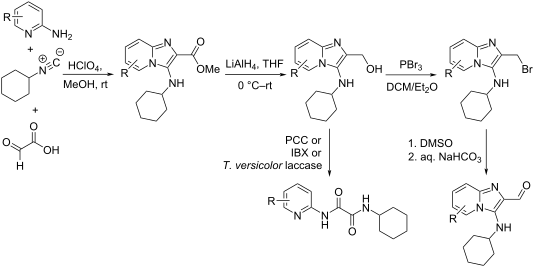
Preparation of 3-(alkylamino)imidazo[1,2-a]pyridine-2-carbaldehydes via Kornblum oxidation and unexpected ring-opening reactions of the corresponding alcohols under oxidative conditions
Beilstein J. Org. Chem. 2026, 22, 763–770, doi:10.3762/bjoc.22.58
- derivatives have been found to be of interest in the development of organic materials with interesting properties [11][12]. The importance of imidazo[1,2-a]pyridines is evidenced by the plethora of recent review articles covering methods for their preparation [13][14][15][16] and functionalisation reactions
- atom, giving rise to benzamides, while Wu and co-workers [31] reported ring-opening to give either benzamides or α-ketoamides. This is in contrast to our own report, where only the oxalamide derivatives 18 were isolated. Two other oxidation methods, IBX and enzymatic oxidation using T. versicolor
- laccase in the presence of TEMPO and O2, were tested on compounds 17 in order to obtain the corresponding aldehydes, but both of these methods also gave rise to the ring-opened products 18. A detailed investigation into the mechanism of this ring-opening reaction was not conducted. However, this failure


Rongalite addition to dienones: diastereoselectivity in cyclic sulfone synthesis; stereochemical rationalization and prospects as a general conjugate nucleophile
Beilstein J. Org. Chem. 2026, 22, 742–752, doi:10.3762/bjoc.22.56

- experimental and computational study of the diastereoselectivity of cyclic sulfone synthesis by reaction of Rongalite with doubly electrophilic dienones is presented. Computational methods, including density functional theory, conformational search methods, and internal reaction coordinate methods, have been
- the reactivity of other readily available sulfinate nucleophiles using competition and exchange experiments. Keywords: diastereoselectivity; Rongalite; sulfones; Introduction Sulfonyl groups are widespread in licensed drugs [1]. New methods for the incorporation of sulfonyl groups into organic
- product, we used density functional theory (DFT) and conformational search techniques based on tight-binding methods to find the energetically minimized structure of 7 (see Supporting Information File 1 for details on all computations). The lowest energy structure is depicted in Figure 3. It shows a


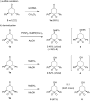


Synthesis of heterocycles based on azomethine ylides from α-amino acids (or amines) and carbonyl compounds
Beilstein J. Org. Chem. 2026, 22, 705–741, doi:10.3762/bjoc.22.55
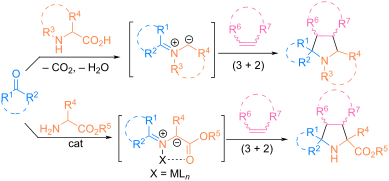
- the development of 1,3-dipolar cycloaddition over the past decade, examining the reactions of various dipoles, including azomethine ylides, with a wide range of dipolarophiles [22]. In reviews [23][24][25], various methods for the generation of azomethine ylides were discussed in detail, for example
- compounds were reviewed. Rare methods for preparing azomethine ylides using pyridylimines and α-silylimine were described. Electrophilic alkenes, styrene derivatives, and new, previously undescribed unsaturated substrates were frequently used as dipolarophiles. The contribution of our research group to the
- -quinolyl, 2-pyridyl, and 4-pyridyl fragments. It is worth noting that 1-(4-nitrophenyl)-1,3-butadiene (40) and 1,1-bis(2-pyridyl)ethylene (41) also proved to be suitable substrates in this reaction (Scheme 20). It was demonstrated by computational methods (DFT) that electronic effects within the


Anti-invasive and cytotoxic evaluation of a (+)-pinoresinol-based semisynthetic library against glioblastoma
Beilstein J. Org. Chem. 2026, 22, 691–704, doi:10.3762/bjoc.22.54
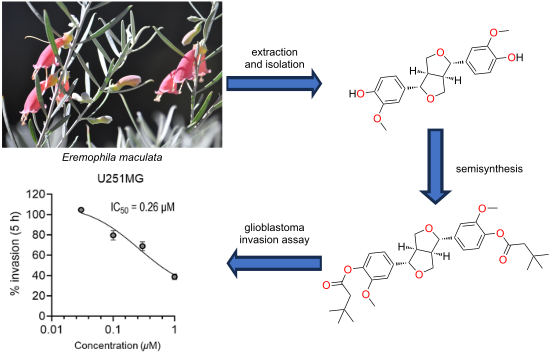
- collected on a Rigaku XtaLAB synergy diffractometer using Cu Kα radiation at 100.0(1) K using an Oxford Cryostream cooling device. The structure was solved by direct methods and difference Fourier synthesis [36]. Hydrogen atoms bound to the carbon atom were placed at their idealized positions and included



Synthesis of depressin, cryptomeridiol and 4-epi-cryptomeridiol enabled by a terpenoid chiral pool-producing platform
Beilstein J. Org. Chem. 2026, 22, 683–690, doi:10.3762/bjoc.22.53
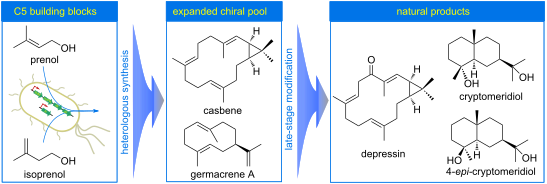
- efficient macrocyclization methods, including tetracarbonylnickel-promoted cyclization of allylic dibromide [17][18], copper-mediated intramolecular carbene–olefin cyclization [19], titanium-induced intramolecular carbonyl coupling [20], and organozinc carbenoid-mediated intramolecular cyclopropanation [21
- . With the ability to facilely obtain the terpene skeletons such as casbene and germacrene A by this heterologous terpene-producing platform, accessing other casbane- and germacrene-type of natural products and their analogues becomes possible if suitable chemical and enzymatic methods are available for
- ). Supporting Information Supporting Information File 5: Materials, synthetic methods and copies of NMR spectra for all compounds. Supporting Information File 6: X-ray crystal structure of 16. Funding We are grateful to the National Natural Science Foundation of China (No. 82574274) for the financial support.


Harnessing light energy with molecules
Beilstein J. Org. Chem. 2026, 22, 680–682, doi:10.3762/bjoc.22.52

- a key property for characterizing the light harnessing efficiency of a photoswitch. In the article by Volker, Steen, and Crespi [18], a convenient and reliable fiber optic spectroscopic setup for determining this quantum yield is reported and was benchmarked for azobenzene against other methods
Using generative AI to transform peptide hits into small molecule leads
Beilstein J. Org. Chem. 2026, 22, 672–679, doi:10.3762/bjoc.22.51
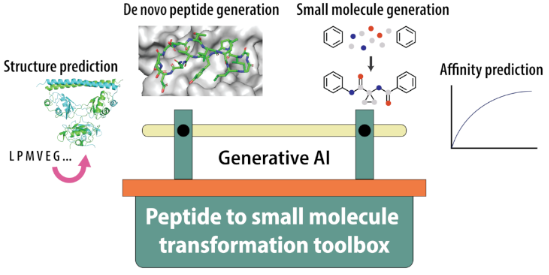
- experimental co-crystal structure of the bound complex, standard medicinal chemistry principles are used to probe structure–activity relationships (SAR) and determine the key interactions that form a minimal pharmacophore, supported by classical physics-based molecular modelling methods such as molecular
- candidate small molecules for experimental validation in functional assays. Nascent examples of ML approaches In contrast to physics-based models for extracting pharmacophores and predicting small molecule binders, ML methods are now emerging as alternatives for accomplishing these tasks. An early
- tractable, although synthetic accessibility was noted to be somewhat restricted by the highly sp3-rich nature of the generated molecules. New iterations of these methods have since been reported by the authors [23], though experimental validation of predictions remains to be reported at the time of writing


Photoorganocatalytic trifluoromethylation of (het)arenes in green conditions
Beilstein J. Org. Chem. 2026, 22, 662–671, doi:10.3762/bjoc.22.50
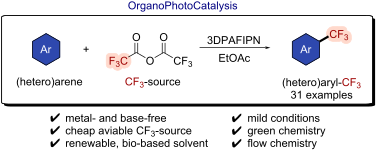
- approaches can be regarded as among the most environmentally sustainable methods for trifluoromethylation. MacMillan and co-workers reported the photochemical trifluoromethylation of arenes and heteroarenes using Ru- and Ir-based photocatalysts together with trifluoromethanesulfonyl chloride (TfCl) in the