Search results
Search for "piperidine" in Full Text gives 294 result(s) in Beilstein Journal of Organic Chemistry. Showing first 200.
One-pot four-component sequential synthesis of S-alkyl dithiocarbamates using lipase as a biocatalyst
Beilstein J. Org. Chem. 2026, 22, 1048–1056, doi:10.3762/bjoc.22.83
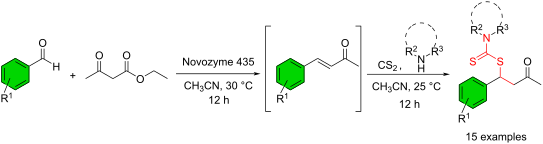
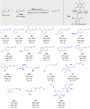
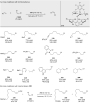
- presented in Scheme 3 and Scheme 4. As shown in Scheme 3, the reaction with cyclic amines such as pyrrolidine resulted in a higher product yield (6a, 96%) compared to piperidine (6b, 87%). Additionally, both benzaldehyde (6a, 96%) and 2-methylbenzaldehyde (6e, 92%) afforded the desired products in excellent


The role of spacer length and flexibility in peptide self-assembly
Beilstein J. Org. Chem. 2026, 22, 986–996, doi:10.3762/bjoc.22.77
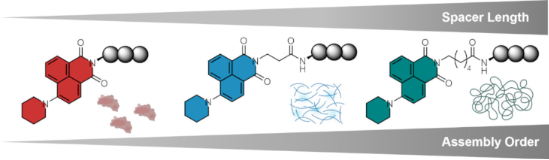
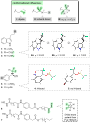
- naphthalene imide spacers were synthesized in two steps starting from 4-bromo-1,8-naphthalic anhydride (1) (Scheme 1 and Supporting Information File 1, Scheme S1). First, the bromo substituent in compound 1 was replaced by piperidine in a metal-free Buchwald–Hartwig amination reaction to obtain 6-(piperidin-1
- enhanced fluorescence likely reflects suppression of non-radiative decay pathways upon self-assembly, potentially due to conformational restriction of the fluorophore, including reduced flexibility of the piperidine unit. In contrast, the red shift observed for 8 under aqueous conditions may arise from
- deprotection step using a solution of 8% piperidine (DMF, 2.1 mL) for 80 s at 110 °C. The amino acids (0.5 M in DMF, 1.0 mL), DIC (0.75 M in DMF, 1.0 mL) and Oxyma Pure (0.26 M in DMF, 1.5 mL) were added to the resin and the solution was heated to 105 °C for 60 s and held at that temperature for 30 s. The


Synthesis of sterically shielded piperidine nitroxides via acid-catalyzed heterocyclization of β-aminoketone derivatives with ketones
Beilstein J. Org. Chem. 2026, 22, 948–954, doi:10.3762/bjoc.22.74
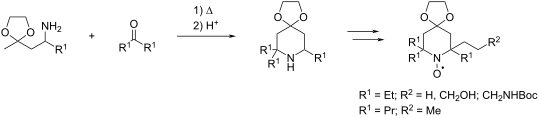
- Chemical Kinetics and Combustion, Siberian Branch of the Russian Academy of Sciences, Novosibirsk, 630090, Russia 10.3762/bjoc.22.74 Abstract The capabilities of modern methods for the synthesis of sterically shielded piperidine nitroxides with acyclic substituents are largely limited to symmetrical
- in materials science and structural biology. The new heterocyclization strategy implies the construction of a 2,2,6-trisubstituted piperidine scaffold from β-aminoketone acetals and dialkyl ketones under acid catalysis. The resulting amines were oxidized to the corresponding ketonitrones and
- hydrogenation to give saturated alkyl or functionalized alkyl groups. The study of reduction kinetics for alkyl and allyl-substituted piperidine nitroxides in ascorbate/glutathione media (30% EtOH, pH 7.5) yielded second-order rate constants of ≈10−2 M−1·s−1, which is close to that earlier reported for 2,2,6,6


Synthesis of heterocycles based on azomethine ylides from α-amino acids (or amines) and carbonyl compounds
Beilstein J. Org. Chem. 2026, 22, 705–741, doi:10.3762/bjoc.22.55
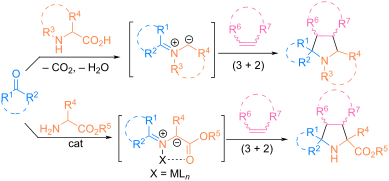
- , during which piperidine derivatives are formed [57][58]. In 2023, Wang's research group developed a (3 + 2) cycloaddition strategy of azomethine ylides from iminoethers 12 and benzofulvenes 47, in which benzofulvenes without electron-withdrawing substituents can act as active 2π-dipolarophiles for the
- isatins and amino acids, in which the nucleophilic center is activated due to the possibility of delocalization of the negative charge involving the indole ring. In these reactions, the authors used ʟ-proline, piperidine-2-carboxylic acid, and sarcosine. In all cases, the synthesis proceeds with high


Design, synthesis and biological evaluation of 2,5-diaryloxazolo[4,5-d]pyrimidin-7-ylamines as selective cytotoxic agents against HeLa cells
Beilstein J. Org. Chem. 2026, 22, 390–398, doi:10.3762/bjoc.22.27

- therapeutic potential. Analyzing the structure–activity relationship with respect to the HeLa cancer cell line, it can be seen that among the diphenyloxazolopyridine derivatives, the substitution of the piperidine functional motif at position 7 in compound 1 by 4-ethylpiperazine leads to a decrease in the
- addition of a 4-chlorophenyl group instead of the methyl group as a functional motif at position 7 (4) sharply reduced the cytotoxicity of compound 1. The substitution of piperidine by morpholine in this motif in compound 4 resulted in a 2-fold increase in the activity of the obtained derivative 5. However


Dialkylaminoalkylation of β-ketosulfones via ring-opening of 3-sulfonylpyrrolidines
Beilstein J. Org. Chem. 2026, 22, 383–389, doi:10.3762/bjoc.22.26
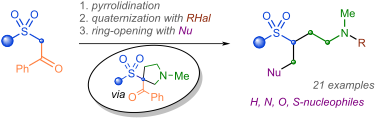
- , piperidine, morpholine, or 1,2,3,4-tetrahydroisoquinoline (THIQ). A special curiosity was associated with the use of mercaptans as nucleophiles for the synthesis of aminobutanes 4 containing both sulfide and sulfone moieties. To our delight, an excess of butylmercaptan or thiophenol readily afforded products




A mild and atom-efficient four-component cascade strategy for the construction of biologically relevant 4-hydroxyquinolin-2(1H)-one derivatives
Beilstein J. Org. Chem. 2026, 22, 244–256, doi:10.3762/bjoc.22.18
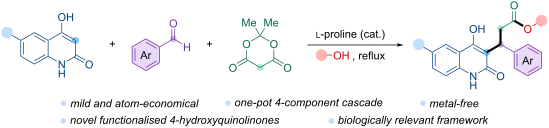
- with α,β-unsaturated esters, such as (E)-3-(3,4-dimethoxyphenyl)acrylic acid esters 3 (see Supporting Information File 1) exemplified by compound 4. Different solvents and catalysts, both acidic and basic, were screened at room temperature, including refluxing in pyridine with piperidine, but the


Base-promoted deacylation of 2-acetyl-2,5-dihydrothiophenes and their oxygen-mediated hydroxylation
Beilstein J. Org. Chem. 2026, 22, 192–204, doi:10.3762/bjoc.22.13
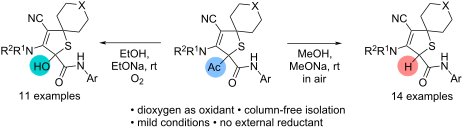
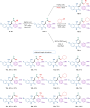
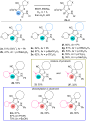
- that the oxidized product formed from morpholine- (1f) and piperidine-substituted (1k) 2,5-dihydrothiophenes in 60 (2f) and 53% (2k) yield. Oxidation of the dimethylamino-substituted 2,5-dihydrothiophene 1l afforded a mixture of products in 25% (OH-substituted, 2l) and 32% (H-substituted, 2l′) yield
- cyclooctano-spiroannulated dihydrothiophenes 4a–f were transformed into products 5a–f in 58–90% yield. Piperidine- and azepane-substituted cyclooctano-spiroannulated dihydrothiophenes 4e,f also transformed into deacylated products 5e,f in 71% and 89% yield, respectively. Several control experiments were
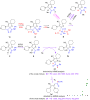
- lower donor character compared to pyrrolidine, but higher than that of morpholine and piperidine. As a result, a mixture of products 2l and 2l′ is formed. Starting dihydrothiophenes 1 form more stable anions B in comparison with regioisomers 4 due to the delocalization of the negative charge over the




Asymmetric Mannich reaction of aromatic imines with malonates in the presence of multifunctional catalysts
Beilstein J. Org. Chem. 2026, 22, 151–157, doi:10.3762/bjoc.22.8
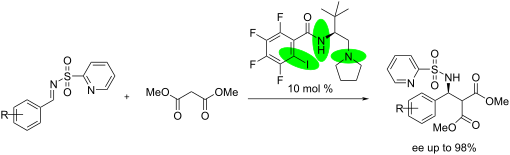
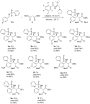
- adduct in 83% ee (Table 1, entry 9). Replacing the five-membered pyrrolidine ring in the catalyst structure with the more flexible six-membered piperidine ring (catalyst H, Table 1, entry 13) reduced its selectivity slightly (78% ee). However, the catalyst derived from phenylglycine (catalyst F) or


Total synthesis of natural products based on hydrogenation of aromatic rings
Beilstein J. Org. Chem. 2026, 22, 88–122, doi:10.3762/bjoc.22.4
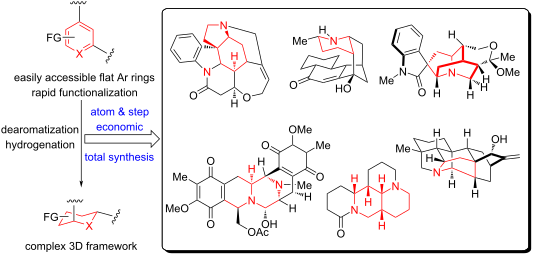
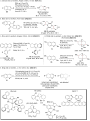
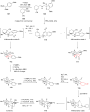
- piperidine 17 (Scheme 3) [43][44]. Mechanistic studies demonstrated that the nitrogen atoms present in both pyridine and piperidine complexed with the triarylborane, cleaving the H–H bond and reducing the pyridine. In 2022, Xiao and co-workers reported a study on the conversion of isolated pyridinium salts
- 18, 20 to piperidine compounds using [CpRhCl2]2 as a metal catalyst and formic acid as a hydrogen source (Scheme 3) [45]. Different with other previous studies, this method allows for substituents at the 3-position of pyridine, enabling the rapid preparation of chiral piperidine compounds. It should
- fragment-based screening across a broad substrate set, their method efficiently provides cyclohexane and piperidine frameworks commonly found in bioactive molecules and pharmaceutical intermediates. In the same year, Yu and co-worker described another mild and convenient approach to reduce monocyclic










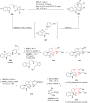

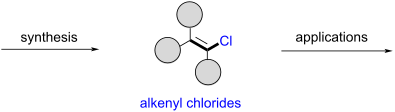
Synthesis and applications of alkenyl chlorides (vinyl chlorides): a review
Beilstein J. Org. Chem. 2026, 22, 1–63, doi:10.3762/bjoc.22.1

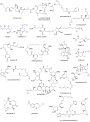

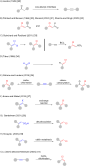





















Total synthesis of asperdinones B, C, D, E and terezine D
Beilstein J. Org. Chem. 2025, 21, 2730–2738, doi:10.3762/bjoc.21.210
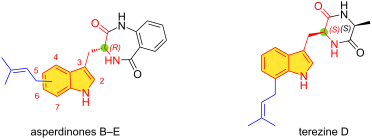
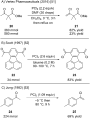
- iodoindoles 25–28 in 68–79% yields (Scheme 5). Negishi cross-coupling according to Jackson et al. [39] with the organozinc reagent prepared from 29 gave the adducts 30–33 in 42–55% yields. Removal of the Fmoc and N-acetyl groups with piperidine gave the corresponding anthranilamides, which upon heating with


Competitive cyclization of ethyl trifluoroacetoacetate and methyl ketones with 1,3-diamino-2-propanol into hydrogenated oxazolo- and pyrimido-condensed pyridones
Beilstein J. Org. Chem. 2025, 21, 2716–2729, doi:10.3762/bjoc.21.209
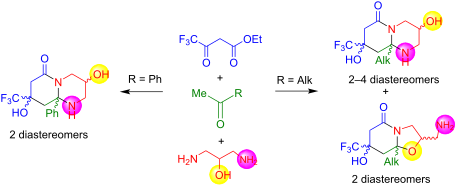
- promise for the three-component approach we have proposed. The importance of trifluoromethyl-containing pyridine and piperidine systems is well known for both medical and agrochemical applications [30]. Thus, many medicinal agents have such fragments, for example, the non-nucleoside reverse transcriptase
- ], fluopyram [36], and the nematicide fluazaindolisine [37] (Figure 1). The trifluoromethyl piperidine backbone is part of the structure of anticancer [38] and antirheumatic [39] agents. The fluorine-containing pyridines and their heteroannelated derivatives are known to exhibit a high biological potential, on
- agent with moderate activity against the influenza virus A/Puerto Rico/8/34 (H1N1) among them. Structures of bioactive molecules with trifluoromethylpyridine and piperidine frameworks. ORTEP view of compounds 4асc (a, CCDC: 2479553), 4аct (b, CCDC: 2479554), 4аtt (c, CCDC: 2479555), 4аtc (d, CCDC


Recent advancements in the synthesis of Veratrum alkaloids
Beilstein J. Org. Chem. 2025, 21, 2657–2693, doi:10.3762/bjoc.21.206
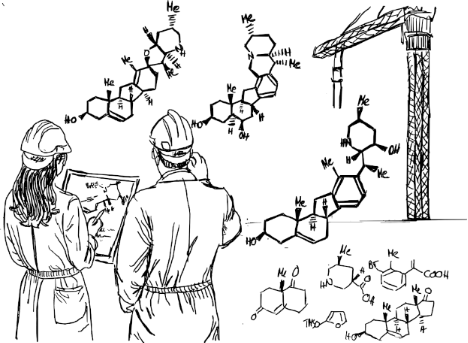
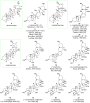
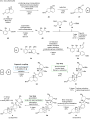
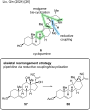
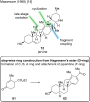
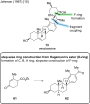
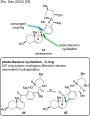
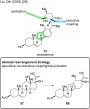
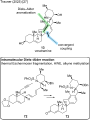
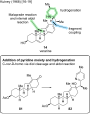
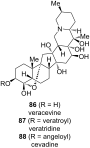
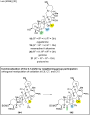
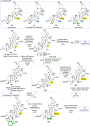
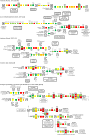
- the C-nor-D-homo skeleton to an EF-ring system; jervanine-type alkaloids consist of a hexacyclic framework with a spirofused tetrahydrofuran E-ring and a fused piperidine F-ring (connectivity I + II, Scheme 2). Veratramine-type Veratrum alkaloids resemble the jervanine-type subclass with respect to
- the piperidine motif but lack the E-ring (connectivity I, Scheme 2). Most congeners of this subclass also include an aromatic D-ring, but also alkaloids with non-aromatic D-rings belong to this group. Cevanine-type alkaloids are the largest subgroup in the Veratrum class. In comparison to the
- veratramine subclass, an additional E-ring is formed via connection of an sp3-center at the D-ring to the nitrogen atom of the piperidine F-ring, thus, forming a quinolizidine EF-moiety (connectivity I + III, Scheme 2). Members of this group are often highly oxidized, featuring multiple hydroxy groups
















Thiazolidinones: novel insights from microwave synthesis, computational studies, and potentially bioactive hybrids
Beilstein J. Org. Chem. 2025, 21, 2618–2636, doi:10.3762/bjoc.21.203
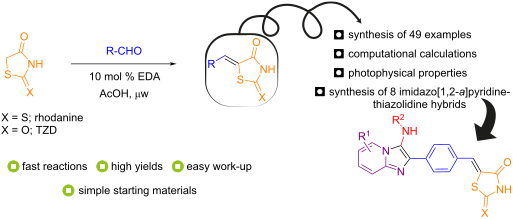
- ], diammonium phosphate (DAP) [43], and tetrabutylammonium bromide (TBAB) [44]. Organic bases like morpholine [45], triethylamine [46], ethanolamine, and piperidine [47] and heterogeneous catalysts from Cu [48], Ti [49], and Zn [50] metal compounds have also been used. Common solvents are ethanol [51], toluene
- an additive resulted in low reaction yields of the desired product 3a (Table 1, entries 1 and 2). The addition of an aliphatic amine (piperidine) to the reaction medium significantly improved the yields (Table 1, entries 3 and 4). In the absence of NaOAc, only a slight decrease in yield was observed
- to replace AcOH by ethanol (Table 1, entry 10), however, the use of ethanol with piperidine was controversial. We found out that, during the reaction with benzaldehyde (1a) and rhodanine (2a), a multicomponent reaction was taking place by a substitution process, leading directly to 2-amino-5






Comparative analysis of complanadine A total syntheses
Beilstein J. Org. Chem. 2025, 21, 2334–2344, doi:10.3762/bjoc.21.178
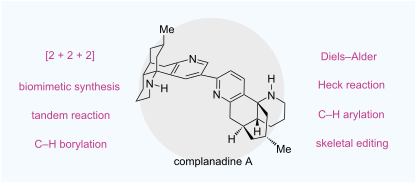
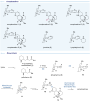
- diastereomers) via either a creative “degradation” of the piperidine ring or cross-coupling reactions at the pyridine C3 position [29]. The Tsukano total synthesis – 2013 In 2013, Tsukano and co-workers reported their total synthesis of complanadines A and B (Scheme 4). Their synthesis utilizes a Diels–Alder



Recent advances in Norrish–Yang cyclization and dicarbonyl photoredox reactions for natural product synthesis
Beilstein J. Org. Chem. 2025, 21, 2315–2333, doi:10.3762/bjoc.21.177
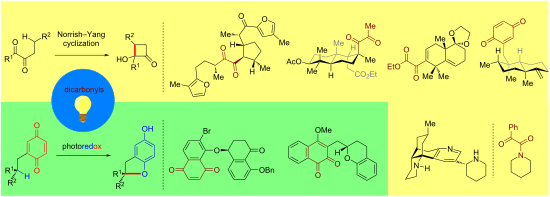
- to construct a β-lactam, an α-metallated piperidine equivalent, overcoming poor yields and stereoselectivity in traditional methods. Its palladium-catalyzed cross-coupling with 2-bromolycodine via β-lactam C–C cleavage enabled stereoretentive coupling, efficiently synthesizing lycoplatyrine A and its







Pathway economy in cyclization of 1,n-enynes
Beilstein J. Org. Chem. 2025, 21, 2260–2282, doi:10.3762/bjoc.21.173
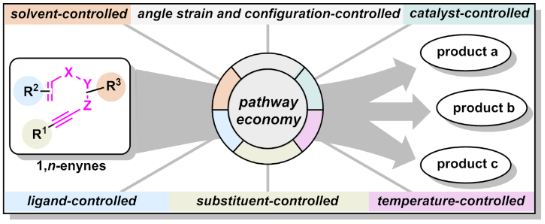
- metal-free methodology delivered synthetically versatile iodinated homoallylic alcohols bearing piperidine motifs and pyrrolidine-fused cyclopropanes. Importantly, the reaction was carried out with high operational simplicity and environmental compatibility under mild reaction conditions. In 2024, Chan
- . In contrast, when the alkyne was substituted with a phenyl group, the reaction shifted toward a 6-endo-dig cyclization pathway due to steric and electronic effects (Scheme 14, path b). When HEH was employed as the nucleophile, a spiro[indoline-3,3'-piperidine] framework 66 was formed. When indole


Discovery of cytotoxic indolo[1,2-c]quinazoline derivatives through scaffold-based design
Beilstein J. Org. Chem. 2025, 21, 2062–2071, doi:10.3762/bjoc.21.161
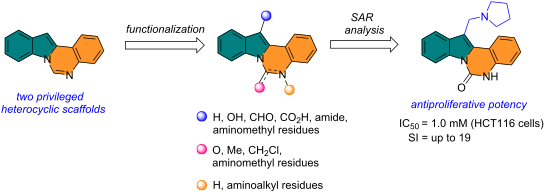
- substitution of the terminal chloride in 11 with various cyclic amines, including pyrrolidine, piperidine, and mono-tert-butoxycarbonyl (Boc)-protected piperazine, provided a set of aminoalkyl derivatives 12а–с (Scheme 4). This strategy enables the expansion of structural diversity within this scaffold and


General method for the synthesis of enaminones via photocatalysis
Beilstein J. Org. Chem. 2025, 21, 1535–1543, doi:10.3762/bjoc.21.116
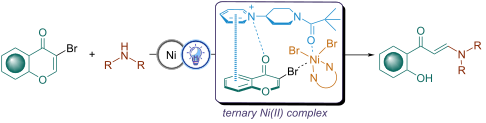
- electrophilicity of the β-carbon due to the electron-donating nature of the methyl group. Subsequently, we turned our attention to investigate a range of amine derivatives 8 under the standard conditions. When morpholine was replaced by piperidine, the expected enaminone 9g was provided, albeit in lower yield




Microwave-enhanced additive-free C–H amination of benzoxazoles catalysed by supported copper
Beilstein J. Org. Chem. 2025, 21, 1462–1476, doi:10.3762/bjoc.21.108
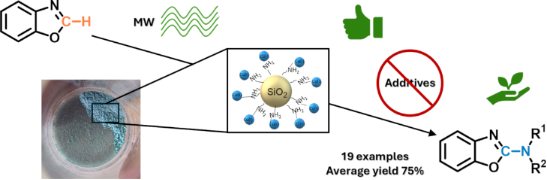
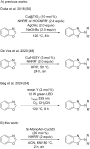
- in this field, which have attracted considerable interest over the years. Results and Discussion Inspired by the extensive literature on C2-benzoxazole amination, we initially began our optimisation by studying a homogeneous procedure in the presence of piperidine, which was used as amine component
- demonstrated, adding acetic acid enabled the reaction to proceed with even lower catalyst loading [47]. To avoid the use of acid and to minimise the amount of the amine, we repeated the reaction with 1.5 equivalents of piperidine, and compared different Cu(II) and Cu(I) salts. Both Cu(I) and Cu(II) chloride
- with the vessel pressurised under nitrogen (Table 2, entry 7). Under these conditions, the yield was 58%, demonstrating the superiority of an open vessel in a multimode cavity for this reaction. Since Cu salts facilitate both the nucleophilic attack of piperidine on benzoxazole to form the intermediate



Investigations of amination reactions on an antimalarial 1,2,4-triazolo[4,3-a]pyrazine scaffold
Beilstein J. Org. Chem. 2025, 21, 1126–1134, doi:10.3762/bjoc.21.90
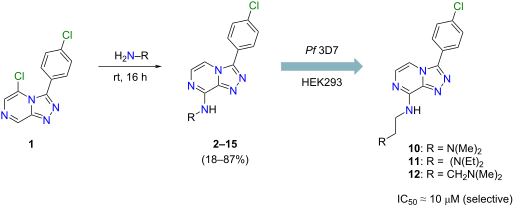
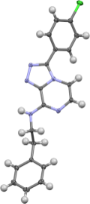
- NMR and HRESIMS data. Further X-ray crystallographic studies were undertaken on crystalline material of compounds 7, 10, and 15. The thermal ellipsoid plots for these compounds are shown in Figure 4. It is notable that piperidine, both at room temperature and under reflux, has been reported to give




A versatile route towards 6-arylpipecolic acids
Beilstein J. Org. Chem. 2025, 21, 1104–1115, doi:10.3762/bjoc.21.88
- pharmacokinetics [15][16], stability against degradation [17] and general stability [10][18] of the peptide [19]. One of those amino acids is pipecolic acid [20][21], a homolog of proline with a six-membered piperidine ring. Pipecolic acid has similar features as proline in regard to its rigid nature and turn
- -inducing properties in peptides [22][23][24]. Furthermore, derivatives of pipecolic acid are known for their bioactivity as secondary metabolites [25][26][27] and for being building blocks for piperidine alkaloids [28] with a variety of uses. Results and Discussion Addressing specific positions in the ring
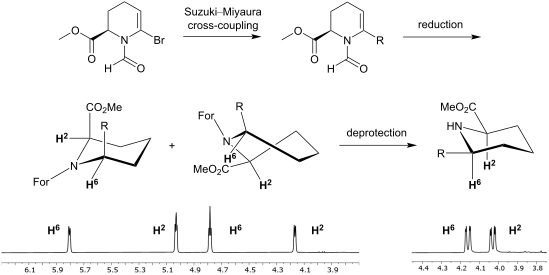
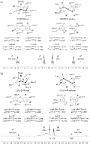
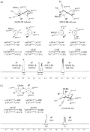
- coupled with yields ranging from 50 to 90% (Scheme 3). Once the cross-coupling has been performed, the next step included establishing the piperidine motif through hydrogenation or reduction of the N-formyl enamine thereby introducing a second stereocenter in C6 position. We decided to use two approaches





Synthesis of HBC fluorophores with an electrophilic handle for covalent attachment to Pepper RNA
Beilstein J. Org. Chem. 2025, 21, 727–735, doi:10.3762/bjoc.21.56
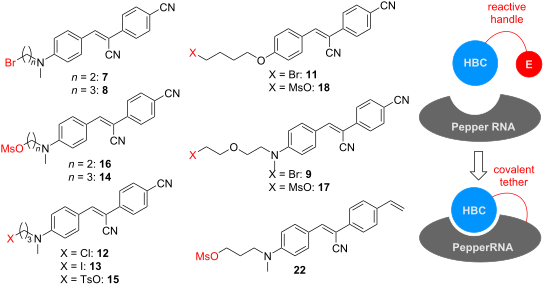
- nucleophilic aromatic substitution of 4-fluorobenzaldehyde with 2-(methylamino)ethanol, 3-methylamino-1-propanol or 2-[2-(methylamino)ethoxy]ethan-1-ol in the presence of potassium carbonate to afford benzaldehyde derivatives 1, 2, and 3 in excellent yields. Next, the piperidine-induced condensation with 4
- monitored by the inherent fluorescent signal of the target RNA [11]. The synthetic route to such an HBC fluorophore is shown in Scheme 6. Piperidine-induced condensation of compound 2 with 4-iodophenylacetonitrile afforded the HBC-like ligand, whose hydroxy group was immediately protected with TBS-Cl to
- piperidine and stirred at 100 °C for 20 hours. A strongly yellow-colored solution was obtained and cooled on ice, whereby a precipitate was formed and filtered off. The filter cake was washed with ice-cold ethanol and dried under high vacuum. General procedure C. In a manner similar to [11], the product



Origami with small molecules: exploiting the C–F bond as a conformational tool
Beilstein J. Org. Chem. 2025, 21, 680–716, doi:10.3762/bjoc.21.54
- ][179][180][181]. For example, consider the analgesic drug fentanyl (104, Figure 11). This drug contains a piperidine moiety, which is protonated at physiological pH and forms a salt bridge with an aspartate residue in the binding site of the μ-opioid receptor. One of the drawbacks of fentanyl (104) is
- piperidine moiety to 6.8, such that it is only protonated at acidic pH. Since low pH is a hallmark of injured tissue, compound 105 maintains analgesic activity at the site of injury while offering fewer side-effects. The magnitude of the pKaH-lowering effect varies with the number of fluorines, and with