


Search results
Search for "stereocenters" in Full Text gives 153 result(s) in Beilstein Journal of Organic Chemistry.
Chiral cyclopropenimine-catalyzed enantioselective Michael reactions of phenol and benzofuran-derived α,β-unsaturated pyrazolamides with benzophenone-imine of glycine esters
Beilstein J. Org. Chem. 2026, 22, 888–896, doi:10.3762/bjoc.22.69
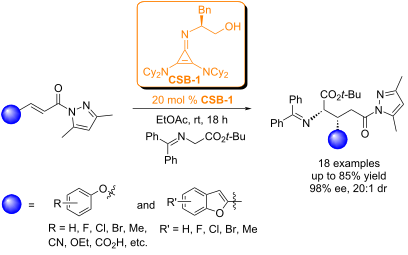
- adjacent stereocenters, which was obtained from in-situ acidic hydrolysis and lactamization of the corresponding Michael product. Keywords: α,β-unsaturated pyrazolamide; chiral cyclopropenimine; glutamic acid; lactamization; Michael addition; Introduction Phenols and benzofurans are feedstock chemicals






Diastereodivergent electrophilic trapping of α-boryl lithium derivatives
Beilstein J. Org. Chem. 2026, 22, 882–887, doi:10.3762/bjoc.22.68
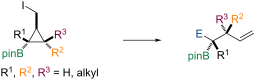
- range of electrophiles to give boronic esters bearing vicinal tri- and tetrasubstituted stereocenters in good yields and high diastereoselectivities. Notably, substrates bearing alkyl substituents display the opposite sense of diastereoselectivity to previously studied aryl-substituted analogues. The
- in a stereodefined manner would achieve the synthesis of polysubstituted organoboron compounds with adjacent stereocenters. The latter are highly valuable building blocks, given the pivotal role of organoboron compounds in contemporary chemistry as stable, yet reactive, intermediates that enable
- ), providing compound 6h bearing two adjacent fully substituted stereocenters (Scheme 3). Although the yield was relatively low (34%), the diastereomeric remained high (dr 90:10). The relative configuration of the major diastereomers of 6h was assigned by analogy to 6c, but it could not be definitively




Synthesis of heterocycles based on azomethine ylides from α-amino acids (or amines) and carbonyl compounds
Beilstein J. Org. Chem. 2026, 22, 705–741, doi:10.3762/bjoc.22.55
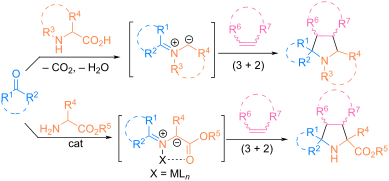
- chiral metal complexes of Ag(I), Cu(I/II), Zn(II), Ni(II) with ligands of the Segphos, Fesulfos, or Biphamphos type [12][13][14][15]. Such catalytic systems control the enantioselectivity of cycloaddition and allow the preparation of enantioenriched pyrrolidines containing several stereocenters in high
- silver-catalyzed asymmetric double 1,3-dipolar cycloaddition reaction was developed that provides highly substituted, enantioenriched pyrrolizidines 9 containing up to six stereocenters (Scheme 8). It is assumed that the endo-selective (3 + 2) cycloaddition of the azomethine ylide obtained from
- 12 with β-fluoromethyl-β,β-disubstituted enones 15 was studied, resulting in the formation of pyrrolidines 16 and 17 with two adjacent or two discrete quaternary stereocenters (Scheme 10). The regioselectivity of this reaction is controlled by the choice of a suitable chiral ligand. The authors


Modern synthetic pathways towards eribulin and its subunits
Beilstein J. Org. Chem. 2026, 22, 495–526, doi:10.3762/bjoc.22.37
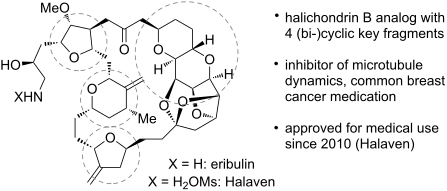
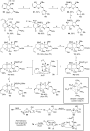
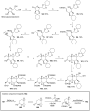
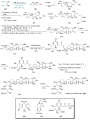
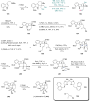
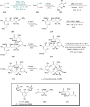
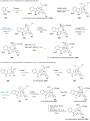
- with TBAF leading to 79. Although the synthesis of 79 through this method is quite laborious, especially with regard to all necessary adjustments of stereocenters, the idea of recycling byproducts of Halaven production clearly shows the advancements in this process. Therefore, this route should not be
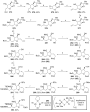
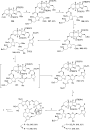
- oxidation towards an intermediate ketone, which was further methylenated with MePPh3Br. Eventually, the regioselective hydroboration–oxidation and DMP-oxidation led to aldehyde 231. Herein, both stereocenters of 231 were adopted from the naturally given structure of 220 and were maintained over 14 steps








A facile and practical method for the synthesis of trans-(±)-taxifolin and its derivatives via Darzens reaction
Beilstein J. Org. Chem. 2026, 22, 443–450, doi:10.3762/bjoc.22.31
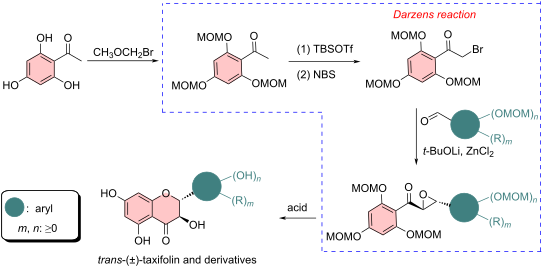
- transformation from dietary food to multifunctional medications in the near future. Taxifolin is a chiral compound with two stereocenters and exists as trans or cis isomers. It is commonly referred to as the trans dextral form (trans-(+)-taxifolin), which has higher bioactivity than its levorotatory enantiomer


Non-central chirality in organic chemistry
Beilstein J. Org. Chem. 2026, 22, 370–371, doi:10.3762/bjoc.22.24
- ; chiroptical properties; molecular chirality; Chirality is a foundational concept in organic chemistry, traditionally framed around tetrahedral carbon stereocenters. Over the past decades, however, it has become increasingly clear that molecular handedness is not confined to localized points in space. Axes
Spirobarbiturates with a pyrrolizidine moiety: synthesis, structure and biological evaluation
Beilstein J. Org. Chem. 2026, 22, 274–288, doi:10.3762/bjoc.22.20
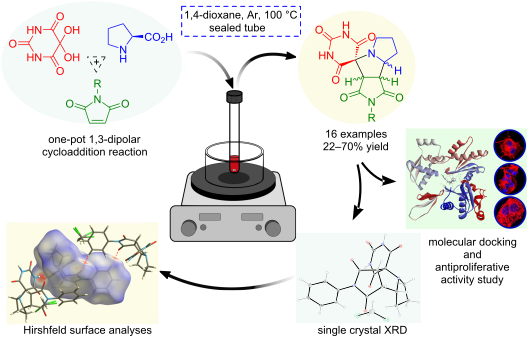
- in the maleimide: in most cases the endo-isomer is the main (or only) product, but for some N-arylmaleimides the exo-product is predominant. The proposed mechanism is discussed, and the products were characterized by detailed spectral analysis. The configuration of the stereocenters was determined by
- configuration of their stereocenters, was determined using NMR spectroscopy and XRD analysis. endo-Isomers 4a–e exhibited the following characteristic signals in their 1H NMR spectra: multiplets in the range of δ 1.5–4.4 ppm were assigned to the protons of the pyrrolizidine ring system. The methyl singlets of




Highly electrophilic, gem- and spiro-activated trichloromethylnitrocyclopropanes: synthesis and structure
Beilstein J. Org. Chem. 2026, 22, 123–130, doi:10.3762/bjoc.22.5
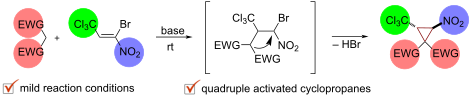
- )/CH3 (pyrazolone) (δH = 2.15 ppm) in the minor isomer 9b (Scheme 5). Thus, the relative configurations of the stereocenters in these molecules can be defined as 1SR,2RS,3SR (9a) and 1SR,2RS,3RS (9b). Cyclopropanes 2–8 are formed as single diastereomers. The vicinal spin–spin coupling constants of C1H
- –C2H protons of the cyclopropane ring (3JH(1)H(2) = 5.7–7.5 Hz) indicate their transoid arrangement [38][39][45]. This makes it possible to assign 1SR,2RS configurations to the stereocenters. The proposed mechanism for this transformation is depicted in Scheme 6. Michael addition of the CH-acid anion I


Total synthesis of natural products based on hydrogenation of aromatic rings
Beilstein J. Org. Chem. 2026, 22, 88–122, doi:10.3762/bjoc.22.4
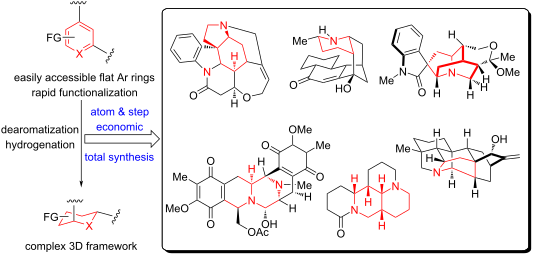
- systems. In addition, converting a planar sp2-hybridized-atoms-enriched framework into three-dimensional sp3-hybridized-atoms-enriched architectures inherently generates new stereocenters, making stereocontrol essential in asymmetric variants. As highlighted in the methods below, recent advances in
- hydrogenation reaction (Scheme 7) [60]. Using an acid-assisted dynamic kinetic resolution method, they obtained a series of chiral indolines 56 containing exocyclic stereocenters in high yields and excellent enantioselectivity. Mechanistic studies of the reaction revealed that the dynamic kinetic resolution
- new stereocenters, producing architecturally complex 6–5 fused ring systems. The key points lie in the utility of a chiral homogeneous ruthenium-N-heterocyclic carbene complex, as well as an in-situ activated rhodium catalyst. In 2022, Bach and co-workers reported a modular approach for the highly











Competitive cyclization of ethyl trifluoroacetoacetate and methyl ketones with 1,3-diamino-2-propanol into hydrogenated oxazolo- and pyrimido-condensed pyridones
Beilstein J. Org. Chem. 2025, 21, 2716–2729, doi:10.3762/bjoc.21.209
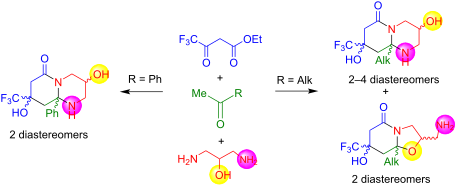
- –1628 cm−1 and NH2 groups at ν 3376–3272 cm−1. The structures of the obtained heterocycles 4 and 5 contain three stereocenters, so one could expect the formation of up to 8 stereoisomers in each case. Analysis of the 19F NMR spectra showed that from two to four diastereomers of


Recent advancements in the synthesis of Veratrum alkaloids
Beilstein J. Org. Chem. 2025, 21, 2657–2693, doi:10.3762/bjoc.21.206
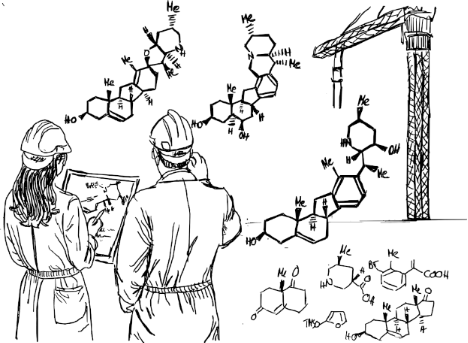
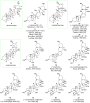
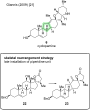
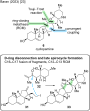
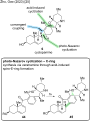
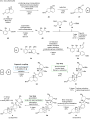
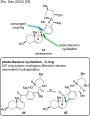
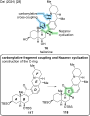
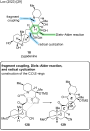
- undesirable transformations in the synthesis of both fragments, as well as in the later stages of the synthesis. This total synthesis of cyclopamine provided implementation of new methodologies and as a highlight, the key photoinduced excited-state Nazarov cyclization, which installed two stereocenters
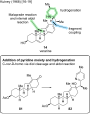
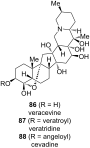
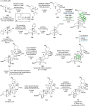
- . The pyridinium species was reduced to reveal the piperidine E-ring with correct configuration of the stereocenters at C22 and C25. Reduction of the C3-tosylate afforded deoxoverticinone (96), a known congener of verticine. Seven more redox manipulation steps were required to install the C6–OH group
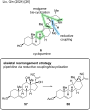
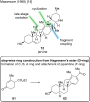
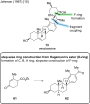
- isolation of heilonine was reported in 1989 by Kaneko et al. from Fritillaria ussuriensis. It is believed to be a constituent of “beimu", a traditional Chinese medicine that is used as a sedative, antitussive, and expectorant [52]. The nine stereocenters reside in two different regions of the molecule
















Chemoenzymatic synthesis of the cardenolide rhodexin A and its aglycone sarmentogenin
Beilstein J. Org. Chem. 2025, 21, 2637–2644, doi:10.3762/bjoc.21.204
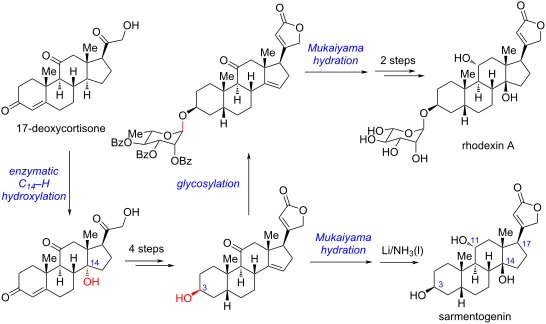
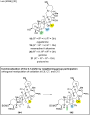
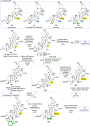
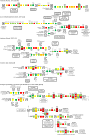
- -electron demand Diels–Alder (IEDDA) reaction was utilized to successfully construct the BCD tricyclic structure with the correct configuration of the four contiguous stereocenters in just one step. However, the requirement of a series of protecting group manipulations undermined the step-economy and


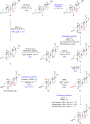

Total syntheses of highly oxidative Ryania diterpenoids facilitated by innovations in synthetic strategies
Beilstein J. Org. Chem. 2025, 21, 2553–2570, doi:10.3762/bjoc.21.198
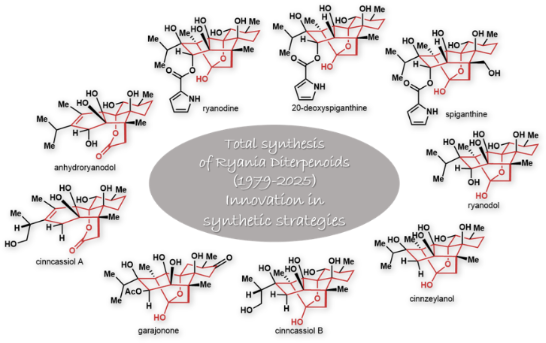
- and structurally established [16][17][18]. Structurally, ryanodine (1) and related diterpenoid natural products feature a 6-5-5-5-6 pentacyclic core skeleton containing 11 stereocenters, eight of which are quaternary carbons. A key structural feature is the assembly of a polycyclic cage-like framework
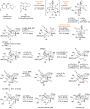
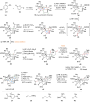
- -alkoxy bridgehead radical addition then installed an allyl fragment, and ring-closing metathesis (RCM) smoothly formed the C ring to complete the core skeleton. The total synthesis was finalized by installing the four remaining stereocenters (C2, C3, C9, and C10). The specific synthetic route is as
- stereocenters characteristic of the target molecule, the authors strategically implemented this methodology. This approach efficiently established two carbon–carbon and four carbon–oxygen bonds while introducing four contiguous stereocenters, successfully assembling the highly functionalized AB ring system




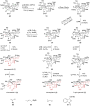


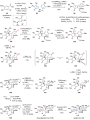

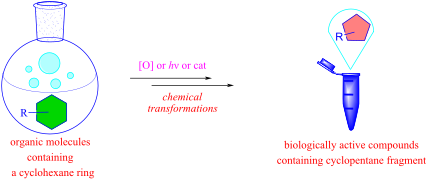
Transformation of the cyclohexane ring to the cyclopentane fragment of biologically active compounds
Beilstein J. Org. Chem. 2025, 21, 2416–2446, doi:10.3762/bjoc.21.185
- a sterically compact [6-5-5] tricyclic skeleton, as well as a highly strained trans-fused bicyclo[3.3.0]octane ring system and seven contiguous stereocenters. A structurally interesting diol 52 was diastereoselectively obtained using a linear sequence of 14 steps starting from the readily available
- multiple stereocenters, including contiguous quaternary carbons. As a result, the carboborative ring contraction reaction is conveniently used for structural modification of natural products containing a cyclohexene ring and in the synthesis of new compounds to increase their activity, metabolic stability


Recent advances in Norrish–Yang cyclization and dicarbonyl photoredox reactions for natural product synthesis
Beilstein J. Org. Chem. 2025, 21, 2315–2333, doi:10.3762/bjoc.21.177
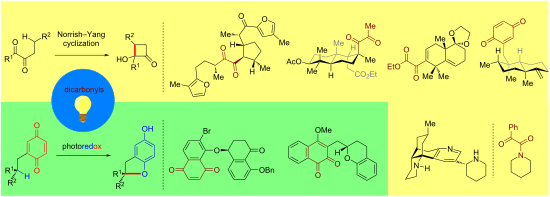
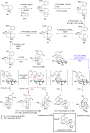
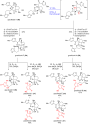
- Terpenoids 1.1 (+)-Cyclobutastellettolide B (+)-Cyclobutastellettolide B (13), featuring an unusual 6/6/4-fused tricyclic core with six stereocenters – including three contiguous quaternary stereocenters – was first isolated by Stonik et al. in 2019 from a Stelletta sp. sponge collected in Vietnamese waters
- ingeniously leverages the high selectivity of photochemical reactions and the strain-release property of rearrangement reactions, enabling the precise construction of multiple stereocenters in one step and overcoming the synthetic challenges posed by contiguous quaternary carbon centers and sterically
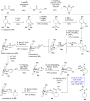
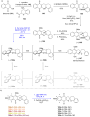
- -obscurine (83) as a late-stage common intermediate. Compound 83 was readily accessible via previously reported protocols [40], which featured a diastereoselective formal [3 + 3] cycloaddition between 76 and 81 as the key step. This cycloaddition constructs the three contiguous stereocenters and two C–C







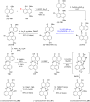
Enantioselective radical chemistry: a bright future ahead
Beilstein J. Org. Chem. 2025, 21, 2283–2296, doi:10.3762/bjoc.21.174
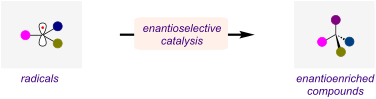
- [22][23]. In these studies, alkyl radicals underwent conjugate addition to N-enoyloxazolidinones. Sibi later described enantioselective tandem radical conjugate addition–trapping reactions that formed two carbon–carbon bonds and created two vicinal stereocenters in a single transformation (Scheme 1
- single process that established five new carbon–carbon bonds and nine contiguous stereocenters, including four all-carbon quaternary centers (Scheme 3). Transition-metal-catalyzed radical reactions Recent advances in enantioselective radical reactions catalyzed by base metals (e.g., Fe, Co, Ni, Mn
- decatungstate (TBADT) and chiral amine 33 was able to catalyze the reaction between benzodioxoles 32 and cyclic β,β-disubstituted enones 31. Cyclic ketones 34 bearing all-carbon quaternary stereocenters at the β-position were obtained in good yields and high enantioselectivity. Enzyme-catalyzed radical


The application of desymmetric enantioselective reduction of cyclic 1,3-dicarbonyl compounds in the total synthesis of terpenoid and alkaloid natural products
Beilstein J. Org. Chem. 2025, 21, 2085–2102, doi:10.3762/bjoc.21.164
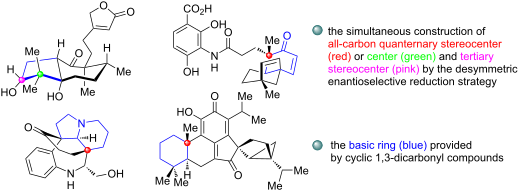
- The desymmetric enantioselective reduction of cyclic 1,3-dicarbonyl compounds is a powerful tool for the construction of ring systems bearing multiple stereocenters including all-carbon quaternary stereocenters, which are widely useful chiral building blocks for the total synthesis of structurally
- shortage of natural product sources. Nevertheless, the asymmetric total synthesis of terpenoid and alkaloid natural products presents significant challenges due to their complex and diverse ring systems and the presence of multiple stereocenters, including all-carbon quaternary stereocenters. Consequently
- , (−)-glaucopine C, and (+)-allocyathin B2 The cyrneine diterpenoids represent an important subfamily of cyathane diterpenoids which possess a common 5-6-7 fused tricarbocyclic core with two all-carbon quaternary stereocenters. Many impressive syntheses have been reported to date [18][19][20][21][22][23][24][25


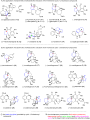





Asymmetric total synthesis of tricyclic prostaglandin D2 metabolite methyl ester via oxidative radical cyclization
Beilstein J. Org. Chem. 2025, 21, 1964–1972, doi:10.3762/bjoc.21.152
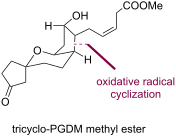
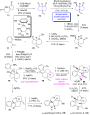
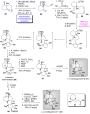
- available has prevented its practical use, and synthesis methods for tricyclic-PGDM methyl ester are required. Based on the utilization of oxidative radical cyclization for the stereoselective construction of the cyclopentanol subunit with three consecutive stereocenters, we describe an asymmetric total
- -selective cross-metathesis, respectively [9]. In general, racemic cyclopentanol precursors (A ring system, prepared in 6–9 steps) have been used to form the polyfunctionalized tricyclic frameworks incorporating contiguous stereocenters. In previous syntheses, the efficient construction of the cyclopentanol



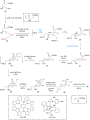
Enantioselective desymmetrization strategy of prochiral 1,3-diols in natural product synthesis
Beilstein J. Org. Chem. 2025, 21, 1932–1963, doi:10.3762/bjoc.21.151

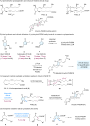
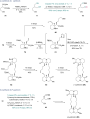
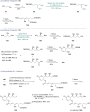
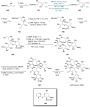
- -worker described the asymmetric synthesis of (−)-rasfonin, harnessing an enantioselective enzymatic desymmetrization with lipase AK and an enzymatic oxidative kinetic resolution to install stereocenters [47]. The synthesis commenced with the preparation of fragment 100 from ethylene glycol (97) (Scheme












[3 + 2] Cycloaddition of thioformylium methylide with various arylidene-azolones in the synthesis of 7-thia-3-azaspiro[4.4]nonan-4-ones
Beilstein J. Org. Chem. 2025, 21, 1791–1798, doi:10.3762/bjoc.21.141
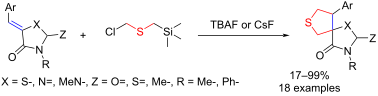
- thiohydantoin 7, on the contrary, have a trans configuration of two vicinal stereocenters (Scheme 3 and Figure 1). Thus, in all cases we have obtained, probably, the most thermodynamically favorable isomers. This result allows us to assume a stepwise mechanism of the ylide addition to the double bond of



Synthetic approach to borrelidin fragments: focus on key intermediates
Beilstein J. Org. Chem. 2025, 21, 1135–1160, doi:10.3762/bjoc.21.91
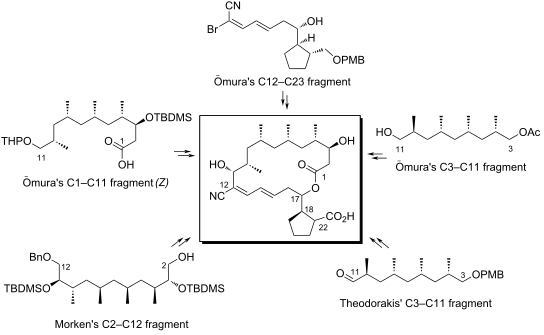
- the correct stereochemistry of the newly formed three stereocenters. Additionally, replacing cesium carbonate with triethylamine proved crucial for achieving efficient asymmetric hydrogenation in this case. Subsequently, the carboxylic acid group of 57 was reduced with LiAlH4 in THF to produce primary
- ]. Their method was based on the concept of “catalytic total synthesis”, wherein all stereocenters were installed under the control of catalysts. Minnaard and Madduri proposed the synthesis of the C1–C11 fragment from unsaturated thioester 92 through iterative, previously developed asymmetric 1,4-addition








Silver(I) triflate-catalyzed post-Ugi synthesis of pyrazolodiazepines
Beilstein J. Org. Chem. 2025, 21, 915–925, doi:10.3762/bjoc.21.74
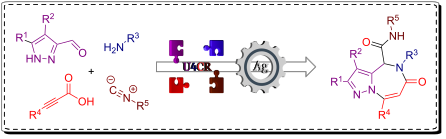
- , obtaining a separable mixture of the major cis and minor trans diastereomers of the sp3-enriched pyrazolodiazepine 17. The relative configuration of the stereocenters in the major cis isomer of 17 was established via scXRD analysis. Both diastereomers of 17 were found to be amenable to chemoselective amide




Regioselective formal hydrocyanation of allenes: synthesis of β,γ-unsaturated nitriles with α-all-carbon quaternary centers
Beilstein J. Org. Chem. 2025, 21, 800–806, doi:10.3762/bjoc.21.63
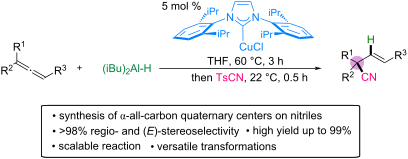
- quaternary centers that contain functional groups is challenging mainly because of their sterically demanding property [9][10][11]. In this context, the incorporation of cyano groups at the quaternary carbon centers is promising for the development of versatile acyclic all-carbon quaternary stereocenters




Copper-catalyzed domino cyclization of anilines and cyclobutanone oxime: a scalable and versatile route to spirotetrahydroquinoline derivatives
Beilstein J. Org. Chem. 2025, 21, 749–754, doi:10.3762/bjoc.21.58
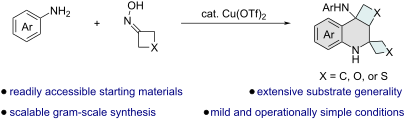
- azetidinones, enabling the efficient and enantioselective synthesis of tetrahydroquinoline-fused azetidines with three contiguous stereocenters in a single step [23]. Later, Tanaka, Nagashima, and their co-workers established a chemo-, regio-, and diastereoselective dearomative transformation of quinolines




Asymmetric synthesis of β-amino cyanoesters with contiguous tetrasubstituted carbon centers by halogen-bonding catalysis with chiral halonium salt
Beilstein J. Org. Chem. 2025, 21, 547–555, doi:10.3762/bjoc.21.43
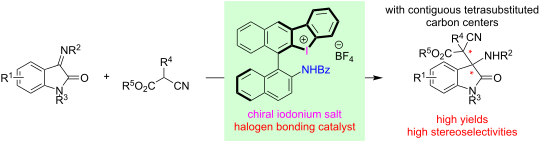
- ; chiral halonium salt; contiguous stereocenters; halogen bonding; Mannich reaction; Introduction Halogen bonding (XB) has attracted intense research attention for its unique interaction between halogen atoms and electron-rich substituents [1]. XB has been applied to various fields of chemistry, such as





