Search results
Search for "this compound" in Full Text gives 515 result(s) in Beilstein Journal of Organic Chemistry. Showing first 200.
Configuration–packing synergy enabling integrated crystalline-state RTP and amorphous-state TADF
Beilstein J. Org. Chem. 2026, 22, 224–236, doi:10.3762/bjoc.22.16
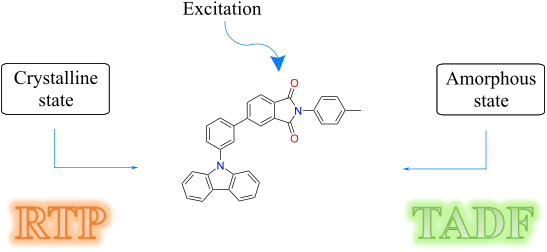
- the importance of molecular packing and intermolecular interactions in achieving efficient phosphorescence at room temperature, making this compound a promising candidate for applications in optoelectronic devices that require stable and efficient RTP behavior. The films of 1 that were prepared under


Base-promoted deacylation of 2-acetyl-2,5-dihydrothiophenes and their oxygen-mediated hydroxylation
Beilstein J. Org. Chem. 2026, 22, 192–204, doi:10.3762/bjoc.22.13
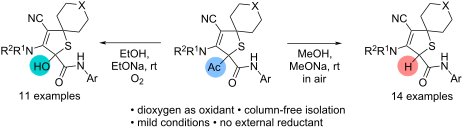
- products (Scheme 1D) or the deacetylated products (Scheme 1E) have been developed. Results and Discussion Dihydrothiophene 1a was selected as a model substrate for our optimization study (Table 1). Initially, this compound was treated in ethanolic solution (2 mL) at room temperature in air for 1 h in the




Improved synthesis and physicochemical characterization of the selective serotonin 2A receptor agonist 25CN-NBOH
Beilstein J. Org. Chem. 2026, 22, 175–184, doi:10.3762/bjoc.22.11
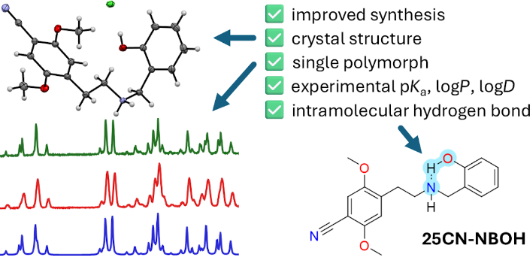
- -NBOH (1), providing easier access to this compound. When the hydrochloride salt 1·HCl was precipitated and recrystallized from ethanol, a single and stable, nonhygroscopic polymorph with a well-defined melting point formed. A crystal structure determined by SCXRD confirmed the structural assignment


Total syntheses of highly oxidative Ryania diterpenoids facilitated by innovations in synthetic strategies
Beilstein J. Org. Chem. 2025, 21, 2553–2570, doi:10.3762/bjoc.21.198
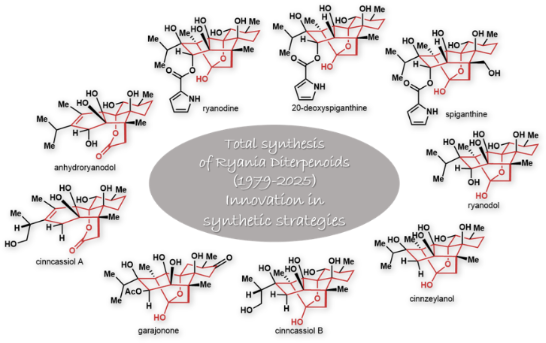
- natural product. Similarly, starting from 57, installation of an allyl group at C2, followed by oxidative cleavage, reduction, and deprotection, provided cinncassiol B (7). Subjecting this compound to an acid-promoted fragmentation reaction then completed the total synthesis of cinncassiol A (9
- route commenced from (−)-pulegone. After introducing oxidation states at C6 and C10 and installing an alkynyl group at C11, oxidative cleavage of a double bond yielded the key propargylic alcohol intermediate 66. This compound underwent a 1,2-addition with alkynyl Grignard reagent 67, and the resulting



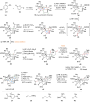

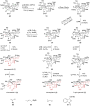


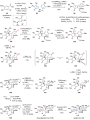

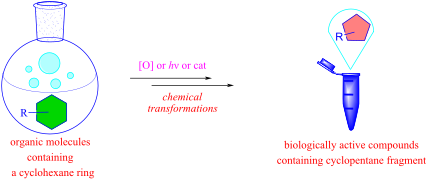
Transformation of the cyclohexane ring to the cyclopentane fragment of biologically active compounds
Beilstein J. Org. Chem. 2025, 21, 2416–2446, doi:10.3762/bjoc.21.185
- (III) and iodine(III), and Wolff rearrangement. 2.1 Benzilic acid and semipinacol-type rearrangements The strategy of ring contraction using the benzilic acid-type rearrangement was used by Zhang et al. [38] for the asymmetric synthesis of 4β-acetoxyprobotryane-9β,15α-diol (52). This compound contains
- methylcyclopentanone 238 with a yield of 26%. This compound can be used in the synthesis of isoboonein (239) [104]. In compound 146, the effect of the keto group is more significant than that of the dioxolane fragment, as is known for this type of compounds. Therefore, changes to this functionality or its removal can


The high potential of methyl laurate as a recyclable competitor to conventional toxic solvents in [3 + 2] cycloaddition reactions
Beilstein J. Org. Chem. 2025, 21, 2389–2415, doi:10.3762/bjoc.21.184
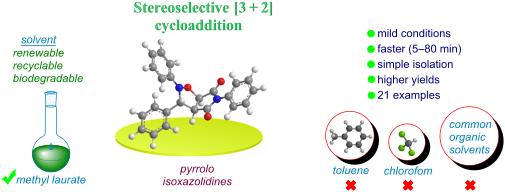
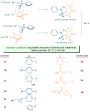
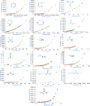
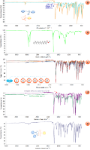
- functional solvent(s) of our solute icon in this tool and following the update, the parameter values given above for the relevant nitrone were readily obtained. As can be seen from the figure, methyl laurate is a good alternative to competing toxic organic solvents that are good solvents for this compound






Synthetic study toward vibralactone
Beilstein J. Org. Chem. 2025, 21, 2376–2382, doi:10.3762/bjoc.21.182

- -lactone with an all-carbon quaternary center and two trisubstituted olefin moieties. It is therefore not surprising that this compound has attracted considerable interest from both the chemical biology and synthetic chemistry communities. Sieber and co-workers disclosed that vibralactone can target ClpP1


Recent advances in Norrish–Yang cyclization and dicarbonyl photoredox reactions for natural product synthesis
Beilstein J. Org. Chem. 2025, 21, 2315–2333, doi:10.3762/bjoc.21.177
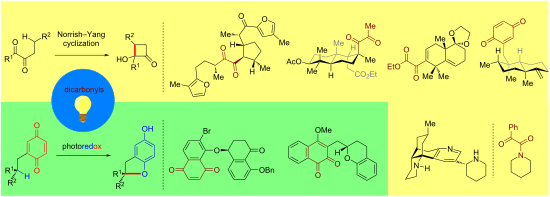
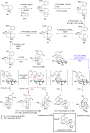
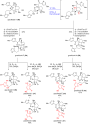
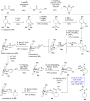
- [20]. This compound significantly elevates reactive oxygen species levels in murine peritoneal macrophages (73 ± 12%) and exhibits potential as a lead for developing immunomodulatory agents. In 2021, Yang’s group reported a concise enantioselective total synthesis of (+)-cyclobutastellettolide B







Research towards selective inhibition of the CLK3 kinase
Beilstein J. Org. Chem. 2025, 21, 2250–2259, doi:10.3762/bjoc.21.172
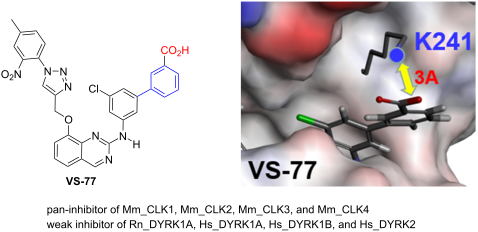
- been able to transform this compound into a derivative having a significant affinity toward this kinase (VS-77, IC50 = 0.3 μM). Further, this compound has kept good activities against the other CLKs, and therefore can be qualified as a new pan-inhibitor of the CLKs. Unexpectedly, this modification has


Further elaboration of the stereodivergent approach to chaetominine-type alkaloids: synthesis of the reported structures of aspera chaetominines A and B and revised structure of aspera chaetominine B
Beilstein J. Org. Chem. 2025, 21, 2072–2081, doi:10.3762/bjoc.21.162
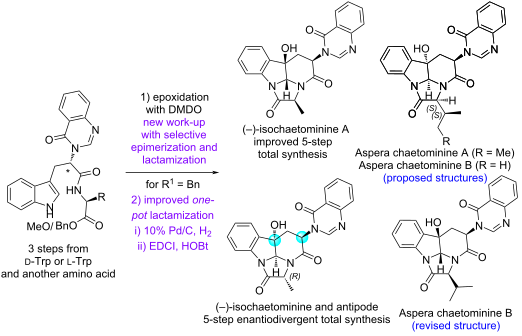
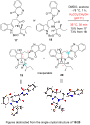
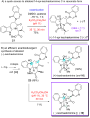
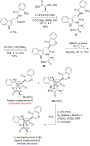
- -10, previously known as ent-11-epi-chaetominine) in 32% yield starting from ʟ-Trp and ʟ-Ala [64]. In the last step of that total synthesis, the diastereomeric monocyclization product 22 was obtained as the major product (48% yield). Exposing this compound to an aged K2CO3/MeOH solution at 35 °C for



Photochemical reduction of acylimidazolium salts
Beilstein J. Org. Chem. 2025, 21, 1973–1983, doi:10.3762/bjoc.21.153
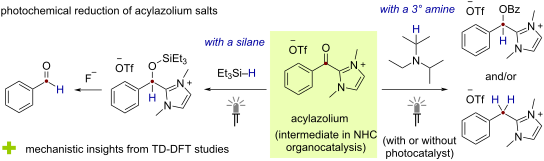
- %) and BzO− (43%), additional signals consistent with the O-benzoylated species 3 were identified. This compound was synthesized independently from benzoyl chloride and 1-methylimidazole (see Supporting Information File 1) with spiking of the crude 1H NMR spectrum with the authentic sample confirming the


Convenient alternative synthesis of the Malassezia-derived virulence factor malassezione and related compounds
Beilstein J. Org. Chem. 2025, 21, 1730–1736, doi:10.3762/bjoc.21.135

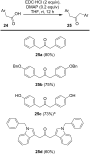
- debenzylated by Pd-catalyzed hydogenation to cleanly yield 25c. This affords a route to such compounds bearing hydroxylated aromatic groups that employs milder conditions than previously reported [22][24]. Finally, we prepared N,N′-dibenzylmalassezione (25d). Initially, this compound was prepared with the


Catalytic asymmetric reactions of isocyanides for constructing non-central chirality
Beilstein J. Org. Chem. 2025, 21, 1648–1660, doi:10.3762/bjoc.21.129

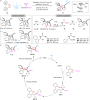
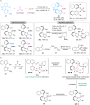
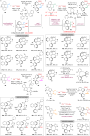
- of the resulting products in developing chiral organocatalysts was investigated as well. For instance, 28a was converted to a thiourea-tertiary amine 29 through a four-step procedure in an overall 36% yield. This compound was then utilized as the catalyst in the electrophilic amination reaction





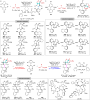
3-Aryl-2H-azirines as annulation reagents in the Ni(II)-catalyzed synthesis of 1H-benzo[4,5]thieno[3,2-b]pyrroles
Beilstein J. Org. Chem. 2025, 21, 1595–1602, doi:10.3762/bjoc.21.123

- the NHC-complex, IPrCuCl, the formation of cycloadduct 11 was detected, which was isolated in 10% yield (Scheme 6). The formation of this compound implies the cleavage of the azirine N−C2 bond, indicating that the IPrCuCl-catalyzed reaction proceeds by a different mechanism, likely involving the

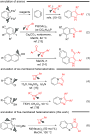


Facile synthesis of hydantoin/1,2,4-oxadiazoline spiro-compounds via 1,3-dipolar cycloaddition of nitrile oxides to 5-iminohydantoins
Beilstein J. Org. Chem. 2025, 21, 1552–1560, doi:10.3762/bjoc.21.118

- triethylamine hydrochloride. This method has proven to be simple and effective in most cases, with the exception of compound 5g. The moderate solubility of this compound in diethyl ether led to partial precipitation from the reaction mixture. It is worth noting that chromatographic purification is also possible
- , was observed for the spiro-compound 5l, which contains a p-nitro group in the aromatic core of the nitrile oxide fragment. This compound was obtained in excellent yield of 93% and 88% using the dropwise and diffusion mixing technique, respectively. This result may be explained by the optimal

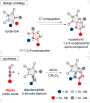
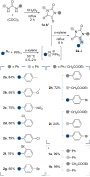


Ambident reactivity of enolizable 5-mercapto-1H-tetrazoles in trapping reactions with in situ-generated thiocarbonyl S-methanides derived from sterically crowded cycloaliphatic thioketones
Beilstein J. Org. Chem. 2025, 21, 1508–1519, doi:10.3762/bjoc.21.113
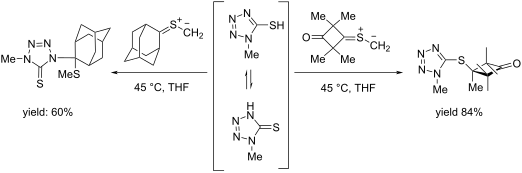
- (mp 136‒138 °C) in high yield of 86%. The 13C NMR spectrum registered for this compound revealed a shift of the S‒C‒S atom, incorporated into the cyclobutanone ring, at 74.8 ppm. On the other hand, the thioaminal functionality with N‒C‒S moiety located within the tetrazole ring, shows a signal at


Advances in nitrogen-containing helicenes: synthesis, chiroptical properties, and optoelectronic applications
Beilstein J. Org. Chem. 2025, 21, 1422–1453, doi:10.3762/bjoc.21.106
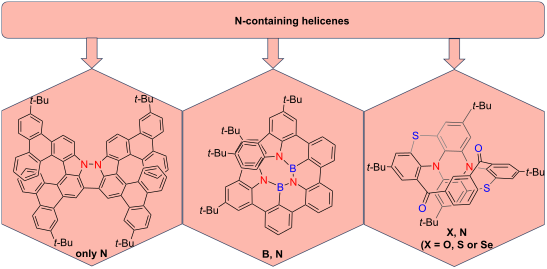
- , while compound 68e emits blue light (ΦF = 0.37) and demonstrates pronounced AIE in the solid state. Concurrently, Jiang’s group reported 69b, the first hetero[4]helicene-type molecule exhibiting both CPL and TADF [83]. This compound displays a high ΦF of 0.51 and a |glum| of 1.2 × 10⁻³. OLED devices

Tautomerism and switching in 7-hydroxy-8-(azophenyl)quinoline and similar compounds
Beilstein J. Org. Chem. 2025, 21, 1404–1421, doi:10.3762/bjoc.21.105
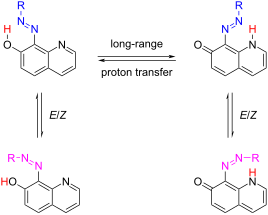
- OH functionality in compound 2 gives possibility to influence the tautomerism in this compound dynamically by protonation/deprotonation. The tautomeric and switching properties of compounds 1 and 2 have been revealed by using quantum-chemical calculations, UV–vis and NMR spectroscopy and UV
- ][87][88]. Obviously, in the case of compound 2 the relaxation back to the ground state through the CI in the N=N bond isomerization region, which is the only option in this compound to return back to the ground state, populates exclusively the ground state E instead of Ecis. Is there a potential for




Oxetanes: formation, reactivity and total syntheses of natural products
Beilstein J. Org. Chem. 2025, 21, 1324–1373, doi:10.3762/bjoc.21.101
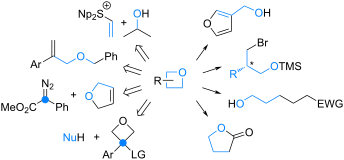
- applications, the research group has also developed two practical and scalable syntheses of this compound: one based on oxidation of 3-oxetanol (130) (obtained from epichlorohydrin), and the other on a Williamson etherification of dihydroxyacetone (129) [10][11][12]. In 2010, Zhang et al. added another










Recent advances in amidyl radical-mediated photocatalytic direct intermolecular hydrogen atom transfer
Beilstein J. Org. Chem. 2025, 21, 1306–1323, doi:10.3762/bjoc.21.100
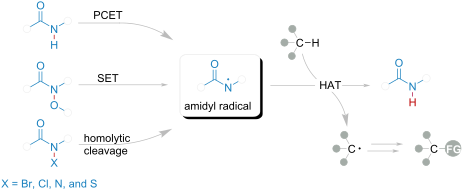
- demonstrated the homolytic cleavage of the N–O bond using N-(tert-butyl)-O-(1-phenylvinyl)-phenylhydroxyamide as a HAT reagent [78][79]. This compound was capable of initiating the formation of amidyl radicals through visible light activation. Although their controlled experiments showed that this method was






Synthetic approach to borrelidin fragments: focus on key intermediates
Beilstein J. Org. Chem. 2025, 21, 1135–1160, doi:10.3762/bjoc.21.91
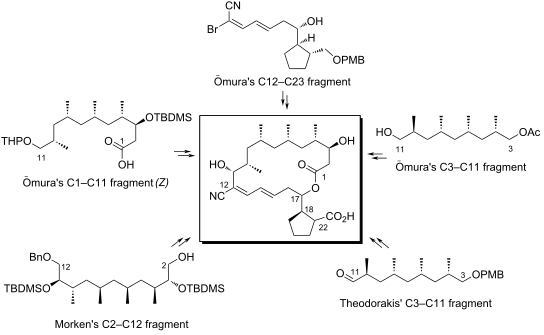
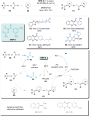
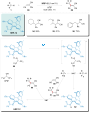
- % yield over three steps. This compound was isolated in its pure form as a white solid after recrystallization from ethanol, confirmed by HPLC and NMR. In parallel, the primary alcohol group of ent-38 was protected as a TBDMS ether, and the acetate group was converted to a tosyl ester by hydrolyzing the
- acetate functionality using potassium carbonate in methanol, followed by reaction with tosyl chloride in pyridine and DMAP. The product, ent-43, was obtained in 79.5% yield over three steps. This compound was reduced using LiAlH4 and treated with TBAF to remove the TBDMS group, yielding alcohol ent-40 in
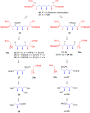
- the late stage coupling with 137 was prepared from the known lactone 138 (Scheme 21). Following a literature procedure, compound 139 was obtained from lactone 138 and subsequently treated with CrO3 to yield ketone 140 in 90% yield [55]. The ketone moiety of this compound was then reacted with a Wittig








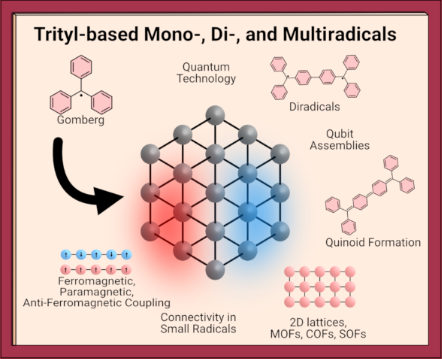
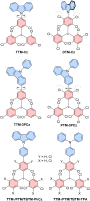
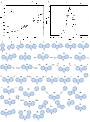
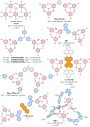
On the photoluminescence in triarylmethyl-centered mono-, di-, and multiradicals
Beilstein J. Org. Chem. 2025, 21, 964–998, doi:10.3762/bjoc.21.80









Studies on the syntheses of β-carboline alkaloids brevicarine and brevicolline
Beilstein J. Org. Chem. 2025, 21, 955–963, doi:10.3762/bjoc.21.79
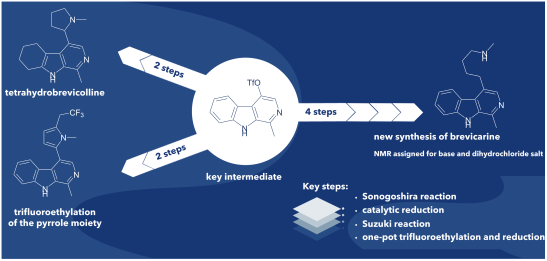
- ) were also ineffective. Based on literature data [42][43], we attempted the selective reduction of the pyrrole ring of compound 30 with NaCNBH3 in TFA as well. Surprisingly, trifluoroethylated product 32 was isolated. The formation of this compound can also be explained on the basis of analogies


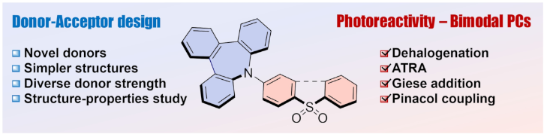
Study of tribenzo[b,d,f]azepine as donor in D–A photocatalysts
Beilstein J. Org. Chem. 2025, 21, 935–944, doi:10.3762/bjoc.21.76
- electron-withdrawing group [31]. Additionally, it is possible that the mobility of core 4 contributes to this behavior, as evidenced by the observation that the DE is not present in the more rigid structures 5a and 6a. In this compound, we did not observe changes in the absorption profile during the



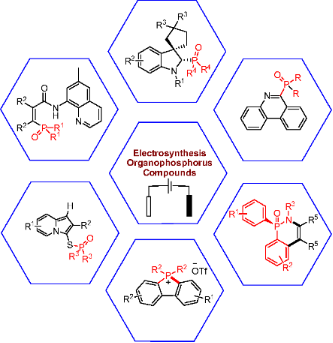
Recent advances in the electrochemical synthesis of organophosphorus compounds
Beilstein J. Org. Chem. 2025, 21, 770–797, doi:10.3762/bjoc.21.61