Search results
Search for "NMR analysis" in Full Text gives 430 result(s) in Beilstein Journal of Organic Chemistry. Showing first 200.
Nickel-catalyzed cross-coupling of 2-fluorobenzofurans with arylboronic acids via aromatic C–F bond activation
Beilstein J. Org. Chem. 2025, 21, 146–154, doi:10.3762/bjoc.21.8
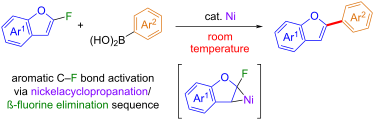
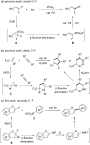
- , excluding boronic acid 2a (Scheme 6). The reaction was monitored using 19F and 31P NMR spectroscopy. The 19F NMR analysis showed that 79% of 1b remained and revealed a new broad double doublet peak at 55.0 ppm (JFP = 53, 42 Hz) relative to internal C6F6 (δ = 0.0 ppm). The 31P NMR spectrum depicted broad



Controlled oligomerization of [1.1.1]propellane through radical polarity matching: selective synthesis of SF5- and CF3SF4-containing [2]staffanes
Beilstein J. Org. Chem. 2024, 20, 3134–3143, doi:10.3762/bjoc.20.259
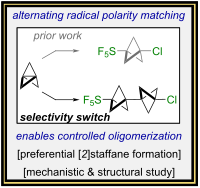
- the equivalents of [1.1.1]propellane (1) relative to SF5Cl and evaluating the impact on selectivity (Table 1). A 0.1 M solution of SF5Cl in n-pentane was added to a 0.8 M solution of 1 in Et2O at room temperature, and the mixture was stirred for 3 hours prior to 19F NMR analysis. Upon increasing from


Hypervalent iodine-mediated intramolecular alkene halocyclisation
Beilstein J. Org. Chem. 2024, 20, 3113–3133, doi:10.3762/bjoc.20.258
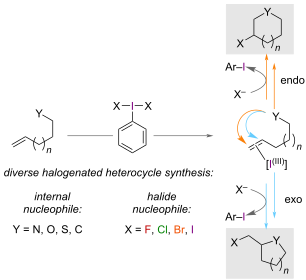
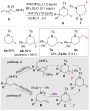
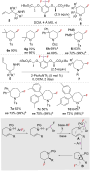
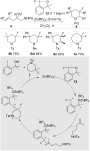
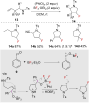
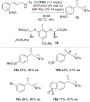
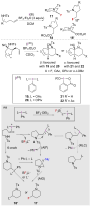
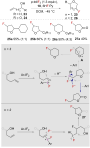
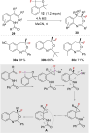
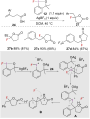
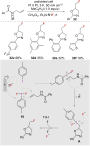
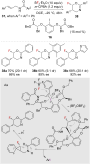
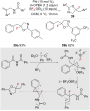
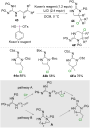
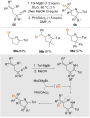
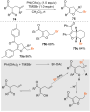
- (cis/trans) determined by 19F NMR analysis. Kitamura’s synthesis of 3-fluoropyrrolidines. Values in parentheses represent the cis:trans ratio. Jacobsen’s enantio- and diastereoselective protocol for the synthesis of syn-β-fluoroaziridines 15. Different HVI reagents lead to different





















Advances in the use of metal-free tetrapyrrolic macrocycles as catalysts
Beilstein J. Org. Chem. 2024, 20, 3085–3112, doi:10.3762/bjoc.20.257
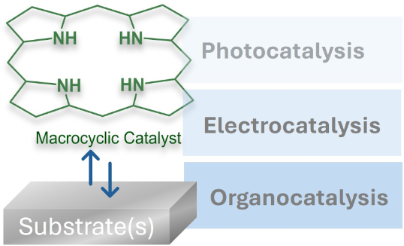
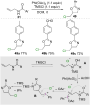
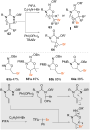
- porphyrins, and provided evidence for aryl radical formation through mass spectrometry and NMR analysis of the adduct formed from the reaction between the radical intermediate and the scavenger 2,2,6,6-tetramethyl-1-piperidin-1-oxyl (TEMPO). Furthermore, they used the catalysts for borylation of arylamines


Enantioselective regiospecific addition of propargyltrichlorosilane to aldehydes catalyzed by biisoquinoline N,N’-dioxide
Beilstein J. Org. Chem. 2024, 20, 3069–3076, doi:10.3762/bjoc.20.255
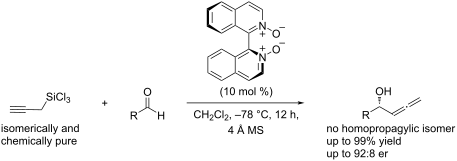
- propargyltrichlorosilane free of allenyltrichlorosilane on a 50 mmol scale albeit in 43% chemical yield (determined by 1H NMR analysis of the reaction mixture using freshly distilled anhydrous methylene chloride as an internal standard, Scheme 3). There was no sign of allenyltrichlorosilane observable by 1H NMR in the


gem-Difluorovinyl and trifluorovinyl Michael acceptors in the synthesis of α,β-unsaturated fluorinated and nonfluorinated amides
Beilstein J. Org. Chem. 2024, 20, 2946–2953, doi:10.3762/bjoc.20.247
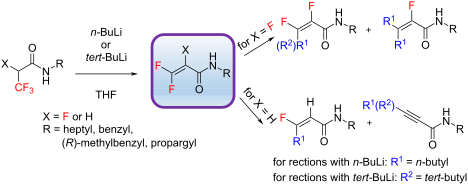
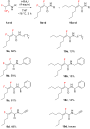
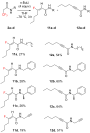
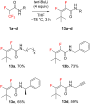
- anticipated α-substituted compound (Table 1, entry 9). The NMR analysis revealed that the obtained compounds were Michael addition products. The formation of the presented compounds (Table 1) was due to the earlier generation of gem-difluoroalkenes by the elimination of one of the fluorine atoms from the CF3




Structure and thermal stability of phosphorus-iodonium ylids
Beilstein J. Org. Chem. 2024, 20, 2931–2939, doi:10.3762/bjoc.20.245
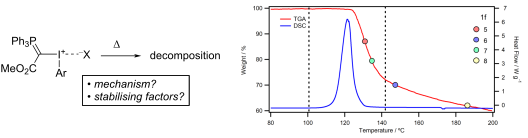
- spectrometry (MS) and NMR analysis were carried out on aborted TGA runs of compounds 1e, 1i, 1j and 1k that had been held at a constant temperature T1 (50–140 °C, see Supporting Information File 1) under an N2 atmosphere in open pans for 30 min or until a mass loss >5% of the original mass was observed, then
- heated to temperature T2 (136–205 °C, see Supporting Information File 1) until 20–40% mass loss of original weight. Based on this data, the following decomposition mechanism is proposed (Figure 4a): MS, 1H and 31P NMR analysis after heating to T1 showed the presence of (methyloxycarbonylmethyl
- involving scission of the C(ylid)–I bond or the C(Ar)–I bond was proposed based on ex situ MS and NMR analysis, resulting in the formation of (methyl)triphenylphosphonium intermediate 8. The nature of the arene substituent (I–Ar) and anion (X) appear to play an important, yet currently unquantifiable, role


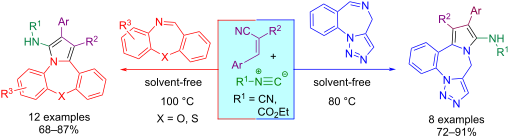
Synthesis of pyrrole-fused dibenzoxazepine/dibenzothiazepine/triazolobenzodiazepine derivatives via isocyanide-based multicomponent reactions
Beilstein J. Org. Chem. 2024, 20, 2870–2882, doi:10.3762/bjoc.20.241
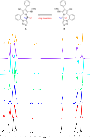
- δ = 4.65 and δ = 5.84 ppm corresponding to hydrogen I and hydrogen II. Remarkably, at higher temperatures (85 °C), the rapid inversion of the seven-membered ring results in it being observed as a single structure on the 1H NMR time scale (see Figure 3, spectrum F) [19][47][48]. Furthermore, 13C NMR
- analysis, mass spectrum, and IR are consistent with the structure (for details see Supporting Information File 1). Finally, a single crystal X-ray analysis of compound 6a was performed, confirming the structure (Figure 4). The proposed mechanism for an isocyanide-based multicomponent domino reaction for





Synthesis of tricarbonylated propargylamine and conversion to 2,5-disubstituted oxazole-4-carboxylates
Beilstein J. Org. Chem. 2024, 20, 2827–2833, doi:10.3762/bjoc.20.238

- experiments were conducted in the same way. In the deuteration experiment, the reaction was quenched with deuterium oxide (0.2 mL) instead of acetic acid. The decrease of the integral of the signal of the benzyl proton was confirmed by 1H NMR analysis. Synthesis of polyfunctionalized methane derivatives


Transition-metal-free decarbonylation–oxidation of 3-arylbenzofuran-2(3H)-ones: access to 2-hydroxybenzophenones
Beilstein J. Org. Chem. 2024, 20, 2655–2667, doi:10.3762/bjoc.20.223
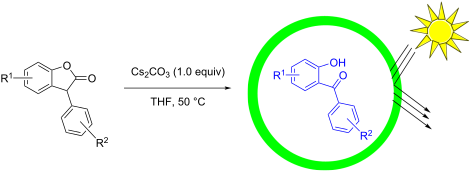
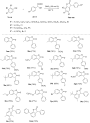
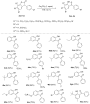
- , all the structures corroborated with the expected structure, as shown in Figure 3. To confirm the formation of hydroperoxide in THF via autooxidation, freshly distilled THF was heated under open atmosphere at 50 °C for 4 h, and was concentrated under vacuum to obtain the hydroperoxide residue. 1H NMR
- analysis of the residue, recorded in CDCl3 (Supporting Information File 1, Figure S1) confirmed the presence of hydroperoxide. Resonances attributable to O–CH–O were observed as a quartet centered at δ 5.40 ppm in the NMR spectrum. The –O–OH group in hydroperoxide gave rise to a singlet at 10.91 ppm. The




The scent gland composition of the Mangshan pit viper, Protobothrops mangshanensis
Beilstein J. Org. Chem. 2024, 20, 2644–2654, doi:10.3762/bjoc.20.222
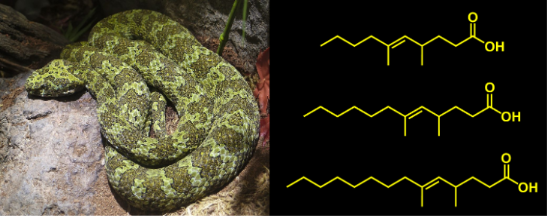
- ) were observed with similar mass spectra. The amount of secretion available and the complex mixture did not allow for the isolation of enough material for NMR analysis. Therefore, for the structure elucidation of these unknown compounds, we used different analytical methods, including GC–MS, GC–IR, and
- product research has recently been published by our team [41]. Conclusion 4,6-Dimethylalk-5-enoic acids are important components of the scent gland secretion of Protobothrops mangshanensis. Since NMR analysis was not possible due to the low amounts present, the compounds were identified only with the help


Photoredox-catalyzed intramolecular nucleophilic amidation of alkenes with β-lactams
Beilstein J. Org. Chem. 2024, 20, 2461–2468, doi:10.3762/bjoc.20.210
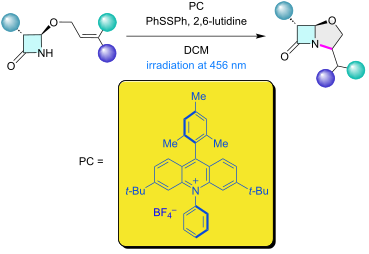
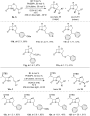
- , entry 1). Assignment of the relative configurations as cis or trans was achieved by 1H NMR analysis, considering the chemical shifts of the proton in the α-position of the β-lactam nitrogen atom and the geminal protons in the benzylic position (see Supporting Information File 1). The difference in the
- stereocenter in the five-membered ring was attributed by 1H NMR analysis for 11c. Moreover, the configuration was also confirmed by NOE studies on the two isolated diastereoisomers, which confirmed the preferred trans-isomer formation (see Supporting Information File 1). Analysis of the dr values revealed that
- intramolecular photoredox reaction. Photoredox-catalyzed intramolecular N-alkylation reactions of various β-lactams. The trans/cis dr was determined by 1H NMR analysis of the crude reaction mixture. Synthesis of the model substrate 14 and its photoredox-catalyzed intramolecular N-alkylation reaction. The trans




Synthesis and conformational analysis of pyran inter-halide analogues of ᴅ-talose
Beilstein J. Org. Chem. 2024, 20, 2442–2454, doi:10.3762/bjoc.20.208
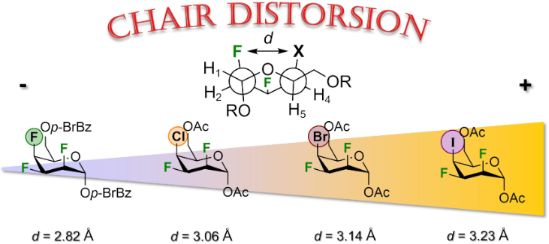
- order to decipher the key physical properties of complex pyran inter-halides, we performed 19F NMR analysis of halogenated talose analogues 12–15 (Figure 2). First, all analogues adopt standard 4C1-like conformations. Comparison of the vicinal and geminal coupling constants for each organohalogen
- −200.55 ppm for 15. Talopyranose analogues 12–15 incorporate a 2,3-cis, 3,4-cis relationship for the halogens. We previously prepared a small set of trihalogenated allopyranose analogues that also included the 2,3-cis, 3,4-cis relationship for the halogens (Figure 1a) [23]. 19F NMR analysis of halogenated


Efficient one-step synthesis of diarylacetic acids by electrochemical direct carboxylation of diarylmethanol compounds in DMSO
Beilstein J. Org. Chem. 2024, 20, 2392–2400, doi:10.3762/bjoc.20.203
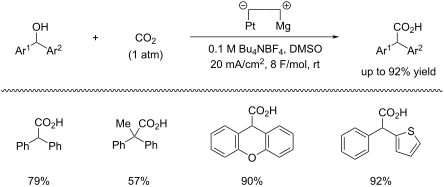
- in less than 10% yield, determined through 1H NMR analysis, except for Table 1, entries 3 (13%) and 5 (25%). It should also be noted that electrolysis was carried out at room temperature, but the temperature of the reaction mixture increased to 40–50 °C at the end of the electrolysis in every case
- of dechlorinated diphenylmethanol (1a) in the recovered starting material were confirmed by 1H NMR analysis. These results suggested that 2a was produced from 1a, which was generated in situ by electroreductive dechlorination of 1b. In other words, electroreductive dechlorination of 1b, producing 1a
- , took place preferentially over electroreductive C(sp3)–O bond cleavage of 1b. It should also be noted that no aromatic carboxylic acids were detected by 1H NMR analysis. In contrast, the electrochemical carboxylation of 1c, containing a fluorine atom, gave a mixture of fluorine-containing carboxylic


Asymmetric organocatalytic synthesis of chiral homoallylic amines
Beilstein J. Org. Chem. 2024, 20, 2349–2377, doi:10.3762/bjoc.20.201
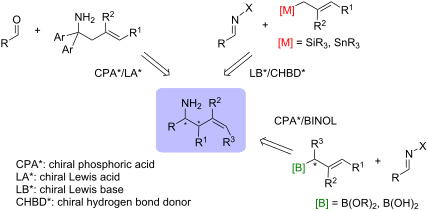
- two enantiotopic faces of acylimine 2, exposing only one face to the attack by the allyl group. The replacement of one isopropoxy (iPrO) group between allylboronate 1 with BINOL was confirmed by ESI-MS and NMR analysis of the reaction mixture. Interestingly, both (E)- and (Z)-crotyl boronates 6 and 8




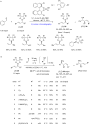


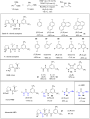


gem-Difluorination of carbon–carbon triple bonds using Brønsted acid/Bu4NBF4 or electrogenerated acid
Beilstein J. Org. Chem. 2024, 20, 2261–2269, doi:10.3762/bjoc.20.194
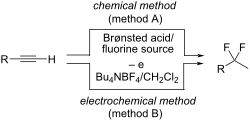
- in the presence of the substrate. The total electricity of 3.0 F/mol vs 1a was passed to the solution. Interestingly, the result gave the corresponding difluorinated compound 2a in 29% yield in the case of 8 mA, as shown by 19F NMR analysis. In addition, 2a was obtained in 42% yield by 19F NMR
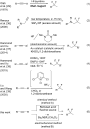
- the formation of the corresponding product 2d in 40% yield as the 19F NMR analysis (Table 2, entry 6), but the isolation of 2d was difficult [54]. Method B gave 2d in 35% yield, as shown by the 19F NMR analysis (Table 2, entry 7). Another alkyne, namely, octadec-1-yne (1e), was found to be a nice
- yield (Table 2, entry 16). Likewise, method B also gave 2i in 21% yield, as shown by the 19F NMR analysis (Table 2, entry 17), but it was difficult to purify and isolate the product 2i in this case. Finally, the internal aliphatic alkyne such as dodec-6-yne (1j) was found to be effective for the gem



Electrochemical radical cation aza-Wacker cyclizations
Beilstein J. Org. Chem. 2024, 20, 1900–1905, doi:10.3762/bjoc.20.165
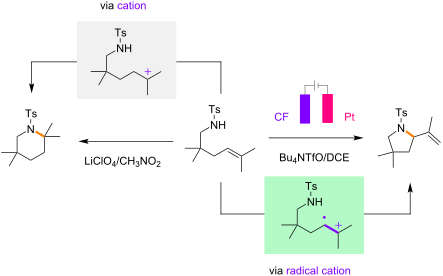
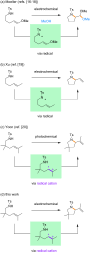
- with stirring. The solution was diluted with water and extracted with dichloromethane. The combined organic layers were dried over Na2SO4, filtered, and concentrated in vacuo. Yields were determined by 1H NMR analysis using benzaldehyde as an internal standard (Table 1). Silica gel column




A facile three-component route to powerful 5-aryldeazaalloxazine photocatalysts
Beilstein J. Org. Chem. 2024, 20, 1831–1838, doi:10.3762/bjoc.20.161
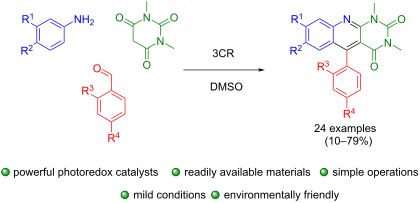
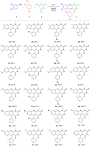
- source in this reaction, a deuterium labelling experiment was conducted (Scheme 2C). Indeed, the deazaalloxazine derivative 6-d with quantitative incorporation of deuterium in C(5) position, was isolated and confirmed by 1H NMR analysis and mass spectrometry (for more details on possible reaction




Methyltransferases from RiPP pathways: shaping the landscape of natural product chemistry
Beilstein J. Org. Chem. 2024, 20, 1652–1670, doi:10.3762/bjoc.20.147
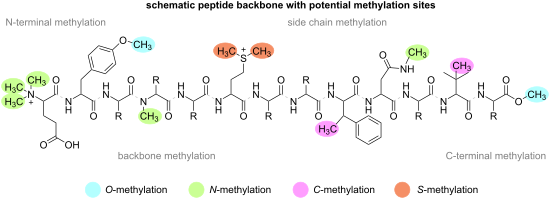
- and NMR analysis of the natural product, no knockout studies were performed to identify which enzyme is responsible for the S-methylation. The authors propose LopH as the most likely enzyme, as it shares modest sequence and structural similarity with other MTs. This also hints at a possible new MT





Electrocatalytic hydrogenation of cyanoarenes, nitroarenes, quinolines, and pyridines under mild conditions with a proton-exchange membrane reactor
Beilstein J. Org. Chem. 2024, 20, 1560–1571, doi:10.3762/bjoc.20.139
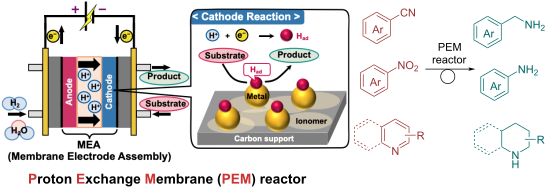
- synthesis. Therefore, the electroreduction of pyridine (8a) was performed (Table 6). First, the electroreduction of 8a was performed with 0.1 equiv of PTSA, and 1.0 equiv of PTSA was added after electrolysis to determine the yield by 1H NMR analysis (Table 6, entry 1). The yield of 9a·PTSA (26% yield) was
- mmol; solvent, CH2Cl2 (0.5 M); flow rate of the solution of 6a, 0.75 mL min−1; flow rate of H2 gas, 100 mL min−1; reaction temperature, room temperature; current density, 50 mA cm−2. The solution was circulated until the passage of 50 F mol−1 (10 h). The yields were determined by 1H NMR analysis using
- H2 gas, 100 mL min−1; reaction temperature, room temperature; current density, 50 mA cm−2 (10 h). The solution was circulated until the passage of 50 F mol−1. The yields were determined by 1H NMR analysis using 1,1,2,2-tetrachloroethane as an internal standard. Plausible mechanism for the reduction


Bioinformatic prediction of the stereoselectivity of modular polyketide synthase: an update of the sequence motifs in ketoreductase domain
Beilstein J. Org. Chem. 2024, 20, 1476–1485, doi:10.3762/bjoc.20.131
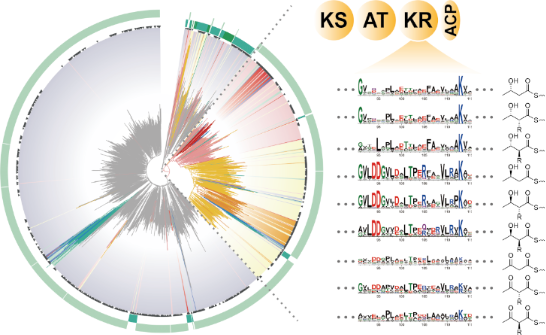
- product structures were experimentally determined, such as by crystallography, nuclear magnetic resonance (NMR) analysis or by chemical synthesis, were obtained for further analysis. The modules in PKSs were categorized as α-module (containing KS-AT-ACP tridomain), β-module (KS-AT-KR-ACP), γ-module (KS-AT


Selectfluor and alcohol-mediated synthesis of bicyclic oxyfluorination compounds by Wagner–Meerwein rearrangement
Beilstein J. Org. Chem. 2024, 20, 1462–1467, doi:10.3762/bjoc.20.129
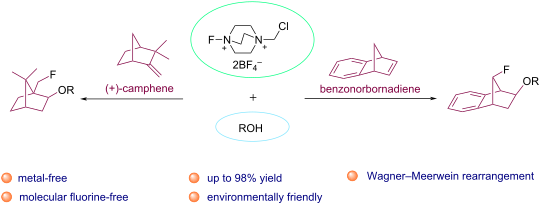
- his kind contributions for NMR analysis. Funding M.H.Ç. and B.N are grateful to The Scientific and Technological Research Council of Turkey (TUBİTAK) (Project number 2209-A) for financial support. Ziya Dağalan thanks to YÖK 100/2000 and TUBİTAK BİDEB 2211A program for their support.


Novel analogues of a nonnucleoside SARS-CoV-2 RdRp inhibitor as potential antivirotics
Beilstein J. Org. Chem. 2024, 20, 1029–1036, doi:10.3762/bjoc.20.91
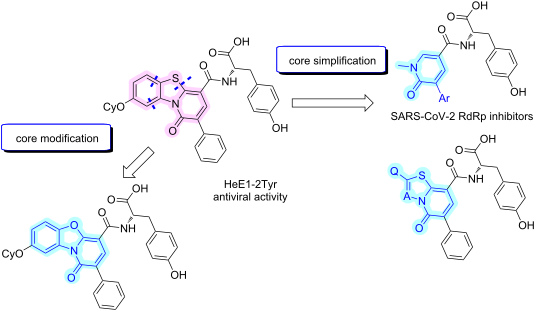
- insufficient evidence provided even by meticulous NMR analysis and eventually had to be confirmed by X-ray crystallography (Figure S1, Supporting Information File 1). Changing the ester function from an ethyl to an allyl group enabled a very mild cleavage using a Pd-mediated reaction with triethylsilane [28


Enantioselective synthesis of β-aryl-γ-lactam derivatives via Heck–Matsuda desymmetrization of N-protected 2,5-dihydro-1H-pyrroles
Beilstein J. Org. Chem. 2024, 20, 940–949, doi:10.3762/bjoc.20.84
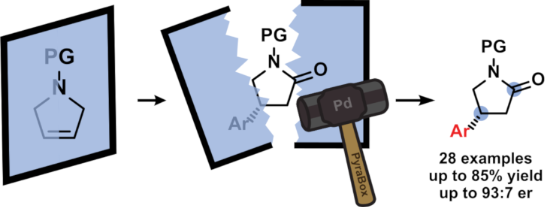
- data for the new compounds. Acknowledgements We acknowledge the Ph.D. student Otto Daolio Köster for the fruitful discussions and assistance with the experimental work, and Mr. Anderson S. Pedrosa for technical assistance with NMR analysis. Funding We thank the financial support of the São Paulo




Direct synthesis of acyl fluorides from carboxylic acids using benzothiazolium reagents
Beilstein J. Org. Chem. 2024, 20, 921–930, doi:10.3762/bjoc.20.82
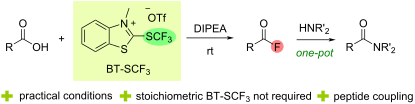
- equiv of NaH in DCM under conditions similar to our previous reports on the deoxygenative trifluoromethylthiolation of carboxylic acids [31]. 19F NMR analysis of the crude reaction mixture after 2 h at rt revealed no conversion towards the desired acyl fluoride product 2a, however, 30% of thioester 3a
- 1, entry 9). To further investigate the potential for reducing the loading of the deoxyfluorinating reagent, 0.5 equiv of the carboxylic acid substrate 1a was reacted with 0.5 equiv of both BT-SCF3 and DIPEA in DCM for 30 min at rt. 19F NMR analysis of the mixture indicated the clean formation of
- product resulting from addition of 1 to thiocarbonyl difluoride. After a further 30 minutes at rt, 19F NMR analysis of the crude mixture indeed indicated the formation of 2a in an overall yield of 74%, implying both pathways are feasible and that sub-stoichiometric amounts of BT-SCF3 relative to the