Search results
Search for "protonation" in Full Text gives 477 result(s) in Beilstein Journal of Organic Chemistry. Showing first 200.
Influence of the cation in hypophosphite-mediated catalyst-free reductive amination
Beilstein J. Org. Chem. 2025, 21, 1661–1670, doi:10.3762/bjoc.21.130

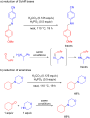
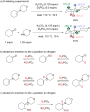
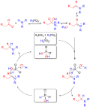
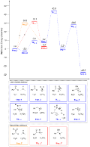
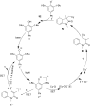
- the DFT calculations (Scheme 5, Figure 2). Firstly, reductive amination of an aldehyde started from a nucleophilic addition of the amine to the carbonyl group of the aldehyde. In the presence of acid, this step could occur via acidic catalysis involving a protonation step of an amine (Step_2) or
- protonation of an aldehyde (Step_2’). Due to the higher basicity of the secondary amine compared with the carbonyl group of benzaldehyde, protonation of dimethylamine was the main reaction pathway (30.9 vs −2.6 kcal/mol). However, it was found that the protonation of the carbonyl group led to a great
- weakly nucleophilic secondary ammonium cation to the carbonyl group occurred with ΔEa = 11.5 kcal/mol (TS2→3). In recent DFT [39] and experimental [40] studies on the reductive amination reaction it was postulated that this protonation of amine played a key role in the catalytic cycle especially in the


pH-Controlled isomerization kinetics of ortho-disubstituted benzamidines: E/Z isomerism and axial chirality
Beilstein J. Org. Chem. 2025, 21, 1568–1576, doi:10.3762/bjoc.21.120
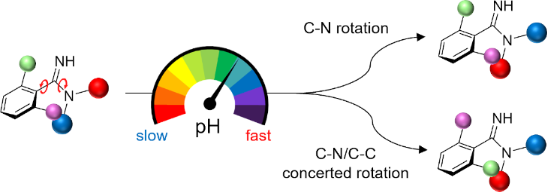
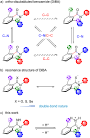
- barriers by protonation, providing a novel approach to control the kinetics of isomerization via pH adjustment. The results showed that protonation of the amidine moiety significantly suppresses both C–N bond rotation and C–N/C–C concerted rotation, demonstrating the potential of ortho-disubstituted
- triggered by protonation and deprotonation [1][2][3][4][5][6][7][8][9][10][11][12][13][14][15][16][17][18][19]. This class of molecules has the capacity to regulate three-dimensional structures and motions of molecules through simple acid–base stimuli. This provides a high degree of control over their
- switches [19]. For example, hydrazone-based molecular switches undergo reversible E/Z isomerization around the C=N bond [1][2][3][4][5][6][7], with protonation significantly shifting the equilibrium. Beyond double-bond isomerization, pH stimuli have also been employed to modulate rotational barriers in



General method for the synthesis of enaminones via photocatalysis
Beilstein J. Org. Chem. 2025, 21, 1535–1543, doi:10.3762/bjoc.21.116
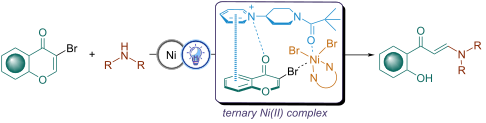
- bond of I is cleaved by PC1•, generating a C-centered radical II, which can be further reduced to give an enolate III, that ultimately evolves to the more stable anion IV and undergoes protonation to afford the final enaminone product 9a. Conclusion In summary, a simple and effective nickel-assisted




Azobenzene protonation as a tool for temperature sensing
Beilstein J. Org. Chem. 2025, 21, 1528–1534, doi:10.3762/bjoc.21.115
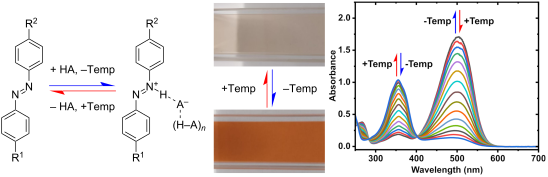
- changes in their absorption and photochemical properties. While azobenzene protonation has been recently used as a tool in photoswitching studies, the factors influencing protonation itself have received little attention. Here, we report a strong temperature dependence of azobenzene protonation in 1,2
- . Keywords: azobenzene; protonation; sensing; spectral changes; temperature; Introduction Molecular switches are molecules that can reversibly shift between distinct (meta)stable states in response to external stimuli such as light, pH changes, or electric fields [1]. Over the past decades, they have
- other transformations that can offer useful functionalities. These include ionization via protonation of one of the nitrogens forming the azo bond [12][13], azo–hydrazone tautomerization [14][15], and binding of analytes to side groups [16]. Such transformations depend on the azobenzene structure but


Ambident reactivity of enolizable 5-mercapto-1H-tetrazoles in trapping reactions with in situ-generated thiocarbonyl S-methanides derived from sterically crowded cycloaliphatic thioketones
Beilstein J. Org. Chem. 2025, 21, 1508–1519, doi:10.3762/bjoc.21.113
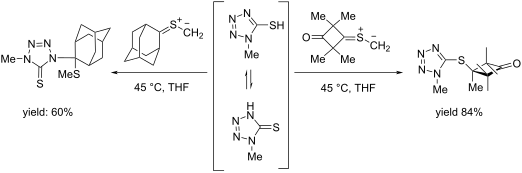
- publications [15], or/and from secondary processes, like an intramolecular rearrangement. Taking into account the postulated basicity (and nucleophilicity) of thiocarbonyl S-methanides 1 derived from cycloaliphatic thioketones [6], the initiating step of these processes can be presented as protonation of the


Advances in nitrogen-containing helicenes: synthesis, chiroptical properties, and optoelectronic applications
Beilstein J. Org. Chem. 2025, 21, 1422–1453, doi:10.3762/bjoc.21.106
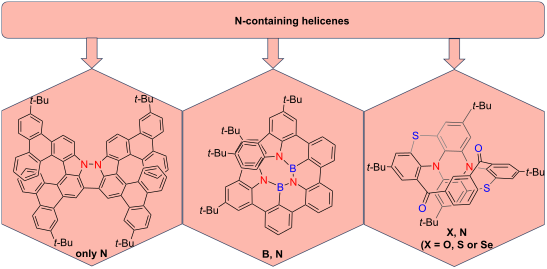
- 6 exhibiting enhanced chiroptical performance and protonation-induced CPL amplification [19]. Meanwhile, Audisio’s team developed heterohelicenes via regioselective [3 + 2]-cycloadditions, with compound 7 displaying pH-responsive CPL sign inversion (|glum| = +1.1 × 10⁻³ at 430 nm, −1.2 × 10⁻³ at 585
- length. Protonation further induced red-shifted emission, with compound 14d-H+ emitting at 542 nm. However, PLQYs decreased significantly from 0.078 to 0.006 with longer helicenes. The CD spectra of 14c and 14d were found to resemble their carbohelicene analogues, underscoring the structural fidelity and
- excellent UV stability and solvent-dependent fluorescence [91]. Protonation significantly enhanced their emission intensity, and the presence of nitrogen facilitated further structural derivatization. In the same year, Alcarazo’s group reported an enantioselective gold-catalyzed synthesis of compound 78

Tautomerism and switching in 7-hydroxy-8-(azophenyl)quinoline and similar compounds
Beilstein J. Org. Chem. 2025, 21, 1404–1421, doi:10.3762/bjoc.21.105
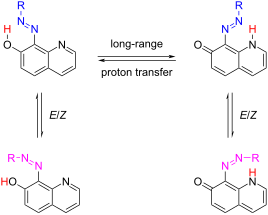
- OH functionality in compound 2 gives possibility to influence the tautomerism in this compound dynamically by protonation/deprotonation. The tautomeric and switching properties of compounds 1 and 2 have been revealed by using quantum-chemical calculations, UV–vis and NMR spectroscopy and UV




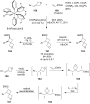
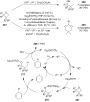
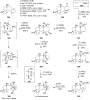
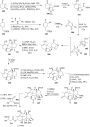
Oxetanes: formation, reactivity and total syntheses of natural products
Beilstein J. Org. Chem. 2025, 21, 1324–1373, doi:10.3762/bjoc.21.101










Recent advances in amidyl radical-mediated photocatalytic direct intermolecular hydrogen atom transfer
Beilstein J. Org. Chem. 2025, 21, 1306–1323, doi:10.3762/bjoc.21.100
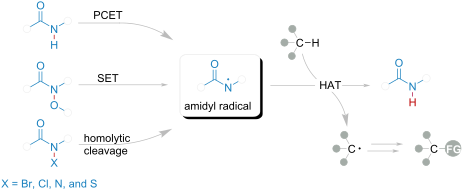
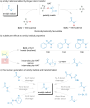
- , resulting in the formation of radical 21. Radical 21 then oxidized the photocatalyst radical anion to its ground state while simultaneously generating anion 22. Ultimately, anion 22 yielded product 19 through protonation. This system demonstrated good applicability, achieving yields of 53% to 60% for
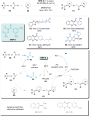
- promoted by the PC radical anion. The resulting anion 32 ultimately produced product 27 through protonation. This system demonstrated the significant HAT capability of amidyl radical 29, as evidenced by the synthesis of products 33, 34, and 35 with yields reaching 70% to 78%. Amidyl radical from N–N bond
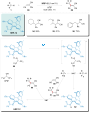
- carbanion, which undergoes either solvent-mediated protonation or direct proton transfer from the acridiniumamide, ultimately delivering product 89 while regenerating the zwitterionic HRP-12 catalyst. This catalytic platform demonstrated exceptional site selectivity in aliphatic C–H bromination under






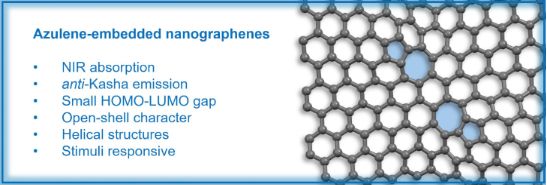
Recent advances and future challenges in the bottom-up synthesis of azulene-embedded nanographenes
Beilstein J. Org. Chem. 2025, 21, 1272–1305, doi:10.3762/bjoc.21.99
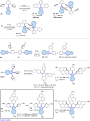
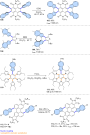
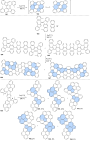
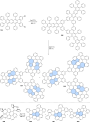
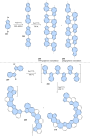
- using FeCl3 as the oxidant (Scheme 14) [70]. The use of K2CO3 as an additional base was necessary because residual moisture, in the presence of FeCl3, led to the protonation of the starting azulenes. Interestingly, when azulenes were substituted exclusively with phenyl groups, no desired product was
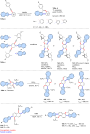
- was employed by Xin and co-workers in the synthesis of isomeric π-scaffolds (Scheme 19) [96]. Precursors 144a–c were annulated using PtCl2, yielding target PAHs 145–147 in yields ranging from 26% to 46%. Compounds 141–143 and 145–147 can undergo a two-fold protonation process, resulting in the
- optical absorption. The UV–vis absorption spectra, fluorescence properties and 1H NMR spectroscopy, indicate that 150 and 151 can be protonated to form the corresponding tropylium cation and consecutive dication under acidic conditions, with reversible protonation−deprotonation capabilities. Additionally






Recent advances in oxidative radical difunctionalization of N-arylacrylamides enabled by carbon radical reagents
Beilstein J. Org. Chem. 2025, 21, 1207–1271, doi:10.3762/bjoc.21.98
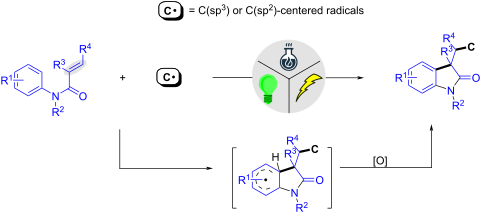
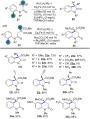
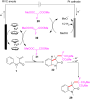
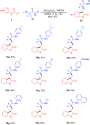
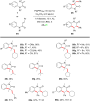
- ) catalyst is then regenerated at the Pt cathode. Protonation of D gives intermediate E, and subsequent deprotonation at the anode yields the target compound 35a. N-Arylalkenes: difluoroalkyl/trifluoroalkyl radicals While the majority of radical cyclizations involve hydrocarbon-based radicals, the














Enhancing chemical synthesis planning: automated quantum mechanics-based regioselectivity prediction for C–H activation with directing groups
Beilstein J. Org. Chem. 2025, 21, 1171–1182, doi:10.3762/bjoc.21.94
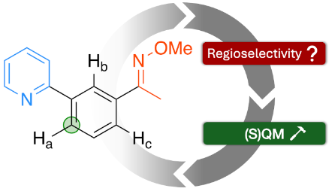
- simulating different solvent effects or examining the impact of different catalysts and ligands, extending beyond Pd(OAc)2. Additionally, accounting for varying reaction conditions, like conducting the reaction in acidic or basic environments, is possible by adjustments to the substrate-SMILES. Protonation


A multicomponent reaction-initiated synthesis of imidazopyridine-fused isoquinolinones
Beilstein J. Org. Chem. 2025, 21, 1161–1169, doi:10.3762/bjoc.21.92
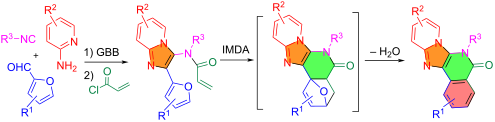
- intermediate 7, the carbonyl oxygen interacts with AlCl₃, enhancing the electrophilicity and promoting the rearrangement to form stable oxonium ions. The removal of water from 7 is facilitated by protonation, producing reactive carbocations which undergo dehydrative aromatization to produce products 8




A versatile route towards 6-arylpipecolic acids
Beilstein J. Org. Chem. 2025, 21, 1104–1115, doi:10.3762/bjoc.21.88
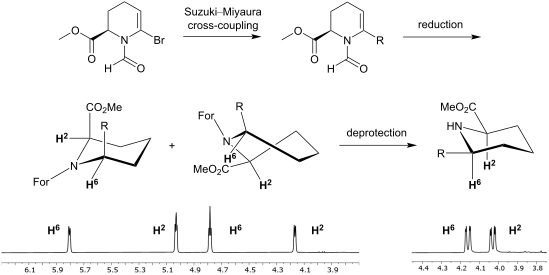
- to investigate how the configuration of the stereocenter in C2 position influences diastereoselectivity. In the first approach, NaBH3CN was used under acidic conditions to reduce the acyliminium intermediate formed from the N-acyl enamine upon protonation at C5, while in the second approach





Recent total synthesis of natural products leveraging a strategy of enamide cyclization
Beilstein J. Org. Chem. 2025, 21, 999–1009, doi:10.3762/bjoc.21.81
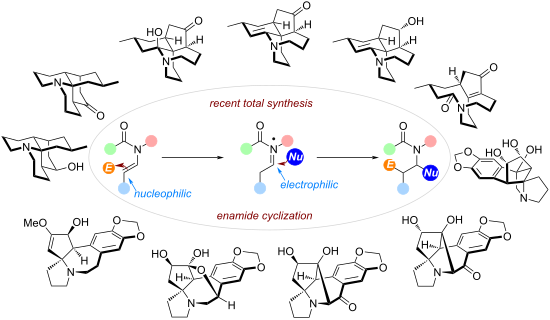
- cephalotaxine, cephalezomine H, (−)-cephalotaxine, (−)-cephalotine B, (−)-fortuneicyclidin A, (−)-fortuneicyclidin B, and (−)-cephalocyclidin A. Unlike enamines, tertiary enamides can participate in cyclization reactions initial as nucleophiles, and upon protonation, alkenylation, or alkylation, the resultant
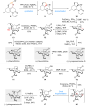
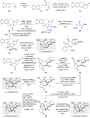
- , these methods offer promising strategies for the total synthesis of complex natural products. Review Aza-Prins cyclization – total synthesis of (−)-dihydrolycopodine and (−)-lycopodine Cyclizations of enamides can proceed via several distinct pathways. If protonation of the enamide occurs first, the
- quaternary center in a single step. As depicted in Scheme 1, key enamide 1 was prepared from (R)-pulegone in 6 steps. In the presence of the weak acid H3PO4, protonation of 1 generates a stabilized iminium ion 2, which then undergoes a 6-exo-trig cyclization to deliver 4 after hydration of cation 3. Notably



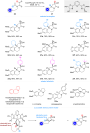


Recent advances in controllable/divergent synthesis
Beilstein J. Org. Chem. 2025, 21, 890–914, doi:10.3762/bjoc.21.73
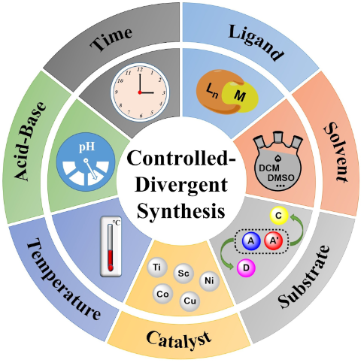
- Friedel–Crafts-type addition and protonation to complete ortho-position cyclization. In contrast, para-position cyclization was exclusively achieved through π–π interactions between the electron-rich X-phos ligand and the substrate, compensating for the electron-deficient nature of the aromatic system and
- is used as the inorganic base, bromine radicals abstract hydrogen to form product 75; whereas when Na2HPO4 is used as the inorganic base, its weaker basicity leads to protonation of complex Int-72 to form intermediate Int-73, which then preferentially undergoes single-electron transfer with the DPZ
- into the carbenoid unit, providing heptacyclic ruthenium ring intermediate Int-77. Intermediate Int-78 is then formed via ruthenium migration insertion into the C=N bond from Ru–C(alkyl). For diazoketoester substrates, the final product 81 is released from Int-78 through protonation, intramolecular


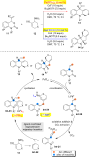

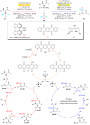




Cu–Bpin-mediated dimerization of 4,4-dichloro-2-butenoic acid derivatives enables the synthesis of densely functionalized cyclopropanes
Beilstein J. Org. Chem. 2025, 21, 877–883, doi:10.3762/bjoc.21.71
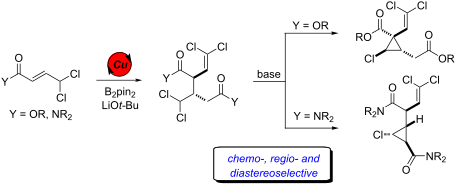
- reaction in the presence of MeOH in order to trap the potential copper intermediate by protonation. When 2 equiv of MeOH were used, we still obtained the dimerization product 2. Nevertheless, when a catalytic amount of base was used, we only observed the formation of β-borylation product 12 (Scheme 3b
- . Finally, the new enolate E evolves through intramolecular proton abstraction and elimination of boryllithium [20][21]. The formation of side product 3 observed when dichloromethane was used as a solvent could be explained by protonation of intermediate A, followed by transmetalation of the resulting


4-(1-Methylamino)ethylidene-1,5-disubstituted pyrrolidine-2,3-diones: synthesis, anti-inflammatory effect and in silico approaches
Beilstein J. Org. Chem. 2025, 21, 817–829, doi:10.3762/bjoc.21.65
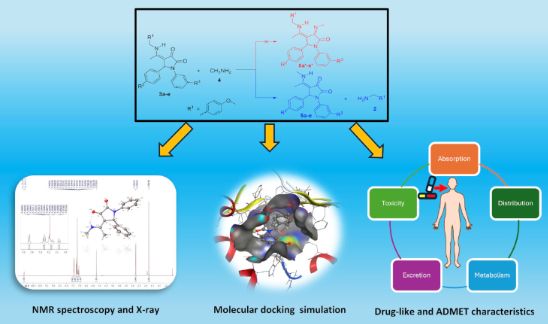
- using the pkCSM web server [28]. Docking molecular simulation: The structure of nitric oxide synthase (iNOS) protein (PDB ID: 3E7G) [45] was obtained from the Protein Data Bank. Protonation of the protein was carried out using the Protonate 3D tool in MOE to assign correct protonation states at pH 7.4


Synthesis of N-acetyl diazocine derivatives via cross-coupling reaction
Beilstein J. Org. Chem. 2025, 21, 490–499, doi:10.3762/bjoc.21.36
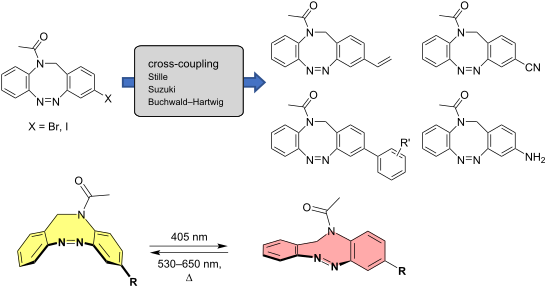
- pH 7.4 compared to 41% in acetonitrile, while in acidic aqueous media a PSS of 62% E for the Z→E photoisomerization was observed. This is due to the complete protonation of the amino group converting it to an electron-deficient substituent. The thermal half-lives of 13 and 21 increase by a factor of


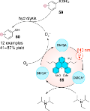
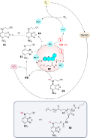
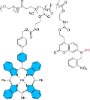
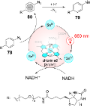
Red light excitation: illuminating photocatalysis in a new spectrum
Beilstein J. Org. Chem. 2025, 21, 296–326, doi:10.3762/bjoc.21.22
















Dioxazolones as electrophilic amide sources in copper-catalyzed and -mediated transformations
Beilstein J. Org. Chem. 2025, 21, 200–216, doi:10.3762/bjoc.21.12
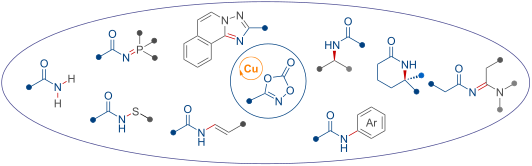
- the targeted amidated product upon protonation, while simultaneously regenerating the active copper hydride species. 2.2 Hydroamidation of alkynes In 2022, Sato and co-workers introduced a copper-catalyzed hydroamidation of alkynes 25 using dioxazolones 24 as amide sources (Scheme 9) [99]. A


Cu(OTf)2-catalyzed multicomponent reactions
Beilstein J. Org. Chem. 2025, 21, 122–145, doi:10.3762/bjoc.21.7

- involves a Friedel–Crafts alkylation of the arene followed by hydroamination (Scheme 6) [5]. The mechanism plausibly starts with the in situ formation of triflic acid from Cu(OTf)2 which leads to protonation of the oxygen atom of the alcohol with generation of the activated allyl alcohol. This latter gives
- the allyl carbenium ion VI through the loss of a molecule of water, then undergoes a Friedel–Crafts alkylation by attack of the aromatic partner. The outcome of the reaction proceeds through a Markovnikov protonation of the allylated arene VII by triflic acid, which generates the carbocation










Recent advances in organocatalytic atroposelective reactions
Beilstein J. Org. Chem. 2025, 21, 55–121, doi:10.3762/bjoc.21.6
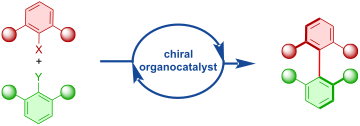
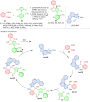
- acylazolium intermediate Int-16 followed by E-selective protonation of Int-17 (Scheme 9). NHC-catalysis also proved useful in the atroposelective construction of triaryl derivatives with two stereogenic axes. Wei, Du, and co-workers developed a synthesis of 1,2-diaxially chiral triarylpyranones 29 via an NHC
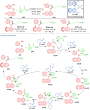
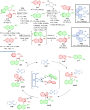
- between the ketomalonate and organocatalyst Int-68 were shown as the pivotal interaction that formed the chiral pocket for the induction of chirality. Nucleophilic addition followed by rearomatization of the pyrrole ring and protonation of the oxygen forms the axially chiral arylpyrrole 237. The









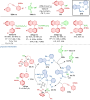


Giese-type alkylation of dehydroalanine derivatives via silane-mediated alkyl bromide activation
Beilstein J. Org. Chem. 2024, 20, 3274–3280, doi:10.3762/bjoc.20.271
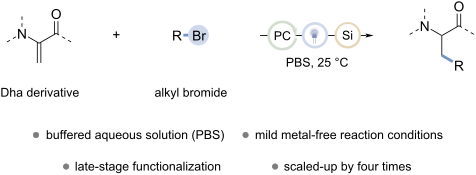
- pathway for the functionalization of an electron-deficient olefin is the Giese reaction (Figure 1) [6][7]. This reaction involves the hydroalkylation of the olefin via radical addition (RA), followed by either hydrogen-atom transfer (HAT) or single-electron transfer (SET) and protonation. Traditionally
- slight increase in chemical yield. Giese reaction: Radical addition on olefins with an electron-withdrawing group (EWG) followed by a HAT or SET and protonation; halogen-atom transfer: (a) tin-mediated XAT, (b) XAT initiated by a photocatalyst (PC) and mediated by boranes (B), silanes (Si) or alkylamines



Non-covalent organocatalyzed enantioselective cyclization reactions of α,β-unsaturated imines
Beilstein J. Org. Chem. 2024, 20, 3221–3255, doi:10.3762/bjoc.20.268
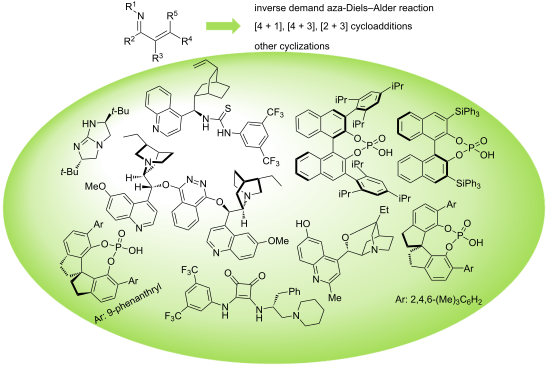
- azlactones through H-bond interactions with the squaramide moiety. The activated complex undergoes a [4 + 2] cyclization, through the Si-face attack of the enolate to the 1-azadiene leading to intermediate A which undergoes tautomerization and protonation to yield the chiral tricyclic derivative 16. To
- azadiene in a stepwise mechanism: firstly, the vinylogous Michael addition of the dienolate to the double bond of the α,β-unsaturated N-sulfonylimine occurs in a stereoselective fashion. Subsequently, cyclization due to an intramolecular aza-Michael reaction and protonation leads to the enantioenriched
- carbanion to the isocyanate group forming intermediate B which undergoes protonation yielding the product. The authors attempted to perform different reductions of the products without any success. However, they performed a gram scale version of the transformation obtaining the product in comparable yields