Search results
Search for "mass spectrometry" in Full Text gives 685 result(s) in Beilstein Journal of Organic Chemistry. Showing first 200.
Structure and thermal stability of phosphorus-iodonium ylids
Beilstein J. Org. Chem. 2024, 20, 2931–2939, doi:10.3762/bjoc.20.245
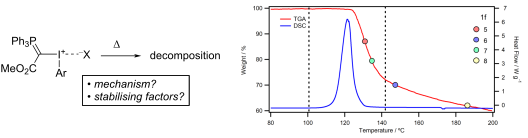
- understanding of the decomposition mechanism. Despite large differences in Tonset, most samples showed relatively consistent second decomposition steps at ca. 225 °C (Figure 3b), which is indicative of a common decomposition intermediate for all compounds. To investigate this common intermediate, ex-situ mass
- spectrometry (MS) and NMR analysis were carried out on aborted TGA runs of compounds 1e, 1i, 1j and 1k that had been held at a constant temperature T1 (50–140 °C, see Supporting Information File 1) under an N2 atmosphere in open pans for 30 min or until a mass loss >5% of the original mass was observed, then


The charge transport properties of dicyanomethylene-functionalised violanthrone derivatives
Beilstein J. Org. Chem. 2024, 20, 2921–2930, doi:10.3762/bjoc.20.244
- materials. Supporting Information Supporting Information File 30: NMR spectra of compounds, crystallographic informnation and OFET plots. Acknowledgements We acknowledge EPSRC UK National Mass Spectrometry Facility at Swansea University and EPSRC UK National Crystallography Service. Funding Sondos


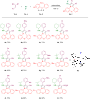
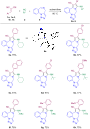
Synthesis of pyrrole-fused dibenzoxazepine/dibenzothiazepine/triazolobenzodiazepine derivatives via isocyanide-based multicomponent reactions
Beilstein J. Org. Chem. 2024, 20, 2870–2882, doi:10.3762/bjoc.20.241
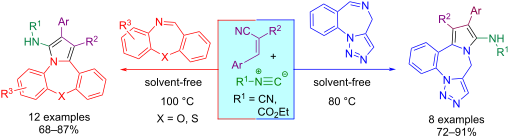
- mass spectrometry. Taking 4h as an example for the analysis of its structure, in its 1H NMR spectrum, one singlet signal appears at δ = 0.67 (9H) corresponding to the three methyl groups in the tert-butyl substituent. A singlet at δ = 2.39 (3H) is assigned to the protons of the CH3-group on the phenyl





Investigation of a bimetallic terbium(III)/copper(II) chemosensor for the detection of aqueous hydrogen sulfide
Beilstein J. Org. Chem. 2024, 20, 2818–2826, doi:10.3762/bjoc.20.237
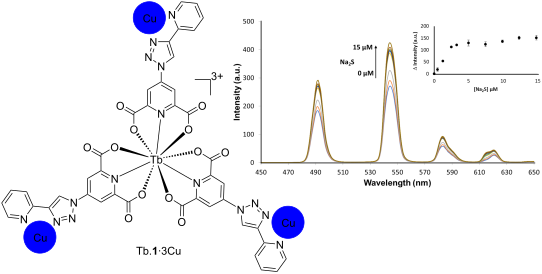
- conditions. High-resolution mass spectrometry (HRMS) analysis and the 1H NMR spectrum were consistent with formation of the Tb.1 complex (Figures S1 and S2 in Supporting Information File 1). Luminescence characterization of Tb.1 As anticipated, based on the previously reported europium complex ([Eu(triazole
- magnetic resonance (1H NMR) spectra was recorded on a Bruker DRX400 spectrometer operating at 400 MHz. High-resolution mass spectrometry (HRMS) was performed using a Bruker BioApex 47e FTMS with an analytical electrospray source employing NaI for accurate mass calibration (ESI). UV–vis absorption spectra


C–C Coupling in sterically demanding porphyrin environments
Beilstein J. Org. Chem. 2024, 20, 2784–2798, doi:10.3762/bjoc.20.234
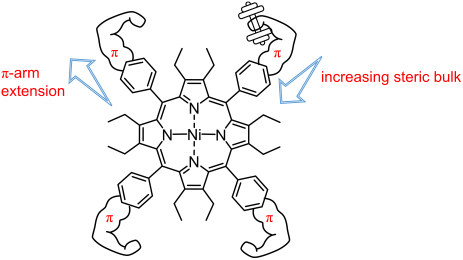
- compared to the 85 °C used in the synthesis of the para-equivalent 26 gave no conversion and was accompanied by the formation of palladium black [49]. No reactivity was observed by either TLC or mass spectrometry when switching back to Pd2(dba)3 with three different ligands SPhos, XantPhos, and Rac-Binap
- (Table 3, entries 7 and 8). The same success could not be replicated for OET-o-BrPPs with no reactivity being observed by TLC or by mass spectrometry. Likewise, a microwave-assisted coupling [48], resulted in no product formation (Table 3, entry 9). Thiophene-3-ylboronic acid (21) was also chosen for
- thank Dr. Gary Hessman from the Mass Spectrometry Unit in Trinity College Dublin for acquiring APCI data used in this manuscript. Funding This project has received funding from Science Foundation Ireland (SFI award 21/FFP-A/9469, PORPHYSHAPE) and was supported by the Technical University of Munich


The scent gland composition of the Mangshan pit viper, Protobothrops mangshanensis
Beilstein J. Org. Chem. 2024, 20, 2644–2654, doi:10.3762/bjoc.20.222
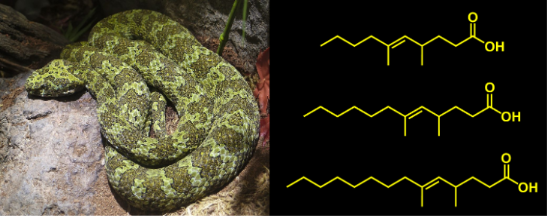
- , proline-containing diketopiperazines were identified for the first time in snake scent glands, although an artificial formation from amino acids likely present in the secretion cannot be excluded. Keywords: carboxylic acids; identification; mass spectrometry; pheromones; snakes; Introduction Located in
- investigated by direct inlet atmospheric solids analysis probe-atmospheric mass spectrometry (ASAP-APCI-MS), which allows the detection of secondary metabolites up to a molecular mass of 1,500 Da, but no additional compounds were detected. A more detailed description of the use of this method in natural
- column (30 m × 0.25 mm, 0.25 µm film thickness) with helium as the carrier gas. The eluted compounds were applied to a ZnSe disk rotating at 4 mm/min at −40 °C. The resulting IR spectra were processed using GRAMS/AI 9.2 software (Thermo Fisher Scientific). High-resolution mass spectrometry data were


Base-promoted cascade recyclization of allomaltol derivatives containing an amide fragment into substituted 3-(1-hydroxyethylidene)tetronic acids
Beilstein J. Org. Chem. 2024, 20, 2585–2591, doi:10.3762/bjoc.20.217
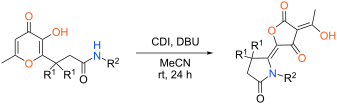
- formation of various unidentified byproducts. The obtained tetronic acids 4 are solid crystalline compounds, whose structure was proved by 1H, 13C NMR spectroscopy and high-resolution mass spectrometry. The 1H NMR spectra of the synthesized products contain characteristic signals of protons of the methyl


Anion-dependent ion-pairing assemblies of triazatriangulenium cation that interferes with stacking structures
Beilstein J. Org. Chem. 2024, 20, 2567–2576, doi:10.3762/bjoc.20.215
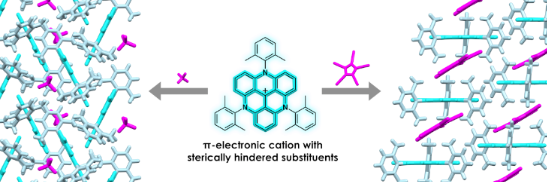
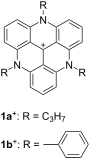
- desorption ionization time-of-flight mass spectrometry (MALDI–TOF MS). The synthesized ion pairs showed similar electronic properties in solution state. In CH3CN, 2+-BF4− exhibited UV–vis absorptions at 273, 350, and 524 nm and fluorescence emission at 607 nm upon excitation at 524 nm. The absorption band at



Visible-light-mediated flow protocol for Achmatowicz rearrangement
Beilstein J. Org. Chem. 2024, 20, 2493–2499, doi:10.3762/bjoc.20.213
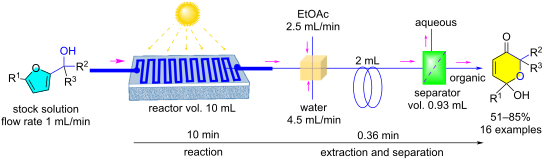
- corresponding products (3o, 3p) in good yields. All the products obtained were characterized by 1H NMR, 13C NMR and mass spectrometry techniques. A plausible catalytic cycle has been postulated based on a literature study [13], and is shown in Figure 2. With the exposure of photocatalyst to sunlight/LED light


Phenylseleno trifluoromethoxylation of alkenes
Beilstein J. Org. Chem. 2024, 20, 2434–2441, doi:10.3762/bjoc.20.207
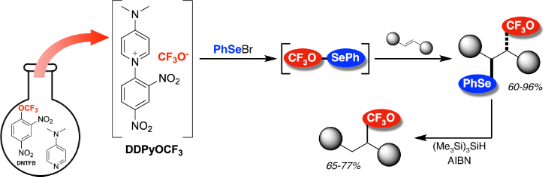
- experimental and analytical data and NMR spectra. Acknowledgements The NMR Center and the Mass Spectrometry Center are acknowledged for their analysis. Funding The authors are grateful to the French National Research Agency (ANR; grant no. 20-CE07-0004-02, Ap-PET-I). The CNRS, the French Ministry of Education



Tandem diazotization/cyclization approach for the synthesis of a fused 1,2,3-triazinone-furazan/furoxan heterocyclic system
Beilstein J. Org. Chem. 2024, 20, 2342–2348, doi:10.3762/bjoc.20.200
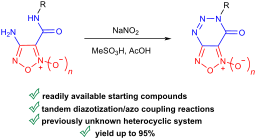
- , indicating that the developed tandem protocol does not depend on the presence of the N-oxide moiety in the parent heterocycle. All synthesized triazinones 1 and 7 were fully characterized by IR, 1H and 13C NMR spectroscopy, and high-resolution mass spectrometry. The structure of compounds 1b and 7h was


Improved deconvolution of natural products’ protein targets using diagnostic ions from chemical proteomics linkers
Beilstein J. Org. Chem. 2024, 20, 2323–2341, doi:10.3762/bjoc.20.199
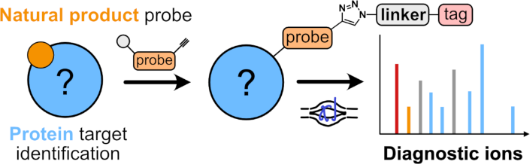
- action on a molecular level. To search elusive, often labile, and low-abundant conjugates between proteins and active compounds, chemical proteomics introduces a feasible strategy that allows to enrich and detect these conjugates. Recent advances in mass spectrometry techniques and search algorithms
- identification rates and may help to identify otherwise difficult to find interactions between active compounds and proteins, which may result from unperturbed conditions, and thus are of high physiological relevance. Keywords: chemical proteomics; diagnostic ions; mass spectrometry; target identification
- disease [2][3]. In parallel, mass spectrometry (MS) has been crucial in many areas centered around the characterization of NPs [4]. First to annotate their often complex structures using diverse fragmentation techniques [4]. Nowadays, MS is applied for the identification of NPs’ cellular protein targets




Deuterated reagents in multicomponent reactions to afford deuterium-labeled products
Beilstein J. Org. Chem. 2024, 20, 2270–2279, doi:10.3762/bjoc.20.195
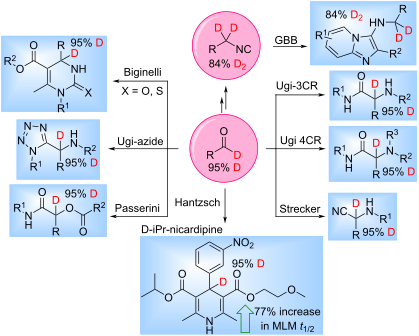
- . Optimization of deuterated Leuckart–Wallach reactiona. Microsomal stability package of deuterated and non-deuterated dihydropyridines. Supporting Information Supporting Information File 86: Experimental and analytical data and copies of NMR spectra. Acknowledgements We thank the UA mass spectrometry and NMR


Novel truxene-based dipyrromethanes (DPMs): synthesis, spectroscopic characterization and photophysical properties
Beilstein J. Org. Chem. 2024, 20, 2163–2170, doi:10.3762/bjoc.20.186
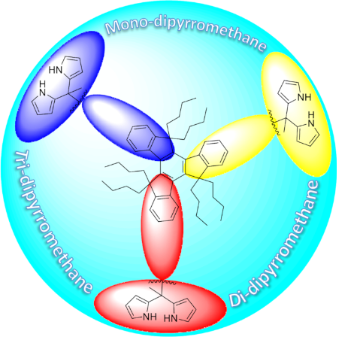
- derivatives were successfully characterized and their structures were established by means of the 1H and 13C NMR spectroscopy, besides further confirmation by mass spectrometry (see Supporting Information File 1). The UV–vis absorption, emission and time-resolved fluorescence spectra Emission and absorption


A facile three-component route to powerful 5-aryldeazaalloxazine photocatalysts
Beilstein J. Org. Chem. 2024, 20, 1831–1838, doi:10.3762/bjoc.20.161
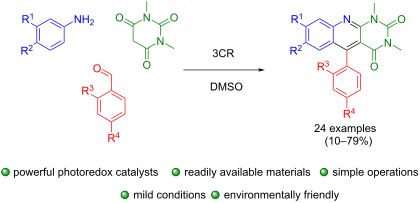
- unexpected structure of product 6 was confirmed by 1H, 13C NMR and mass spectrometry. The main feature of the 1H NMR spectrum of compound 6 is the absence of the signals of the aromatic aldehyde moiety and the appearance of the singlet of the 5-CH methyne group at 9.56 ppm and the singlets of the protons of
- source in this reaction, a deuterium labelling experiment was conducted (Scheme 2C). Indeed, the deazaalloxazine derivative 6-d with quantitative incorporation of deuterium in C(5) position, was isolated and confirmed by 1H NMR analysis and mass spectrometry (for more details on possible reaction




Ugi bisamides based on pyrrolyl-β-chlorovinylaldehyde and their unusual transformations
Beilstein J. Org. Chem. 2024, 20, 1773–1784, doi:10.3762/bjoc.20.156
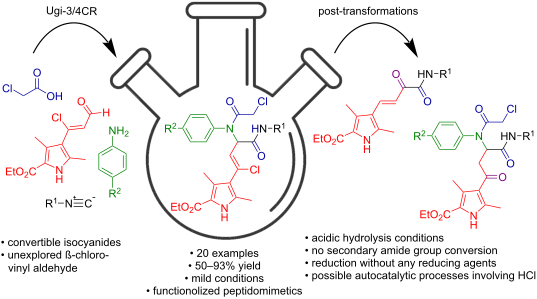
- stirring for three hours (Scheme 3, conditions A). However, the results of this attempted post-Ugi transformation were quite unexpected: Instead of acid 11, we isolated the amide of the unsaturated derivative of pyruvic acid 10a according to the 1H and 13C NMR spectra and mass spectrometry data. In order
- conventional thermal heating, amide 10a was isolated, albeit in a lower yield and accompanied with tar formation. In addition to the 1H, 13C NMR spectra and mass spectrometry data, the structure of compound 10d was established by X-ray diffraction analysis (Figure 3). It was also found that the substituents at


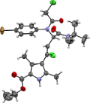


Oxidation of benzylic alcohols to carbonyls using N-heterocyclic stabilized λ3-iodanes
Beilstein J. Org. Chem. 2024, 20, 1677–1683, doi:10.3762/bjoc.20.149
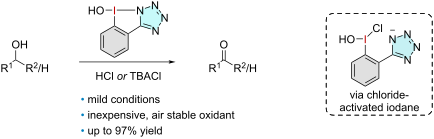
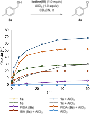
- detected as a side reaction via mass spectrometry. Vinyl alcohols were also studied, giving carvone (4v) in 74% yield without oxidation of the double bonds. Finally, other heterocyclic benzylic alcohols were investigated, which led to undesired chlorinations in the case of benzimidazoles 3w and 3x and




Polymer degrading marine Microbulbifer bacteria: an un(der)utilized source of chemical and biocatalytic novelty
Beilstein J. Org. Chem. 2024, 20, 1635–1651, doi:10.3762/bjoc.20.146
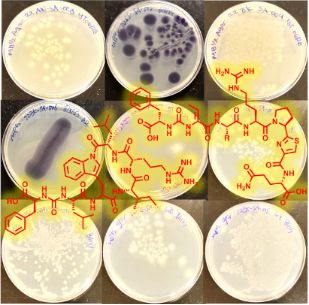
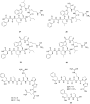
- known parabens (2, 5, 6, and 11), five new ones (7–10, and 12) were identified. Their structures were elucidated by high-resolution mass spectrometry (HRMS) and 1D and 2D nuclear magnetic resonance (NMR). The configuration in 8 and 10 remained undetermined. Antimicrobial activities of compounds 2 and 5
- Microbulbifer bacteria and is not limited to Microbulbifer strains isolated from either coral or sponge microbiomes. Imaging mass spectrometry demonstrated that bulbiferamides are excreted by Microbulbifer bacterial colonies into the extracellular media. Based on the characteristic mass spectrometric




New triazinephosphonate dopants for Nafion proton exchange membranes (PEM)
Beilstein J. Org. Chem. 2024, 20, 1623–1634, doi:10.3762/bjoc.20.145
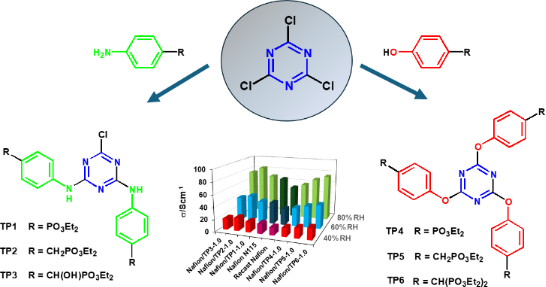
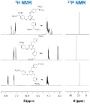
- characterization of the dopants was carried out by Fourier-transform infrared spectroscopy (FTIR), nuclear magnetic resonance (NMR) spectroscopy and mass spectrometry (MS). 1H, 13C and 31P NMR characterization was done using different one- and two-dimensional techniques, and were obtained on a Bruker Avance III HD




Hypervalent iodine-catalyzed amide and alkene coupling enabled by lithium salt activation
Beilstein J. Org. Chem. 2024, 20, 1405–1411, doi:10.3762/bjoc.20.122

- . Acknowledgements We thank Dr. Yong W. Kim (University of Toledo) for NMR assistance. Mr. Babatunde Obadawo (University of Toledo) is acknowledged for collecting the high-resolution mass spectrometry data. We acknowledge Dr. Navdeep Kaur’s Ph. D. for her contributions in her Ph. D. thesis titled “Selective



Synthesis of 1,2,3-triazoles containing an allomaltol moiety from substituted pyrano[2,3-d]isoxazolones via base-promoted Boulton–Katritzky rearrangement
Beilstein J. Org. Chem. 2024, 20, 1334–1340, doi:10.3762/bjoc.20.117
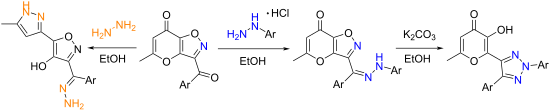
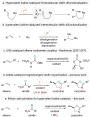
- spectroscopy and high-resolution mass spectrometry. Moreover, X-ray analysis was used for confirmation of structure of compound 4g (Figure 1). A plausible mechanism of the studied rearrangement is presented in Scheme 5. At first, anion A is generated from starting hydrazone 3 under action of base. Next
- obtained the recyclized product 6a (Scheme 6), whose structure was confirmed by 1H, 13C NMR spectroscopy, high-resolution mass spectrometry and X-ray analysis. Based on the aforementioned reaction we have synthesized a set of pyrazolylisoxazoles 6 (Scheme 7). The proposed mechanism of investigated


Computation-guided scaffold exploration of 2E,6E-1,10-trans/cis-eunicellanes
Beilstein J. Org. Chem. 2024, 20, 1320–1326, doi:10.3762/bjoc.20.115

- crystallographic information. Acknowledgements We acknowledge the University of Florida Center for Nuclear Magnetic Resonance Spectroscopy and Ion Ghiviriga for excellent NMR support. We acknowledge the University of Florida Mass Spectrometry Research and Education Center (MSREC), which is supported by the NIH


Diameter-selective extraction of single-walled carbon nanotubes by interlocking with Cu-tethered square nanobrackets
Beilstein J. Org. Chem. 2024, 20, 1298–1307, doi:10.3762/bjoc.20.113
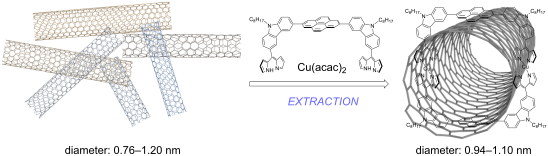
- extraction, the square Cu-nanobrackets 1b were successfully obtained by the reaction between the nanobracket 4b and copper(II) acetylacetonate in THF at room temperature. The product was characterized as 1b by MALDI-TOF mass spectrometry (Figure 1a), absorption (Figure 1b) and Raman (Figure 2c




Synthesis of indano[60]fullerene thioketone and its application in organic solar cells
Beilstein J. Org. Chem. 2024, 20, 1270–1277, doi:10.3762/bjoc.20.109
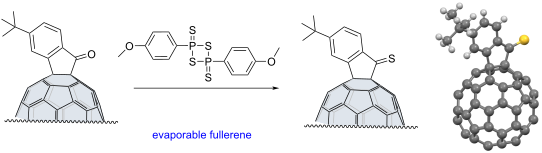
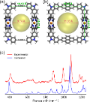
- amount of Lawesson's reagent was increased to 3 equiv (Table 1, entry 5), the signal of thioketone was observed for the first time by high-performance liquid chromatography (HPLC) and MALDI time-of-flight mass spectrometry. Subsequently, a conversion of 99% was achieved by further increasing the amount


Mechanistic investigations of polyaza[7]helicene in photoredox and energy transfer catalysis
Beilstein J. Org. Chem. 2024, 20, 1236–1245, doi:10.3762/bjoc.20.106
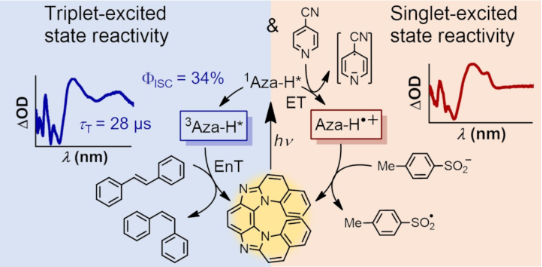
- , Supporting Information File 1) [76]. A reaction course plot in the absence of 4CP and TsNa revealed rapid decomposition of the photocatalyst, presumably in a [2 + 2]-photocycloaddition with the styrene component as observed in mass spectrometry (see Figure S17 and Figure S18 in Supporting Information File 1
- reported similar efficiencies for the formation of both isomers starting from the perpendicular triplet state (Figure 5E) [35][83]. In contrast to styrene substrates, mass spectrometry shows no addition products of catalyst and stilbene. Hence, the photocatalyst is not consumed by side reactions