Search results
Search for "LED" in Full Text gives 2063 result(s) in Beilstein Journal of Organic Chemistry. Showing first 200.
Calcium waste as a catalyst in the transesterification for demanding esters: scalability perspective
Beilstein J. Org. Chem. 2025, 21, 1520–1527, doi:10.3762/bjoc.21.114
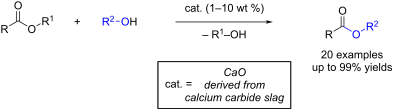
- of δ-valerolactone (4e) successfully led to the opening of the ring structure of the lactone and the formation of methyl 5-hydroxypentanoate (5e) in 91% yield at a catalyst loading of 1 wt % and for 3 h. The transesterification of triglycerides obtained from the esterification of linear saturated C5


Ambident reactivity of enolizable 5-mercapto-1H-tetrazoles in trapping reactions with in situ-generated thiocarbonyl S-methanides derived from sterically crowded cycloaliphatic thioketones
Beilstein J. Org. Chem. 2025, 21, 1508–1519, doi:10.3762/bjoc.21.113
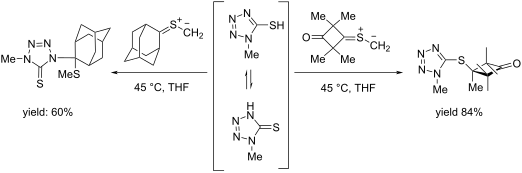
- CH2Cl2 led to isolation of a colorless, crystalline material with a narrow melting point of 107‒109 °C (yield 66%). The 1H NMR spectrum registered for the purified product perfectly fitted with that one of the crude mixture and thereby confirmed formation of a single product with a single set of the Me‒S
- observed in reactions with 1b. For example, thermal decomposition of 2b performed in THF solution at 45 °C in the presence of 4a (molar ratio 1.1:1.0) led to the exclusive formation of the S-insertion product, i.e., dithioacetal 10c, which was isolated after chromatographic workup as a crystalline compound
- , trapping reactions (toluene, 60 °C) performed with 2d, functionalized with two spiro-cyclohexyl rings, and 5-mercaptotetrazoles 4a‒e led selectively to dithioacetals 10m‒q, which could be separated chromatographically as crystalline materials in good yields (46‒89%). Isomeric thioaminals of type 9 were not


Heterologous biosynthesis of cotylenol and concise synthesis of fusicoccane diterpenoids
Beilstein J. Org. Chem. 2025, 21, 1489–1495, doi:10.3762/bjoc.21.111
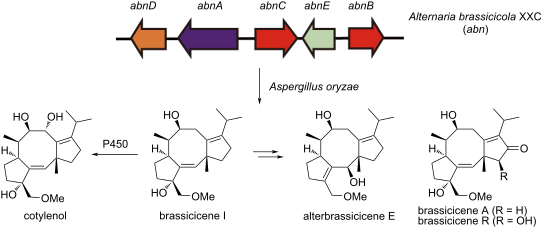
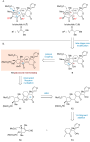
- ][23][24][25][26]. Most of these synthetic approaches rely on similar strategies, i.e., coupling of the A ring and the C ring followed by the formation of the B ring. Additionally, the semisynthesis of analogues of 1 has been reported and led to the discovery of ISIR-050 (4), which shows higher


Photoredox-catalyzed arylation of isonitriles by diaryliodonium salts towards benzamides
Beilstein J. Org. Chem. 2025, 21, 1480–1488, doi:10.3762/bjoc.21.110
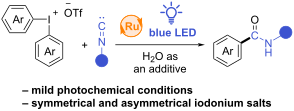
- as Cs2CO3 (Table 1, entry 10) and KOH (Table 1, entry 11) led to diminished yields, reducing the product formation to 30% and 11%, respectively. In both cases we observed substantial decomposition of the iodonium salt affecting the yield of the desired product. We also performed the reaction with
- photochemical reactions such as the reagents concentrations and ratio. Surprisingly, both dilution of the reaction mixture to 0.05 M and concentration to 0.2 M led to reduced yields (Table 1, entries 12 and 13) compared to the optimal concentration of 0.1 M. Furthermore, the yield of 2aa exhibited minimal
- [Ru(bpy)3](PF6)2 as the photocatalyst, under an Ar atmosphere with irradiation by blue LED light (Table 1, entry 2). With the optimized conditions in hands, a series of benzamides 2aa–je were synthesized using various symmetrical diaryliodonium salts 1a–k and isonitriles (Scheme 2). The analysis of


Microwave-enhanced additive-free C–H amination of benzoxazoles catalysed by supported copper
Beilstein J. Org. Chem. 2025, 21, 1462–1476, doi:10.3762/bjoc.21.108
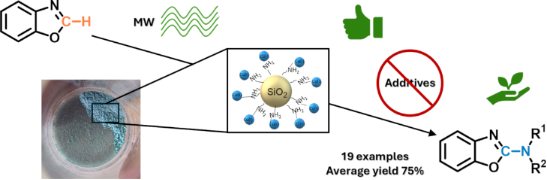
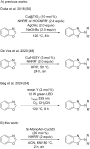
- weak oxidants. MW irradiation has led to a significant enhancement in reaction rate with the reaction running to completion in only 1.5–2 h. The derivatisation of silica with pendent primary amino groups has granted it the capability to stably support copper(I) and (II) in a cheap and efficient MW
- -promoted procedure that has been optimised with solid-supported Cu(I). The heterogeneous process dramatically simplified the work-up of the reaction, allowing the catalyst to be removed from the reaction mixture via simple filtration. Moreover, it led to an increase in the amount of recovered products and



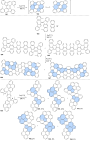
Advances in nitrogen-containing helicenes: synthesis, chiroptical properties, and optoelectronic applications
Beilstein J. Org. Chem. 2025, 21, 1422–1453, doi:10.3762/bjoc.21.106
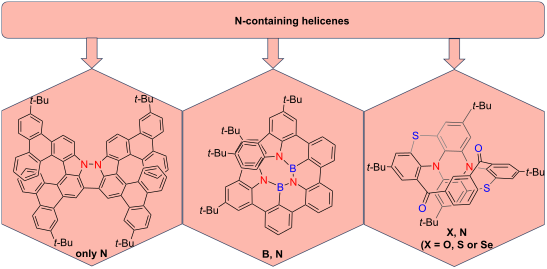
- × 10−2, respectively), its PLQY was relatively low (24%). Further molecular optimization led to the development of compounds 53a–c, which demonstrated ultra-narrow emission bands (FWHM = 16–34 nm), high PLQYs (67–82%), and exceptional CPL brightness (BCPLs of 583, 374, and 349 M−1 cm−1, respectively
- reported a bis(N,Se)-hetero[4]helicene 59b and systematically compared its structural and dynamic properties with those of its sulfur analogue 59a [74]. Despite their close structural resemblance, the longer C–Se bond in 59b led to a markedly higher racemization barrier (145.7 vs 112.8 kJ/mol), thereby
- two π-extended hetero[6]helicenes – 61a and 61b – incorporating thiadiazole and selenadiazole moieties, respectively [76]. Substitution of sulfur with selenium enhanced intermolecular interactions and led to a notable reduction in the optical bandgap, highlighting the effectiveness of heteroatom

Reactions of acryl thioamides with iminoiodinanes as a one-step synthesis of N-sulfonyl-2,3-dihydro-1,2-thiazoles
Beilstein J. Org. Chem. 2025, 21, 1397–1403, doi:10.3762/bjoc.21.104
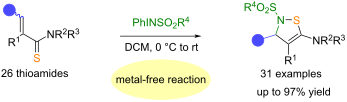
- using [Cu(MeCN)4]OTf instead of Rh2(Piv)4, the target product 3aa was obtained in higher yield (72%, Table 1, entry 2) and with [Cu(MeCN)4]PF6, the yield of 1,2-thiazole 3aa increased to 82%, while the reaction time decreased significantly (Table 1, entry 3). Using Cu(OAc)2 as a catalyst led to a slight
- compounds 3aa–af allowed us to conclude that these decreased when electron-accepting groups (R4) were present in the iminoiodinane reactant. Thus, the replacement of the methyl group in 3af with a tolyl group in 3aa led to a 15% decrease of the yield of the target product. This effect can be explained by an



N-Salicyl-amino acid derivatives with antiparasitic activity from Pseudomonas sp. UIAU-6B
Beilstein J. Org. Chem. 2025, 21, 1388–1396, doi:10.3762/bjoc.21.103
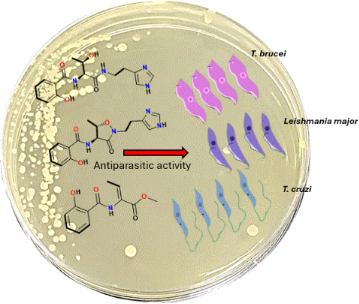
- in the soil and thereby inhibiting the growth and sporulation of several pathogenic microorganisms [14]. In our effort to discover new bioactive secondary metabolites, our group previously cultured the Pseudomonas UIAU-6B strain in a closed system at 28 °C, and the methanolic extract led to the
- purification by a reversed-phase high pressure liquid chromatography (HPLC) system which led to the isolation of four compounds, trivially named pseudomonins D–G (1–4) and three known compounds 5–7 (Figure 1). Compound 1 was isolated as a yellow oil. The molecular formula C11H13NO5 (Δ: −0.7 ppm, 6 degrees of


Oxetanes: formation, reactivity and total syntheses of natural products
Beilstein J. Org. Chem. 2025, 21, 1324–1373, doi:10.3762/bjoc.21.101
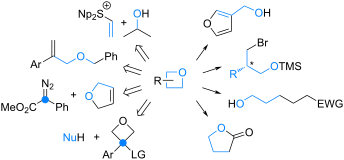
- alkenes and high diastereocontrol (dr ≥ 80:20) was achieved for trisubstituted ones. Switching the bromonium activator to the iodonium analogue only led to a lower yield. This haloetherification method was further expanded by McLaughlin and Roberts in 2022 who reported a convenient two-step sequence










Recent advances in amidyl radical-mediated photocatalytic direct intermolecular hydrogen atom transfer
Beilstein J. Org. Chem. 2025, 21, 1306–1323, doi:10.3762/bjoc.21.100
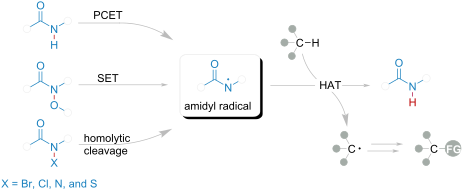
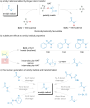
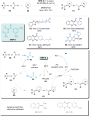
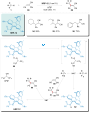
- feasibility of the reactions but has also led to the establishment of a comprehensive platform for C–H functionalization through the introduction of the highly versatile xanthyl functional group. In 2016, Alexanian’s group successfully implemented a method for the direct xanthylation of C–H bonds with high






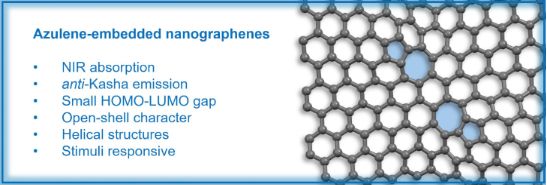
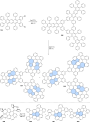
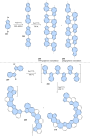
Recent advances and future challenges in the bottom-up synthesis of azulene-embedded nanographenes
Beilstein J. Org. Chem. 2025, 21, 1272–1305, doi:10.3762/bjoc.21.99
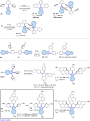
- co-workers reported the oxidation of partially saturated precursor 23 using DDQ, which led to the isolation of PAH 24 in 50% yield which contains two formal azulene units (Scheme 4) [39]. However, compound 24 was found to possess a biradical structure (biradical character index, y0 = 0.49) with
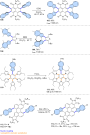
- oxidation of precursor 41 using DDQ which led to a mixture of azulene-embedded PAHs 42–44 (Scheme 7) [48]. Contorted PAHs 42–44 containing two azulene subunits, were formed through a single-step cyclopentannulation and cycloheptannulation process. The cyclodehydrogenation reaction was accompanied by further
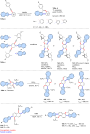
- ring expansion for 2,2’-di(arylethynyl)biphenyls 53a–f [54]. The platinum-catalysed reaction led to a series of azulenophenanthrens 54a–f in yields ranging from 40% to 80%. A similar strategy was employed very recently in the synthesis of azulene-embedded isomers of linear acenes (Scheme 9) by Zhang






Recent advances in oxidative radical difunctionalization of N-arylacrylamides enabled by carbon radical reagents
Beilstein J. Org. Chem. 2025, 21, 1207–1271, doi:10.3762/bjoc.21.98
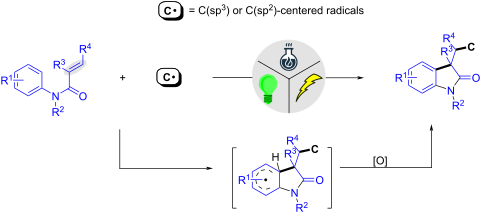
- -substituents induced steric hindrance effects that led to lower yields. To gain further insight into the mechanism, several control experiments were performed. The results indicated that an iminoxyl radical is generated as the initiator of the reaction (Scheme 6). Initially, TBHP undergoes homolytic cleavage
- radical-mediated process. The necessity of Cp2Fe and Y(OTf)3 for the reaction was also confirmed, as the absence of either catalyst led to a dramatic decrease in product yield. These findings highlighted the critical role of electrochemically generated carbon-centered radicals in driving the cyclization
- with α-aminoalkyl radicals generated from tertiary arylamines using photoredox catalysis (Scheme 13) [9]. In this system, Ir[dF(CF3)ppy]2(dtbbpy)PF6 was used as a photosensitizer to trigger the α-C–H activation of N,N-dimethylaniline, generating an alkyl radical under 30 W blue LED (454 nm) irradiation














Synthesis of β-ketophosphonates through aerobic copper(II)-mediated phosphorylation of enol acetates
Beilstein J. Org. Chem. 2025, 21, 1192–1200, doi:10.3762/bjoc.21.96
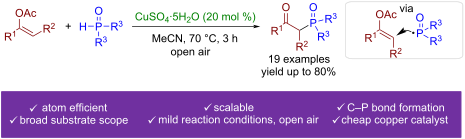
- produced by the oxidation of PH-reagents by copper(II)-containing species. Employing anhydrous CuSO4 instead of the pentahydrate led to a dramatic phosphorylation yield drop from 70 to <5%. It seems that the ligand environment of copper is very important for the effective reaction: other Cu(II) and Cu(I


Selective monoformylation of naphthalene-fused propellanes for methylene-alternating copolymers
Beilstein J. Org. Chem. 2025, 21, 1183–1191, doi:10.3762/bjoc.21.95
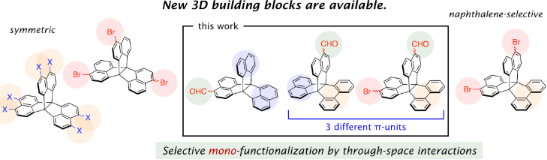
- Supporting Information File 1). Despite several trials, the reactions led to complicated mixtures owing to decomposition and debromination or predominant recovery of the starting material, respectively. Then, we turned our attention to electrophilic formylation. Vilsmeier–Haack [61] and Duff [62] reactions
- led to recovery of starting material or a complicated mixture probably owing to the modestly electron-rich and sterically demanding naphthalene α-positions (Table S202, entries 1–3, Supporting Information File 1). By contrast, a combination of dichloromethyl methyl ether and TiCl4 (Rieche reaction

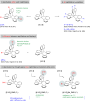

Synthetic approach to borrelidin fragments: focus on key intermediates
Beilstein J. Org. Chem. 2025, 21, 1135–1160, doi:10.3762/bjoc.21.91
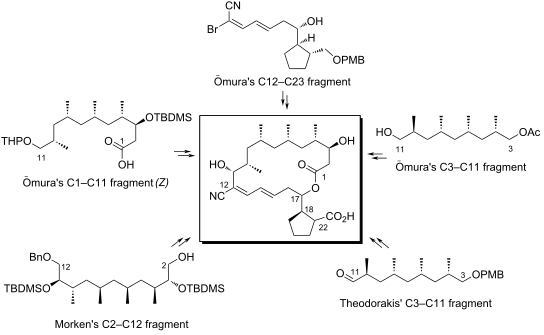
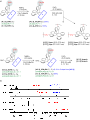
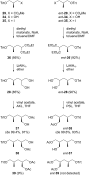
- a marine or hypersaline environment natural products library to identify potent drugs, a putatively novel metabolite co-produced with borrelidin was discovered, expanding the potential for new borrelidin derivatives. This led to the formation of the so-called “borrelidin family” (Table 1), with
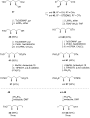
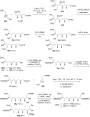
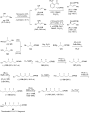
- failure may have been due to the low reactivity of sulfones 27 and ent-27 under the reaction conditions. Additionally, treating ent-42 with excess tert-butyllithium to form the corresponding lithiated derivative and reacting it with epoxide 23a, both with or without BF3·OEt2, also led to unsatisfying
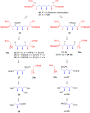
- epoxides 23b and 23a with the non-protected variant 23c, and reacting it with sulfone 27 after pre-complexation with Ti(OiPr)4, again led only to decomposition. Given the unsatisfying results, Uguen and co-workers replaced the epoxides 23a–c to monoethers 46a and 46b, derived from trans-2,3-epoxy-1,4








Gold extraction at the molecular level using α- and β-cyclodextrins
Beilstein J. Org. Chem. 2025, 21, 1116–1125, doi:10.3762/bjoc.21.89
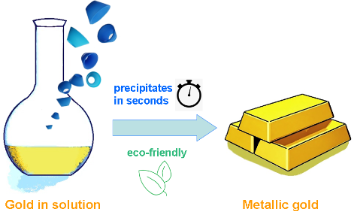
- , led to the quick formation of co-precipitates when added to aqueous solutions of β-CD and KAuBr4 (both at 5 mM): dibutyl carbitol, isopropyl ether, chloroform, dichloromethane, hexane, benzene, and toluene [51]. The most effective one was dibutyl carbitol (DBC), which caused 99.7% precipitation when


A versatile route towards 6-arylpipecolic acids
Beilstein J. Org. Chem. 2025, 21, 1104–1115, doi:10.3762/bjoc.21.88
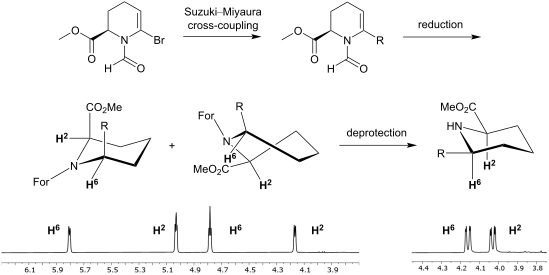
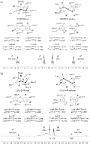
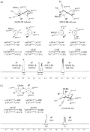
- to reduce the arylated N-formyl enamine moiety in 3 remained unsuccessful. We also aimed at improving conversion and yield by first testing different bases and catalysts [42][43]. DMF, a well-established solvent for cross-coupling reactions, led to lower degradation of the bromide 2 compared to other





Supramolecular assembly of hypervalent iodine macrocycles and alkali metals
Beilstein J. Org. Chem. 2025, 21, 1095–1103, doi:10.3762/bjoc.21.87
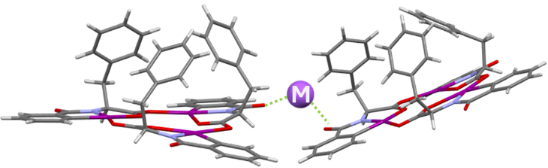
- investigate the association of HIMs with metal cations. NMR titration of HIM 1 with LiBArF20 led to distinct shifting of signals with the successive addition of salt. Figure 4 shows a titration of 1 with increasing equivalents of LiBArF20. The most dramatic changes included the aromatic proton multiplet at



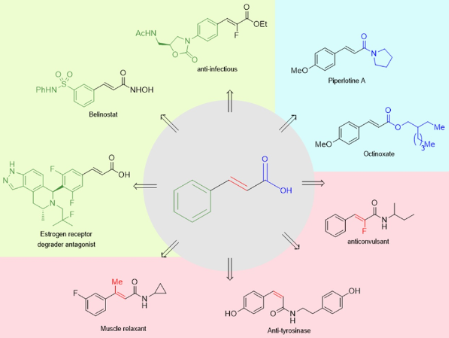
Recent advances in synthetic approaches for bioactive cinnamic acid derivatives
Beilstein J. Org. Chem. 2025, 21, 1031–1086, doi:10.3762/bjoc.21.85
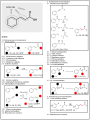
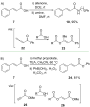
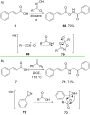
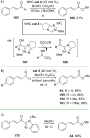
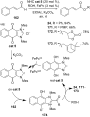
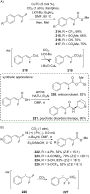
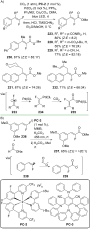
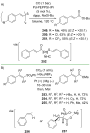
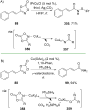
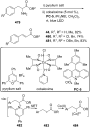
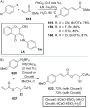
- other hand, Fan and co-workers (2020) prepared α-amidoketone 71 by employing vinyl azide and cinnamic acid (7) in good yield via cascade reaction (Scheme 23B) [58]. The thermal decomposition of the azide led to the generation of the reactive azirine intermediate 72. Moreover, Li and co-workers (2020
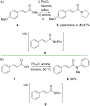
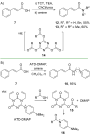
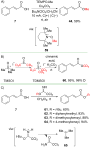
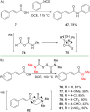
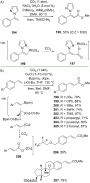
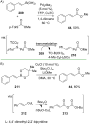
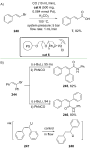
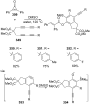
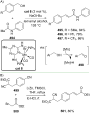
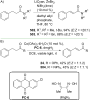
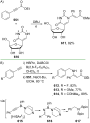
- ion 105 formation via its reaction with acetonitrile. Kokotos and co-workers (2023) prepared Weinreb amide 107 mediated by sunlight or LED 370 nm from cinnamic acid (7) via light-activated DMAP 108, leading to electrophilic iminium 109 formation (Scheme 33) [28]. On the other hand, Gilmour and co





































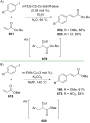

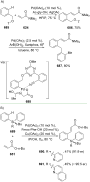
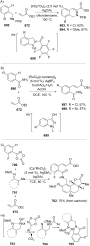
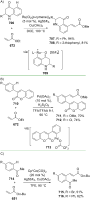




Pd-Catalyzed asymmetric allylic amination with isatin using a P,olefin-type chiral ligand with C–N bond axial chirality
Beilstein J. Org. Chem. 2025, 21, 1018–1023, doi:10.3762/bjoc.21.83
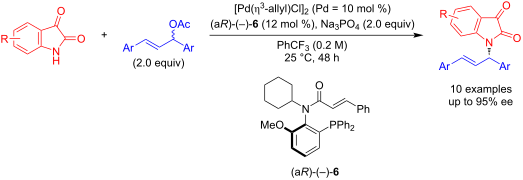
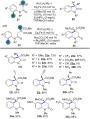
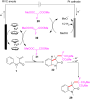
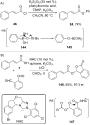
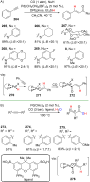
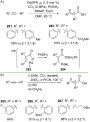
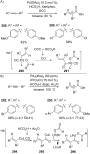
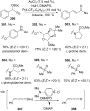
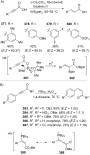
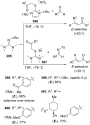
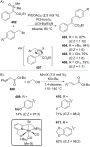
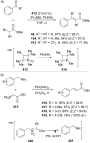
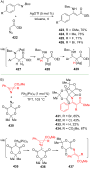
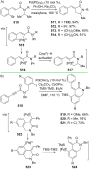
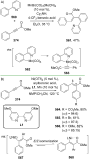
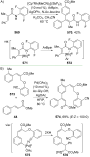
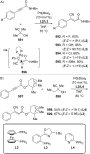
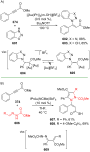
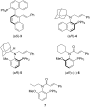
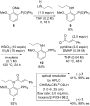
- (Table 1, entry 5). Other potassium salts such as K3PO4 led to a low yield of the product (Table 1, entry 6). Meanwhile, when Na3PO4 was tested, the yield decreased, but the enantioselectivity improved to 88% ee (Table 1, entry 7). With Na3PO4 as the optimum base, which showed the highest
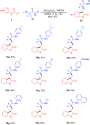
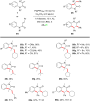
- in good yield, although with slightly decreased enantioselectivity. The introduction of the chloro group at the same position led to a moderate yield for (S)-13d, while the enantioselectivity remained high. In contrast, the reaction with the isatin derivative bearing a nitro group at the 5-position
- yields with high enantioselectivities. Conversely, the isatin derivative bearing a methoxy group at the 6-position led to a decreased yield for (S)-13j, though the enantioselectivity remained high. Additionally, we tested the reaction using an isatin derivative with a chloro group at the 7-position and




Synthesis of pyrrolo[3,2-d]pyrimidine-2,4(3H)-diones by domino C–N coupling/hydroamination reactions
Beilstein J. Org. Chem. 2025, 21, 1010–1017, doi:10.3762/bjoc.21.82
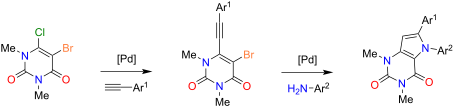
- absorption band. With respect to the phenyl group attached to the pyrrole nitrogen, the presence of the electron-withdrawing CF3 group led to a slight hypsochromic shift (4j). In the case of compound 4l, containing a 4-trifluoromethylphenyl group attached to the nitrogen, no significant shift of the
- wavelengths. However, this shoulder was less distinct for compounds 4m and 4j and not detectable for 4k and 4l, containing the N,N-dimethylaminophenyl group. In contrast to the absorption spectra, in the case of the emission spectra, the presence of a thienyl substituent (compound 4m) led to a hypsochromic
- . Electron-donating N,N-dimethylaminophenyl substituents led to bathochromically shifted absorption and emission spectra accompanied by strongly elevated fluorescence quantum yields (up to 83%). Further studies will be devoted to the synthesis of novel polycyclic uracil derivatives with potential biological



Recent total synthesis of natural products leveraging a strategy of enamide cyclization
Beilstein J. Org. Chem. 2025, 21, 999–1009, doi:10.3762/bjoc.21.81
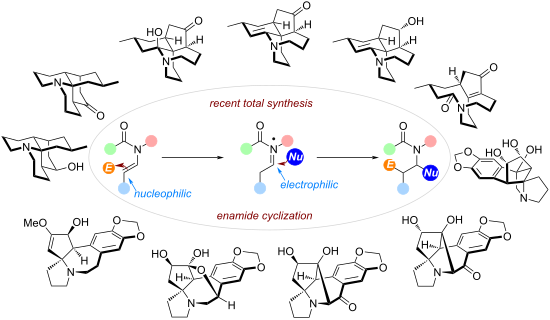
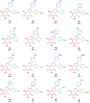
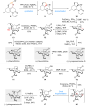
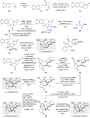
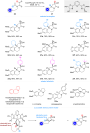
- the terminal alkene and the conformational strain of forming a bridge[3.2.1]bicycle might be responsible for a selective 6-exo-trig cyclization. From tricyclic compound 4, anti-Markovnikov oxidation catalyzed by palladium led to the formation of aldehyde 5. When treated with p-TsOH, the intramolecular





Studies on the syntheses of β-carboline alkaloids brevicarine and brevicolline
Beilstein J. Org. Chem. 2025, 21, 955–963, doi:10.3762/bjoc.21.79
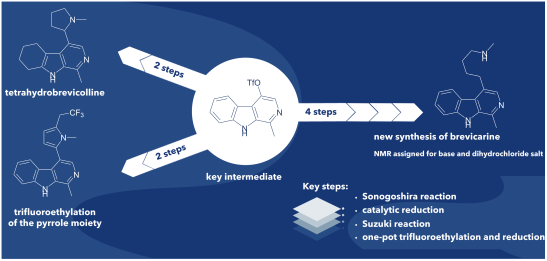
- salt for further confirming their structures. A new synthesis of the related alkaloid brevicolline was also attempted from the same intermediate. However, after successful coupling of β-carboline with N-methylpyrrole, the trials to saturate the pyrrole ring under various conditions led to unexpected
- , versatile key triflate intermediate 3, which allowed the introduction of substituents attached by a C–C bond to position 4 of the β-carboline scaffold by cross-coupling reactions. Sonogashira reaction of compound 3 with N-(3-butynyl)phthalimide (4) led to coupled compound 5. Cleavage of the phthalimide


Study of tribenzo[b,d,f]azepine as donor in D–A photocatalysts
Beilstein J. Org. Chem. 2025, 21, 935–944, doi:10.3762/bjoc.21.76
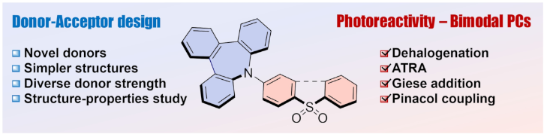
- previously reported by Zysman-Colman and co-workers [19]. Compound 5d showed the best performance with a 27% calculated NMR yield (20%, isolated yield) (Table 3, entry 3), while the azepine derivatives 5a and 5b led the transformation at 13 and 8%, respectively (Table 3, entries 1 and 2). However, these



A convergent synthetic approach to the tetracyclic core framework of khayanolide-type limonoids
Beilstein J. Org. Chem. 2025, 21, 926–934, doi:10.3762/bjoc.21.75
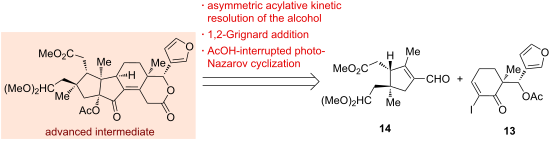
- .) of 24 led only to epimerization at C10 or slow decomposition of the starting material (see Supporting Information File 1, Table S1). Pleasingly, treating 24 with HMDS and TMSI regioselectively generated the expected TMS enol ether [46], which underwent a Li/Si exchange in the presence of MeLi
- stage was set for the construction of the target skeleton through a 1,2-addition (Scheme 4). Preliminary trials to generate organometallic species via Li/I exchange under various conditions (n-BuLi, t-BuLi, or t-BuLi in combination with CeCl3 or MgBr2) led to rapid decomposition, likely due to inherent
- Nazarov cyclization under a variety of conditions (Table 1). Initial trials under acid-mediated Nazarov conditions (AlCl3, BF3·Et2O and Me2AlCl) led to complete decomposition, while the exposure to AcOH resulted in recovery of the starting material (Table 1, entries 1–4). Recognizing the limitations of