Search results
Search for "oxidation" in Full Text gives 1467 result(s) in Beilstein Journal of Organic Chemistry. Showing first 200.
Total synthesis of (±)-simonsol C using dearomatization as key reaction under acidic conditions
Beilstein J. Org. Chem. 2025, 21, 601–606, doi:10.3762/bjoc.21.47
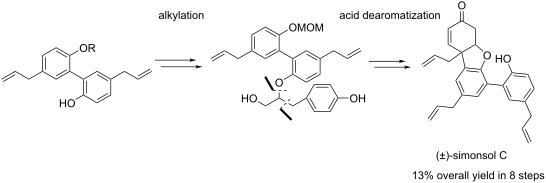
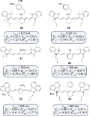
- were optimized to achieve product 20 with 85% yield, minimizing potential side reactions. The subsequent dearomatization step is crucial for the construction of the cyclohexadienone unit. Oxidation of compound 20 with PIDA in trifluoroethanol, the original phenol was converted into a quinone moiety


Formaldehyde surrogates in multicomponent reactions
Beilstein J. Org. Chem. 2025, 21, 564–595, doi:10.3762/bjoc.21.45
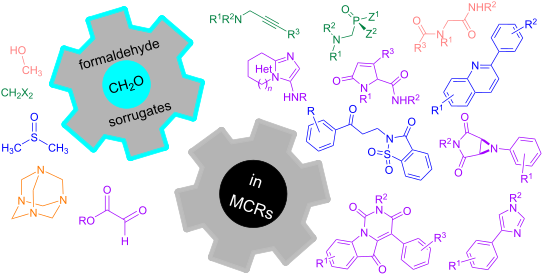
- reactions [10]. Oxidation of the alcohol is done in situ to avoid problems regarding the isolation and instability of the aldehyde produced, although undesirable reactions, such as oxidation of the amines or isocyanides or overoxidation of the alcohol, could also be problematic [11][12]. In this regard
- , several efforts have been made to improve the chemoselectivity of the oxidation step. Among the most relevant examples, o-iodoxybenzoic acid (IBX) has been used in Ugi and Passerini reactions to oxidize the suitable alcohol to the desired aldehyde [13]. Alternatively, catalytic amounts of a ternary system
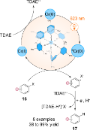
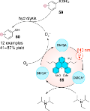
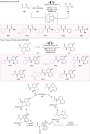
- , in a recent work, Pan et al. could chemoselectively oxidize methanol using a TEMPO-catalyzed electro-oxidation process, even in the presence of oxidizable amines, such as benzylamine, paving the way for the use of methanol as a formaldehyde surrogate in these isocyanide-based MCRs (Scheme 3) and


Deep-blue emitting 9,10-bis(perfluorobenzyl)anthracene
Beilstein J. Org. Chem. 2025, 21, 515–525, doi:10.3762/bjoc.21.39
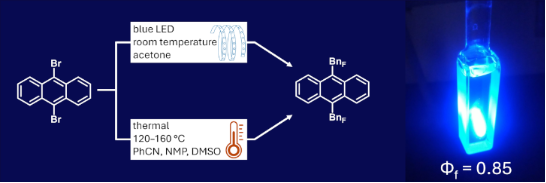
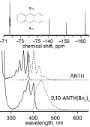
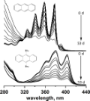
- to suppress undesirable fluorescence self-quenching [15]. Not only do bulky substituents disrupt intermolecular interactions of this type, they can also provide higher chemical stability and reduce or prevent the photodimerization and photo-oxidation to which all acenes are prone [13]. Furthermore





Synthesis of the aggregation pheromone of Tribolium castaneum
Beilstein J. Org. Chem. 2025, 21, 510–514, doi:10.3762/bjoc.21.38
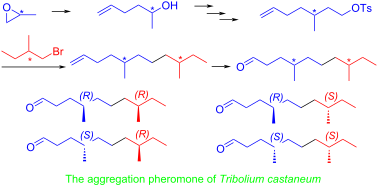
- with Grignard reagent, and oxidation with RuCl3/NaIO4. Keywords: aggregation pheromone; chiral 2-methyloxirane; red flour beetle; total synthesis; Introduction The red flour beetle, Tribolium castaneum Herbst (Coleoptera: Tenebrionidae), is a cosmopolitan, destructive stored product pest [1], which
- coupling, and finally leads to the target pheromones by olefin oxidation with RuCl3/NaIO4. Results and Discussion The retrosynthetic analysis of the aggregation pheromone (4R,8R)-1 is shown in Scheme 1. Obviously, the target pheromone (4R,8R)-1 could be synthesized via an oxidation of chiral terminal
- oxidation. The optical purity of the chiral secondary alcohol (R)-4 was more than 99% ee, determined by 1H NMR spectrum of its Mosher ester [27][28]. The subsequent tosylation with p-tosyl chloride gave (R)-hex-5-en-2-yl 4-methylbenzenesulfonate ((R)-5) in 88% yield [29]. The reaction of (R)-5 with the


Photomechanochemistry: harnessing mechanical forces to enhance photochemical reactions
Beilstein J. Org. Chem. 2025, 21, 458–472, doi:10.3762/bjoc.21.33

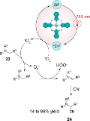
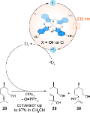
- exposing fresh material to light. In 2016, König and co-workers exploited rod milling to develop a photomechanochemical approach for the riboflavin tetraacetate (RFTA)-catalyzed photocatalytic oxidation of alcohols to the corresponding carbonyl compounds upon irradiation with five LEDs (λ = 455 nm) [69
- oxidation of 1,2-diphenylethyne to benzil [71]. Thus, when a 1:2 mixture of 7.1 and 4-chlorothiophenol (7.2) was ground in the presence of eosin Y as the photocatalyst and anhydrous Na2SO4 as a bulking agent, benzil (7.3) was obtained in 43% GC yield under blue light irradiation (LED, 14.5 W). Isolation led
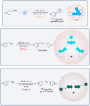
- oxidation of alcohols. The photos in Scheme 6 were reproduced from [69] (© 2016 M. Obst et al., published by Beilstein-Institut, distributed under the terms of the Creative Commons Attribution 4.0 International License, https://creativecommons.org/licenses/by/4.0). Photomechanochemical oxidation of 1,2




Electrochemical synthesis of cyclic biaryl λ3-bromanes from 2,2’-dibromobiphenyls
Beilstein J. Org. Chem. 2025, 21, 451–457, doi:10.3762/bjoc.21.32
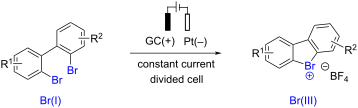
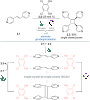
- diarylbromonium species by direct anodic oxidation of 2,2'-dibromo-1,1'-biphenyl. The electrochemical method provides access to a range of symmetrically and non-symmetrically substituted cyclic biaryl λ3-bromanes in moderate yields. Keywords: anodic oxidation; cyclic biaryl λ3-bromane; cyclic voltammetry
- oxidation of 2,2'-dibromo-[1,1'-biphenyl] into mono-λ3-bromane 5 would set the stage for the key cyclization event (Scheme 1, reaction 2). We also reasoned that an anodic oxidation of the aryl bromide is perfectly suited for the generation of mono-λ3-bromane 5 under mild conditions [16][17][18]. This
- an electrochemical synthesis of cyclic diaryl λ3-bromanes under anodic oxidation conditions. Results and Discussion Symmetric 2,2'-dibromo-1,1'-biphenyl 4a possessing ethoxycarbonyl groups ortho to the bromine was chosen as a model compound for our study. We anticipated that the presence of the ester


Beyond symmetric self-assembly and effective molarity: unlocking functional enzyme mimics with robust organic cages
Beilstein J. Org. Chem. 2025, 21, 421–443, doi:10.3762/bjoc.21.30
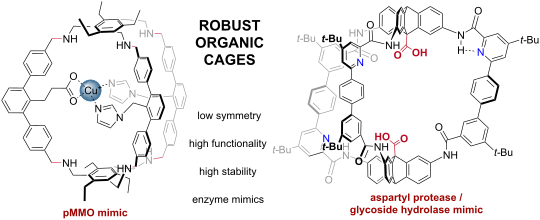
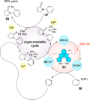
- , which can act as an oxidation catalyst (Figure 7C) [44]. The long-standing challenges of synthesis, stability, solubility and internal functionalization are beginning to be tackled, and the remainder of this Perspective will discuss specifics of these hard-earned advances and the opportunities they
- ) [38]. To capture both stability and solubility, we turned to Mastalerz’s post-functionalization chemistry [286][300][304][306][358][359][360][361][362], in which imines are oxidized by a Pinnick oxidation to amides [286][360][363][364], an approach gaining popularity [46][262]. Importantly, we were




Identification and removal of a cryptic impurity in pomalidomide-PEG based PROTAC
Beilstein J. Org. Chem. 2025, 21, 407–411, doi:10.3762/bjoc.21.28
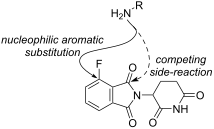
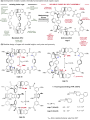
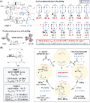
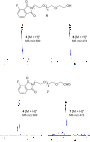
- synthesis of iVeliparib-AP6 [5] starts with a nucleophilic aromatic substitution (SNAr) reaction wherein 4-fluorothalidomide (1) reacts with amino-PEG7-OH 2 to give alcohol 3 (Scheme 1). Subsequent alcohol oxidation followed by reductive amination of the resulting aldehyde 4 with veliparib [6][7] provides




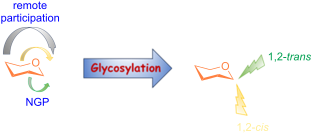
The effect of neighbouring group participation and possible long range remote group participation in O-glycosylation
Beilstein J. Org. Chem. 2025, 21, 369–406, doi:10.3762/bjoc.21.27
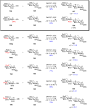
- first introduced the 2,2-dimethylpentenoate protecting group 32 (Figure 1) similar to the pivalate group which showed versatility in its cleavage principle [101]. Hydroboration oxidation of the olefinic bond helped in the removal of the protecting group. On the other hand, dihydroxylation with osmium




Synthesis, structure, ionochromic and cytotoxic properties of new 2-(indolin-2-yl)-1,3-tropolones
Beilstein J. Org. Chem. 2025, 21, 358–368, doi:10.3762/bjoc.21.26
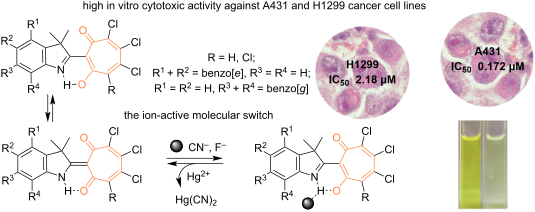
- -(indolin-2-yl)-5,6,7-trichloro-1,3-tropolones 7a,b is accompanied by dehydrochlorination of 6 upon boiling in dioxane according to method A. One of the conditions for carrying out the reaction according to method B is the use of a two-fold excess of quinone 3. Oxidation of dihydrotropolones 6 with an




Red light excitation: illuminating photocatalysis in a new spectrum
Beilstein J. Org. Chem. 2025, 21, 296–326, doi:10.3762/bjoc.21.22
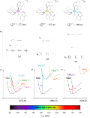
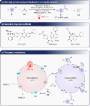
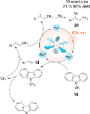
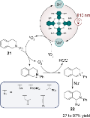
- sustainable photocatalysis, with applications ranging from selective oxidation to cross-dehydrogenative coupling. These organic systems are valued for their reduced environmental impact, their wide availability, and tunability, making them viable alternatives to traditional metal-based catalysts for red-light
- own a large span of colors depending on the nature of the metal and the ligands but also on the various oxidation states these compounds can attain. This property results on the absorption of a visible-light photon complementary to the observed color and has been extensively exploited in photoredox
- have been proven to be efficient in photoredox catalysis [9][10][11][12]. Actually, MLCT enables a charge separation for which the ligand-based electron can trigger a chemical reduction while the metal-centered hole, a chemical oxidation. This type of excitation is particularly enhanced in heavy metals
















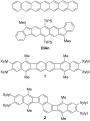
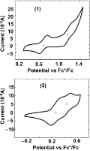
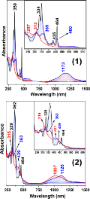
Oxidation of [3]naphthylenes to cations and dications converts local paratropicity into global diatropicity
Beilstein J. Org. Chem. 2025, 21, 277–285, doi:10.3762/bjoc.21.20
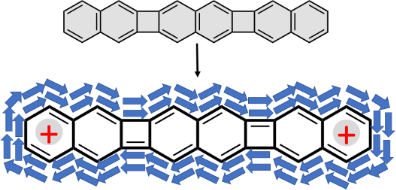
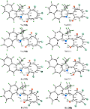
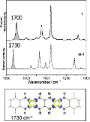
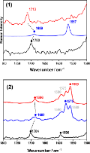
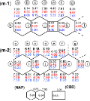
- bonding changes. Stretching force constants were evaluated to monitor the aromatic–antiaromatic alternation pattern upon oxidation. They showed us that the dication of linear [3]naphthylene became an overall global π-electron delocalized molecule. This result was supported by nucleus independent chemical
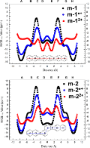
- shift (NICS) calculations and anisotropy of the current induced density (ACID) plots, as they evidenced the presence of a perimetral diatropic global ring current upon oxidation. Keywords: ACID; aromaticity; force constants; NICS; spectroscopy; Introduction Since the discovery of conjugated polymers
- attracted a growing interest in recent times, both from fundamental and technological reasons [9][10][11]. Antiaromaticity destabilizes the ground state of organic molecules by raising their highest energy occupied molecular orbitals, thus allowing for easy oxidation, doping, and electron-transfer reactions


Synthesis and characterizations of highly luminescent 5-isopropoxybenzo[rst]pentaphene
Beilstein J. Org. Chem. 2025, 21, 270–276, doi:10.3762/bjoc.21.19
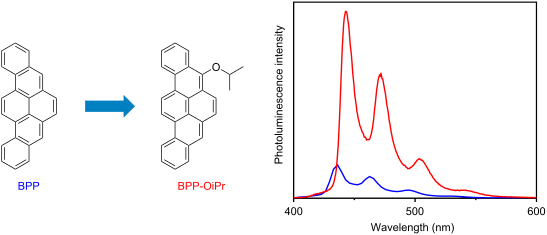
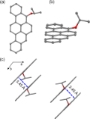
- properties were investigated by UV–vis absorption and fluorescence spectroscopy in compassion to pristine BPP and its oxidation product, benzo[rst]pentaphene-5,8-dione (BPP-dione). BPP-OiPr exhibited a significantly enhanced photoluminescence quantum yield (PLQY), reaching 73% in comparison to pristine BPP
- improving the stability of inverted perovskite solar cells [23]. On the other hand, benzo[rst]pentaphene-5,8-dione (BPP-dione) is known as an oxidation product of BPP [24][25], but to the best of our knowledge, the detailed optical properties of this BPP derivative have not been previously described in the
- reaction conditions to selectively obtain BPP-OiPr 3 in 55% yield from dialdehyde 1. Additionally, oxidation of BPP-OiPr 3 provided BPP-dione 4 in 70% yield. The photophysical properties of BPP-OiPr 3 and BPP-dione 4 were carefully studied, examining the solvent-polarity dependence of their optical spectra




Synthesis of disulfides and 3-sulfenylchromones from sodium sulfinates catalyzed by TBAI
Beilstein J. Org. Chem. 2025, 21, 253–261, doi:10.3762/bjoc.21.17
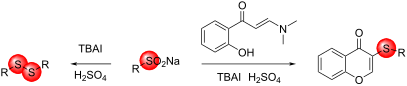
- importance. In the field of disulfide synthesis, the conventional approach mainly involves oxidizing thiols to form disulfides. This process employs various oxidation agents, which can be categorized as nonmetallic and metal derivatives [12][13][14][15][16]. Over the past few years, the implementation of
- catalysts in conjunction with oxygen [17][18][19][20][21][22], electrochemical oxidation [23][24], and photochemical oxidation techniques [25] have emerged as alternative methods. However, these approaches have a significant limitation: the substrates must be thiols, which have unpleasant odors. This has



Streamlined modular synthesis of saframycin substructure via copper-catalyzed three-component assembly and gold-promoted 6-endo cyclization
Beilstein J. Org. Chem. 2025, 21, 226–233, doi:10.3762/bjoc.21.14
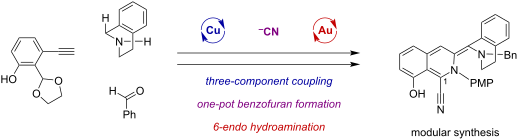
- of lower oxidation state aromatic rings at the A- and E-rings of saframycins. Rational and systematic modification of both ends of the THIQ scaffolds would facilitate the development of reversible covalent DNA binders with tailored sequence preferences. Biosynthetically, the pentacyclic core scaffold
- . The resulting 6-endo cyclization product 12 could not be isolated under these conditions, and instead, the unexpected formation of fluorescent transient intermediate 18 was observed. Dehydrogenative oxidation of the 6-endo-cyclized product 12 with transpositions of the double bonds conjugated to the
- enamine moiety, would afford the corresponding imidate 18 with incorporation of an extended conjugation system. The oxidation-labile nature of the corresponding C11 position in 12 is consistent with the low bond dissociation energies (BDEs) at both the α-position of the nitrogen, as shown in Supporting




Dioxazolones as electrophilic amide sources in copper-catalyzed and -mediated transformations
Beilstein J. Org. Chem. 2025, 21, 200–216, doi:10.3762/bjoc.21.12
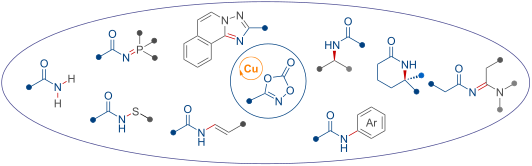
- conventionally challenging functionalizations, such as N- or O-arylations using aryl halides [29][30][31][32][33][34][35][36][37][38] or arylboronic acids [39][40][41][42], hydrofunctionalizations of unsaturated motifs [25][43][44][45][46][47][48][49][50][51][52][53][54][55][56], the oxidation of alcohols [57


Recent advances in electrochemical copper catalysis for modern organic synthesis
Beilstein J. Org. Chem. 2025, 21, 155–178, doi:10.3762/bjoc.21.9
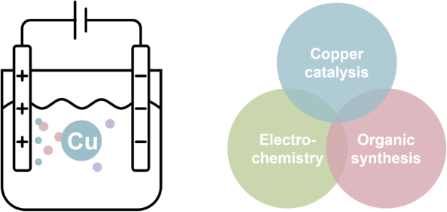
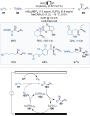
- , and benzamide, however, no relevant competitive oxidation peak was observed with only Cu(OAc)2. These results indicate that Cu(II) intermediate 5 was generated. Based on the mechanistic studies, the authors suggested plausible reaction mechanisms (Figure 4). First, the Cu(II) catalyst coordinates with
- substrate 1 in the presence of a base to form Cu(II) complex 5, which undergoes anodic oxidation to generate Cu(III) intermediate 6. Carboxylate-assisted C–H activation of the benzamide subsequently leads to the formation of Cu(III) species 7. Metalation of the terminal alkyne 2, followed by reductive
- decreasing the oxidation potential. A range of functional groups, such as halides, ethers, and heterocycles, were tolerated well, yielding the corresponding enantioenriched products 14 with high enantioselectivity in the presence of chiral bisoxazoline ligand L2. A possible mechanism is depicted in Figure 5


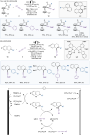

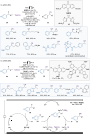





Cu(OTf)2-catalyzed multicomponent reactions
Beilstein J. Org. Chem. 2025, 21, 122–145, doi:10.3762/bjoc.21.7

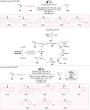
- , respectively. The latter interacts with the alkene generating an alkyl radical IV that converts to the cationic intermediate V by single-electron oxidation by the Cu(II) species. Finally, the attack of the nucleophile leads to the desired products 6. Starting from aryl carbazates, intermediate II, adds
- Biginelli reaction was carried out starting from salicylaldehyde providing hydroxyphenyl-substituted dihydropyrimidines 18 [30]. Subsequently, the regioselective oxidation of the dihydropyrimidine ring in the presence of CAN allowed the formation of new pyrimidinone derivatives 19. The efficacy of Cu(OTf)2
- the triple bond furnishes the furo-ring and the final oxidation affords the tricyclic product 22. Substituted quinolines 23 were obtained in a convenient solvent-free multicomponent reaction starting from electron-rich or electron-poor anilines, alkyl or arylaldehydes and terminal alkynes, performing








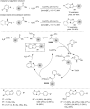


Recent advances in organocatalytic atroposelective reactions
Beilstein J. Org. Chem. 2025, 21, 55–121, doi:10.3762/bjoc.21.6
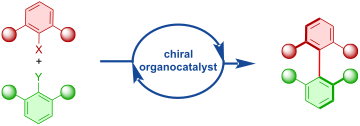
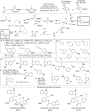
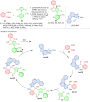
- -axial chirality conversion and formation of axially chiral products 21a–e (Scheme 7). This critical aromatization was later studied in more detail, and the team was able to achieve enantiodivergent aromatization, which led to different atropoisomers based on the oxidation reagent used [26]. The use of
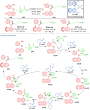
- products 89 and their subsequent oxidation with DDQ provided axially chiral quinolines 90 (Scheme 29) [53]. Good retention of the stereoinformation acquired in the first transformation, moderate to excellent yields and consistently high degrees of enantiomeric purity were achieved. The reaction could also
- be carried out in a one-pot fashion with comparable results and without significant variation from the two-step procedure. Utilization of the Povarov reaction and subsequent oxidation by DDQ was also done by Wang et al. in 2020 [54]. In situ-formed imines from anilines 91 and benzaldehydes 92 were






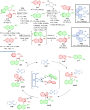


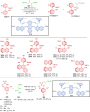

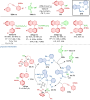


Synthesis, structure and π-expansion of tris(4,5-dehydro-2,3:6,7-dibenzotropone)
Beilstein J. Org. Chem. 2025, 21, 1–7, doi:10.3762/bjoc.21.1
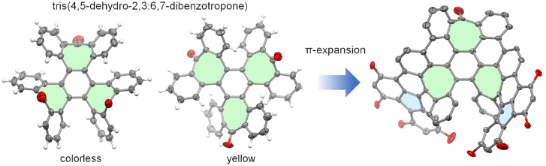
- starting material unreacted or resulted in complex mixtures, from which cyclodehydrogenation products, such as compound 7 (Scheme 1b), could not be isolated in a pure form. This can be attributed to the electron-withdrawing carbonyl groups, which make compound 1 unreactive to oxidation. For thionation of
- one reversible oxidation wave and one quasi-reversible oxidation wave with half-wave potentials of 0.40 V and 0.88 V, respectively, versus ferrocenium/ferrocene (Fc+/Fc). The HOMO energy level is estimated from the first oxidation peak to be −5.5 eV [28], which is consistent with the DFT-calculated


Reactivity of hypervalent iodine(III) reagents bearing a benzylamine with sulfenate salts
Beilstein J. Org. Chem. 2024, 20, 3281–3289, doi:10.3762/bjoc.20.272
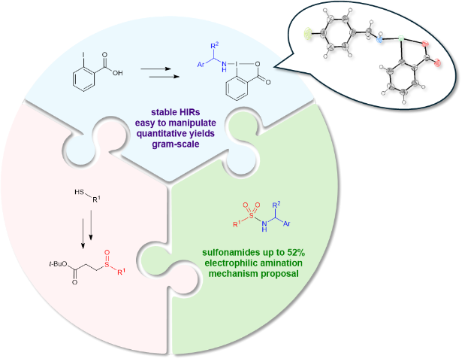
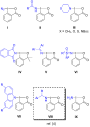
- lengths and angles fall within the expected range for similar compounds [31]. Later, the β-sulfinyl esters 4 were prepared by Michael addition reaction of thiols and α,β-unsaturated esters [32], followed by oxidation of the corresponding sulfides 3 using two different oxidizing agents (oxone and m-CPBA
- 5aa (Table 1, entry 2) but with prior degassed solvent (DMF), to prevent potential oxidation of the sulfenate to sulfinate anions. Indeed, the oxidation of the unstable sulfenate intermediates has been previously reported by Waser when using EBX – an HIR applied in the transfer of alkynes to sulfenate
- oxidation of sulfinamide 6aa by dissolved oxygen molecules in the media. Therefore, an additional experiment was conducted using sodium benzenesulfinate to simulate the potential in situ oxidation of the sulfenate anion before the addition of BBX 2a, but only trace amounts of sulfonamide 5ea were observed



Synthesis of 2H-azirine-2,2-dicarboxylic acids and their derivatives
Beilstein J. Org. Chem. 2024, 20, 3191–3197, doi:10.3762/bjoc.20.264
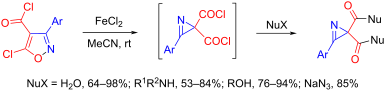
- included oxidation of aldehydes 4 with Oxone to acids 5 and the conversion of the latter into acid chlorides with thionyl chloride. The first reaction sequence was suitable for obtaining compounds 1a–c,e,f with substituents tolerant to radical reaction conditions. A significant advantage of the method is
- separate impurities. In these cases, as well as in reactions giving low aldehyde yields in the first step (4b,d), the second developed reaction sequence turned out to be more effective. In the second approach, the oxidation of aldehydes 4 with Oxone to acids 5 occurs with yields close to quantitative, and





Direct trifluoroethylation of carbonyl sulfoxonium ylides using hypervalent iodine compounds
Beilstein J. Org. Chem. 2024, 20, 3182–3190, doi:10.3762/bjoc.20.263
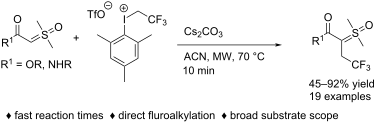
- [28]. In 2017, the Aϊssa group described a procedure to better synthesize such α-alkyl-substituted carbonyl sulfoxonium ylides [29]. This protocol involved the alkylation of a dialkyl thioether, counterion exchange, oxidation, and eventual acylation (Scheme 1a). More recently, the Burtoloso group


Synthesis of extended fluorinated tripeptides based on the tetrahydropyridazine scaffold
Beilstein J. Org. Chem. 2024, 20, 3174–3181, doi:10.3762/bjoc.20.262
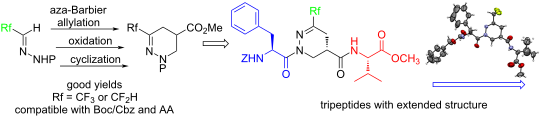
- lead to the corresponding hydrazones 6a–d in good yields (69–80%). Surprisingly, these conditions were unsuitable for compounds 5e and 5f and led to the formation of numerous byproducts. Fortunately, the replacement of iodine with N-bromosuccinimide (NBS), previously reported for the oxidation of
- hydrazine [36], allowed the expected compounds 6e and 6f to be obtained in good yields. This methodology was applied to the previous hydrazides 5a–d giving the corresponding compounds 6a–d in similar yields. As expected, no isomerization occurred during the oxidation, leading exclusively to the imine and
- . Allylation of fluorinated hydrazones 3a–f to obtain 5a–f. Oxidation of hydrazines 5a–f to obtain hydrazones 6a–f. Intramolecular cyclization of compounds 6a–f to obtain tetrahydropyridazines 7a–f. Preparation of tripeptides 8e, 8e’, 8f, and 8f’. Yields refer to the yield over 2 steps. Supporting Information


Multicomponent reactions driving the discovery and optimization of agents targeting central nervous system pathologies
Beilstein J. Org. Chem. 2024, 20, 3151–3173, doi:10.3762/bjoc.20.261

- biomolecules like DNA and lipids. Lipid peroxidation and membrane disruption can cause random cross-linking, resulting in cell death and the fragmentation of proteins and enzymes. Elevated concentrations of reactive oxygen species (ROS) from various molecular processes contribute to the oxidation of proteins