Search results
Search for "transformations" in Full Text gives 1190 result(s) in Beilstein Journal of Organic Chemistry. Showing first 200.
Chitosan-supported CuI-catalyzed cascade reaction of 2-halobenzoic acids and amidines for the synthesis of quinazolinones
Beilstein J. Org. Chem. 2025, 21, 839–844, doi:10.3762/bjoc.21.67
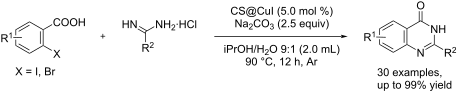
- quinazolinones, and the wide application of the chitosan-supported copper catalyst in various organic transformations [19][20][21], the use of chitosan-supported copper for quinazolinone synthesis has not been reported. As part of our ongoing research interest in chitosan and chitosan-supported copper catalysts
- in organic transformations [22][23][24], we intended to investigate the use of chitosan-supported copper as a catalyst for the synthesis of quinazolinones from 2-halobenzoic acids and amidines under mild reaction conditions (Scheme 1c). Results and Discussion The initial reactions commenced with 2


Regioselective formal hydrocyanation of allenes: synthesis of β,γ-unsaturated nitriles with α-all-carbon quaternary centers
Beilstein J. Org. Chem. 2025, 21, 800–806, doi:10.3762/bjoc.21.63
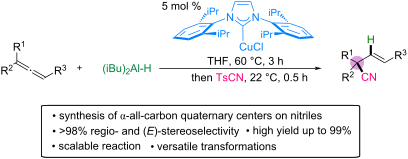
- conditions and shows broad applicability to di- and trisubstituted allenes. Its practicality is demonstrated through the gram-scale synthesis and functional group transformations of amines, amides, and lactams, emphasizing its versatility and synthetic significance. Keywords: α-quaternary nitrile; Cu
- remaining DIBAL-H and TsCN, ultimately yielding the cyanation product 5b in only 54%. The synthetic potential of the obtained β,γ-unsaturated nitriles featuring α-quaternary carbon centers was further illustrated using a series of transformations (Scheme 6). Nitrile 3q was hydrolyzed to amide 6 in a 90




New advances in asymmetric organocatalysis II
Beilstein J. Org. Chem. 2025, 21, 766–769, doi:10.3762/bjoc.21.60
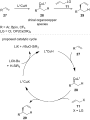
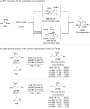
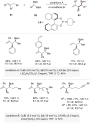
- contributions in stereoselective organocatalytic transformations. The collection contains nine articles featuring various aspects of asymmetric organocatalysis. In the first contribution, Waser et al. examined how chiral phase-transfer catalysts promote β-selective additions of azlactones to allenoates. Maruoka

Recent advances in allylation of chiral secondary alkylcopper species
Beilstein J. Org. Chem. 2025, 21, 639–658, doi:10.3762/bjoc.21.51
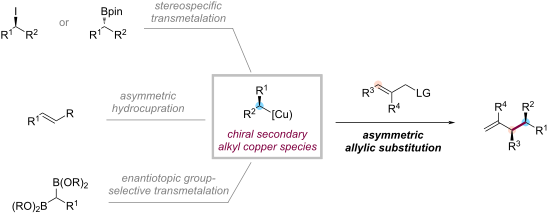
- transmetalation of organolithium and organoboron compounds, copper hydride catalysis, and enantiotopic-group-selective transformations of 1,1-diborylalkanes. Detailed mechanistic insights into stereochemical control and current challenges in this field are also discussed. Keywords: allylic substitution; chiral
- synthesis underscore the robustness and reliability of this copper-mediated transformation in creating stereochemically complex molecules. Mechanistic investigations revealed several key factors controlling the stereochemical outcome of these transformations. The extremely low temperature (−100 °C) during
- phosphate. The absolute stereochemistry of the products was found to be consistent with that of previously reported CuH-catalyzed transformations using (S,S)-Ph-BPE (L1) as the supporting ligand, suggesting a common mode of stereoinduction. In parallel, Hoveyda and co-workers demonstrated the first copper





Photocatalyzed elaboration of antibody-based bioconjugates
Beilstein J. Org. Chem. 2025, 21, 616–629, doi:10.3762/bjoc.21.49
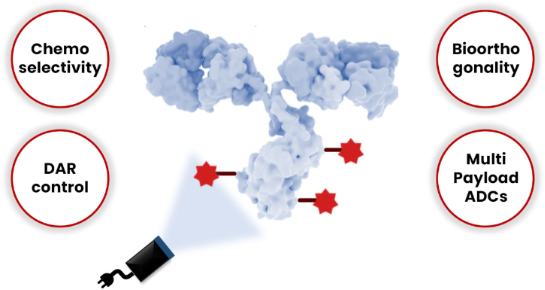
- proteins. By harnessing light to drive chemical transformations, photoredox techniques can facilitate the synthesis of antibody bioconjugates. This perspective will discuss the drive to develop and empower photoredox methods applied to antibody functionalization. Keywords: antibodies; bioconjugation
- expertise required to carry out these transformations is constrained to a very limited number of laboratories, particularly in the field of antibodies. Given the challenges of bioengineering antibodies with non-canonical amino acids, the direct and chemoselective modification of native antibodies is most
- transformations is a strong electrophile that can react with Tyr, for instance, if such an amino acid is located near the reactive site. In addition, command of the DAR might have some limits, as the distance between the catalyst and the mAbs is not well defined, meaning that the photoredox reaction might not


Formaldehyde surrogates in multicomponent reactions
Beilstein J. Org. Chem. 2025, 21, 564–595, doi:10.3762/bjoc.21.45
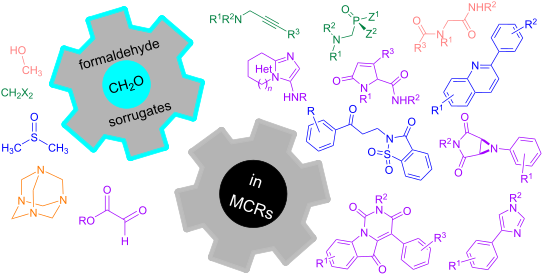
- presence of an excellent leaving group (methyl sulfide) which permits further transformations during the domino sequences. This dual effect of MMS makes DMSO an interesting C1 synthon that works not only as a source of a methylene unit (-CH2-) in terms of formaldehyde surrogate, but also as a promotor of


Study of the interaction of 2H-furo[3,2-b]pyran-2-ones with nitrogen-containing nucleophiles
Beilstein J. Org. Chem. 2025, 21, 556–563, doi:10.3762/bjoc.21.44
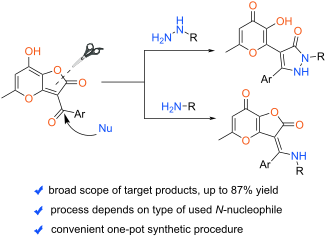
- structures of key synthesized products were unambiguously proved by X-ray diffraction. Various examples of transformations of furanones. Interaction of starting 2H-furo[3,2-b]pyran-2-ones with diverse amines. Synthesis of enamines 4. Reaction conditions: 1a (1 mmol, 0.38 g), amine 2 (1.2 mmol), AcOH (3 mL


Photomechanochemistry: harnessing mechanical forces to enhance photochemical reactions
Beilstein J. Org. Chem. 2025, 21, 458–472, doi:10.3762/bjoc.21.33
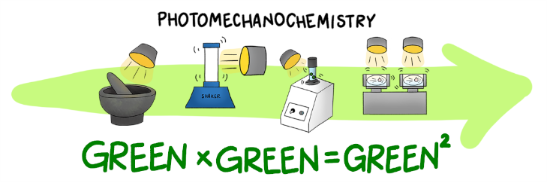
- research. Keywords: light-mediated synthesis; mechanochemistry; photomechanochemistry; Introduction Light-mediated synthetic methodologies have significantly transformed contemporary organic chemistry by enabling a broad array of previously unattainable transformations [1]. In fact, the absorption of a
- transfer [13][14][15]. Regardless of the mechanistic details of the activation manifold, all photochemical reactions obey two laws: the Grotthuss–Draper and the Einstein–Stark laws [16]. The Grotthuss–Draper law dictates that only absorbed light can induce photochemical transformations within a system. In
- of organic solvents [34] required for light-mediated transformations including on- and in-water approaches [35][36][37], the use of supercritical CO2 as solvent [38], and the melting point depression strategy [39]. However, a more drastic option would be to remove the solvent: no solvent is the best




Electrochemical synthesis of cyclic biaryl λ3-bromanes from 2,2’-dibromobiphenyls
Beilstein J. Org. Chem. 2025, 21, 451–457, doi:10.3762/bjoc.21.32
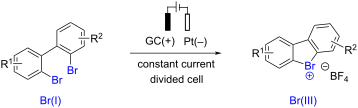
- notable examples underscore the remarkable potential of cyclic diaryl λ3-bromanes in the development of efficient synthetic transformations. Cyclic diaryl λ3-bromanes 1 are typically synthesized using a method developed by Sandin and Hay in 1952 [11] that relies on the excellent nucleofugality of


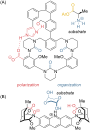
Beyond symmetric self-assembly and effective molarity: unlocking functional enzyme mimics with robust organic cages
Beilstein J. Org. Chem. 2025, 21, 421–443, doi:10.3762/bjoc.21.30
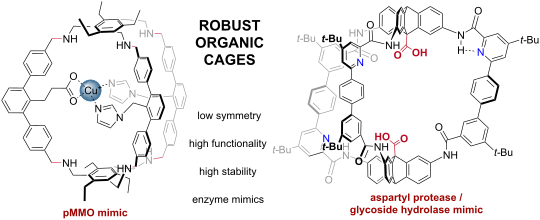
- catalytically active sites but can promote chemical transformations has received significant attention, but it remains a synthetic challenge [27].” The vague term “confinement” is sometimes used as a catch-all explanation for the property changes that arise within a cavity environment, often in the context of




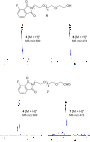
Identification and removal of a cryptic impurity in pomalidomide-PEG based PROTAC
Beilstein J. Org. Chem. 2025, 21, 407–411, doi:10.3762/bjoc.21.28
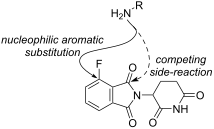
- pomalidomide or its close analogs, indicating that a side reaction unrelated to the SNAr of the fluoride has occurred. 1H NMR and MS analyses suggested that phthalimide 5 was the byproduct formed through this series of transformations. Supporting this hypothesis, analysis of the reaction intermediates




Synthesis, structure, ionochromic and cytotoxic properties of new 2-(indolin-2-yl)-1,3-tropolones
Beilstein J. Org. Chem. 2025, 21, 358–368, doi:10.3762/bjoc.21.26
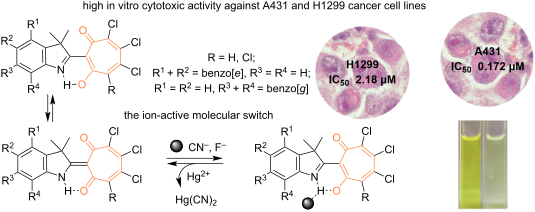
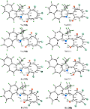
- decrease to normal values of 1800–2000 cm−1, indicating a complete inhibition of the ESIPT process. These spectral transformations are usually caused by the formation of a strong N–H(O–H)···CN− (F−) hydrogen bond up to deprotonation [28]. Using the principle of “relay recognition” [29], we investigated the




Red light excitation: illuminating photocatalysis in a new spectrum
Beilstein J. Org. Chem. 2025, 21, 296–326, doi:10.3762/bjoc.21.22
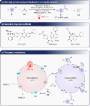
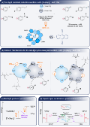
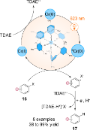
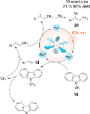
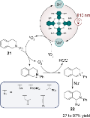
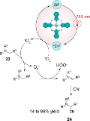
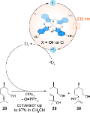
- become a powerful approach for achieving sustainable chemical transformations, combining high efficiency with energy-saving, mild conditions. By harnessing the deeper penetration and selectivity of red and near-infrared light, this method minimizes the side reactions typical of higher-energy sources
- chemistry with significant potential in synthetic and biomedical fields. Keywords: green chemistry; medicinal chemistry; organic photochemistry; photocatalysis; red-light mediated transformations; Introduction Red-light-activated photocatalysis has recently gained significant interest as a tool for
- driving chemical transformations under mild and efficient conditions. The use of red and near-infrared light enables deeper penetration into reaction media, reducing the high-energy side reactions commonly triggered by UV or blue light. These features make red-light photocatalysis particularly
















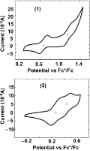
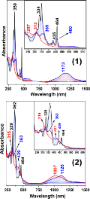
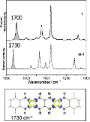
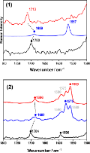
Oxidation of [3]naphthylenes to cations and dications converts local paratropicity into global diatropicity
Beilstein J. Org. Chem. 2025, 21, 277–285, doi:10.3762/bjoc.21.20
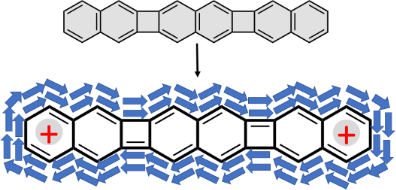
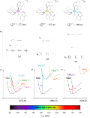
- , it has been very insightful to study the molecular transformations associated with the generation of cationic species in conjugated aromatic oligomers displaying one-dimensional π-electron delocalization [1]. Oligothiophenes [2] and oligo(para-phenylene vinylenes) [3] have been used as models of
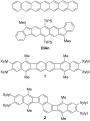
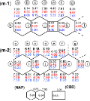
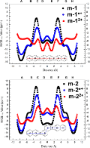
- were generated using the continuous set of gauge transformations (CSGT) method, as implemented in the Gaussian 09 suite, and the AICD 2.0.0 program [34]. Chemical structures of heptacene, diindenoanthracene (DIAn), and the molecules of 1 and 2 studied in this work (TIPS: triisopropylsilyl, Mes: mesityl


Three-component reactions of conjugated dienes, CH acids and formaldehyde under diffusion mixing conditions
Beilstein J. Org. Chem. 2025, 21, 262–269, doi:10.3762/bjoc.21.18
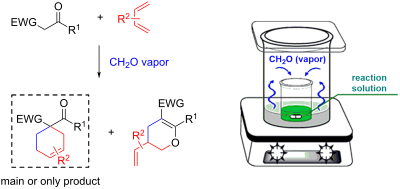
- adducts of formaldehyde condensation are formed under milder conditions and are highly reactive, which is important for further synthetic transformations. However, due to the high carbonyl reactivity of formaldehyde, its interaction with active methylene compounds is often complicated by polycondensation


Streamlined modular synthesis of saframycin substructure via copper-catalyzed three-component assembly and gold-promoted 6-endo cyclization
Beilstein J. Org. Chem. 2025, 21, 226–233, doi:10.3762/bjoc.21.14
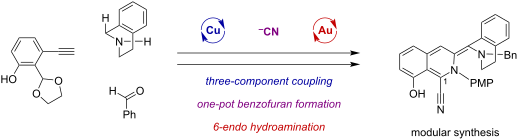
- , followed by gold(I)-promoted 6-endo cyclization between the internal alkyne and 2,3-diaminobenzofuran moieties with spontaneous transformations into the left THIQ segment in 14. Results and Discussion As outlined in our modular synthetic approach (Scheme 1c), the copper(I)-catalyzed three-component
- transformations: copper(I)-catalyzed regiocontrolled three-component assembly of alkyne 8, THIQ segment 9, and benzaldehyde to yield 10, followed by tandem Strecker reaction and intramolecular cyclization to form 2,3-diaminobenzofuran 11. Subsequent gold(I)-mediated 6-endo hydroamination of 11 leads to the


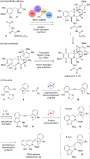


Dioxazolones as electrophilic amide sources in copper-catalyzed and -mediated transformations
Beilstein J. Org. Chem. 2025, 21, 200–216, doi:10.3762/bjoc.21.12
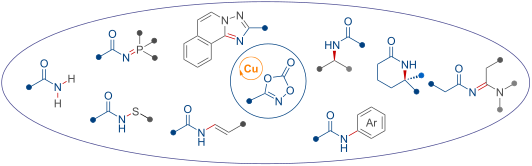
- advancements in the synthetic transformations of dioxazolones, with particular examples of copper salts. Keywords: amidation; copper salts; dioxazolones; electrophilic nitrogen; N-acyl nitrene; Introduction Dioxazolones, first synthesized and reported by Beck and co-workers [1], have been employed as
- electrophiles in various nucleophilic transformations due to their susceptibility to rapid decomposition into the corresponding isocyanates (Scheme 1a) [2][3]. They have attracted increasing interest as electrophilic amide sources in amidation using transition-metal catalysts such as ruthenium, rhodium, and
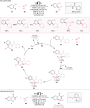
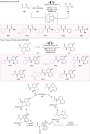
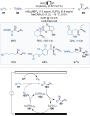
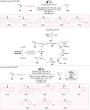
- . Review 1 Transformations via the formation of copper nitrenoids 1.1 C(sp3)–H amidation Lactams are recognized as one of the most significant nitrogen-containing heterocycles in drug discovery [69][70]. Among these, six-membered lactams, known as 2-piperidinones, have been extensively studied due to their


Recent advances in electrochemical copper catalysis for modern organic synthesis
Beilstein J. Org. Chem. 2025, 21, 155–178, doi:10.3762/bjoc.21.9
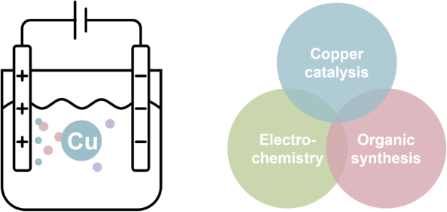
- Yemin Kim Won Jun Jang Department of Chemistry and Nanoscience, Ewha Womans University, Seoul, 03760, Korea 10.3762/bjoc.21.9 Abstract In recent decades, organic electrosynthesis has emerged as a practical, sustainable, and efficient approach that facilitates valuable transformations in synthetic
- electrochemistry and copper catalysis for various organic transformations. Keywords: copper; electrochemistry; radical chemistry; single-electron transfer; sustainable catalysis; Introduction Transition-metal-catalyzed cross-coupling has emerged as an effective method for forming carbon–carbon (C–C) and carbon
- achieved by precisely controlling the potential. Additionally, the merging of electrochemistry and transition-metal catalysis offers advantages in controlling substrate activation, intermediate reactivity, and bond formation, as well as facilitating asymmetric transformations. As a result, electrochemical


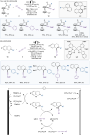






Cu(OTf)2-catalyzed multicomponent reactions
Beilstein J. Org. Chem. 2025, 21, 122–145, doi:10.3762/bjoc.21.7

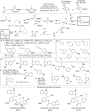
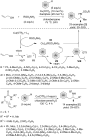
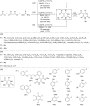
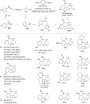
- transition-metal catalysts provides synthetic tools even more advantageously. Copper has also become very interesting in this field, mainly in processes aimed at synthesizing heterocyclic compounds. Among the various catalysts, Cu(OTf)2 stands out in heterocyclic synthesis and ring transformations due to its








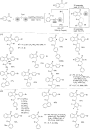
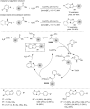


Recent advances in organocatalytic atroposelective reactions
Beilstein J. Org. Chem. 2025, 21, 55–121, doi:10.3762/bjoc.21.6
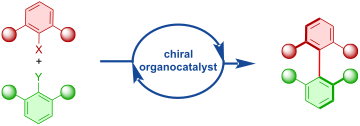
- -catalysis recently led to an array of intriguing transformations. Axially chiral styrenes 26 were assembled via the NHC-catalyzed reaction of propargylic aldehydes 25, sulfinic acids, and phenols [28]. The crucial step of this transformation is the 1,4-addition of the sulfinic anion to the triple bond of
- a CPA to be used as an organocatalyst or to a phosphoramidite to be used as a chiral ligand. Testing these new structures on known stereoselective transformations, the authors achieved high yields and enantioselectivities (up to 98% yield and 97% ee). Wang et al. performed asymmetric (4 + 3
- authors prepared a wide scope of axially chiral products 186 in high yields with excellent enantiomeric purity. The reaction allows lowering of the catalyst loading to 2 mol %. Deprotection of the amino group enabled subsequent transformations, such as a reaction with isocyanate from which a new potential











Hot shape transformation: the role of PSar dehydration in stomatocyte morphogenesis
Beilstein J. Org. Chem. 2025, 21, 47–54, doi:10.3762/bjoc.21.5
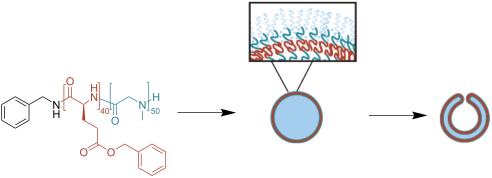
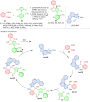
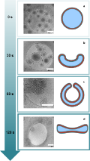
- -polystyrene block copolymers (PEG-PS) stand out for their versatility and adaptability. These copolymers exhibit a remarkable propensity for self-assembly, allowing the formation of vesicles capable of undergoing diverse shape transformations. Notably, they can adopt the distinctive stomatocyte morphology
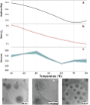
- suggests that shape transformations triggered by saccharose are more effective at higher temperatures [38]. Conclusion Self-assembled vesicles crafted from polysarcosine-poly(benzyl glutamate) block copolymers exhibit distinct properties compared to conventional systems like PEG-PS or PEG-PDLLA, notably


Emerging trends in the optimization of organic synthesis through high-throughput tools and machine learning
Beilstein J. Org. Chem. 2025, 21, 10–38, doi:10.3762/bjoc.21.3
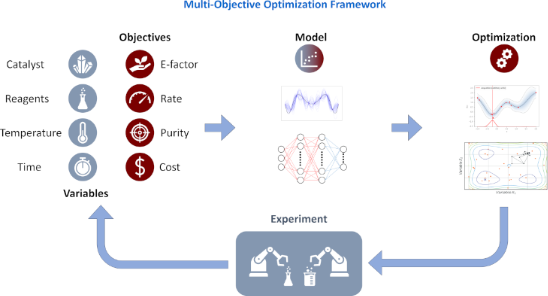
- transformations based on diazonium chemistry, in parallel (Figure 4). A total of 96 reaction conditions were tested, leading to optimized reaction parameters in less than an hour. Chatterjee et al. [55] introduced the concept of radial synthesis to perform multiple single-step chemical reactions or to decouple


Reactivity of hypervalent iodine(III) reagents bearing a benzylamine with sulfenate salts
Beilstein J. Org. Chem. 2024, 20, 3281–3289, doi:10.3762/bjoc.20.272
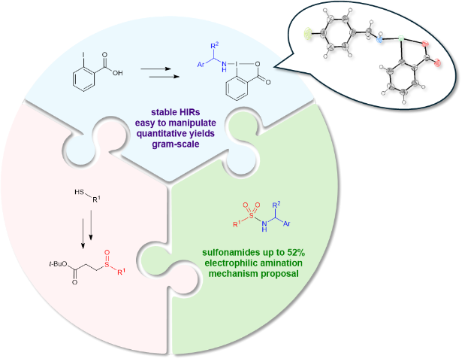
- transformations. The umpolung reactivity provided by these iodine reagents enables chemical transformations that would typically demand less environmentally friendly conditions. The investigations conducted in this work confirmed the ability of the novel hypervalent iodine(III) reagents 2 to transfer their amine



Giese-type alkylation of dehydroalanine derivatives via silane-mediated alkyl bromide activation
Beilstein J. Org. Chem. 2024, 20, 3274–3280, doi:10.3762/bjoc.20.271
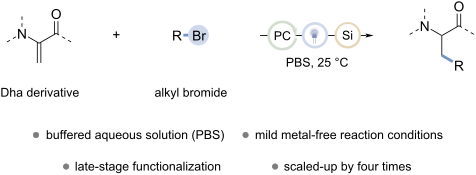
- approaches have also gained widespread attention for their unique advantages in these transformations [4]. Radical chemistry often exhibits complementary reactivity to two-electron pathways and can be performed with high selectivity, atom economy, and functional group tolerance [5]. A well-known radical



Non-covalent organocatalyzed enantioselective cyclization reactions of α,β-unsaturated imines
Beilstein J. Org. Chem. 2024, 20, 3221–3255, doi:10.3762/bjoc.20.268
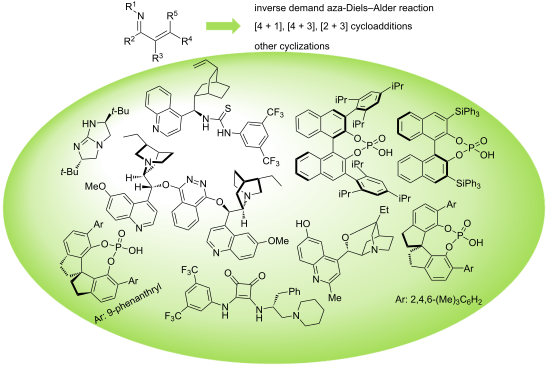
- -raising activation (amine-based catalysis and N-heterocyclic carbenes), and iii) LUMO-lowering and HOMO-raising activation (bifunctional thioureas and squaramides). Due to the ubiquitous nature of non-covalent interactions in organic systems, they can play a decisive role in asymmetric transformations [15
- carbamate group by interaction with the oxygen atom of the phosphoryl group. Although recently Rana and co-workers published a review article covering catalytic asymmetric transformations of azadienes [16], there is still room for this review which only focuses on non-covalent organocatalyzed cyclizations
- reviews [17][18]. Review Hydrogen bond donors: bifunctional thioureas and squaramides The use of bifunctional catalysts is commonplace in organocatalyzed transformations [19][20][21][22][23]. These catalysts are able to activate an electrophile and a nucleophile simultaneously and in IEDADA reactions they