


Search results
Search for "water" in Full Text gives 2269 result(s) in Beilstein Journal of Organic Chemistry. Showing first 200.
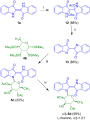
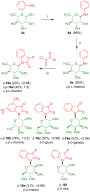
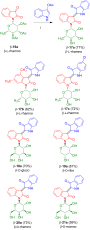
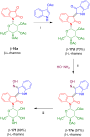
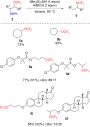
N-Glycosides of indigo, indirubin, and isoindigo: blue, red, and yellow sugars and their cancerostatic activity
Beilstein J. Org. Chem. 2024, 20, 2840–2869, doi:10.3762/bjoc.20.240
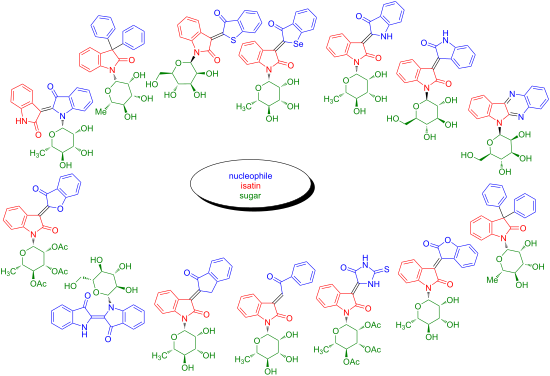
- represent promising candidates for drug discovery, because of their improved water solubility, membrane permeability, and improved recognition by the respective receptors [16]. The present article aims to provide an updated review of the chemistry and biological applications of N-glycosides of indigo
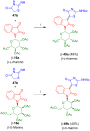
- -rhamnosides α-17a and α-17c, respectively (Scheme 14) [23]. Water solubility plays an important role with regard to the pharmacological activity. It was previously shown that the water solubility and anticancer activity of non-glycosylated indirubins can be improved by conversion of the keto to an oxime group
- -glycosylated indirubins act as a ligand for the aryl hydrocarbon receptor (AhR) and also directly inhibit several cyclin-dependent kinases (CDK). A problem is generally the low water solubility of these compounds. The commercially available indirubin-3’-monoxime (34) shows a better solubility, due to the











Multicomponent synthesis of α-branched amines using organozinc reagents generated from alkyl bromides
Beilstein J. Org. Chem. 2024, 20, 2834–2839, doi:10.3762/bjoc.20.239
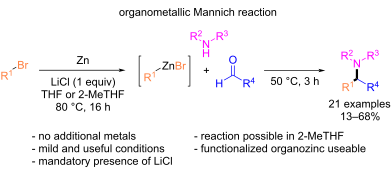
- step, this salt was more conveniently introduced to the medium at the stage of organozinc preparation. We observed that the presence of LiCl was not deleterious for the metalation, although the organozinc yield decreased to 71% (Table 1, entry 3), probably due to the initial presence of water traces in


Synthesis of tricarbonylated propargylamine and conversion to 2,5-disubstituted oxazole-4-carboxylates
Beilstein J. Org. Chem. 2024, 20, 2827–2833, doi:10.3762/bjoc.20.238

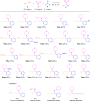
- -benzyl-2-(4-methylphenyl)oxazole-4-carboxylate (5a) in 13% yield (Table 3, entry 1). Several conditions were considered, but the yield of 5a did not improve. On the other hand, the addition of two equivalents of water increased the yield, indicating the important role of a stoichiometric amount of water
- results, a plausible mechanism was proposed, as shown in Scheme 3a. The 5-exo-dig ring closure is induced by O-attack of the amide moiety on the ethynyl group to form 6, during which a stoichiometric proton source (water in the solvent) is necessary. Subsequently, one of the ethoxycarbonyl groups at the 4
- phenacyl group, yielding 9 without any detectable cyclization product (Scheme 4). This hydration process is thought to proceed via two paths. The reaction is initiated by the protonation of the ethynyl group to generate the vinyl cation intermediate 10. Product 9 is directly formed by the attack of a water


Investigation of a bimetallic terbium(III)/copper(II) chemosensor for the detection of aqueous hydrogen sulfide
Beilstein J. Org. Chem. 2024, 20, 2818–2826, doi:10.3762/bjoc.20.237
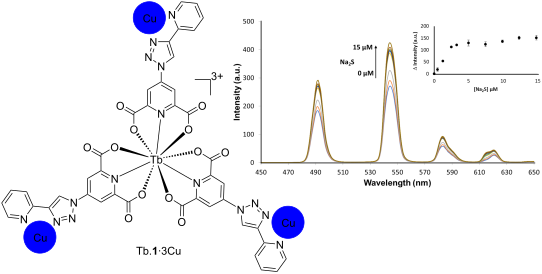
- − in the aqueous state at a pH of 7.4 due to its weak acidic nature and high solubility in water (80 mM at 37 °C) [6]. Elevated levels of H2S in groundwater pose high risks to both human health and aquatic ecosystems [7], compelling rigorous monitoring of water sources. Even though sensors for
- -DPA)3]3−, Tb.1 exhibited limited solubility in water, becoming insoluble at concentrations exceeding 100 μM. Therefore, a 1 mM stock solution of Tb.1 was prepared in DMSO, with the final concentration of DMSO in analytical solutions kept at ≤5%. Initial luminescence analysis of a 5 μM solution of Tb.1
- calibration gas generator. Synthesis of Tb.1 To a solution of L (155 mg, 0.5 mmol) in water (6 mL) and 1 M NaOH (4 mL) a solution of Tb(OTf)3 (100 mg, 0.166 mmol) in water (2 mL) was added to obtain a white precipitate instantly. The solution was stirred at room temperature for a day. The precipitate was


Synthesis and antimycotic activity of new derivatives of imidazo[1,2-a]pyrimidines
Beilstein J. Org. Chem. 2024, 20, 2806–2817, doi:10.3762/bjoc.20.236
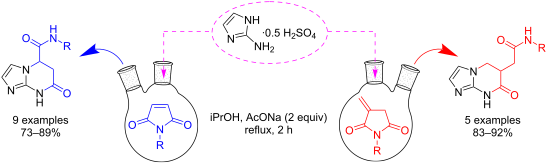
- acetate (0.82 g, 10 mmol), and iPrOH (10 mL) was boiled for 1 h. The resulting precipitate was filtered off, washed with water (2 × 5 mL) and recrystallized from a mixture of DMF/iPrOH 1:2. The title compounds were obtained as white (4a–e) or pink (4f–i) solids. General procedure for the synthesis of N
- filtered off, washed with water (2 × 5 mL) and recrystallized from a mixture of DMF/iPrOH 1:2. The title compounds 5a–e were obtained as white solids. Some biologically active compounds and organic fluorophores containing the imidazo[1,2-a]pyrimidine nucleus. Existing approaches to imidazo[1,2-a


Mechanochemical difluoromethylations of ketones
Beilstein J. Org. Chem. 2024, 20, 2799–2805, doi:10.3762/bjoc.20.235
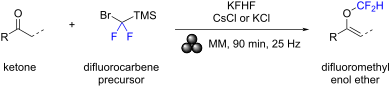
- sufficient mixing. Silica could not fulfill this role. Lastly, water, 1,4-dioxane, chloroform, and toluene were tested in a liquid-assisted grinding (LAG) protocol (Table 1, entries 10–13). The lowest yields were obtained with water and 1,4-dioxane, providing 3a in yields of 37% and 43%, respectively (Table
- reaction conditions were chosen based on those reported by Ni, Hu and co-workers for the difluoromethylation of alcohols in solution [39]. The two activators KFHF and KOAc were investigated in a dichloromethane/water mixture at room temperature for 10 h. In both cases, the yield of 3a was negligible (with


C–C Coupling in sterically demanding porphyrin environments
Beilstein J. Org. Chem. 2024, 20, 2784–2798, doi:10.3762/bjoc.20.234
- stability than boronic acids and other employed esters as the four methyl groups protect the boron center from attack of water [44][45], preventing protodeboronation from the hydrolysis route. However, protodeboronation can be complex when it comes to pKa considerations, for example, 3,5


Copper-catalyzed yne-allylic substitutions: concept and recent developments
Beilstein J. Org. Chem. 2024, 20, 2739–2775, doi:10.3762/bjoc.20.232
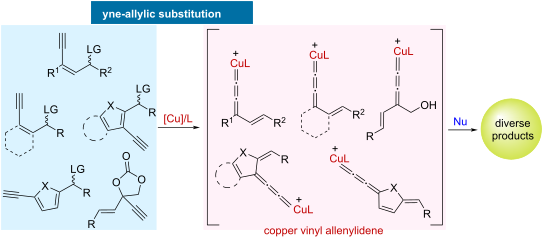
- , 6a–w). Interestingly, both Cu(I) and Cu(II) can promote the reaction and the reaction is not sensitive to water (Scheme 7, 6g). The intramolecular decarboxylative yne-allylic substitution can also be achieved (Scheme 8, 6a–u). O-Nucleophiles and C-nucleophiles are all suitable reactants, yielding









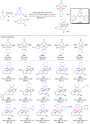


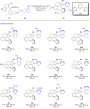


Synthesis of spiroindolenines through a one-pot multistep process mediated by visible light
Beilstein J. Org. Chem. 2024, 20, 2722–2731, doi:10.3762/bjoc.20.230
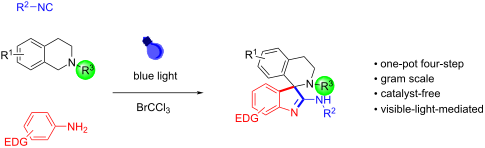
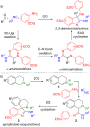
- optimized reaction conditions, we observed good conversion of the starting material, but the desired compound was isolated in very poor yield, as the α-aminoamide 4a resulted the main product (Table 1, entry 1). We were surprised about that, as, even if water is present as co-solvent in the reaction mixture
- , we have never noted the formation of the α-aminoamide in our previous work. Repeating the reaction in the absence of water suppressed the 4a formation but with a concomitant drop of the conversion, resulting again in a poor yield of 2a (Table 1, entry 2). Thus, we demonstrated that GO was able to


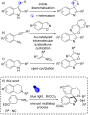


Synthesis of benzo[f]quinazoline-1,3(2H,4H)-diones
Beilstein J. Org. Chem. 2024, 20, 2708–2719, doi:10.3762/bjoc.20.228
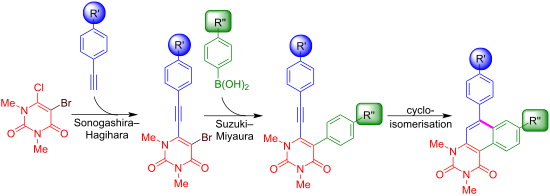
- stirred for 4 hours under argon atmosphere at 100 °C. The reaction was monitored by TLC until completion. The reaction was neutralised with a saturated NaHCO3 solution and diluted with water (40 mL). The phases were separated, and the aqueous layer was extracted with dichloromethane (3 × 30 mL). The
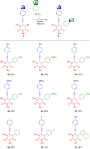
- (PPh3)4 (10 mol %), NaOH (3 equiv), 1,4-dioxane/water 5:1, 100 °C, 1 h; iv) p-TsOH (20 equiv), toluene, 100 °C, 4 h. Synthesis and isolated yields of 1,3-dimethyl-5-aryl-6-[2-(aryl)ethynyl]uracils 4a–i. Reaction conditions: 3 (1 equiv), boronic acid (1.2 equiv), Pd(PPh3)4 (5 mol %), NaOH (3 equiv), 1,4
- -dioxane/water 5:1, 100 °C, 1 h. Scope and isolated yields of the synthesis of 5. Reaction conditions: 4 (1 equiv), p-TsOH·H2O (20 equiv), toluene, 100 °C, 4 h. Proposed reaction mechanism of the cyclisation with N,N-dimethylanilino functional groups. Optimization of the synthesis of 5a. Photophysical data




Synthesis of fluoroalkenes and fluoroenynes via cross-coupling reactions using novel multihalogenated vinyl ethers
Beilstein J. Org. Chem. 2024, 20, 2691–2703, doi:10.3762/bjoc.20.226

- parent compounds. Furthermore, fluoroalkenes can be utilized as feedstock for fluoropolymers. Teflon, which is a well-known fluoropolymer with excellent water-repellent and oleophobic properties, is synthesized by polymerizing a monomer called tetrafluoroethylene. As a consequence, convenient and diverse
- mol %), cesium carbonate (1.5 equiv), palladium bis(trifluoroacetate) (5 mol %) in THF (2.0 mL) was added the respective boronic acid derivative 4 (2.0 equiv). The reaction solution was refluxed for 3.5 h. The reaction mixture was quenched by the addition of water (40 mL) at 0 °C and extracted with


Transition-metal-free decarbonylation–oxidation of 3-arylbenzofuran-2(3H)-ones: access to 2-hydroxybenzophenones
Beilstein J. Org. Chem. 2024, 20, 2655–2667, doi:10.3762/bjoc.20.223
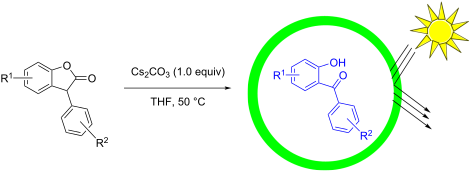
- environmental hazards, and this can only be circumvented using a transition-metal-free synthesis protocol. Although eco-friendly methods for the synthesis of 2-hydroxybenzophenones have been reported via a cycloaromatization of α-alkenoyl ketene dithioacetals and nitroethane in water [15], an alternate and more
- cold 10% aqueous NaHCO3 solution was added. The reaction mixture was diluted with EtOAc and filtered through a Celite bed. The filtrate was extracted with ethyl acetate (3 × 40 mL), the organic extract was washed with water and brine, and dried with Na2SO4. The organic extract was concentrated under




The scent gland composition of the Mangshan pit viper, Protobothrops mangshanensis
Beilstein J. Org. Chem. 2024, 20, 2644–2654, doi:10.3762/bjoc.20.222
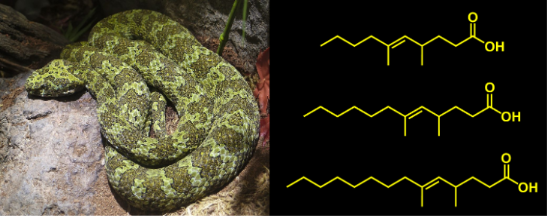
- for 18 h. After cooling down to room temperature, water, and diethyl ether were added. The phases were separated and the aqueous phase was extracted three times with diethyl ether. The organic phases were combined, dried over sodium sulfate, filtered, and concentrated for GC–MS analysis [44
- analysis [8]. Silver nitrate column chromatography: Silver nitrate column chromatography was carried out as described [45]. An aq solution of silver nitrate (5.5 g) in H2O (30 mL) was added to silica gel (50 g). Water was added to barely cover the silica gel. The silica was stirred with a glass rod and


Deciphering the mechanism of γ-cyclodextrin’s hydrophobic cavity hydration: an integrated experimental and theoretical study
Beilstein J. Org. Chem. 2024, 20, 2635–2643, doi:10.3762/bjoc.20.221
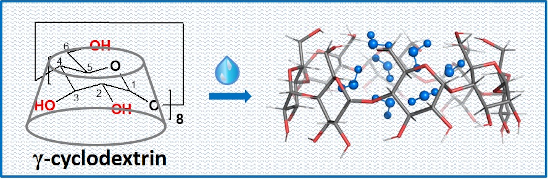
- substances. Host CDs are highly accommodative to water molecules as well and usually contain water in the native state. There is still an ongoing discussion on both the total number of water molecules and their preferred binding position inside the cavities of the CDs. To understand the hydration/dehydration
- light on the mechanism of the γ-CD hydration and to address some unanswered questions: (i) what are the preferable locations for water molecules in the macrocyclic cavity (“hot spots”); (ii) what are the major factors contributing to the stability of the water cluster in the CD interior; (iii) what type
- of interactions (i.e., water–water and/or water–CD walls) contribute to the stability of the water assemble; (iv) how does the mechanism of the γ-CD hydration compare with those of its α-CD and β-CD counterparts. Keywords: cyclodextrin; DFT calculation; DSC/TG; hydration; thermodynamic


Applications of microscopy and small angle scattering techniques for the characterisation of supramolecular gels
Beilstein J. Org. Chem. 2024, 20, 2608–2634, doi:10.3762/bjoc.20.220
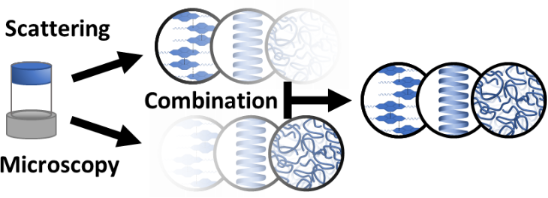
- , the bulk gel (which may not be the same as the surface) is inaccessible and cannot be characterised. AFM has the advantage of allowing for the measurement of hydrated samples, and therefore does not suffer from drying artefacts. Since hydrogels are mainly made of water and low concentration hydrogels
- the range of hierarchical assemblies [32]. Another significant concern posed by blotting is the brief introduction of an air–water interface which can lead to preferential organisation of particles, as well as unpredictable changes in local concentration on the TEM grid [41]. To overcome such


Efficient modification of peroxydisulfate oxidation reactions of nitrogen-containing heterocycles 6-methyluracil and pyridine
Beilstein J. Org. Chem. 2024, 20, 2599–2607, doi:10.3762/bjoc.20.219
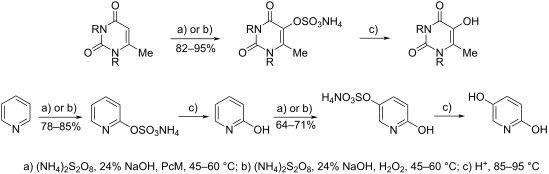
- distilled water, 6-methyluracil (99%, Chemical Line LLC, Russia), pyridine (analytically pure grade, Reakhim LLC, Russia), (NH4)2S2O8 (analytically pure grade, Panreac), NaOH (analytically pure grade, Reakhim LLC, Russia), H2SO4 (reagent grade, LLC Sigma Tech, Russia), dimethyl sulfate (99%, Chemical Line
- by РсМ. As described in [13] to a three-necked flask of 100 mL capacity, equipped with a mechanical stirrer, a thermometer, and a reflux condenser, containing 10 mL of distilled water, was added 0.023 mol of the corresponding uracil 1 or 4, followed by the addition of 11 mL of a previously prepared
- mixture to room temperature, concentrated H2SO4 was slowly added until pH 6–7 according to litmus paper and left standing for 12 h. The precipitated white crystals were filtered off, washed with water, and dried in air. Compound 2 yields are given in [13] and compound 5 yields are given in Table 1. b


Synthesis and cytotoxicity studies of novel N-arylbenzo[h]quinazolin-2-amines
Beilstein J. Org. Chem. 2024, 20, 2592–2598, doi:10.3762/bjoc.20.218
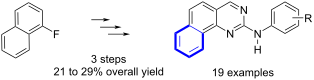
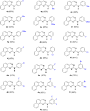
- stirred at −78 °C for 2 h, and then dry DMF (3.3 mL, 0.041 mol) was added. After stirring for 2 h at −78 °C, the mixture was quenched with water and the crude product was extracted with ethyl acetate (30 mL × 3). The combined organic phase was dried over anhydrous Na2SO4, filtered and concentrated under
- ]quinazolin-2-amine (3): To a stirred solution of guanidinium carbonate (2.0 g, 0.011 mol) in DMA (15 mL) was added compound 2 (1.5 g, 0.008 mol). Then the reaction mixture was heated to stir at 150 °C for 16 h. After completion of the reaction (TLC), the mixture was poured into ice water, a solid was formed


A review of recent advances in electrochemical and photoelectrochemical late-stage functionalization classified by anodic oxidation, cathodic reduction, and paired electrolysis
Beilstein J. Org. Chem. 2024, 20, 2500–2566, doi:10.3762/bjoc.20.214
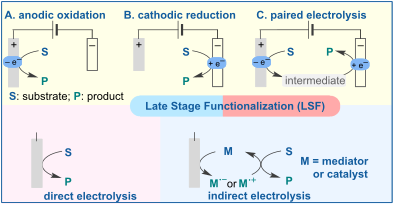
- further emphasized its utility. Mechanistic studies have demonstrated that the key to this selective chemical conversion lies in the dual oxidation process at the anode. The authors suggest that anodic oxidation of the sulfide generates a sulfur radical cation intermediate, which reacts with water at the
- the hydrosilane to generate a silyl radical. This silyl radical is then oxidized anodically to produce a silyl cation. The silyl cation subsequently abstracts a proton from water (H2O), forming the desired silanol product (Scheme 28). While many methods combining metal catalysis and electrochemistry
- − is protonated to produce DDQH2. The anodic oxidation of DDQH2 regenerates DDQ, which re-enters the catalytic cycle (Scheme 29). Furthermore, Qiu and coworkers disclosed a metal-free electrochemical dihydroxylation of unactivated alkenes using water as the hydroxy source under air conditions [40




























Visible-light-mediated flow protocol for Achmatowicz rearrangement
Beilstein J. Org. Chem. 2024, 20, 2493–2499, doi:10.3762/bjoc.20.213
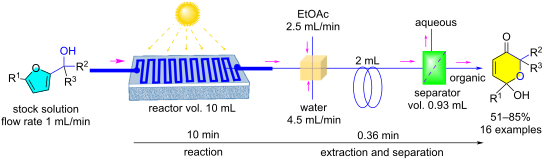
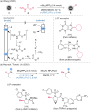
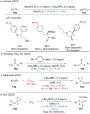
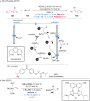
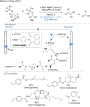
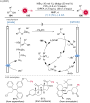
- obtained when EtOAc (flow rate set at 2.5 mL/min), water (flow rate set at 4.5 mL/min) were taken with the extraction time of 0.25 min and separation time of 0.11 min (see details in Supporting Information File 1, Table S2, entry 5). To verify the steadiness of the newly constructed integrated photo-flow
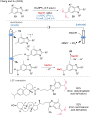
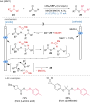
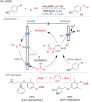
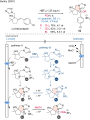
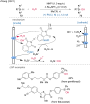
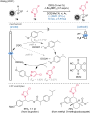
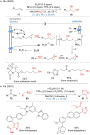
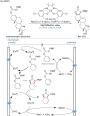
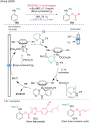
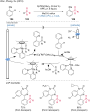
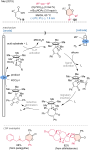
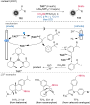
- OH). The Achmatowicz product is formed by addition of water to oxocarbenium intermediate A followed by elimination of L. Conclusion In conclusion, an integrated continuous PFR platform for photocatalytic functionalization of furfuryl alcohols to dihydropyranones through an Achmatowicz rearrangement


Phenylseleno trifluoromethoxylation of alkenes
Beilstein J. Org. Chem. 2024, 20, 2434–2441, doi:10.3762/bjoc.20.207
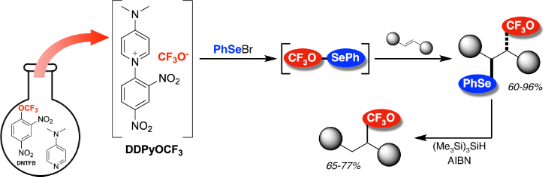
- separatory funnel and 10 mL of water are added. The aqueous layer is extracted three times with 10 mL of diethyl ether. The organic layers are combined and washed with 10 mL of water. The organic layer is dried with MgSO4, filtered, and concentrated under vacuum. Compounds 2 are obtained after purification



Homogeneous continuous flow nitration of O-methylisouronium sulfate and its optimization by kinetic modeling
Beilstein J. Org. Chem. 2024, 20, 2408–2420, doi:10.3762/bjoc.20.205
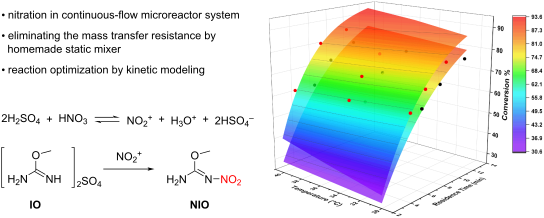
- , 98.0%) was purchased from Sinopharm Chemical Reagent Co., Ltd.; pure water from AR, Hangzhou Wahaha Group Co., Ltd.; all reagents were used without further purification. Sulfuric acid solutions of different mass fractions were prepared with pure water and 98% concentrated sulfuric acid in an ice bath
- reaction coil. All preheat tubes, mixers, and reaction coils were immersed in the same water bath to maintain a constant temperature. Finally, after controlling the residence time, the reaction was terminated by pumping excess pure ice water through a high-pressure PTFE pump (Pump C, JJRZ-10004F, Hangzhou
- thermometer connected to the outlet. Sample analysis When the continuous flow system was operated at steady state (after 2–3 times the residence time), the reaction solution was quenched and diluted by a large amount of ice water at the outlet of the reaction system. The quenched and diluted reaction solution


![[Graphic 1]](/bjoc/content/inline/1860-5397-20-205-i17.svg?max-width=637&scale=1.18182)


Improved deconvolution of natural products’ protein targets using diagnostic ions from chemical proteomics linkers
Beilstein J. Org. Chem. 2024, 20, 2323–2341, doi:10.3762/bjoc.20.199
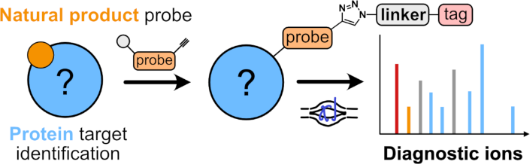
- conjugates may be carried out using desthiobiotin (DTB) as affinity tag instead of biotin [103][104]. The DTB-tag allows to elute probe–peptide–DTB conjugates from streptavidin beads using a mixture of water, organic solvent – typically acetonitrile (ACN) – and an acid such as formic acid. The desthiobiotin
- tag in cell lysate, the proteins are loaded onto the carboxylate magnetic beads and aggregated with the beads by addition of an organic solvent, for example ethanol or acetonitrile. The subsequent washes of the carboxylate magnetic beads with proteins by an organic solvent–water mixture or organic




Stereoselective mechanochemical synthesis of thiomalonate Michael adducts via iminium catalysis by chiral primary amines
Beilstein J. Org. Chem. 2024, 20, 2313–2322, doi:10.3762/bjoc.20.198
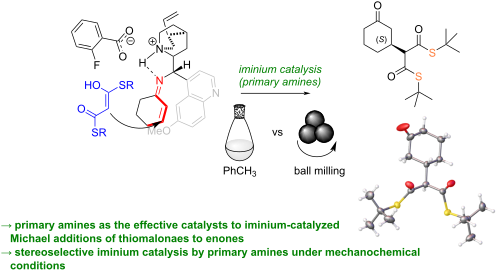
- by extended reaction times, sometimes up to 168 hours. An intriguing example involves the use of a bifunctional primary amine-sulfonamide catalyst, which activates benzylideneacetone towards dibenzyl malonate, with the presence of water accelerating the reaction [25]. An alternative approach, where


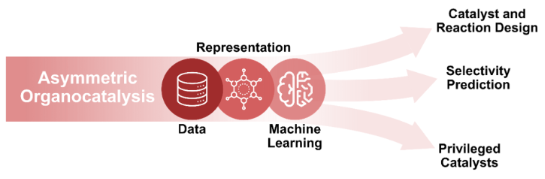
Catalysing (organo-)catalysis: Trends in the application of machine learning to enantioselective organocatalysis
Beilstein J. Org. Chem. 2024, 20, 2280–2304, doi:10.3762/bjoc.20.196


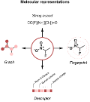


Deuterated reagents in multicomponent reactions to afford deuterium-labeled products
Beilstein J. Org. Chem. 2024, 20, 2270–2279, doi:10.3762/bjoc.20.195
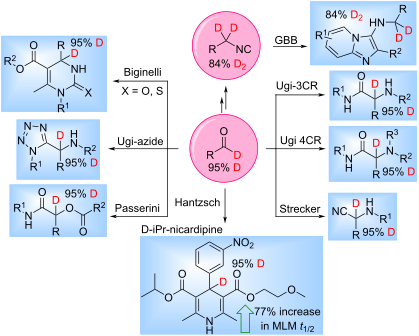
- preparation of 4d, a deuterated isocyanide was solely employed and for 4a,b and 4e,f, water was used as solvent. For the latter, product precipitates from the aqueous solution which deters undesirable side-reactions whilst also aiding rate of the reaction. The fifth MCR employed herein is the ubiquitous





